Fender Design Challenge
Fender Design Challenge
Fender is the American English term for the part of an auto-mobile, motorcycle or other vehicle body that frames a wheel well (the fender underside). Its primary purpose is to prevent sand, mud, rocks, liquids, and other road spray from being thrown into the air by the rotating tire. Fenders are typically rigid and can be damaged by contact with the road surface.
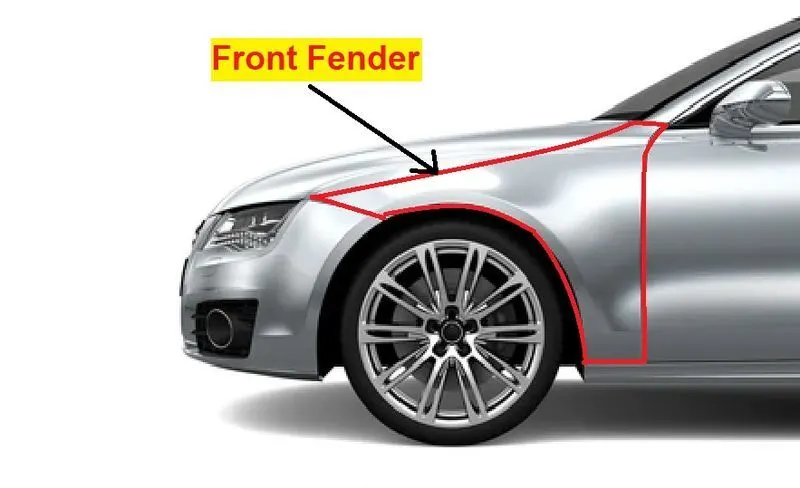
Sticky materials, such as mud, may adhere to the smooth outer tire surface, while smooth loose objects, such as stones, can become temporarily embedded in the tread grooves as the tire rolls over the ground. These materials can be ejected from the surface of the tire at high velocity as the tire imparts kinetic energy to the attached objects. For a vehicle moving forward, the top of the tire is rotating upward and forward, and can throw objects into the air at other vehicles or pedestrians in front of the vehicle.
Types of Fenders
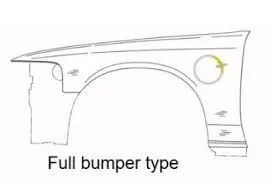
1)Full Bumper Type: The Full bumper type fender was a pretty old design and was used in the previous years. It largely covers the half of the wheel like a semicircular portion and was little bit heavy then the other types fenders. The manufacturing cost of these fenders were also high as they take more time bigger die and generate more scrap.
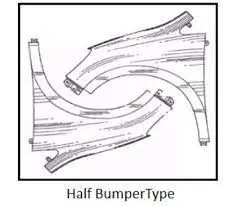
2)Half Bumper type: These fenders are more used in today's conventional vehicles as they are lightweight more economical to manufacture and take less time to produce, in only one die two units of then fenders can be make in a single stroke and generate less scrap.
Manufacturing process
The manufacturing of the fender majorly involves these operations.
1.Embossing
2.Bending
3.Cutting and Blanking
Embossing
Embossing is a metal forming process for producing raised or sunken designs or relief in sheet material using matched male and female roller dies, theoretically with no change in metal thickness, or by passing sheet or a strip of metal between rolls of the desired pattern.
Bending
Metal bending is a process by which metal can be deformed when applying force to the subject, which causes it to bend at an angle and form the anticipated shape, which often results in it being in a ‘V’ or a ‘U’ shape. This is done through the application of force on a
workpiece. The force on the work piece can be mechanical, pneumatic or hydraulic.
Cutting and Blanking
Cutting processes are those in which a piece of sheet metal is separated by applying a great enough shearing force to cause the
material to fail.
Blanking is a steel manufacturing process in which a flat, geometric shape is created by feeding a coil of sheet metal into a press and
die. In this process, the blank is punched out from the large metal sheet
Master Section
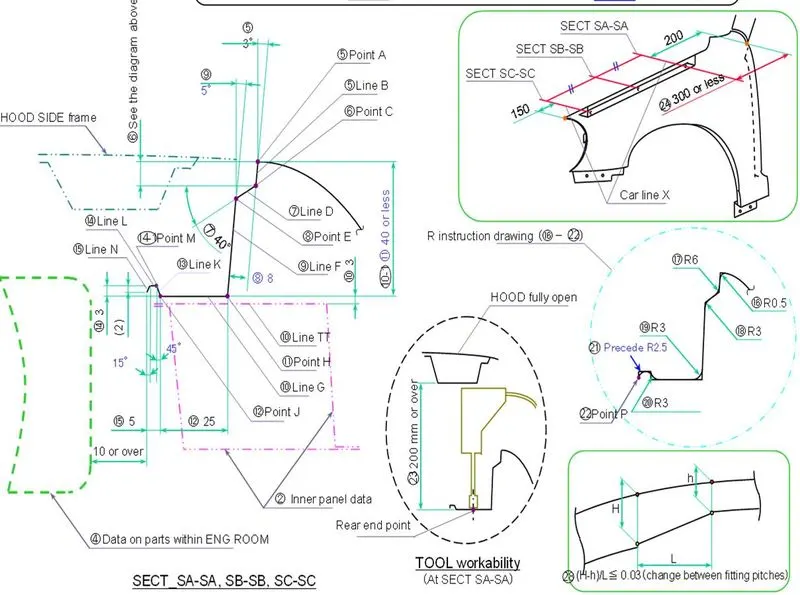
Master section is also provided for the reference purpose to design the drip area mounting as that is the main mounting of the fender. I also shows the minimum gap required for the repair purpose to mantel and dismantle the fender with the help of the screws.It aslo shows the radius of the fillets and blends which should be given to the sharp corners of the mountings.
Mountings on the Fender
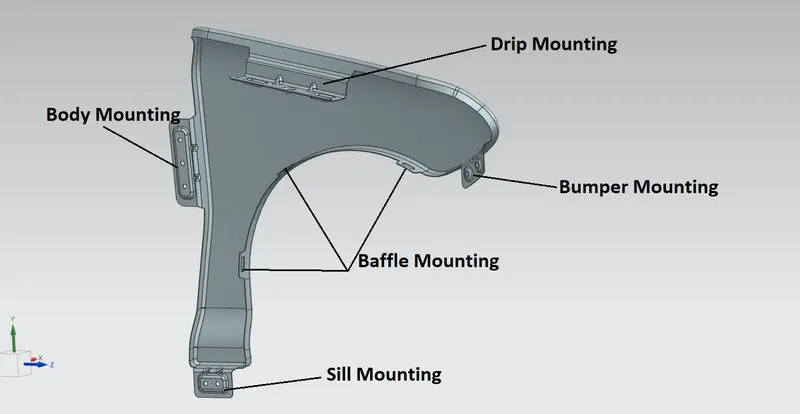
1) Drip Mounting
It is the main mounting of the fender which is provided in the top edge to connect it with the engine compartment. Drip mounting is been designed in this project according to the master section provided in which all the clearance from various positions are given. Drip mountings stiffness is also increased with the cross-section provided and by giving the darts or ribs on the corner.
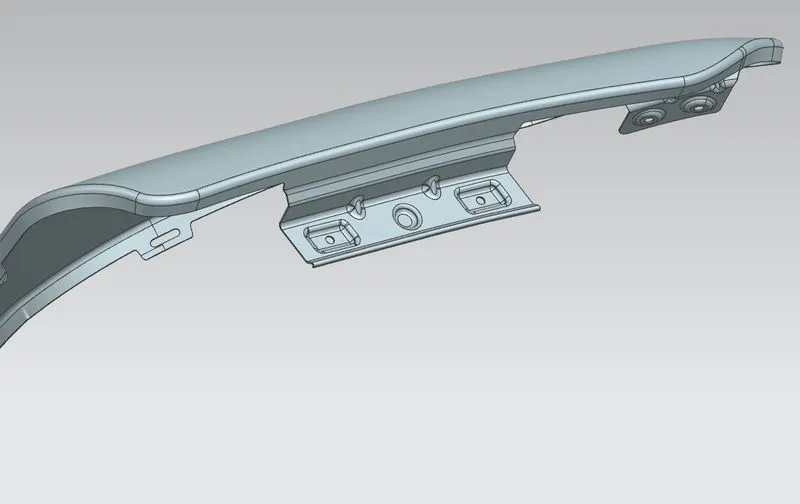
2)Sill Mounting
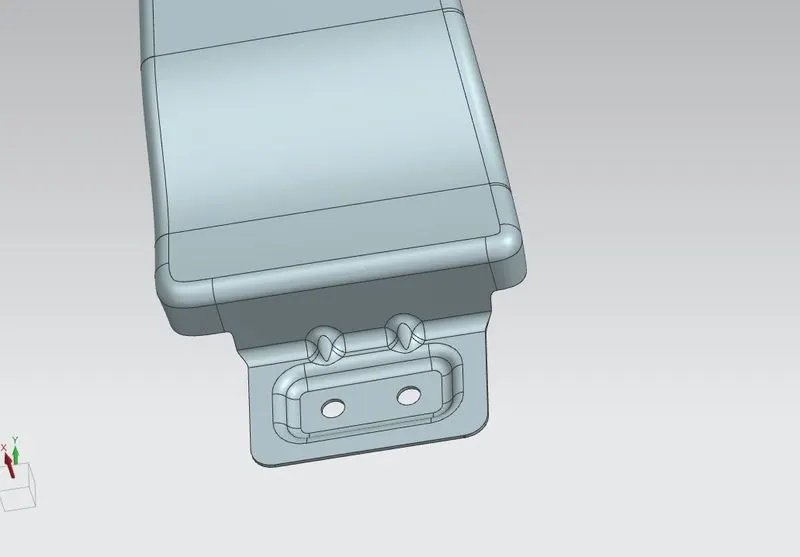
Sill mounting is provided in the bottom of the fender and is connected mainly with the bottom door panel or the bottom BIW section of the vehicle. Embosses and ribs are given to further increase the strength and stiffness of fender.
3)Body Mountings
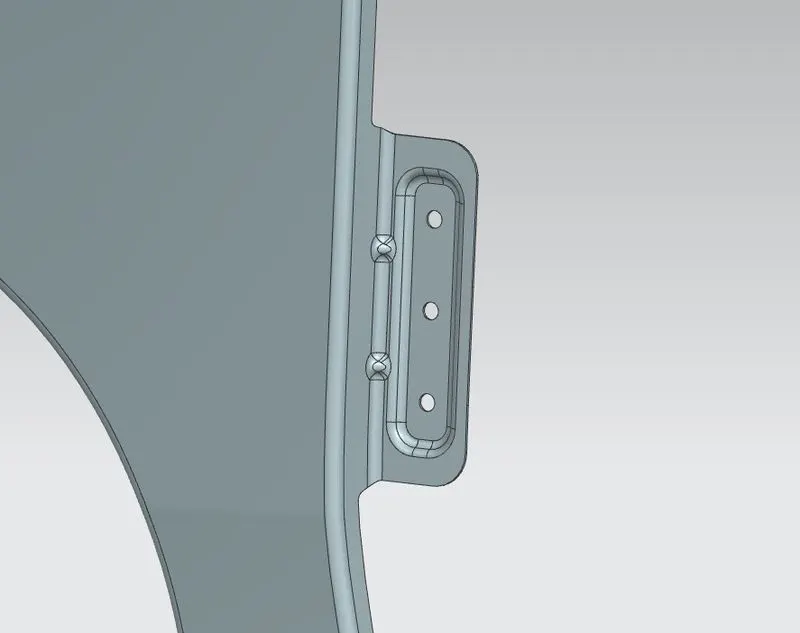
Body Mounting is generally given to connect the fender to the door side body of the vehicle so it is given is the side edge of the fender. In body mounting embosses, ribs or darts are given to further increase the strength.
4)Bumper Mounting
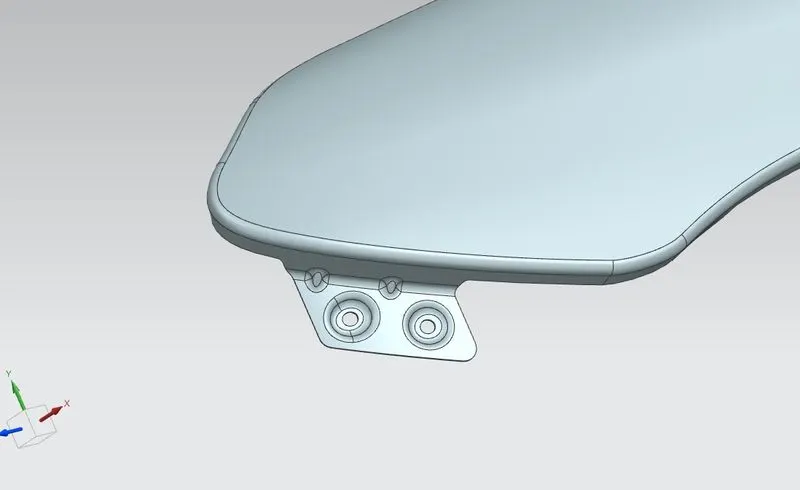
The bumper mounting region is located beneath the bumper. The fender gets attached before the installation of the bumper. After
fixing the fender with fasteners the bumper will cover the bumper mounting
5)Baffle Mounting
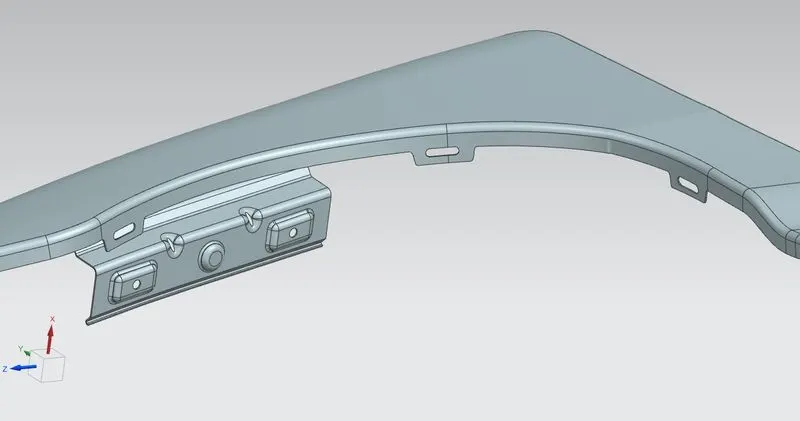
In this region, the baffle gets installed to the fender with the help of clips which holds the baffle with the fender along the wheel arch.
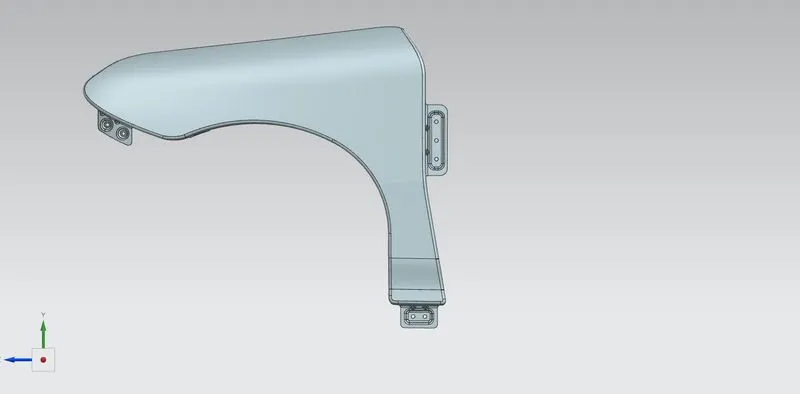
Nx CAD student edition is used to design the front fender
Report Prepared By:-
Rishabh Soni