Fender Design Challenge
OBJECTIVE: Using the Master Section, design the Fender Drip Area, Sill Mounting Area, Bumper Mounting Area, Baffle Mounting Area, and A-pillar Mounting Area of a passenger car.
The master portion shown below is utilized to produce the drip area and the rest of the mounting points according to the design requirements.
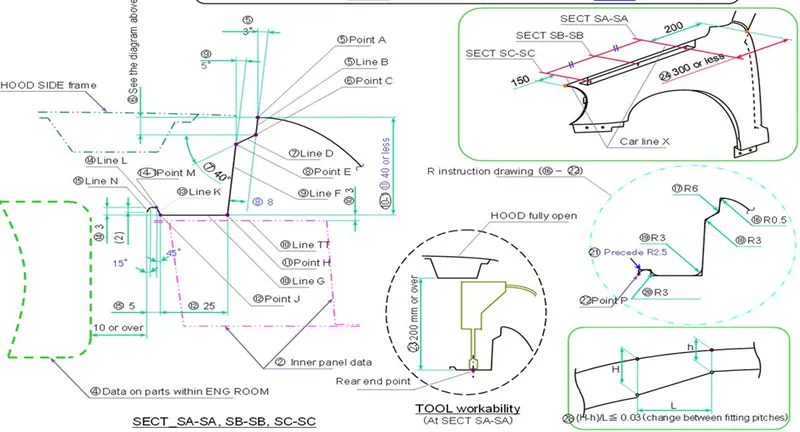
To make a Front Fender, a side-facing aesthetic component that conceals the engine compartment.
- Include the appropriate mounting points
- Comply with the gap and flushness requirements
- Follow the rules for frontal collisions.
Principles of Design
The fender is a decorative element that also serves as a framing for the wheel arch.
The primary goal is to keep sand, dirt, gravel, and liquids from being sprayed into the engine compartment, automobile body, and pedestrians by rotating tyres.
Bumper Types
• Full Bumper
Beyond the headlamp installation, the fender extends to the bumper interface.
The fender blank is larger, resulting in material waste and an increase in cost.
• Bumper half
Before installing the headlights, the fender is trimmed.
It allows the bumper to stretch further, saving material, money, and time during production.
Points of attachment
The fender is attached to the vehicle in five places.
• Body Mounting • Drip Area • Bumper Mounting • Sill Mounting • A-Pillar Mounting
As a design engineers, we examine for initial feasibility and because we don't have reference data, the engine compartment will be given a surface with predetermined borders and a master section that can adapt to any condition.
Mounting of the Drip Area mounting zone
According to the design configuration considered while building a drip area mounting, a 200-300mm clearance should be supplied in the engine compartment for the wiper motor, and about 150mm clearance should be provided on the front section for housing the headlamp and its electrical accessories.
Other Mountings-
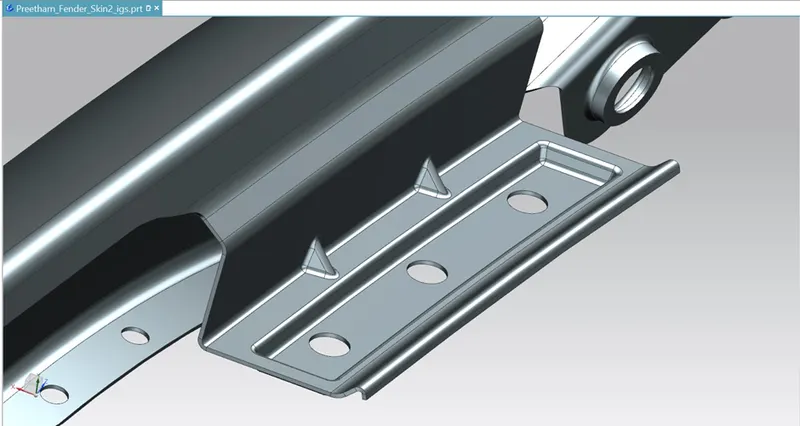
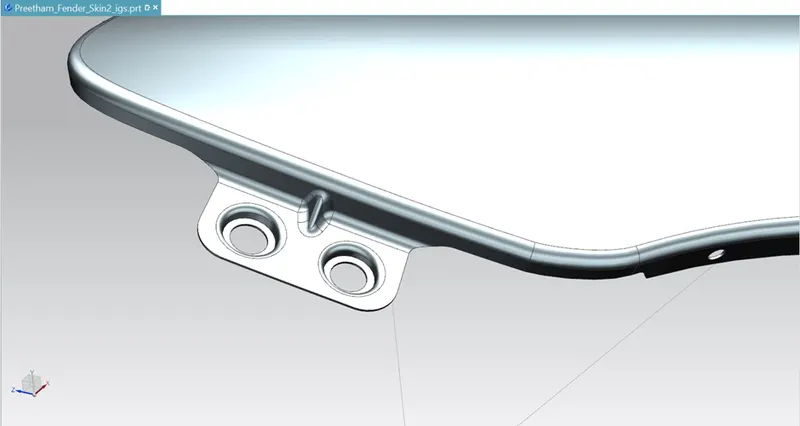
Below is the remaining mounting places, which were created with a 3.5mm emboss distance and a 10-degree airflow angle in mind. A baffle is installed at the wheel arc to absorb noise from the engine compartment.
- We emboss the panel to add robustness; the length law is 3.5mm for all mounting zones and at a 10-degree angle.
- A smooth curve is produced to make panel fabrication easier.
- Ribs are used to give the panel structural support.
- A 5mm diameter hole is drilled for screw attachment.
Bumper mounting region
Sill Mounting Region
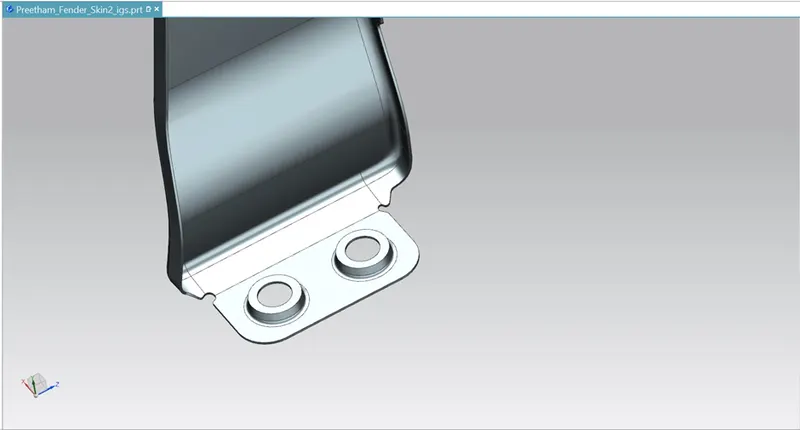
A-Pillar Mounting
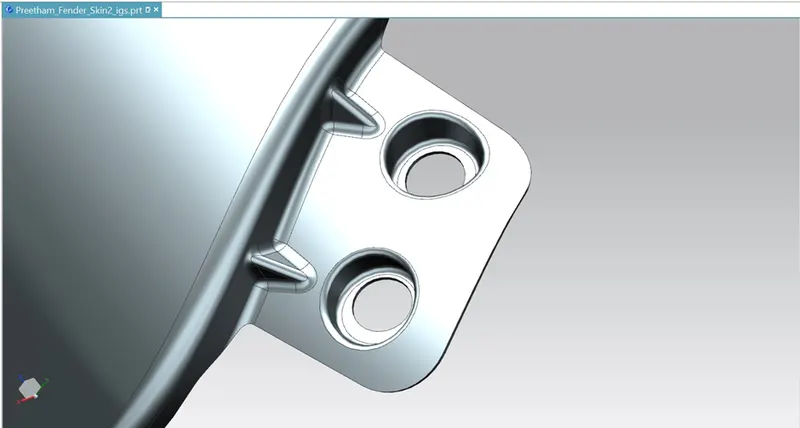
Body Mount
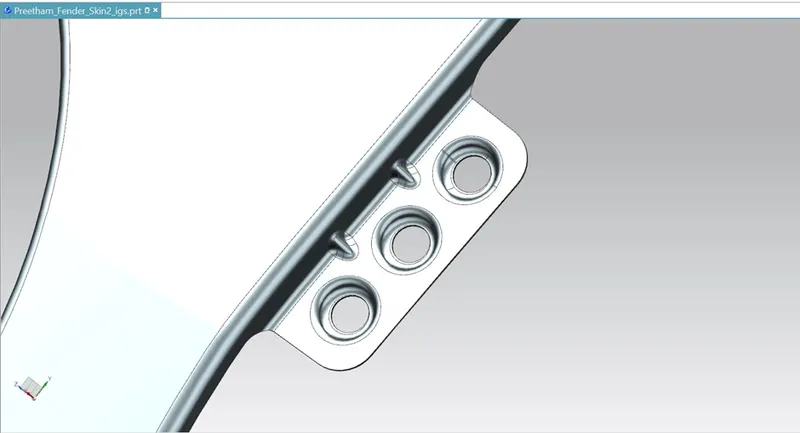
Baffle Mounting
The wheel arch serves as a frame for the baffle plate, a plastic covering that prevents mud, sand, and other debris from spreading. The wheel arch serves as a frame for the baffle plate, a plastic covering that prevents mud, sand, and other debris from spreading. It is secured by plastic fittings and locators, so no additional reinforcements are required.
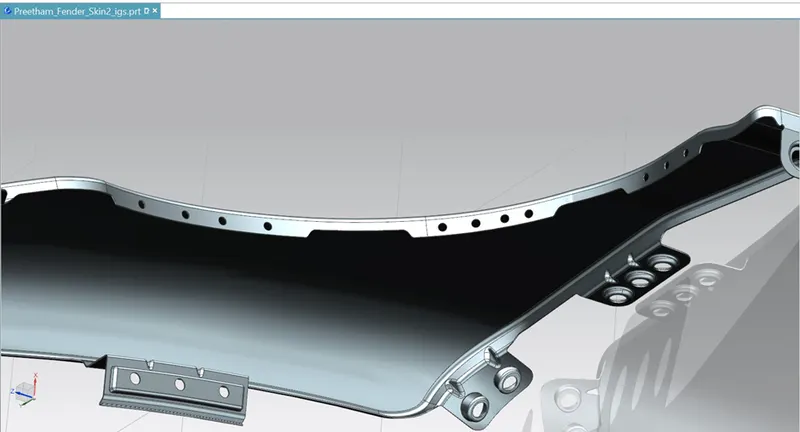
Corner reliefs
We provide relaxation to avoid tension concentration at sharp edges and corners.
The CAE team investigates the red zone, which is a stress-intensified area.
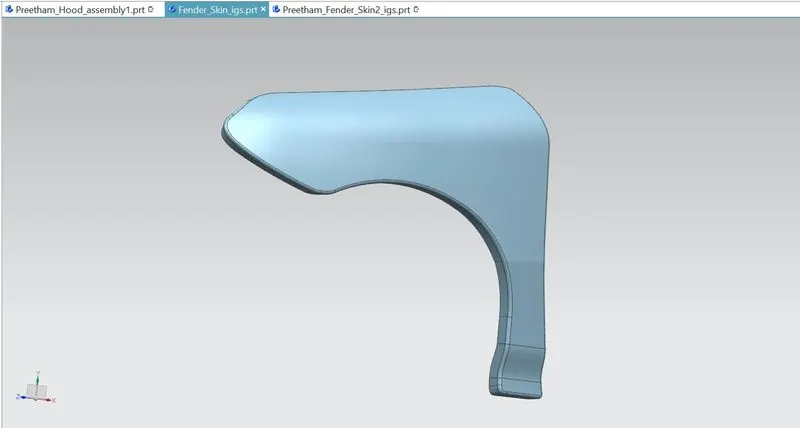
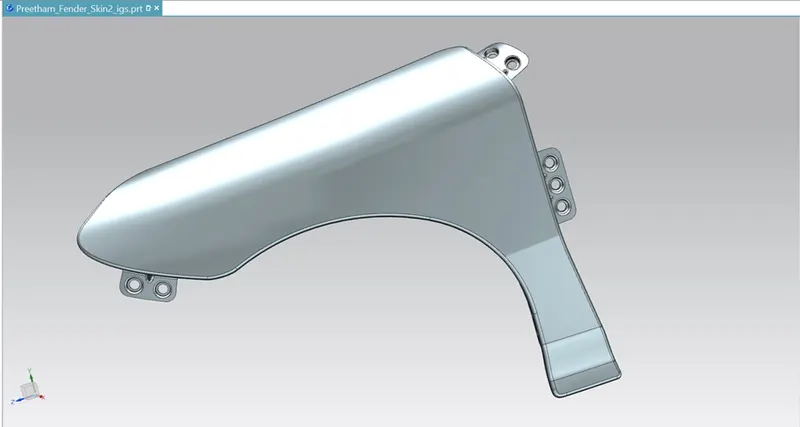
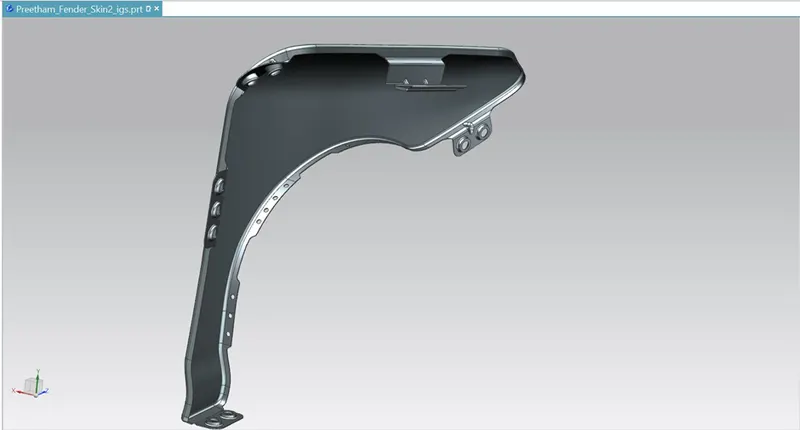
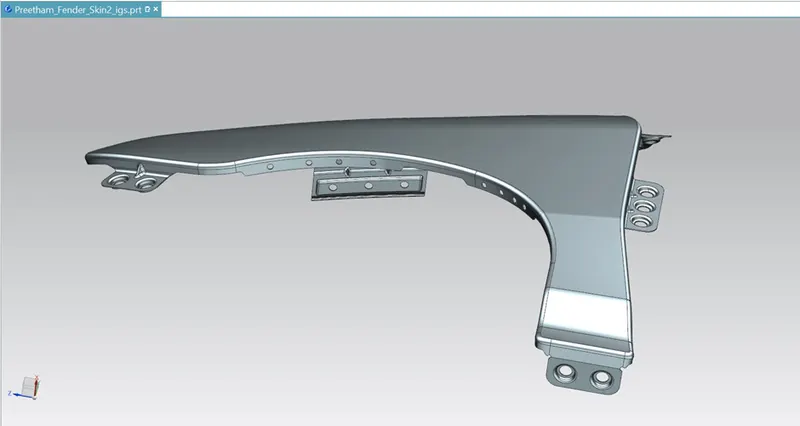
Fender Images
Conclusion
With the given master section as the input, designed and constructed the front fender of a car with drip area, sill mount, bumper mount, A-Pillar mount, and body mount.