Fender Design Challenge
OBJECTIVE: To develop the Drip Area, Sill mount, Bumper Mount, A-Pillar mount, and Baffle Mounting of the Front Fender.
INTRODUCTION: The design of any product starts from a requirement. The design engineer sketches the product based on the requirement. Then the 2D sketch with proper dimensions is converted into the 3D model using the advanced CAD software. Another important thing in the design is, every product is that is designed should be able to manufacturable. So the role of the design engineer is to design a product that can be easily manufactured and with less cost-effective. This is the place where the Design for manufacturing [DFM] and Design of assembly [DFA] takes a role while developing any product. The process of development of design carries on until the design satisfies the customer's needs.
FENDER: Fender is the American English term for the part of an automobile, motorcycle, or other vehicle body that frames a wheel well. Its primary purpose is to prevent sand, rocks, mud, liquids, and other road spray from being thrown into the air by the rotating tire. The fender is typically rigid and can be damaged by contact with the road surface.
Sticky materials, such as mud, may adhere to the smooth outer tire surface, while smooth loose objects, such as stones, can be become temporarily embedded in the tread grooves as the tire rolls over the ground. These materials can be ejected from the surface of the tire at high velocity as the tire imparts kinetic energy to the attached objects. For a vehicle moving forward, the top of the trie is rotating upward and forward and can throw objects into the air at other vehicles or pedestrians in front of the vehicle. Fender is a front outer side member of a car, which covers the wheel side.
Aside from keeping your vehicle clean, car fenders protect vital components from minor collisions. They also help define the car's overall style and design. They provide classy contours that give your car a classy, edgy look, especially when your vehicle is viewed from the side. They also help improve your car's aerodynamics, so your car is not only cleaner but also faster.
Curved steel was predominantly used in the fabrication of fender panels when they were first introduced in the late 1800s. Today, automakers use non-ferrous sheet metals and other materials to avoid corrosion damage caused by exposure to water and the elements. You can find modern car fenders made from steel, aluminum, thermoplastic, and fiberglass.

TYPES OF FENDERS: There are two types of fenders:-
1. Full Bumper Type
2. Half Bumper Type
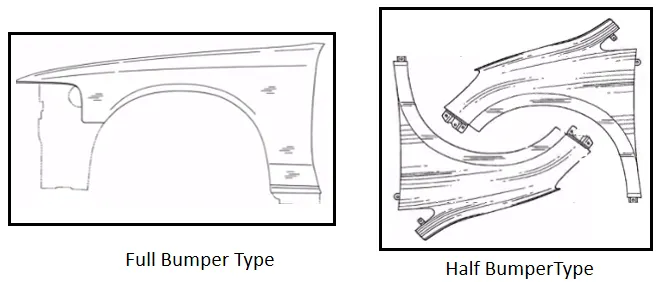
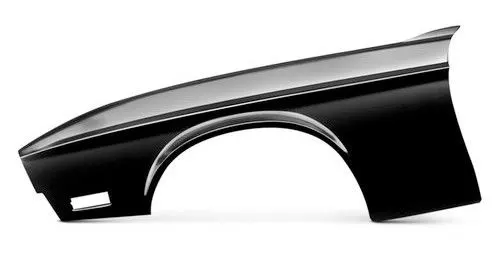
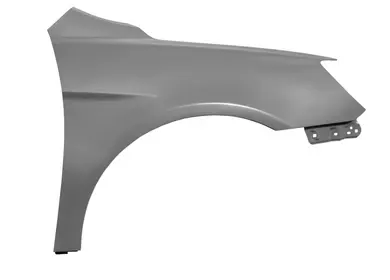
Full Bumper Type: This type of bumper is not commonly used because this design is more scrap-producing during manufacturing. The blank of steel or aluminum used to produce this type has more wastages. This type is not economically good to manufacture.
Half Bumper type: Half Bumper Type is most commonly used and in this, we reduce the usage of the steel material and use lots of plastic on the bumper which in term decreases the weight of the car, also increases the performance.
FRONT FENDER DESIGN: Given master section to create the Drip Area, Sill mount, Bumper Mount, A-Pillar mount, and Baffle Mounting.
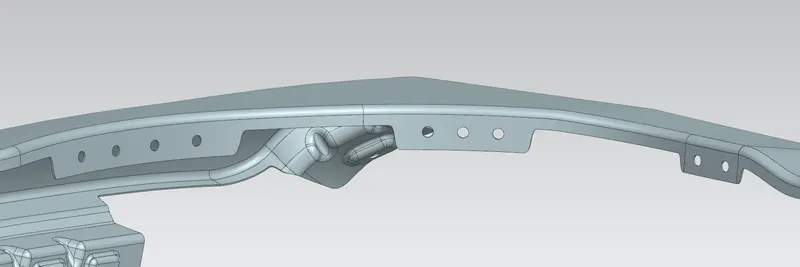
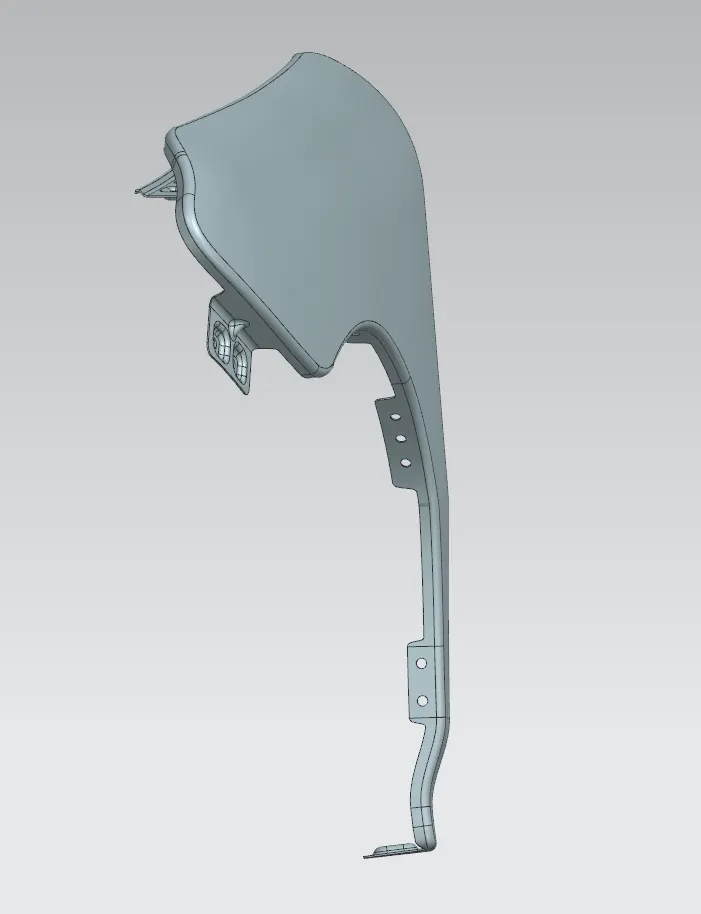
Mounting Regions on the Fender: There are 5 mounting regions on the fender:
- A- pillar mounting
- Body mounting
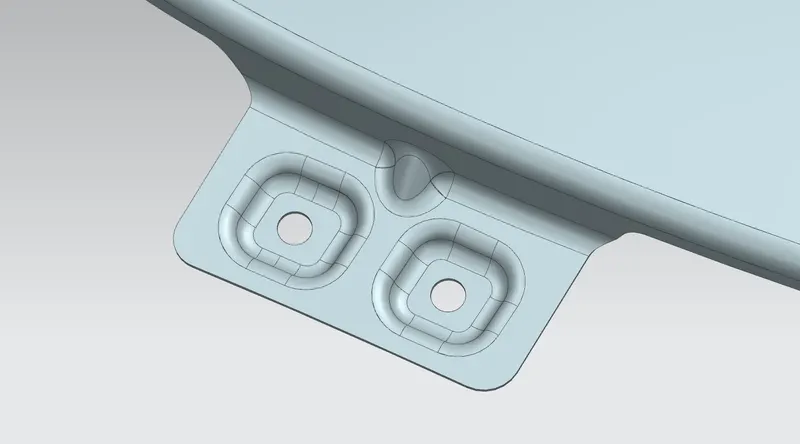
- Sill mounting
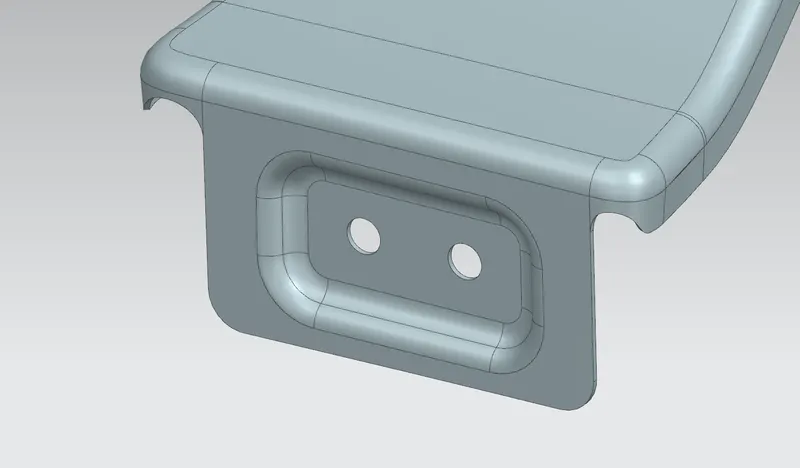
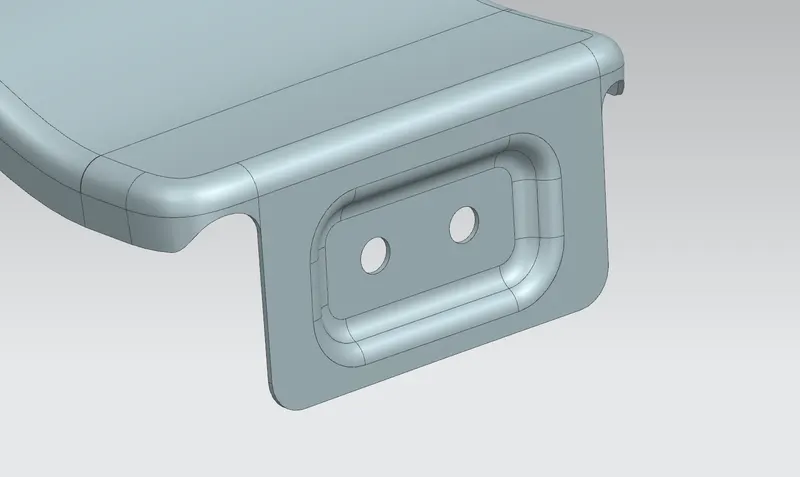
- Bumper mounting
- Drip mounting
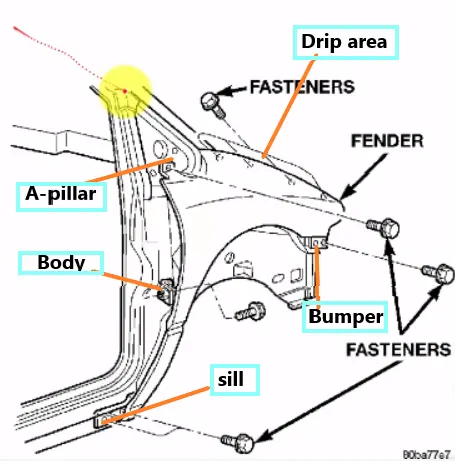
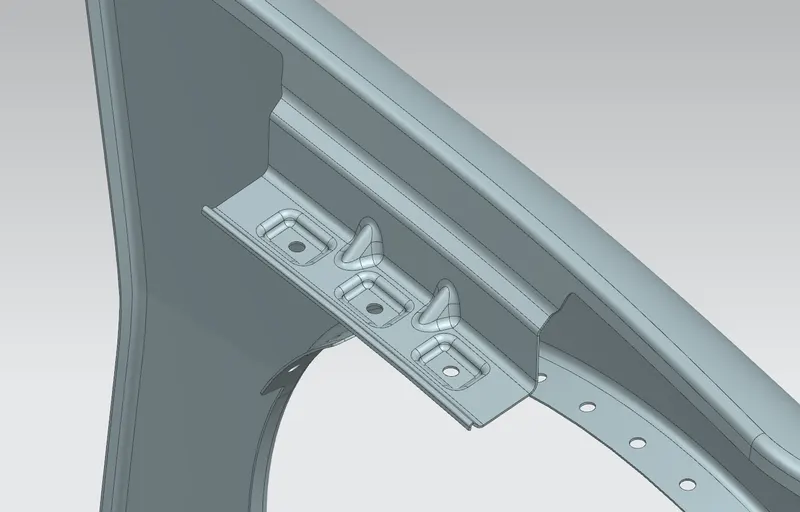
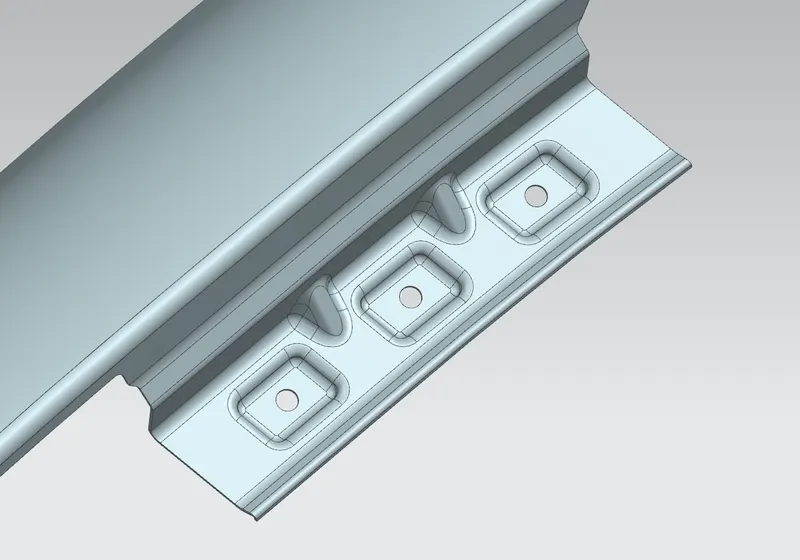
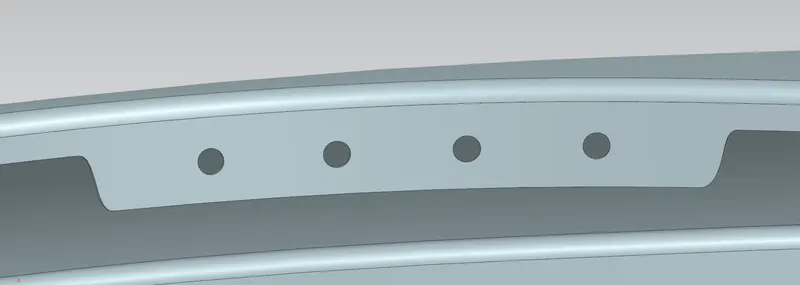
- Drip Area: Drip area mounting is an important part of the fender. this mounting is attached to the engine compartment of the car. fender drip area is mounted via weld nuts to the engine compartment. A min of 150mm distance is kept from the front side and a distance of 300mm or less can be kept on the rear side. the total length of drip area from the top of the fender should be less than 40mm, this is to avoid the spring back during the manufacturing. the edge of the mounting should be at least 10mm away from any nearby component in the engine. A rigidity bead is provided at the end to increase the strength of the mounting.
- A-Pillar Area: The A-pillar area mounting depends upon the A-pillar of the car. the mounting can also be provided with ribs to strengthen the part. this mounting is critical in design as it has to be mounted on A-pillar properly.
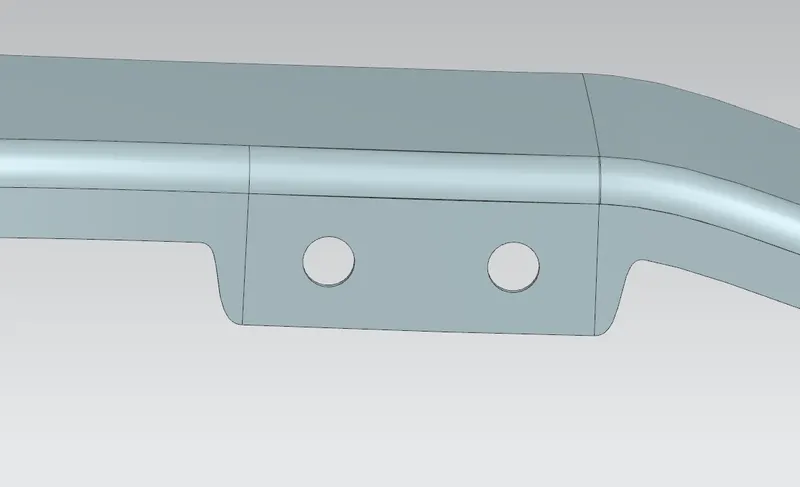
- Body Side Area: Another mounting point is created for the body side on the fender. this mounting is created such that it can be mounted on the body of the car. it may consist of one or two bolting holes.
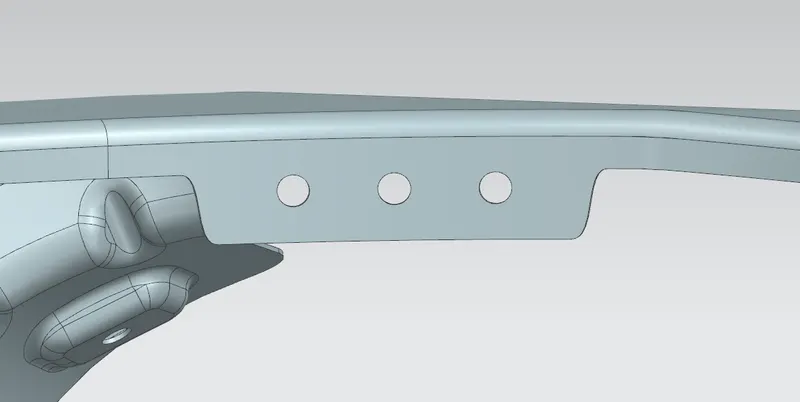
- Sill Area: Sill area mounting is also an important mounting part .this mounting point is basically on the bottom of the fender. the mounting part should be created such that the fender is firmly attached to the sill.
- Cowl Area: Sometimes fender is also provided with the cowl area mounting. this mounting is on the top side of the fender.
Design Criteria:
- Embosses are provided to increase strength.
- Smooth curves are designed for easy manufacturing of panels.
- Ribs are provided to drip area mount to give structural support and extra strength.
- Maintain an extra 10mm from the flat surface for the fastener holes.
- All fillets should maintain a 2 or 3mm radius in most regions.
- The thickness of the fender is 0.75mm.
- 150mm distance from the front end is kept for the headlamps in the bumper.
- 200mm distance from the rear end is kept for the wiper motor assembly.
- The engine compartment should not be visible from the outside. For this purpose initially, 3 degrees of angle & 9mm length is given.
- 40 to 60mm depth is given. If the depth increase from 60mm the spring back effect will also increase.
- Embosses are given to the drip area to increase the strength.
DRIP AREA:
A-PILLAR MOUNTING:
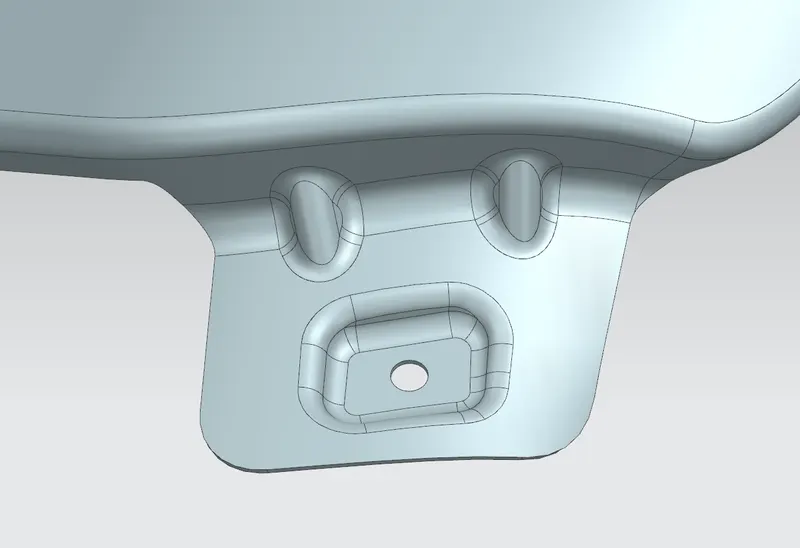
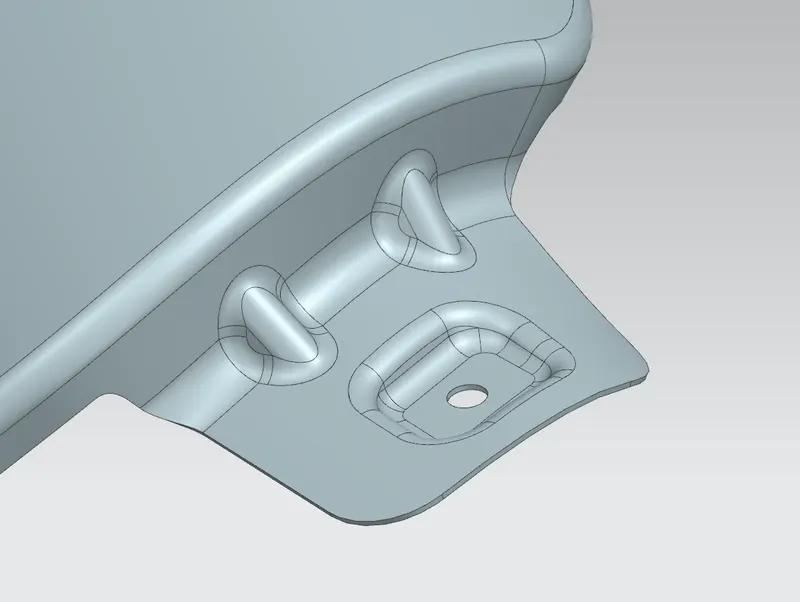
BUMPER MOUNTING:
SILL MOUNTING:
BAFFLE MOUNTING:
FRONT VIEW:
TOP VIEW:
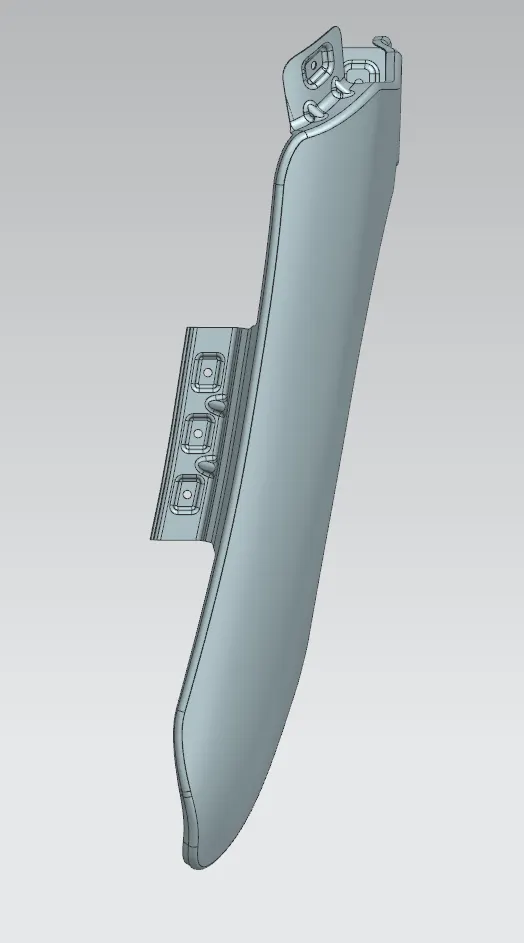
SIDE VIEW:
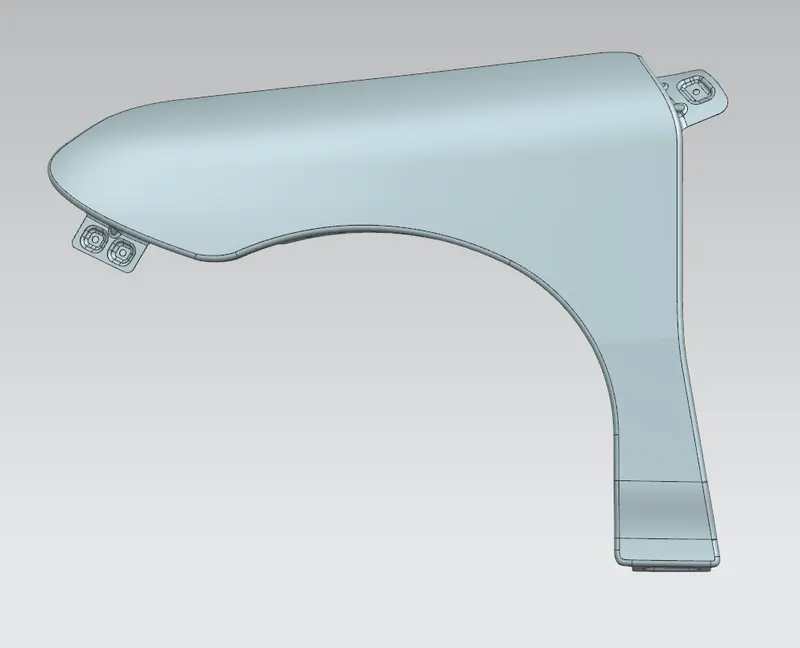
ISOMETRIC VIEW:
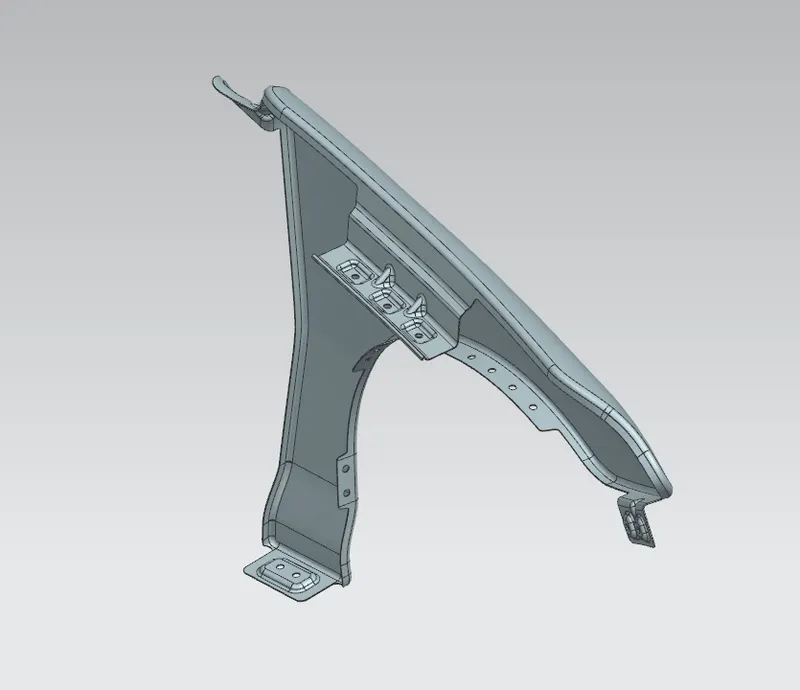
CONCLUSION: The fender is designed with the necessary mounting points considering the design parameters.