Fender Design Challenge
DESIGN OF CAR FRONT FENDER
OBJECTIVE: The aim of this project is to design the front fender of a car by taking into account all the design considerations required in the design of front fender.
SOFTWARE USE: NX-CAD
INTRODUCTION
FENDER:
A fender is the part of an automobile which may be a car, motorcycle or any other vehicle body which frames the wheel well (underside fender). The primary purpose of this part is to prevent mud, rock, sand, or other road sprays from being thrown into the air by the rotating tire. Fenders are typically rigid and can be damaged by contact with the road surface.
Sticky material, such as mud, may adhere to the smooth outer tire surface, while smooth loose objects, such as stones, can become temporarily embedded in the tread grooves as the tire rolls over the ground. This material can be ejected from the surface of the tire at high velocity as the tire impacts Kinetic energy to the attached objects. For a vehicle moving forward, the top of the tire is rotating upward and forward and can throw objects into the air at other vehicles or pedestrian in front of the vehicle. This may cause injury to the pedestrians and also damage other vehicles which are nearby to avoid this fender is provided on the top of the wheel which covers the wheel well and avoids all the road stuff to be thrown into the air.
In the case of a car, fender is located on the front side and rear side of the vehicle, that’s why the fender is named as front fender and rear fenders as shown below.
Type of fender:
The fenders can be classified into two types
- Full bumper type
- Half bumper types
FULL BUMPER TYPE
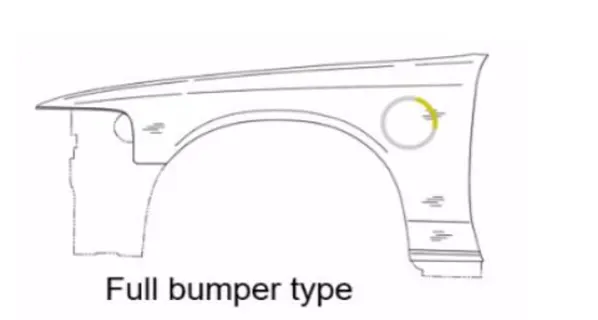
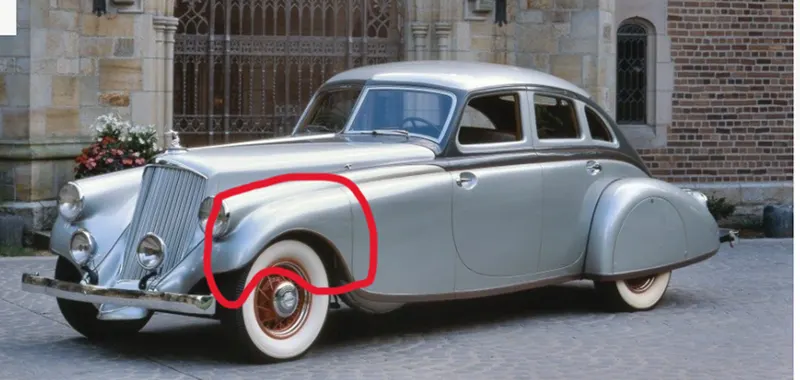
This type of car fender was utilizing for old cars which were having a long bonnet size and to match up with this a full bumper fender was used, these fenders cover large portion of the wheel and there by not allowing the road spray to get off the road surface, but the disadvantage of this was the weight of the fender and also the material consumed to prepare it. But as we move on future and with advancement in the automobile industry, we have come with another type of car fenders and full bumper type fenders have become absolute.
HALF BUMPER TYPE
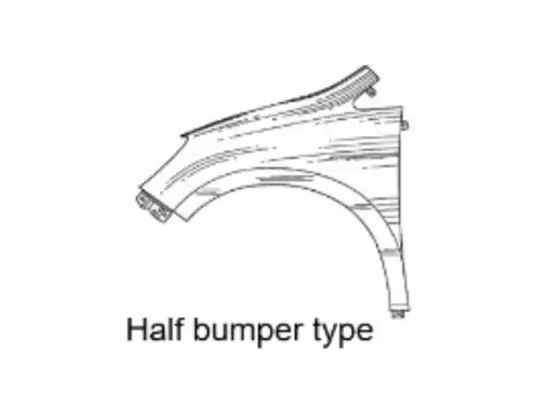

This type of fender is now tremendously used in all the modern cars as this fender consumed half the material than that required in full bumper type i.e. we can produce two fenders in the same material which reduces the weight of the fender and also the cost required to manufacture it.
MATERIAL USED FOR THE FENDER:
There are different types of material available in the market which can be used to manufacture the fender such as steel, aluminium, thermoplastic olefin elastomers, etc. but the use of material depends upon the type of vehicle its purpose and the cost of the vehicle all these factors decide the material as in the case of a sports car the fender may be manufacture from aluminium or carbon fiber to reduce the weight and also to provide strength to the vehicle.
DESIGN CONSIDERATIONS FOR FENDER
While designing a fender several design parameters are to consider such as how to decide the portion required for drip area, sill mounting, bumper mounting, A- pillar mounting. How much thickness should be given to it the angle considerations in the design of drip area and minimum radius for fender, etc.
TYPES OF MOUNTING PROVIDED ON FENDER:
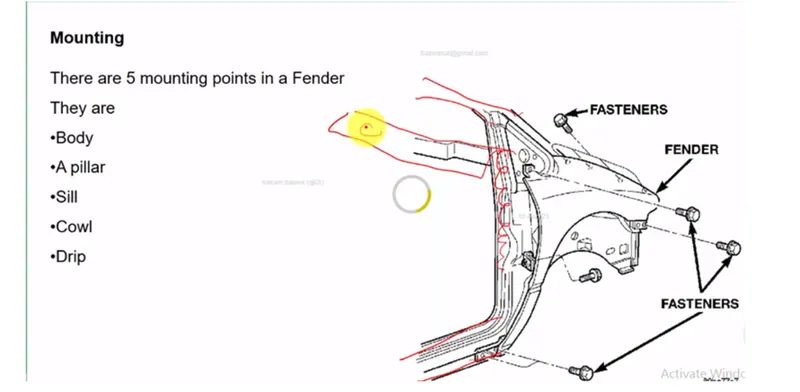
A fender consists of five types of mountings to be provided on the fender to get it fixed properly on the car frame so, as to avoid NVH i.e., noise, vibrations and harness.
- Drip area mounting
- Bumper mounting
- Sill mounting
- A-pillar mounting
- Splash & baffle mounting
DRIP AREA MOUNTINGS
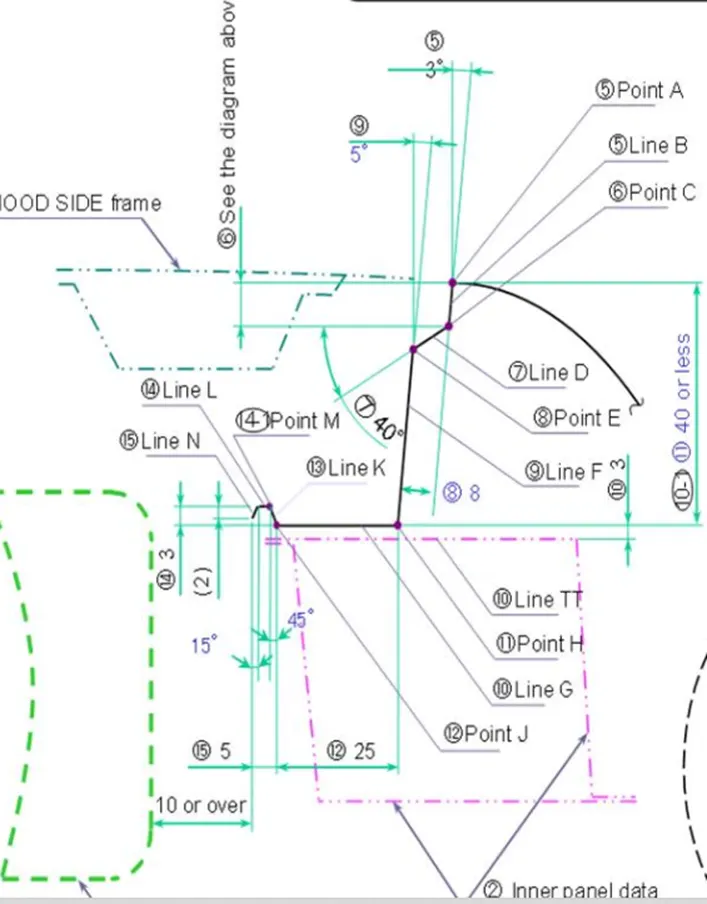
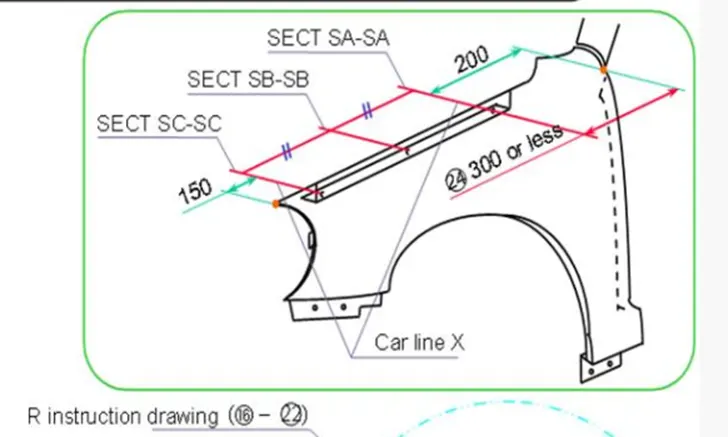
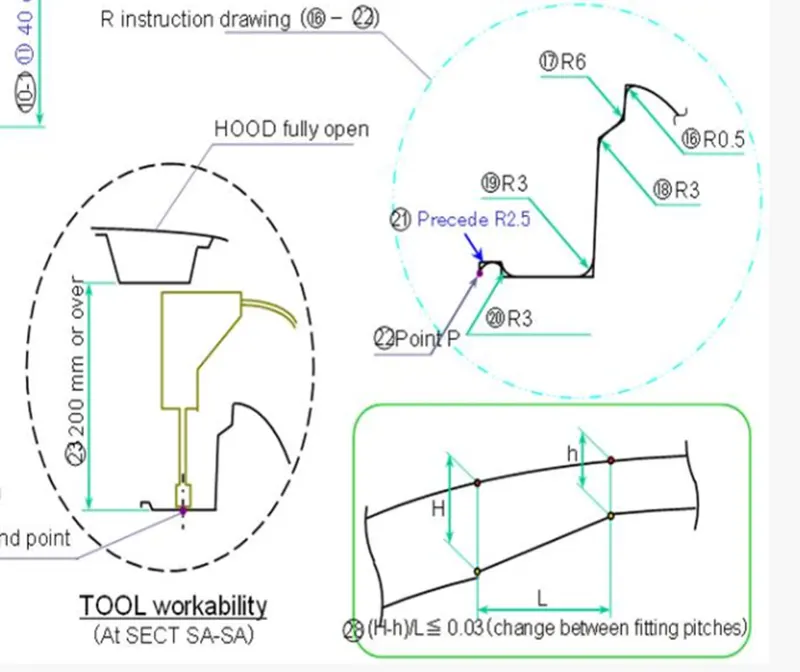
This is the main portion of the fender which provides the stability to it while designing the fender, position of this area is to be calculated from the master section. 200mm space for cowl mounting & wiper motor mounting is needed so, that much portion should be left while designing fender future more 150mm for headlamps unit is to be taken into account. The maximum depth of drip area should not exceed 40mm, if done so then the spring back effect gets introduction in drip area mounting. Proper holes are to be created in the drip area for fixing it firmly with the frame of the vehicle.
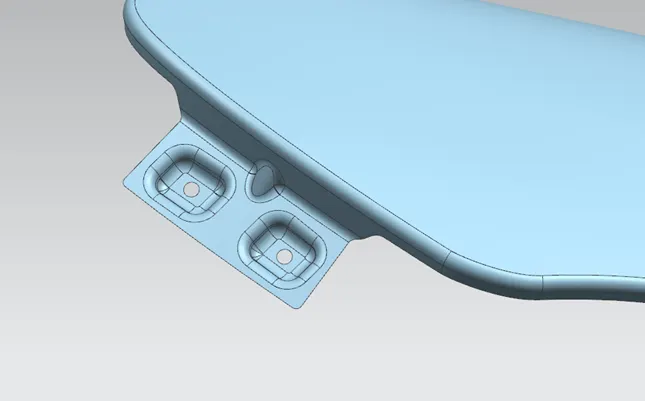
Bumper mounting:
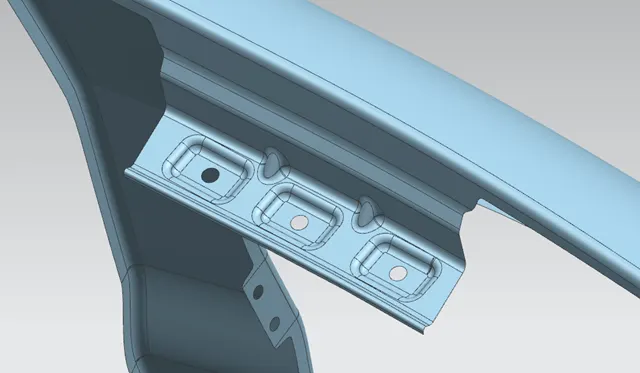
This portion of the fender gets in contact with the front bumper of the car proper should be given to mounting so, that it gets easily accommodated with the bumper housing. As shown in the below figure holes are provided for the fastening purpose.
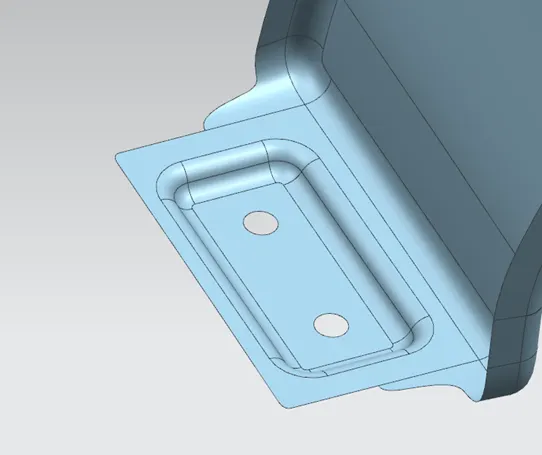
STILL MOUNTING:
This portion is located at the lower end of the fender which gets in contact with the frame of the can it provides proper sealing to the fender locks the degree of freedom of the fender there by reducing NVH.
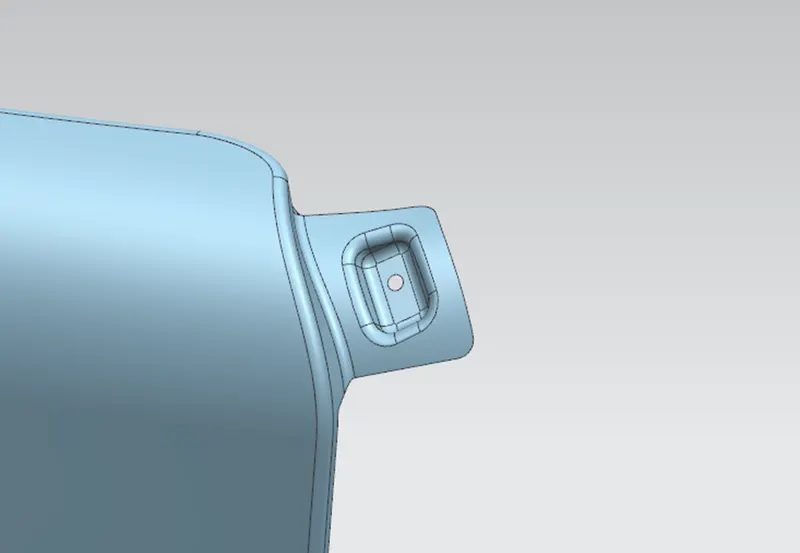
PILLER MOUNTING:
The body of an automobile is made of a structure that is just the same as that of a house. It has similar components, which include the roof, the pillars and the floor. The car pillar in the vehicle stands in the near-vertical position, which supports the vehicle’s roof. However, the A-pillar and the D pillar stand inclined some vehicles for aerodynamic reason.
A proper mounting on the fender should be provided to get in contact with the A-pillar of the vehicle body, to provide strength to the vehicle in case of frontal crash.
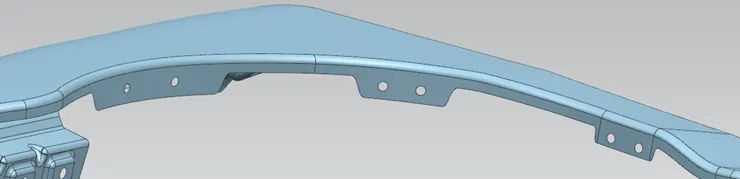
Splash & baffle mounting:
These mountings are provided on the wheel arc are of the fender on which the splash & baffles are provided this prevents the road spray to be accumulated on the lower car frame mostly baffles made up of plastic are mounted on the fender as they are light in weight and also cost of for manufacturing is low. But high-class vehicle is made up of other materials like alloy steel, aluminium.
VIEWS
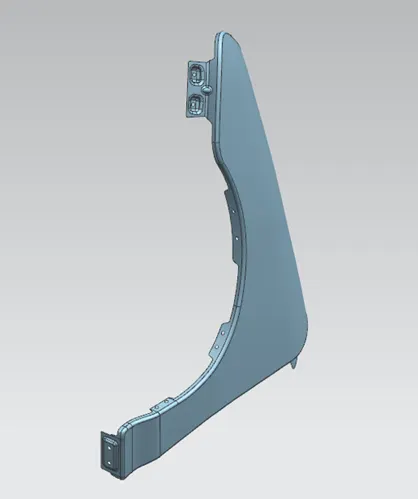
- ISO VIEW
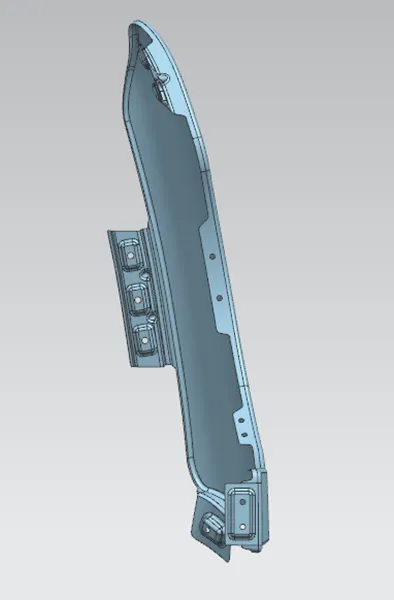
- FRONT VIEW
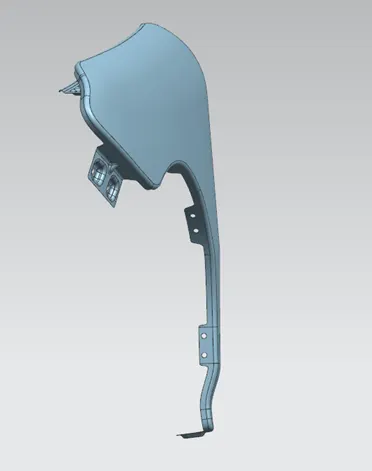
- TOP VIEW
CONCLUSION
Hence, we completed our front fender by designing all the mounting of the front fender by using skin data provided a per the master section of fender and learned about the various design consideration which are to keep in mind while designing the fender and the importance of each mounting provided on fender.