Fender Design Challenge
Aim:
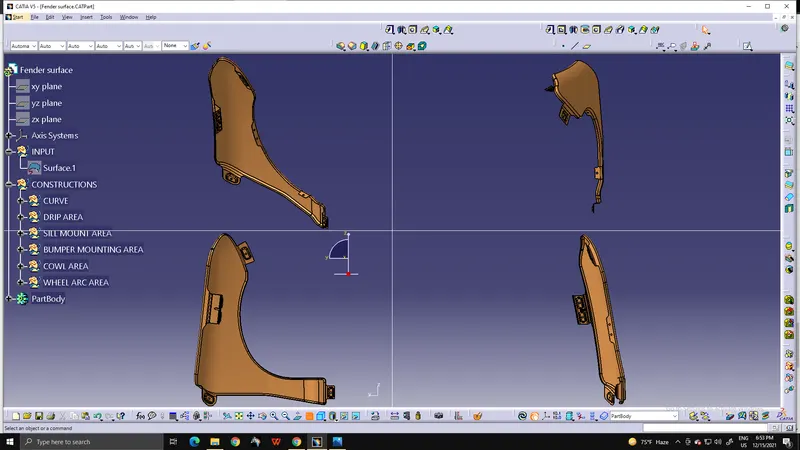
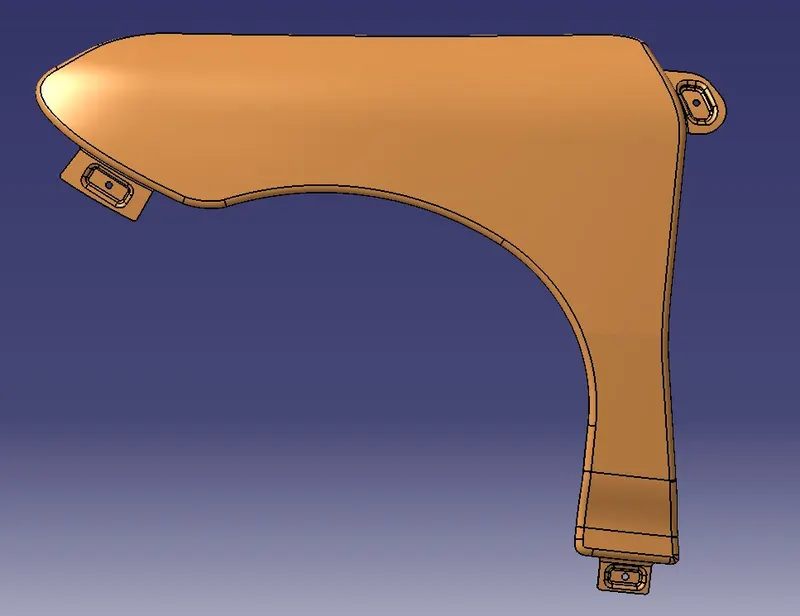
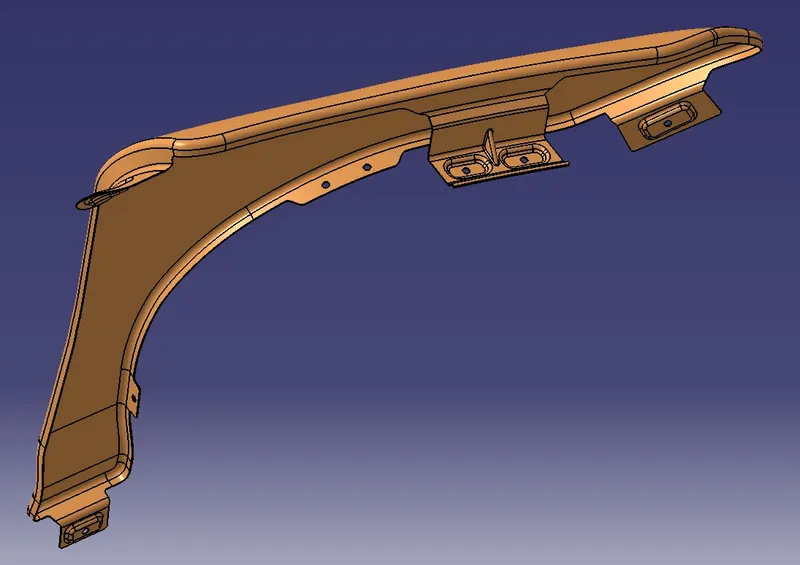
To design a front fender from the given skin data and the master section provided with Drip mounting, A-pillar, Sill, Bumper, and Cowl mountings.
What is Fender?
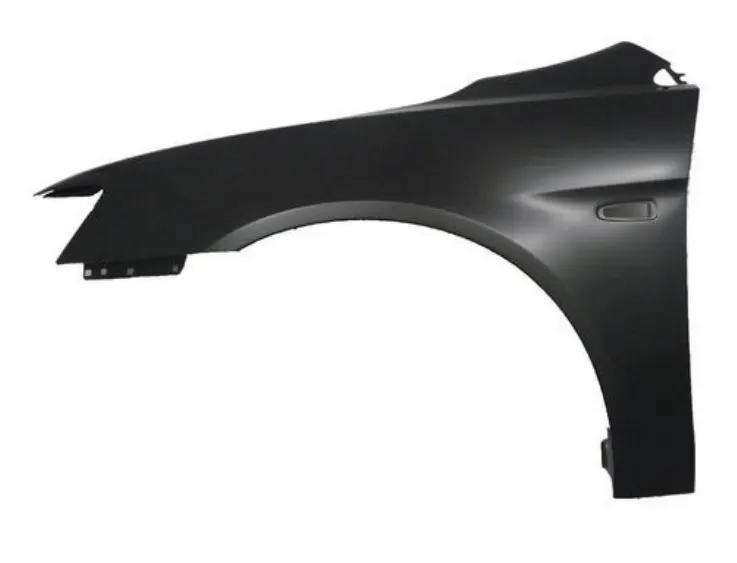
A fender is a part of the automobile that is placed just above the tires/wheels (both at the front & back). The purpose of the fender in an automobile is to prevent sand, mud, rocks, liquids, and other roads spray from being thrown into the air by the rotating tire.
Below is an example image of the front fender of a car:
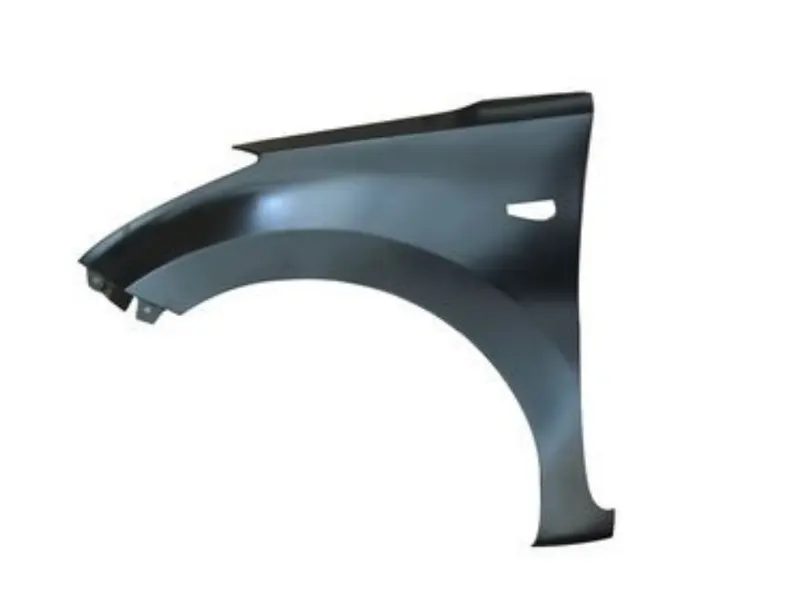

"Fender" is an American English term whereas in Britain & India it is called Wing & Mudguard respectively. The fender's openings for the wheel wells tend to be much larger than the diameter of the tire because they do not move with the tire suspension and consequently must be large enough to allow the full range of tire motion on the suspension without touching the interior of the wheel well.
Types of Fender:
There are different fender styles. While appearance may be one of the first things on a person mind when choosing a fender style, but one should also be thinking about the amount of coverage that will need to cover enough to stop water spray, rocks, and other debris from hitting your truck, trailer, and other vehicles on the road.
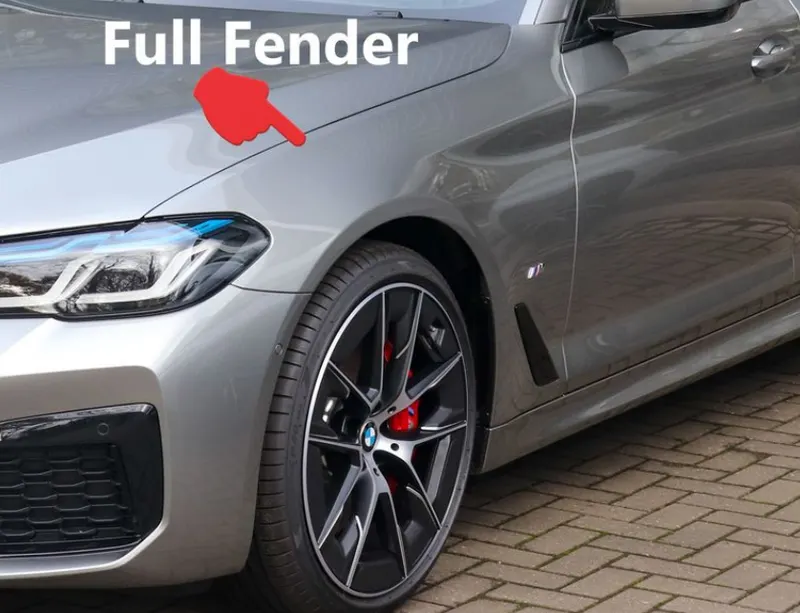
Full Fender:
A full fender means they will be covering more area of the wheel in comparison to the half fender and it also extends towards the ground a lot more. The main advantage is increased coverage, less water on you, and importantly less water on your feet, meaning less road dirt and stuff stays drier longer. Since they cover more it also has the benefit of shielding your bike a bit more from that gritty wearing road dirt so your bike components will also benefit. But due to its bulky shape, the full fender increases the weight of the component which in turn increases the overall weight of the car's body.
Half Fender:
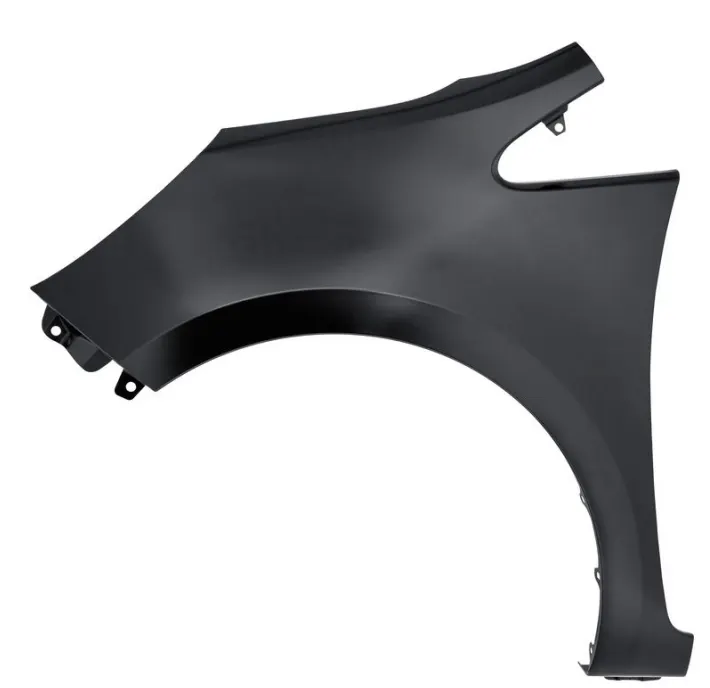
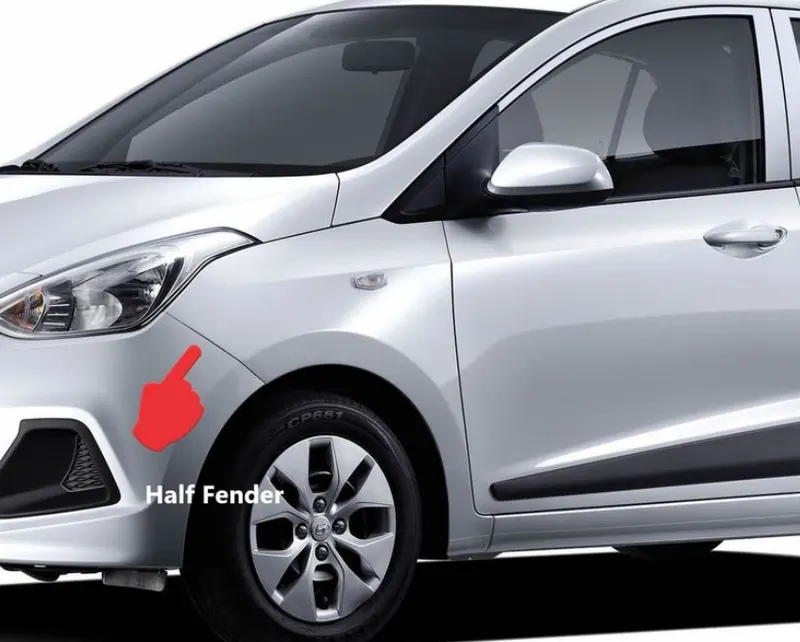
As the name itself refer, the half fender will be covering only the half portion of the wheel's area while the remaining part will be covered with the bumper part. This is done to make sure the weight of the vehicle is reduced without comprising the quality & service. Most of the modern-day vehicles come with half fender because of their rich aesthetic finish & low overall weight.
Manufacturing process:
Shearing is a metal fabricating process used to cut straight lines on the flat metal stock. During the shearing process, an upper blade and a lower blade are forced past each other with the space between them determined by a required offset. Normally, one of the blades remains stationary.
Punching is a Forming process that uses a punch presto force a tool, called a punch, through the workpiece to create a hole via Shearing. Punching is applicable to a wide variety of materials that come in sheet form, including sheet metal & vulcanized rubber, and some forms of plastic sheet. The punch often passes through the work into a die. A scrap slug from the hole is deposited into the die in the process.
Master Section-
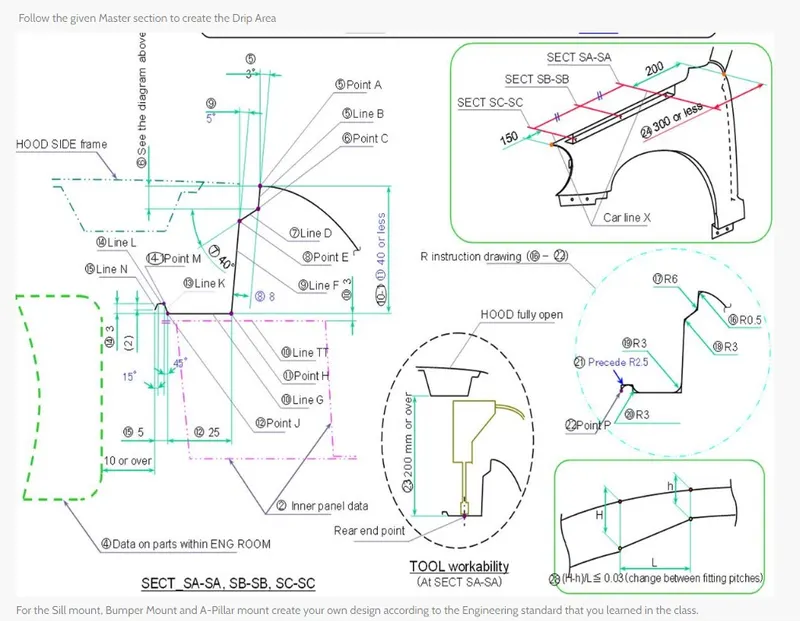
Softeware used- Catia v5
PROCEDURE:
Initially, extract the boundary of the fender.
Use a parallel curve and offset it on the surface with a distance of 5mm.
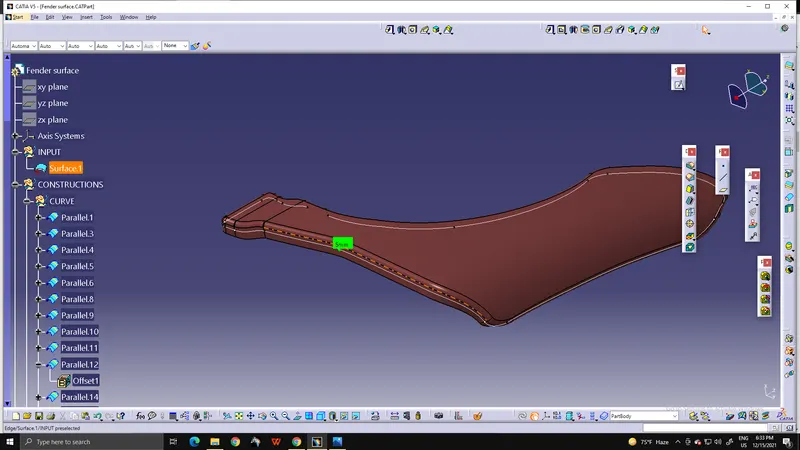
DRIP FLANG:
Create two-point on the Parallel Curve and the lower edge of the fender.
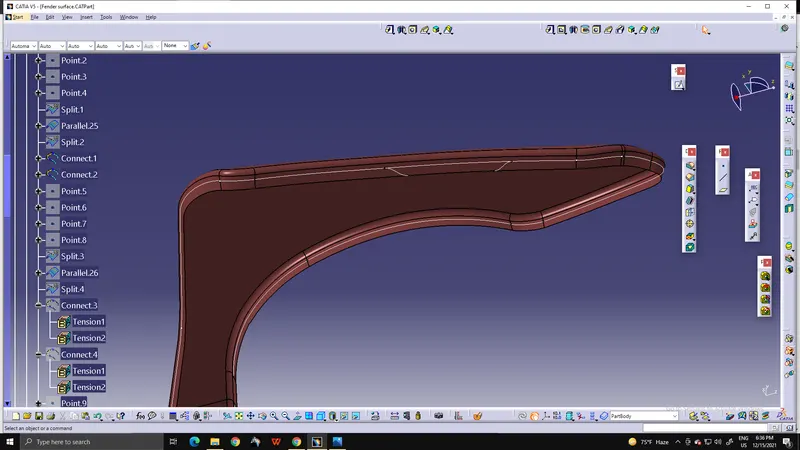
Join those points with 2 connect curves and make it a flange.
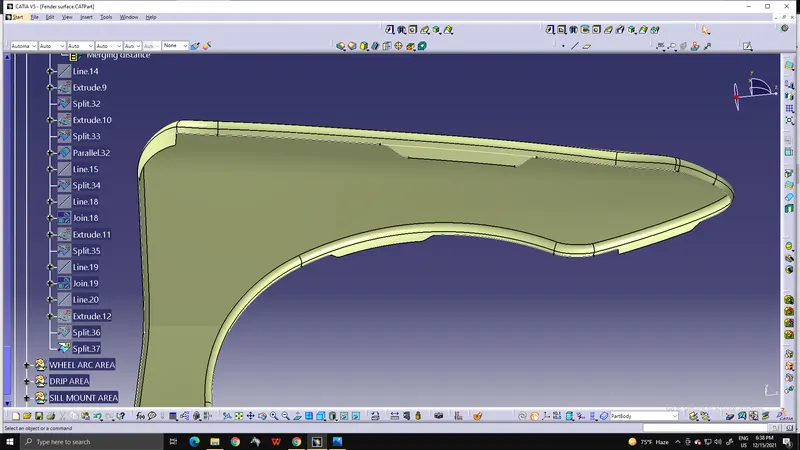
Follow the same process for all the other flanges
After the flange is created, create the drip area. Flange has already more than a 3-degree angle so here we cancel the first sweep which is given in the master section to arrest the vision inside the sheet metal.
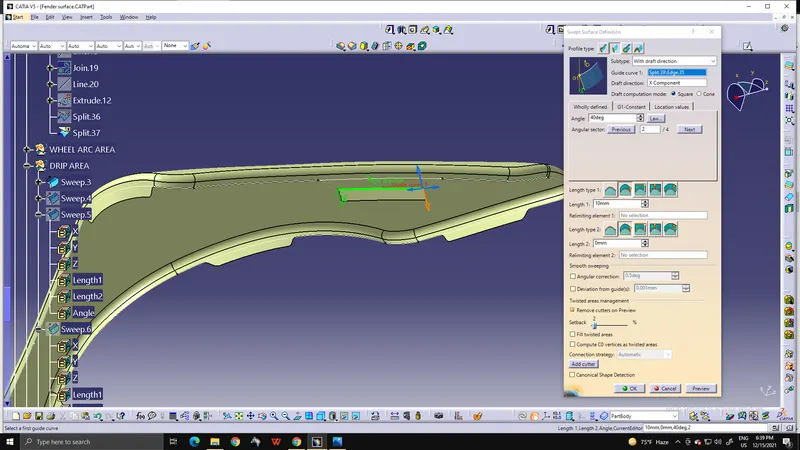
Sweep the edge to 10mm with a 40° draft
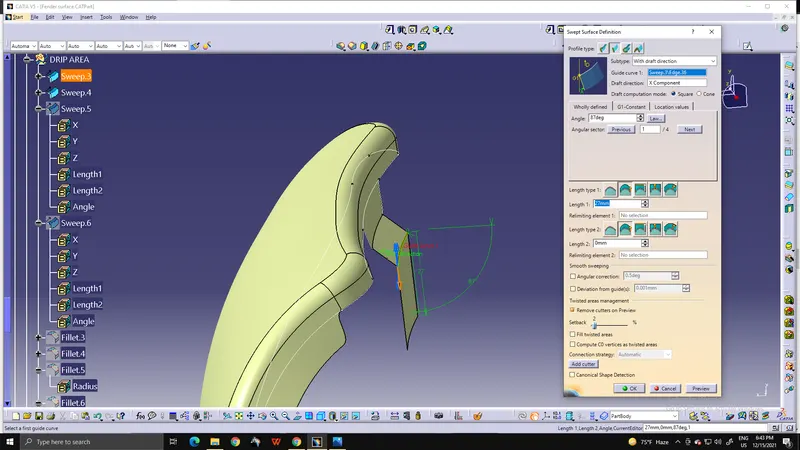
Again, sweep it 27mm with 87° draft direction along with the X component.
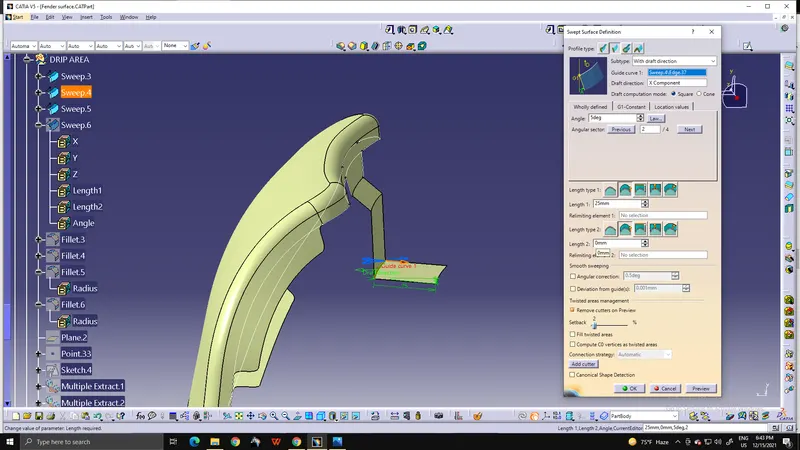
Sweep it 25mm with 5° draft direction along with the X component.
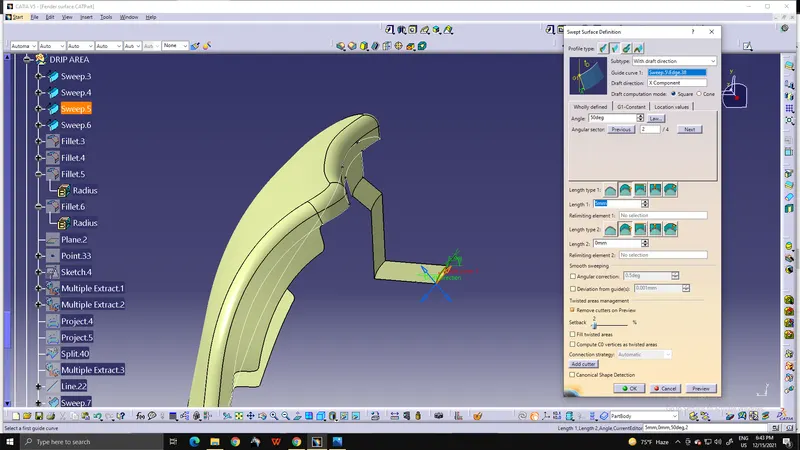
Sweep 50° with X component direction of 5mm.
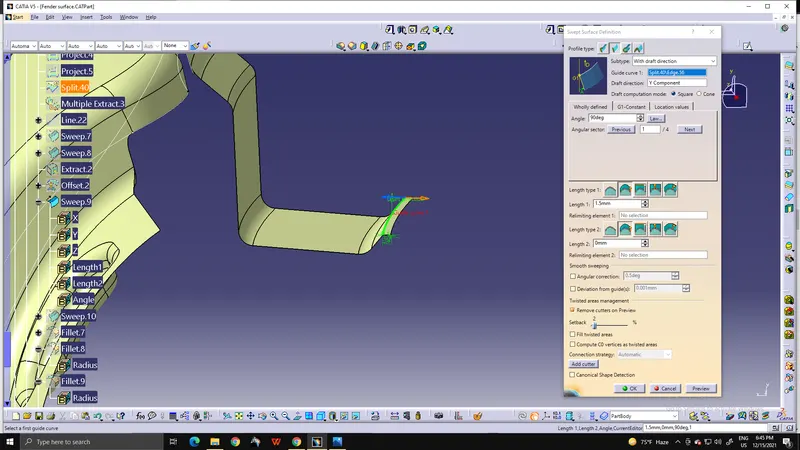
Sweep it 1.5mm with 90° draft direction along with the Y component.
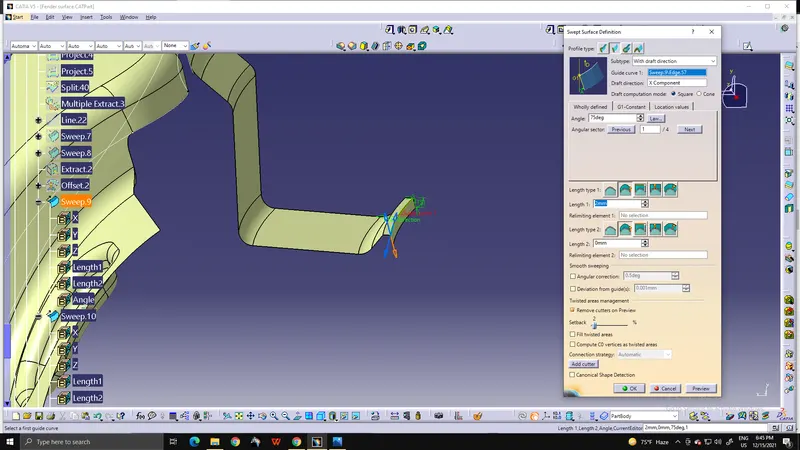
Sweep 75° with a draft direction of 2mm.
Give fillet values as shown in Master-section.
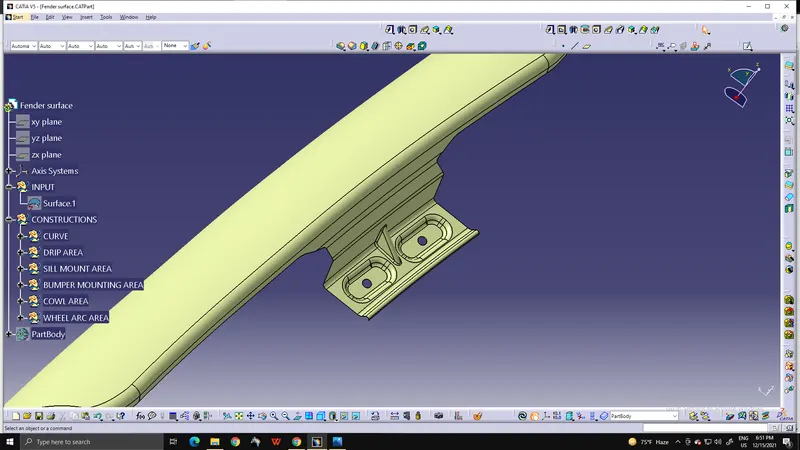
Note:
Design considerations for drip area:
- 150mm Distance from the front end is kept for the headlamps in the bumper.
- 200mm Distance from the rear end is kept for the wiper motor assembly.
- Engine components should not be visible from the outside. For this purpose, initially, 3 degrees of angle & 9mm length is given.
- 40 to 60mm depth is given, if the depth increases from 60mm the spring-back effect will also increase.
A-PILLAR FLANG:
This is the flange that joins the "A" pillar and the Fender.
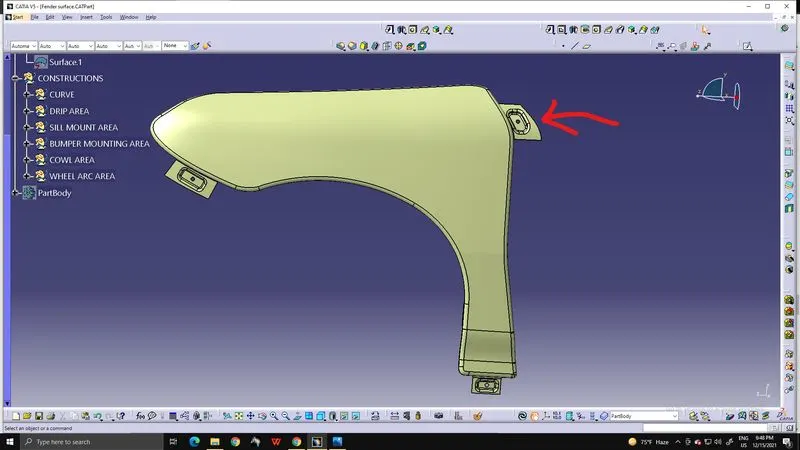
BAFFLE FLANG:
It is the flange that lies behind the wheel arch and holds the mudguard Provided for the wheel.
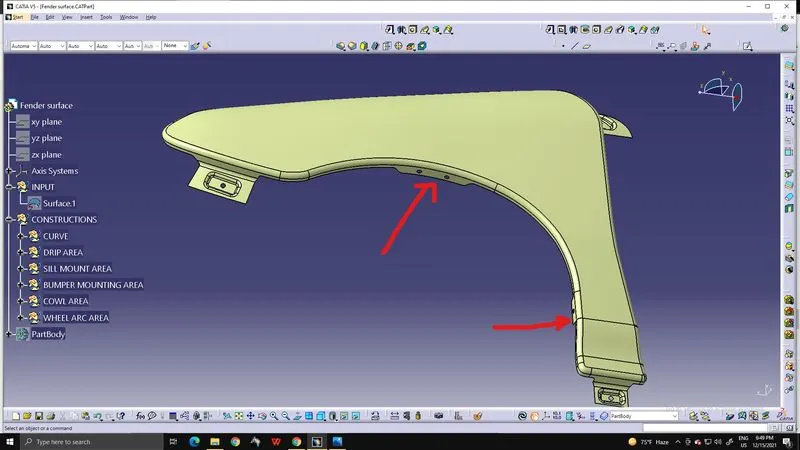
SILL FLANG:
It is the flange That fixes the fender at the sill portion and Constrains Fender.
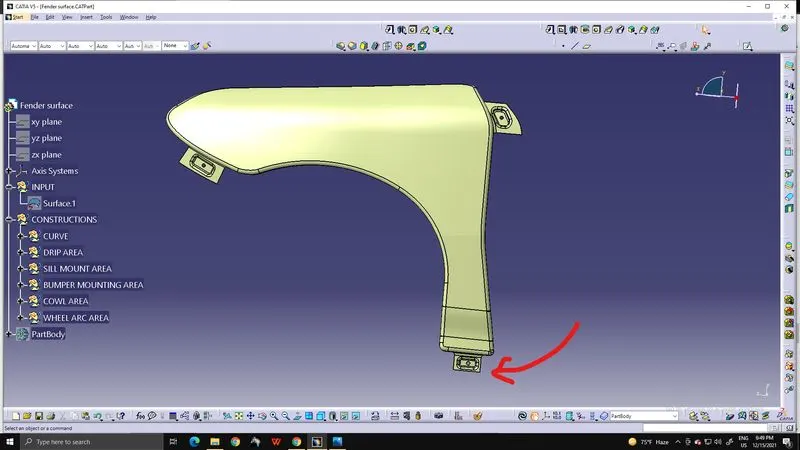
BUMPER FLANG:
This is the flange that connects the bumper to the Fender.
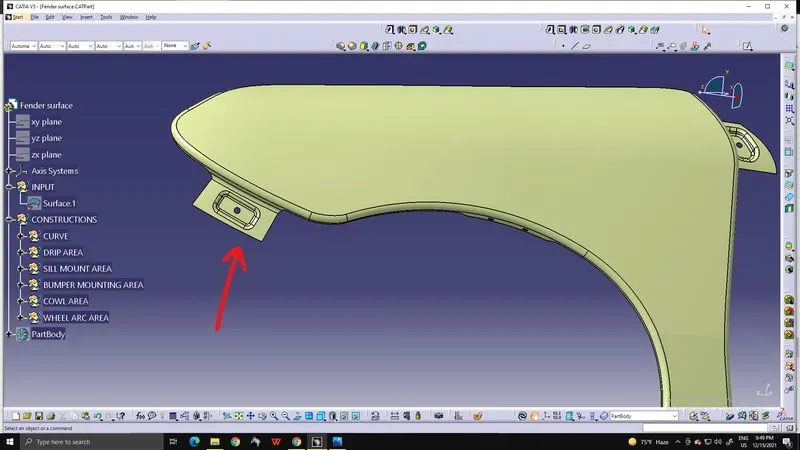
Provide Required holes on the Flanges according to the Fasteners used
Thicken:
After the flanges are created join and thicken them to 0.75mm