Fender Design Challenge
INTRODUCTION ABOUT FENDER
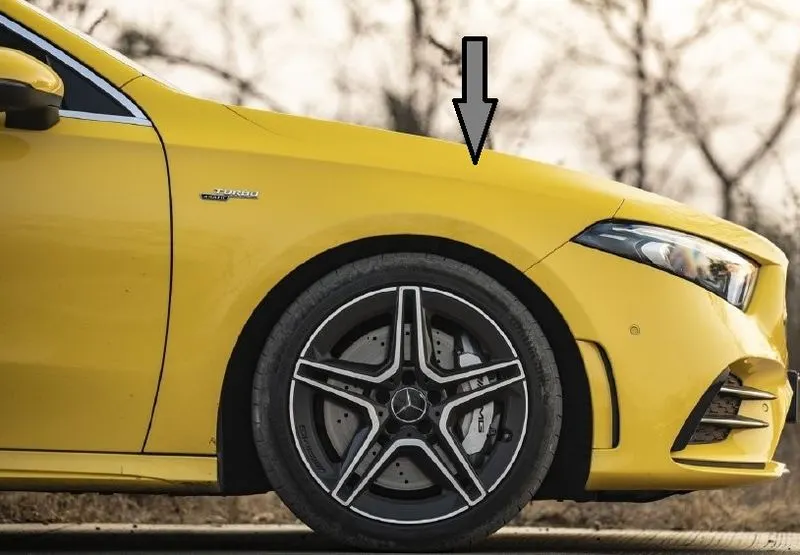
- Fenders are panels on a car that are located on the sides of the car in front of the doors. They serve a number of functions, not least of which is aesthetic. Drivers may be most familiar with the fender in the context of a “fender-bender,” a minor accident in which the fenders of a car are dented or damaged as a result of a collision. Many cars have been designed with easily replaced fenders because such collisions are quite common.
- One of the primary functions of a fender is to keep dirt, dust, and road debris away from the wheel and front braking system. Many have small flaps or wings that are designed to enhance this protective function. The fender will also help to keep debris off of the rest of the car as well, which be useful when a car throws up a rock or stick from the road.
- Depending on the design, fenders can also act to make a car more aerodynamic. Many sports cars have very sleek fenders for this reason, and they may have additional features such as grooves or grillwork which are designed to enhance the car's performance at high speed.
- The other function of fenders is of course aesthetic. Most people do not want to look at the framework of a car, and the panels cover the frame and the sides of the engine block. They can also be used to add flair and style to a car; many cars in the 1950s, for example, had bubble fenders, which stuck out prominently to create a desired look. They can have a wide variety of design features which make them more interesting or stylish to look at.
- Depending on the make of the car, fenders may be made from fiberglass, steel, or other materials. Many of these materials are designed to crumple in a crash, distributing the impact across the frame of the car to make the crash more survivable for the occupants of the vehicle. Depending on the materials used, fenders can sometimes be bent back into shape after a minor accident; in other cases, they will probably need to be replaced.
- In addition to being seen on cars, fenders can also be found on bicycles and motorcycles, along with other wheeled methods of transportation. Many companies make specialized custom fenders with designs like flames, pin-striping, and other decorative features, for people who want to replace their factory-standard panels with something a little more exciting.
TYPES OF FENDERS
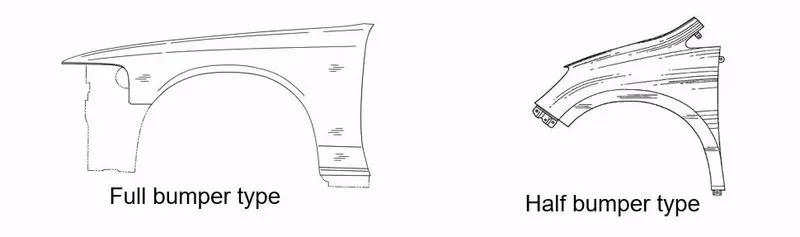
- FULL BUMPER - It has a large blank size and a lot of wastage while creating shapes etc.
- HALF BUMPER - It is used in present and future also because the blank size is less and the wastage or scrap is less comparing to full bumper type fenders.
FOLLOWING FENDER DESIGN INPUTS
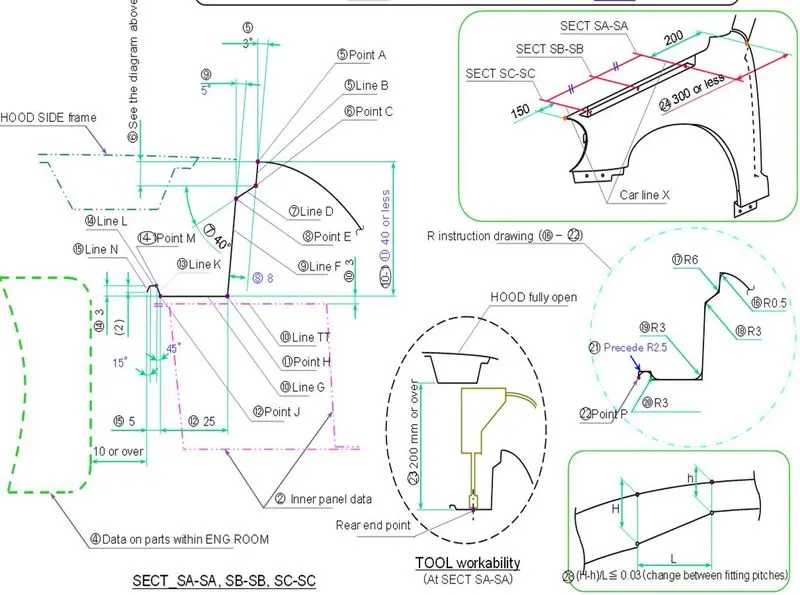
- Drip area dimensions
- Height of the fender dimensions
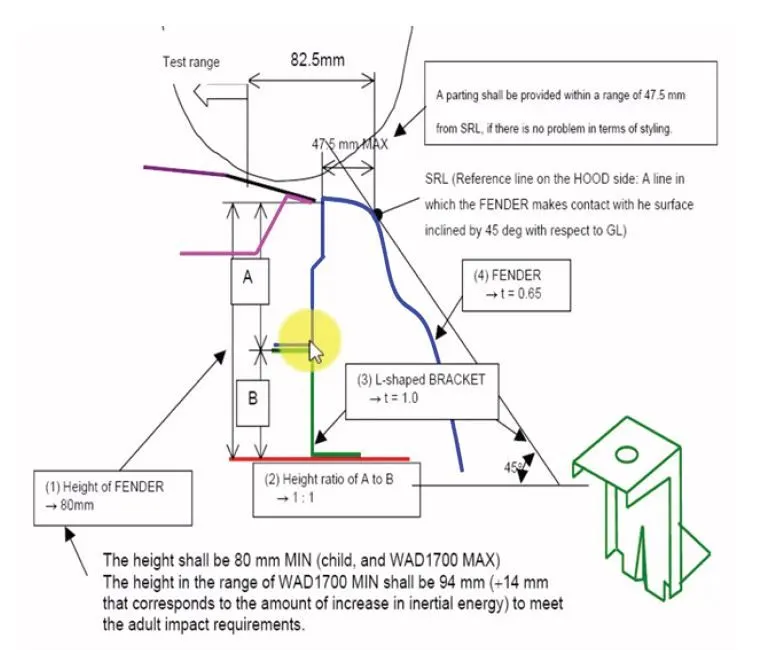
- efects due to compression stamping such as camber, etc occur. thus a touch difference is provided in flange depth when flange length exceeds 800.
- Hood Side drip depth mush be 40mm or less as maximum productivity is achieved at the depth of 40mm. if depth exceeds 40mm, rigidity bead is to be provided. also, forming is not feasible if depth exceeds 60mm due to wrinkling and spring back.
- To prevent fender fixation bolt to be seen from outside and improve appearance of parting gap between HOOD and front Fender.
- When the drip surface is stamped, 3 deg must be secured for spring back. Angle can be increased in order to make expected modification possible.
- Welding surface of drip area with bracket front fender should be flat with a clearance of 1mm front bracket front fender upper surface.
MOUNTING POINTS
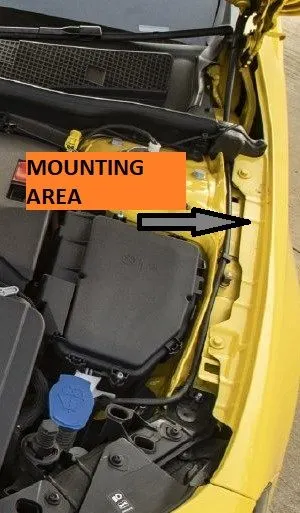
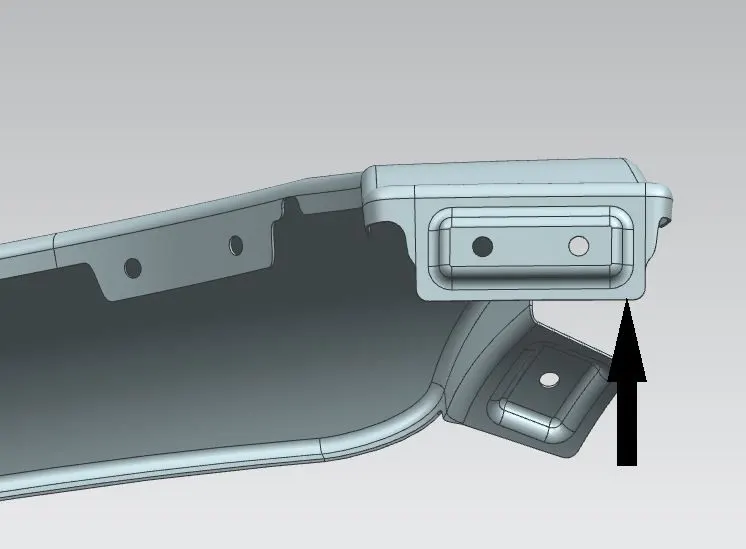
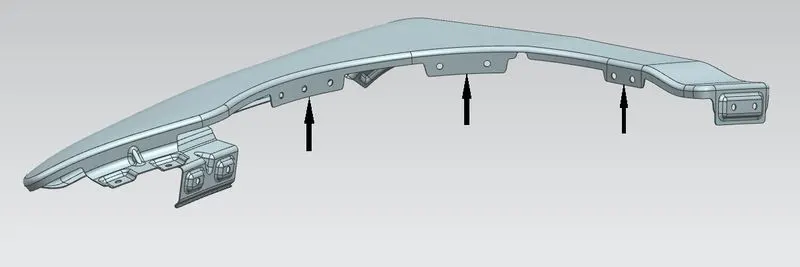
They are 5 mounting points in a front fender
- DRIP
- BUMPER
- A PILLAR
- SILL
- COWL / SPLASH & COVER
DRIP MOUNTING
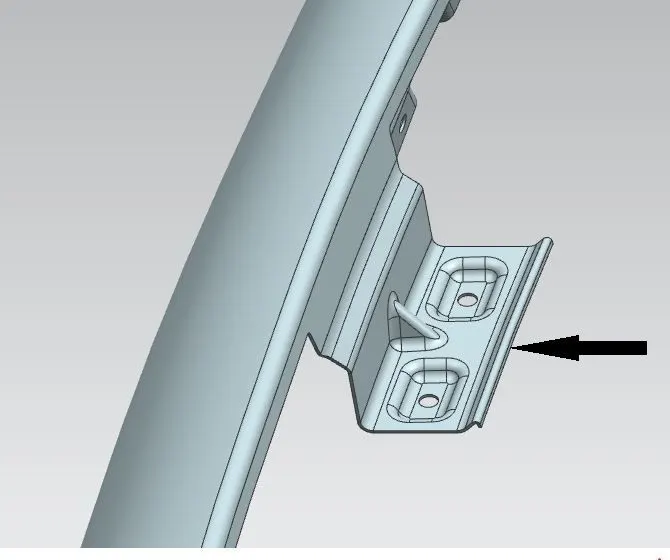
BUMPER MOUNTING
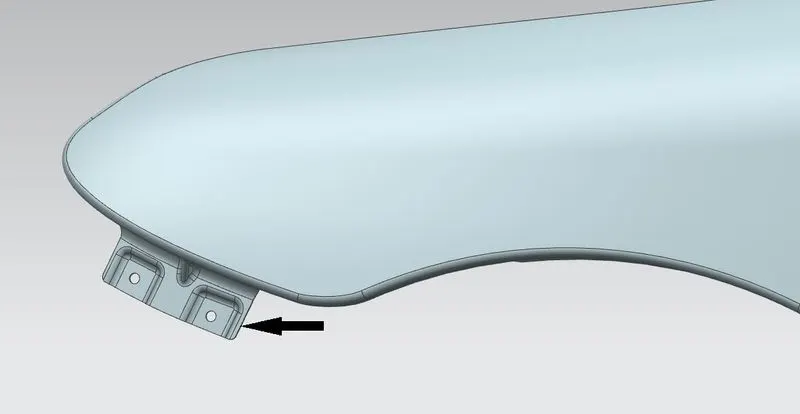
A PILLAR MOUNTING
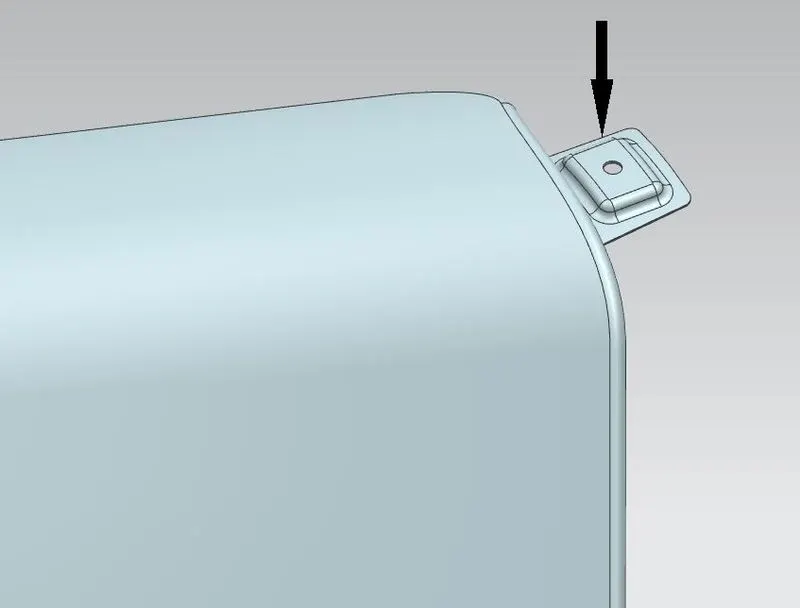
SILL MOUNTING
SPLASH AND COVER MOUNTING
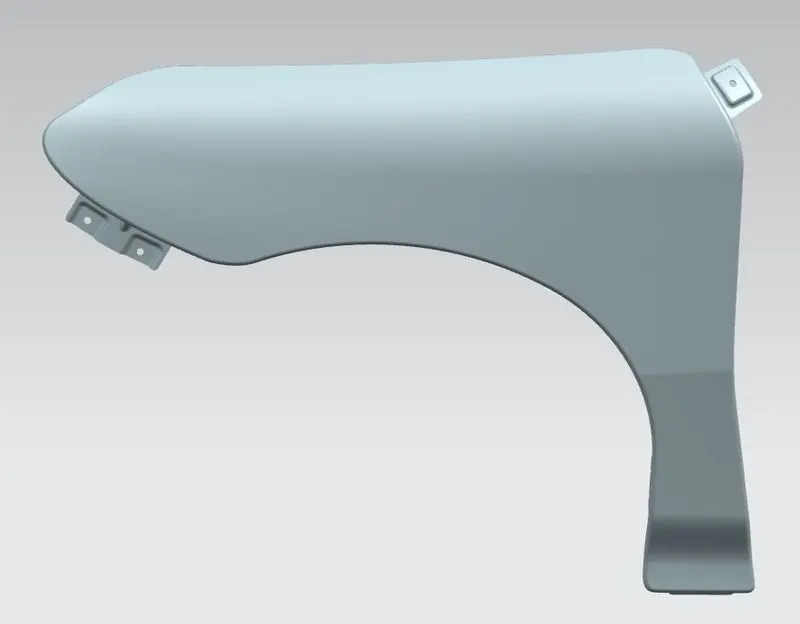
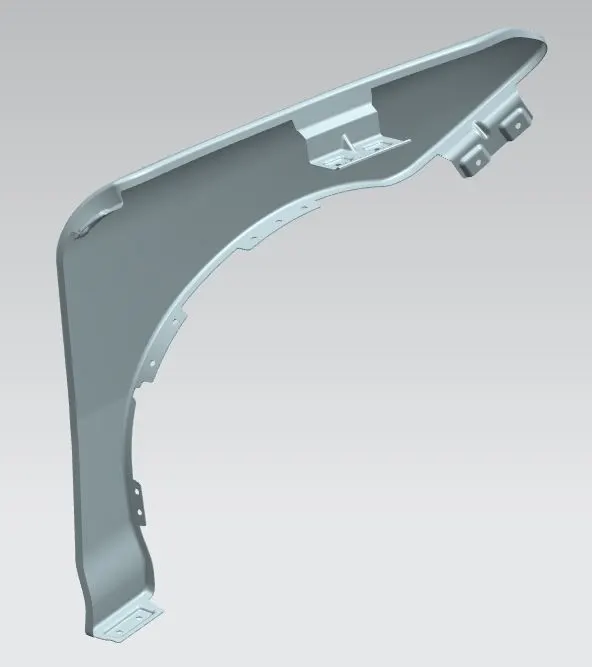
FENDER DESIGN OUTPUT
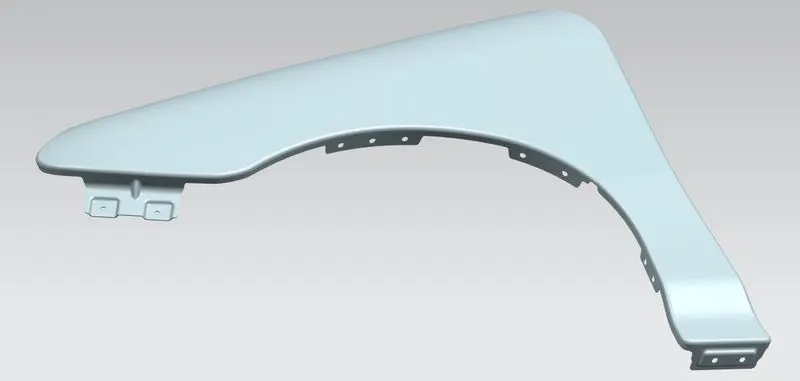
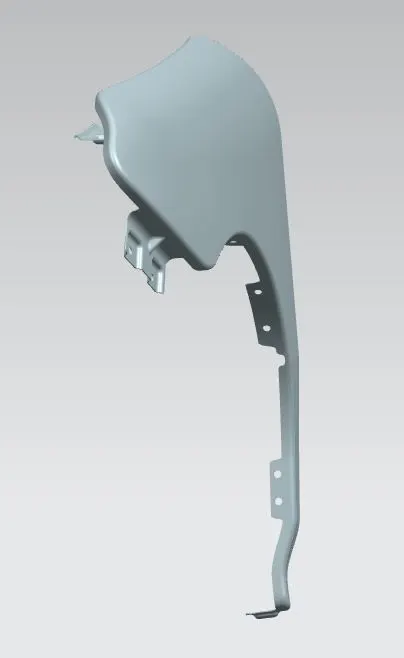
CONCLUSION
Thus, the fender design and its mounting points, manufacturing and all its design parameters.