Fender Design Challenge
Fender Design
Aim:
To design a car fender with provisions for assembling it to other components of a car from the given styling surface.
Introduction:
A fender is a sheet metal car component, assembled as a frame to the wheel. The main purpose of a fender is to avoid the chipping of sand, mud, rocks, liquid etc being thrown in the air while the wheels are rotating. A fender also protects the inner components of the car from sand and mud to avoid any kind of damages.
The given fender styling surface is shown below.
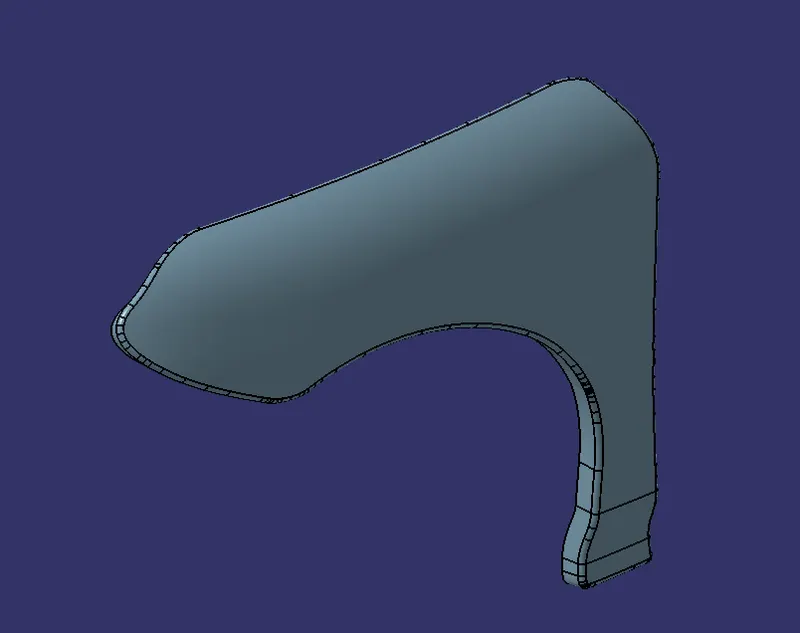
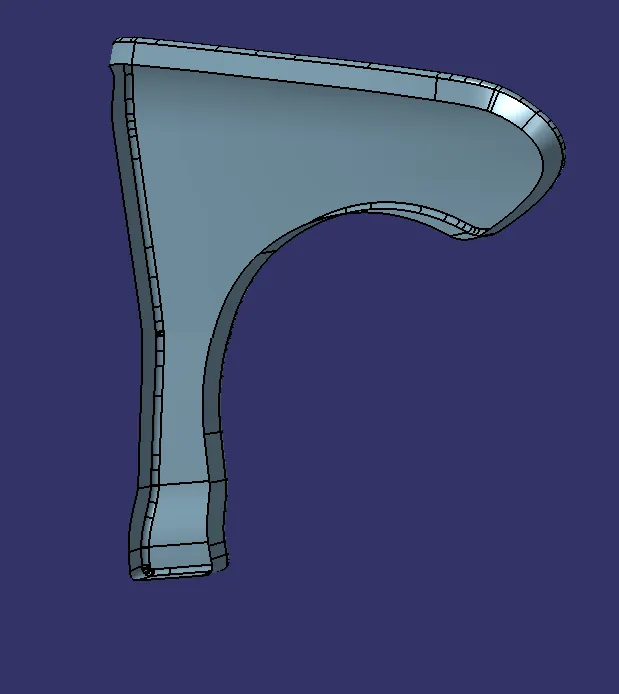
The following provisions are to be created for assembling the fender to the other components of the car.
(i) Drip Area.
(ii) Sill mount area
(iii) Body mount area.
(iv) Bumper mount area.
(v) Baffle mount area.
(i) Drip Area:
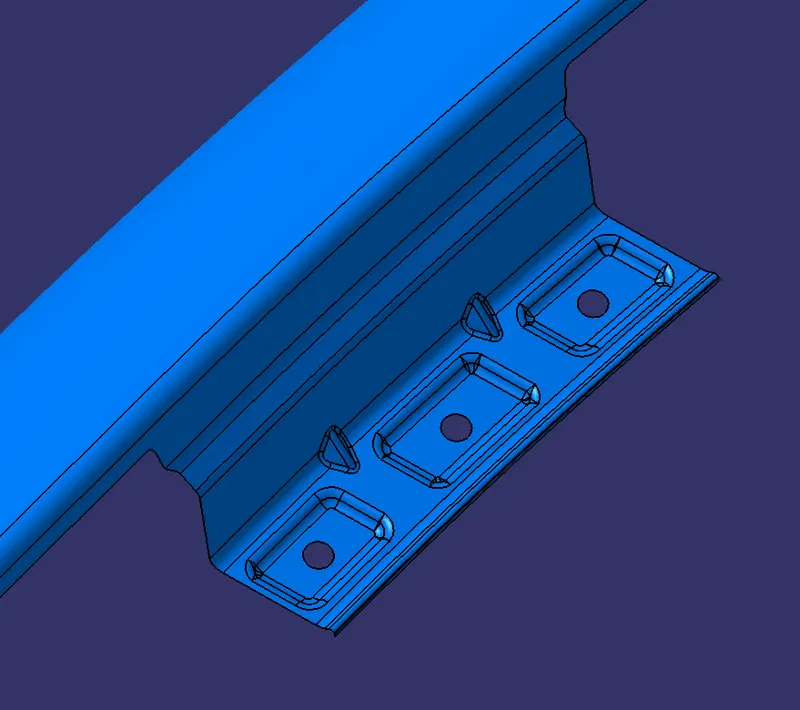
The Drip area is usually mounted to the engine block of the car. So the drip area is to be designed as per the given master sketch for the challenge, providing embossments and beads for stiffening the feature.
The Drip area feature is created as shown below.
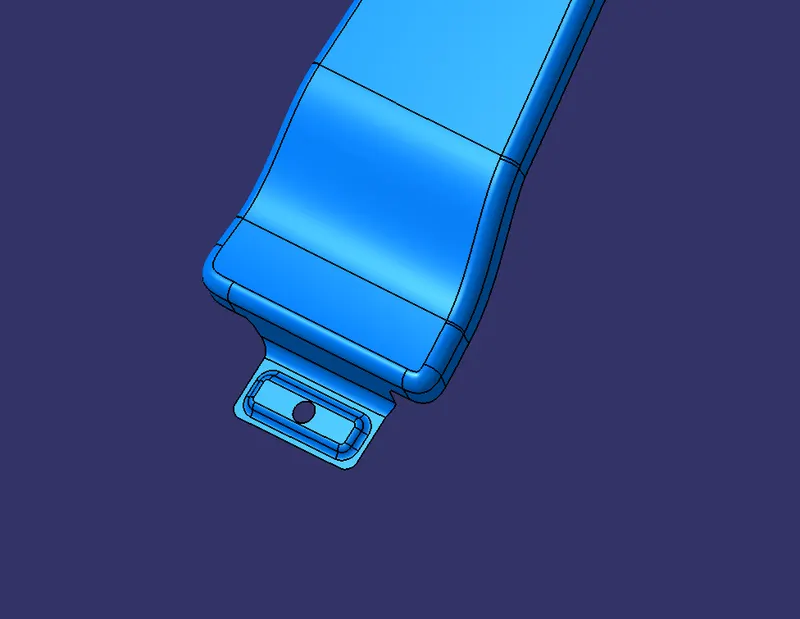
Sill Mount area:
This region is mounted at the lower rail structure near the door know as Sill. The Sill mount area is created as shown below.
Body mount area:
This area is usually mounted to the car main body near the car A-pillar region. The provision is given as shown below.
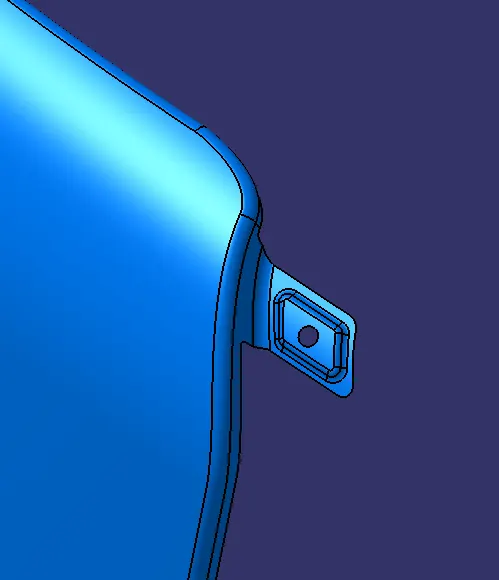
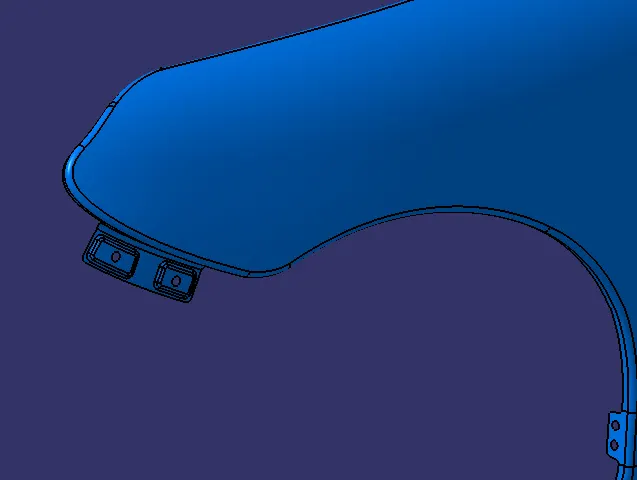
(iv) Bumper mount area:
In this region, the front bumper of the car is mounted to the fender. The given styling surface is a half fender component. Thus the assembly feature for the bumper mount is given as shown below.
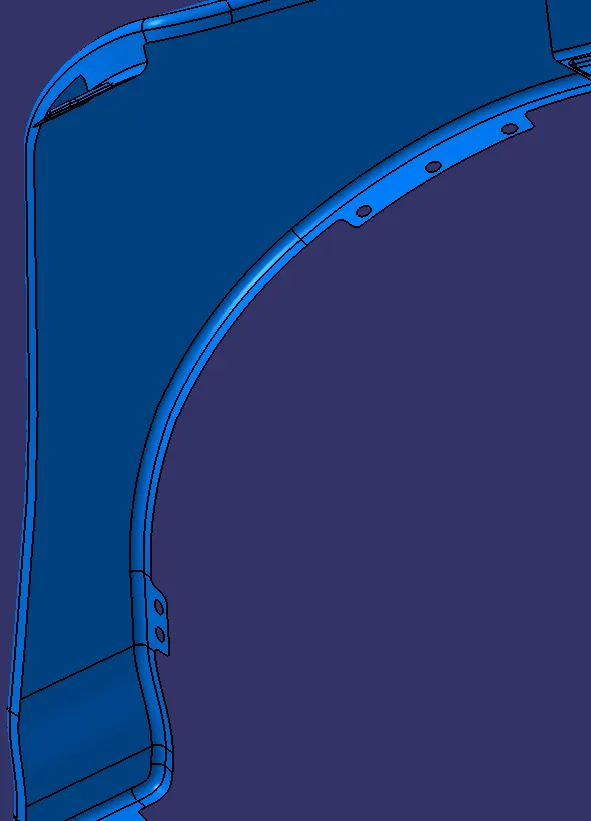
(v) Baffle mount area:
This feature is created for assembling the baffle frame to the fender so that to avoid the chipping of sand or mud from the rotating wheel. The assemble feature is provided as shown below.
After providing the assemble features thicken the fender skin to solid sheet metal with a thickness of 0.75mm.
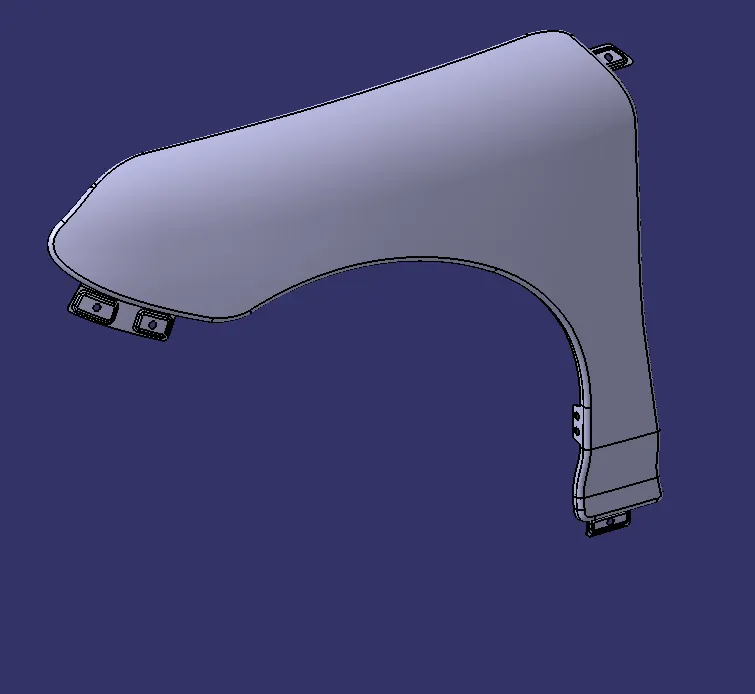
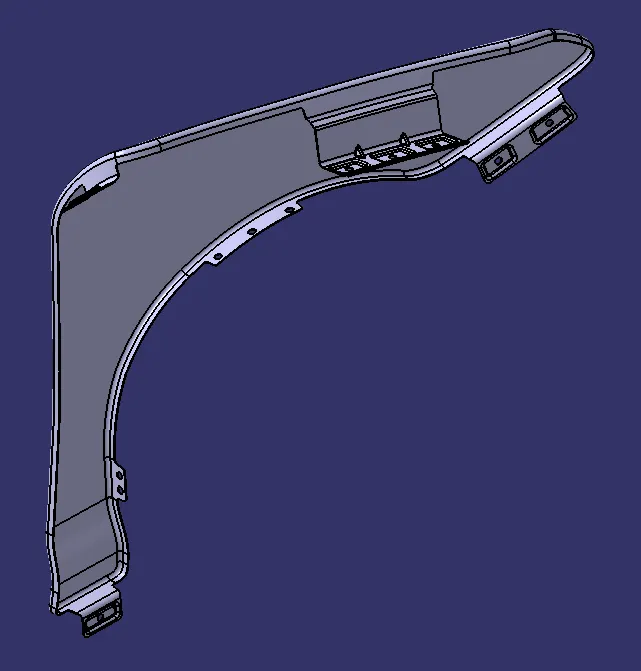
Result:
Thus designing a car fender from the given styling surface is completed which is now suitable for assembling it to the remaining components of the car.