Fender Design
AUTOMOBILE FRONT FENDER DESIGN
OBJECTIVE:
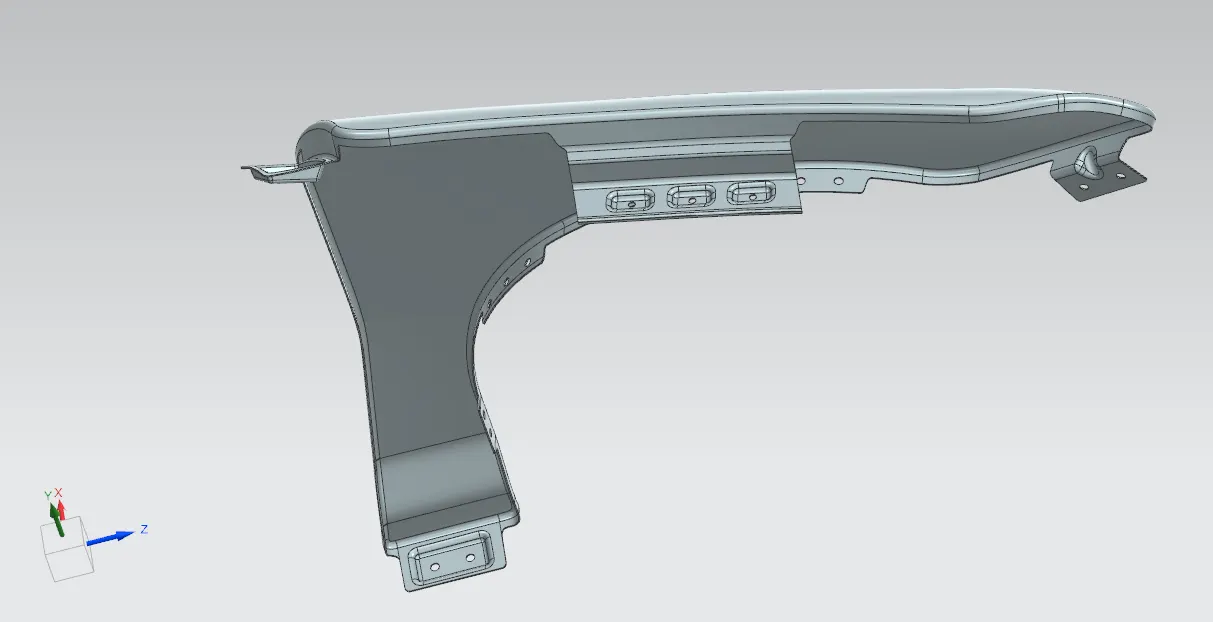
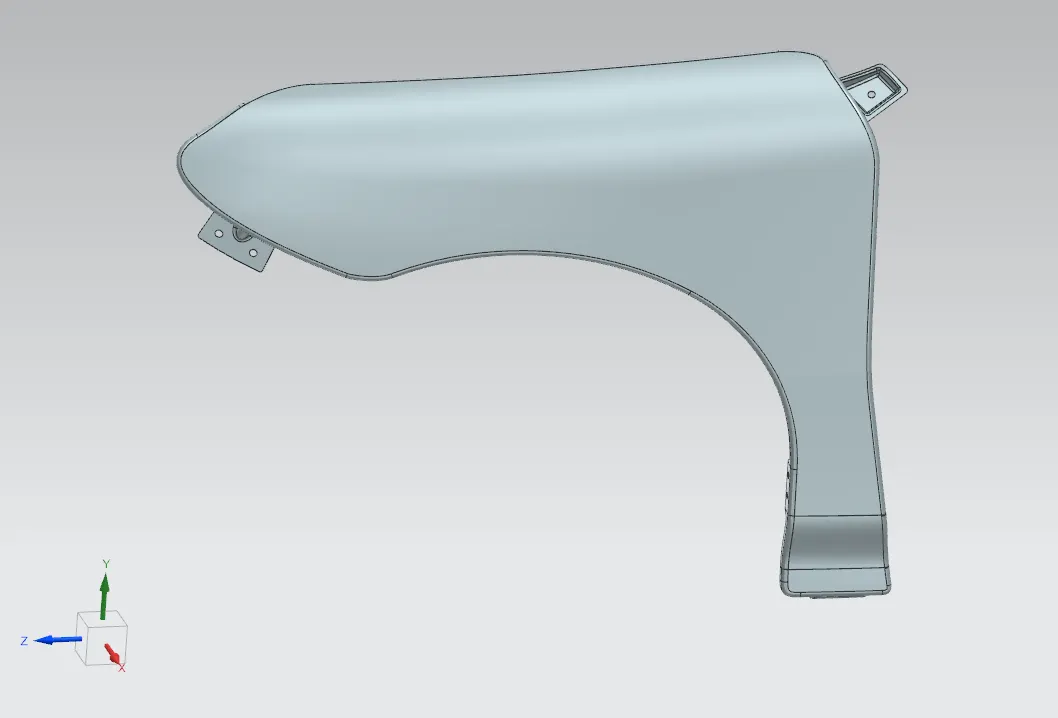
To design the automobile front fender using the given master section based on the design considerations.
INTRODUCTION:
The introduction to front fenders is given below as follows:
FENDER:
The main purpose of fenders is to prevent sand, mud, rocks, liquids, and other road particles from being thrown into the air by the rotating tire.
When a vehicle is moving, tires pick up stones and others and hurl them in all directions. Fenders are present to prevent any injuries to
pedestrians and contain the motion of the particles.
TYPES OF FENDERS:
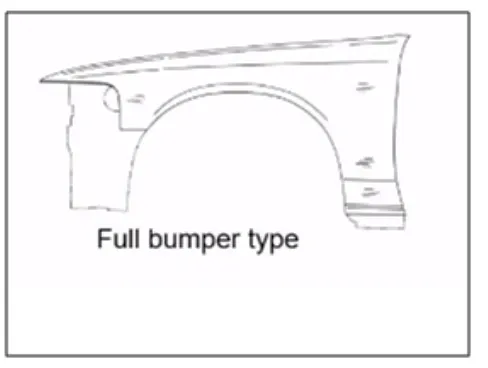
- Full Bumper Type:
Vehicle models from the past employed these kinds of fenders. By only covering the front lamps about the bumper area, they significantly
increase the steel weight. This type of fender has the drawback that there is a lot of waste in the blank and that the company must pay for every inch of material used.
- Half Bumper Type:
These fenders are primarily used to reduce costs by taking out a sufficient amount of the steel wait, which helps to somewhat lower the vehicle's weight. If the blank size is slightly increased, it is possible to create them profitably—that is, two fenders can be made simultaneously. This reduces the weight and increases the performance of the vehicle.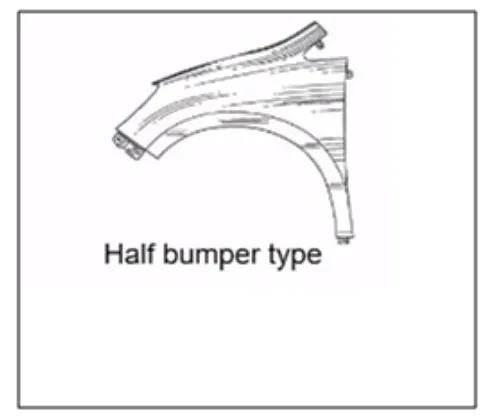
MASTER SECTION:
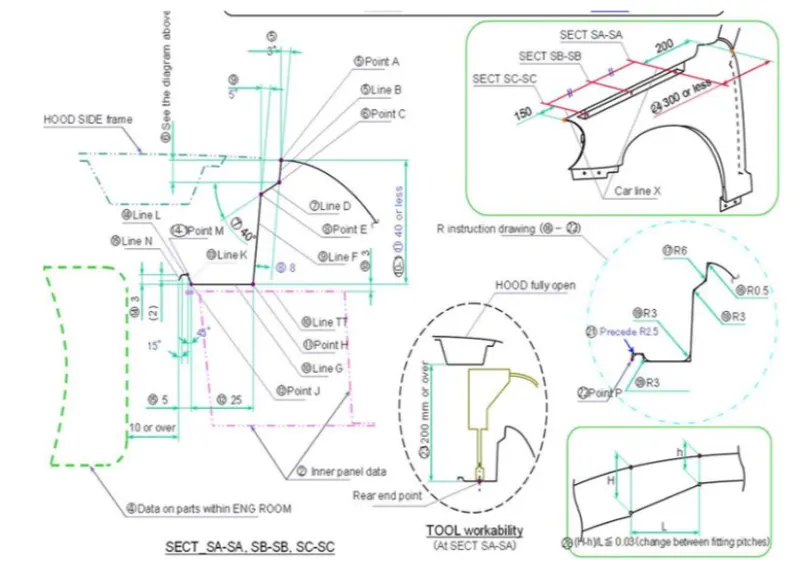
The master section is given below, which describes the dimensions of how to design the drip area mounting.
MOUNTINGS OF THE FRONT FENDER:
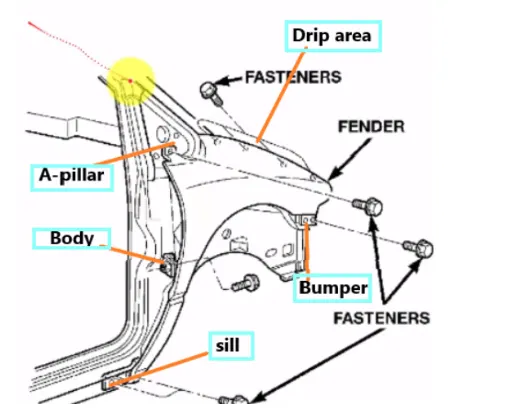
5 mountings are needed for the mounting of the automobile front fender, and they are given below as follows:
1. DESIGN OF DRIP AREA MOUNTING:
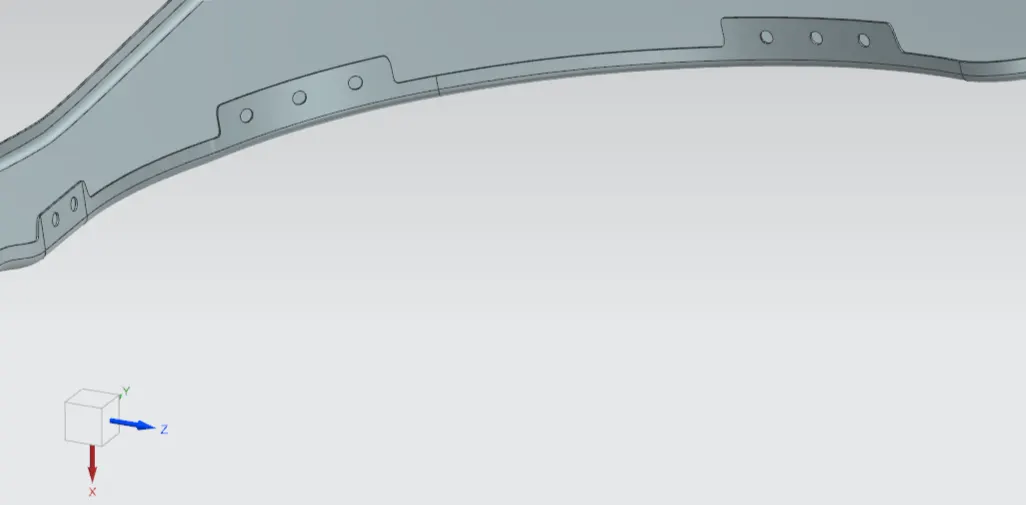
The Drip Area is the crucial mounting component for the fender. Given that it is related to the engine compartment, many design guidelines must be adhered to when creating the fender.
Initially, the gap between the rear end and front end should be prepared. For fixing the cowl part with the fender, we need a minimum of 200mm from the rear end and then start with the drip area. Similarly, for the headlamp housing unit, we need a gap of 150mm from the front. In between these areas, the drip area mounting can be designed.
The wiper motor and associated instruments are housed in the cowl top section.
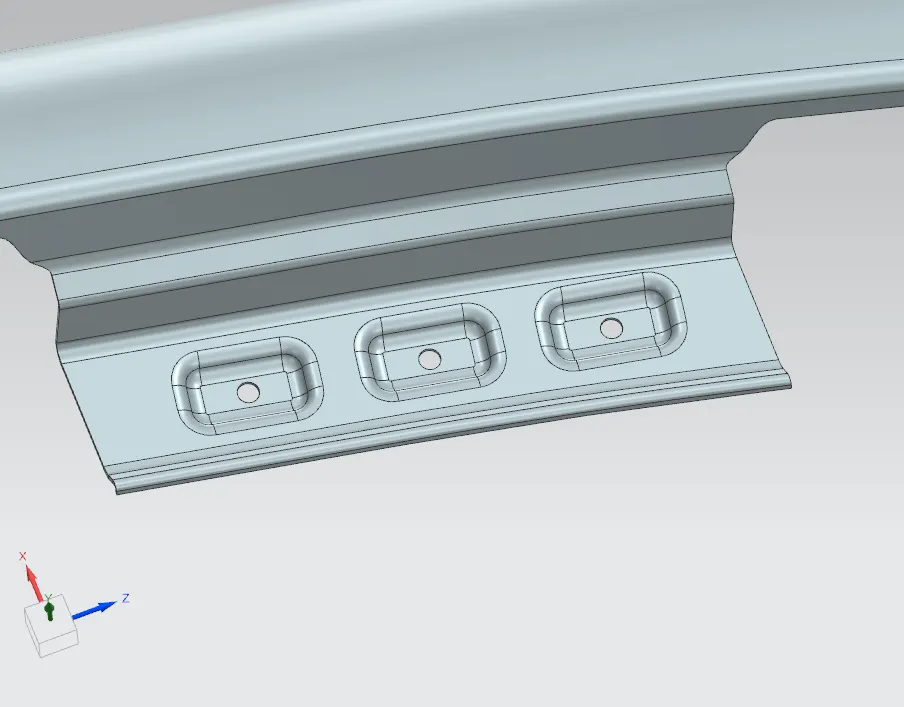
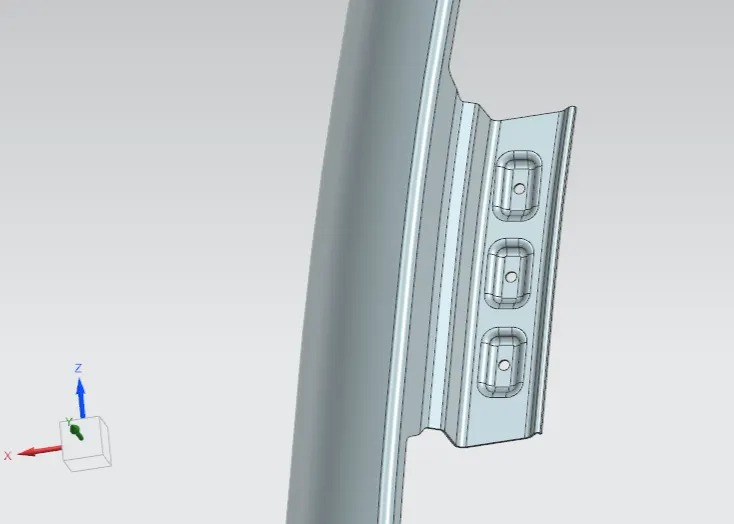
To give the part stiffness and strength, two darts can be provided, if the drip mounting area is longer. This lessens the fender's vibration and its impact on external forces when the car is moving. Here, it wasn't needed as the drip mounting area was not long enough. Embossing is provided on the mounting to strengthen them during fastening.
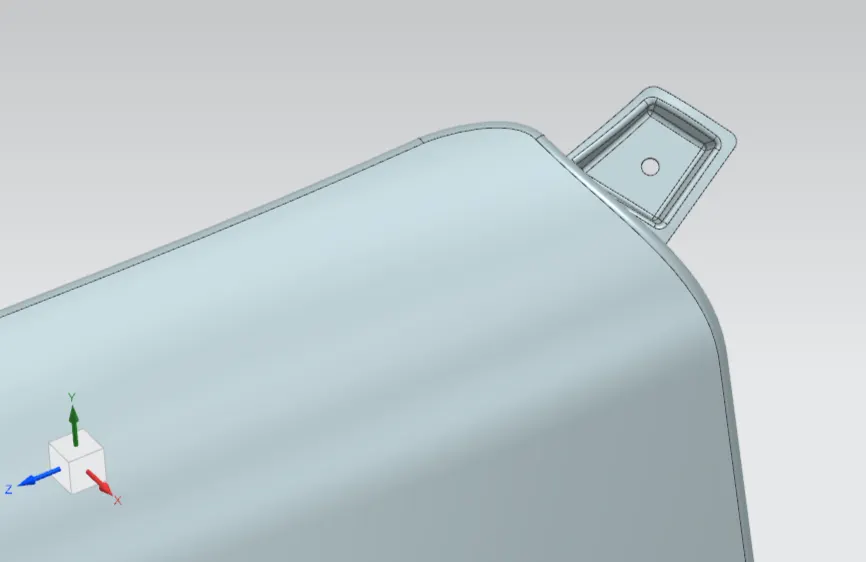
2. DESIGN OF A-PILLAR MOUNTING:
The A-pillar is the structural pillar of the BIW components that combines the body with the roof. Front fenders are fastened to the A-pillar to form a robust structure.
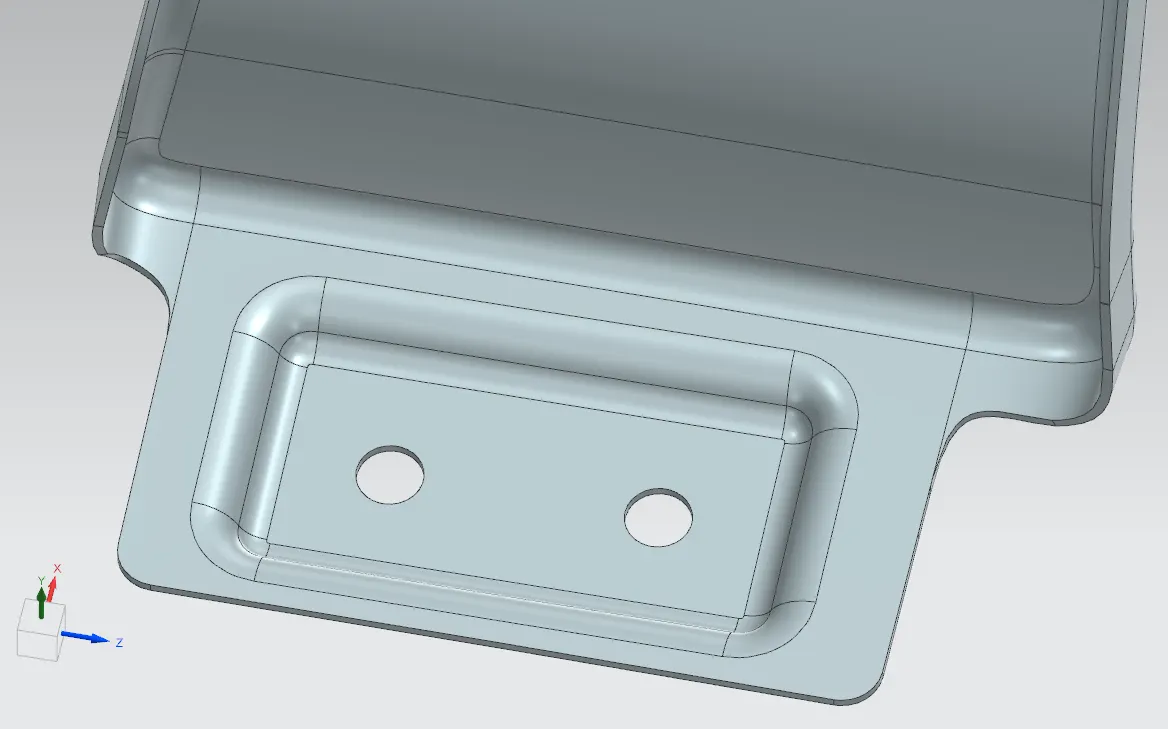
3. DESIGN OF SILL MOUNTING:
The sill, which can be used to unite the floor and the body, is the panel that supports the floor just below the bottom of the door. The sill mounting position is constructed with holes and an embossment because the bottom end of the fender is fastened on the sill body to reinforce the fender panel. The fenders on the sill body are fastened with M5 bolts.
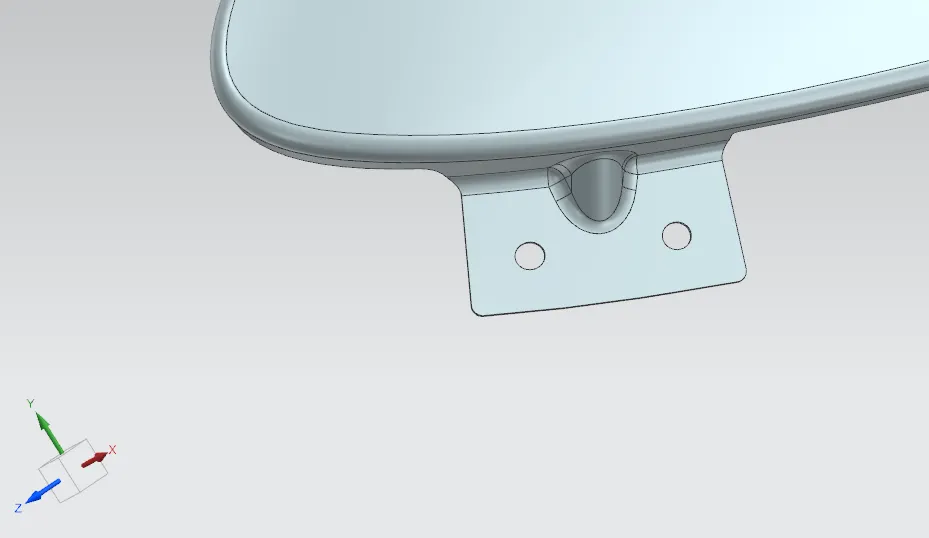
4. DESIGN OF BUMPER MOUNTING:
Bumper mounting is where the bumper would come in contact with the fenders and they are fixed with the help of fasteners. Here, the dart is provided to the mounting to improve the strength of the bumper mounting.
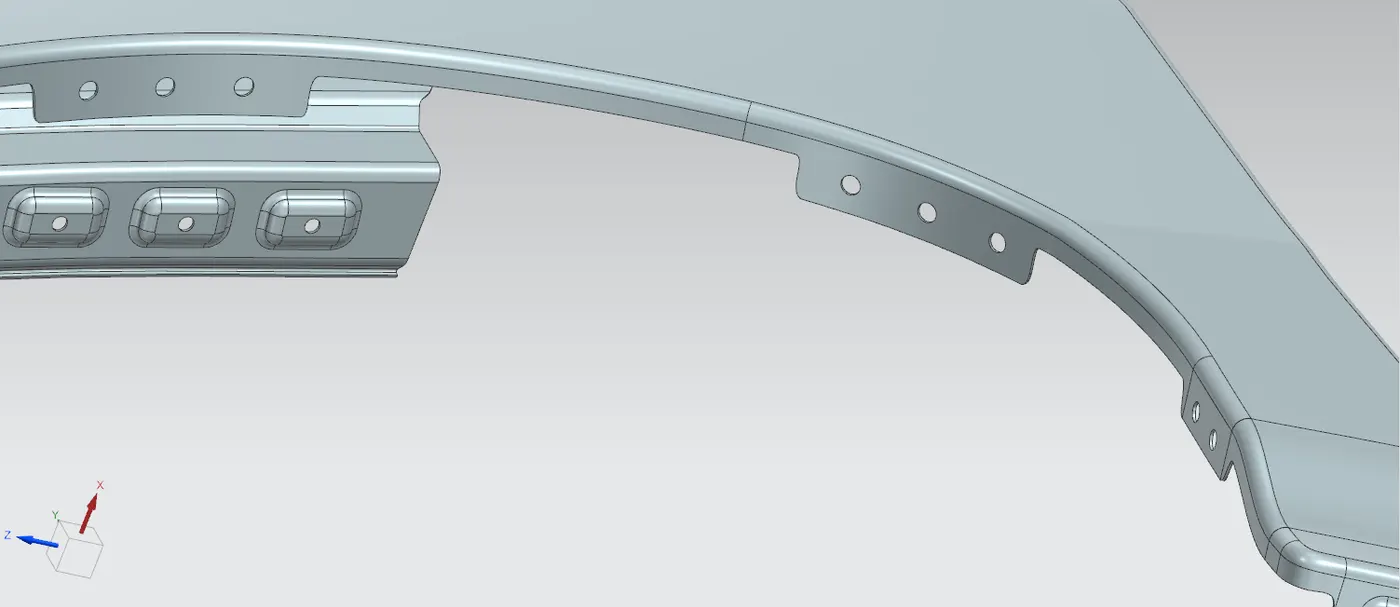
5. DESIGN OF BAFFLE MOUNTING:
Mudguards or baffle mountings are clip-fit mountings that cover the tire on the inside of the fender arch. It protects the engine compartment and keeps pedestrians safe from flying glass fragments on the road when the car is driving. They are attached to the fenders with a unique kind of locking clip that is composed of plastic.
MANUFACTURING PROCESS OF FRONT FENDER:
The manufacturing process of car fenders involves many steps, and they are as follows:
- Shearing and unfolding: A cold roll is sheared and unfurled to the required size of an iron plate. The iron plate is stretched, side-sheared, punched, folded, and reshaped during the oil pressing and punching process.
- Machining: After shaping and punching the iron plate to the required outside contour blank, it is punched once more.
- Metal stamping: To make parts like fenders, a machine automatically coins, bends, and manipulates metal.
- Installation and welding: We install and weld a metal plate or use the fasteners.
CONCLUSION:
Therefore, the design of all the mounting areas, like the drip area mounting, A-pillar mounting, sill mounting, bumper mounting, and baffle mounting, was done to design the automobile front fender using the design considerations from the master section provided. The zip file with part files has been attached for reference.