Fender Design
AIM: To design a front fender of a car by following the given master section as per the design considerations of OEM
A car fender, also known as a wing in some regions, is a crucial component of a vehicle's body that plays a key role in protecting the wheel well and other essential parts of the car. Here are some key points about car fenders:
- Purpose: The primary purpose of a car fender is to protect the wheel well and surrounding components from road debris, stones, mud, and other elements that could be thrown up by the rotating tires. Fenders help prevent these materials from damaging the vehicle's body and undercarriage.
- Material: Fenders are typically made from durable materials such as steel, aluminum, or composite materials. The choice of material depends on various factors, including the vehicle's design, weight considerations, and manufacturing costs.
- Design: Car fenders come in various designs and styles, depending on the make and model of the vehicle. Some fenders are integrated into the overall body design, while others may be separate components that can be replaced individually.
- Location: Fenders are positioned above each of the vehicle's wheels, covering the wheel well and providing a protective barrier. They are an integral part of the vehicle's exterior, contributing to its overall aesthetics.
- Replacement: Fenders can be damaged in accidents, collisions, or other incidents. In such cases, they may need to be repaired or replaced. Replacement fenders are often available as OEM (Original Equipment Manufacturer) parts or aftermarket options, offering different styles and materials.
- Installation: Installing a new fender typically involves removing the damaged one and attaching the replacement securely. This process may require some skill and knowledge of automotive repair, and it's often performed by professionals in auto body shops.
- Legal Requirements: In many regions, vehicles are required to have functional fenders as part of safety regulations. This is to ensure that road debris is properly contained and does not pose a hazard to other drivers or pedestrians.
- Customization: Some car enthusiasts may choose to modify or customize their fenders for aesthetic reasons. This can involve choosing different styles, materials, or even creating custom fenders to enhance the overall appearance of the vehicle.
Types of fenders:
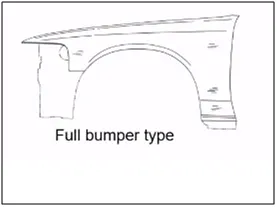
1.Full Bumper Type Fenders:
This could refer to fenders designed to work with full-width bumpers. Full bumper type fenders would extend to cover the entire width of the front or rear of the vehicle, providing adequate protection for the wheel well and other components. These fenders are typically designed to complement vehicles with larger, more encompassing bumpers.
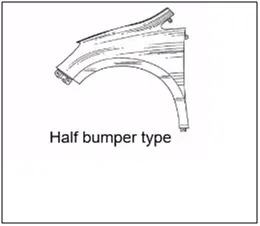
2.Half Bumper Type Fenders:
- Similarly, half bumper type fenders might be designed to work with smaller or partial-width bumpers. These fenders could be smaller in size, covering only a portion of the wheel well and being compatible with vehicles that have more compact or stylistically unique bumpers.
MOUNTING REGIONS ON FENDER :
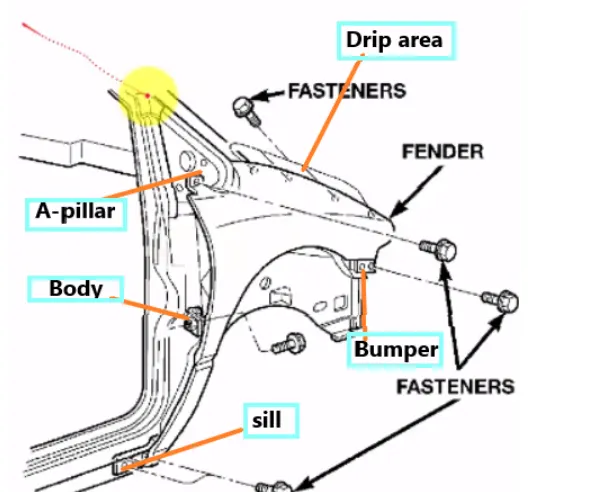
There are 5 mounting regions on the fender , they are
- A- pillar mounting
- Body mounting
- Sill mounting
- Bumper mounting
- Drip mounting
A-Pillar mounting:
The A-pillar is a structural component of a vehicle that provides support to the windshield and connects to the front edge of the vehicle's roof. It is an essential part of the vehicle's safety structure. The A-pillar typically runs vertically from the front edge of the vehicle's body, near the windshield, down to the front edge of the front doors
Sill mounting:
The "sill" typically refers to the lower part of a vehicle's body structure, often running along the side of the car between the front and rear wheel wells. The sill is a structural component that provides support and rigidity to the vehicle's body. When it comes to mounting a fender, the sill can play a role in providing attachment points for the fender
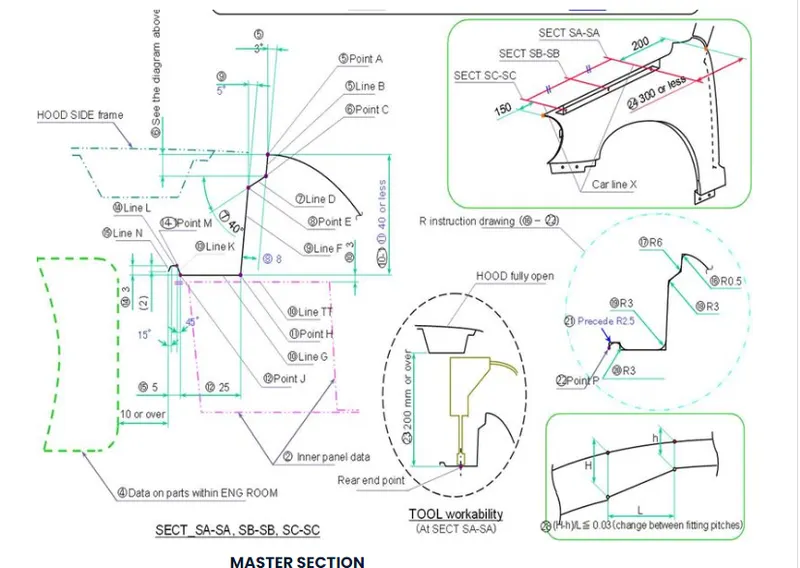
Master Section:
DESIGN OF DRIP AREA MOUNTING :
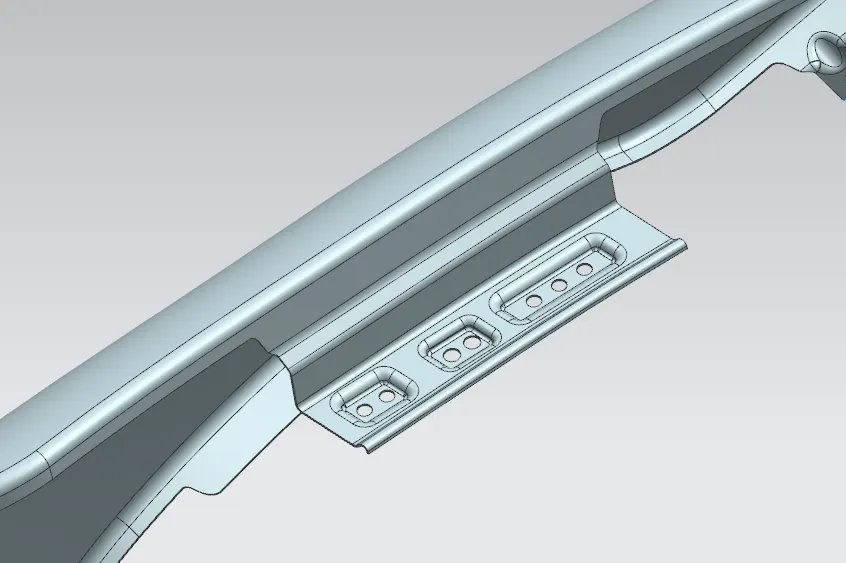
- It is the important mounting unit of the fender . it is connected with the engine compartment , therefore the lot of design constraints are to be followed while designing the fender
- While designing the drip area we have to initially leave 200-300 mm for cowl top
- For placing the headlamp we have to leave at least 150 mm at the front while designing the fender
- Cowl top part consists pf wiper motor and its instruments
- Two darts are added on the longer side of the drip area in order to provide the stiffness and adds strength to the part . This helps the fender to not to vibrate and impact the forces outside of the fender during motion of the vehicle.
- Embossing are provided on the mounting to strengthen them during fastening.
 f
f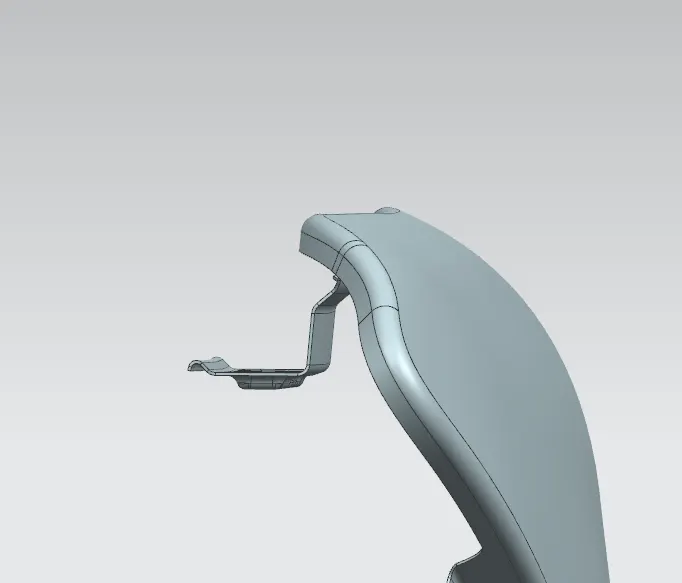
DESIGN OF SILL MOUNTING AREA :
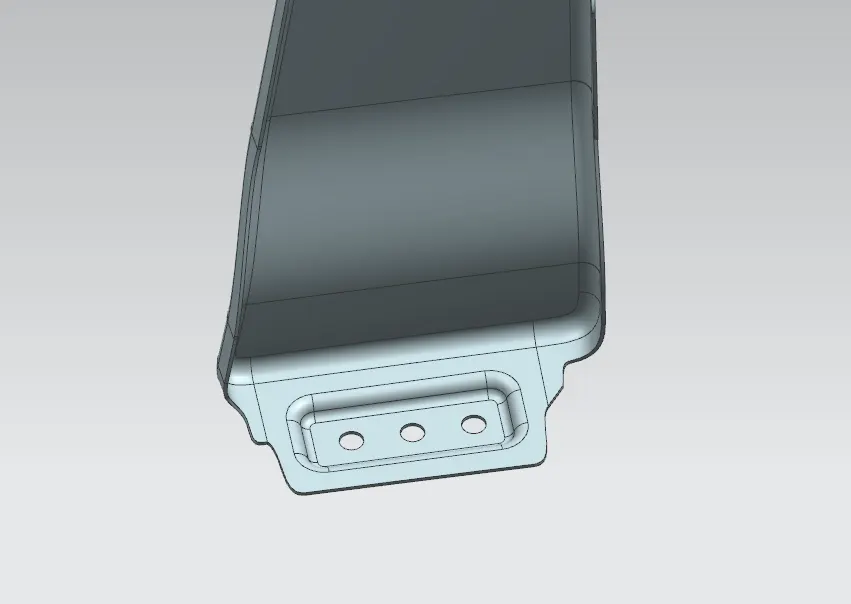
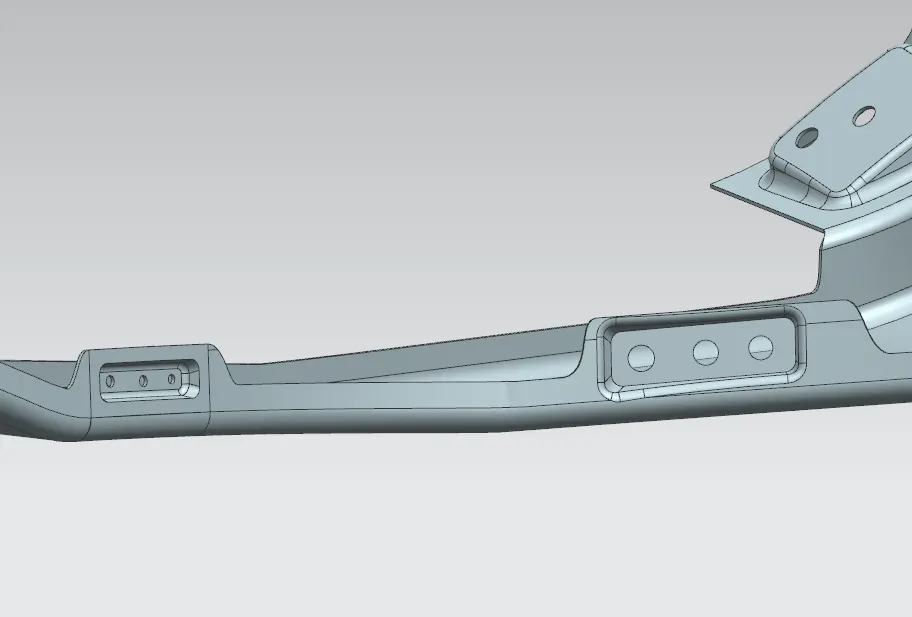
Sill is the panel directly below the bottom of the door supporting the floor and may be used to combine the floor and the body . The bottom end of the fender is mounted on the sill body for reinforcement of the fender panel , thus the sill mounting position is designed with holes and emboss . M5 fasteners are used to fix the fenders on the sill body.
DESIGN OF BUMPER MOUNTING AREA :
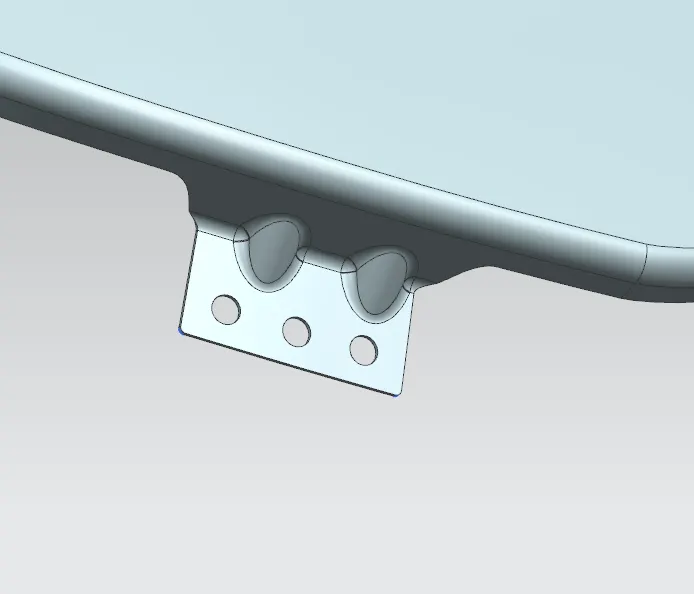
Bumper mounting area is used to fix the plastic bumper to the fender with the help of the fasteners
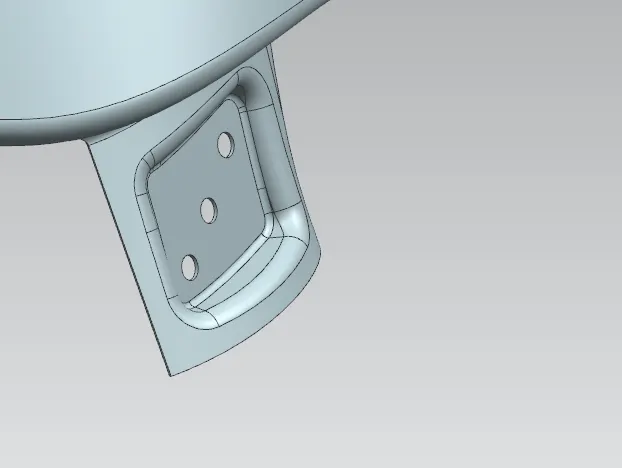
DESIGN OF A-PILLAR MOUNTING AREA :
The A -pillar is the structural pillar that combines the body to the roof . this make the sides of the windshield rest . front fenders are fastened to the A -pillar to form a robust structure.
DESIGN OF BAFFLE MOUNTING AREA :
Baffle mounting or mudguard are clip fit type of mounting on the inner side of the fender arch over the Tyre. it protects the car engine compartment and pedestrians from causing injuries from chip out debris on the road when the car is in motion . they are mounted on the fender using a special type of locking clips which are made up of plastics .
APPLYING OF THICKNESS TO THE SURFACE .
The thickness of 0.75 mm inward on the final sewed surface of the fender to the sheet metal parameters
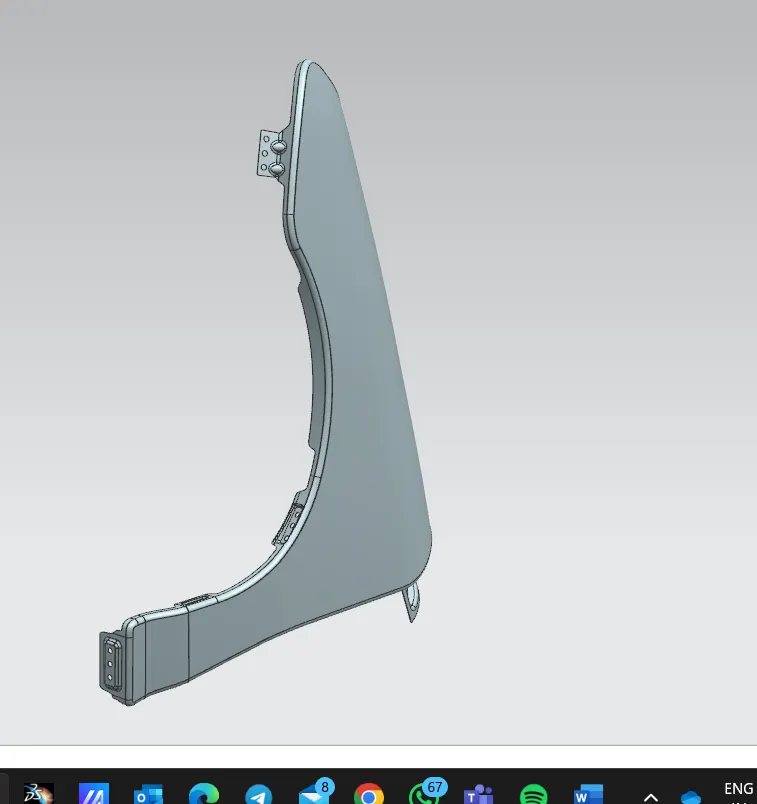
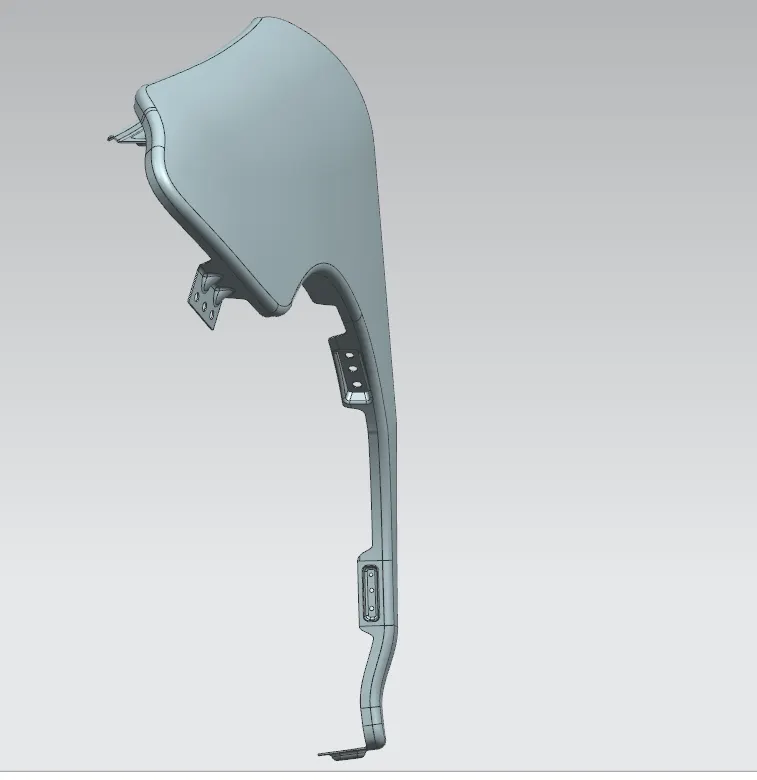
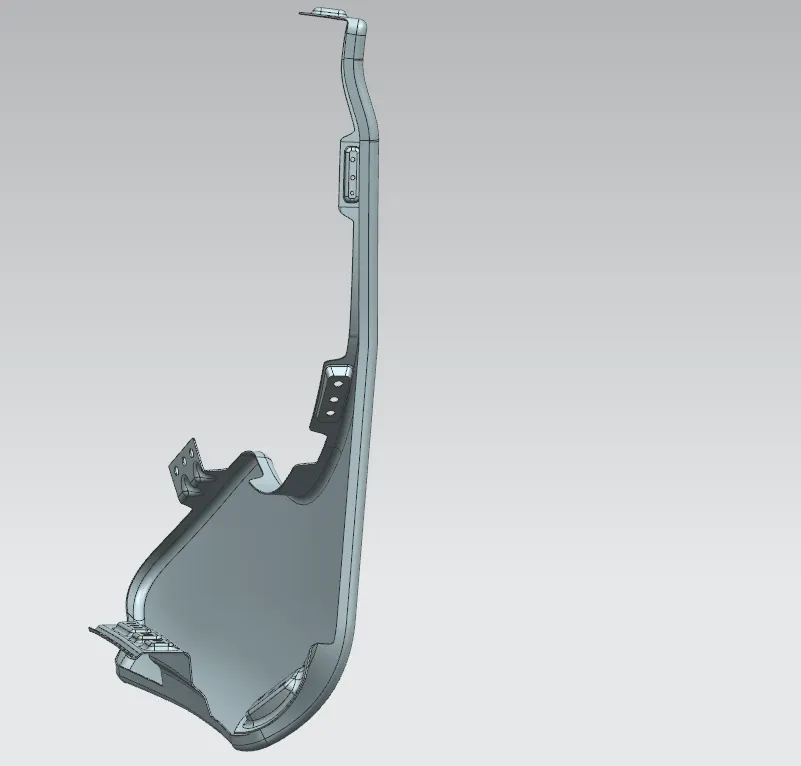
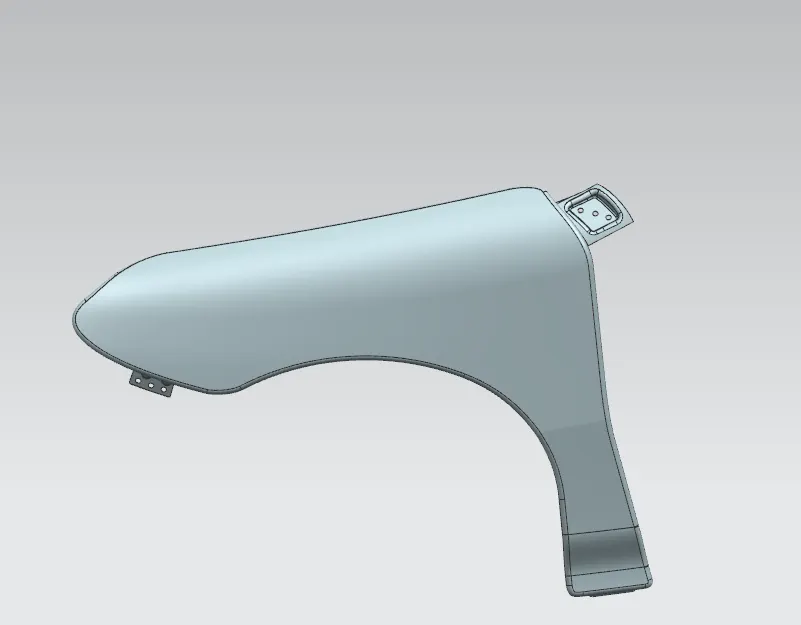
DIFFERENT VIEWS OF FENDER :
Importance of fender:
- Wheel Well Protection:
- Fenders cover the wheel wells and protect them from road debris, stones, mud, and other elements that could be thrown up by the rotating tires. This helps prevent damage to the vehicle's body and other essential components.
- Safety and Crash Protection:
- Fenders contribute to the structural integrity of a vehicle, especially in the event of a collision. They are designed to absorb and distribute impact energy, reducing the force transferred to the vehicle's occupants and other crucial components.
- Aerodynamics:
- Fenders are shaped to enhance the vehicle's aerodynamics. Properly designed fenders help reduce air resistance, improving fuel efficiency and overall performance.
- Aesthetic and Stylistic Enhancement:
- Fenders are a prominent part of a vehicle's exterior design. Different styles and shapes of fenders contribute to the overall aesthetics of the vehicle, reflecting the manufacturer's design choices and the vehicle's intended market.
- Regulatory Compliance:
- In many regions, vehicles are required to have fenders as part of safety and regulatory standards. Fenders help contain road debris, preventing it from becoming a hazard to other drivers or pedestrians.
- Corrosion Prevention:
- Fenders provide a protective barrier against water, salt, and other corrosive elements. Properly maintained fenders contribute to preventing rust and corrosion, extending the lifespan of the vehicle.
- Containment of Splashes and Sprays:
- Fenders help contain water splashes and mud sprays generated by the tires. This not only protects the vehicle's exterior but also enhances visibility for the driver and other road users.
- Mounting Points for Accessories:
- Fenders often serve as mounting points for various accessories, such as side mirrors, lights, or fender flares. These accessories contribute to the vehicle's functionality, safety, and customization.
CONCLUSION : Thus, all mounting areas for the fender designed from skin data and master section is done by following all design rules .