Fender Design
Front fender design basic instructions :
- Clarify the intended purpose of the front fender. Is it for aesthetics, aerodynamics, protection against road debris.
- Ensure that the front fender design is compatible with the vehicle's size, shape, and overall design language.
- Choose appropriate materials based on factors like durability, weight, and cost. Common materials include plastic, metal, carbon fiber, or fiberglass.
- Ensure that the front fender provides adequate coverage over the wheels to prevent splashing of water, mud, and debris onto the vehicle or pedestrians.
Account for suspension travel and movement to avoid interference between the fender and the wheel during compression or extension.
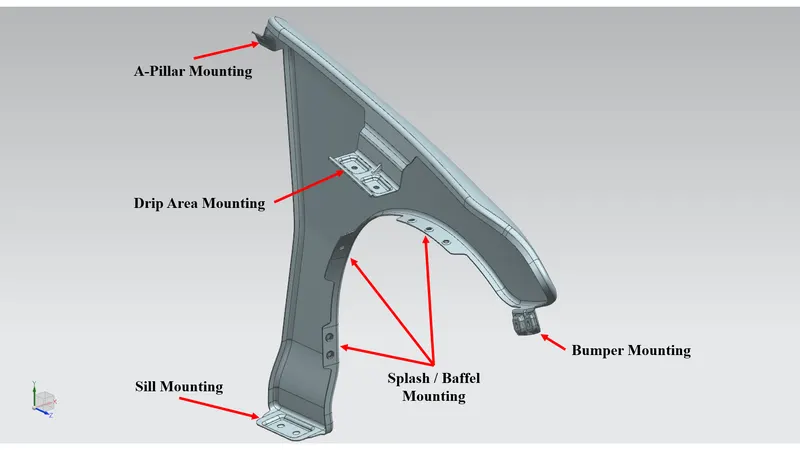
Fender design consists of 6 different mounting points.
- Bumper mounting
- A-Pillar mounting
- Sill mounting
- Baffle mounting
- Drip mounting
- Drat
BUMPER MOUNTING :
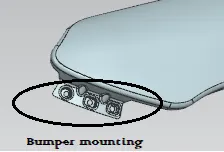
- Mounting a fender bumper, often referred to as a fender flare or wheel arch extension, is a common modification to vehicles to enhance their appearance and protect against road debris. Here's a general guide on how to mount a fender bumper
- If the fender bumper comes with brackets, attach them to the fender bumper according to the manufacturer's instructions.
A-Pillar mounting :
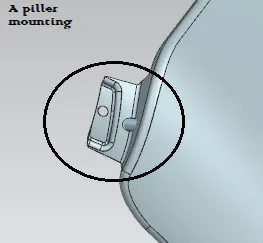
- Mounting components to a vehicle's A-pillar, which is the vertical structural member on either side of the windshield, requires careful attention to ensure safety, structural integrity, and aesthetic appeal. Here's a general guide on how to mount items to the front fender A-pillar
Sill mounting :
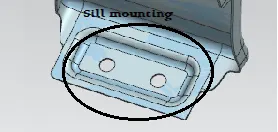
- Mounting components to a vehicle's sill, which is the area beneath the doors along the sides of the vehicle, can serve various purposes such as adding side steps, rock sliders, or other accessories. Here's a general guide on how to mount items to a vehicle's sill.
- Common items include side steps, running boards, or protective rock sliders. Consider the vehicle's design and how the component will enhance its functionality and aesthetics.
Baffle mounting:
- Mounting a front fender baffle or mudguard to a vehicle involves securing a protective cover that helps prevent road debris, water, and mud from being thrown onto the vehicle's body or other vehicles. Here's a general guide on how to mount a front fender baffle.
- Determine the best position for the front fender baffle. It should be placed above the wheel to catch and redirect debris.
Drip mounting:
- The Drip mounting at which the fender gets attached to the engine housing through fasteners. It is the major mounting for the fender. Mountings at the drip area are designed leaving a clearance of 200mm from the back of the fender for the cowl setup. And clearance of 150mm from the front of the fender for a headlamp housing unit.
Drat :
- Darts are provided at the bends to stiffen the sheet metal at that region.