Fender Design
Fender Design
Fenders are the panels that cover the wheel wells and are located above the wheels to protect the vehicle's body from debris, water, and road hazards. The mounting locations for fenders can vary based on the vehicle's design and construction.
Fender mountings are the points of attachment between a vehicle's fenders and its body or chassis.
Fender Mountings
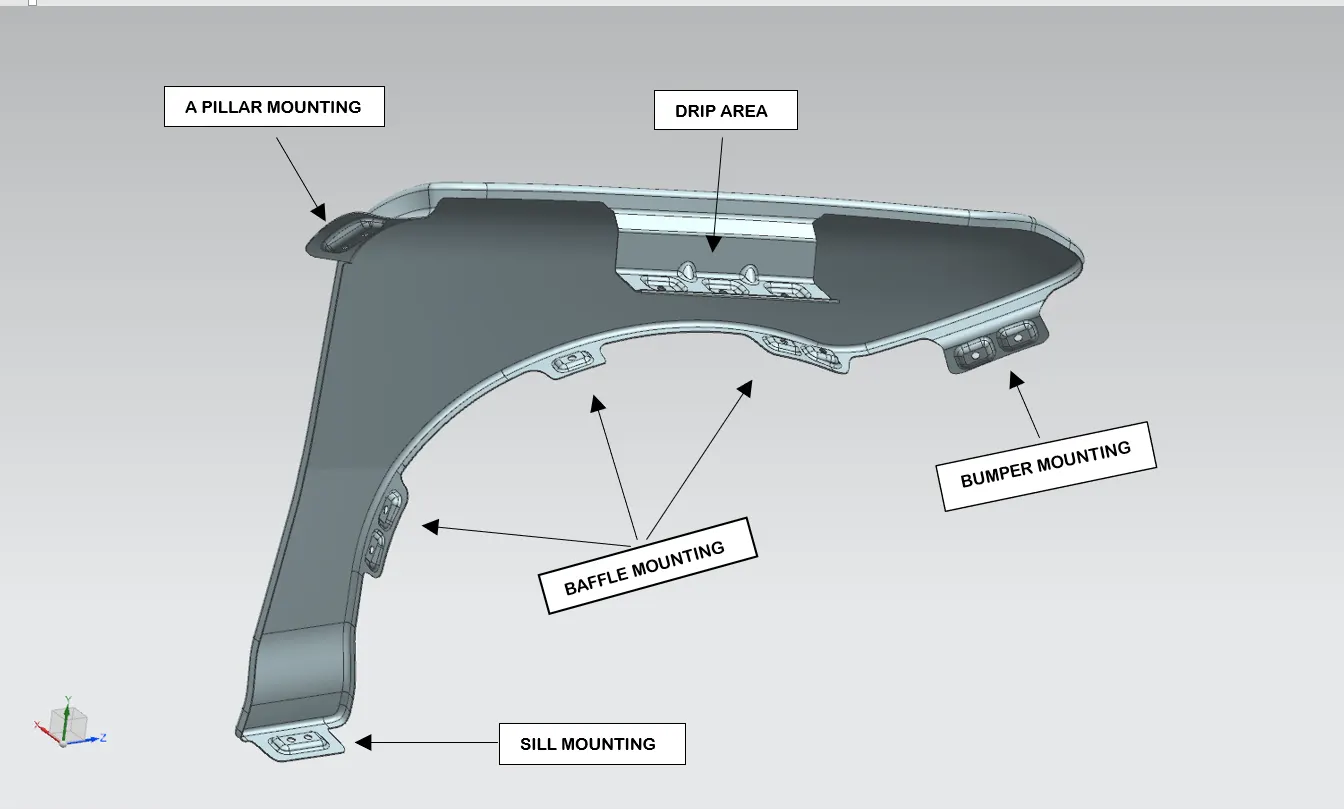
- Drip Area Mounting
- Bumper Mounting
- Sill Mounting
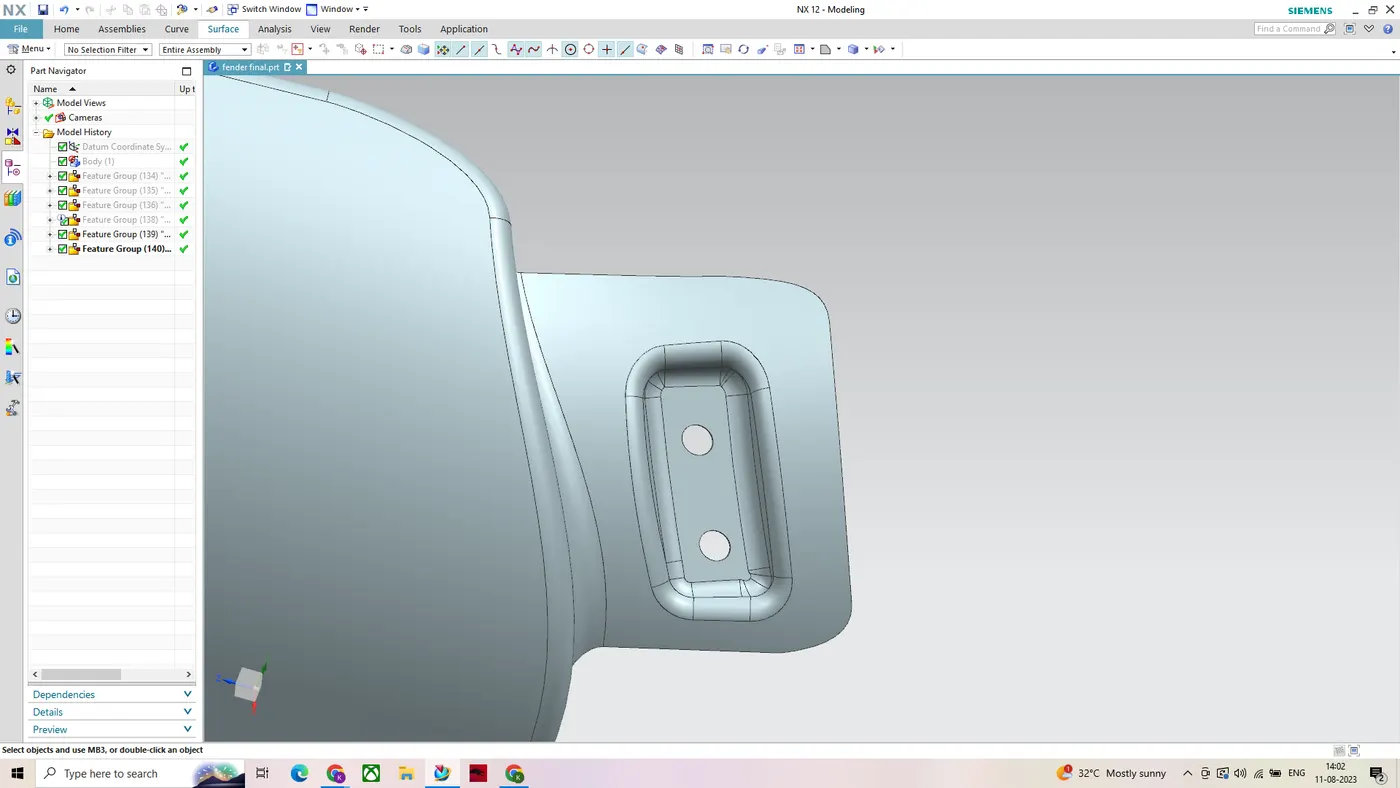
- A-Pillar Mounting
- Splash/Baffle Mounting
DRIP AREA MOUNTING
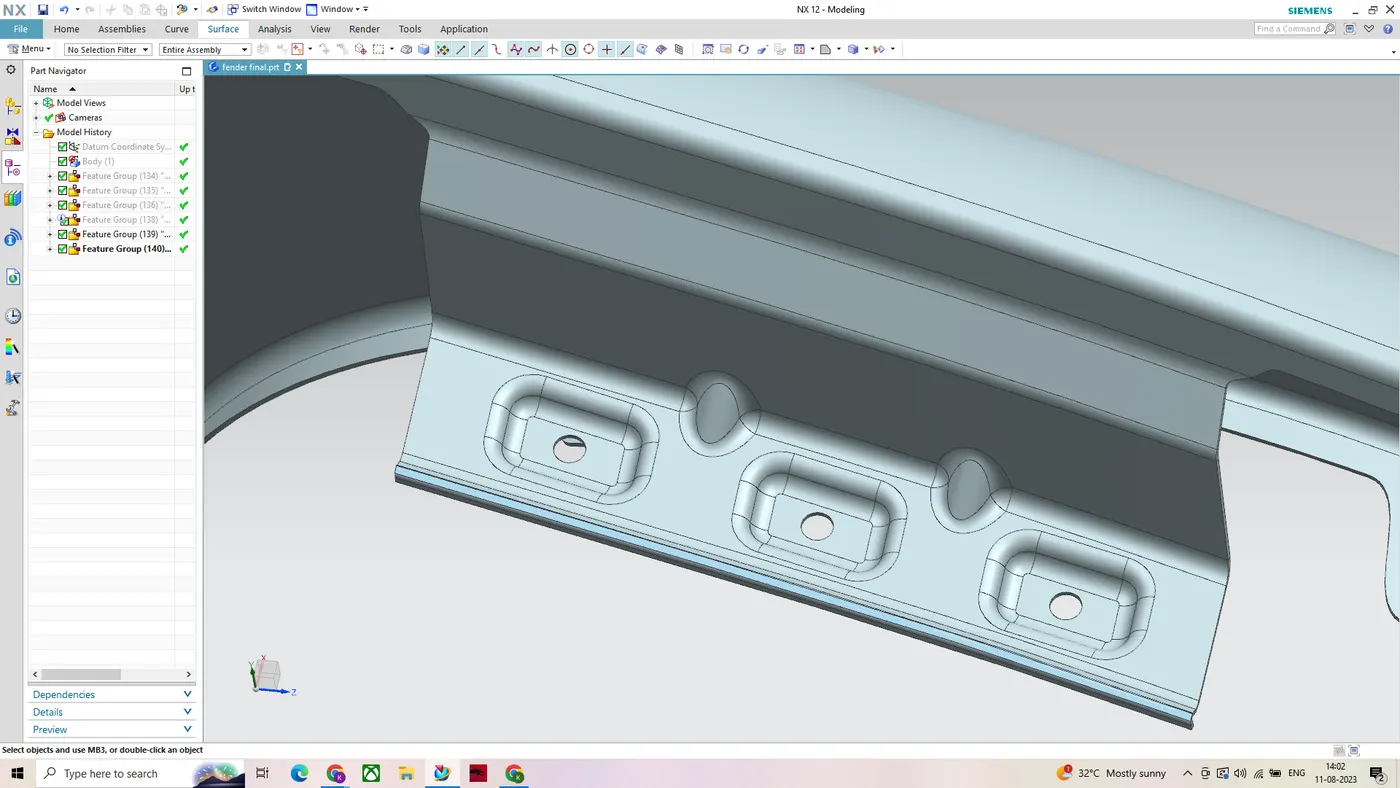
The main fender mounting on the engine housing keeps the fender aligned and stable. This connection is vital for the fender's integration with the vehicle's structure. In the drip area, mountings have specific clearances: 200mm from the fender's rear for the cowl setup and 150mm from the front for a headlamp housing unit. These precise gaps ensure components fit seamlessly, highlighting careful engineering for a well-integrated design.
BUMPER MOUNTING
Front bumper mounting locations are aligned with the front fender's lower edge, connecting the bumper to the vehicle's frame or chassis. This integration creates a unified appearance and enhances the vehicle's front-end design.
BAFFLE MOUNTING
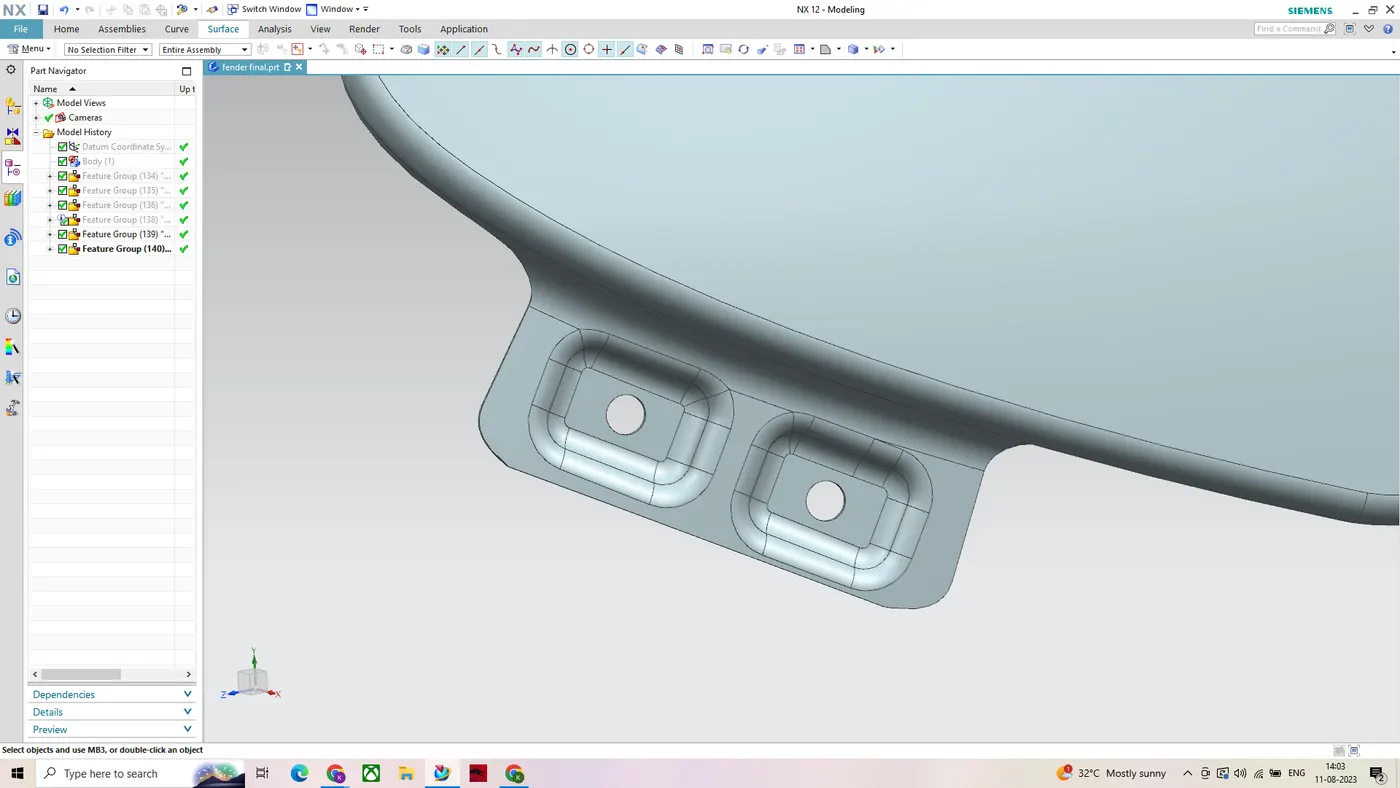
The splash or baffle mounting area is where various components, such as inner fender liners or aerodynamic baffles, are attached to the vehicle. These areas are often situated in the wheel wells, wheel arches, and underbody of the vehicle. Splash and baffle mountings help control airflow, manage water splashes, and enhance aerodynamic performance.
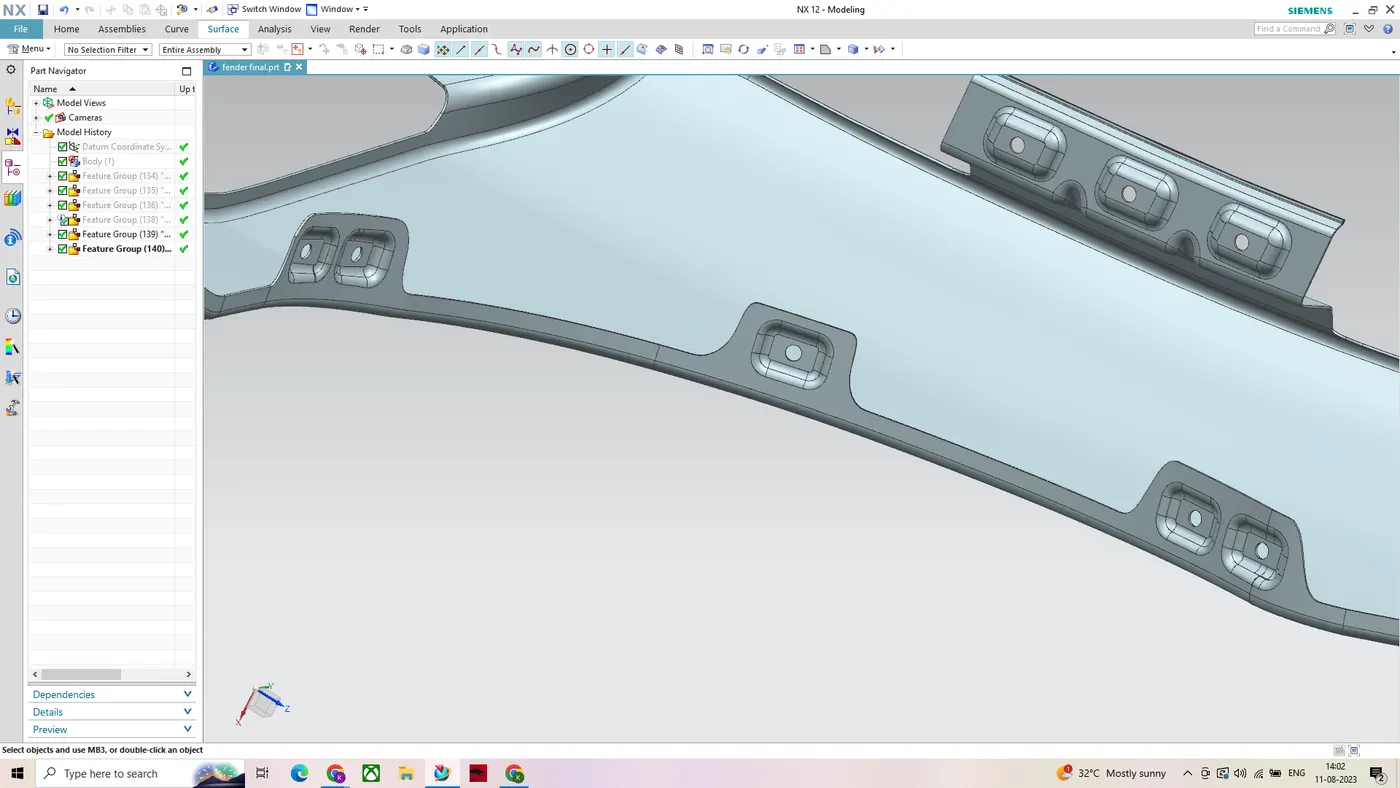
SILL MOUNTING REGION
The sill mounting region refers to the attachment points along the lower edges of the vehicle's body where the sills are secured. These points are typically found along the rocker panels, running parallel to the ground. Sill mountings contribute to the vehicle's structural rigidity, support the doors, and provide a foundation for side-impact protection.
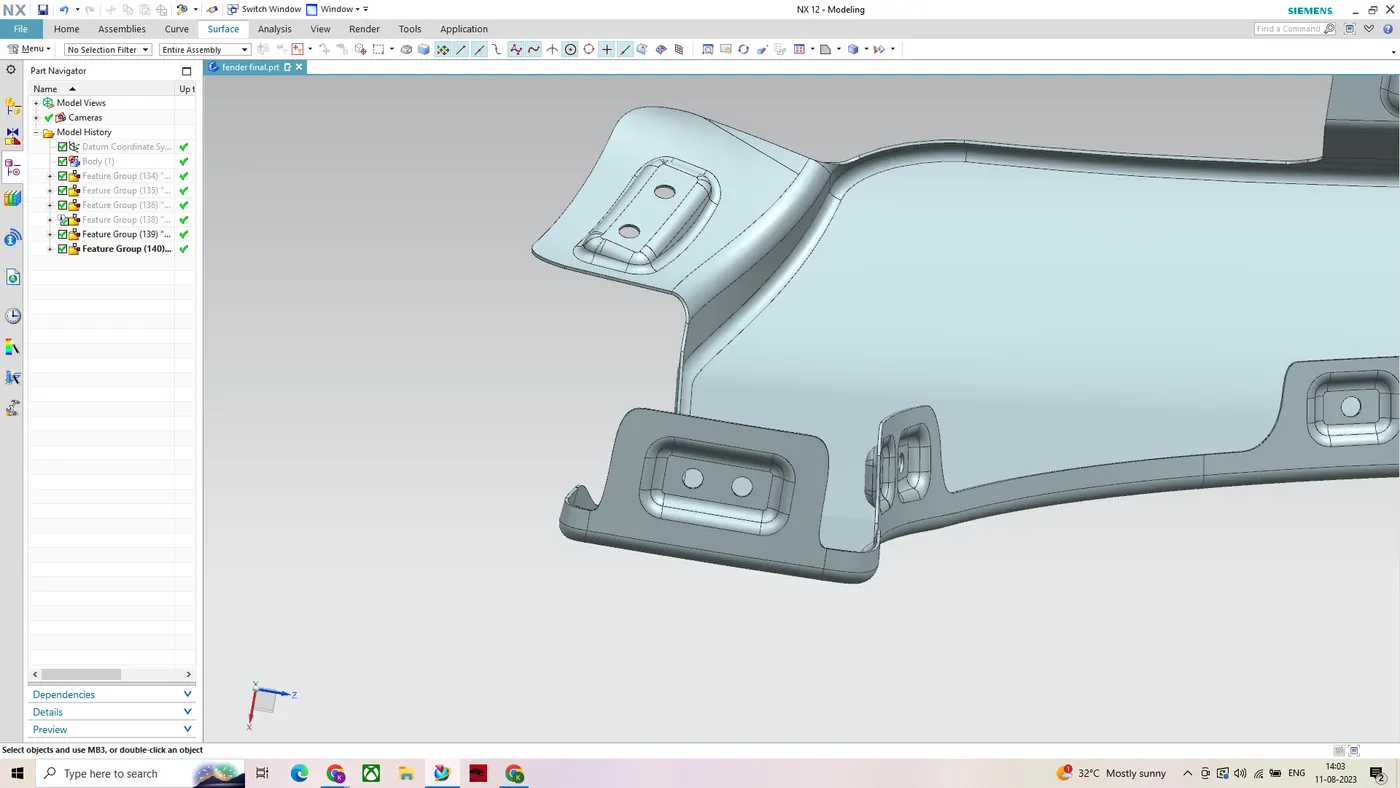
A PILLAR MOUNTING
The A-pillar mounting on the fender is positioned at the front corner of the vehicle's passenger compartment, where the A-pillar meets the fender. This connection is crucial for maintaining structural integrity, supporting the roof, and ensuring proper visibility for the driver.