Fender Design
REPORT ON FENDER DESIGN
Aim
Introduction
Before we go for the design of fender let's try to understand the concept of fender and its role in a vehicle.
Fender - Fender is a part of body of an automobile (vehicle body) that frames a wheel well (fender underside). The primary purpose of fender is to prevent sand, mud, rocks, liquids and other road spray from being thrown into the air by the rotating tire.
When the vehicle is moving on the road, tires pick up stones and others and hurl them in all directions. Fender are basically present to prevent any injuries to pedestrians and contain the motion of these particles.
Automobiles have four fenders which is placed over the wheels. For vehicles with a narrow car body that expose the tire, the fender is an exposed curve over the top of the tire. For wide body vehicles that cover the tire, the fender forms the wheel well surrounding the tire, and is not directly visible from above the car body.
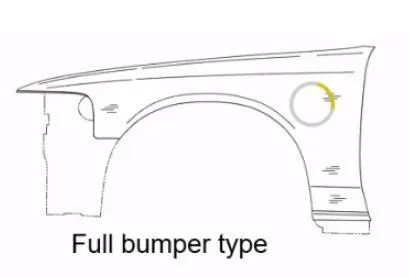
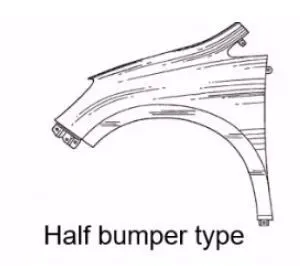
Basically fender is of two types -
- Full Bumper Type - In full bumper type fender, fender covers the whole area of wheel including from the bumper side. It consumes large amount of material to manufacture and also produce large amount of wastage material. This type is used in the old designs of automobiles where it increases the overall weight and thus reduces performance.
- Half Bumper Type - Half Bumper type fender is the modern design fender where less material consumption is observed, so productivity increases by reducing the size of the blank and thus providing more performance. In order to manufacture the half bumper design fender we can produce two fender once a time so the wastage in way to produce the fender is less than full bumper type. it has lighter weight than full bumper type so it gives more performance.
Mounting Points -
These are the five mounting points in a fender -
- Body
- A Pillar
- Sill
- Cowl
- Drip
Drip - It is considered to be important because it is mounted on the engine compartment. These are some engineering standards which follows while designing a fender -
- A minimum gap of 200 mm should be maintained from the rear end of the fender. This is because to have spacing for cowl mounting.
- The second thing is to maintain a minimum gap of 150 mm front end of the fender for headlamp mountings.
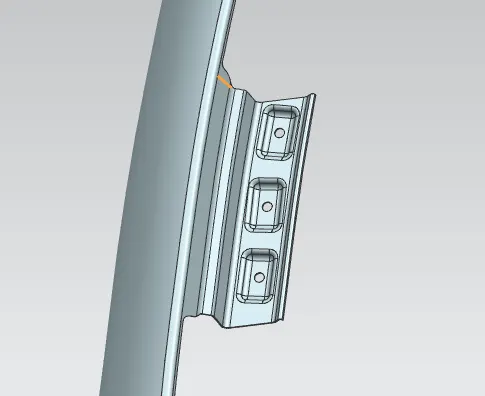
Bumper mount -
It is the front portion of the fender where the bumper is mounted with the help of brackets.
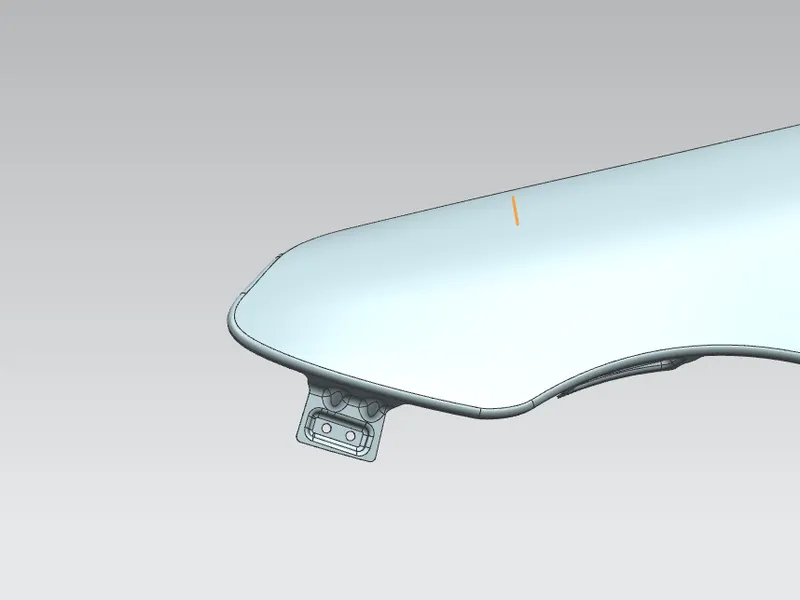
Splash mount - The splash mount plays a vital role in anti-chipping and protects the dust particles, spray particles from being entered inside the car.
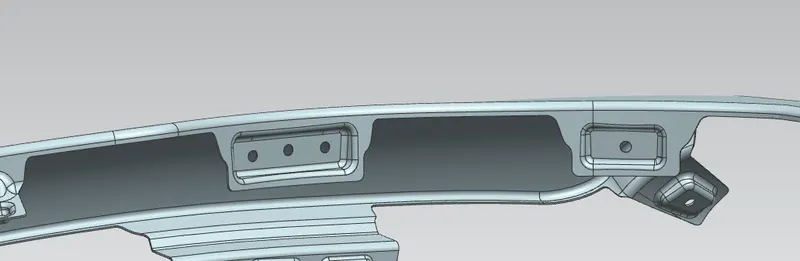
Sill Mount - It is the front portion of the fender where the bumper is mounted with the help of brackets.
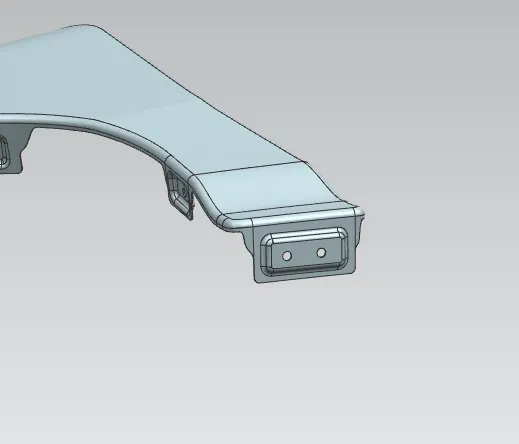
A-Pillar Mount -
A pillar is a region where the A-pillar of the car is mounted from the front fender. It is located at the top right corner of the fender.
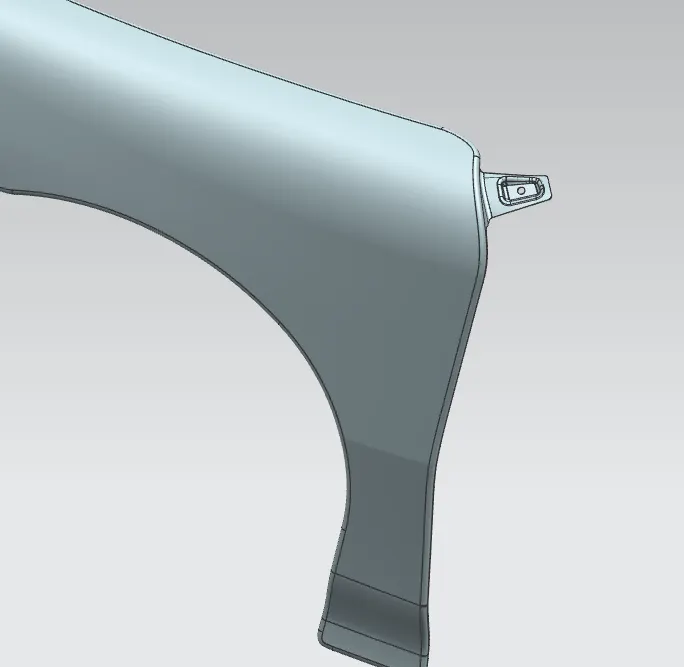
Manufacturing Process for the Fender -
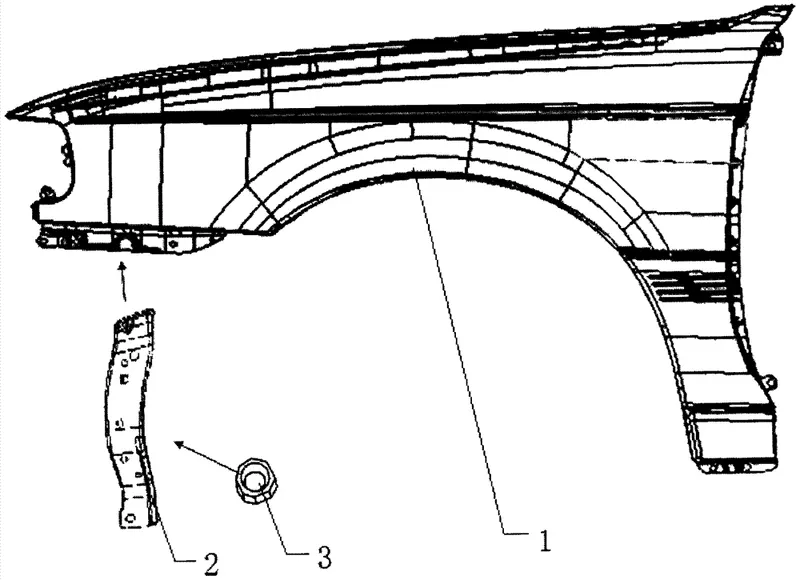
The manufacturing process includes the following steps that firstly, unfolding and shearing are carried out on a plate, wherein a proper cold roll specification is selected at first, a cold roll is unfolded, and then the unfolded cold roll is sheared to an iron plate of the corresponding size according to production material specifications; secondly, oil pressing and punching are carried out, wherein the iron plate is extended at first, then side shearing and punching are conducted on the iron plate, folding and shaping are carried out on the iron plate, and finally reshaping is carried out on the iron plate; thirdly, small first parts of the fender are machined, wherein first of all, the iron plate is punched to a needed outer contour blank, then the iron plate completing the outer contour blank is further shaped, and the iron plate is punched at last; fourthly, installation and welding of a metal plate are conducted. The manufacturing process for the car fender is simple and high in production efficiency; a body of the fender and the small parts can be separately machined, so waiting time is shortened; working efficiency of production is improved.
Design Parameters -
- The thickness of the fender should be 0.75 mm.
- No sharp edge should present in the design because sharp edge make difficulties in manufacturing.
- The clearance should be enough from the engine compartment and also considering the wheel arch area.
- Draft angle must be present wherever it need for easy manufacturing.
So let's go for the procedure to design the fender -
First of all we try to understand the standards and value given in the master section for designing the fender -
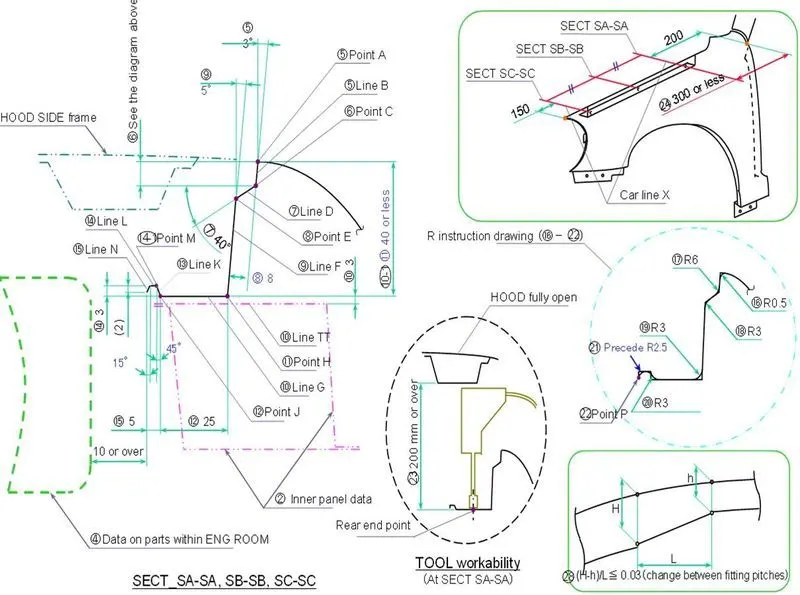
First we create the fender drip area with the given value in master section by the commands law extension, extend sheet, creating sketch, projection curve, trim sheet, edge blend, face blend, bridge curve etc.
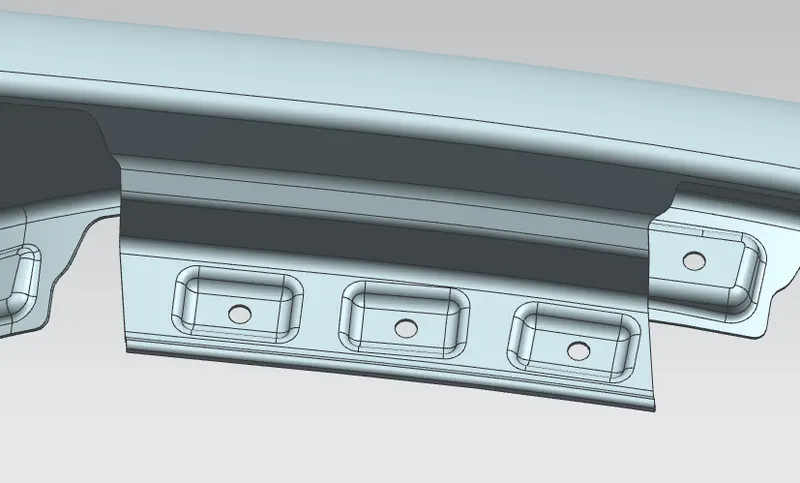
After creating drip mount area we go for bumper mount by using same command and here we provide two ribs in addition to increase the strength of bumper mount -
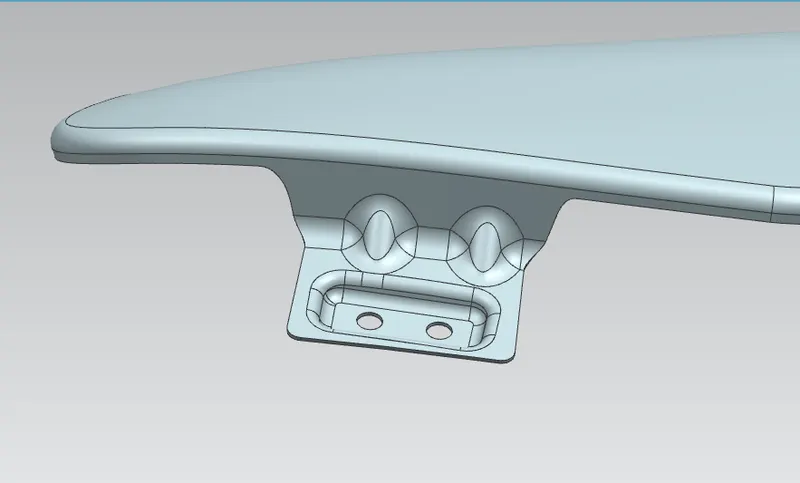
Then for splash -
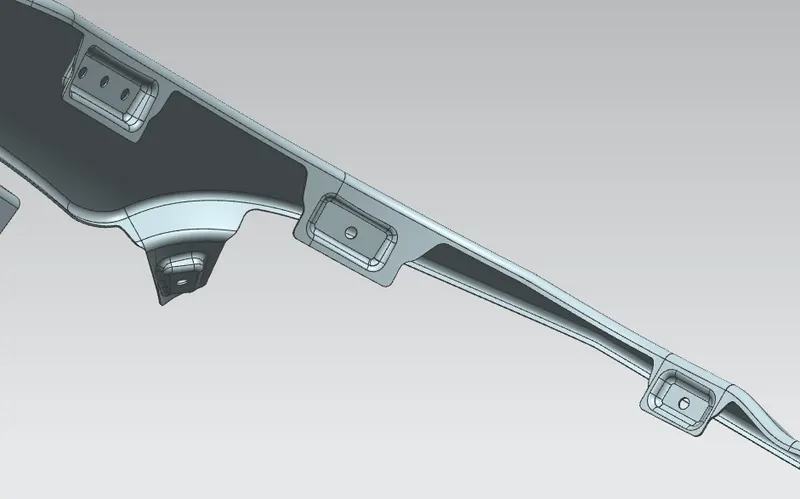
And then for sill mount -
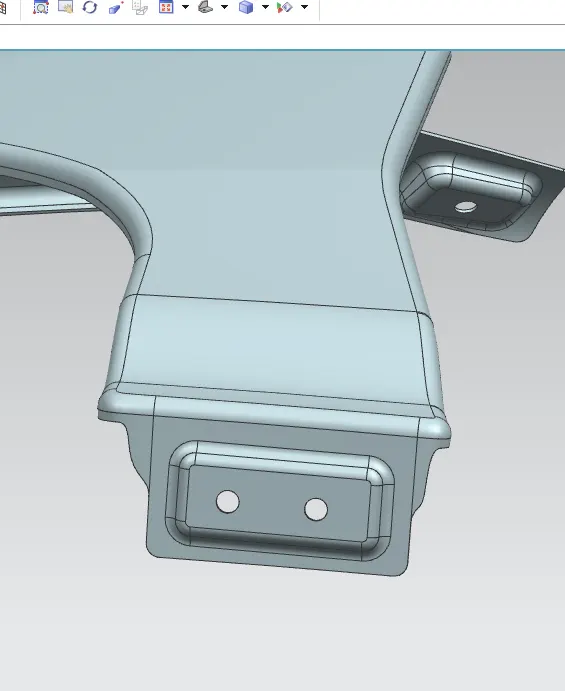
then for A-Pillar mount -
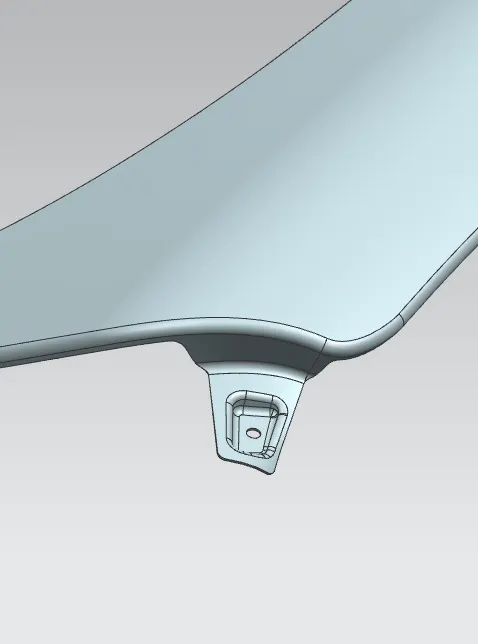
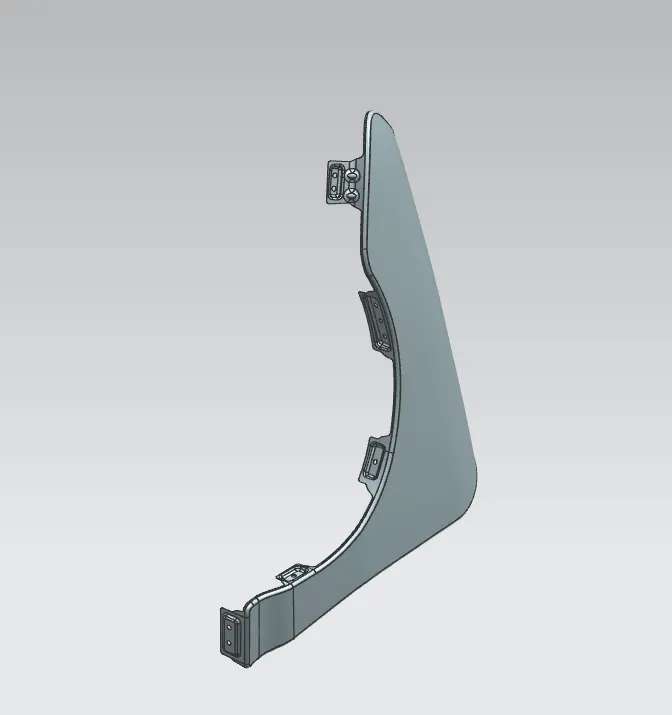
So here we have created all the mounts of fender and now look at the different views of the fender -
Front View -
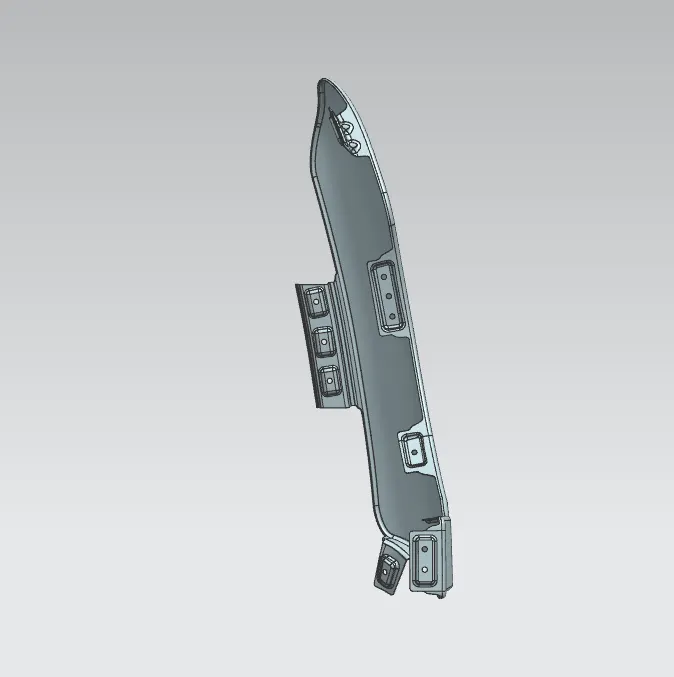
Top View -
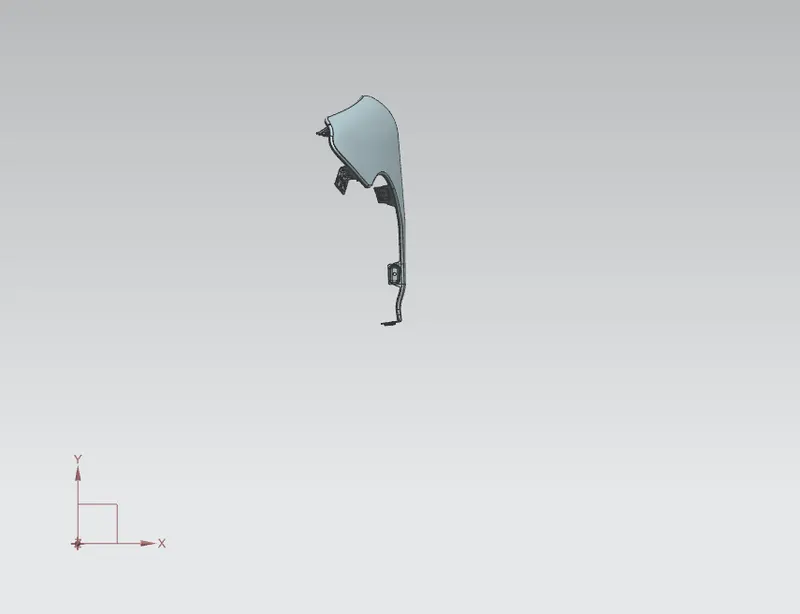
Buttom View -
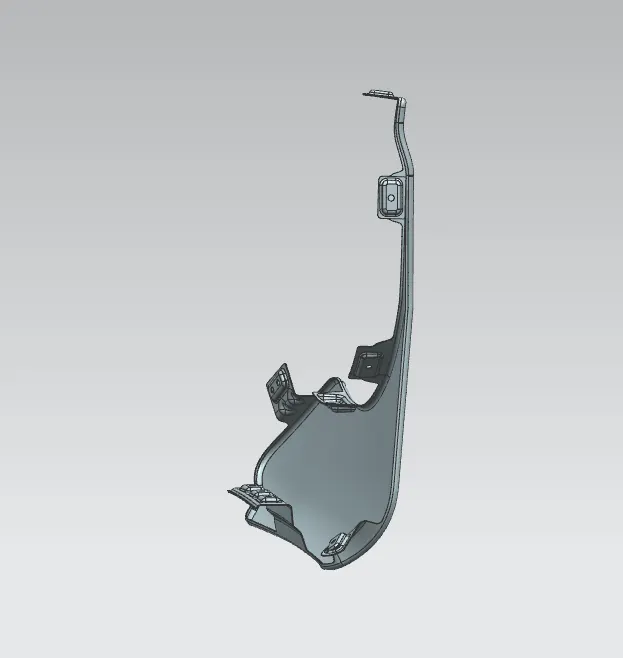
Left Side View -
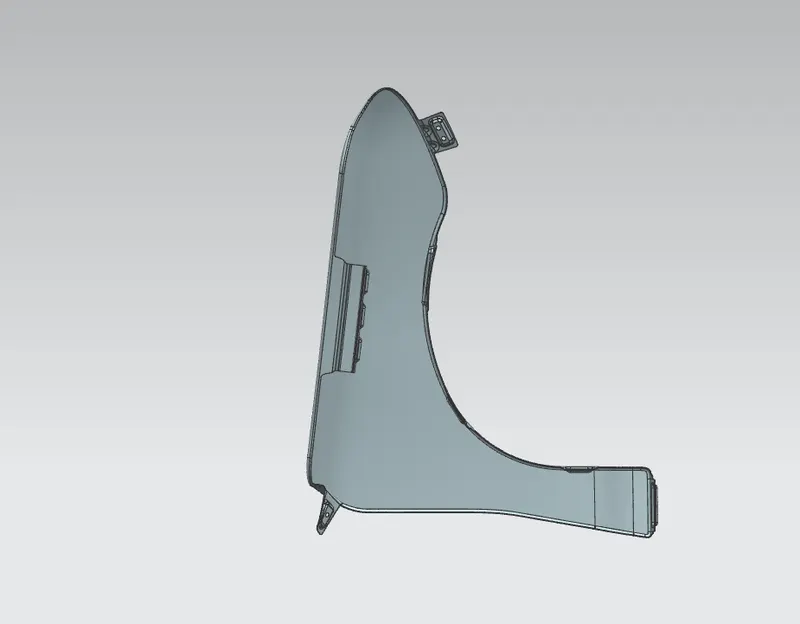
Right Side View -
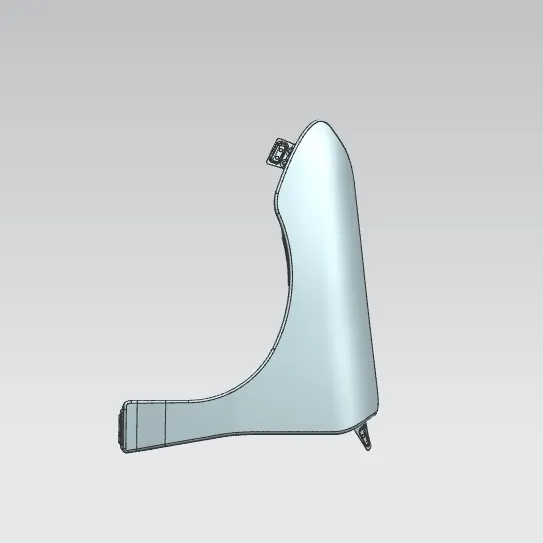
Back Side View -
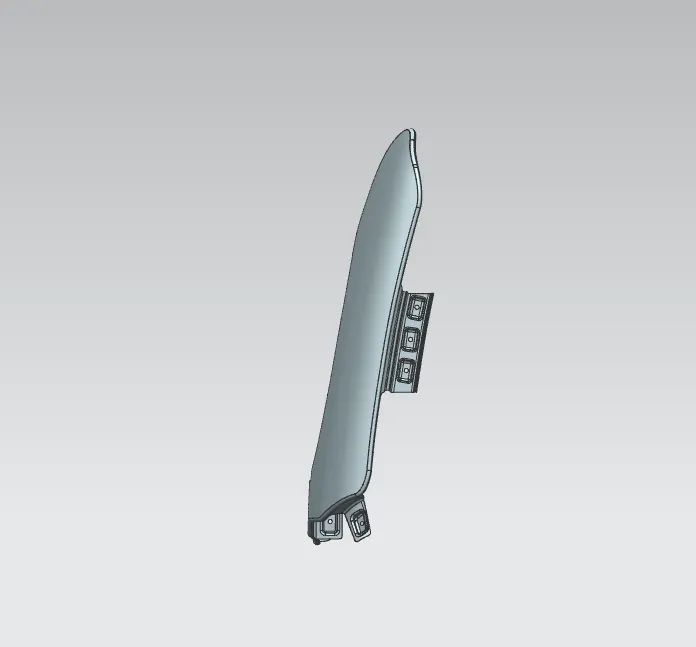
Isometric View -
Conclusion
So here we discussed about the fender and its type. We also discussed about the standard to design a fender and the procedure followed to design the Fender.