Fender Design
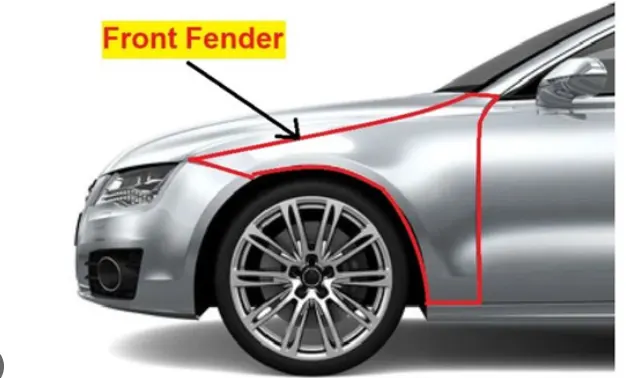
FENDER
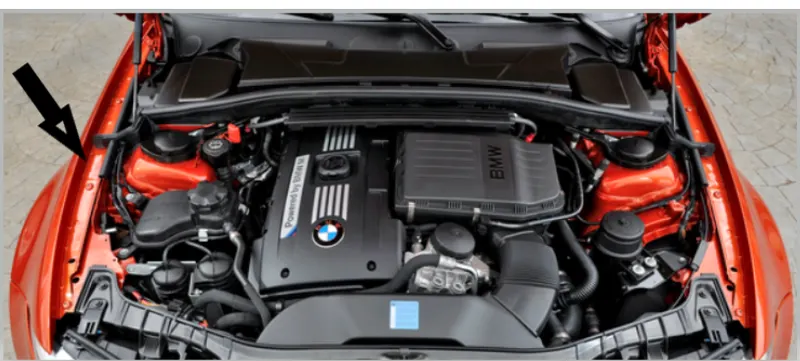
- The fender is the portion of a car's body that protects the wheel and engine compartment.
- The fender has been designed to shield pedestrians from the tremendous impact caused by the engine compartment.
- The fender serves as a cover for the interior, unsightly parts of the engine compartment so that the client won't see them.
- To lessen the impact of the fender on pedestrians, it is made of pastel or softer material.
TYPES OF FENDER
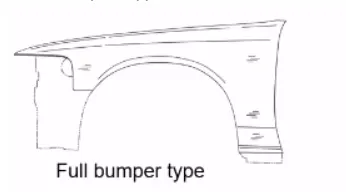
1. FULL BUMPER TYPE:
The conventional style of fender with the most material use is the whole bumper type. This type is utilised in older automotive designs where it adds to overall weight and decreases performance. Due to larger surface, upkeep is also generally more expensive.
2. HALF BUMPER TYPE:
The current half-bumper design uses less material and boosts productivity by making the blank smaller while still delivering better performance. Compared to the full bumper type, the maintenance is also comparatively minimal.
To lower the scrap rate per blank, we switched from full bumper type to half bumper type. In contrast to the half bumper type, where we can make two fenders per blank, the complete bumper can only produce one fender per blank.
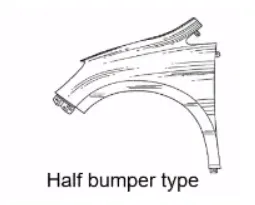
NOTE: Generally full bumper type fenders were used but to reduce the waste material half type fenders are used in most of the cars.
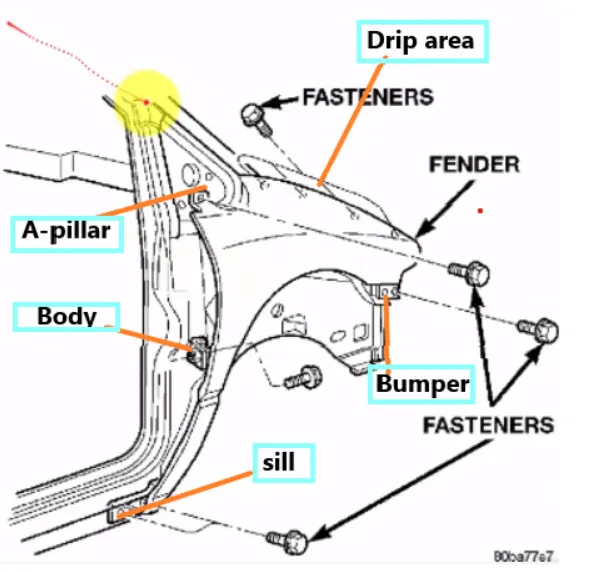
FIVE MAJOR MOUNTING AREAS IN A FENDER:
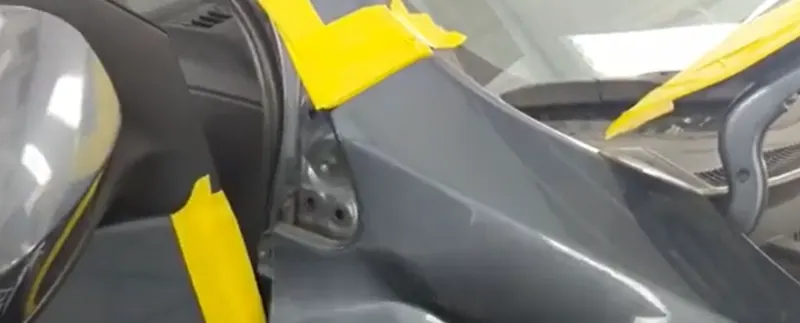
- Cowl Mounting-
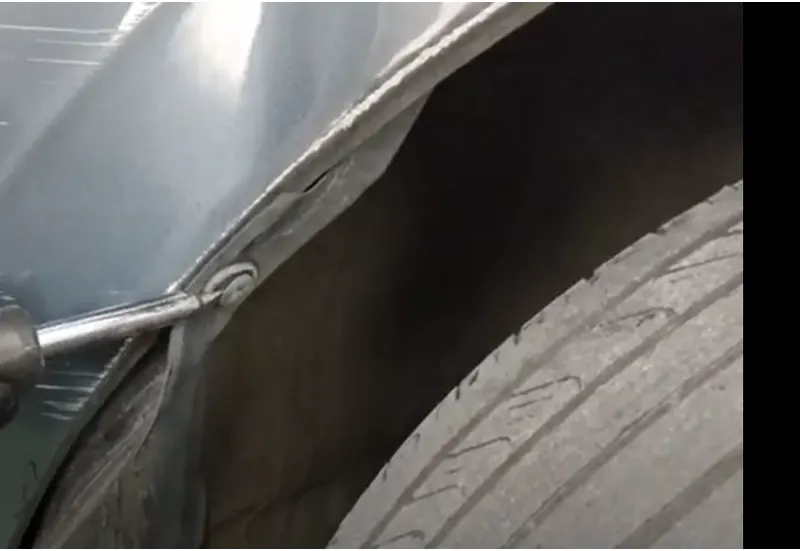
- Baffle mounting-
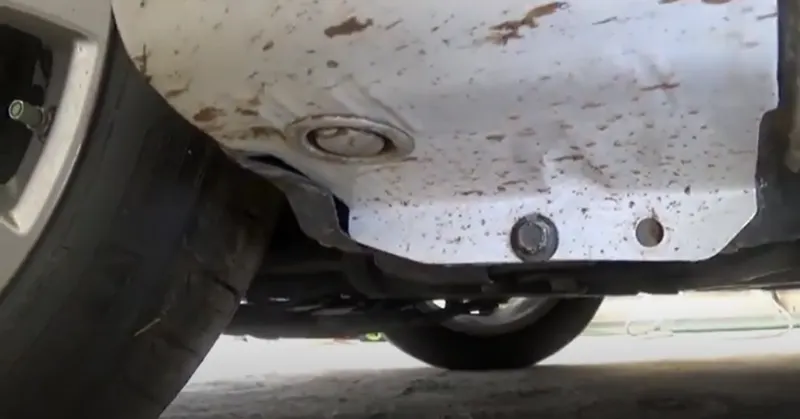
- Sill Mounting-
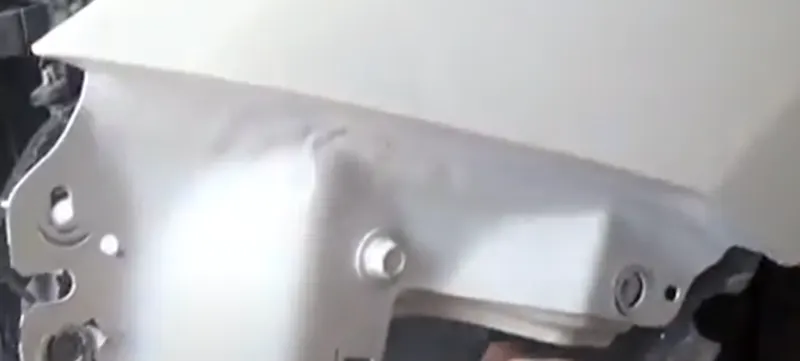
- Bumper Mounting-
- Drip Mounting-
1. CREATION OF DRIP AREA
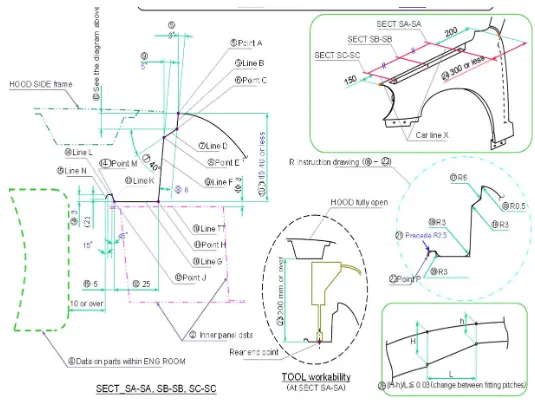
- Follow the given master section for proper dimensions.
DRIP AREA MOUNTING:
- It is the crucial fender mounting unit. As a result of its connection to the engine compartment, the fender must adhere to certain design restrictions.
- We must first account for the cowl top when constructing the drip area by leaving 200–300 mm.
- When creating the drip area mount for fender, we must leave at least 150 mm at the front for mounting the headlamp.
-
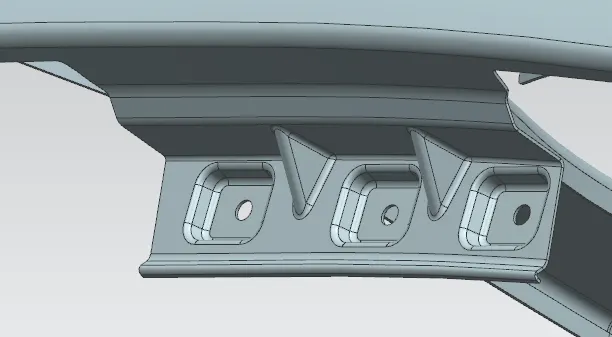
In order to give the part stiffness and extra strength, two darts are inserted on the longer side of the drip region.This prevents the fender from vibrating and impacting external forces when the car is moving.
- On the mounting, embossing is offered to strengthen them during attaching.
2. CREATION OF SILL AREA MOUNTING
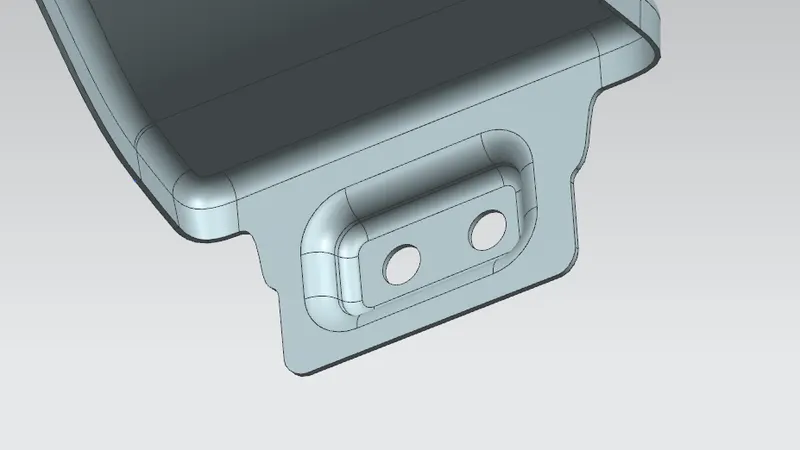
The sill, which connects the floor and the body, is the panel that supports the floor right beneath the bottom of the door. The sill mounting location is built with holes and embosses because the bottom end of the fender is fastened to the sill body for reinforcement of the fender panel. The fenders are fastened to the sill body with M5 bolts.
3. CREATION OF BUMPER AREA MOUNTING
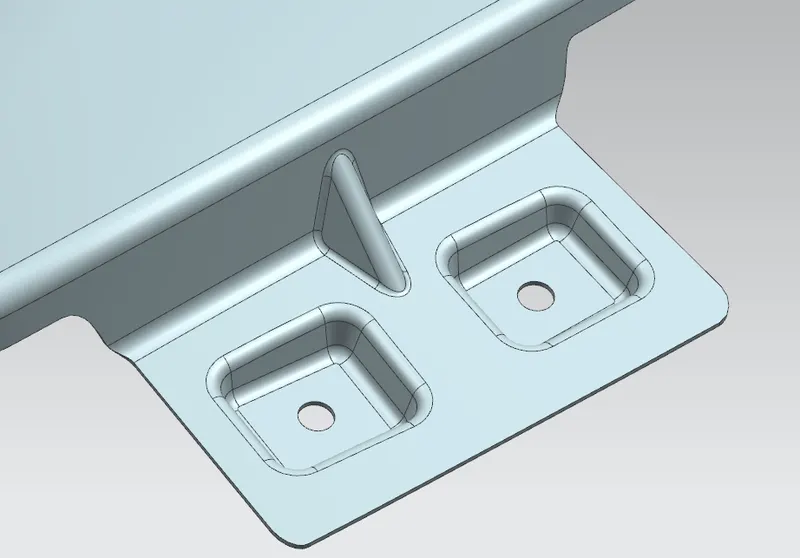
The bumper mounting area is used to fix the plastic bumper to the fender with the help of the fasteners.
4. CREATION OF COWL AREA MOUNTING
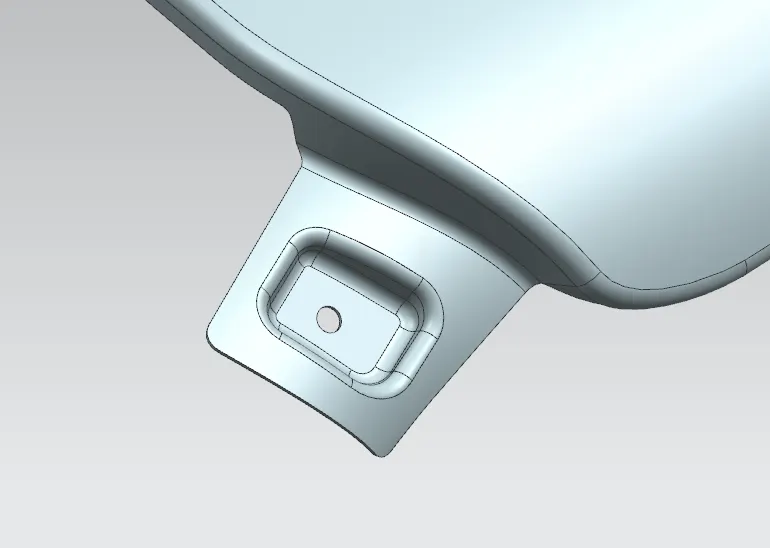
This area covers the wiper motor and its instruments.
5. CREATION OF BAFFEL MOUNTING
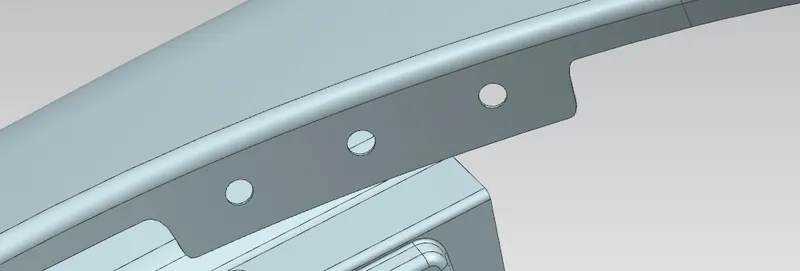
- On the inside of the fender arch, over the tyre, baffle mounting or mudguards are the clip-fit mountings.
- When the automobile is moving, it shields the engine compartment from damage and prevents pedestrians from getting hurt by road debris.
- They are attached to the fender with the help of a unique style of locking clip made of plastic.
- we should create three mounting for baffle mounting but here I created only one because of the surface problem during the thickening time.
SURFACE THICKNESS IS BEING APPLIED
The final stitched surface of the fender has a thickness of 0.75 mm inward in accordance with the sheet metal requirements.
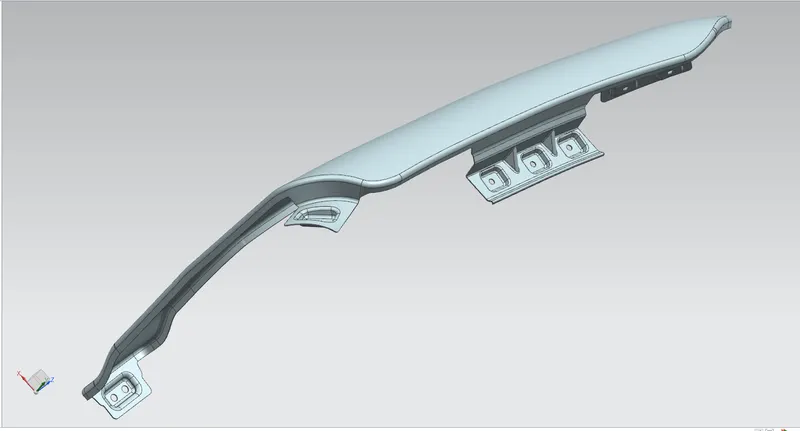
ISOMETRIC VIEW
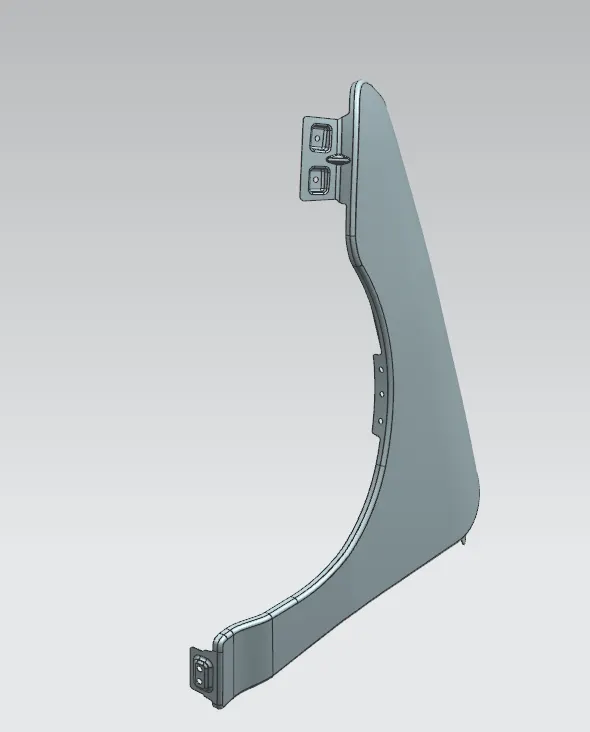
TOP VIEW
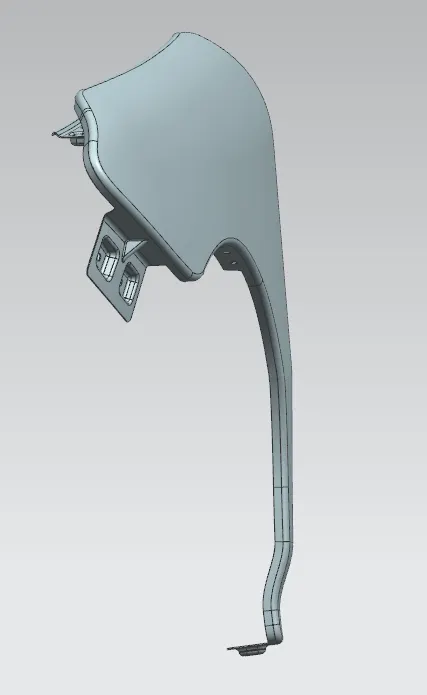
FRONT VIEW
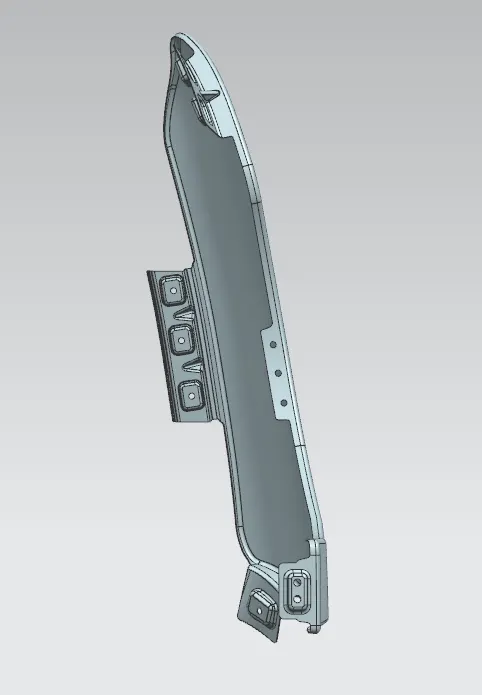
MANUFACTURING PROCESS REQUIRED TO CREATE ALL THE MOUNTING:
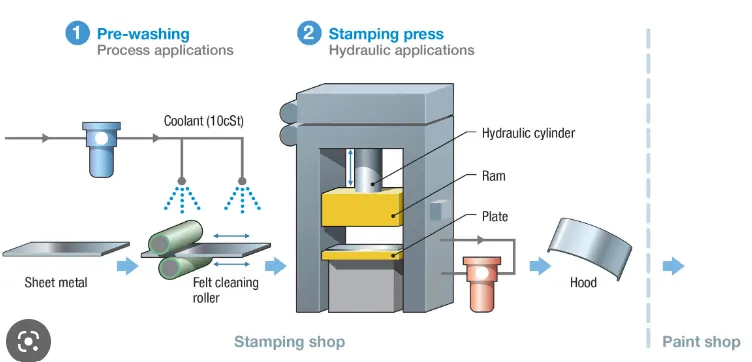
STAMPING PROCESS:
The manufacturing technique of metal stamping is used to form flat metal sheets into desired forms. A range of metal-forming processes, including punching, bending, and piercing, to mention a few, can be used in this intricate process.
Placing flat sheet metal into a stamping press, often known as pressing, can be done in coil or blank form. The metal is shaped into the required shape in the press using a tool and die surface. Metal is shaped using stamping techniques such as punching, blanking, bending, coining, embossing, and flanging.