Fender Design
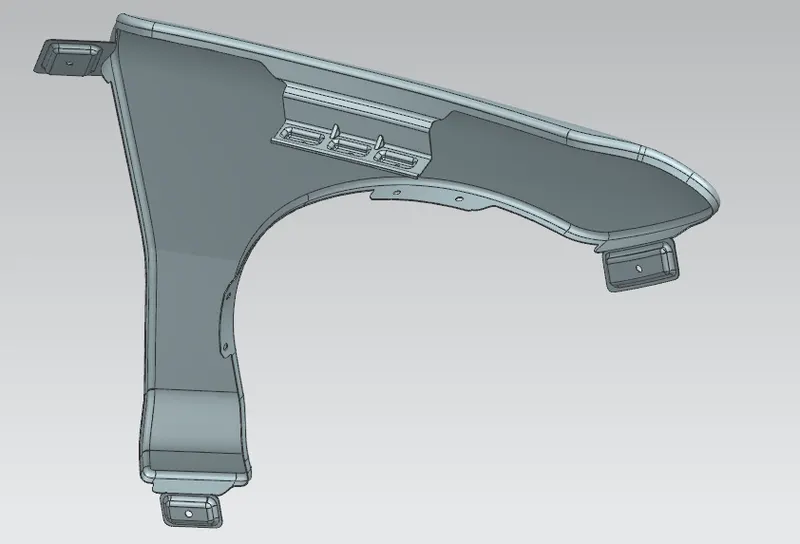
FENDER DESIGN:
AIM:
To create a fender design with the mounting point according to the design parameters.
INTRODUCTION:
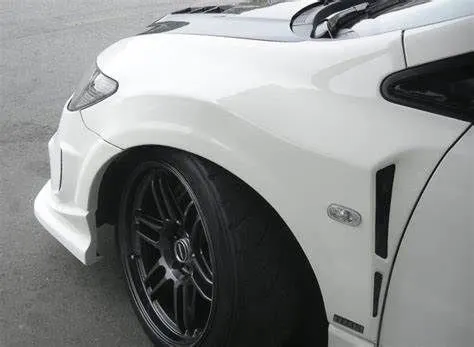
Fender is the part of automobile that frame of wheel well.Its primary purpose is to prevent the sand, mud, rock, liquid and other road spray from being thrown into the air by the rotation of tire. When the vehicle is moving tires pick up the stones and huel them to the all direction fender are basically present to prevent any injuries to pedestion and contain the motion of there particle.Most passenger automobiles have four fenders, one over each wheel. For vehicles with a narrow car body that exposes the tire, the fender is an exposed curve over the top of the tire. For wide body vehicles that cover the tire, the fender forms the wheel well surrounding the tire, and is not directly visible from above the car body.Wheel wells tend to be much larger than the diameter of the tire, because they do not move with the tire suspension and consequently must be large enough to allow the full range of tire motion on the suspension without touching the interior of the wheel well.More elaborate designs include fender skirts for enclosing the outside edge of the wheel well, and stylized pontoon fenders for exposed fenders.
TYPES OF FENDER:
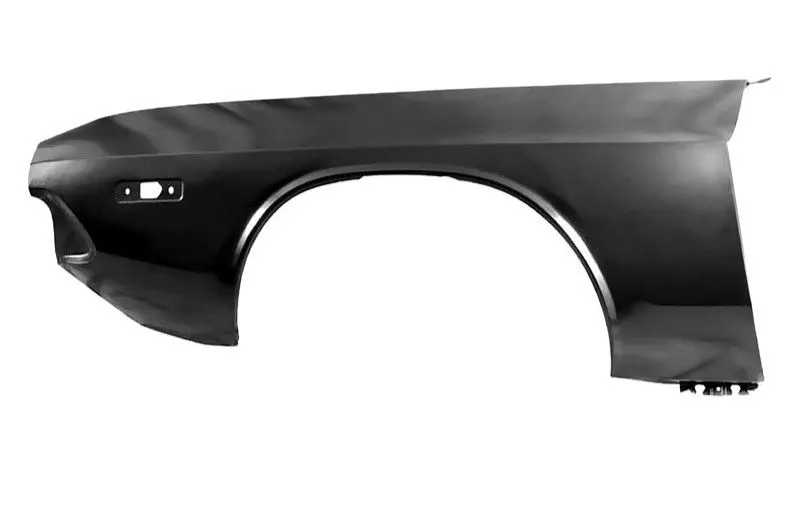
- Full bumper type
- Half bumper type
FULL BUMPER TYPES:
HALF BUMPER TYPE:
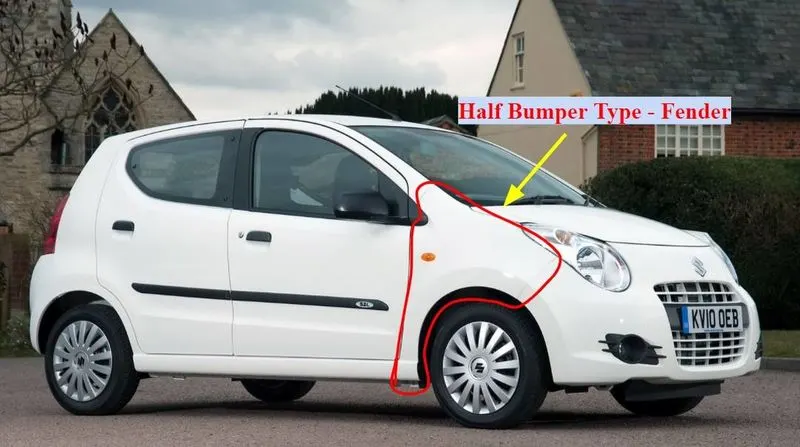
In now days half bumper fender are used because of reduced the scrap of the material and also give more plastic component are given to the car.
MOUNTING POINTS OF FENDER:
Thay are 5 mounting point in fender
- Drip area
- A Pillar
- Sill
- Baffle
- body
DRIP AREA:
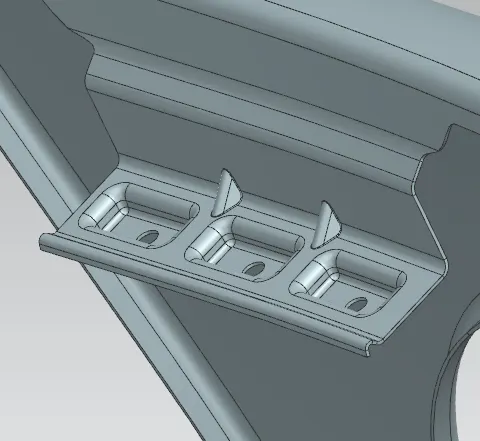
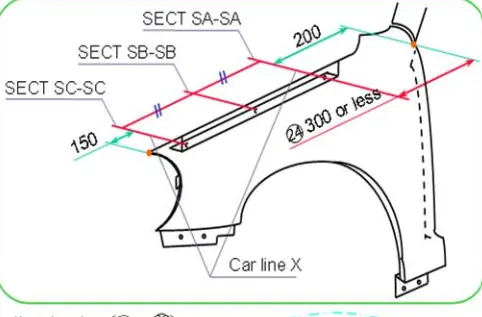
- To design the fender of drip area need to give a clearance at front side 150mm and rear side 200mm.
- The master section of drip are shown in the fig
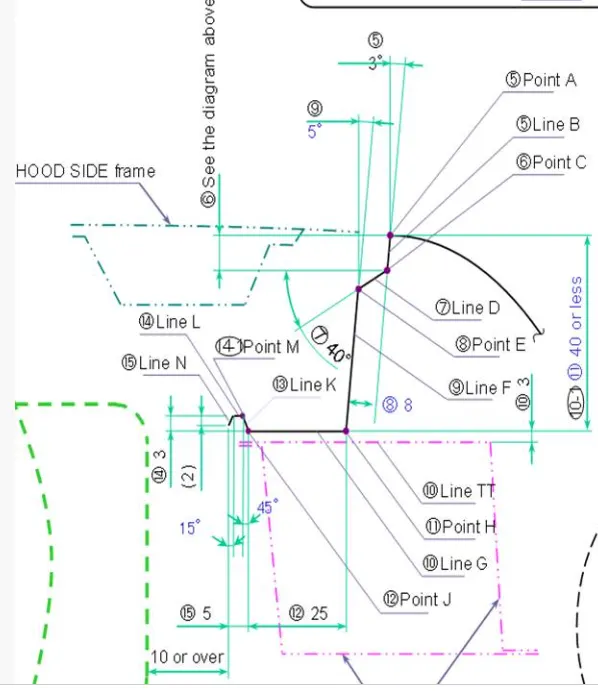
- From this master section at line b and line d use to prevent fender fix bold to be seen outside for that improve the apperance of parting gab between the hood and fender.
- At the point between A and H must be in 40mm or less then of 40mm as maximum productivity.
- The depth exceeds 40mm rigidity of the beads is to be provided and also forming is not feasiblke at depth exceed 60mm due to wrinking and spring back.
- When the dip surfaceis stamped 3deg must be secured for spring back .
- Angle can be incresed be order to make expected modification possible.
- Defect due to compression stamping such as camber ect occure.
- Thus a touch difference is prodided in flange de3pth when the flange length excess of 800m.
A PILLAR:
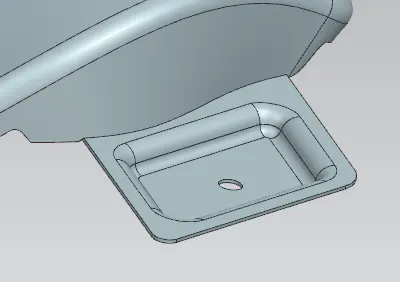
- This Mounting region is located near the cowl of the vehicle where the fender is fastened with the bottom edge of the windshield.
- This mounting is covered with the side rear-view mirror.
SILL:
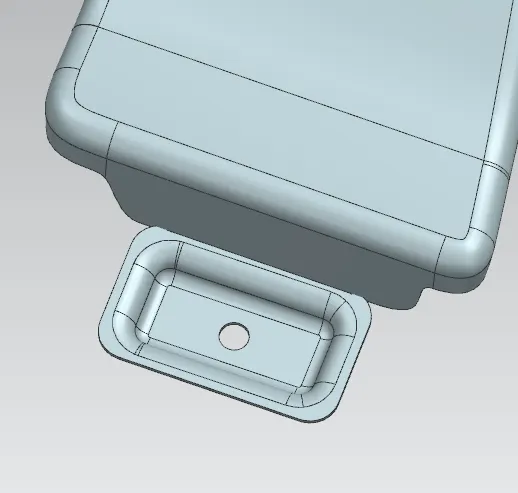
- The area at which the bottom of the fender gets connected to the floor near the bottom edge of the door.
- The Embossed sill mounting of the fender is attached with the fasteners.
BUMPER AREA:
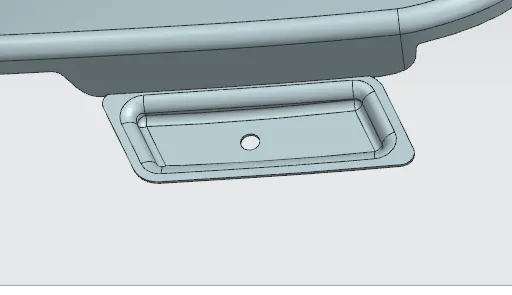
- The bumper mounting region is located beneath the bumper.
- The fender gets attached before the installation of the bumper.
- After fixing the fender with fasteners the bumper will cover the bumper mounting.
BAFFLE AREA:
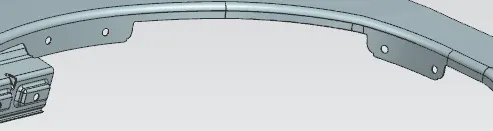
-
In this region, the baffle gets installed to the fender with the help of clips which holds the baffle with the fender along the wheel arch.
OVERALL VIEW:
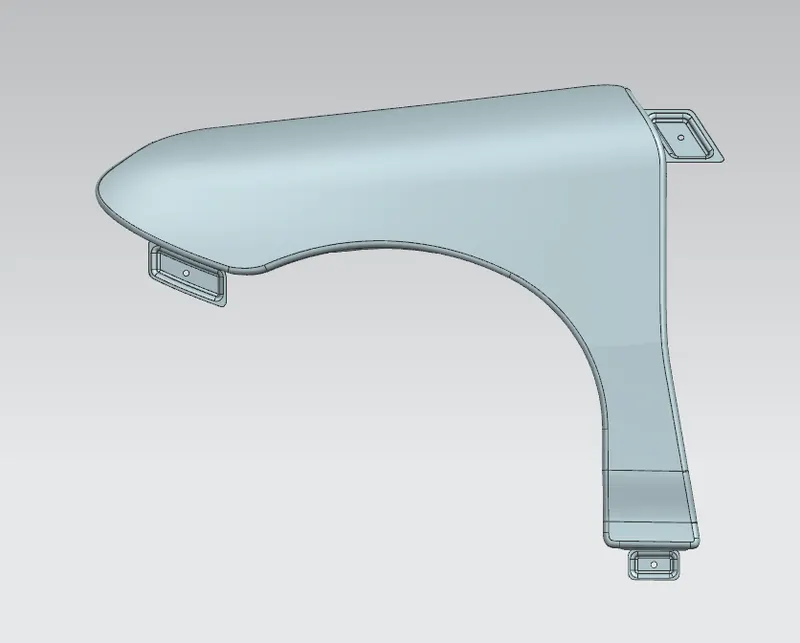
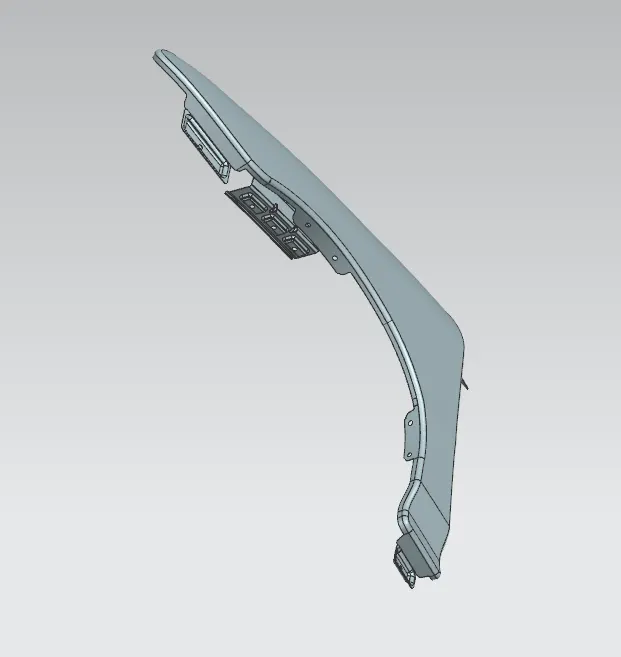
CONCLUSION:
The Fender is designed with the necessary mounting points considering the design parameters.