Fender Design
Fender design
Aim
- To study about the fender and its various design requirements
- To design a fender of thickness 0.75 mm from the given class A surface
- To create various mounts on the fender according to standards which will help assemble them with the car body
Fender
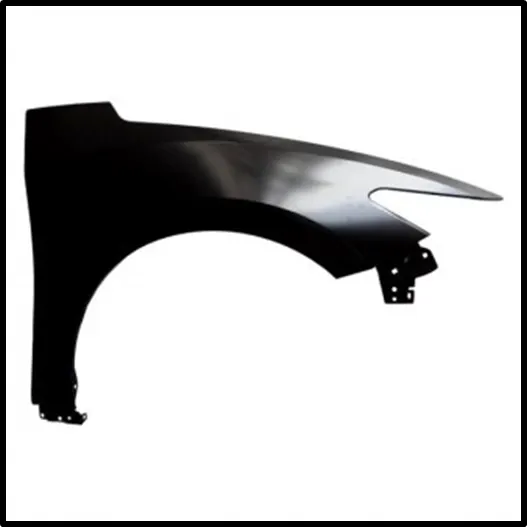
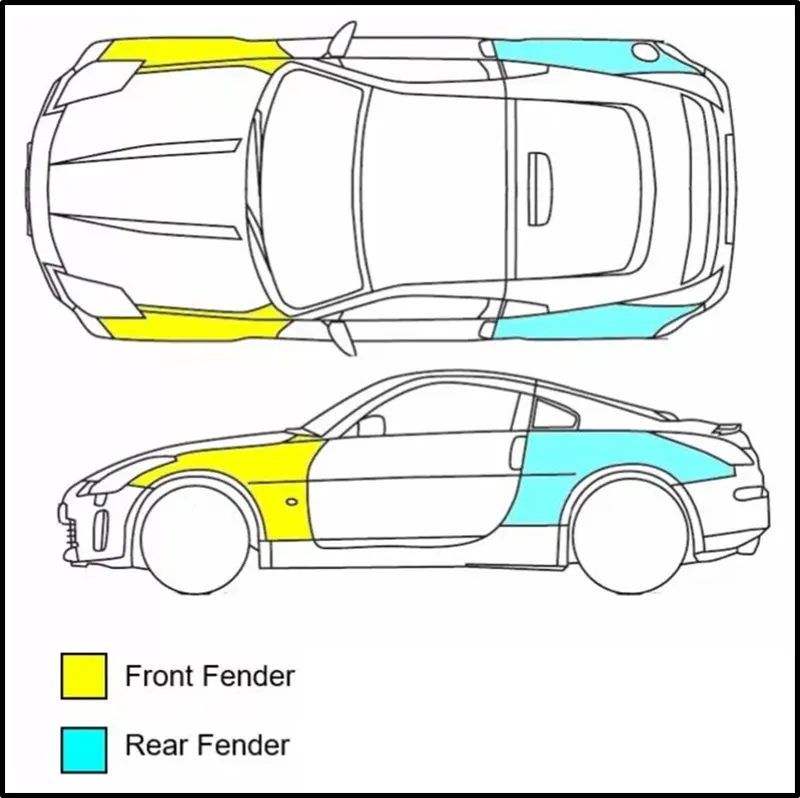
A fender is the curved portion of the car's body that sits over and houses the wheels. Its purpose is to keep mud, rocks, and other road debris from being thrown around by the tires is an uncontrolled and dangerous manner. In other words, the fender is a housing for the wheels that keeps road debris contained. If there was nothing covering the wheels, all kinds of debris would be kicked up by the rotating tires. The fender not only protects your car from sustaining damage from road debris but it prevents this debris from being thrown up at other vehicles and especially pedestrians on the road. This is why vehicles with large, oversized tires are often required by law to install fender flares an extended form of the car fenders that gives extra coverage to extra-large tires. They look exactly the same like fender on a car, but fender flares are much bigger than the regular ones.
Types of fenders:
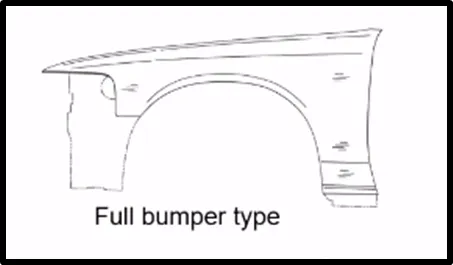
Full bumper type
- The full bumper type fender was typically used in old cars and is no longer been used. The fender used to cover a larger area in comparison to the half bumper type.
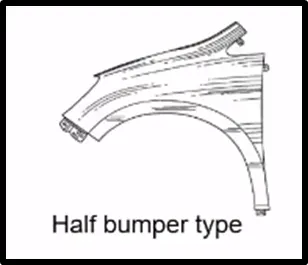
Half bumper type
- Most modern vehicles are installed with a half bumper type fender. These fenders cover less area in comparison to the old ones which results in less material consumption. This also has a direct impact on the overall cost of the vehicle since the metal usage is decreased.
- Decrease in weight also adds to increases efficiency and overall performance characteristics of a vehicle
Design considerations for front fender:
Mountings
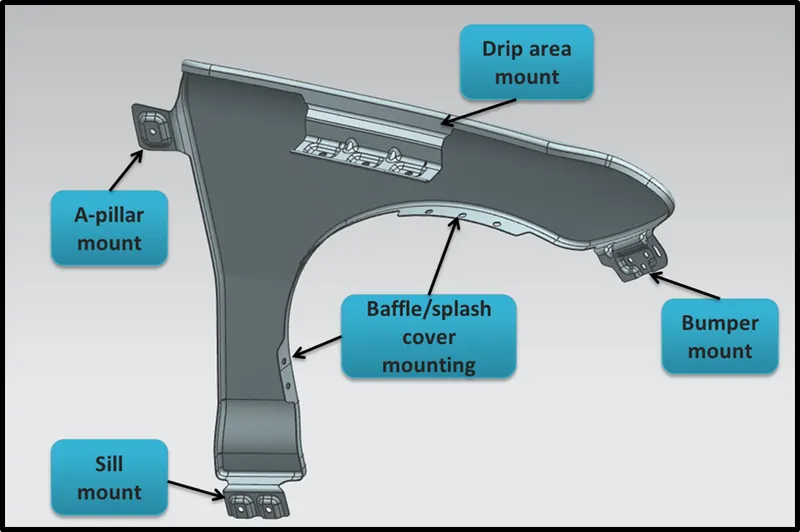
In order securely assemble the front fender to the car body several mounts are used along the fender .The generally used mounting regions on the fender are listed below:
- A-pillar mounting
- Drip area mounting
- Body mounting
- Sill mounting
- Bumper mounting
A-pillar mounting
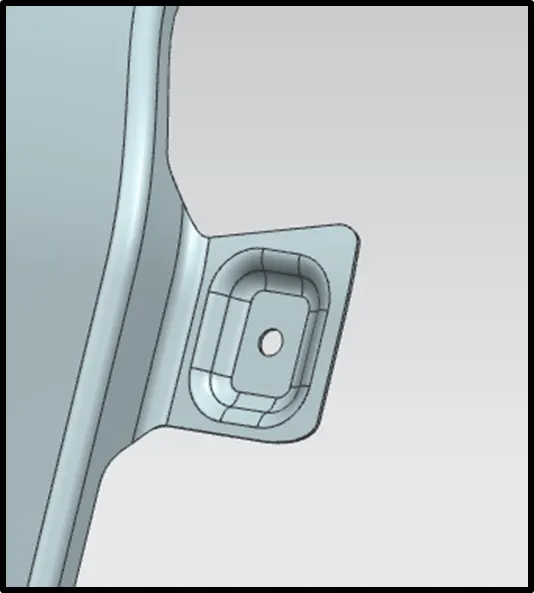
- As the name suggests the A-pillar mount is located near the A-pillar of the car. The A-pillar is one of the structural members which connect the roof to the car body.
- The location of the A pillar-mount is important in determining the position the drip area mount
Drip area mounting:
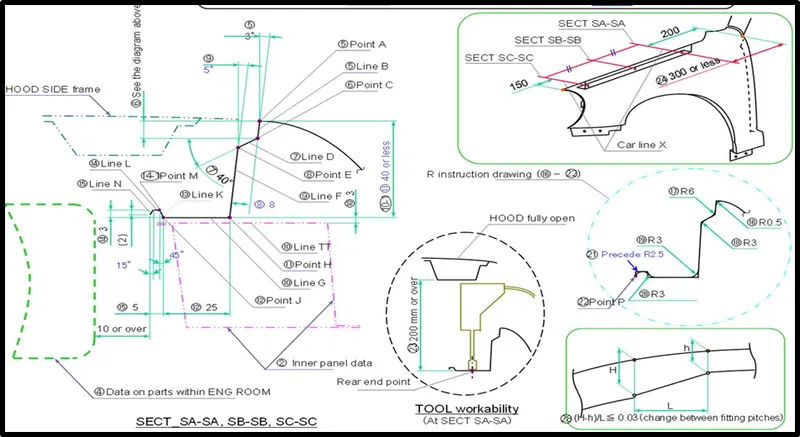
- The drip area is the region where the fender is mounted to the engine bay. The drip area mount is the most important and the largest mount in terms of area since it experiences a lot of vibration directly from the engine components
- A master section for the drip area mount is been given which has to be followed to ensure that the mount is manufacturable and also easily accessible during installation and maintenance activities
- The front of the drip area mount must be at least 150 mm rearward of the headlight mounting region
- From the end of the A-pillar mount there should be a gap of 200 mm to the rear side of the drip area mount
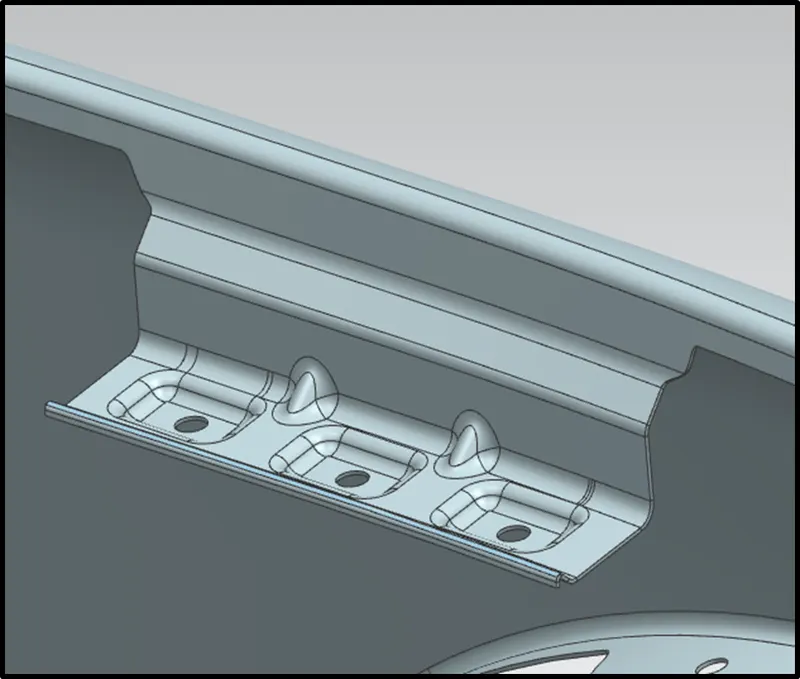
- Since the drip mount area is large and it experiences vibration, the chance of deformation and movement is very high. In order to reduce the chances we have created two darts(also can be called ribs or gussets)to increase the stiffness of the mount in the particular area
Sill mounting:
- Sill are structural members along the side of the car placed below the doors of the car
- The sill mounting helps fasten the fender to the sill area of the car body.
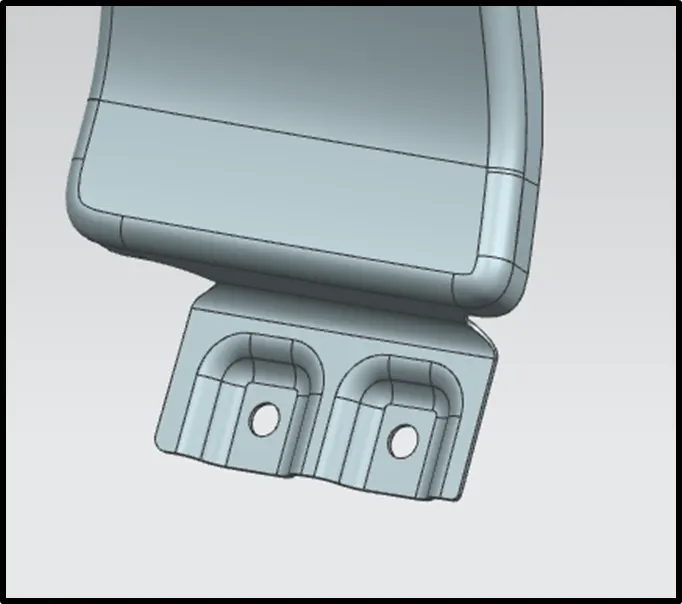
Bumper mounting:
- Bumper is used to cover the frontal potion of the car and also used to absorb impact forces due to collision. The main mounting point of the bumper is on the fender bumper mounting point
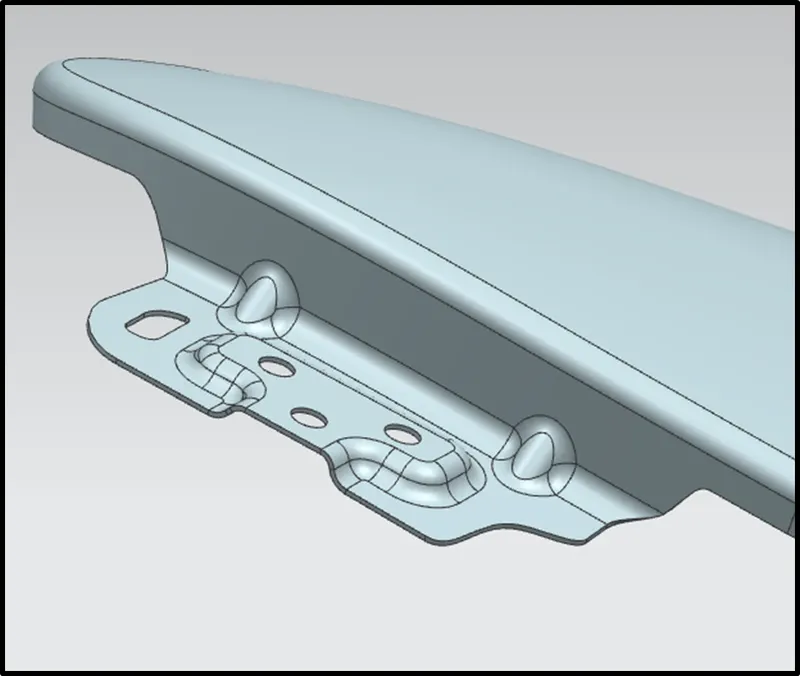
Baffle mounting
- The baffle mounting also known as the fender liner is mounted along with the mudguard to prevent debris and dust form been thrown into the engine room and also the pedestrians and other vehicles on the road.
- They are generally mounted on to the fender with the help of various plastic fasteners like push clips for easy installation and removal during maintenance and service activities
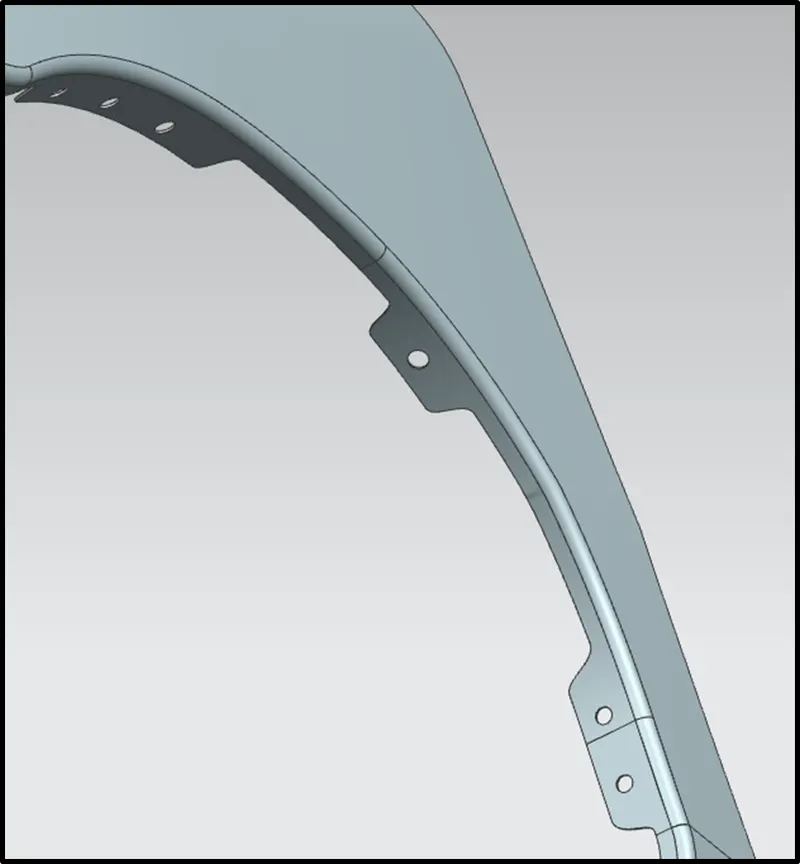
Fender wheel arch
The wheel arch is the semi-circular part positioned above the wheel of a vehicle. The wheel arch area is generally covered by a plastic cladding which serves many purposes.Wheel arch design also has few regulations to be followed and it varies from country to country.Few of the regulations are listed below.
US Regulation
- The US regulation requires us to take measure the clearance L between the wheel outer edge and the wheel arch edge for every 10 degrees between the limit -20 to 180 degrees
- All the values measured which is known as the clearance value L must be greater than 5m to satisfy the US regulation
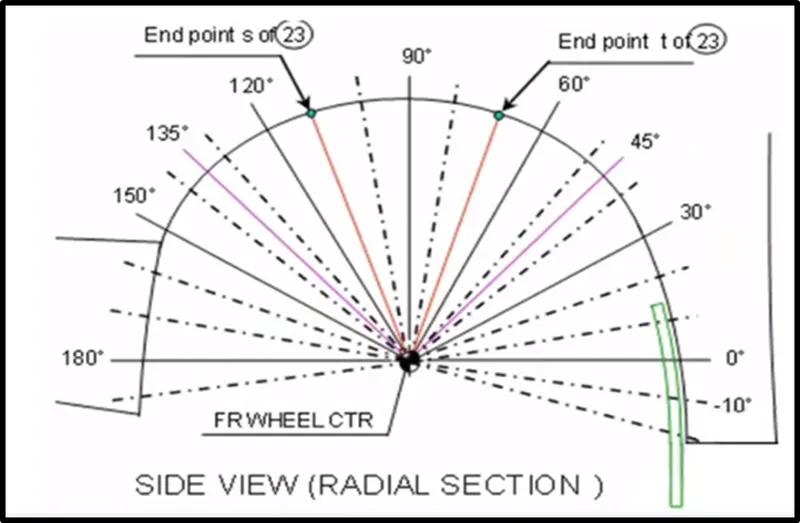
Japan Regulations
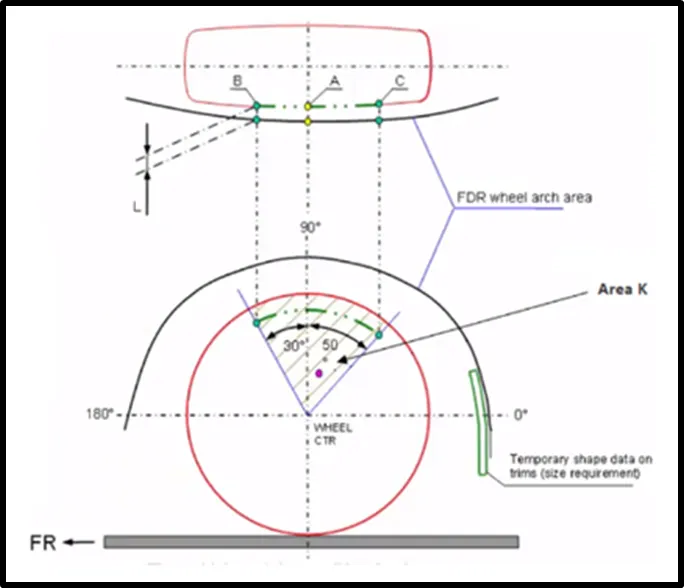
- Based on the image given below the clearance value L must be measured at points which are at an angle of 50 degrees,90 degrees and 30 degrees respectively
- All the points must have a clearance value L of more than 5mm to satisfy the Japanese regulations
Europe Regulations
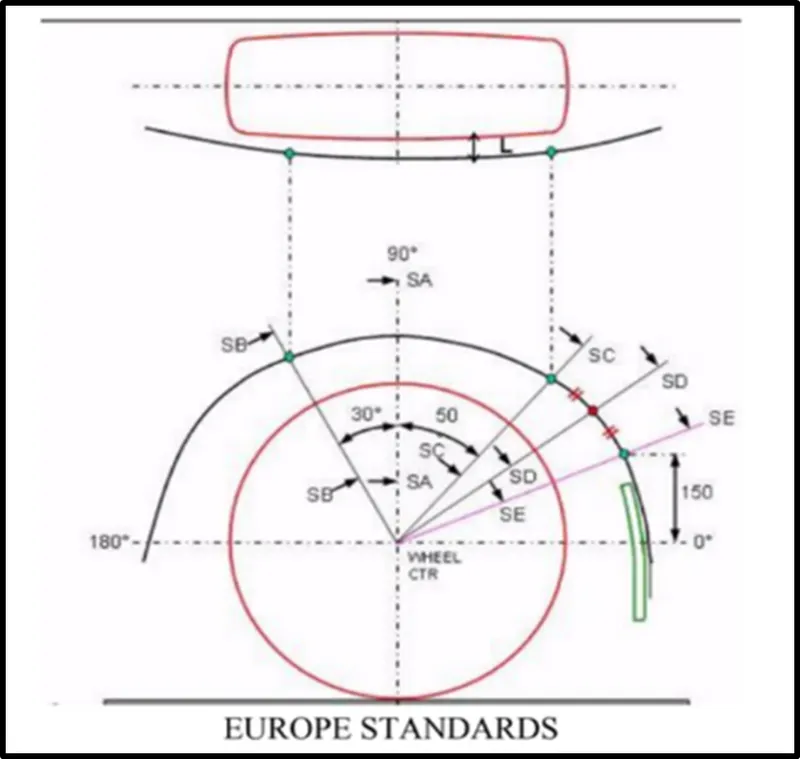
- We are required to measure the clearance L at the sections SA-SA,SB-SB,SC-SC,SD-SD,SE-SE as shown in the image below
- The clearance value L at all the five section must be grater then 10 mm to satisfy the European regulations
Draft angle
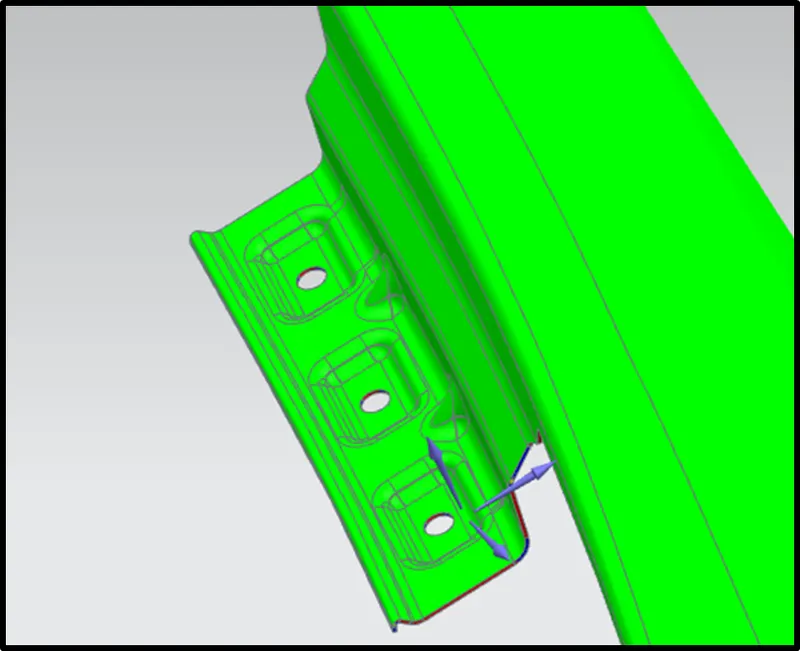
Positive draft angle is provided over all the surfaces of the mounts and its embosses to facilitate easy separation of the part and tool and reduce any chances of damage to the part during ejection. In most cases a minimum draft angle of 7 degrees is required for sheet metal components to ensure no problems occur during the processing of the sheet metal.
Safety and NVH
Safety is one of the most critical aspects considered while designing any automobile component. Fender can play a major role in frontal and side collisions and hence must be designed accordingly.
When a pedestrian collides with a car, the whole human body wraps around the front of the car, and the head impacts on the bonnet or the windscreen region in most of the cases. The distance at which the head impacts on the car from the ground is mentioned as Wrap Around Distance (WAD).
This distance has a major dependency on the height of the fender and hence is considered as on the most important factors for pedestrian safety
Baffles are installed in the fender in most of the cars to reduce the NVH levels
Material
Material selection is one of the toughest and most important criteria for any product since it has a direct impact on the overall cost, safety, manufacturability, recyclability and the weight of the final product. Car fenders are typically constructed from steel and sometimes from aluminium and also other composite materials
Styling and aerodynamics
The front fender adds a lot in terms of aesthetic and hence the styling designer has to create a smooth and good looking surface. The fender also has to be aerodynamic in shape since the flow along the side of the car is majorly impacted by the shape of the fender and hence a more efficient aerodynamic surface can result in increased efficiency

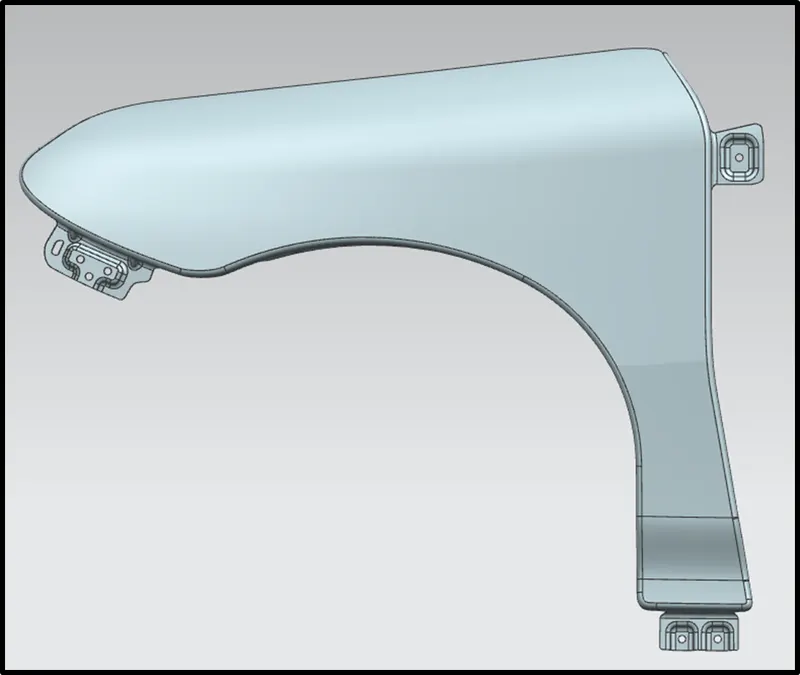
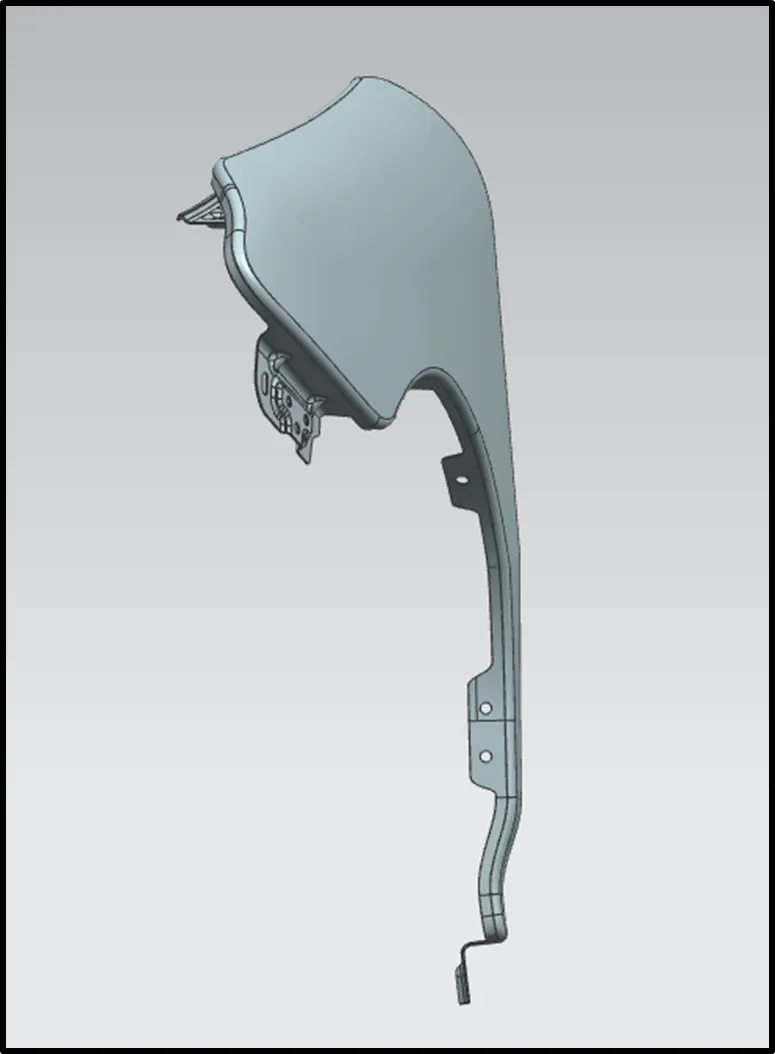
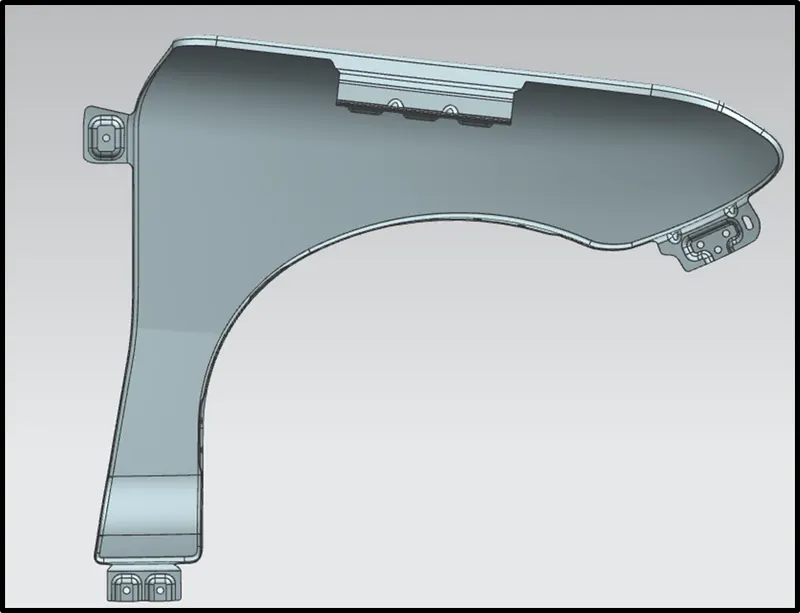
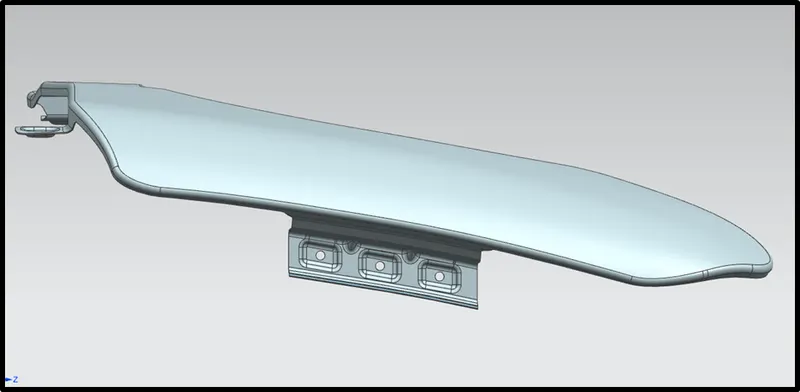
Different view of fender
Conclusion:
- The various design requirements of fender are studied in detail
- The fender is designed with a thickness of 0.75 mm from the given class A surface
- Various mounts are created on the fender according to standards which will help assemble them with the car body