Fender Design
Fender : Originally something hung over the side to protect the hull of a ship at a wharf, pier, etc. Of fire places since 1680s; of automobiles from 1919. Fender-bender "minor automobile accident" is from 1958.
Metal or plastic enclosure over the wheels of an automobile or other vehicle to protect against splashing mud, etc.The fender is located over the wheels of the vehicle. As such, there are four fenders on a typical vehicle: front right, front left, rear right and rear left.
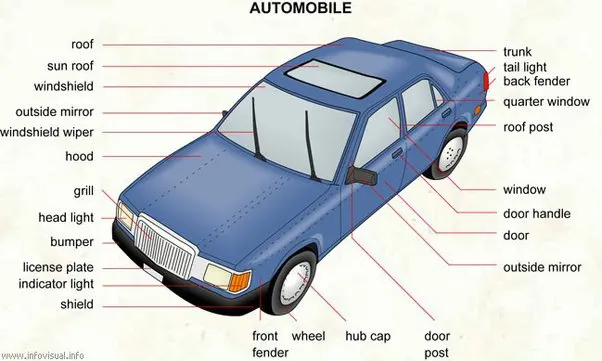
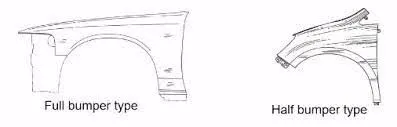
Full Fender & Half Fender:
Full : These types of fenders were used in earlier models of vehicles. They contribute to the major increment of the steel weight by just covering the front headlights with respect to the bumper region. The problem associated with this kind of fender is there is a lot of wastage in the blank and every inch of a material is a cost to the industry.
Half : These fenders are mainly used for serving the purpose of cost-cutting and reducing enough proportions of the steel wait resulting in a reduction of the weight of the vehicle slightly. They can be economically manufactured, i.e by slightly increasing the blank size, we can produce two fenders at a time.
DESIGN CONSIDERATIONS
The front fender has basically five mounting positions with respect to the other components. The mounting positions are as follows:
- Drip Area Mounting.
- A-Pillar Mounting.
- Sill Mounting.
- Bumper Mounting.
- Baffle Mounting.
For the creation of the Drip Area Mounting, the given Master Section is followed, and the other mounting points are created by assuming appropriate positions with the respected components.
A pillar Mounting
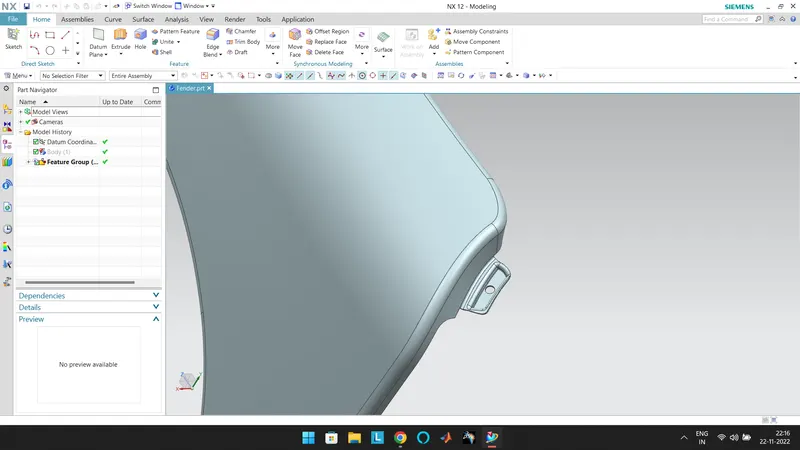
Drip Area
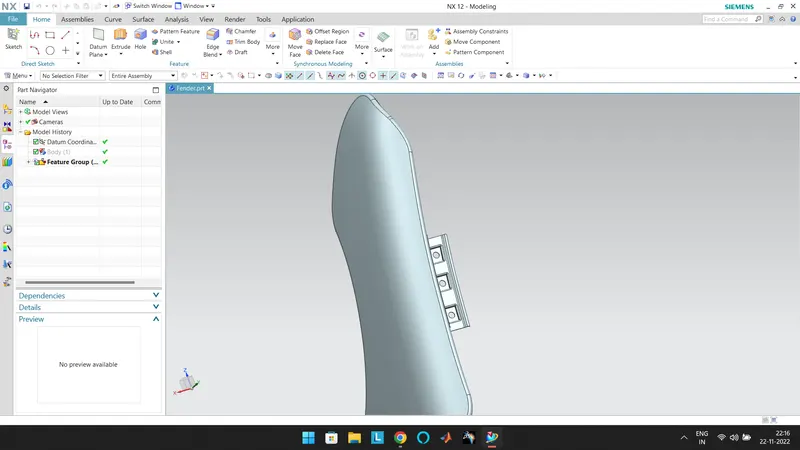
Sill Mounting
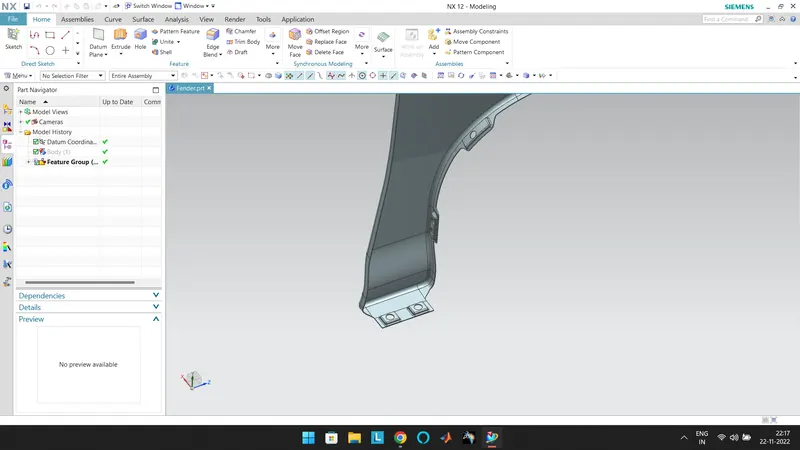
Baffel Mounting
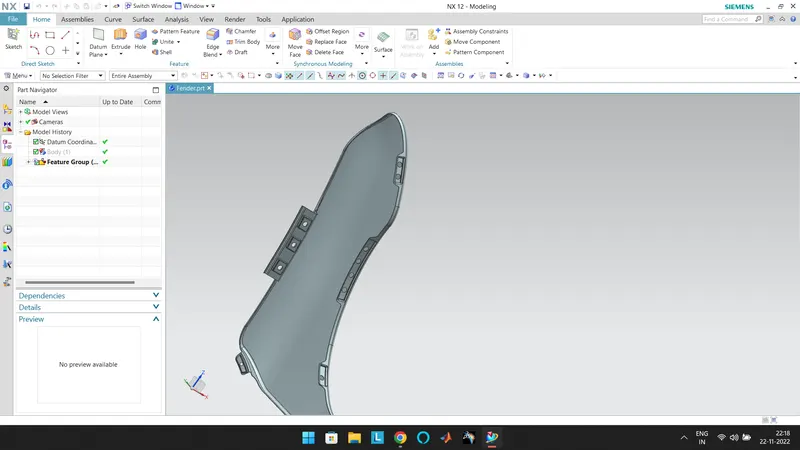
The emboss are created like that to comfortably seat in the inner panel of the body with the cavities. So That moulding should be created like that for easy placing.
CONCLUSION
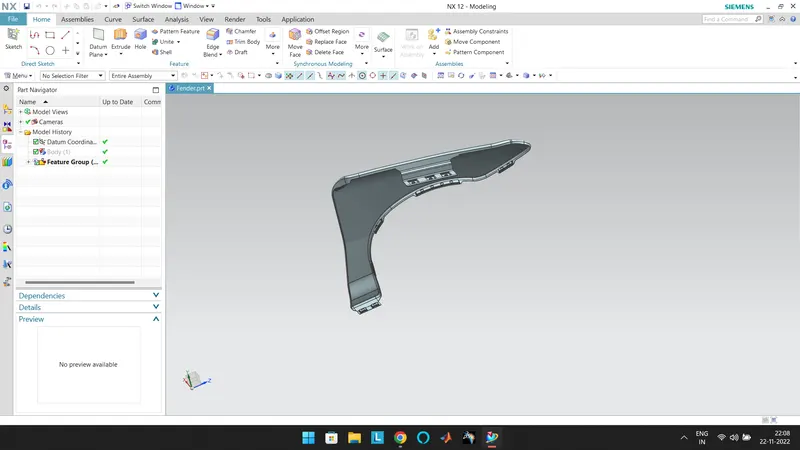
The front fender is designed according to the given master section and as per the OEM Standards.