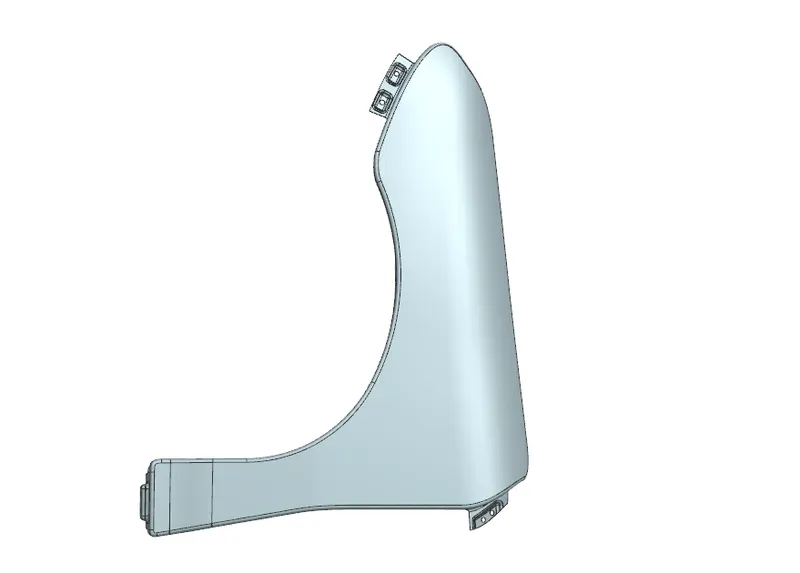
Fender Design
AIM:
- To design a front fender from the given skin data and the master section provided with Drip mounting, A-pillar, Sill, Bumper and Baffle (splash) Mounts.
- To Prepare a report by explaining about Fender Design and its different mounts , manufacturing process and its design parameters.
INTRODUCTION:
Fender- Fender is the American english term for the part of an automobiles, motorcycle or other vehicle body that frames a wheel well (the fender underside). Its primary purpose is to prevent sand, mud, rocks, liquids, and other road spray from being thrown into the air by the rotating tire. Fenders are typically rigid and can be damaged by contact with the road surface.
Fender is an important exterior component of an Automobile. Fender is the connecting link between the Bumper and the Sidedoor Panel. This is not the only purpose of the Fender. The Fender has a few very important functions to perform.
They are -
1. To protect the Engine Block and the Engine Components from getting hit by the little Sand & Rock particles that are thrown up by the fast-moving wheel.
2. For aesthetic purposes. This fills the hole left after all the necessary components are added i.e; Hood, Bumper & Side Panel.
3. Lastly and most importantly, to prevent the rocks and sand particles from hitting the Pedestrians nearby. It's made sure that all the particles hit the Baffle region of the Fender.
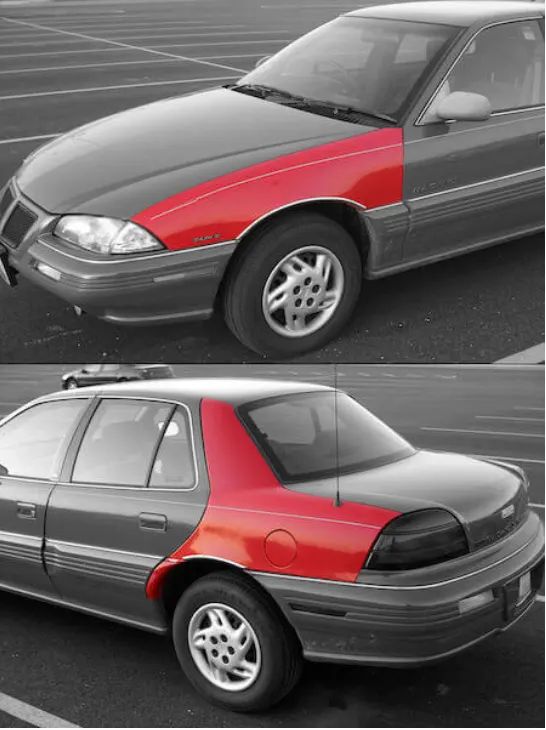
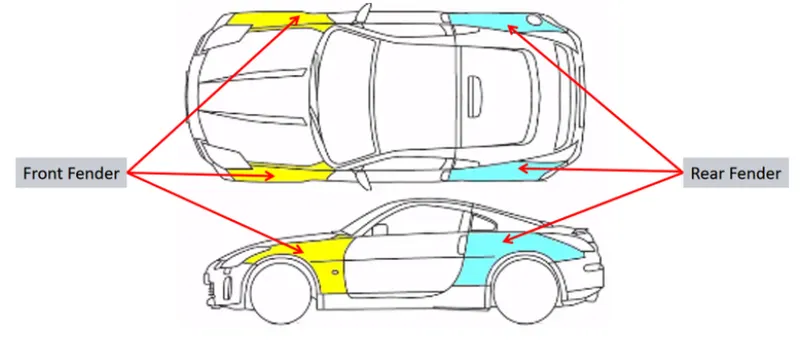
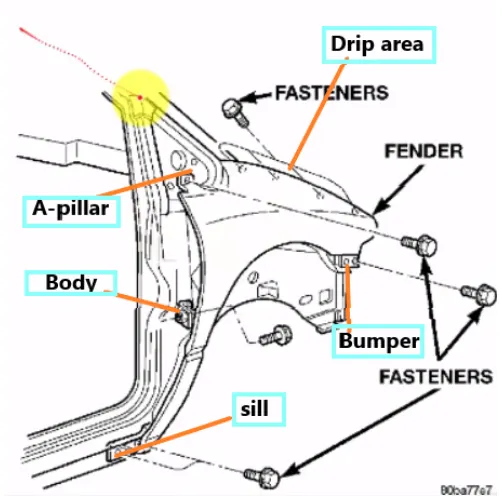
Mountings in Fender - There are 5 Mountings in Fender:
- Drip Area
- Bumper Mounting
- Sill Mounting
- A-Pillar Mounting
- Baffle Mounting
Drip Area : It is the critical mounting area located inside the engine component. Designed according to the master section provided and optimal opening angle is maintained to make it look well assembled from outside.
A-pillar area : It is located at the top area of the fender used to be mounted with the top hoop area.
Bumper mounting area: In half bumper fenders the bumper is connected with the bumper mounting area of the fender.
Sill Area: It is located at the bottom area of the fender.
Baffle mounting: Ist is located at the wheel arch of the fender.
How Car Fenders Offer Protection
Driving will be very messy if your car doesn’t have fenders that house the wheel wells. The tires of your car spin fast when you drive. As they rotate, they catch moisture and debris from the pavement and spray them into the air.
The tire’s kinetic energy ejects these foreign matters into the air at high velocities. As this thing is happening, the moisture and debris that fly in the air can cause the following to happen:
- Get other vehicles or pedestrians on the road side dirty
- Hurt pedestrians
- Scratch the bodies of other vehicles
- Cause minor, and even major damage to other vehicles
Fenders are classified as
Full Bumper Type

Half Bumper Type
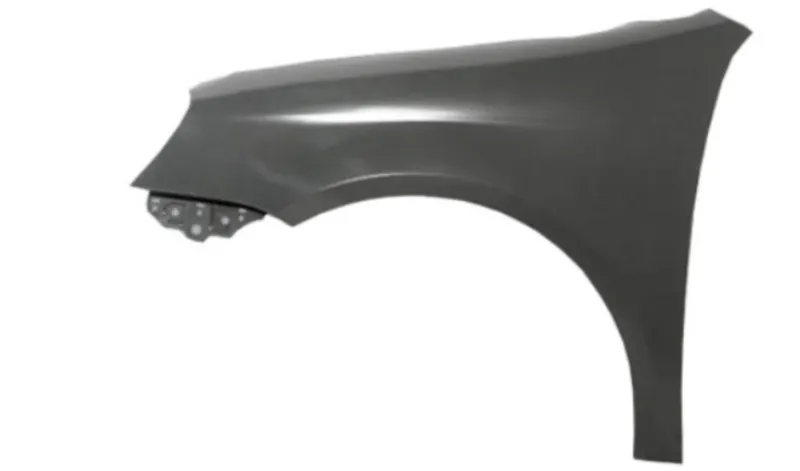
In 90’s full bumper type fenders are used. Here the blank used to produce full bumper type was really big and also leads to have a great wastage around.
Now these days the companies opted to design half bumper, in this case companies have a high possibility to reduce the scrap by slightly increasing the blank size results in producing two fenders at the same time. This is called scrap management and it reduces the steel weight on the fender which results in better performance and cost reduction.
Input given to prepare the design of the fender
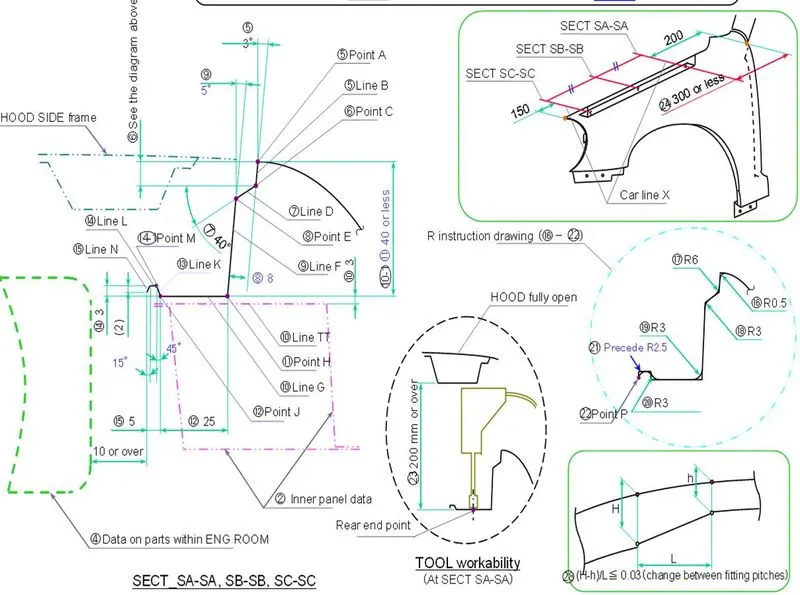
- Master Section:
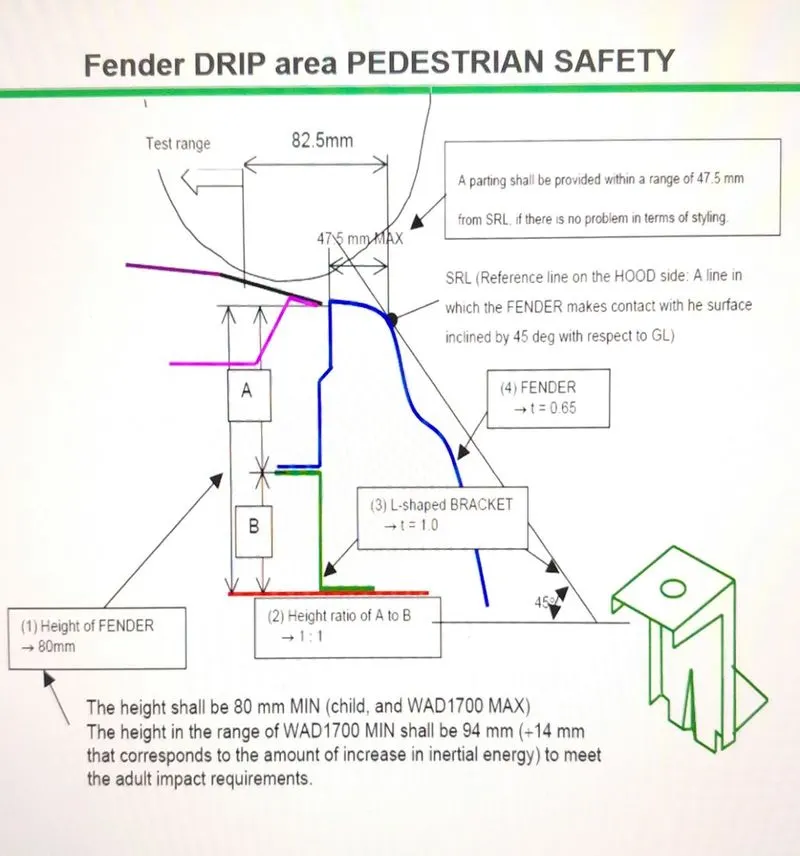
Design consideration of Front fender for pedestrian safety
The manufacturing process of car fender includes the following steps :
- At the beginning, unfolding and shearing are carried out on a plate, wherein a proper cold roll specification is selected at first, a cold roll is unfolded, and then the unfolded cold roll is sheared to an iron plate of the corresponding size according to production, material specifications.
- Then oil pressing and punching are carried out, wherein the iron plate is extended at first, then side shearing and punching are conducted on the iron plate, folding and shaping are carried out on the iron plate, and finally reshaping is carried out on the iron plate.
- After that small first parts of the fender are machined, wherein first of all, the iron plate is punched to a needed outer contour blank, then the iron plate completing the outer contour blank is further shaped, and the iron plate is punched at last.
- Final step is installation and welding of a metal plate are conducted. The manufacturing process for the car fender is simple and high in production efficiency; a body of the fender and the small parts can be separately machined, so waiting time is shortened; working efficiency of production is improved.
PROCEDURE:
Design Requirements:
- Provide embosses and darts to improve strength.
- Provide minimum distance of 150 mm and 200 mm from front and back of fender respectively while creating drip mounting.
- Thickness – 0.75 mm
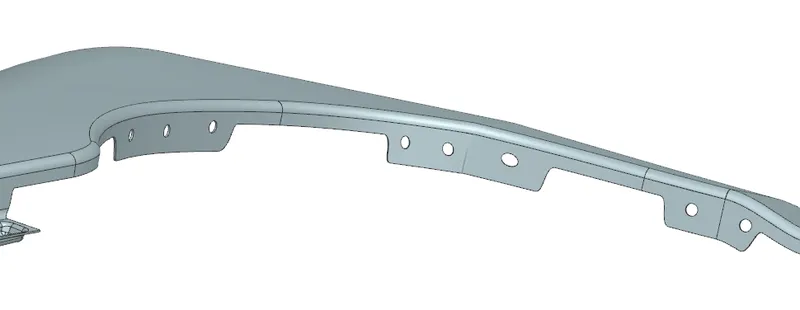
Drip Mount -
- Drip area is the major fender part which is going to mount to the engine compartment.
- While designing the drip area, there should be minimum 200 mm distance from the back side of the fender to provide sufficient space for the cowl to setup and a minimum of 150 mm distance from the front side of the fender to provide space for the headlight housing.
- Provide at least 10 mm distance from the engine room.
- The hood side drip area depth must be 40 mm or less as maximum productivity is achieved at the depth of 40mm. forming is not feasible is depth exceeds 60mm due to wrinkling and spring back effect.
- Dart is provided for extra strength.
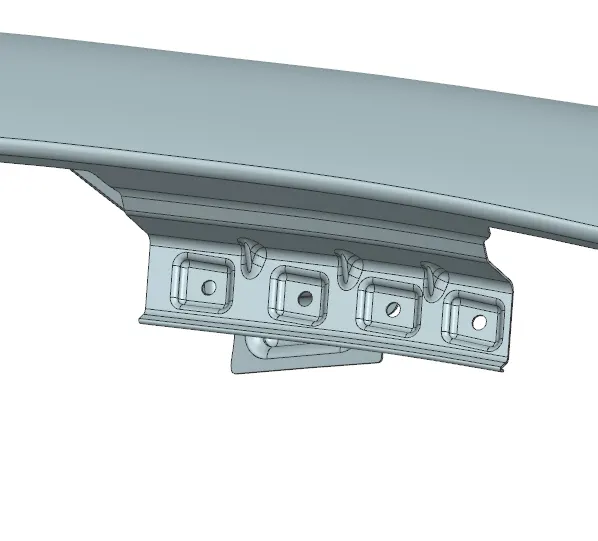
Baffle Mount -
- For improvement of NVH in car , usually a baffle is mounted on the fender of the car . it is mounted on the wheel arch area .
- Embosses are not needed since it is a free end which is not main attachment to the body of the car.
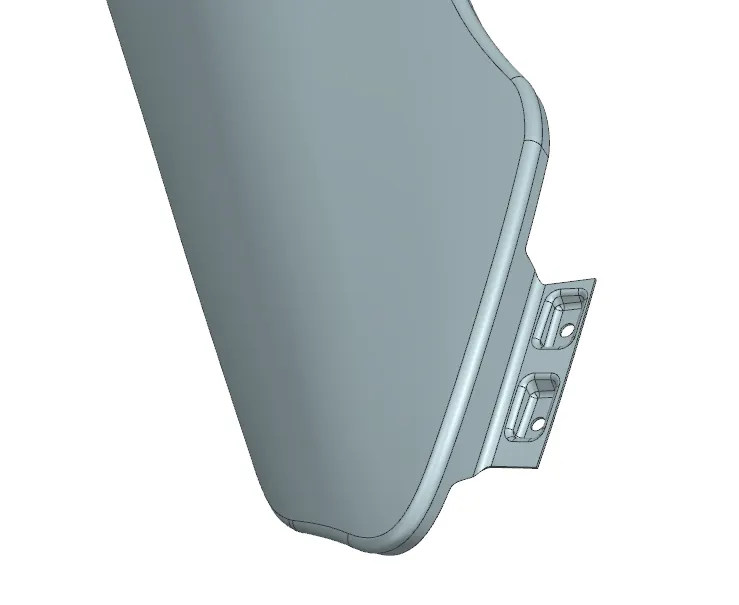
Sill Mount -
Sill area mounting is also an important mounting part .This mounting point is basically on the bottom of the fender . The mounting part should be created such that the fender is firmly attached to the sill to avoid NVH issues.
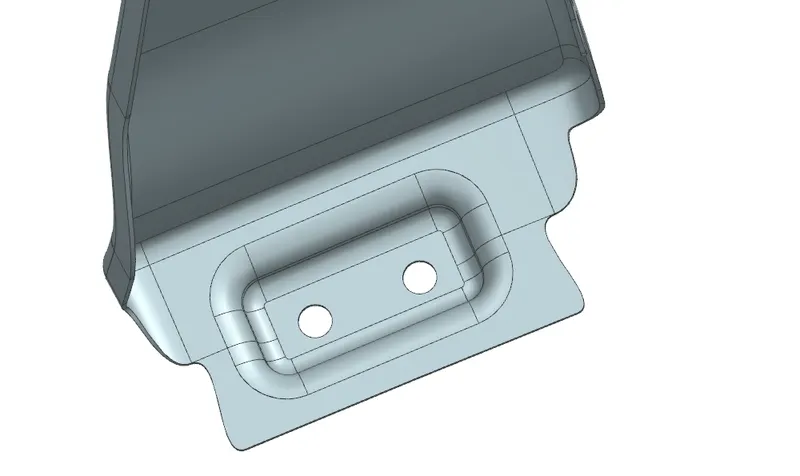
Bumper Design -
- This is designed by consulting the bumper design team to design the bumper and fender assembly fixation.
- Two Bolting holes with embosses are created for approapriate assembly.
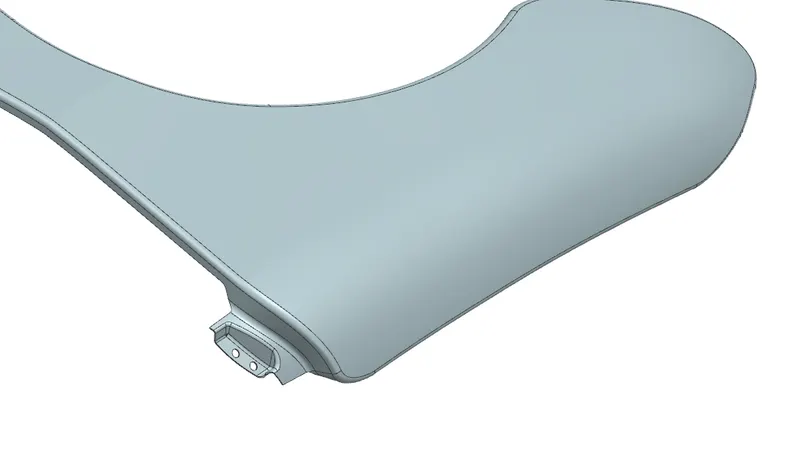
Cowl Mount -
This region is located on the top-back side of the fender where the A-pillar is connected with the fasteners. This cowl area is covered with the ORVM of the vehicle.
Conclusion: We have successfully design the fender with all its mountings.
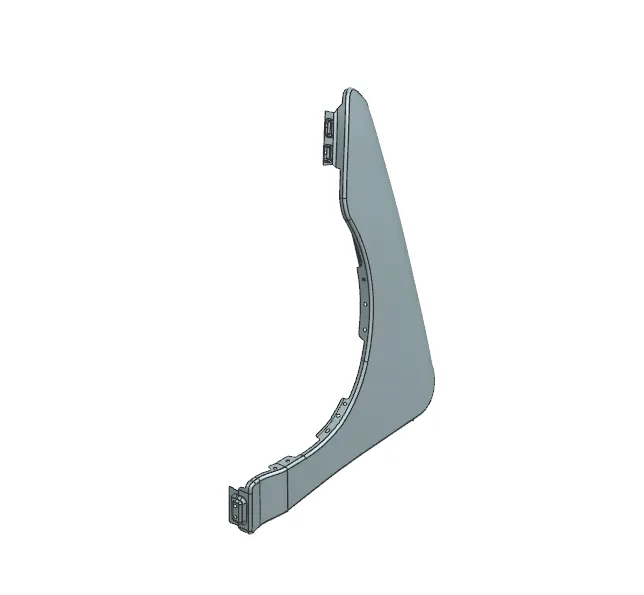
Isometric View-
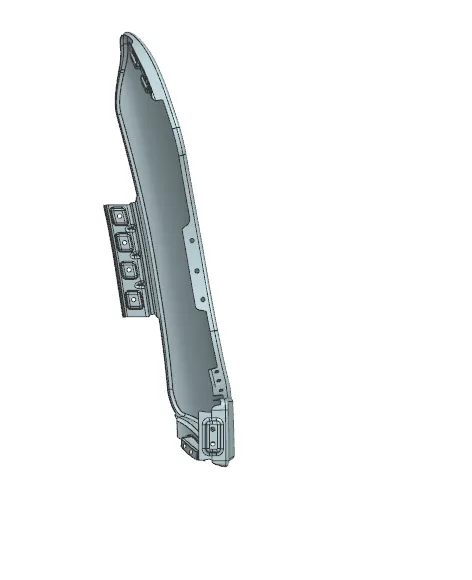
Front View -
Top View -
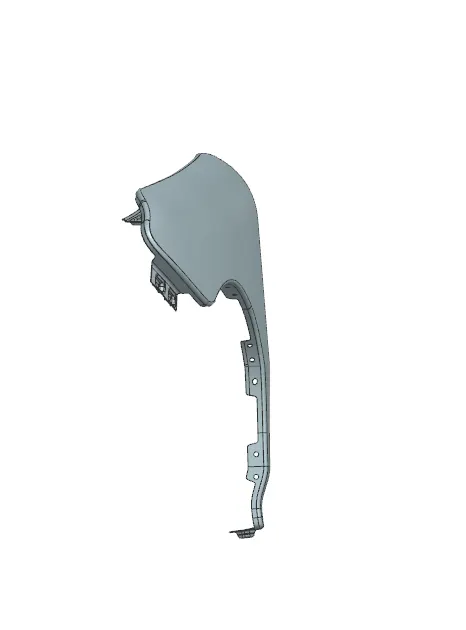
Right View -