Fender Design
FENDER DESIGN CHALLENGE
OBJECTIVE: To design various mounting points on the front fender, according to the design parameters using NX-CAD design software
FENDER is an American English term for the part that frames a wheel of an automobile. The fenders are an intricate sheet of metal covering the wheel well of the car. Its primary function of the fenders is to shields the wheels and protect the passenger the pedestrians and the other vehicles prevent from sand, mud, rocks, liquids and other road spray that can fly in the air because of the rotating tire while the car is running.
Sticky materials may adhere to the smooth outer tire surface, while smooth loose objects, such as stones, can be become temporarily embedded in the tread grooves as the tire rolls over the ground. These materials can be ejected from the surface of the tire at high velocity as the tire imparts kinetic energy to the attached objects.
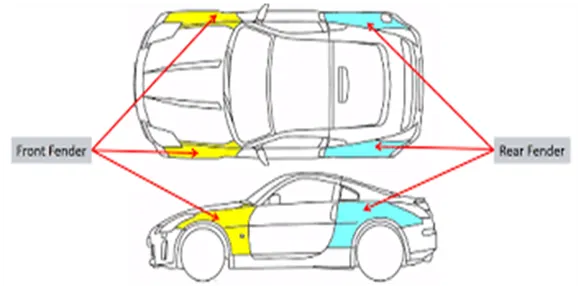
The fender is located over the wheels of the vehicle. As such, there are four fenders on a typical vehicle: front right, front left, rear right & rear left. The front car fenders begin where the front door hinges run and end just before the bumper. The rear car fenders begin where the back doors close and terminate before the back bumpers. Fenders are typically rigid & can be damaged by contact with the road surface.
TYPES OF FENDER: The type of fender is based upon the area covered i.e., full fender type and half fender type.
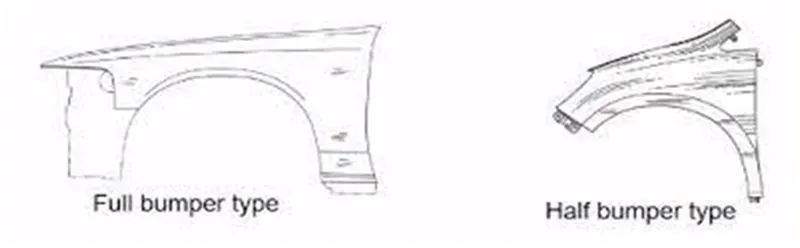
FULL FENDER TYPE: Full fender type is traditional type of fender where more material is consumed. This type is used in old design of automobiles where it increases the overall weight and thus reduces performance.
HALF FENDER TYPE: Half fender type is modern design where less material consumption is observed, so productivity increases by reducing size of blank and thus providing more performance.
MATERIAL USED: The most commonly used wheel well are of plastic material. In the olden days, the inner fender or wheel well was made of sheet metal. If the vehicle with metal inner fenders is used there is a good chance that winter salt & moisture have caused them to develop some rust in hard-to-spot areas. Improper repairs after an accident can also accelerate corrosion here as well.
PURPOSE OF FENDER:
Safety: Protects pedestrian from the wheel, e.g. it’s better to be it by a laterally moving fender than a rolling tire, keeps loose, streaming items from being wrapped up in a rolling wheel.
Aerodynamics: Smoothes the car profile so you don't get a lot of drag off the uncovered wheels. Some fenders are enclosed on the side for this.
General Appearance: Looks better with fender, gives a finished look, looks more streamlined.
Cleanliness: Protect the car, occupants and passersby from items, water, mud, snow, ice, thrown off the tires as you drive.
MOUNTING REGIONS ON FENDER: There are five mounting region on a fender
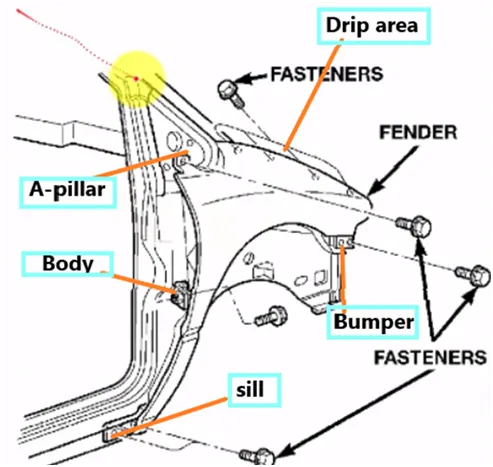
- A-PILLAR MOUNTING
- BODY MOUNTING
- SILL MOUNTING
- BUMPER MOUNTING
- DRIP AREA MOUNTING
DESIGN METHODOLOGY
INPUT DESIGN PARAMETERS:
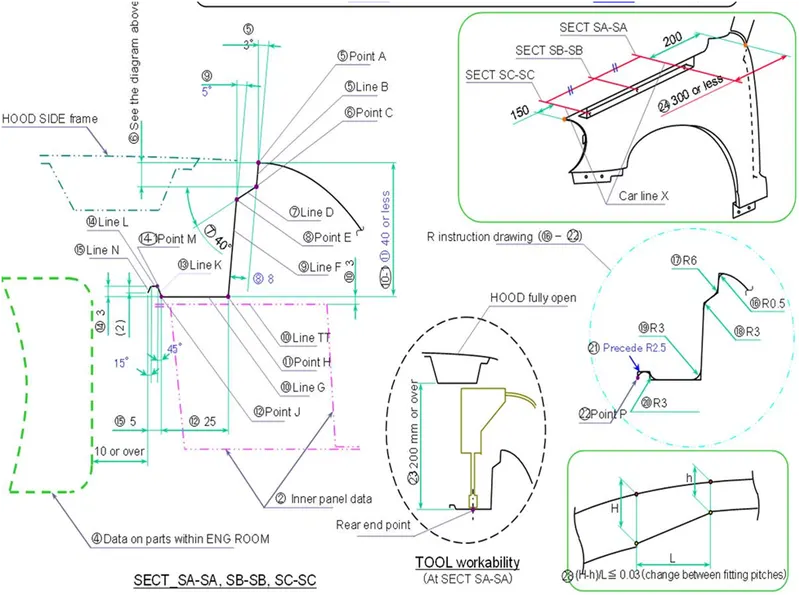
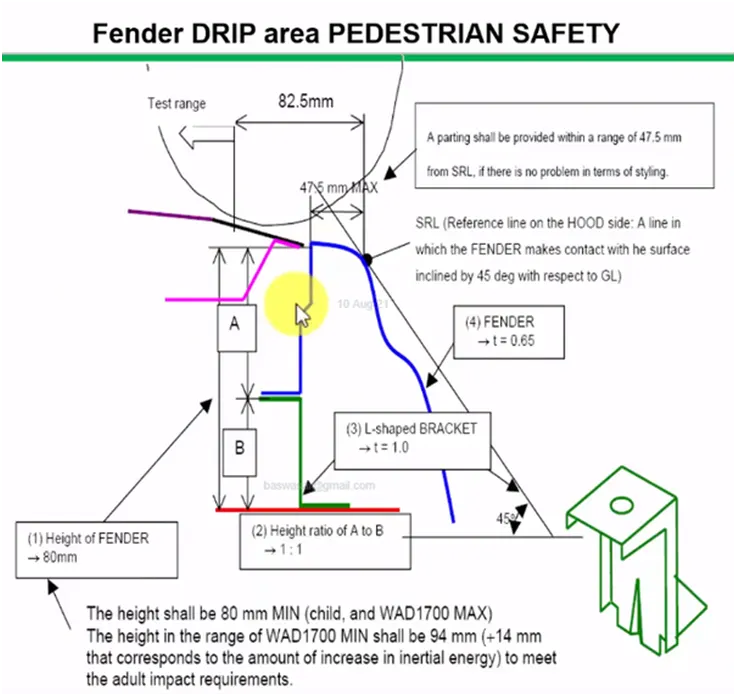
- DRIP MOUNT:
The drip area is the most important mounting in a fender; it is the point where the fender has to be attached to the engine compartment.
The drip area should be designed in such a way that it should be at least 150mm away from the front end of the fender to have sufficient space for mounting headlamps housing. Mostly the drip area starts from 200mm away from the rear end of the fender, to have sufficient space for the cowl which carries the wiper equipment.
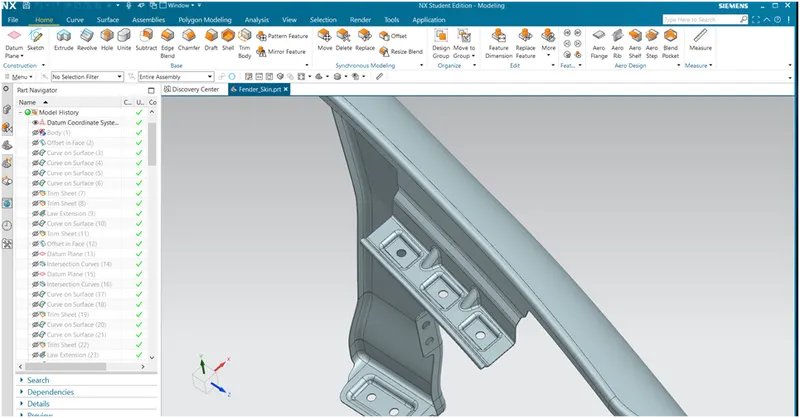
- A-PILLAR MOUNT:
The A -pillar is the structural pillar that combines the body to the roof. Front fenders are fastened to the A -pillar to form a robust structure. This mounting position is created for attaching the fender to A Pillar of the vehicle. Also enough clearance should be given for the easy mounting of the wiper equipment.
- SILL MOUNT:
Sill mounting is created on the bottom portion of the fender for attaching to the sill. Sill is the panel directly below the bottom of the door supporting the floor and may be used to combine the floor and the body. The bottom end of the fender is mounted on the sill body for reinforcement of the fender panel, thus the sill mounting position is designed with holes and emboss.
- BUMPER MOUNT:
Bumper mounting area is used to fix the plastic bumper to the fender with the help of the fasteners. This mounting point should have enough strength to hold the bumper steadily.
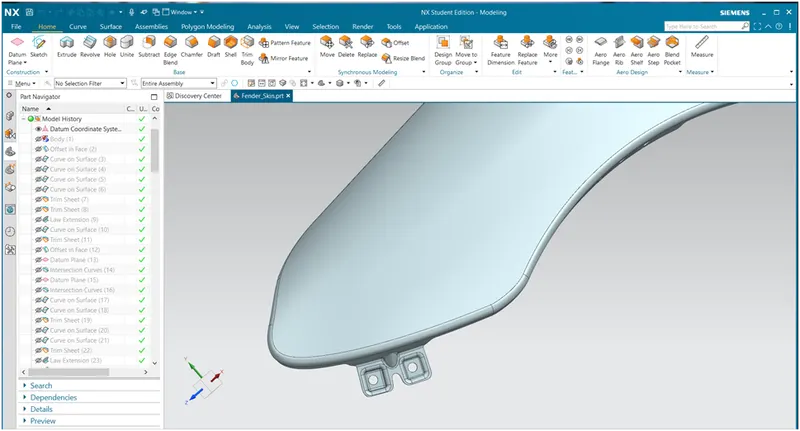
- BAFFLE MOUNT:
These mounting points are created for attaching plastic components i.e baffle which prevents chipping inside the engine compartment. Baffle mounting or mudguards are clip fit type of mounting on the inner side of the fender arch over the Tyre. It protects the car engine compartment and pedestrians from causing injuries from chip out debris on the road when the car is in motion. They are mounted on the fender using a special type of locking clips which are made up of plastics.
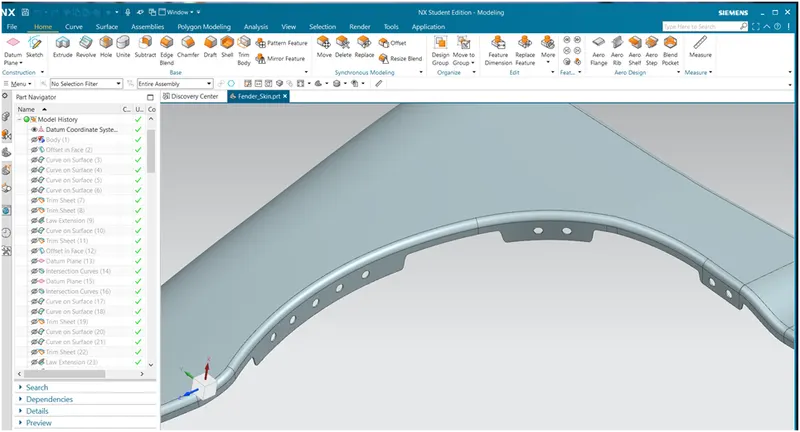
APPLYING OF THICKNESS TO THE SURFACE:
The thickness of 0.75 mm inward on the final sewed surface of the fender to the sheet metal parameters
DESIGN CRITERIA:
- Provided embosses to increase the
- Smooth curves are designed for easy manufacturing of
- Darts are provided to drip mount, Bumper mount & A-pillar mount to give structural support and extra
- Maintain extra 10mm from the flat surface for the fastener
- Fillets should maintain 2 or 3 mm radius in most
- Thickness of fender is 75 mm.
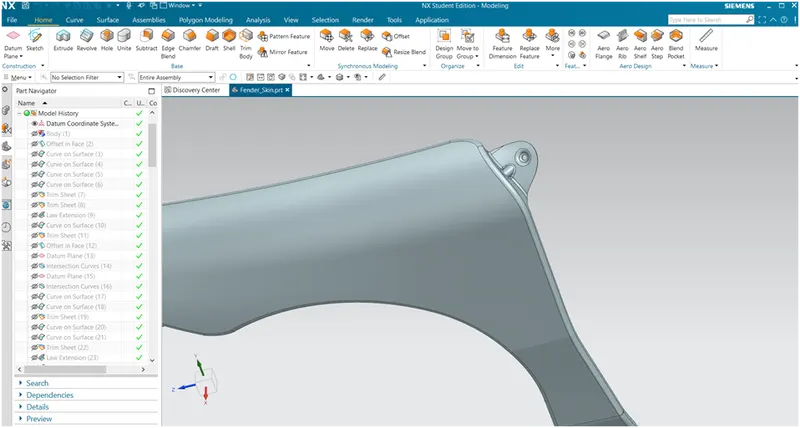
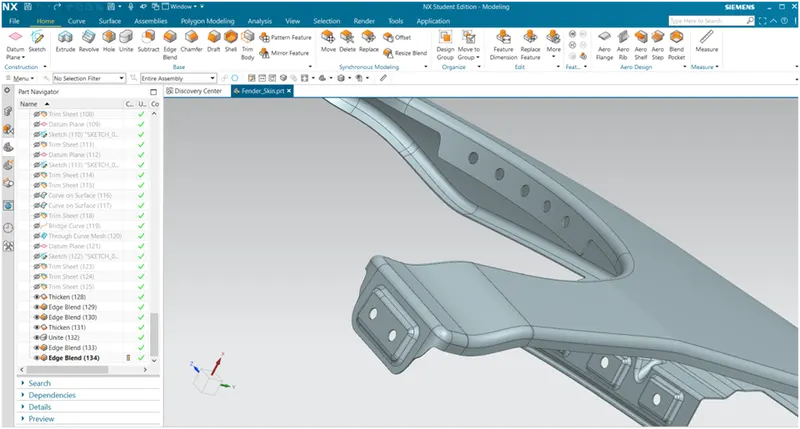
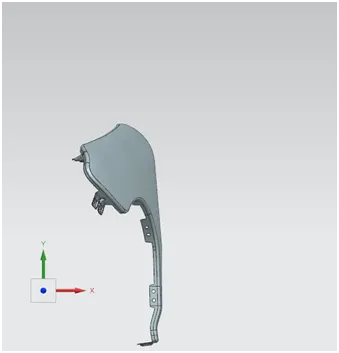
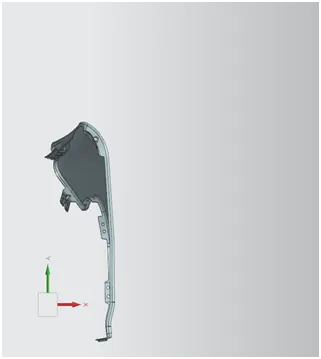
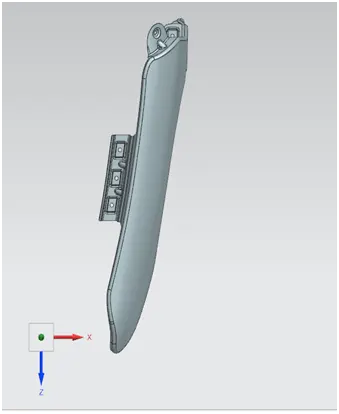
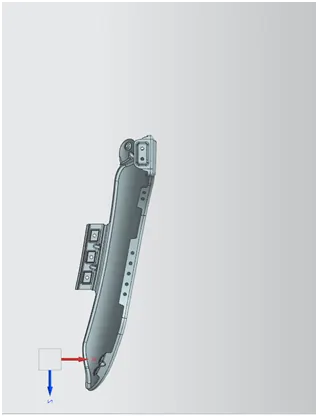
DIFFERENT VIEWS OF FENDER:
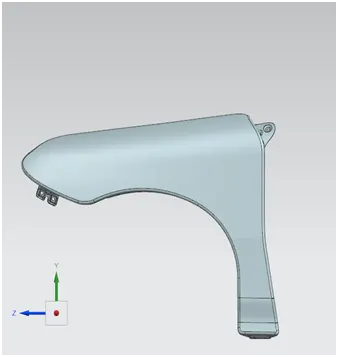
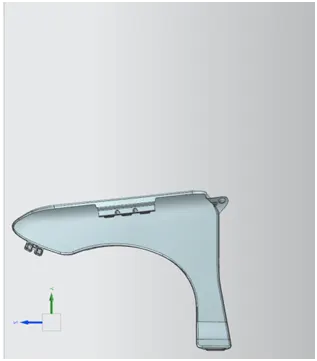
CONCLUSION
The front fender is designed with the necessary mounting points considering the design parameters with the help of NX-CAD software according to the given master section and a Surface as per the OEM Standards.