Fender Design
AIM : Prepare a report by explaining about Fender Design and its different mounts , manufacturing process and its design parameters and design a front fender mountings with given fender skin data.
Fender : Fender is a part of a vehicle which frames a wheel and prevents from the sticky and hard substance such as mud, sand, rock, etc. Sticky materials such as mud may adhere to the smooth outer tire surface, while smooth loose objects such as stones can become temporarily embedded in the tread grooves as the tire rolls over the ground.
Fender Design Process : Depending on the make of the car, fenders may be made from fiberglass, steel, or other materials. Many of these materials are designed to crumple in a crash, distributing the impact across the frame of the car to make the crash more survivable for the occupants of the vehicle.
Fender skin is made by forming process.
Forming : Forming is a process in which the shape of a partly finished product, for example sheet metal, is changed using plastic deformation. During forming, force is applied to a piece of sheet metal to change its shape rather than remove any material.
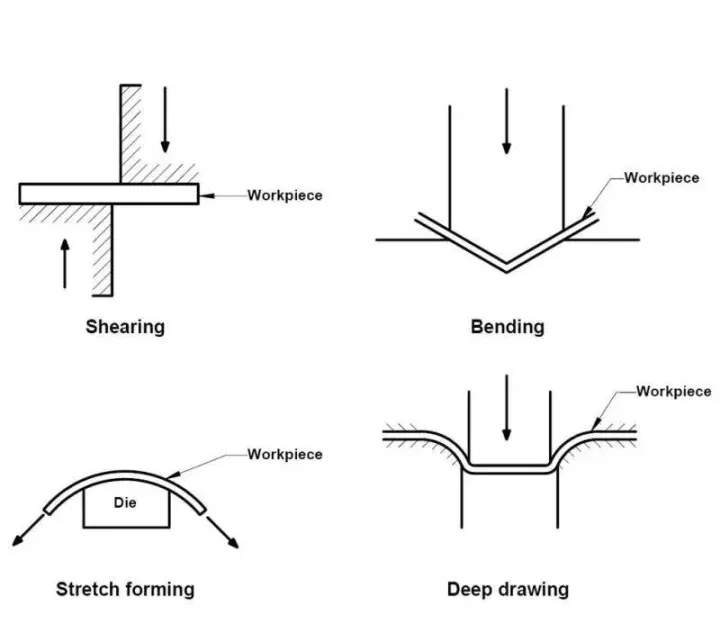
Stamping : It is an important forming process used in making skin of fender.
The process of turning sheets of metal into a useful part or component is called sheet metal stamping. The metal is fed into a press, where the stamping tool, also known as a die, creates the desired shape. The die is pressed into or through the metal with tremendous force.

Embossing : Embossing is a stamping process for producing raised or sunken designs or relief in sheet metal. This process can be made by means of matched male and female roller dies, or by passing sheet or a strip of metal between rolls of the desired pattern. It is often combined with foil stamping to create a shiny, 3D effect.
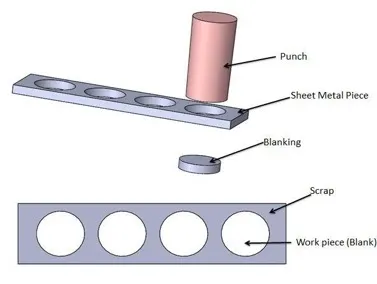
Punching : Sheet metal punching is a cutting process in which material is removed from a piece of sheet metal by applying a great enough shearing force.
Types of Fender :
- Full Bumper Type : The full bumper type fender was used in old cars, it covers the full area until the front lighting. But it has a lot of sheet metal material which is unnecessary and increases the weight of the fender. This type of fenders are no longer used in automobiles.
- Half Bumper Type :
Mainly half bumper type is used in automobiles. It is basically related to scrap management. Half bumper type leads to less wastage of the blank.
We have changed full bumper type to half bumper type to reduce the scrap rate per blank. In the full bumper, we can only produce one Fender per blank, whereas as a half bumper type we can produce 2 fenders per blank.
Mountings:
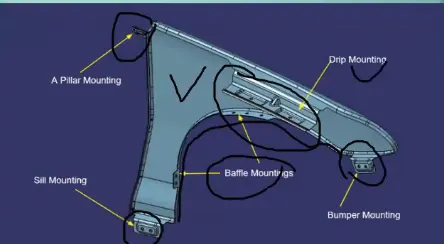
There are major 5 mounting points in the fender.
- Body
- A Piller
- Sill
- Cowl
- Drip
Drip area :
- It is the area through which fender is attached to engine housing through fasteners.
- There should be some consideration followed to design the drip area of fender.
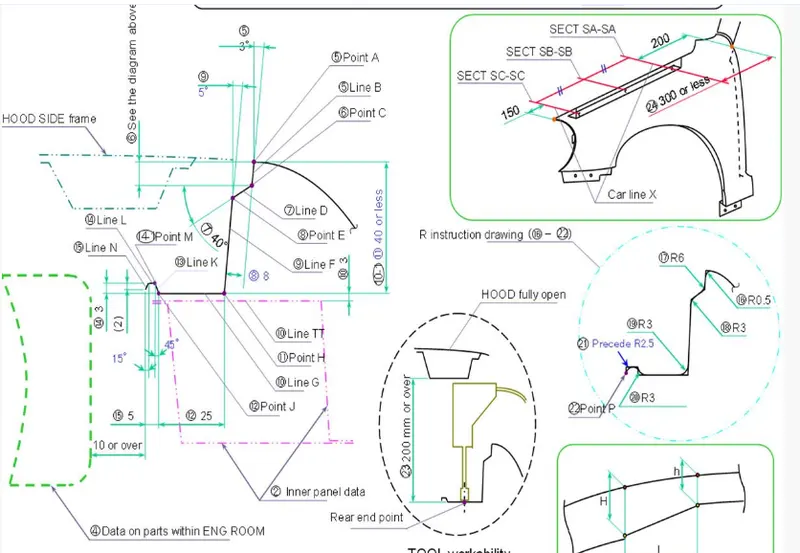
- From back side of front fender, there will be 200mm clearance for cowl(wiper motor) mounting area.
- From front side of front fender, there will be 150mm clearance for head lamp housing unit.
- Remaining area we can use to design a drip area.
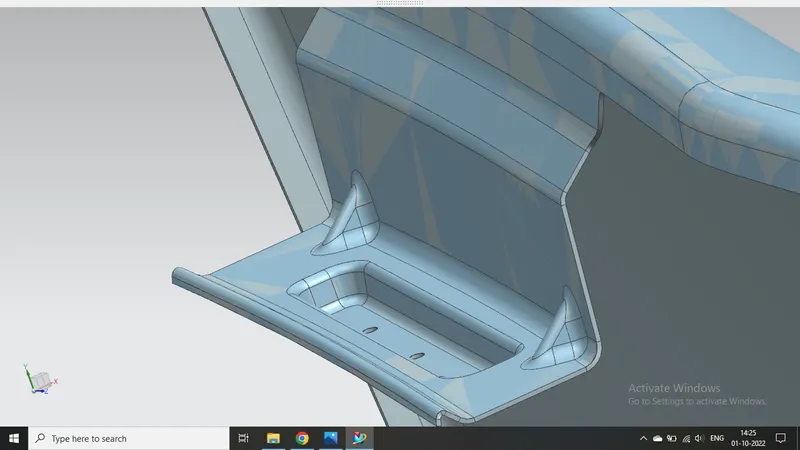
A piller Mounting :
- The A pillars on your car hold either side of the front windscreen in place. They are the ones you see as you look straight at the car from the front.
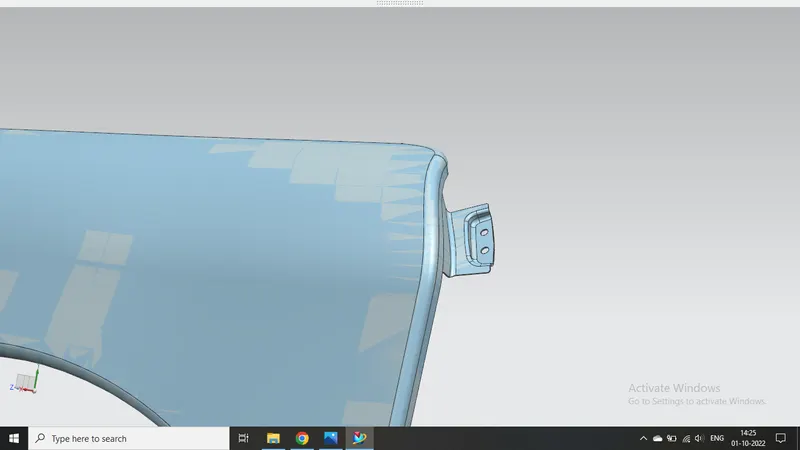
Bumper Mounting :
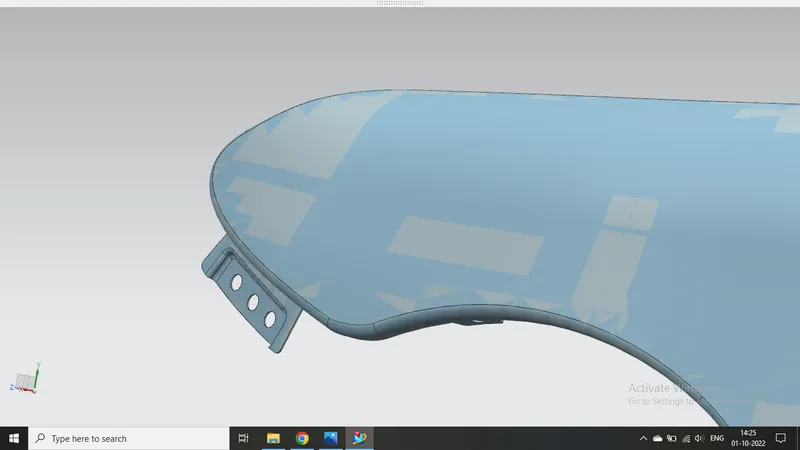
Sill Mounting :
The mounting area at the panel directly below the bottom of the door supporting the floor and may be used to combine floor and body.
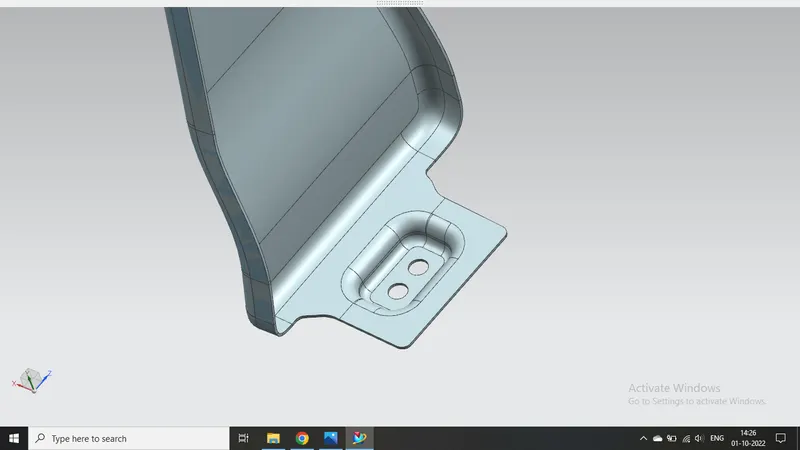
Baffle Mounting :
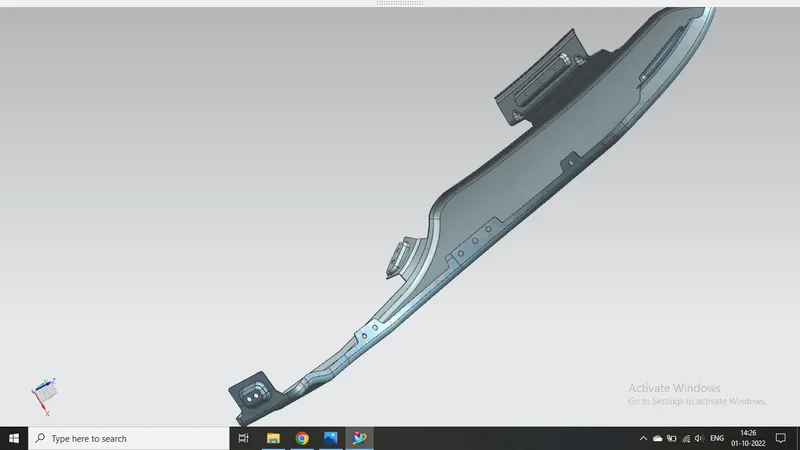
Complete Body Mounting :
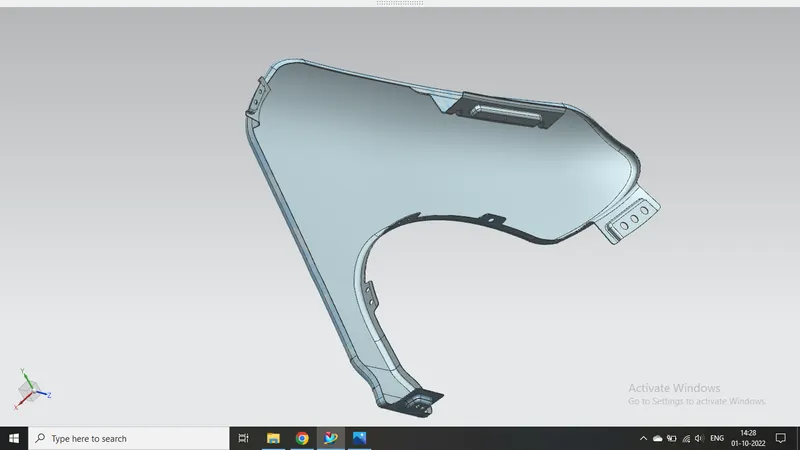
Conclusion : All the definitions and manufacturing processes used in fenfer design has been completed and The part file and step file of the fender has been attached in the report.