Fender Design
FENDERS
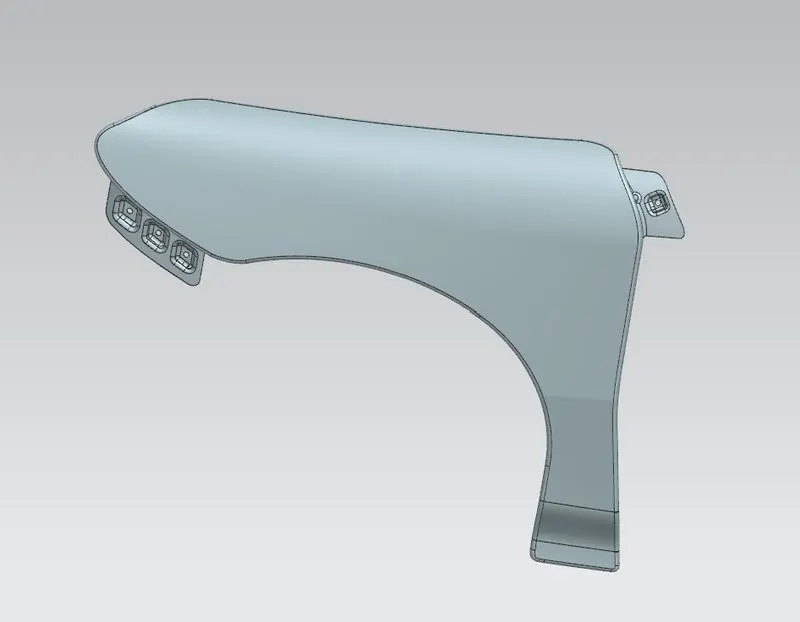
- Fender is the American English term for the part of an automobile, motorcycle or other vehicle body that frames a wheel well.
- Its primary purpose is to prevent sand, mud, rocks, liquids, and other road spray from being thrown into the air by the rotating tire.
- When vehicle is moving, tires pick up stones and others and hurl them in all directions. Fenders are basically present to prevent any injuries to pedestrians and contain the motion of these particles.


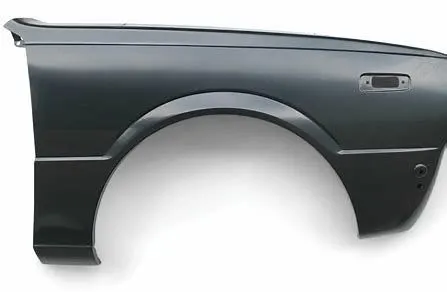
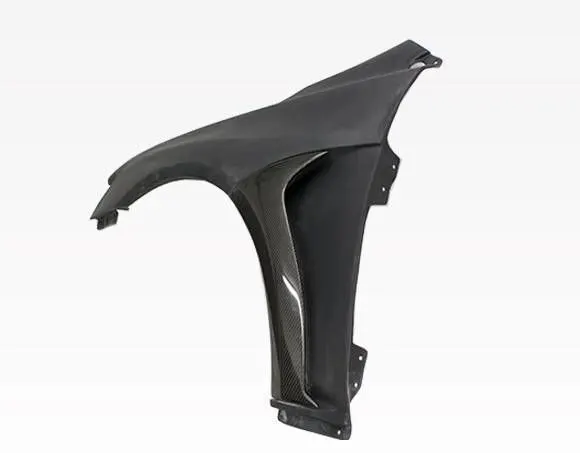
Types : There are two types of fenders used in cars. They are :
- Full bumper type and
- Half bumper type.
Full bumper type : In full bumper type, the fender covers the entire wheel area from the front to the body side. This type is widely used by the OEMs and automotive industries in early days.
Half bumper type : In half bumper type, the fender only covers the one-third area of the wheel from the bodyside to front. This is because to reduce the production cost and material wastage compared to the full bumper type. This type is widely used by the OEMs and automotive industries nowadays.
MOUNTINGS ON A FENDER
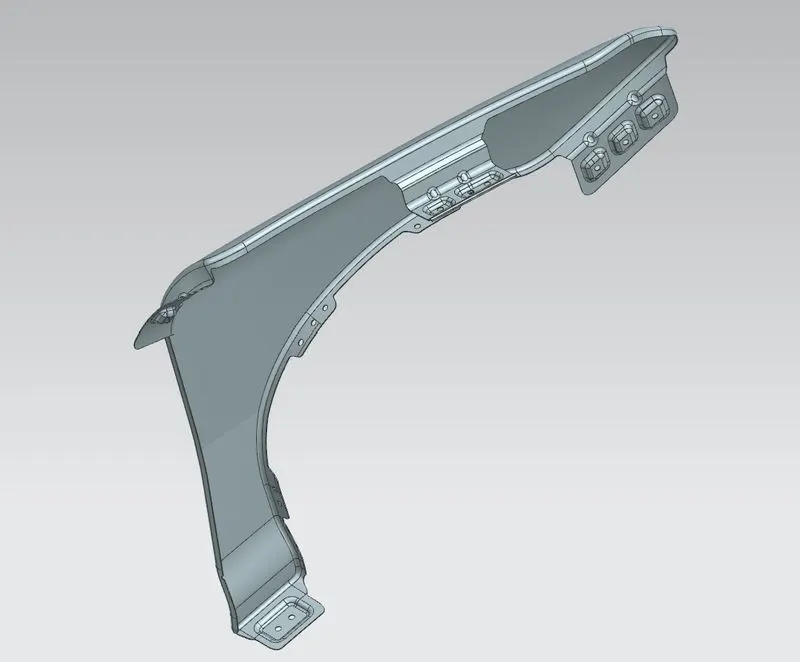
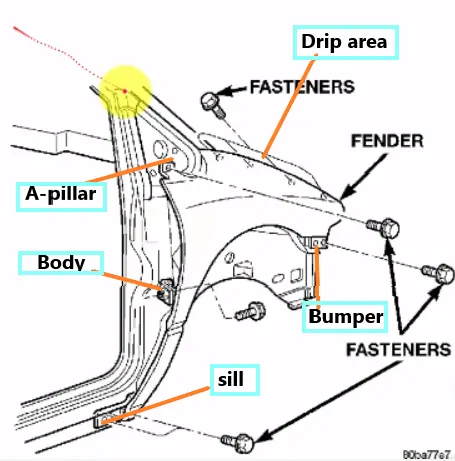
There are certain mounts associated with a fender. Some of which are used to join the fender to the main body whereas some for the attachment of other parts on to the fender. Some of them are :
- A-Pillar Mounting
- Body Mounting
- Sill Mounting
- Bumper Mounting
- Drip Mounting
- Cowl Mounting
- Baffle Mounting
- ORVM Mounting, etc.
MANUFACTURING PROCESS
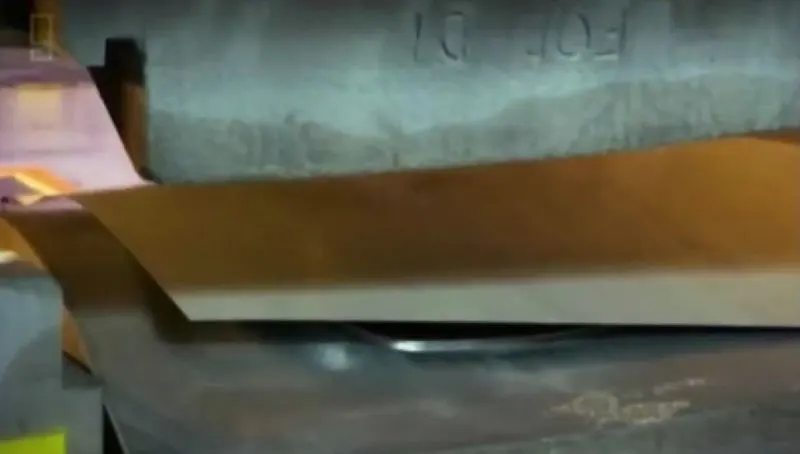
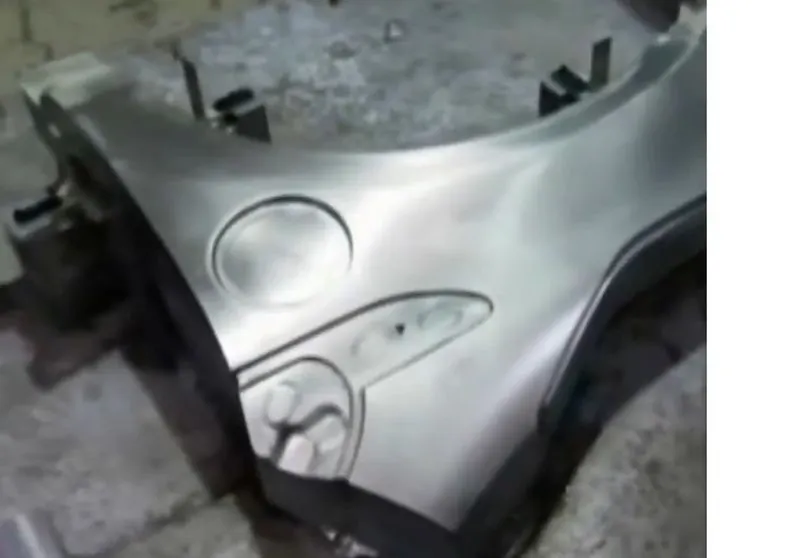
- The sheet metal is rolled out and cut into blanks of required size.
- It is placed into a press and aligned on top of the die.
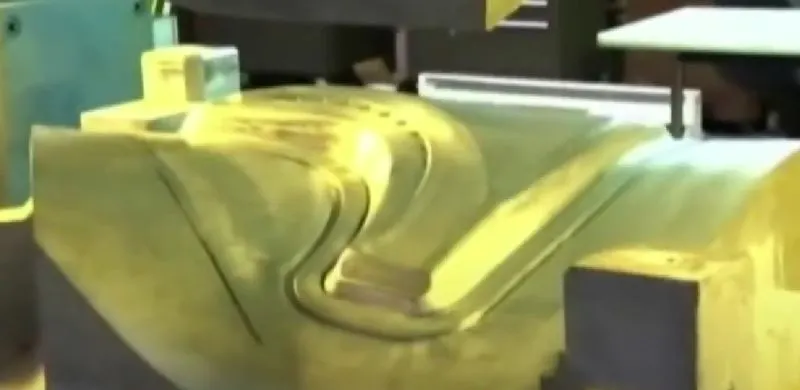
Die

- The blank is then punched to get the desired shape.
Punching
Fender
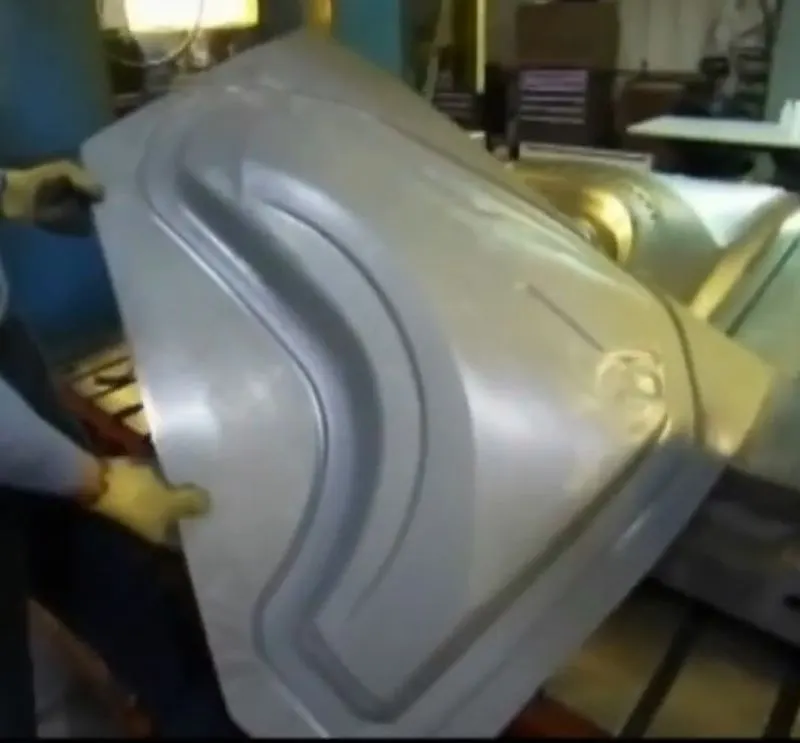
- The outer material is trimmed off by shearing.
DESIGN PARAMETERS
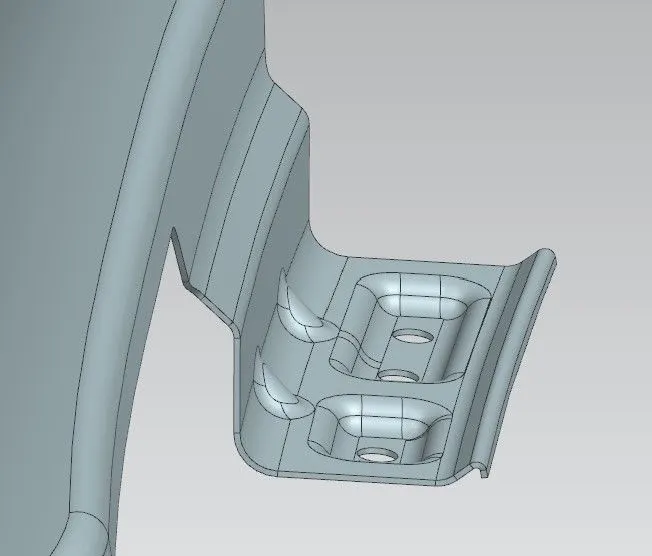
Drip Area Mounting :
- It is connected with the engine compartment.
- A distance of 200 mm for cowl top have to be left.
- Similiarly a diistance of 150 mm have to be left at the front for placing the headlamp.
- The flanges are made as per the master section.
- Embossing is provided on the mounting to strengthen them during fastening.
- Two darts are added on the longer side of the drip area in order to provide the stiffness and add strength to the part.
- This helps in preventing fender vibrations.
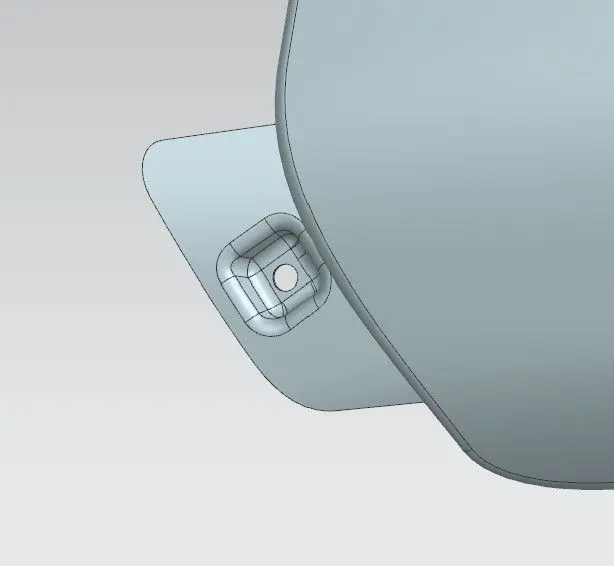
A-Pillar Mounting :
- The A -pillar is the structural pillar that combines the body to the roof.
- Front fenders are fastened to the A -pillar to form a robust structure.
- Embossing is provided on the mounting to strengthen them during fastening.
- Holes are provided on the embossment for fastening.
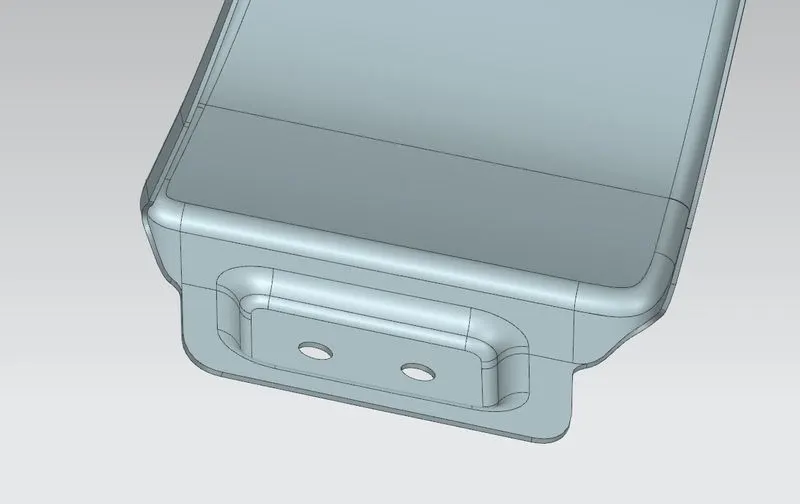
Sill Mounting :
- Sill is the panel directly below the bottom of the door supporting the floor.
- The bottom end of the fender is mounted on the sill body for reinforcement of the fender panel
- Embossing is provided on the mounting to strengthen them during fastening.
- Holes are provided on the embossment for fastening.
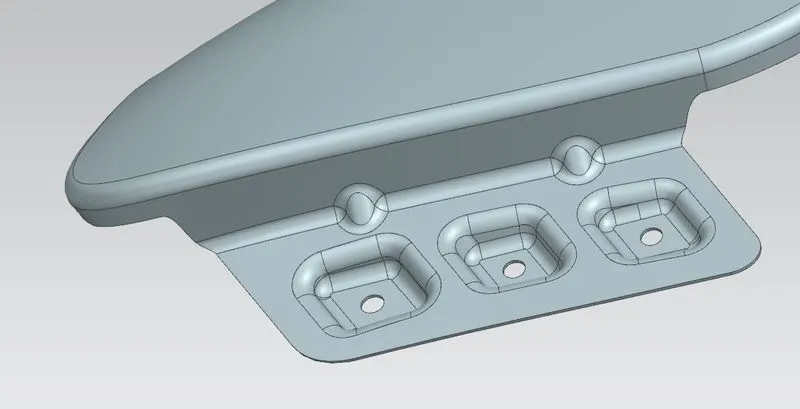
Bumper Mounting :
- Bumper mounting area is used to fix the plastic bumper to the fender.
- Embossing is provided on the mounting to strengthen them during fastening.
- Holes are provided on the embossment for fastening.
- Darts are provided for additional strength and siffness.
Baffle Mounting :
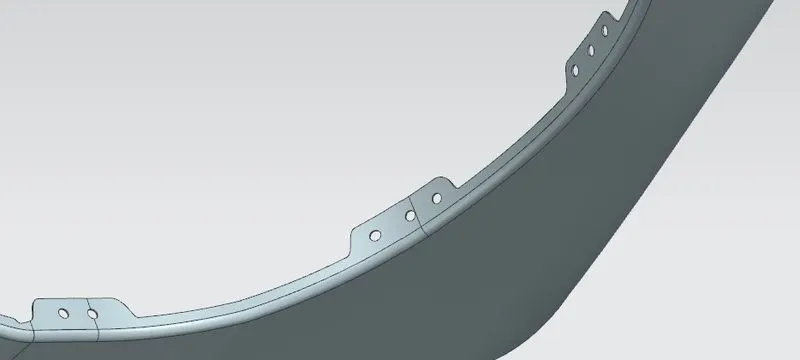
- Baffle mounting or mudguard are clip fit type of mounting on the inner side of the fender arch over the tire.
- It protects the car engine compartment and pedestrians from causing injuries from chip out debris on the road when the car is in motion.
- They are mounted on the fender using a special type of locking clips which are made of plastics.
Relief :
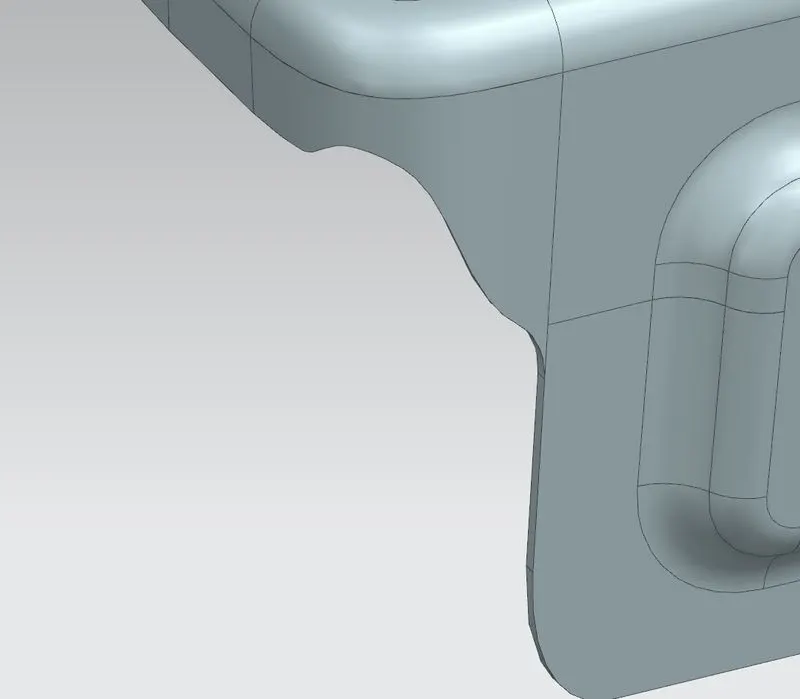
- Reliefs are provided at corners for preventing wrinkling and overlapping of the sheet which can affect the aesthetics.
- Springback can be minimised by providing reliefs.
3D PART MODEL