CHT analysis of Exhaust Port (ANSYS FLUENT)
AIM: to understand various concepts of CFD such as CHT analysis, Y+ values through the CFD simulation of an exhaust manifold of an inline 4 cylinder engine.
OBJECTIVE:
- Give a brief description of why and where a CHT analysis is used.
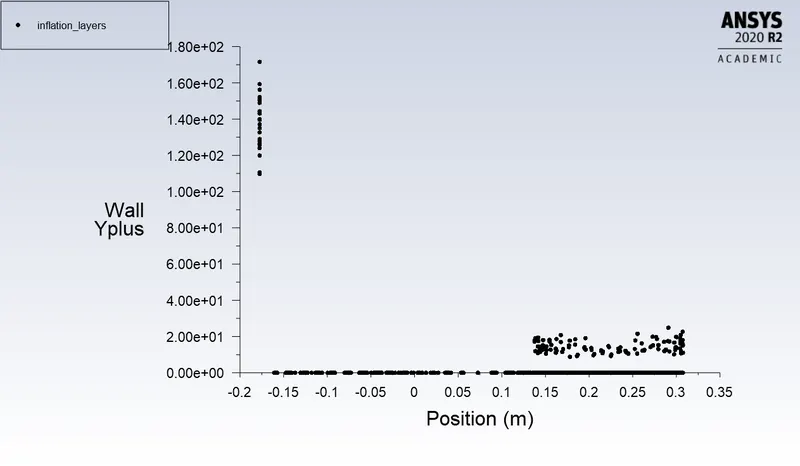
- Maintain the y+ value according to the turbulence model and justify the results.
- Calculate the wall/surface heat transfer coefficient on the internal solid surface & show the velocity & temperature contours in appropriate areas.
- How would you verify if the HTC predictions from the simulations are right? On what factors does the accuracy of the prediction depend on?
THEORY:
CHT Analysis:
CHT stands for Conjugate Heat Transfer,
Conjugate heat transfer corresponds with the combination of heat transfer in solids and heat transfer in fluids. In solids, conduction often dominates whereas in fluids, convection usually dominates. Conjugate heat transfer is observed in many situations. For example,
Heat Transfer by Solids and Fluids
Heat Transfer in a Solid
In most cases, heat transfer in solids, if only due to conduction, is described by Fourier’s law defining the conductive heat flux, q, proportional to the temperature gradient:  .
.
For a time-dependent problem, the temperature field in an immobile solid verifies the following form of the heat equation:

Heat Transfer in a Fluid
Due to the fluid motion, three contributions to the heat equation are included:
- The transport of fluid implies energy transport too, which appears in the heat equation as the convective contribution. Depending on the thermal properties on the fluid and on the flow regime, either the convective or the conductive heat transfer can dominate.
- The viscous effects of the fluid flow produce fluid heating. This term is often neglected, nevertheless, its contribution is noticeable for fast flow in viscous fluids.
- As soon as a fluid density is temperature-dependent, a pressure work term contributes to the heat equation. This accounts for the well-known effect that, for example, compressing air produces heat.
Accounting for these contributions, in addition to conduction, results in the following transient heat equation for the temperature field in a fluid:

- Open space claim; upload the geometry ;
- in Repair-> extra edges-> select 'tick '
- perform 'volume extraction' -> select edges -> click 'tick'
- label the volume and the solid
- open the meshing interface -> generate mesh and check for conformity
- In workbench -> reset mesh ; open space claim -> enable share topology-> go to workbench &click share topology
- reopen the meshing interface -> name the faces of the geometry -> geberate the mesh
- in 'quality' check mesh quality(above 10 %)
- open ansys fluent -> physics-> pressure based, absolute ,steady state, k-omega sst solver
- physics -> materials -> set materials -> set up boundary conditions for components
- Solution -> initialise -> enter no of iterations
- post processing -> create necessary plots
- mesh refinement
- add inflation layers -> select the volume-wall layer ; name it -> define by total thickness
- capture curvature
- reduce mesh size
CONCLUSIONS:
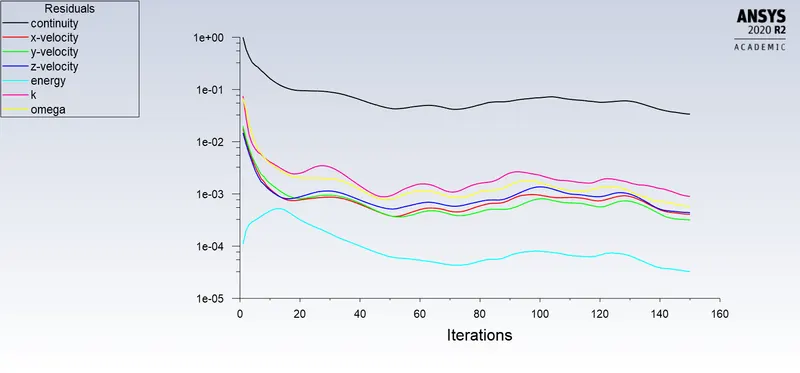
- From the plot of the residuals we can conclude that the simulation has converged.
- Fron the plot of y+ we can see that the turbulence model we have chosen for this simulation is the correct one.
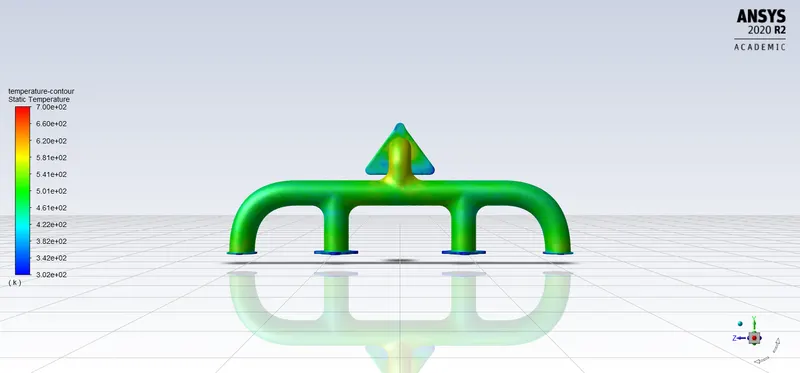
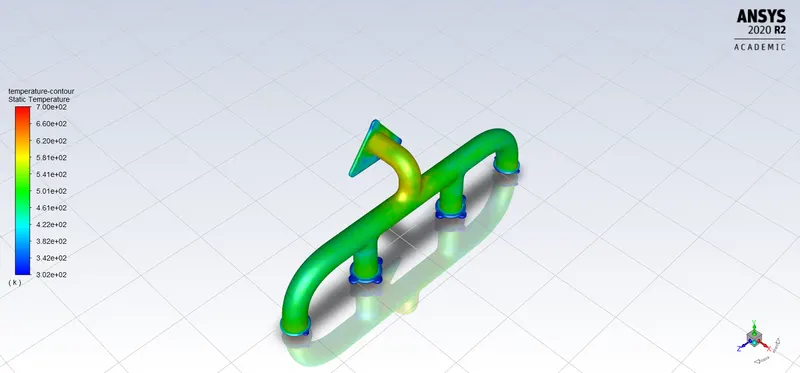
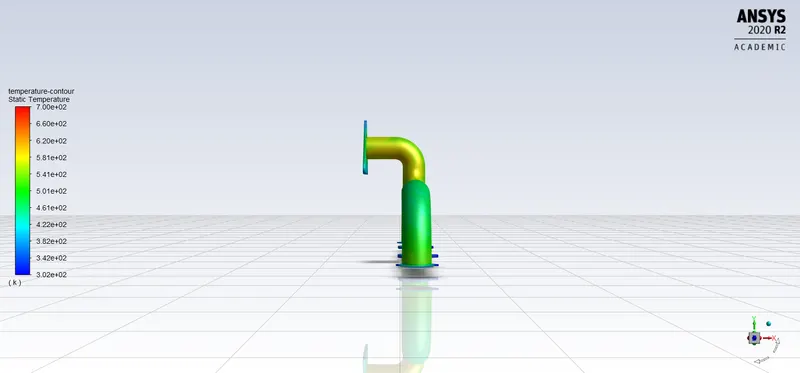
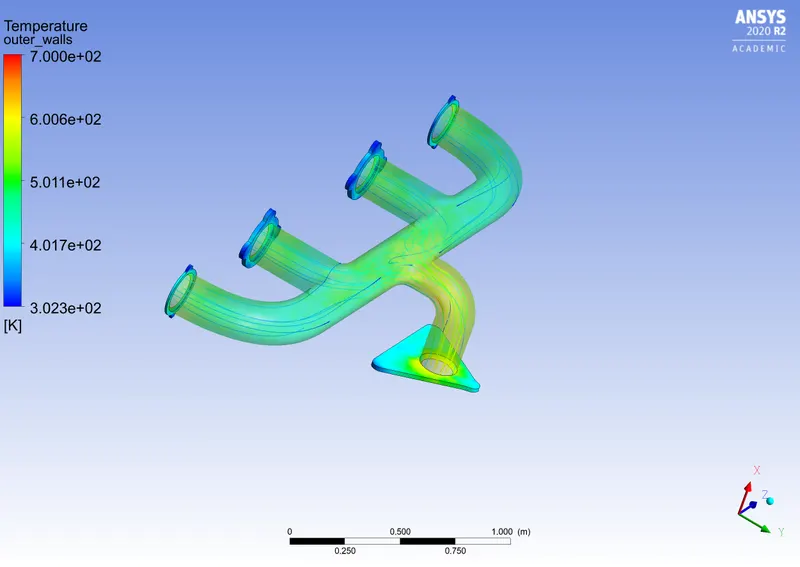
- From the temperature contours we can see that the temperature is the highest at the collector outlet.
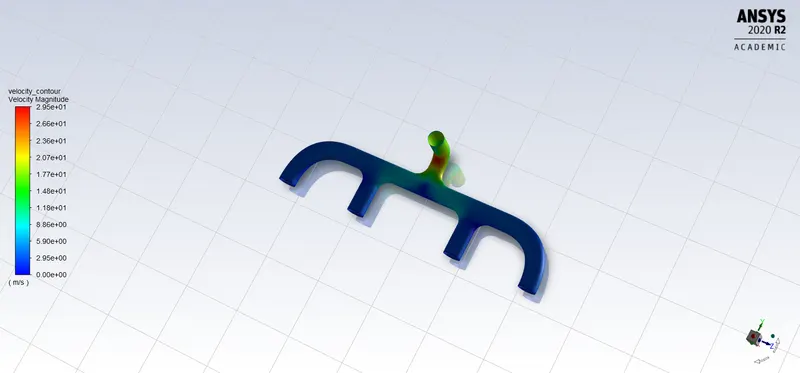
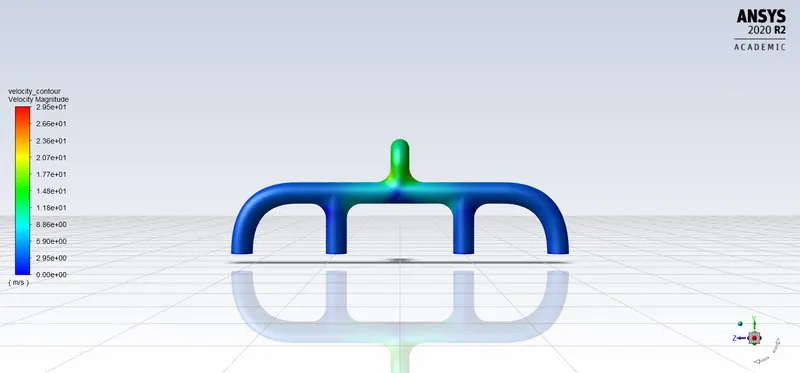
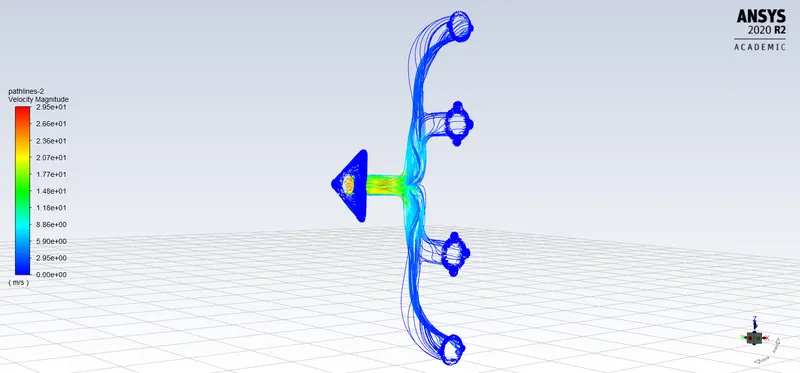
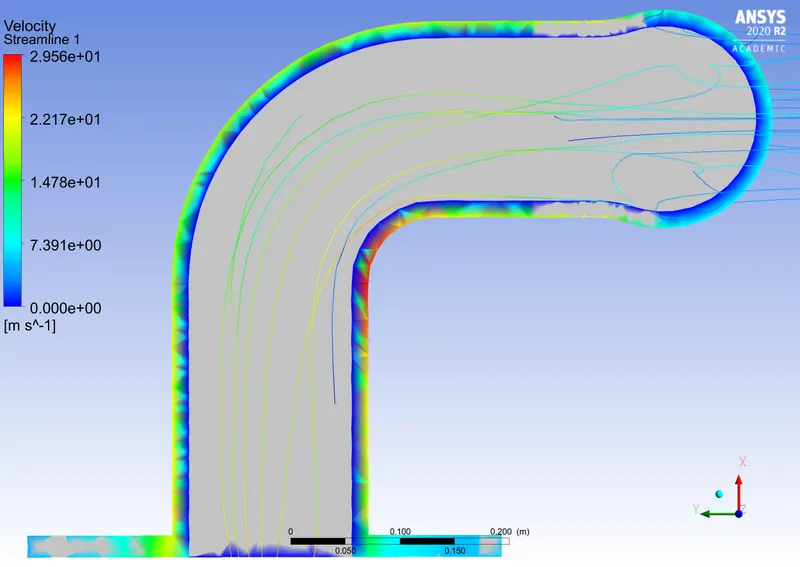
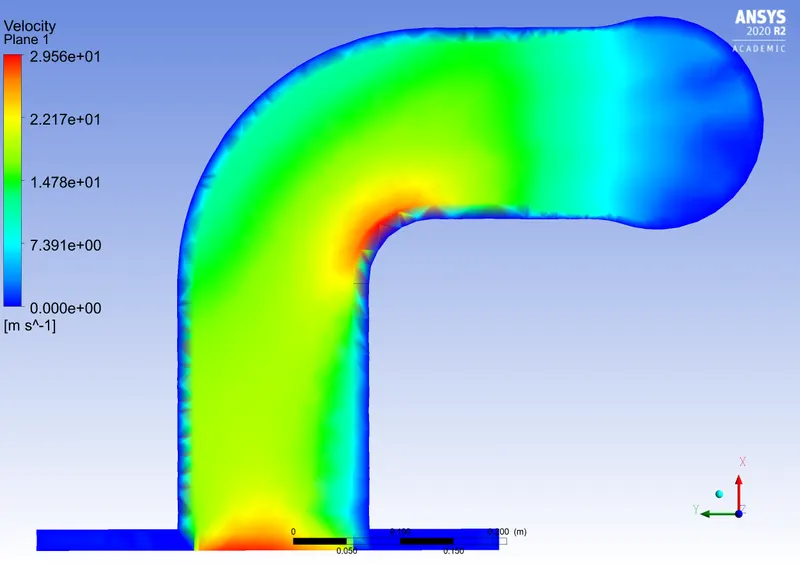
- From the velocity contours we can see that the velocity is the highest at the outlet collector outlet, this is in accordance with the bernoulli principle.
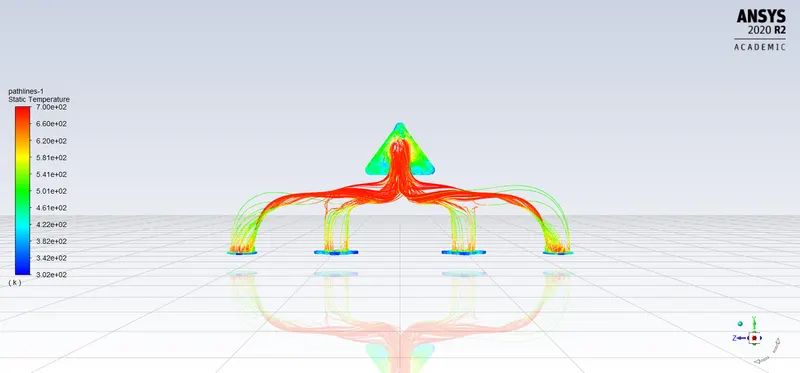
- From the temperature and velocity pathlines we can see that the temperature and the velocity is the highest at the same point in the geometry.
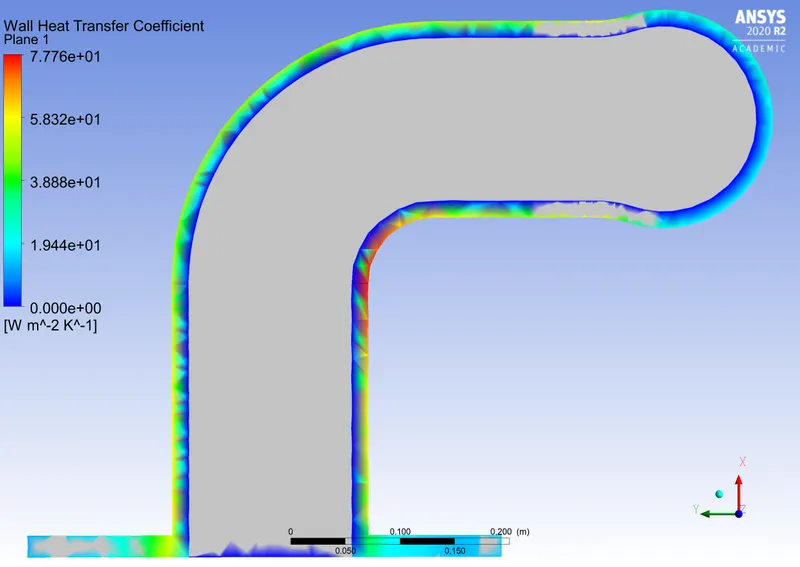
- from the wall temperature vs velocity pathlines we can see that the wall temperature coefficient is highest where the velocity is the highest, this is in accordance with the physics of the flow
- From the xy plane plots we can see how the velocity and wall heat transfer coefficients are related.
VALIDATION OF SIMULATION :
- The simulation can be validated by either theoretical analysis or experimental analysis
- CFD data can be validated by other published data provided it is authentic.
- Since most cfd simulations will lack actual experimental validation, we can check the validity of the simulation by checking the value of the residuals,grid independence and making sure that the physics is actually being captured.
- In the above simulation we can see that the region where the velocity is maximum is the region of the outlet collector, this is validated by the nature of the flow and the geometry(bernoulli's principle)
- Thus it is safe to say that in the region of maximum velocity we will have the region of maximum temperature and region of maximum wall heat transfer coefficient. our simulations also she the same thus we can be sure that the simulation is accurate