DOOR TRIM DESIGN
DOOR TRIM DESIGN
OBJECTIVE:
Create the Door Trim Plastic component through the given Class-A surface. To begin with, the tooling axis for the Class-A Surface should be created meeting the requirements of the draft angle and at the end perform the Draft analysis on the model.
INTRODUCTION :
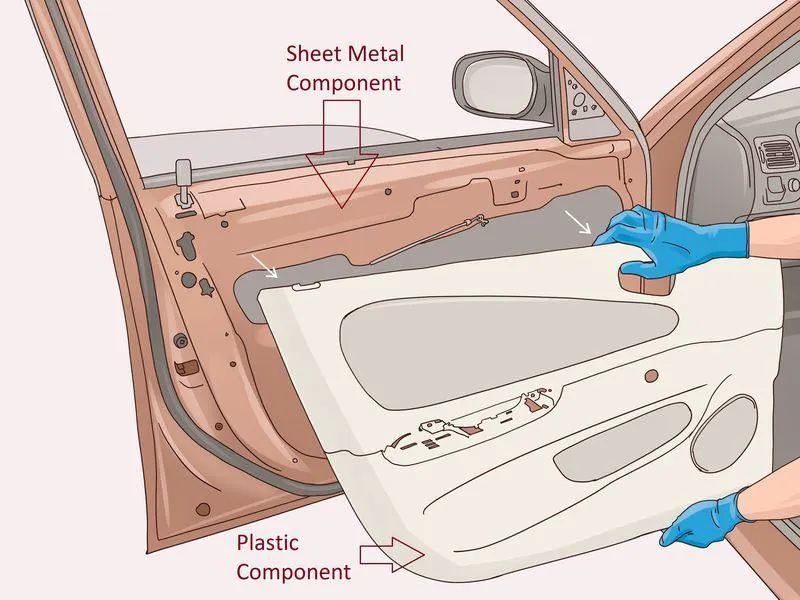
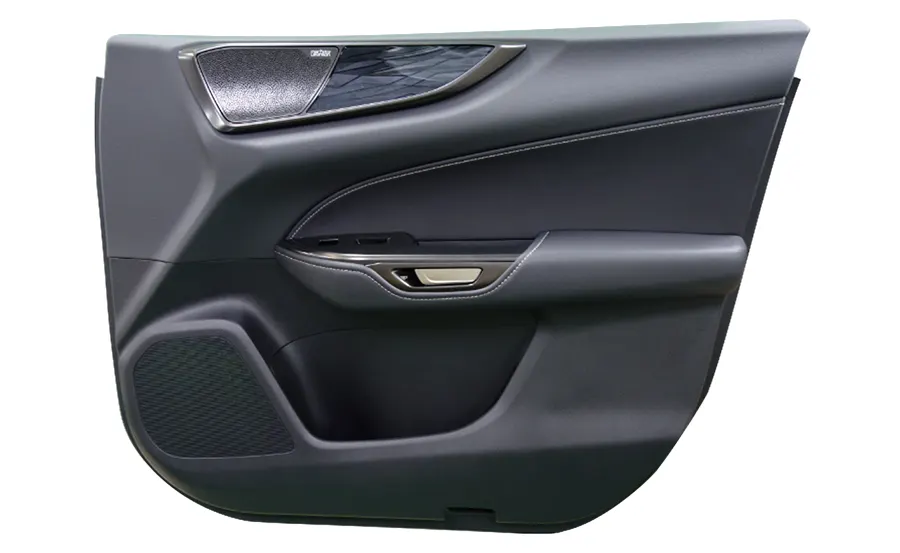
An interior component attached to the inner side of the door. This product does more than merely improve the appearance of the vehicle interior. Rather, it is a vital module component that creates a more comfortable interior by providing a variety of accouterments and functions.Next to the dashboard, the door trims are the interior parts that contain the most controls and decorative parts. As such, there is a necessity for balancing gap between parts, as well as an overall sense of unity between the numerous parts.
Conventionally, door panels consisted of polyvinyl chloride (PVC) or polyurethane foamed core with appropriate textile fabric coverings. Subsequently, there was a shift toward thin-wall moldings of ABS or PP backed by textiles in order to manufacture a contour-backed panel with recesses. This is primarily because integrated injection-molded door panel assemblies reduce the need for other energy-absorbing materials, resulting in cost reduction for manufacturers due to simplification of door construction.
Door currently have an inner full width panel consisting of electronic windows, central locking system and speakers.These panels typically consists of a foamed core covered with either textiles or plastics.
Acrylonitrile Butadiene Styrene(ABS):
Acrylonitrile Butadiene Styrene is a copolymer made by polymerizing styrene and acrylonitrile in the presence of polybutadiene. The styrene gives the plastic a shiny, impervious surface. The butadiene, a rubbery substance, provides resilience even at low temperatures. A variety of modifications can be made to improve impact resistance, toughness, and heat resistance.
PROPERTIES OF ABS-
| PROPERTY | METRIC | UNITS | ENGLISH | UNITS |
|---|---|---|---|---|
| General | ||||
| Density | 1.01e3 - 1.21e3 | kg/m^3 | 63.1 - 75.5 | lb/ft^3 |
| Mechanical | ||||
| Yield Strength | 1.85e7 - 5.1e7 | Pa | 2.68 - 7.4 | ksi |
| Tensile Strength | 2.76e7 - 5.52e7 | Pa | 4 - 8.01 | ksi |
| Elongation | 0.015 - 1 | % strain | 1.5 - 100 | % strain |
| Hardness (Vickers) | 5.49e7 - 1.5e8 | Pa | 5.6 - 15.3 | HV |
| Fracture Toughness | 1.19e6 - 4.29e6 | Pa/m^0.5 | 1.08 - 3.9 | ksi/in^0.5 |
| Young's Modulus | 1.19e9 - 2.9e9 | Pa | 0.16 - 0.421 | 10^6 psi |
Alternate Material Is Polypropylene,
PROPERTIES OF PP-
| PROPERTY | UNIT | VALUE / RANGE |
| Tensile Strength, Yield at 23 C | MPa | 31 - 45 |
| Tensile Strength, Break at 23 C | MPa | 18 - 22 |
| Elongation, Yield | % | 10 - 12 |
| Elongation, Break | % | 50 - 145 |
| Tensile Modulus at 23 C | MPa | 1950 |
| Flexural Strength, Yield | MPa | |
| Flexural Modulus | MPa | 1350 - 1800 |
| Compressive Strength | MPa | |
| Izod Notched | J/m (kJ/m2) | 35 - 60 (3.0 - 6.5) |
DESIGN FLOW:
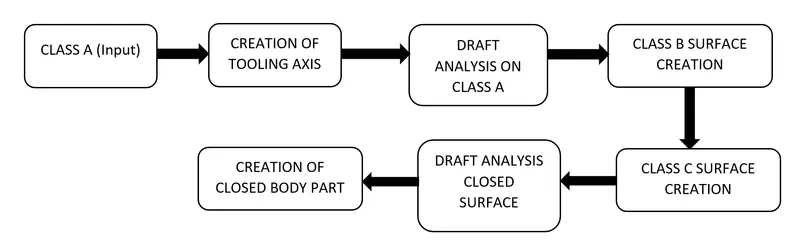
TOOLING AXIS:
- Considering the Ejection from the cavity of the mould after manufacturing the interior trim must have the nominal 3-degree draft angle.
- Hence the tooling axis is created by considering the above factor.
- The direction in which the mold or core and cavity opens is the tooling axis.
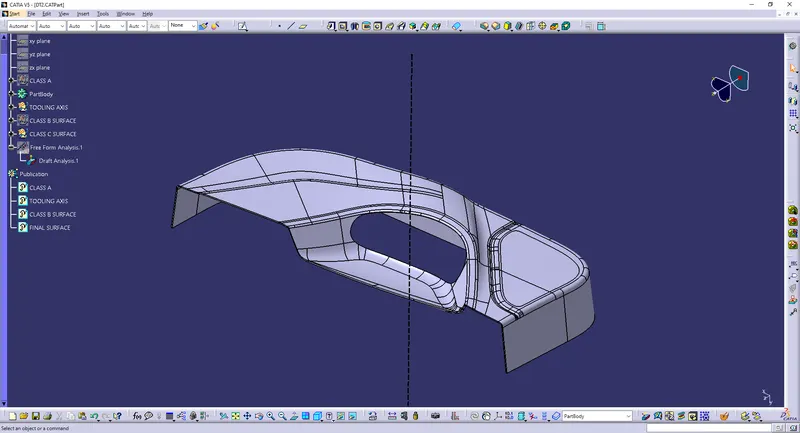
- In this case below is the tooling axis that I have used.
- The Line in the black color is our tooling axis
CLASS A SURFACE:
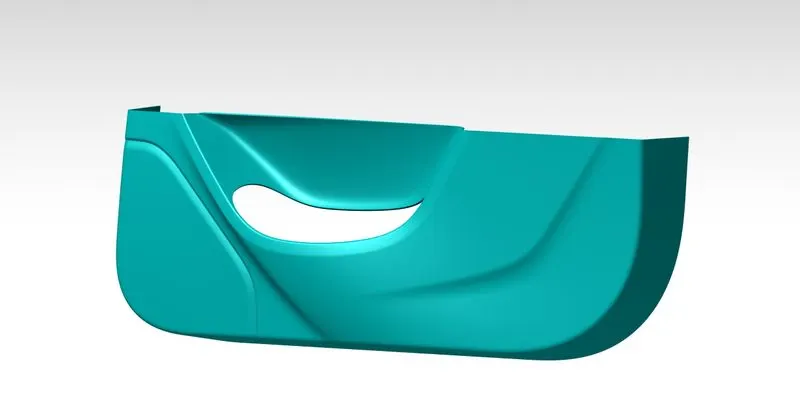
- In automotive design, a class A surface is any of a set of freeform surfaces of high efficiency and quality.
- It is the visible aesthetic surface of any automotive component.
- Class A surface refers to those surfaces which are visible and abide to the physical meaning, in a product.
- This classification is primarily used in the automotive and increasingly in consumer goods industry.
- It is a requirement where aesthetics has a significant contribution.
- For this reason, the exterior of automobiles is deemed Class-A.
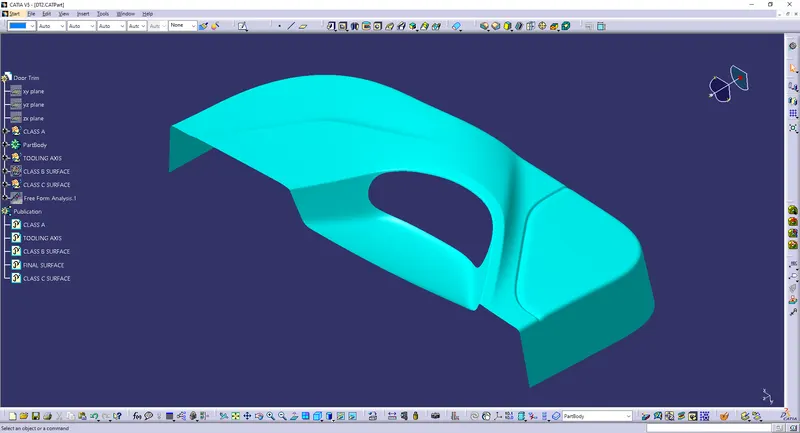
- Below is the CLASS A SURFACE that I have used as input.
CLASS B SURFACE:
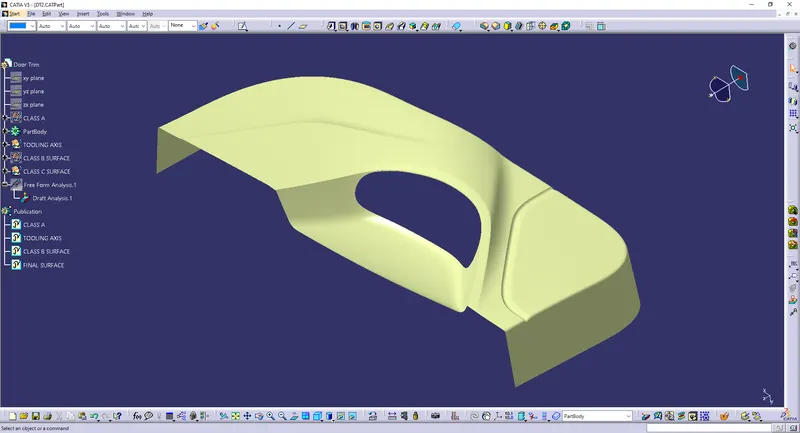
- Class B surfaces are Engineering Surfaces which are invisible to the eyes or often on the back side of the Class A surfaces.
- It is mainly the thickness of the component or Class A.
- These surfaces need to be designed as per the Class A surface i.e., the continuity, thickness of the component, functionality etc should be maintained.
- These surfaces include the main engineering features such as Screw bosses, Ribs, Snaps, Stiffeners and fixations.
- B surfaces also do not contain any aesthetic styling content and textures since it is not visible to eyes.
- Below is the image of CLASS B that I have created
CLASS C SURFACE:
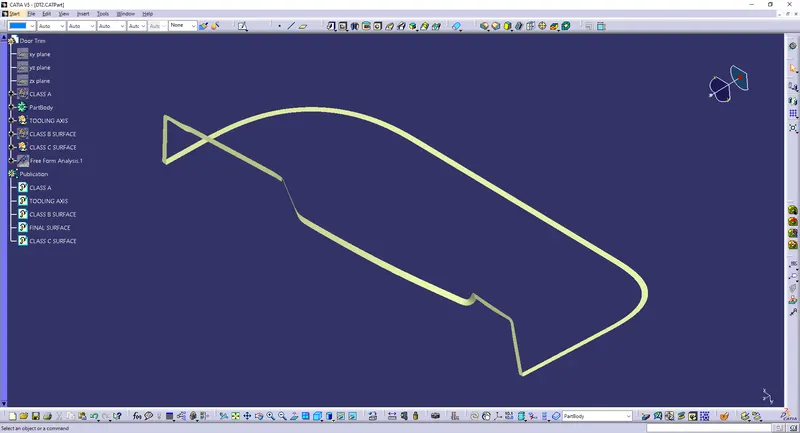
- Class C surfaces are connectors between Class A and B surfaces.
- This surface connects both A and B surfaces along the Tooling Axis.
- It contains the draft as per the design.
- It is basically the thickened surface between both A and B surface.
- Below is the Class C surface that I have created for this model
CLOSED SURFACE:
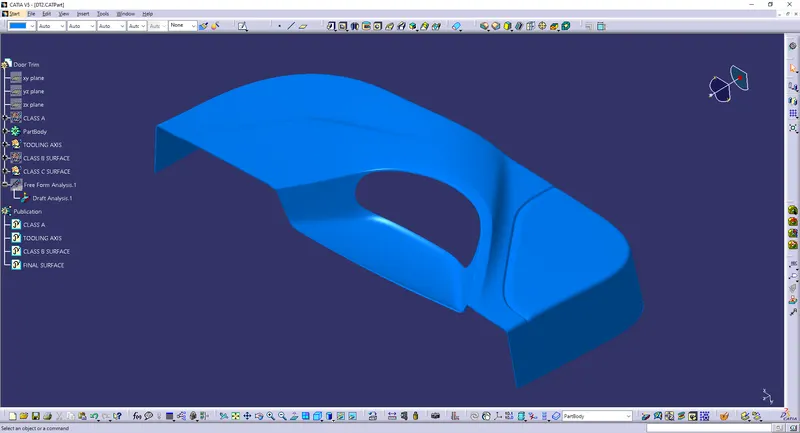
- Now the class – A and Class- C surfaces were joined together by removing the gaps in-between them with the help of extrapolation and Trim surface.
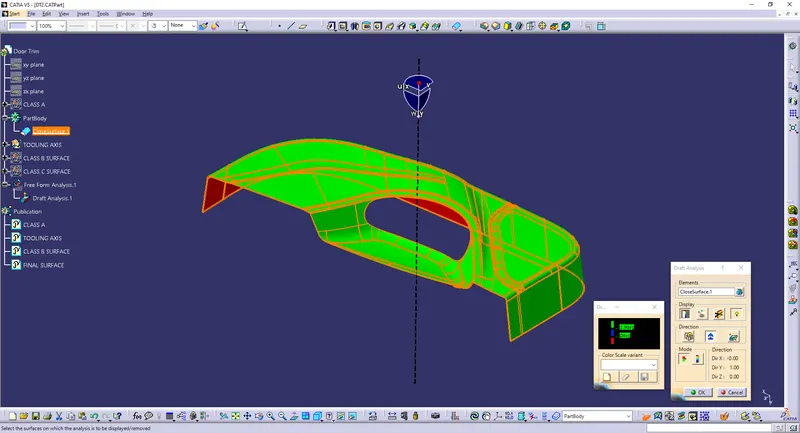
- Then, by defining the part body by using the Closed Surface command in Part Design, the component's solid body is created.
FINAL SOLID BODY:
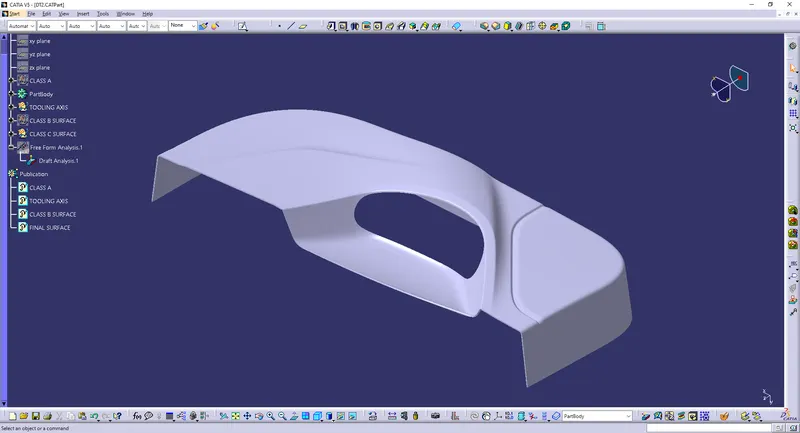
DRAFT ANALYSIS:
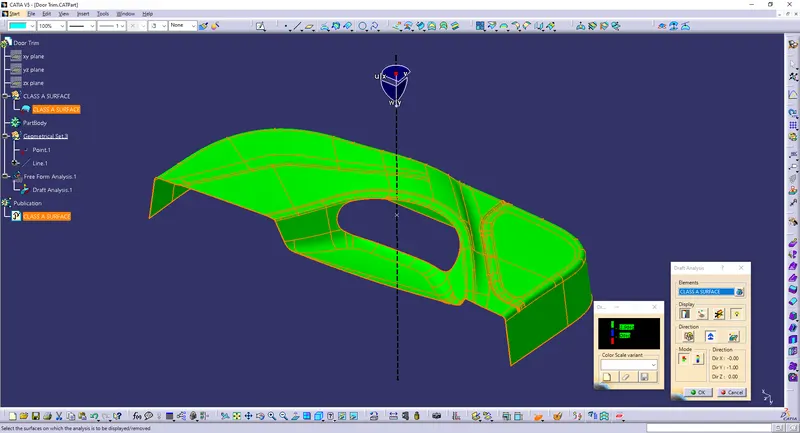
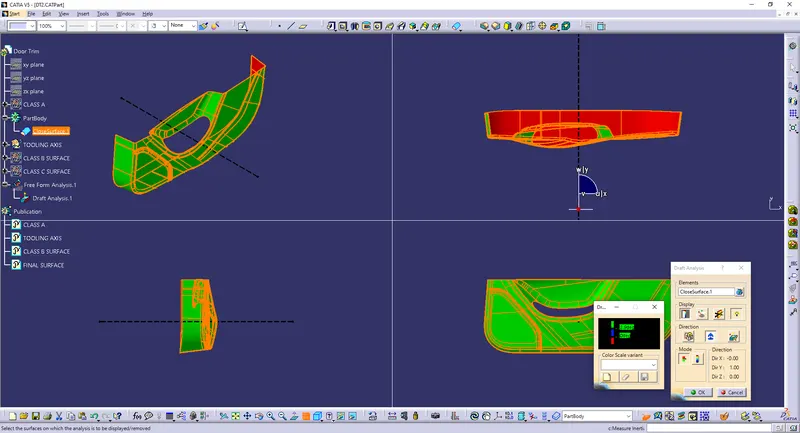
- Draft Analysis is a tool in CATIA which identifies the zones which deviates from the specified values of angles along a defined draft direction using colour codes.
- It highlights the regions of draft using colours.
- Draft analysis is the first step performed after receiving the Class A of the component.
- Draft analysis should be passed in order to make the plastic component manufacturable.
- Acceptable draft angles are used as range for draft analysis that is 0 to 3 degree.
SURFACE:
SOILD BODY:
FOUR VIEWS:
CONCLUSION-
Finally the Class – A, B & C surfaces with the Tooling Direction have been Published and the Door Trim is moved on to the designing of the next operation – the creation of other features.