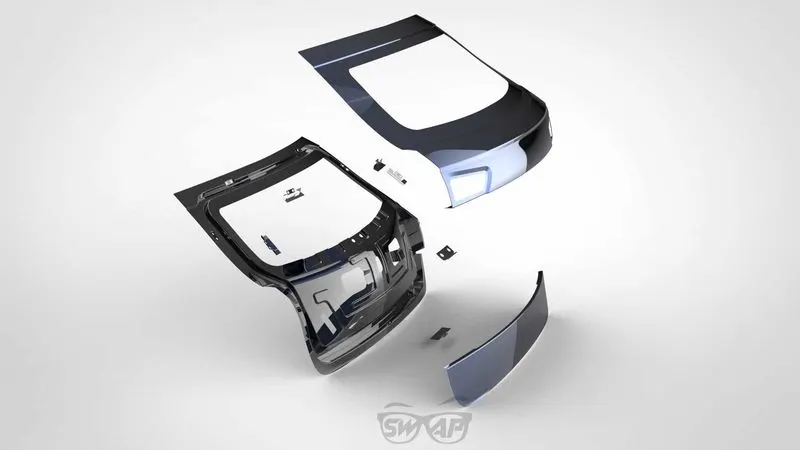
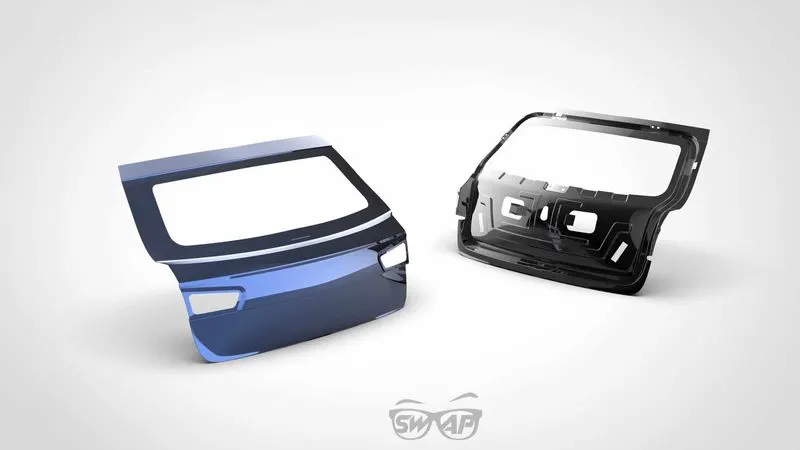
Design of backdoor
Car Back Door Design
Aim- To design back door of car using given outer class 'A' surface.
Introduction-
A car back door refers to the door located at the back of a vehicle, typically used for entry and exit by passengers sitting in the back seat. Some cars have a single back door, while others have two back doors (a left and a right). These doors may be hinged on the side or at the top, and are typically opened using a handle or a button. Some cars also have automatic back doors that can be opened using a remote or a button on the key fob.
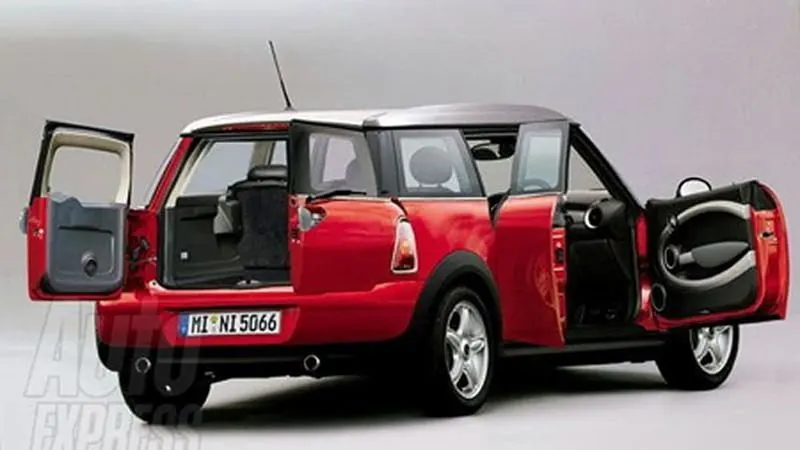
The back door of a vehicle, also known as a hatch, tailgate, trunk-lid, or boot-door, is a hinged board or door located at the rear of the vehicle. It can be moved up or down for loading and unloading and provides access to the trunk. It also includes features such as tail lamps, hinges, a wiper motor, and a gas stay
The Backdoor serves several functions
including protecting occupants and luggage from damage
housing assembly of tail lamps, wiper motor and other components
serving as an entry and exit point for luggage/passengers
housing the windshield glass for rear visibility, and mounting parking sensors and a rear view camera.
Types of Back Door
1. Top Mounted
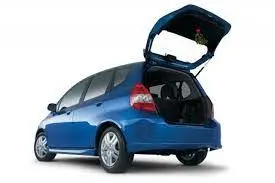
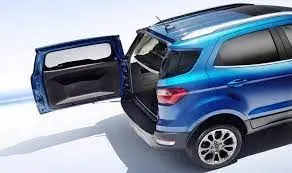
Back doors of this type are commonly found in station wagons, pickup trucks, and some sports utility vehicles. Today's modern cars, however, often feature top-mounted tailgating systems that are both powered and gas stay-supported. These tailgates offer improved rear visibility compared to traditional designs
2. Side mounted Back Door
Side-mounted back doors, also known as side doors, are typically found on van-type MPVs, SUVs, and pickup trucks. These types of doors are generally considered more convenient and easier to use compared to top-mounted ones, as they are typically smaller in size and can be easily accessed. These doors are especially useful for goods handlers transporting longer objects or pipes, as they can be opened and closed with ease, preventing accidental head impacts. Additionally, loading and unloading cargo in vehicles with side-mounted doors is generally considered more efficient.
3.Bottom mounted Back door
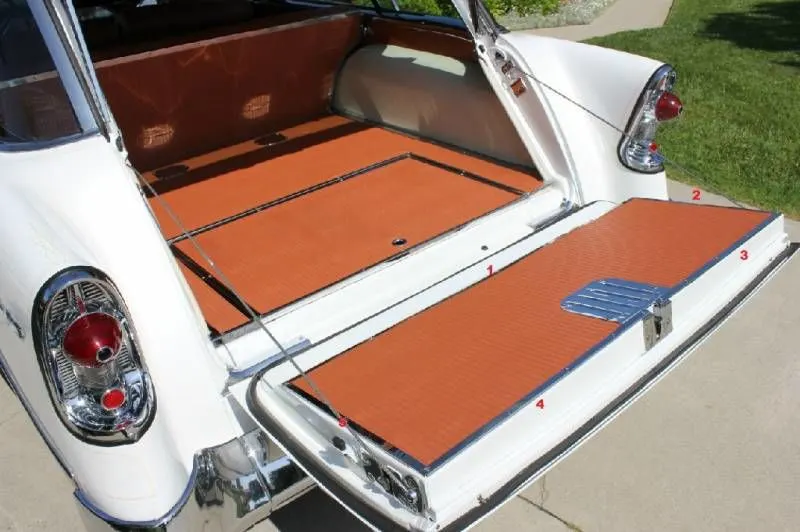
Estate cars, pickup trucks, and some luxury SUVs use a bottom or split type backdoor system, which is a convenient type of backdoor. The bottom split can be used as a support or even as a table for passengers while traveling
Materials Selection-
The material used in the construction of the back door plays a significant role in its overall weight. Steel and Aluminum are commonly used materials, with Steel being denser and heavier than Aluminum. The choice of material is often determined by the budget of the vehicle, with low-cost vehicles typically using Steel due to its lower cost compared to Aluminum. Another consideration is that using cast Aluminum parts instead of deep-drawn Steel parts can reduce the weight of the vehicle by 5-10kg, improving performance. Additionally, the draft angle for cast parts is typically 3 degrees, while it is 7-10 degrees for deep-drawn parts, which can increase luggage or cabin space
The below table gives a comparative information about Steel and Aluminium.
Aluminium Steel
|
Design of Back door in NX CAD:
Door parts thickness is given below,
- Outer Panel - 0.75 mm
- Inner Panel - 0.75 mm
- Reinforcements - 1.5 mm
Parts Of the BackDoor
Outer panel
Hinge Mounting Bracket ( LH & RH )
Gas Stay Bracket ( LH & RH )
Wiper Motor Support Bracket
Latch
Latch Reinforcement
Hinge reinforcement ( LH & RH )
Gas Stay Reinforcement ( LH & RH )
The components of back door are as follows
1 Outer panel
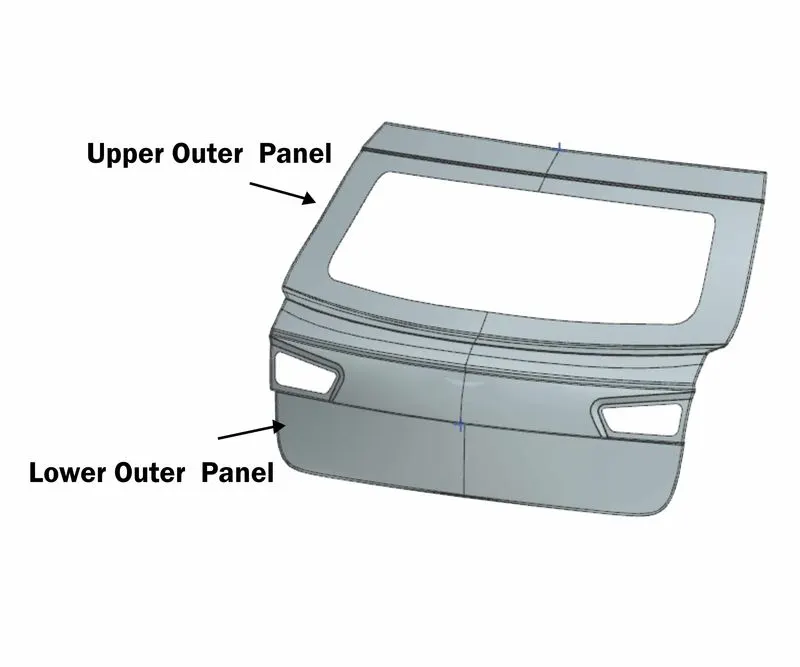
The outer panel is the exterior part of the rear door and primarily responsible for the vehicle's aesthetics. It is connected to the inner panel by mastic sealants in the center and by a hemming process at the edges. The outer door handle and, in some cases, the license plate may also be mounted on the outer panel. Our design includes a two-part outer panel, consisting of an outer upper panel and an outer lower panel. The outer panel is made by stamping sheet metal, with a thickness of 0.75 mm.
Hemming
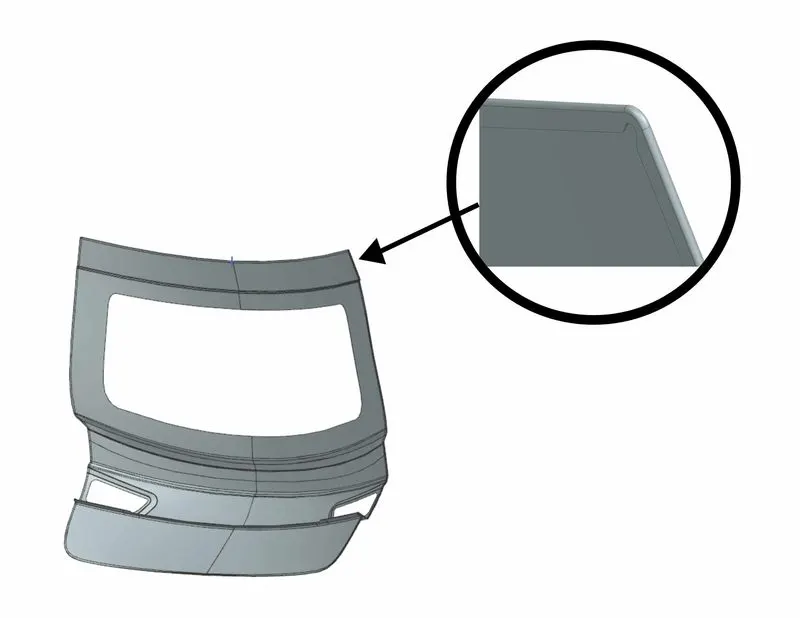
Hemming is a forming process in which the edges of a sheet metal are folded over another part to create a tight fit. It is commonly used to connect parts together, enhance the appearance of a part, and reinforce part edges. In the automotive industry, hemming is often used as a secondary operation after deep drawing, trimming, and flanging to join two sheet metal parts, such as hoods, doors, trunk lids, and fenders.
2. Inner Panel
The inner panel is a crucial component of the backdoor assembly, as it provides strength and aids in dissipating forces from the exterior through the use of embosses. It is also used for mounting accessories such as hinges, the wiper motor, gas stay, latch, and striker. It is typically produced through either casting or deep drawing processes
The inner panel is mostly made of casted aluminum, while steel inner panels are typically manufactured by deep drawing process. When using deep drawing process, a specific tooling direction must be used to shape the panel.
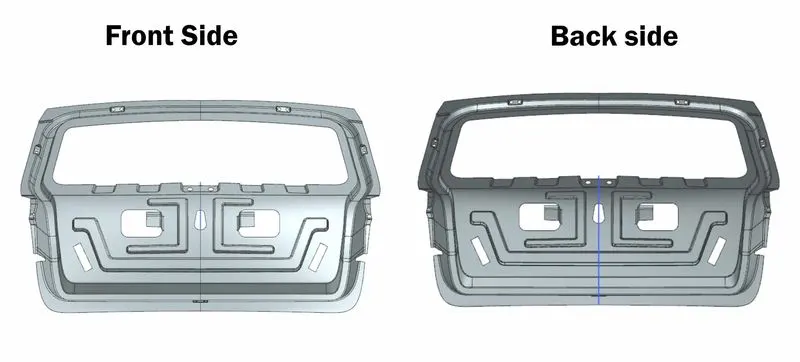
Tooling axis
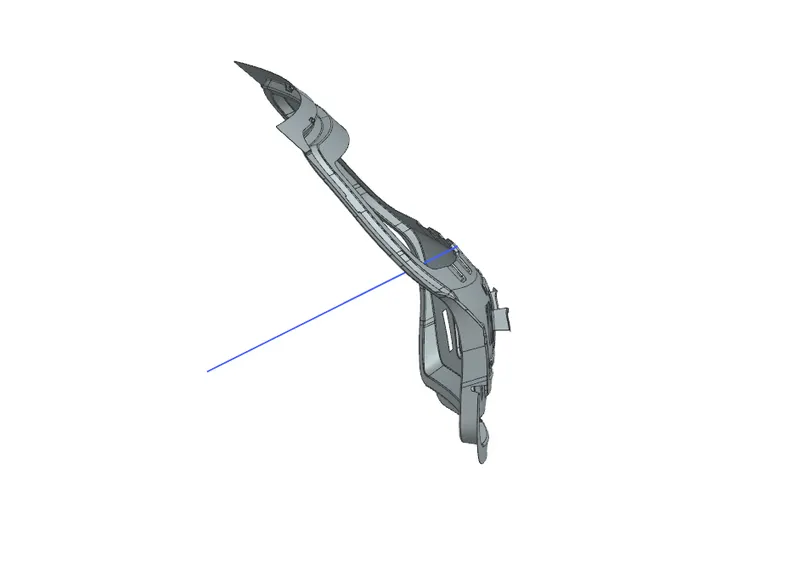
Sealing flange
The sealing flange is a section of the inner panel that allows the backdoor to sit on the rear body side of the car. Its design is crucial as it determines how the backdoor is mounted on the rear body side of the car and prevents external matter from entering the vehicle.
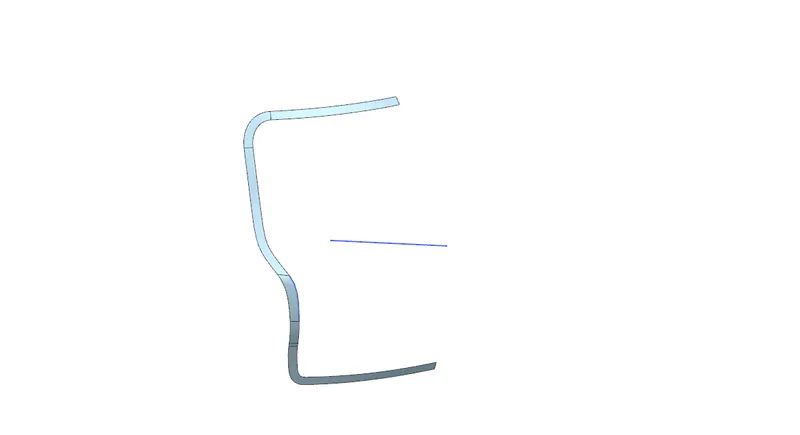
Corner Relif -
Additionally, corner reliefs also prevent cracking and other deformation that may occur due to the forming process and help to maintain the integrity of the panel. This is especially important in high-stress areas such as hinge and latch reinforcements. Corner reliefs are often designed using simulation software to ensure they are effective in reducing stress concentrations during the assembly process.
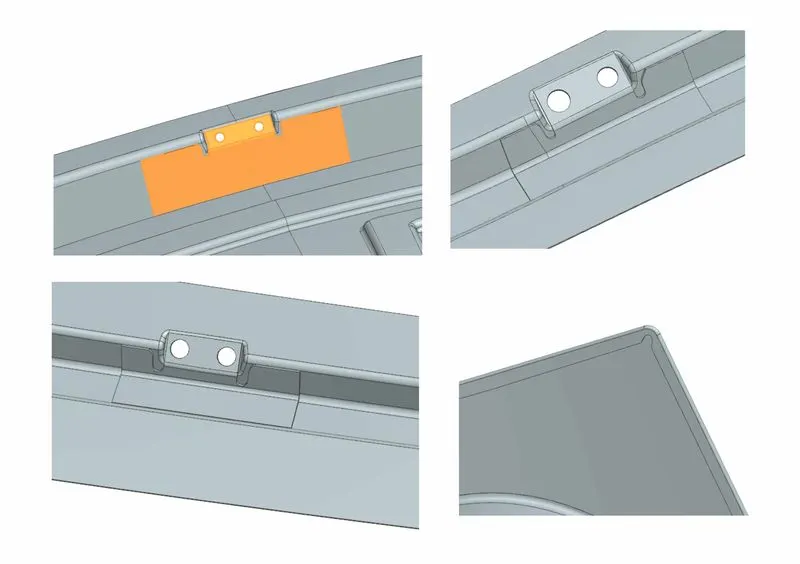
Reinforcements
Reinforcements are added to increase the strength of the panel in specific areas where loads are imposed. They are typically smaller in size compared to the sheet metal parts and help to distribute the load throughout the panel assembly to maintain its rigidity. The reinforcements are usually 1-1.5mm thick, while the panel used in this part is 0.75mm thick.
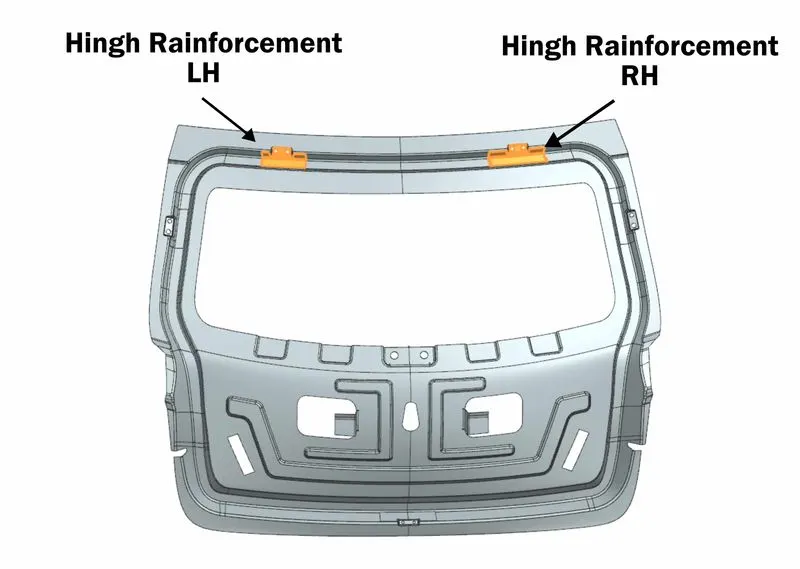
3. Hingh reinforcements
Hinge reinforcements are added to the hinge mechanism that supports the total weight of the backdoor, to increase the strength and rigidity of the hinge. The hinge is a pivot mechanism that allows the backdoor to open and close, and is subject to a significant amount of stress and force. The reinforcements help to distribute the load and prevent the hinge from bending or breaking under the weight of the door. These reinforcements can be made of various materials, such as steel or aluminum, and can come in the form of additional plates or brackets that are attached to the hinge. They are generally 1-1.5mm thick, as opposed to the 0.75mm thick panel used in the door. This added thickness helps to increase the hinge's strength and durability, ensuring that the door can be opened and closed smoothly and safely.
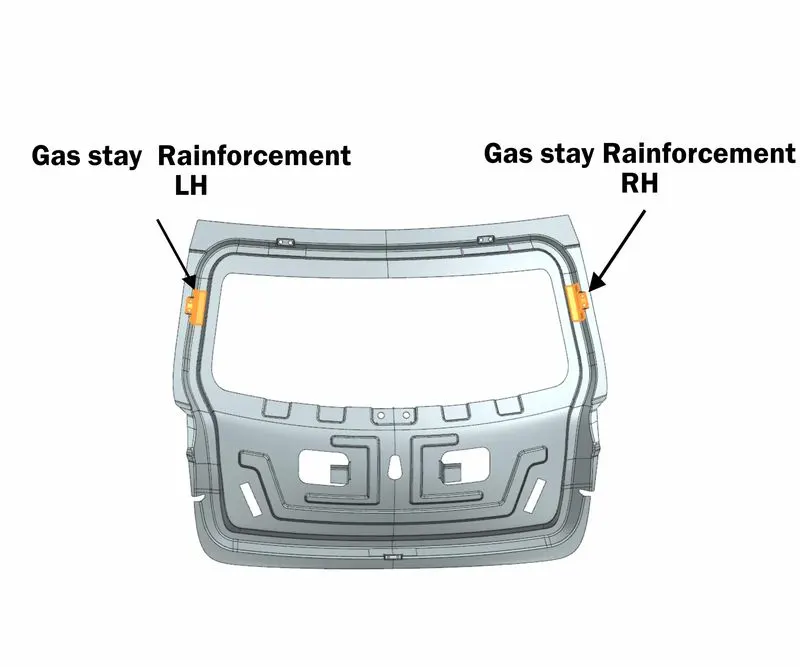
4. Gas stay rainforcement -
A gas stay, also known as a gas strut, is a device that is used to lift the backdoor of a car automatically, making it easier to open and close. It also supports the backdoor in an open position, holding it in place without the need for additional support. There are two types of gas stays: semi-automated and fully automated. A semi-automated gas stay requires the user to manually lift the door slightly before it takes over and opens it fully, while a fully automated gas stay is capable of opening the door completely on its own. The type of gas stay used may depend on the car model and its features.
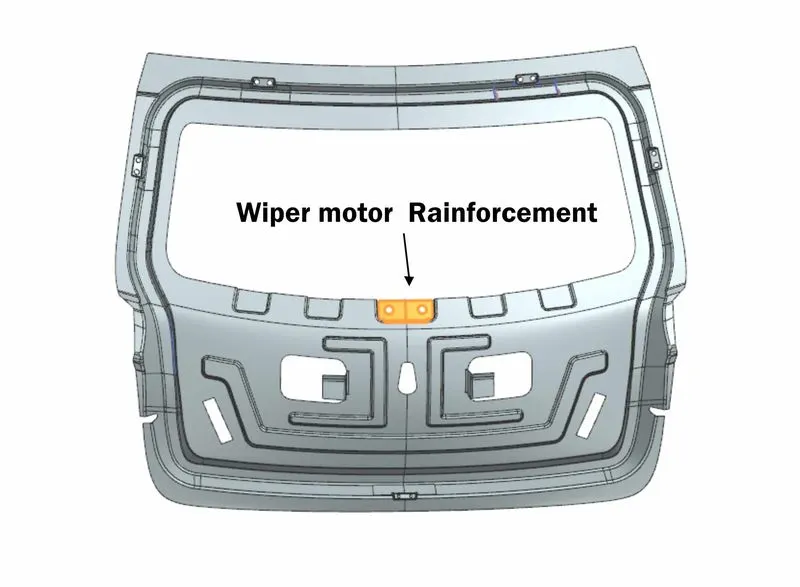
5.Wiper Motor Reinforcement:
The wiper motor is the mechanism that powers the wipers on the rear windshield. It is mounted on the inner panel of the back door and is subject to vibration and heat. These conditions can cause the inner panel to deform and lose strength, leading to poor noise, vibration, and harshness (NVH) characteristics. To prevent this, reinforcement is added around the wiper motor to provide extra support and stability to the panel. This can help to reduce the chance of deformation and improve the overall performance of the door.
Latch and striker reinforcement
Latch and striker reinforcement refers to the added support and reinforcement around the area where the latch and striker mechanism are located on the back door. The latch is the mechanism that keeps the door closed, while the striker is the part on the door frame that the latch locks into. Due to the constant opening and closing of the door, as well as potential slamming or misuse, the area around the latch and striker can experience stress and wear. To prevent this from weakening the door and potentially causing issues with the latch and striker functioning properly, reinforcements are added to increase the strength and rigidity of the door in that area.
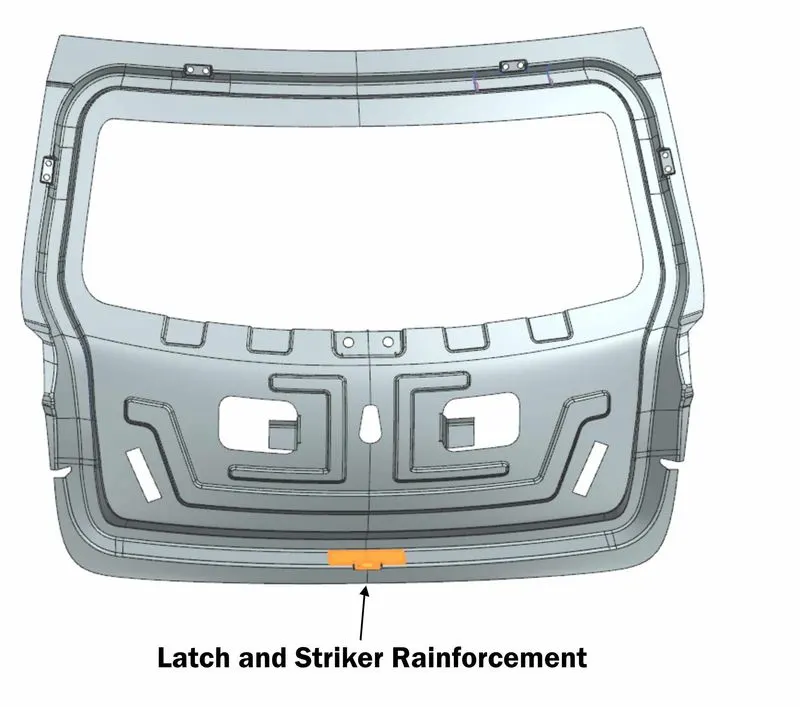
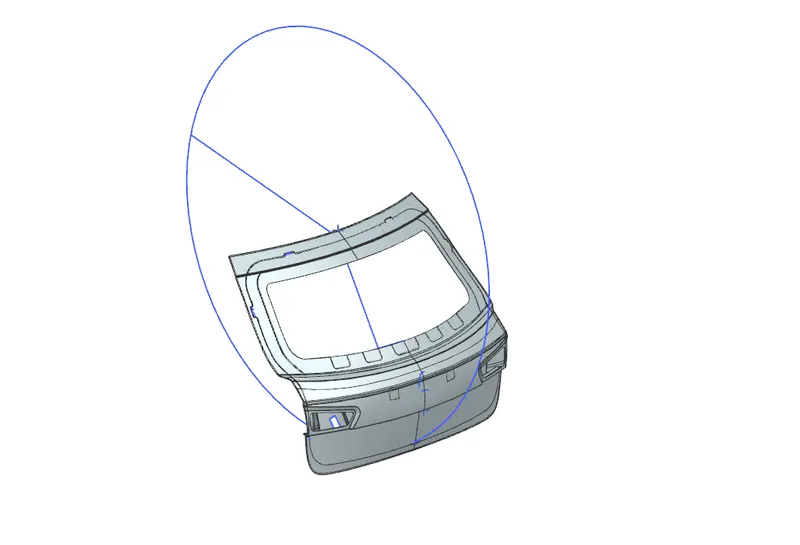
Latch & striker/ Latch Trajectory:
This is known as the latch trajectory, and it determines the path of the latch as it moves along the striker during the opening and closing of the door. The latch trajectory is designed to ensure a smooth and consistent operation of the door, while also taking into account factors such as safety and ease of use. The latch and striker reinforcement is added to ensure that the latch and striker remain securely in place during operation, and to prevent any damage or wear to the inner panel. This reinforcement helps to maintain the durability and longevity of the backdoor assembly.
Design considerations
Durability and corrosion resistance
Noise, vibration, and harshness (NVH) performance
Ease of maintenance and repair
Weight optimization to improve fuel efficiency
Cost optimization and manufacturing feasibility
Aesthetics and overall appearance of the rear door and its integration with the rest of the vehicle's design.
Assembly-
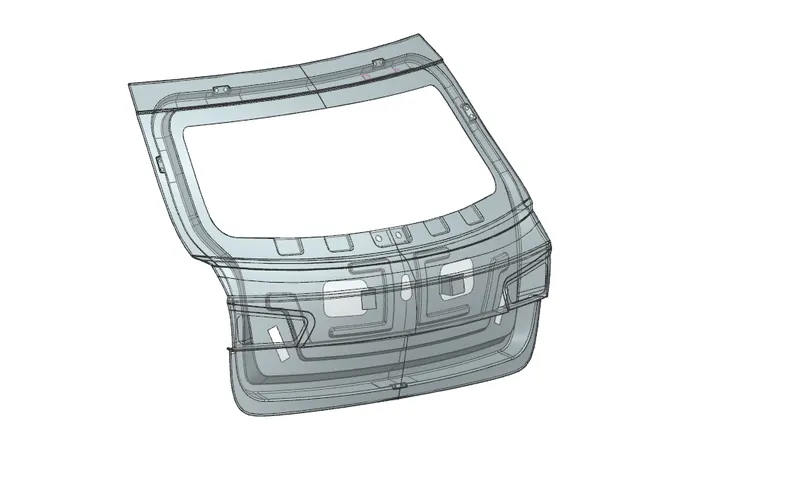
The outer panel, hinge reinforcements, gas stay, wiper motor reinforcement, latch and striker reinforcement and sealing flange were all added to the inner panel. The different components were then joined together using techniques such as hemming, spot welding, and mastic sealants. The final assembly was then checked for proper fit and function, and any necessary adjustments were made to ensure that it met all design considerations such as rear visibility, boot space and accessibility, support structures, and crash regulations. The final assembly was then ready for further testing and validation before being sent for production.
Draft Analysis
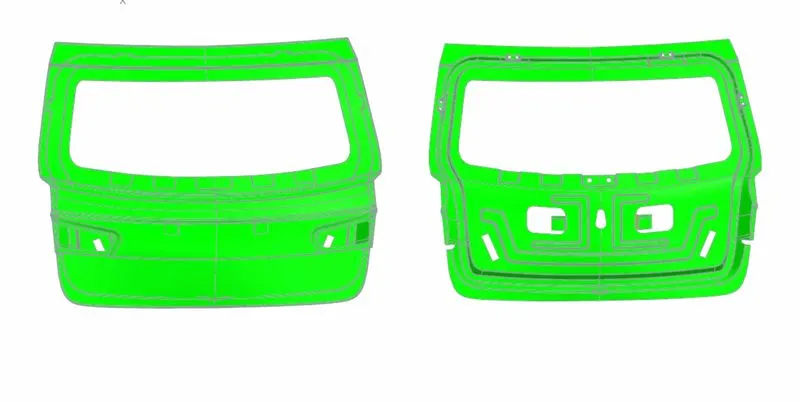
Additionally, Draft analysis is also useful in identifying the areas where the material is stretched or compressed, which can lead to thinning or thickening of the material. This information can be used to optimize the design and prevent any issues during the manufacturing process. It also helps to ensure that the part will have the desired strength and durability after it is manufactured. Overall, Draft analysis is an important step in the design and manufacturing process to ensure that the final product meets the necessary requirements and standards.
Rendered Image