Design of backdoor
DESIGN OF BACK DOOR
INTRODUCTION
What is “Back Door”?
Basically a door of a vehicle is a part that can be functions a pedestrian get in/out of a vehicle and these are hinged over the body. In Back Door “it can be defined as a BIW closure component of a vehicle and it has to be located at the rear end of the body by using hinges and these can allow to access door open/close”.
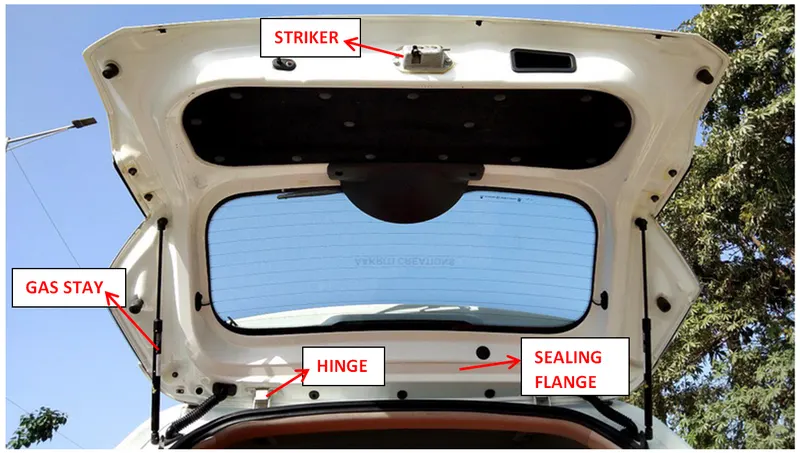
Fig_1: Back Door
MAJOR COMPONENTS OF BACK DOOR ASSEMBLY
- Back door outer panel
- Back door inner panel
- Hinge reinforcements
- Gas stay reinforcements
- Latch & Striker reinforcements.
DESIGN AND FUNCTIONAL REQUIREMENTS
- Rear Visibility Criteria
- Rear crash regulations and requirements
- Sealing and its functions
- Joining Techniques
- Manufacturing Techniques
- Functional requirements of Hinges & Gas stay/Power lifters.
MANUFACTURING TECHNIQUES
1_SHEARING:
The Shearing operation is a cut in a straight line across a strip, sheet, or bar. It leaves a lean edge on the piece of metal that is sheared or cut. In this operation, a sheet metal work piece is placed or kept between two dies from one end. And, the punch is hit at the other end of the sheet, producing a shearing effect. This type of sheet metal operation has three basic stages:
- Plastic deformation occurs when a metal is sandwiched between the upper and lower blades of shear when pressure is applied. It penetrates the metal for around 5 to 40% of its thickness.
- A fracture occurs at the spot where the most stress is concentrated.
- Shear – The metal is sheared once small fractures are discovered.
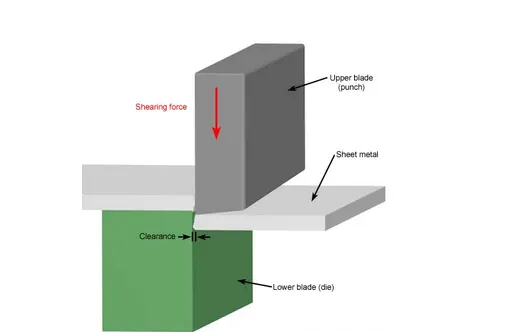
Fig_2: Shearing operation
2_DRAWING:
Deep drawing is one of the most widely used processes in sheet metal forming. Apart from its use in many other sectors, it is applied in the automotive industry for the manufacturing of car body parts.
The deep drawing process is a forming process which occurs under a combination of tensile and compressive conditions. A flat sheet metal blank is formed into a hollow body open on one side or a hollow body is formed into a hollow body with a smaller cross-section.
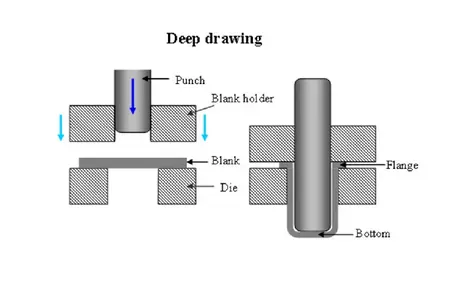
Fig_3: Drawing operation
3_EMBOSSING:
Embossing is a metalworking technique for creating raised surfaces or letters in sheet metal. During this operation, the thickness of the metal does not change. And it helps to improves its strength locally.
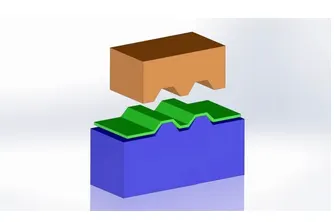
Fig_4: Embossing operation
4_PIERCING:
Piercing is the process of creating desired shape holes in a piece of sheet metal without taking any material from the sheet or removing a very little quantity of material. In this operation, both punch and die are used. Bullet-shaped punches are commonly employed in piercing operations.
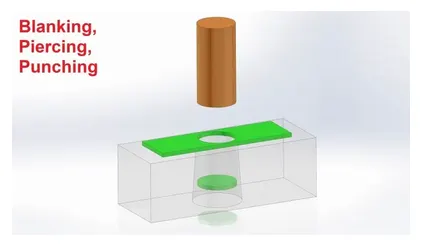
Fig_5: Piercing operation
5_TRIMMING:
The shaving operation is another name for trimming. It is a finishing technique that involves removing burrs from cut edges in order to smooth them down and improve dimensional accuracy.
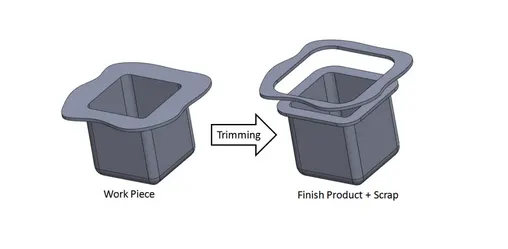
Fig_6: Trimming operation
JOINING TECHNIQUES
1_WELDING JOINTS:
The main purpose is to use the spot welding process to reverse a row of solder joints on the two sheet metal. Directly melt the local sheet metal material at the welding head to complete the sheet metal connection.
Pros:
- Simple process
- No need of pre-processing required.
Cons:
- Equipment complexity.
- Weak welding force, easy to remove welding.
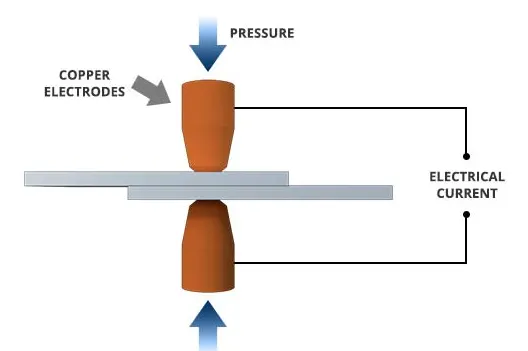
Fig_7: Spot welding
2_HEMMING:
Heming is a forming operation in which the edges of the sheet are folded or fold over another part in order to achieve a tight fit. Normally hemming operations are used to connect parts together, to improve the appearance of a part and to reinforce part edges.
In automotive part production, hemming is used in assembly as a secondary operation after deep drawing, trimming and flanging operations to join two sheet metal parts together(outer/inner panels). Typical parts for this type of assembly are hoods, doors, tail gate, and fenders.
Types:
- Conventional die hemming and
- Roll hemming
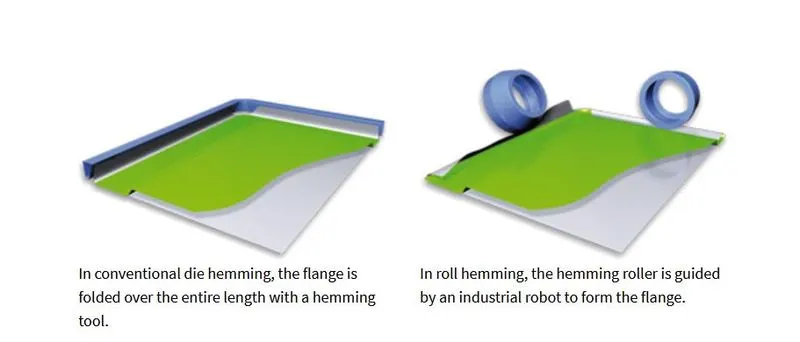
Fig_8: Hemming
DESIGNING OF BACK DOOR
OBJECTIVE:
To design an automotive back door and its components with respect to the all the considerations by using the given skin data and components are,
- Outer panel
- Inner panel
- Reinforcements
With respect to the given data as is the thickness of sheet following are,
Outer panel and Inner panel = 0.75mm
Reinforcements = 1.5 mm.
TOOL USED: NX_12
1_OUTER PANEL
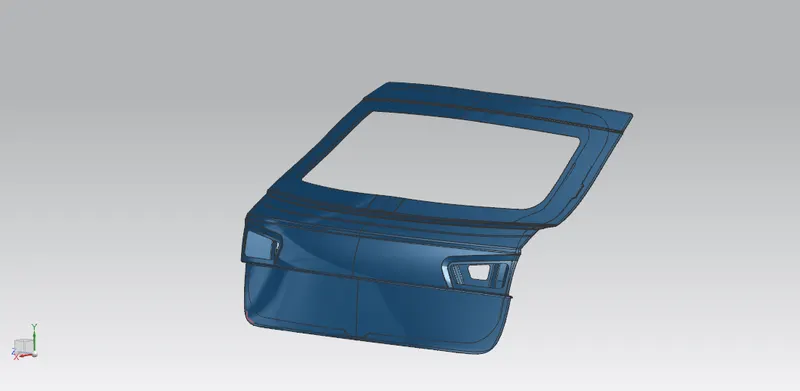
Fig_9: Back door_ Outer Panel
2_INNER PANEL
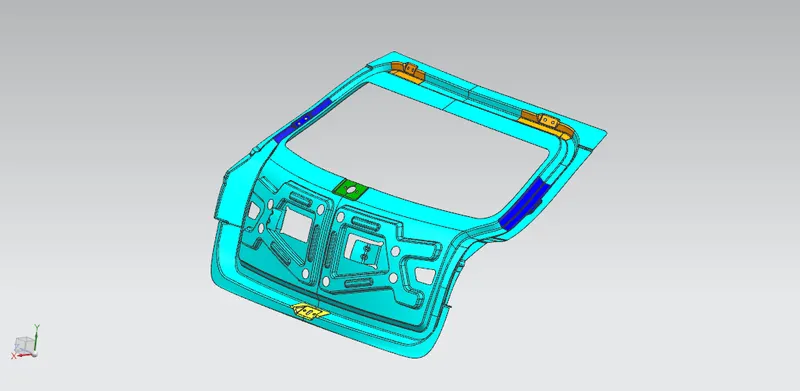
Fig_10: Back door _ Inner Panel
2.1_INNER PANEL DRAFT ANALYSIS
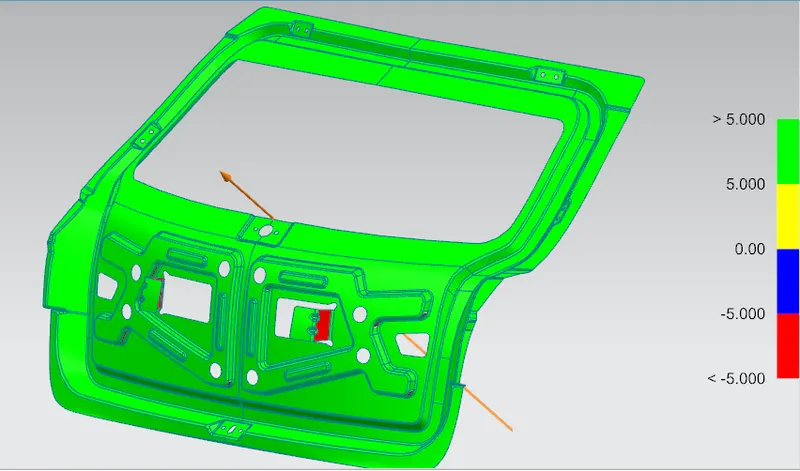
Fig_11: Back door_ IP Draft Analysis
3_STRIKER TREJECTORY
Backdoor is the swinging part which rotates about hinge axis. The position and orientation of latch striker is important for proper opening and closing of the backdoor. The positioning it can be done by sketching trajectory path.
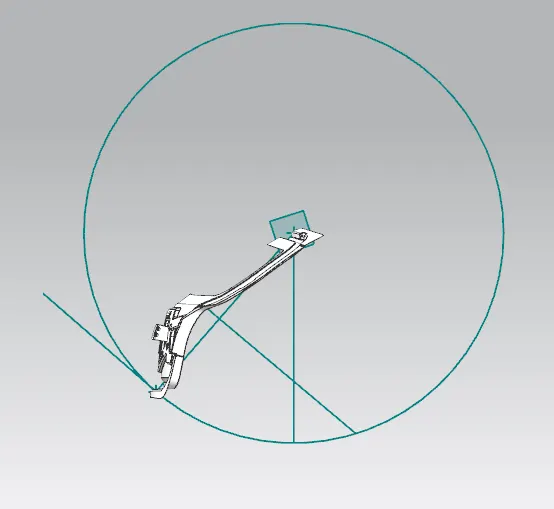
Fig_16: Striker Trajectory
4_REINFORCEMENTS
Reinforcement it can be defined as usually add rigidity and greatly impede crack propagation. In particular, they enforce the mechanical properties of the matrix and, in most cases, are harder, stronger, and stiffer than the matrix. In this back door design the following reinforcements are hinge reinforcement, gas stay reinforcement, wiper motor reinforcement and striker reinforcement and its thickness should be followed 1.5 mm.
3.1_HINGE REINFORCEMENT
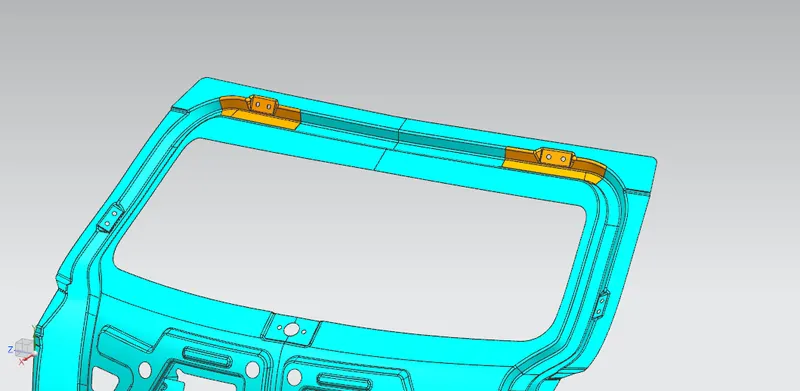
Fig_12: Back door_ Hinge Reinforcement
3.2_GAS STAY REINFORCEMENT
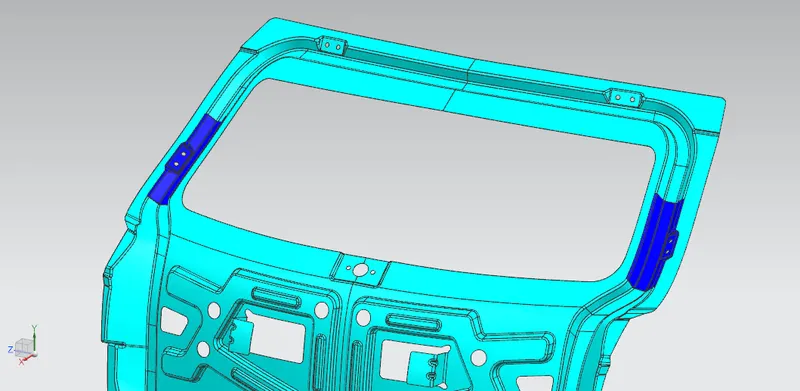
Fig_13: Back door_ Gas stay Reinforcement
3.3_WIPER MOTOR REINFORCEMENT
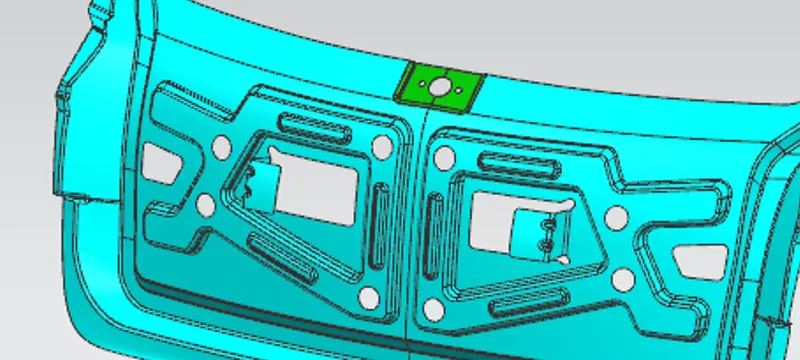
Fig_14: Back door_ Wiper motor Reinforcement
3.4_STRIKER REINFORCEMENT
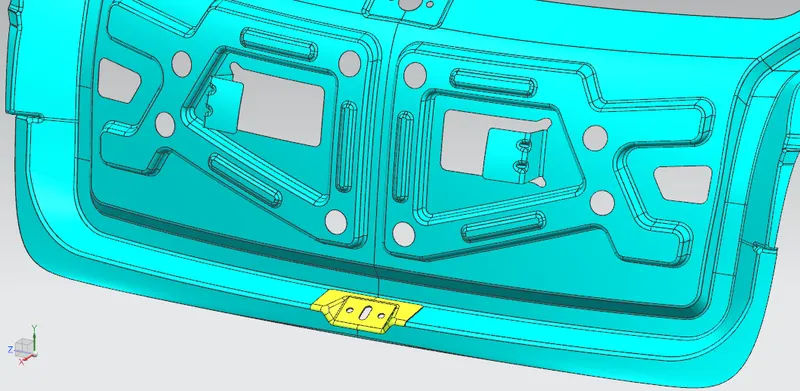
Fig_15: Back door_ Striker Reinforcement
OTHER REF PIC'S:
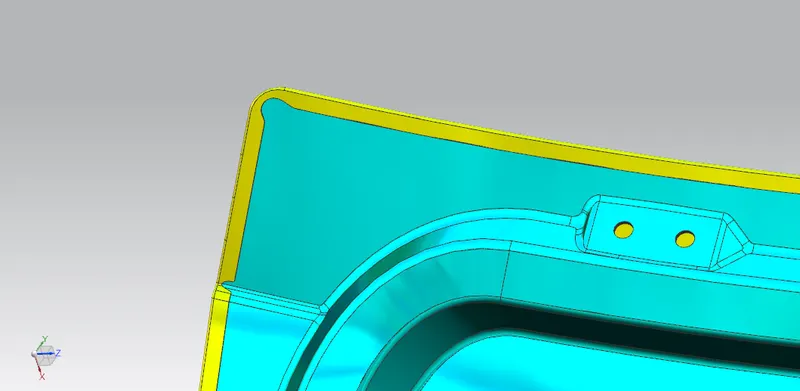
Fig_16: Back door_ Corner Relife
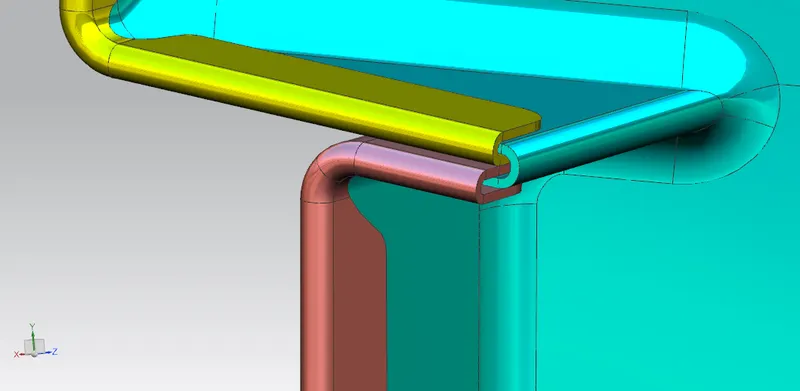
Fig_17: Back door_ Hem Creation
CONCLUSION:
Thus the automotive back door design has been done by using all the design considerations and the followings are appropriate tooling direction, draft analysis, latch and striker trajectory and all the reinforcements are done by using NX_12.