Design of backdoor
OBJECTIVE:
Design of the Outer upper and lower panel, inner panel, and the necessary reinforcements by following the Master section with the design parameters for the given class-A surface.
CONTENTS:
INTRODUCTION
DESIGN CONSIDERATIONS
HEMMING
INNER PANEL
OUTER PANEL
REINFORCEMENTS
DRAFT ANALYSIS
Introduction:
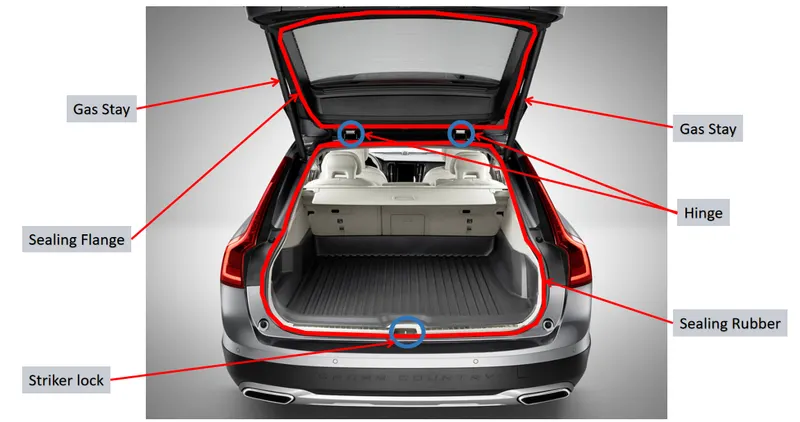
A passenger car is a wheeled motor vehicle used for transporting passengers, which also carries its own engine or motor. Tailgate is the closing door of the luggage compartment. It provides the aesthetic outer appearance to the vehicle as well as wind flow aerodynamic surface. Tailgate is a single stamped or split outer panel. It integrates with the inner reinforcement panel. To avoid air rushing noise as well metal rubbing noise, protected with the sealer application process. Outer edges hemmed by Robot hemming process with 3 pass hemming to ensure sealer fill rate uniformly as well clinch tightness rigidly. in such a way easy to open at the same time, it should not pass external environmental noise inside the passenger compartment and should not lead to any water leak. High closing effort leads to improper locking. Gas Stay is used to easily access opening and closing.
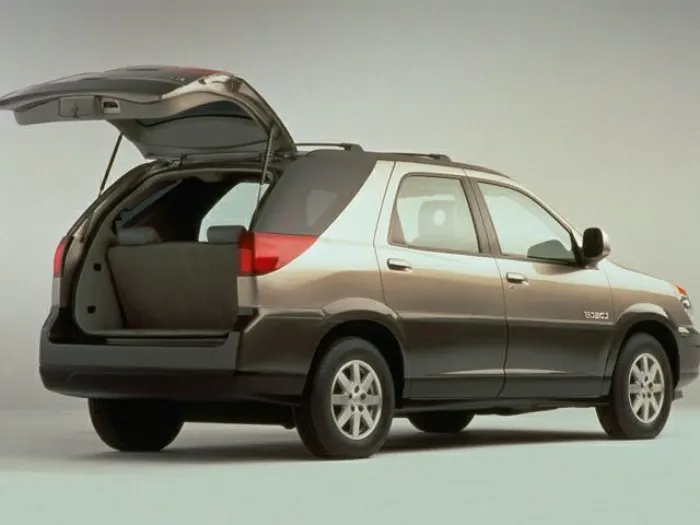
TAILGATE OR BACK DOOR:
A tailgate is a door at the back of a truck or car, that is hinged at the bottom so that it opens downwards.
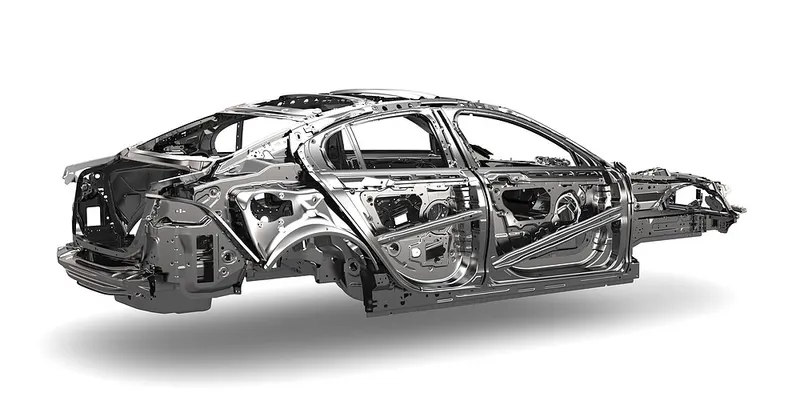
The term BIW derives from manufacturing practices before steel unibody monocoques — when automobile bodies were made by outside firms on a separate chassis with an engine, suspension, and fenders attached .The manufacturers built or purchased wooden bodies (with thin, non-structural metal sheets on the outside) to bolt onto the frame. The bodies were painted white prior to the final color.
A folk etymology for "body in white" is the appearance of a car body after it is dipped into a white bath of primer (undercoat paint)— despite the primer's actual gray color. BIW could also refer to when car bodywork would be made of timber - all timber products, furniture, etc., are considered to be "in the white" when at the stage of raw timber before finishing or varnishing.
In car design, the "body in white" phase is where the final contours of the car body are worked out, in preparation for the ordering of the expensive production stamping die. Extensive computer simulations of crash-worthiness, manufacturability, and automotive aerodynamics are required before a clay model from the design studio can be converted into a body in white ready for production.
Manufacturing process of Backdoor
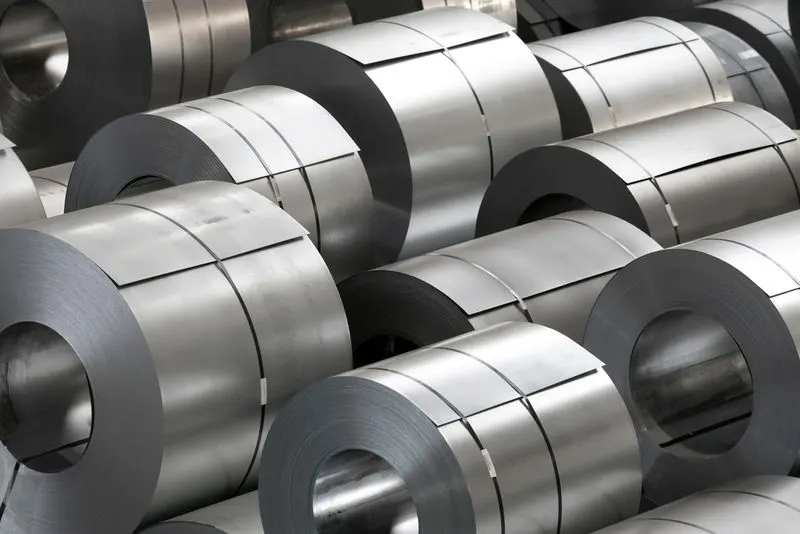
As we know that backdoor is a BIW component that is basically manufactured using a metal forming process. There are different types of metal forming processes that are used for manufacturing automotive parts they are bending, forming, stamping, forging, extruding, etc. From which the stamping is the methodology used to produce the door panels, basically, a die and punch are used in a press machine to stamped out the complete door panel in a single or multiple presses. This method is used because it does not require separate tools to manufacture the component also it is less time consuming and requires less material for the part which is to be produced with precision and accuracy.
Materials used for the manufacturing of backdoor panel
The functional requirement of a backdoor panel is it should be light in weight but in contrast, it should have sufficient strength at the same time to fulfill these requirements the two types of material are used
1) Aluminum
2) Steel
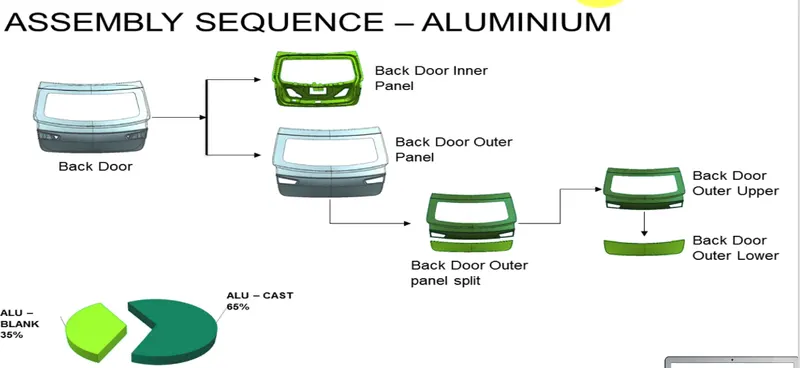
The first one as we all know that it is light in weight compared to that of steel but at the same time the price of aluminum is more than that of steel. So, it is only used for expensive cars or sport vehicles where the weight of the car plays a crucial role. The manufacturing process used for panels made up of aluminum is different when compared to that of steel.
Aluminum panels are made by casting process rather than stamping which is used for steel material due to which the accuracy and precision of the panel is more as compared to that of steel. We can provide sufficient strength by varying the thickness of the sheet at weaker sections in the case of aluminum no reinforcements are needed to be provided but in steel panels, reinforcements are essential as we can not vary the thickness of the sheet it is uniform throughout so, steel panel requires more components as compared to that of aluminum. These are some of the advantages of aluminum over steel.
But the drawback of aluminum is it requires more cost to produce a single panel when compared with steel. So, it can't be used all cars but used for luxury cars only.
To overcome the drawback of steel recently a new method is used for manufacturing i.e is Ultralight steel auto body concept this method gives two ways to reduce the weight of the steel
1) Hydro-Forming
2) Tailor welded blank
Hydroforming
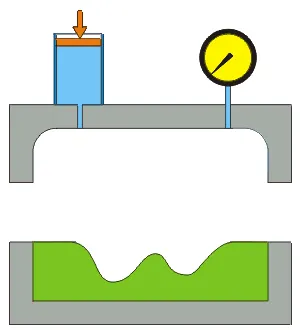
Hydroforming is a cost-effective way of shaping ductile metals such as aluminum, brass, low alloy steel, and stainless steel into lightweight, structurally stiff, and strong pieces. Hydroforming is a specialized type of die forming that uses high-pressure hydraulic fluid to press room temperature working material into a die. To hydroform aluminum into a vehicle's frame rail, a hollow tube of aluminum is placed inside a negative mold that has the shape of the desired result. High-pressure hydraulic pumps then inject fluid at very high pressure inside the aluminum tube which causes it to expand until it matches the mold.
Spot Welding:-
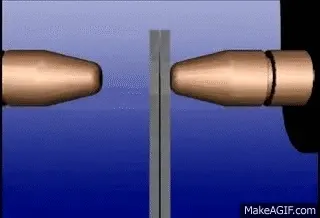
Spot welding is a type of electric resistance welding used to weld various sheet metal products, through a process in which contacting metal surface points are joined by the heat obtained from resistance to electric current
Design Considerations for a backdoor inner panel design:
- Rear Visibility.
- Support structures like hinges and gas stays.
- Mounts for wiper motor, tail lamps, and other wiring loops.
- Fit and clearances.
- Boot space and accessibility.
- Material selection
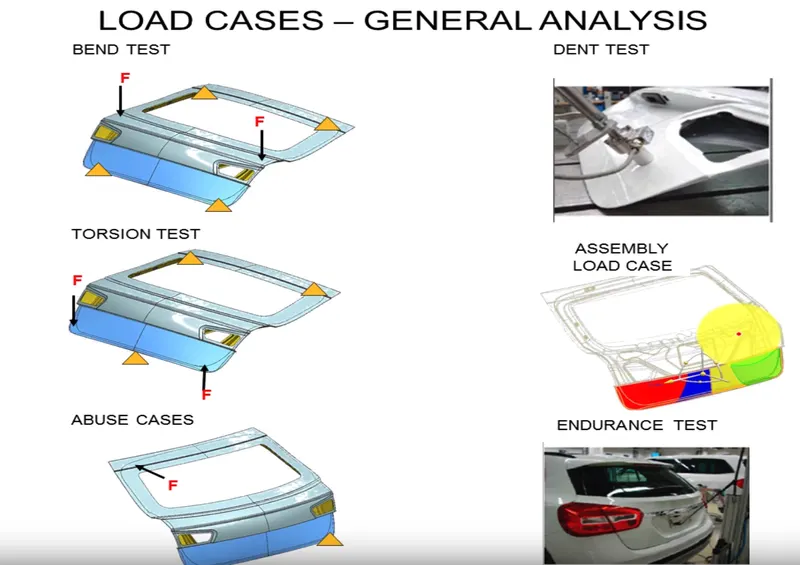
Tail gate BIW is expected to possess a number of significant properties. It must have high tensile strength as well as high stiffness—bending, torsional, static, and dynamic. It must also provide good quality safety both to the car body and to its occupants against crashes of all kinds—front, rear, side, or even rollover, meeting the Federal Motor Vehicle Safety Standard No. 208 [44]. It should also be able to protect occupants from noise, vibration, and/or harshness (NVH) by absorbing or reducing these conditions. Also, it should be easy to weld and form, as well as be highly paintable and easy to design. It should provide a good surface finish that is smooth, and should also be corrosion resistant. Improvement of fuel economy also necessitates the use of lightweight materials in BIW, as it constitutes a significant share of car’s weight; in addition, given environmental concerns in recent times, it is also expected to be recyclable. Given such extensive requirements, only steel and aluminum have been used for making BiW; the former is preferred for its high strength and low cost, while the latter is preferred for its lower density that helps reduce car weight
Material | Yield Strength (MPa) | Ultimate Tensile Strength (MPa) | Reference |
Steel | 210–1250 | 340–1520 | [46] |
Aluminum | 90 | 195 | [47] |
CFRP | 250–585 | [48] |
Here we are assuming Stainless steel as the material for the Designing of Back Door
- Stiffness , strength and weight of the part
As the Back door protects the passengers from rear collisions , it should have enough strength and stiffness .Stiffness ,strength and weight of the part depends up on major two factors .The first is the material selection ,which is discussed above and the second one is the Design of the part.
A Design engineer can easily increase and reduce the stiffness of the part through his or her designs. The methods of increasing stiffness and strength of the parts are adding Embosses in the models.
Embossing
Sheet metal embossing is a stamping process for producing raised or sunken designs or relief in sheet metal. This process can be made by means of matched male and female roller dies, or by passing sheet or a strip of metal between rolls of the desired pattern .Adding of embosses to a sheet metal part , drastically increase the strength of the part.
- Rear visibility criteria
This criteria deals with the visibility of passengers backwards through the rear wind shield glass.it mainly depends up on the Wind glass area .Here in this case as we already have a styling surface wind already included the wind shield area we need not to worry about the Rear visibility criteria
- Hinge position
Hinges are the part which helps to open the Back Door to the luggage space. One part of the hinge is connected to the inner panel of the Back Door while the other is connected with the Roof
There are a few things to consider while the positioning of hinges i
The surface where the hinges to be mounted must be flat in order to keep the hinge tightly in touch with the inner panel , otherwise it leads to loosening of the nuts and bolts resulting in NVH ( Noise ,Vibration and Harshness)
Reinforcements must be provided on both hinges .Because in sheet metals adding another solid body or a sheet body on it ,will results in decreasing the strength of the part. To overcome this problem Reinforcements are used
The central line or the axis of each hinges must be colinear
- Latch position
Placing Latch/striker is on of the major factor to take care of .As a Latch/striker is separate body and itself a reinforcement , there is no need to add extra reinforcements. But like in hinges its compulsory to have a flat surface to mount it.
The striker in the Body and the Latch in the back door must be normal to a trajectory path to have a smooth locking and unlocking .
- Distance from the outer panel to mastic points
The Mastic sealant or the Mastic point is an elastic compound that behaves like a rubber. The mastic points are defined on the hood inner panel where the hood can easily deform. They help the hood outer panel to come back to its original shape after it gets deformed .The distance from mastic points to the outer panel must be 2-8 mm
- Hemming parameters
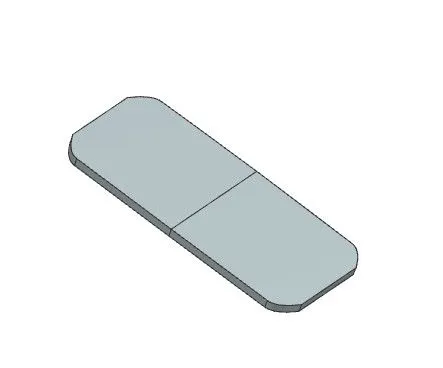
Hemming is a sheet metal forming process in which sheets are joined by bending it usually to 180°. Automotive body panels and automotive parts such as deck-lids, trunk-lids, doors, hoods and tailgates are formed by hemming process.
While hemming the gap between two sheet metals must be in between .2 to .5 mm and the distance bend of the outer sheet metal to the edge of the inner sheet metal must be 2 mm.
- Drawability (Draft Analysis)
To understand what is drawability , first we should know what is deep drawing
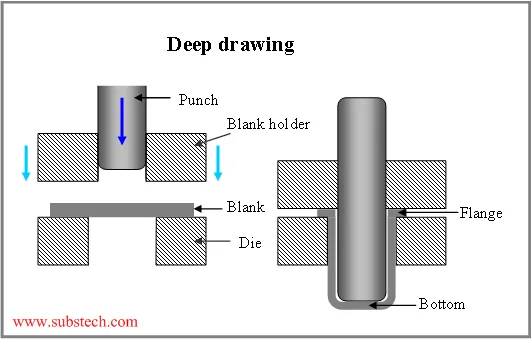
Deep drawing
Deep drawing is a sheet metal forming process in which a sheet metal blank is radially drawn into a forming die by the mechanical action of a punch. It is thus a shape transformation process with material retention. The process is considered "deep" drawing when the depth of the drawn part exceeds its diameter. This is achieved by redrawing the part through a series of dies. The flange region (sheet metal in the die shoulder area) experiences a radial drawing stress and a tangential compressive stress due to the material retention property. These compressive stresses (hoop stresses) result in flange wrinkles (wrinkles of the first order). Wrinkles can be prevented by using a blank holder, the function of which is to facilitate controlled material flow into the die radius. The feasibility of this deep drawing is called Drawability.
Draft analysis in Siemen NX is one of the tool used to study the deep drawing feasibility easily through checking draft angle in the various faces .The Designer should Define a tooling direction in-order to check the draft angles
- Holes (to drain the primer from the cavities)
In the inner side of the Tail gate we can see several holes in the hood. Every holes in it have its purposes. Apart from the holes for the fasteners ,these holes allow e-coating, surface prep, and primer to drain from the cavities in between the tail gate skin and tail gate skeleton after the chassis is dipped into these during production.
Components to Design
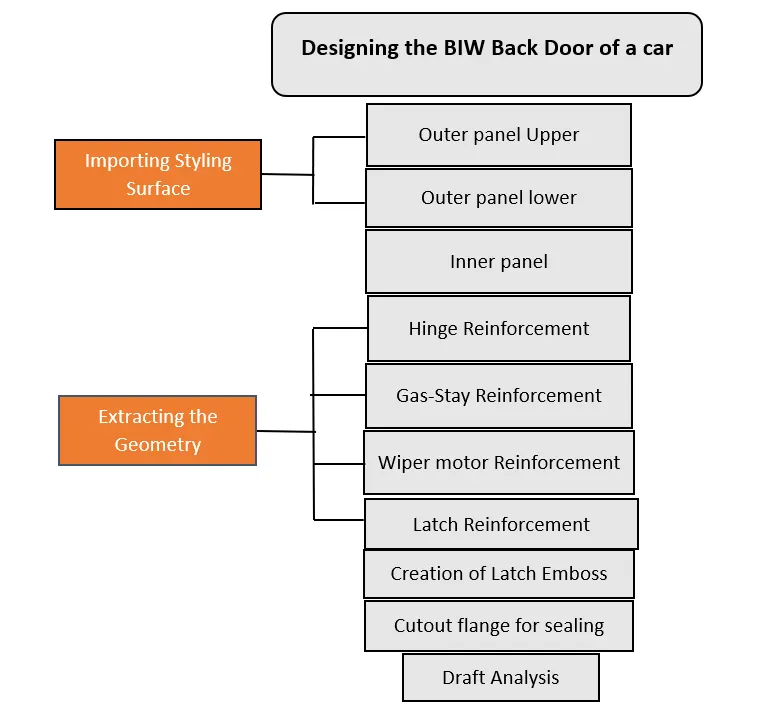
Here in this project we are not creating the hinges as well as the latches., only we are creating Back Door outer panel ,Back Door inner panel ,Reinforcements for Hinge , Gas stay and Viper mount
So in this case we need to assume the hinge position and hinge axis appropriately.
The Main Parts of the Back Door:
1. Outer Upper Panel.
2. Outer Lower Panel.
3. Inner Panel.
4. Gas Stay Reinforcement Left and Right
5. Hinge Reinforcement LH and RH.
6. Striker Reinforcement.
7. Wiper Reinforcement.
SKETCHES:
The below fig shows the REPAIR part of the back door from the given class A.
We need to repair the Back Door inner pannel first we need to check the body wheather it is sewing together or not if not we need to repair the certain part.
First we need to hide the specific part which is making trouble when we are sewing use join the edges with the help of BRIDGE CURVE, and now make a surface through the help of THROUGH CURVE MESH.
By using these 2 steps we need to repair the entire part upto it is sewing entire part with no gaps.
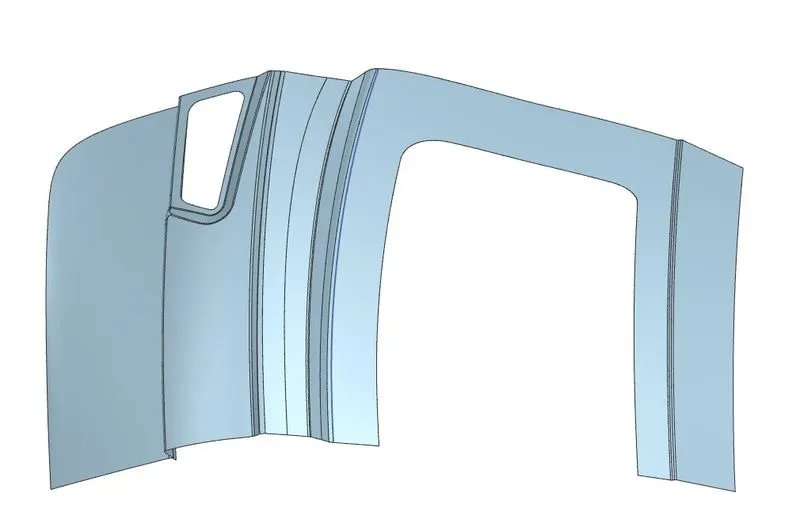
The above fig shows the repair part of the BACK DOOR and it is ready to proceed furtuer step.
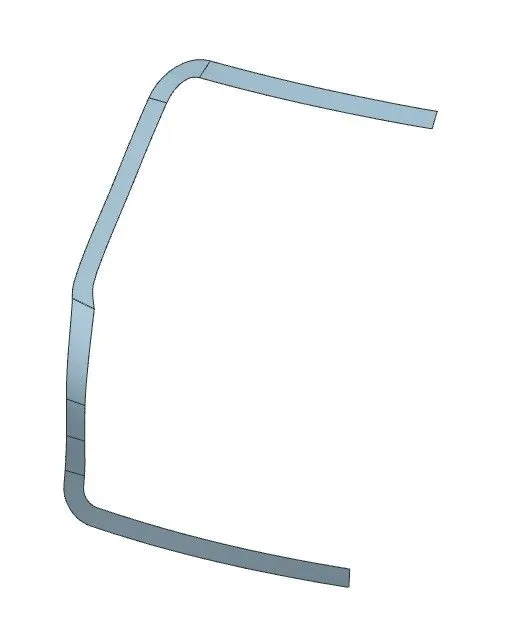
Now we need to make an SEALING FLANGE in the inner pannel.
For the sealing flange we need to use the commands like BRIDGE CUEVE, TRIM SHEET, OFFSET FACE, UNTRIM these are the various commands to perform sealing flange.
After completion of sealing flange sew everything.
Now do the law extension for the sealing flange with and apply EDGE BLEND.
Like this do for the both sides of the Sealing Flange and apply edge blend.
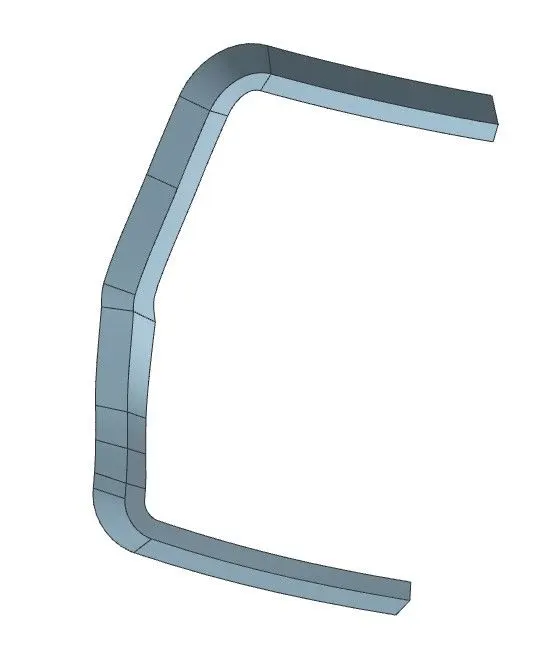
The above fig will shows the Law extension for the sealing flange.
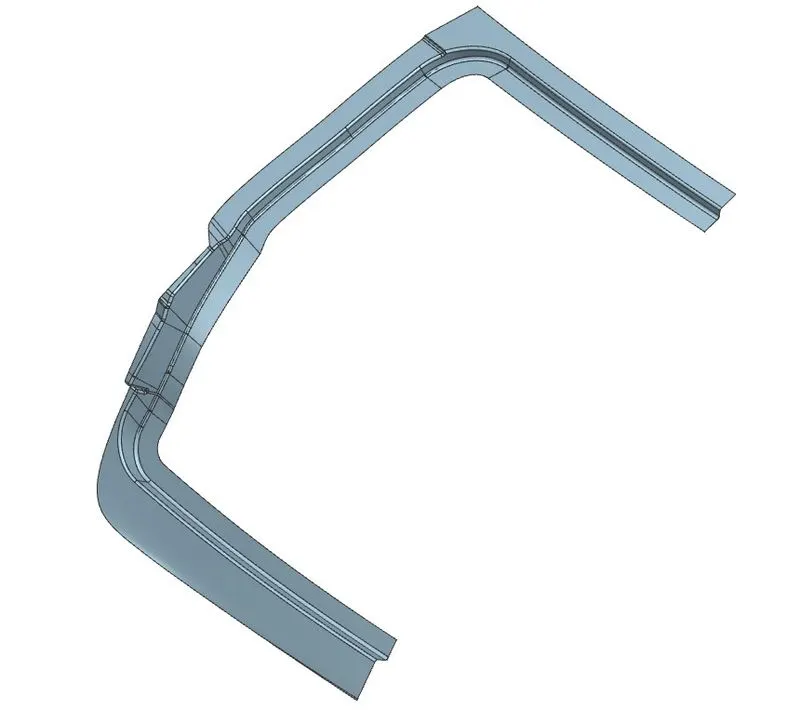
The above fig will shows the where we gave law extension and edge blends.
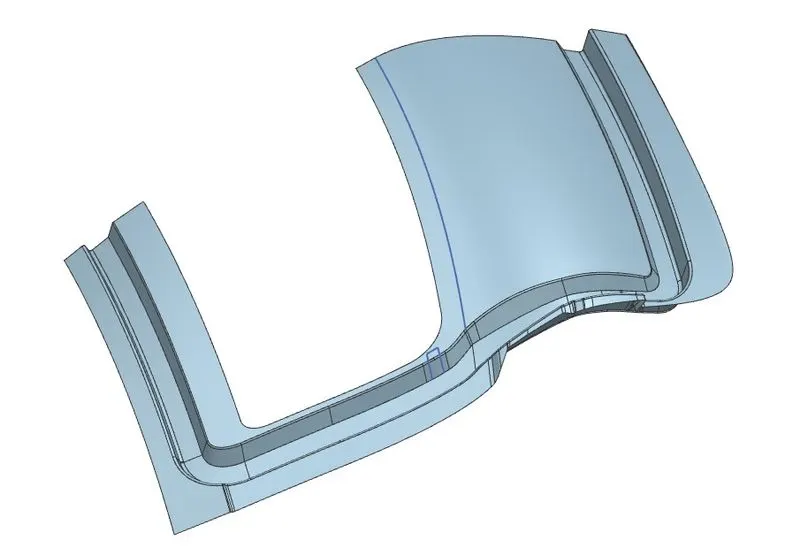
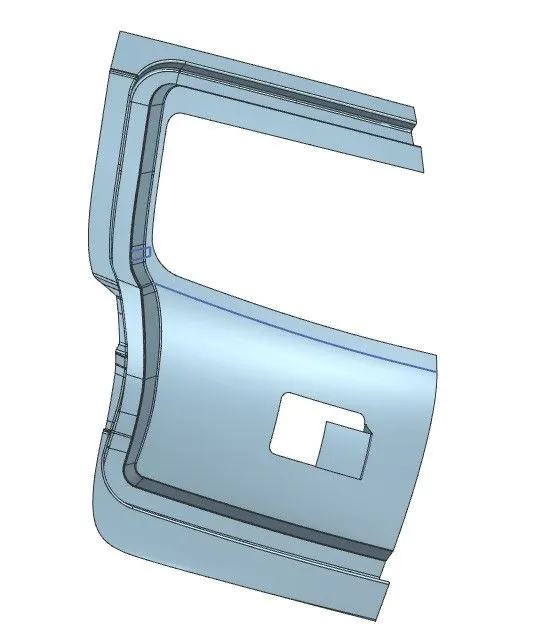
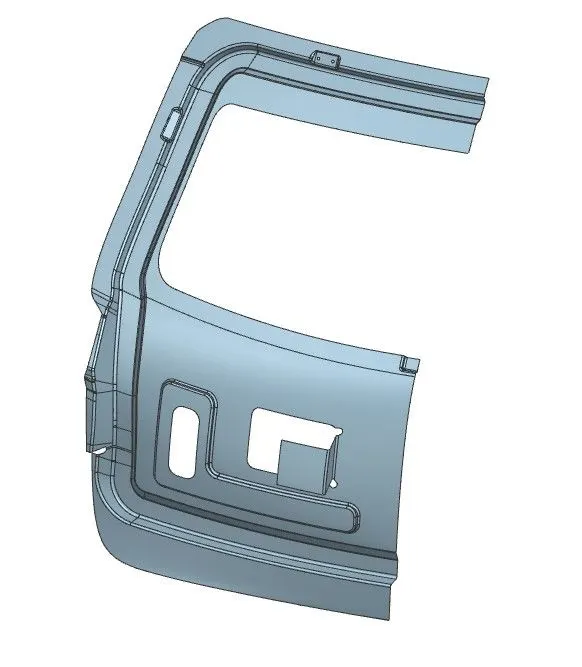
The above figs will shows the BACK DOOR inner pannel with mountings, embosses.
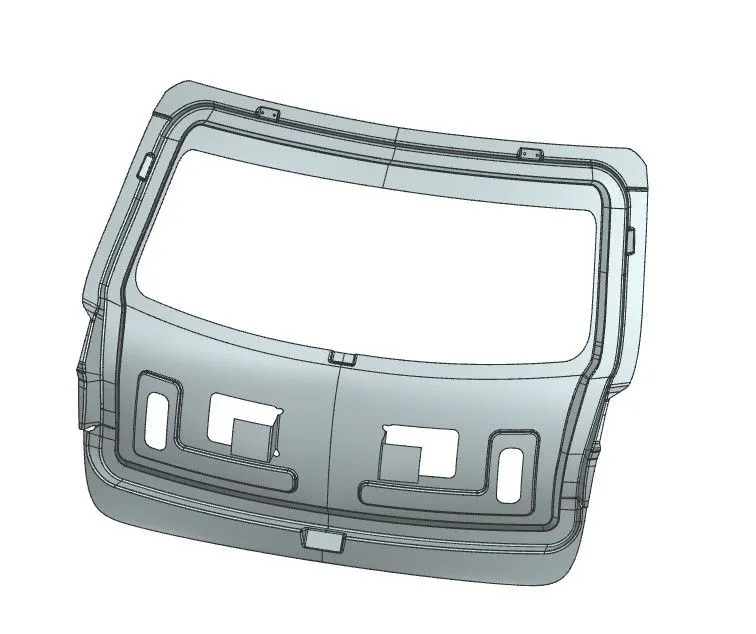
The above fig will shows the total BACK DOOR INNER PANNEL
REINFORCEMENT FOR THE BACK DOOR
HIGE REINFORCEMENT
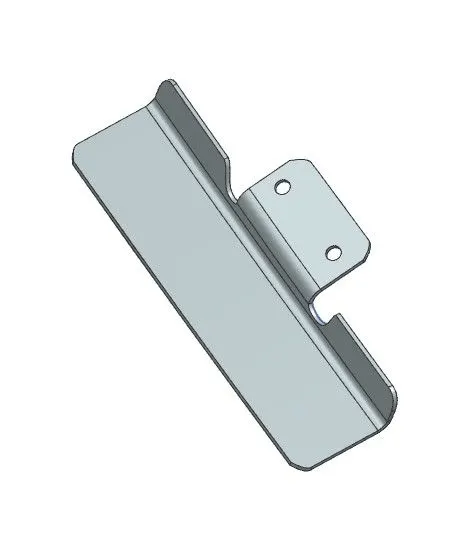
GAS STAY REINFORCEMENT:
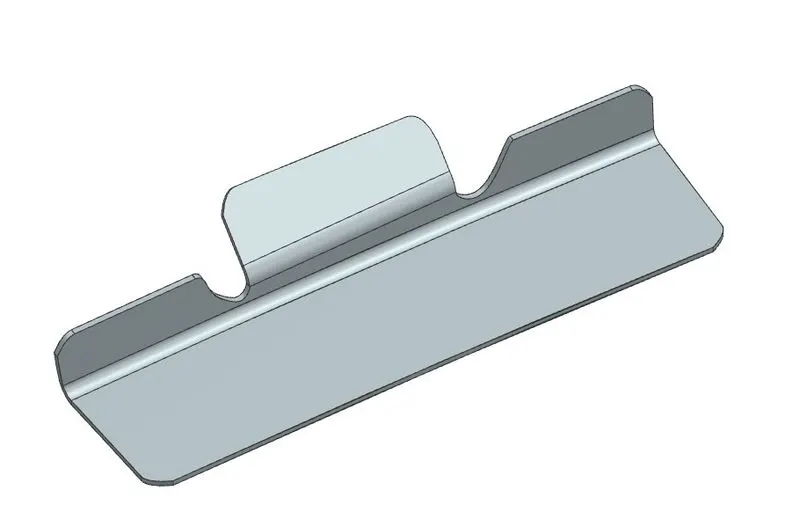
LATCH & STRICKER:
WIPER MOTOR REINFORCENT
HEMMING FOR THE BACK DOOR:
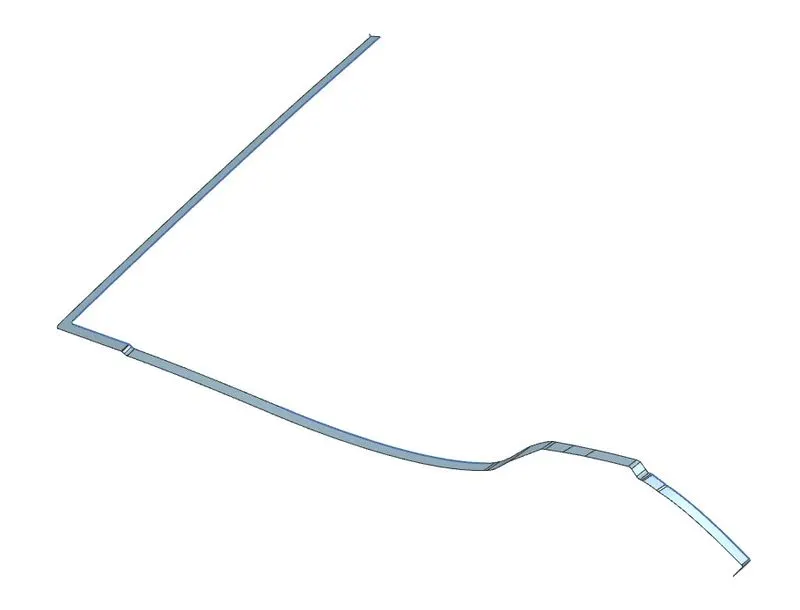
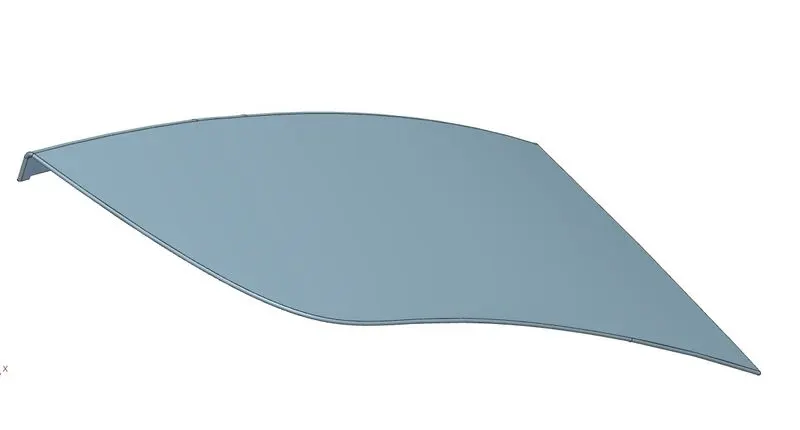
The above fig shows the Heaming flange
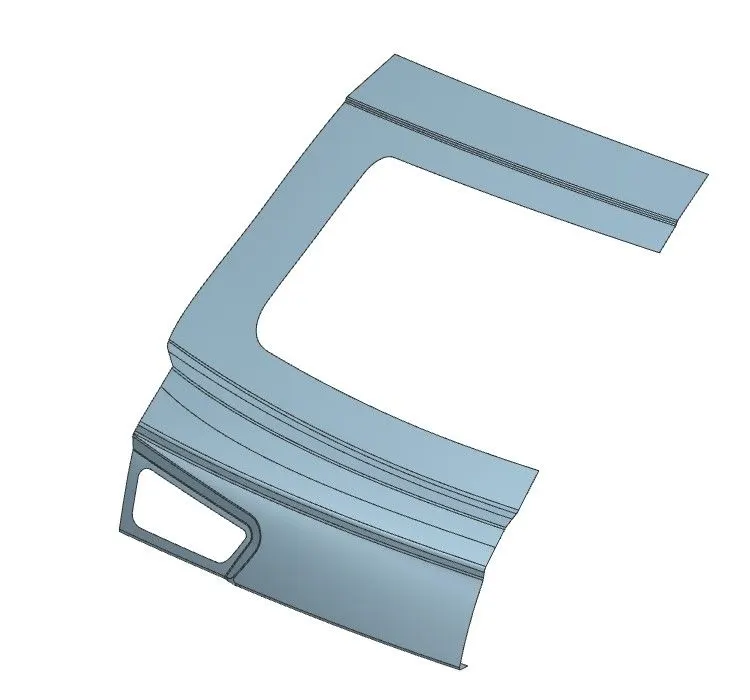
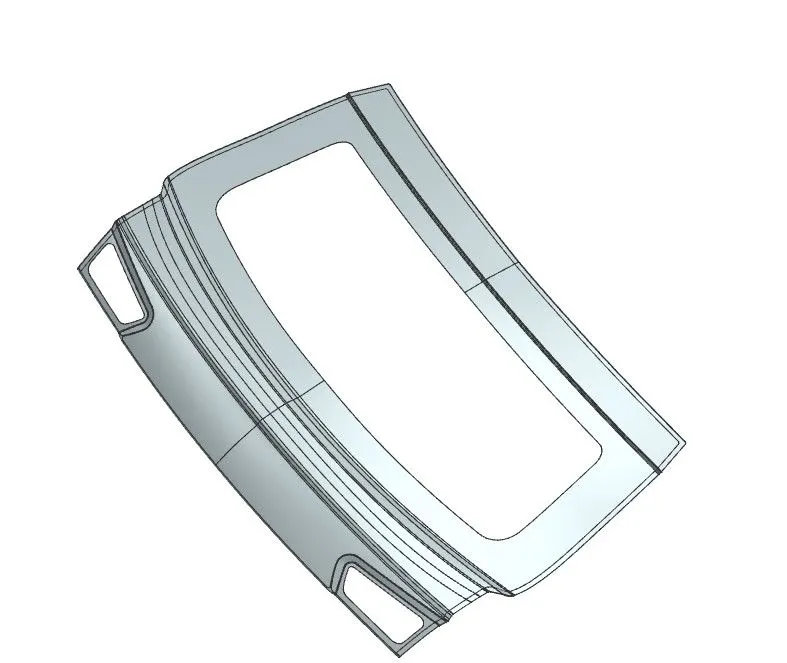
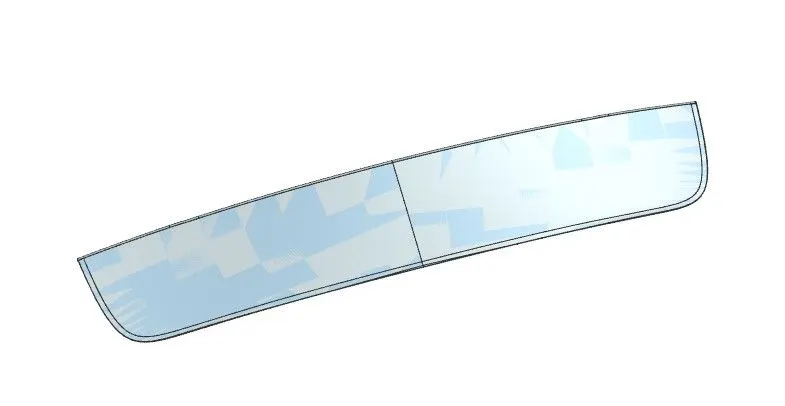
The above figs are all for the upper portion for the back door
CONCLUSION:
Finally we made an Back Door Design and it is ready to manfacture.