Design of backdoor
INTRODUCTION
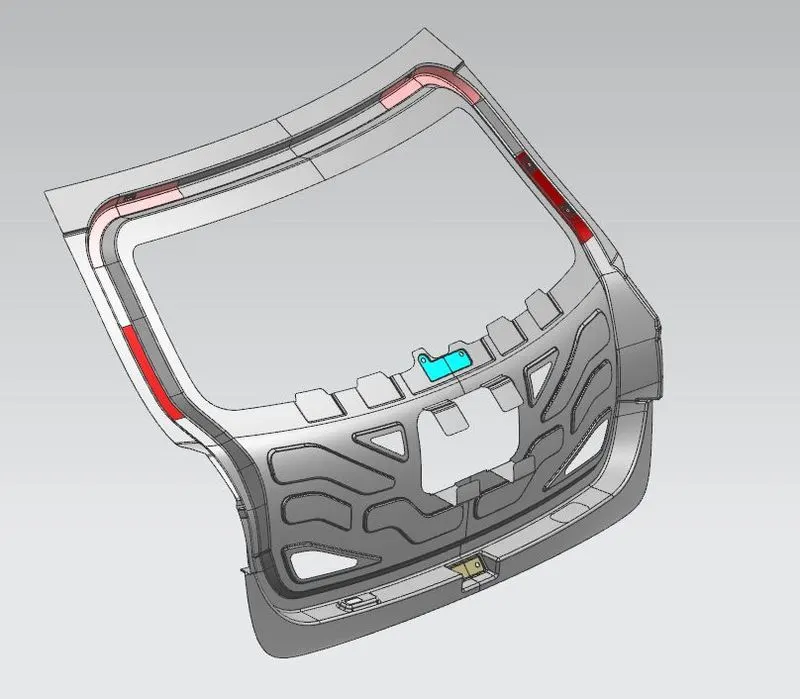
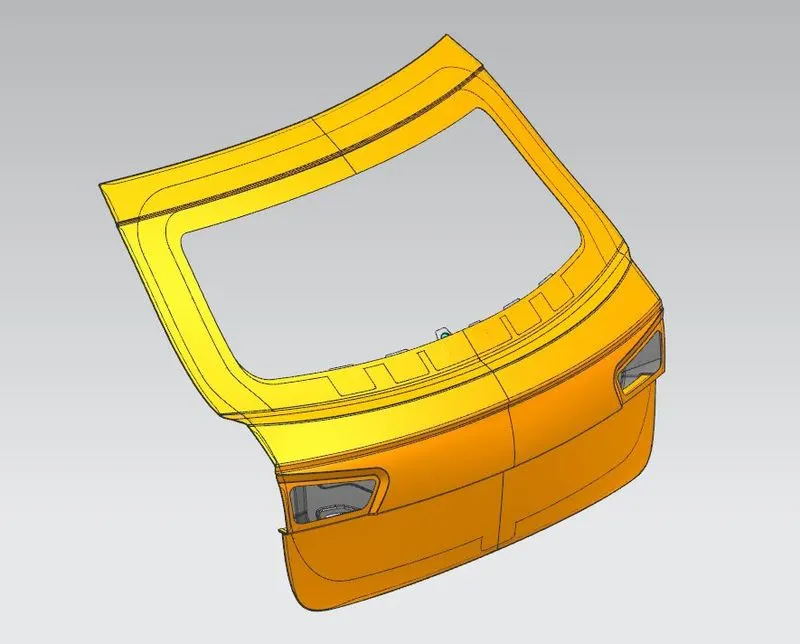
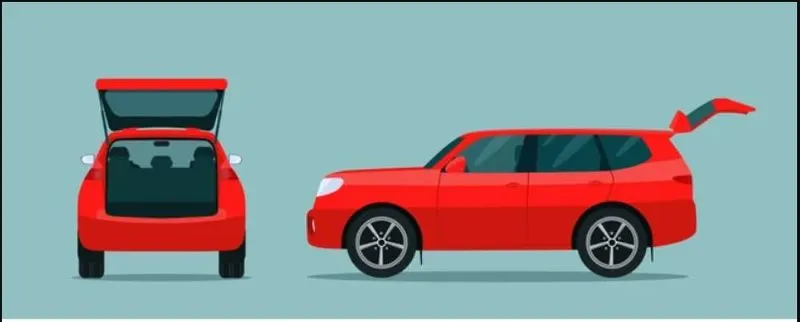
Back door are the type of door which is located at the back and which gives access to the luggage compartment. It also houses the vital components like gas stay, viper, viper motor, tail light and hinge for opening and closing.
OBJECTIVE
The main objective of this project is to understand the design methodology behind designing the inner panel of the back door of the car and to learn and understand the tools used in NX Cad software for designing.
METHODOLOGY
We get the model of the back door from the styling team. Then we will have to do all the engineering work. We create the embosses for the back door inner panel and then design the emosses in a way that all the energy is dissipitated outside and does not enter the cabin. We create embosses for the hinge and the gas stay also. The CAE team will then do the analysis and the give the feedback to do the necessary changes.
DESCRIPTION
Design requirements-
-
Rear visibility
We check the rear visibility area when we design the back door.
-
Luggage area
The more thinner the back door section is the more the luggage area.
But we cannot make it thin because we need some strength and also some space in the section to place the latch and striker and the viper motor.
-
Rear crash regulations
The panel must satisfy all the rules and regulation of the crash test. It must be designed in the such a way that the passenger is safe during rear crash.
-
Sealing and its functions
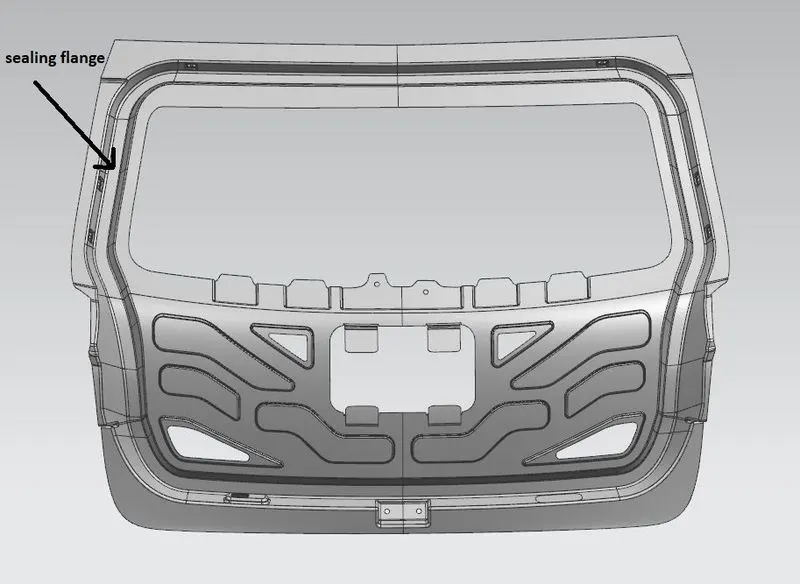
We create sealing flange so as the rear back door is sealed properly. For this we contact woth the roof engineer and body engineer.
-
Material preference
Deciding the material is also important since it will also decide on how much parts are to me designed. While deciding the material we take many parameters into considerations like weight, cost ,etc.
-
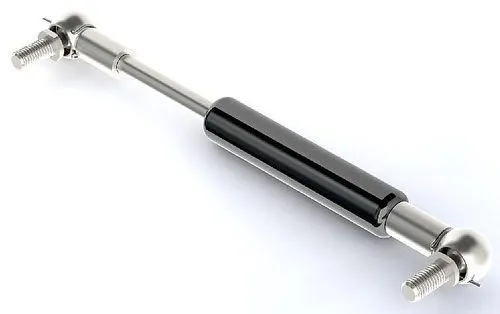
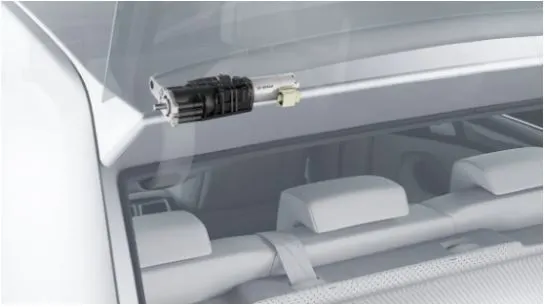
Gas Stay positioning
This depends on the type of gas stay we will use.
We either use gas stay or power spindle depending on the budget and use and it will decide the position of the gas stay.
Part requirements-
For Steel
-
Hinge reinforcements
-
Viper motor reinforcement
-
Gas stay reinforcements
-
Latch and striker reinforcement
-
Inner panel
-
Outer panel
For Aluminium
-
Inner panel
-
Outer panel
Parts Designed-
-
Inner panel
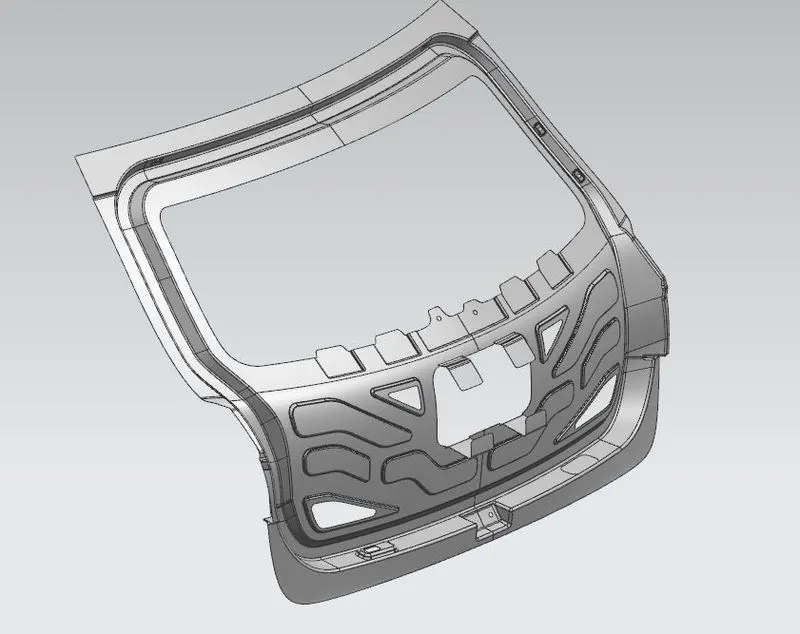
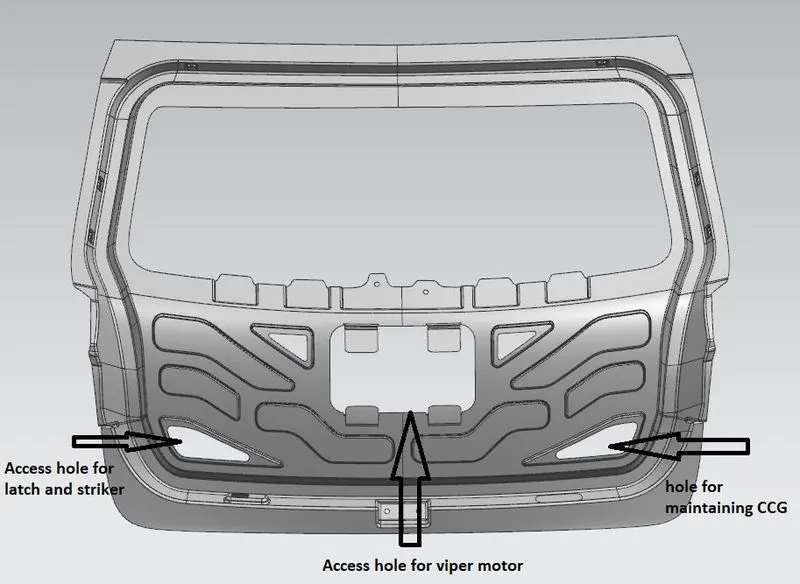
The inner panel are designed so as to give strength to the outer panel pf the car and protect the passengers. We provide embosses to the inner panel to give strength to the inner panel. The embosses are either in 'y' or 'v' shape since these shapes provide greater strength and helps in dissipating the energy outside and not inside the passenger compartment. We also create embosses for the hinge, gas stay and for latch and striker.
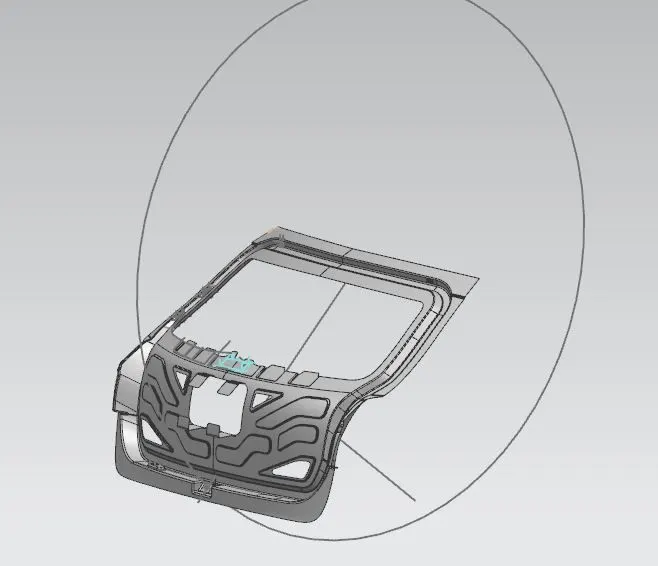
For properly placing the striker we first a circle with centre as the hinge axis of the side door and the circle will act as the trajectory of the striker. Then according to that we will pance the striker and create the emboss for it accordingly.
We even create access holes for the latch and striker motor and the viper motor.
-
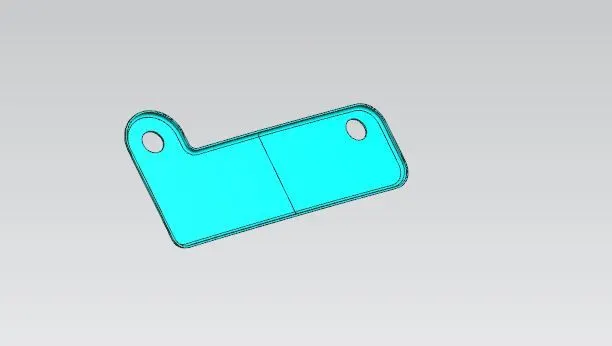
Hinge and gas stay reinforcement
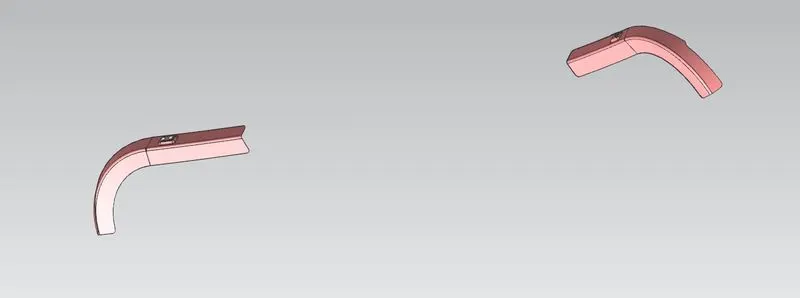
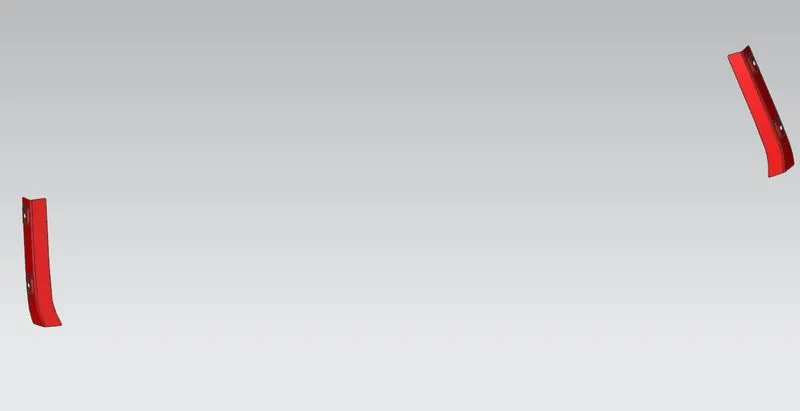
Since we are creating a hole there and placing the hinge the area becomes weak so as to make the area stronger we create a hinge reinforcement there. Mainly we use the hinge reinforcement when the inner panel is made up of steel and not aluminium.
-
Latch and striker reinforcement
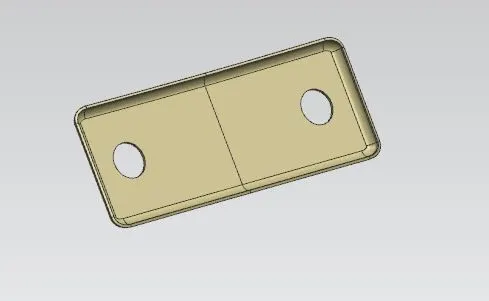
To increase the strength of the area of the latch we add latch reinforcement to the assembly.
-
Viper motor reinforcement
Viper motor area also needs strenght to be increased if the inner panel is made o steel and not aluminium.
-
Outer panel
The outer panel is designed by the designing team but we provide them for the outer panel to join with the inner panel.
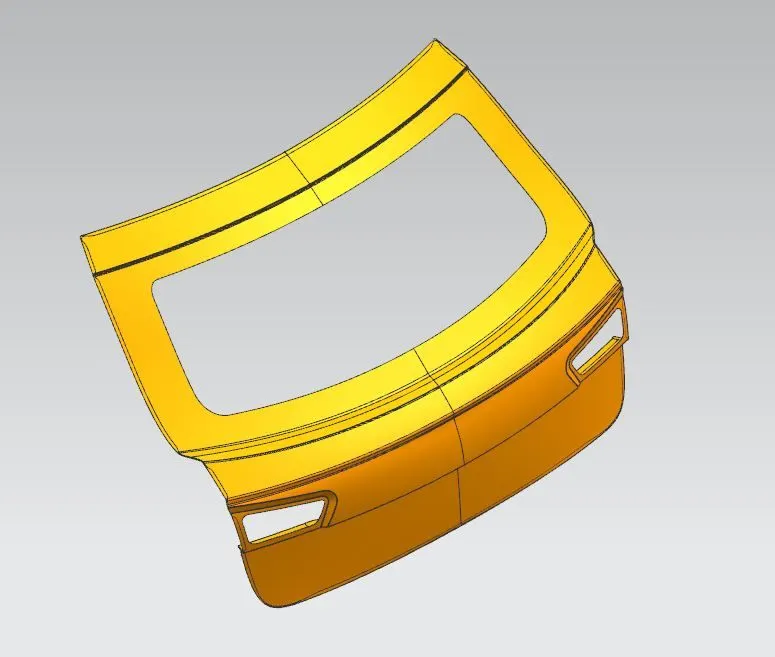
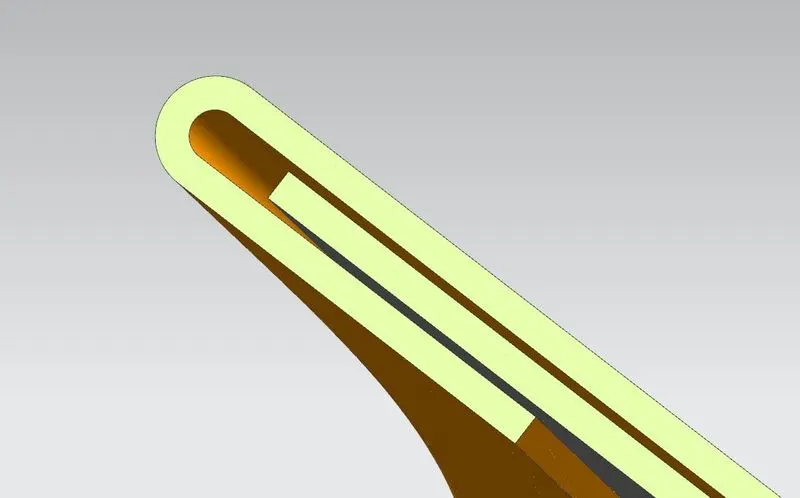
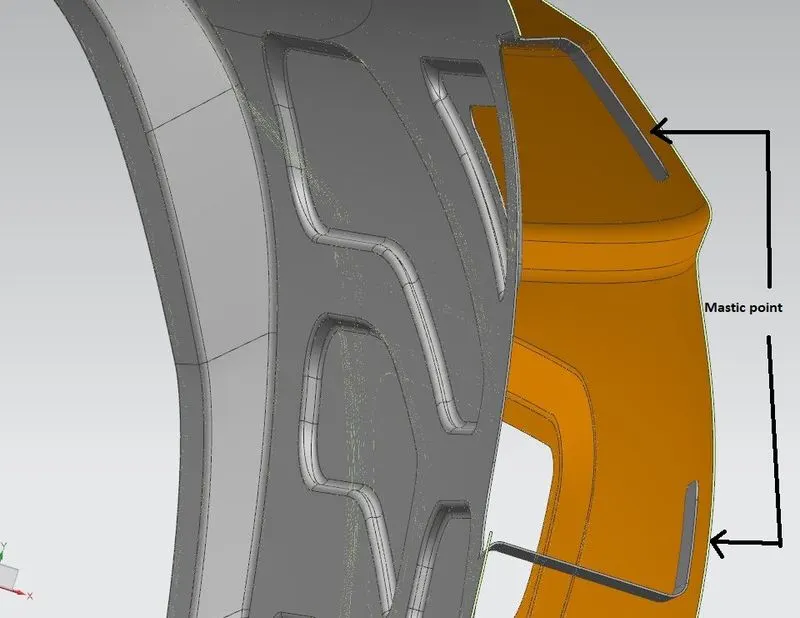
For joining the inner panel and outer panel we use hemming and mastic points.
Hemming-
There is a gap betwen inner panel and outer paanel of 0.2mm and the corner distance between the two is 2mm.
Mastic-
The mastic is provied so as to increase the rigidity and reduce the vibration between the inner panel and outer panel.
CONCLUSION
We were able to successfully design the inner panel of the back door and then assembled all the other parts of the back door. We came to know about the various parts and process behind designing the inner panel of the back door and even the design comsiderations. We also learnt about the various tools used in NX Cad.