Design of backdoor
Objective:
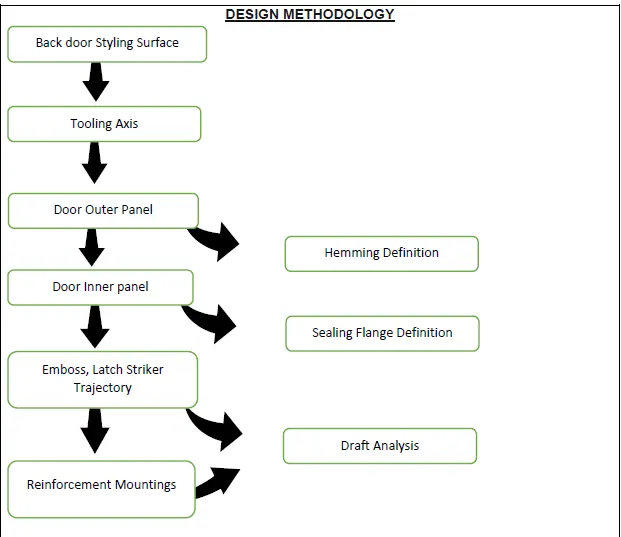
Use the provided styling surface to come up with a back door design, use appropriate design methodologies and provide the necessary reinforcements and embosses.
Introduction:
An automobile back door or Tailgate is the panel that covers the boot (or trunk) of an automobile. It enables access to the main luggage compartment. A hinge allows the boot lid to be raised, while devices such as springs or gas cylinders hold it up in the open position The Backdoor is an assembly of many parts such as inner panel, outer panel upper, outer panel lower and Reinforcement. Inner panel is attached to the outer panel using mastic sealant
The Main Parts of the Back Door:
-Inner panel
-Outer panel
-Hinge reinforcement
-Latch/striker reinforcement
-Hemming
Outer panel:
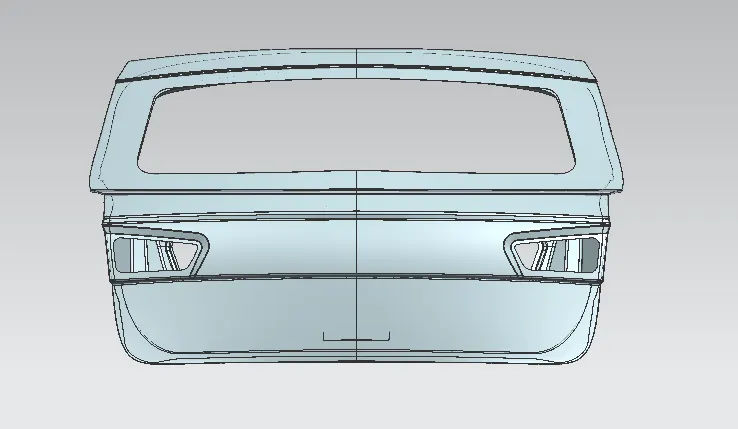
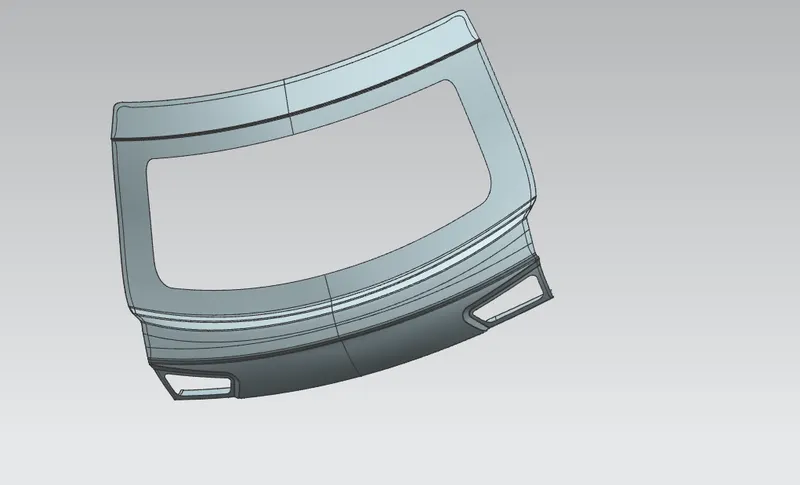
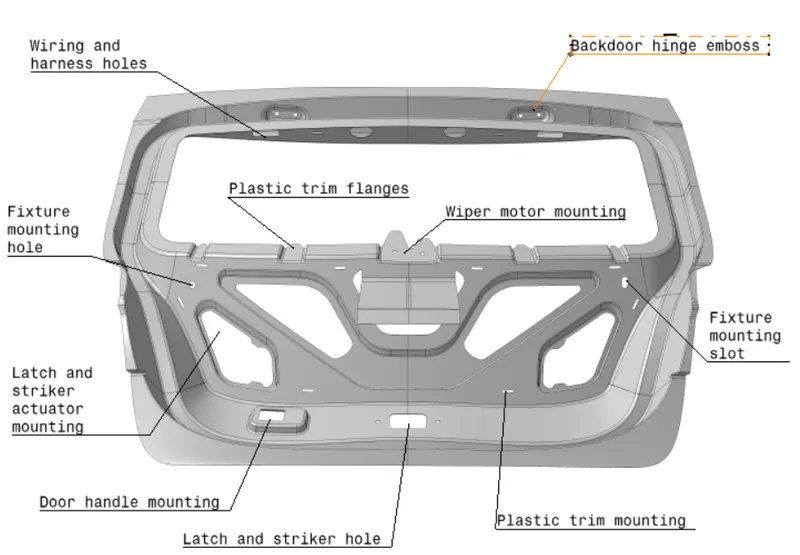
The outer panel of the back door is similar to other BIW components where it is the aesthetic part of a vehicle. The coating provided is of multi-stage which has the property of scratch resistance, rust prevention and smooth and attractive finishes. The outer panel also has the provisions for the tail lamp, rear fog lamp and also has the provision for licence plate mountings. Most of the hatchback cars have the provision for wiper motor.
Inner Panel:
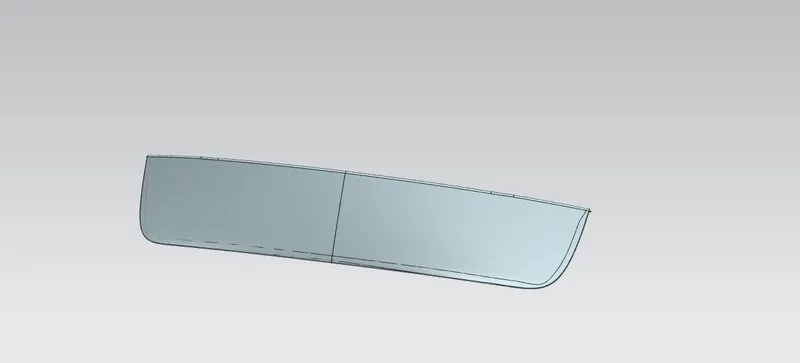
Here the inner panel is created for strengthening the door assembly and it is one of the most important components on which all accessories are mount like hinges, glass guide channel. Back door inner panel is mounted with the Roof. The weight of Door inner panel is near about 7to8kg depends upon its material and its thickness. The possible method is the integration method. In the integration method, the part is stamped out of a single blank. This reduces the number of tools needed; the assembly cost, and eliminates any fit ability problem.
Mastic:
Since we are reducing the overall weight of the door, this mastic providing the strength also serves the purpose of joining the inner and outer panels using the mastic sealants.
The mastic sealants help in reducing the NVH(noise, vibration, and harshness )levels of the door.
Create a Sketch and provide a cut out on the surface. Now, use the sweep option to create the surface perpendicular to the base surface.
EMBOSSING
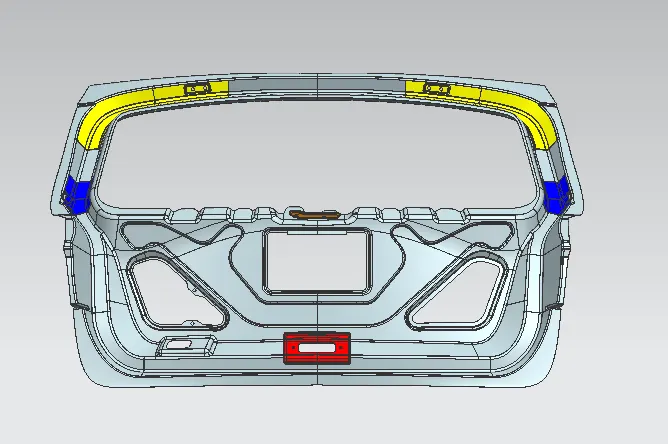
Creating emboss in the outer panel direction because when collision happens from backside of the car this impact initially falls on the embossed faces then force dissipates according to the design of emboss then the remaining force hits the inner panel. For this case I designed my emboss towards outer panel direction.
Emboss should be in 7 degrees to 25 degrees inclined in angle and it should not be in 90-degree angle, why because when we do stamping in manufacturing the stamping tool fits the sheet metal hence it will not come out of that sheet metal, So this is the main reason why the emboss face is in angle.
Hinge and Latch:
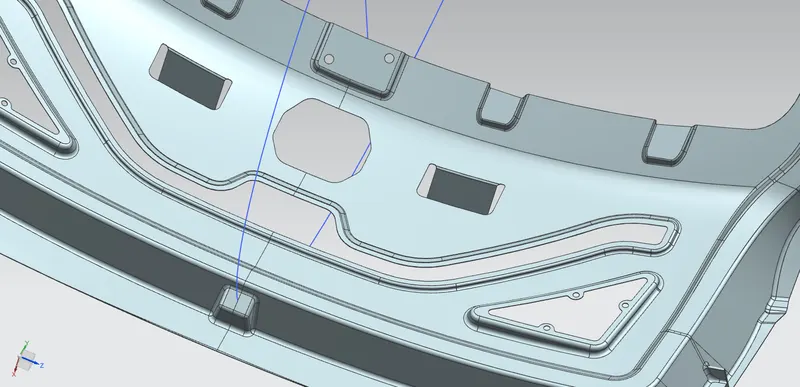
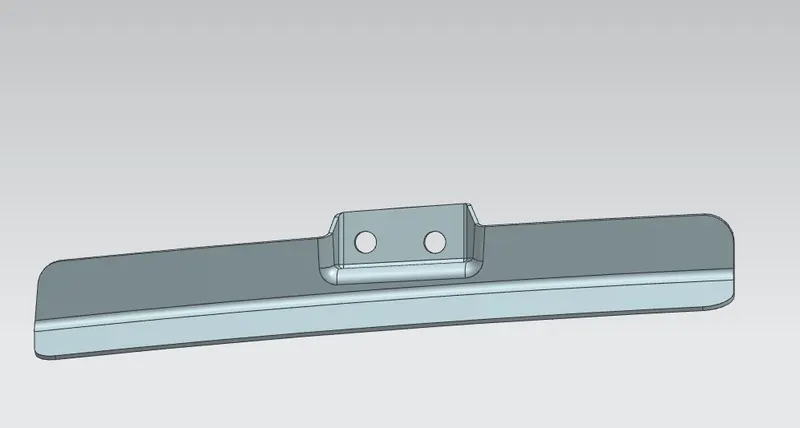
The Latch & Striker forms the locking mechanism of the backdoor with the car. Due to regular opening, closing and over slamming of the backdoor, there is stress developed in the Latch and Striker area. Further, during a rear collision this area will be the first point of contact. To compensate for the same, reinforcements are added in this area.
Hinge is used to connect the door to the BIW also enables the opening and closing of the hood. So, the embosses are created of the hinge along with reinforcements to provide additional support to the inner panel.
The Hinges are created at the top of the inner panel using the parallel curves and corner option.
Use the split option to cut the elements and perform a sweep with an angle of 10 degrees. Offset the surface to 4mm and trim it with the sweep surface. Give the fillets of 4mm to it.
Latch:
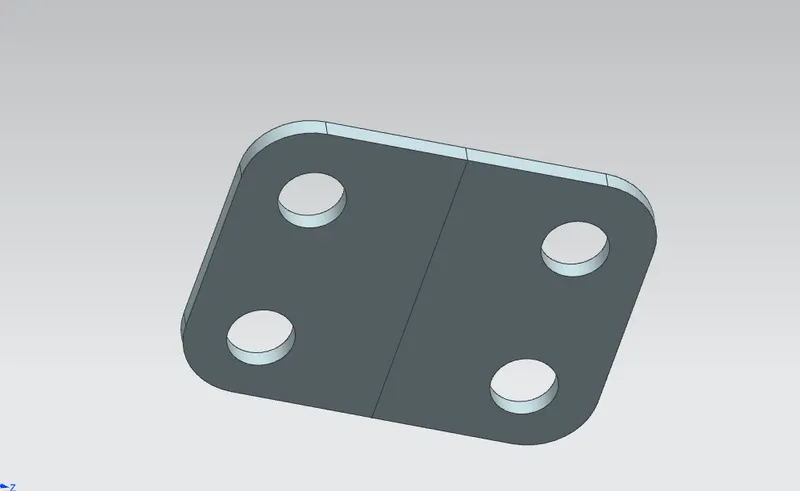
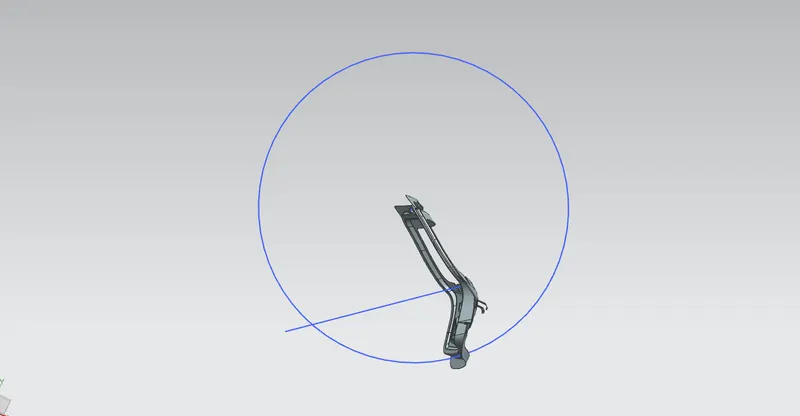
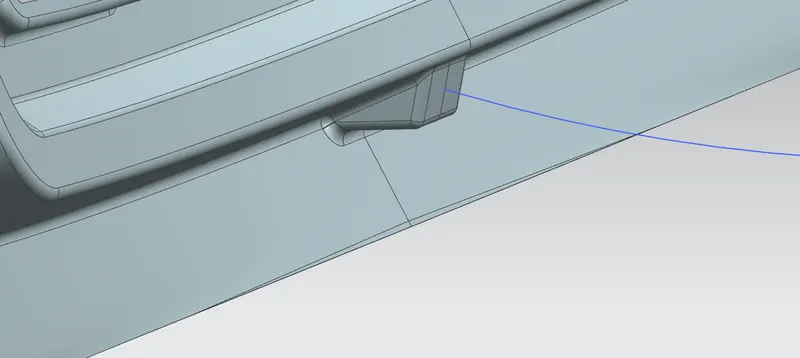
For the latch, it is important to keep the latch embossment according to the trajectory the door opening and closing follows.
Take create a centre point between the two hinge parts and draw a circle marking the sweep of the lower end of the inner panel. Draw a Tangent to the Circle and create the cut on the tangent area and give the cut-outs to it.
Reinforcements:
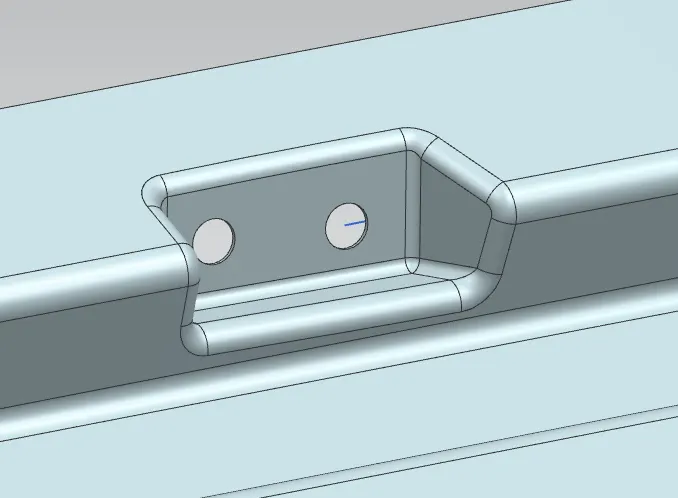
Reinforcements and embosses are added or designed to compensate for loss of strength in a region or area due to the load acting there. In back door's case load acts in the form of Hinge, Gas Stay and Latch & Striker. These load cases are determined with the help of various tests and simulations.
Thickened the inner panel and extract the hinge and around surfaces.
Now, Split the surface to obtain the required reinforcement surface
Hemming is the process of joining two surfaces using set of rollers to bend the parent over the sub part. The brown parent part is the outer panel and white sub part is the inner panel.
Conclusion
Thus the back door was designed from the given styling surface and Draft analysis is also done on the inner panel to check the manufacturing conditions. In this challenge i learned to design the Inner panel, the Outer panel, Wiper Motor reinforcement, Hinge reinforcement, Gas Gtay reinforcements, Latch and Striker reinforcement and its position.