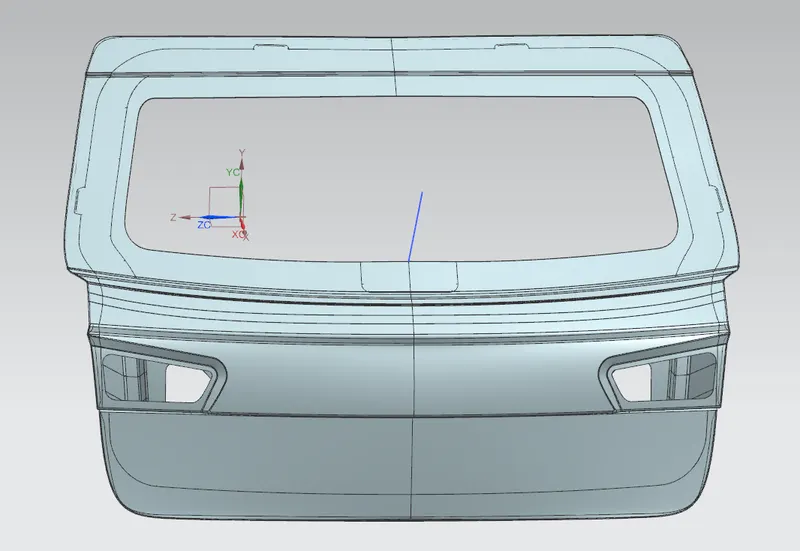
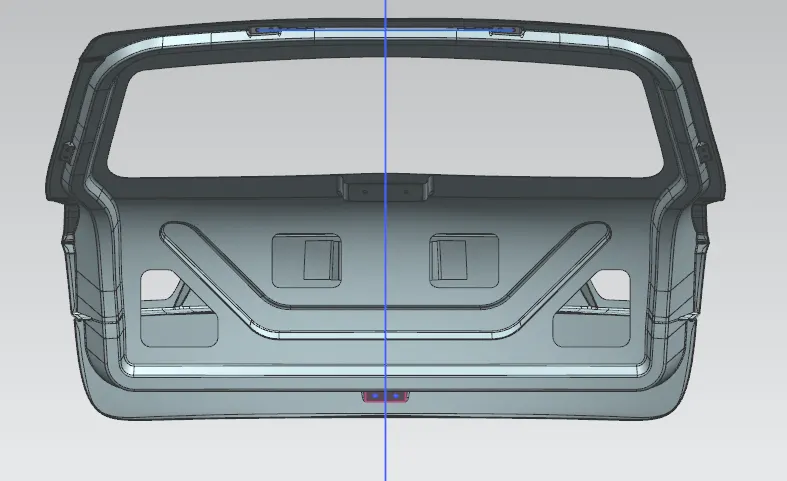
Design of backdoor
OBJECTIVE:
To create a back door design using the given surface and provide the necessary reinforcement and following the design methodologies.
ABOUT BACKDOOR:
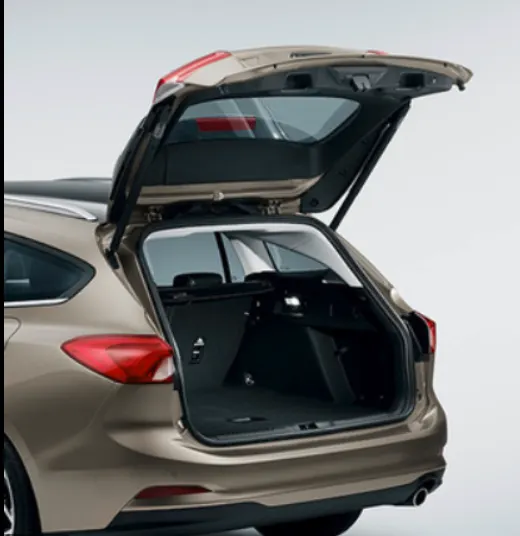
The back door of a car is a component which hinges at the back of the car to cover the boot space or luggage area, but there are more functions that come with it which has to be considered while making a design of the same like rear visibility criteria and boost space.
This part is usually designed keeping the master section of the rear roof rail because of the sealant flange and also various other consideration, as it is also in contact with the side body of the car.
It has back lights / tail lamps and braking lights which is termed as “Third brake light” mounts on it, rear windshield fixes between inner and outer panel, in some back door spare wheel can be mounted on it, sometimes car registration number plate mounts on it and it gives a complete closed design to the car.
Design Consideration:
- Rear visibilities for safety and functionality
- Support structures like hinges and Gas stay
- Boot space
- Mounts for wiper motor and latch
- Strength criteria
- Draft analysis
DESIGN METHODOLOY:
INPUT SURFACE RECTIFICATION:
For the inital start with the input surface. the given surface has to be inspected for any irregularities like tangency condition.
To check whether the given surface are tangent the first two surfaces have to be sewed and checked for any gaps or successful completion of the command. If the command is okay the procees with the next surface.
If there is any error shown follow the procedure.
- By creating a offset curve on the surface on both the direction where it showed error.
- Then trimming the midd portion between the offseted curve
- Then by using bridge curve option at the two ends and following the tangency between the surfaces. the tangential surface is created and sewed.
The above procedure can be used to make the input surface free from error.
TOOLING DIRECTION:
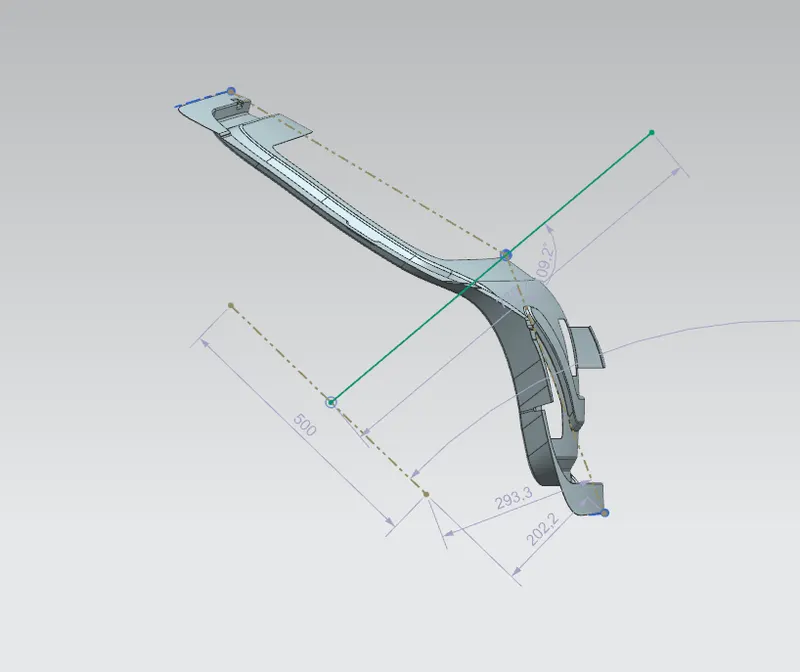
If the given surface has two face in L shape make two lines along the each surface and by using these two line create a interfence line . This line becomes the tooling direction.
SEALING FALNGE:
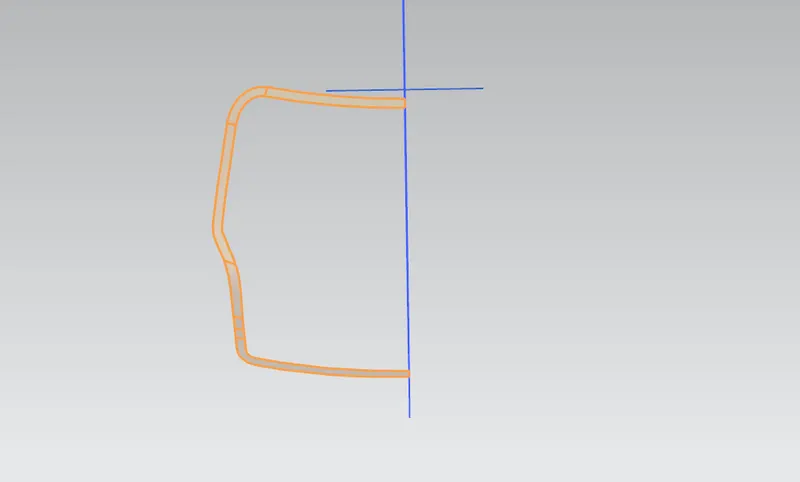
This sealing flange is the part of the inner panel which decides the seating position and placing of the backdoor in the body of the car. The sealing flange plays a vital role in making the inside of the vehicle sealed from water or dust particles by means of a rubber sealing.
Then by following the emboss and other commands the outer panel is modeled.
TRAJECTORY:
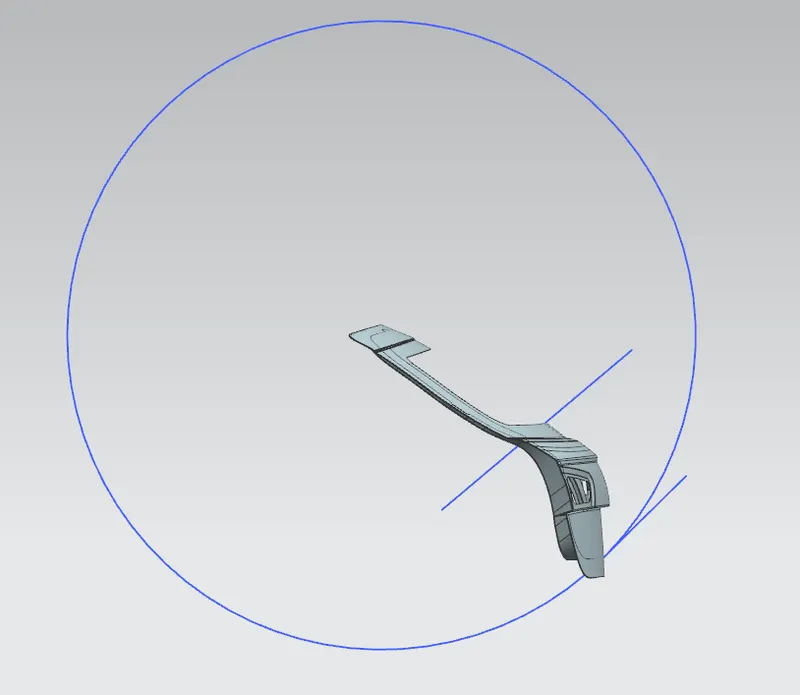
Trajectory for Latch positioning.
To make this trajectory a line is drawing between the LH and RH hine axis and using the line as a centre point for circle and drawing a line tangent to the circle defines the latch positioning and movement while opening of the back door.
CORNER RELIEF:
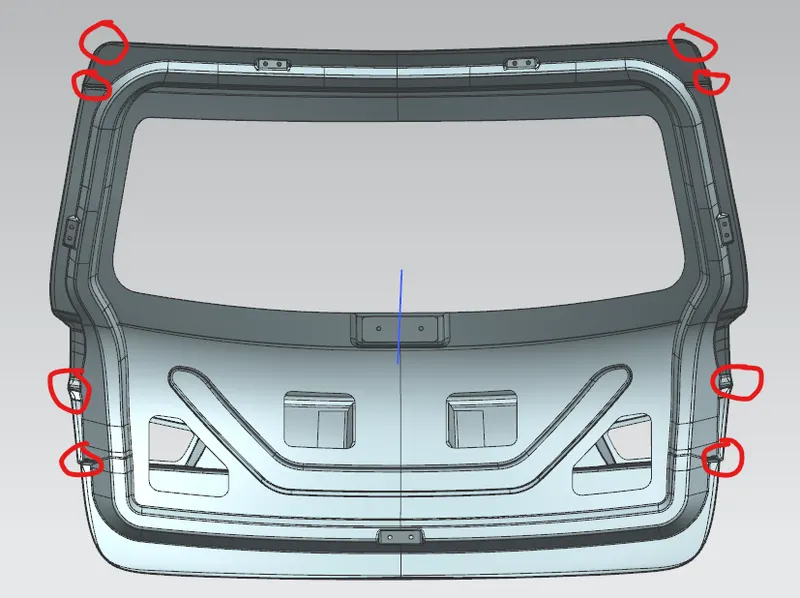
The corner reliefs plays a major role in manufacturing process and by obtaining the surface free from any cracks.
During manufacturing and hemming operations these corners majorly causes error. To avoid those errora and make a product most reliable and longlasting. These reliefs are provided.
REINFORCEMENTS:
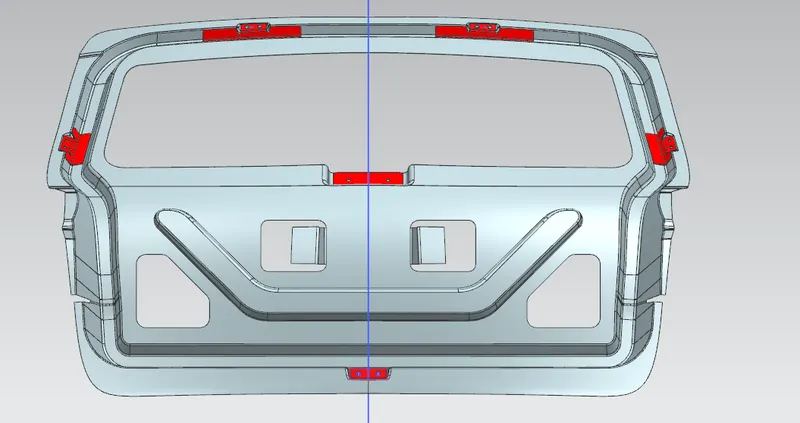
The reinforcements plays a major role in providing the internal support for the parts mounted and providing additional strength to the inner panel.
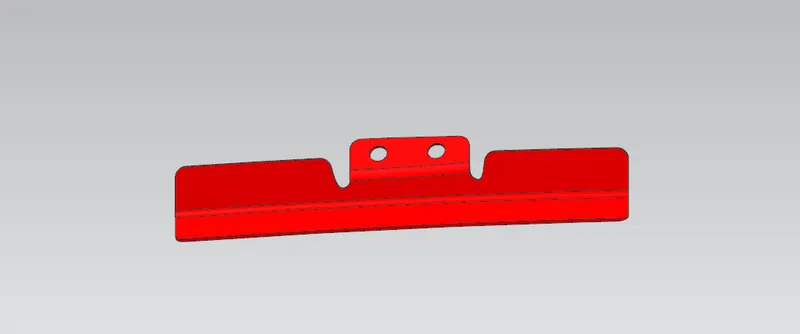
HINGE REINFORCEMENT:
This bracket is used bor the inner side of the hinge and inner panerl lies between the hing reinforcement and the hinge by providing addtional support.
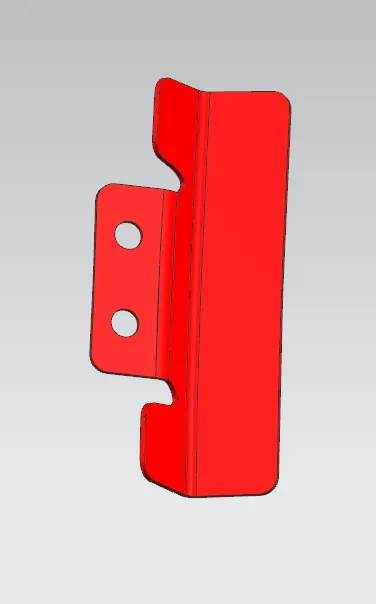
GAS STAY REINFORCEMENT:
This part is used for the supporting of the gas stay. which is the lifting mechanism of the backdoor and maintaing it in the open position.
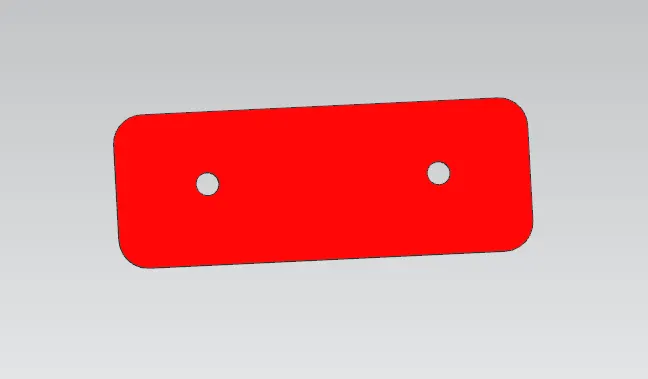
WIPER MOTOR REINFORCEMENT:
The wiper motor reinforcemnt is additional support for the wiper motor.
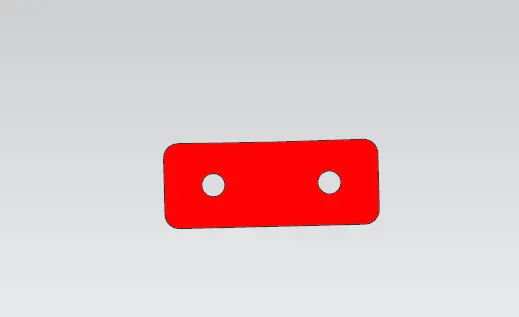
LATCH REINFORCEMENT:
This latch reinforcement provide the support for the latch internally.
DRAFT ANALYSIS:
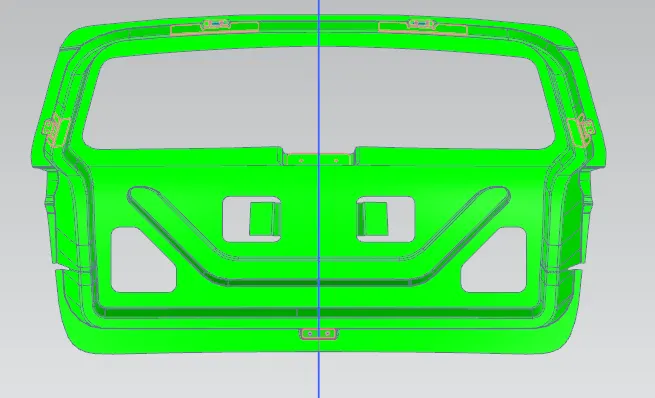
The Draft analysis is performed along the tooling direction and the limit angle or 5 degreees and the output surface show all the areas lies under the green zone which confirms it cleared the draft analysis.
FULL ASSEMBLY: