Design of backdoor
Back Door Design: Report
Introduction
The back door of a car, also known as the tailgate, liftgate, or boot lid, is a critical component designed for utility, safety, and aesthetics. It provides access to the rear storage area, protects the compartment, and contributes to the vehicle's overall aerodynamic and structural performance. Modern back door designs incorporate advanced methodologies to balance functionality, lightweight characteristics, and regulatory compliance.
Types of Back Door Designs
Back doors come in various designs, depending on the vehicle type and intended functionality. Below are the primary types:
1. Top-Mounted Door (Liftgate)
Common in hatchbacks, SUVs, and station wagons.
Hinges are positioned at the top, allowing the door to lift upward.
Gas springs assist in opening and holding the door in place.
2. Side-Hinged Door
Often used in vans and some SUVs.
Hinges are positioned on one side, enabling the door to swing open horizontally.
Provides easier access to cargo areas in tight spaces.
3. Split Doors (Barn Doors)
Consist of two vertical panels that open outward from the center.
Common in commercial vehicles and utility vans.
Allow partial access to the cargo area without opening the entire door.
4. Drop-Down Tailgate
Typically found in pickup trucks.
Hinges at the bottom allow the door to drop down horizontally.
Supports heavy loads and provides a platform for loading and unloading.
5. Dual-Action Tailgate
Combines features of drop-down and side-hinged designs.
Provides flexibility for different loading scenarios.
Components of the Back Door
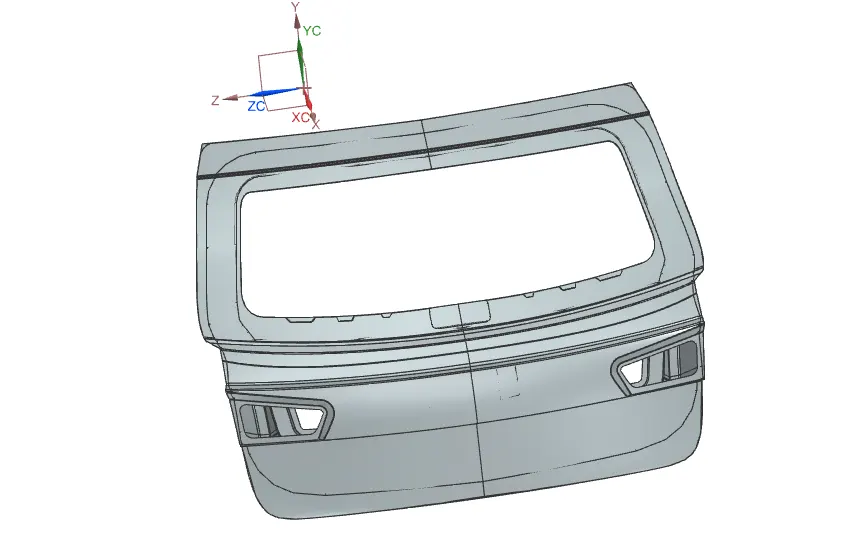
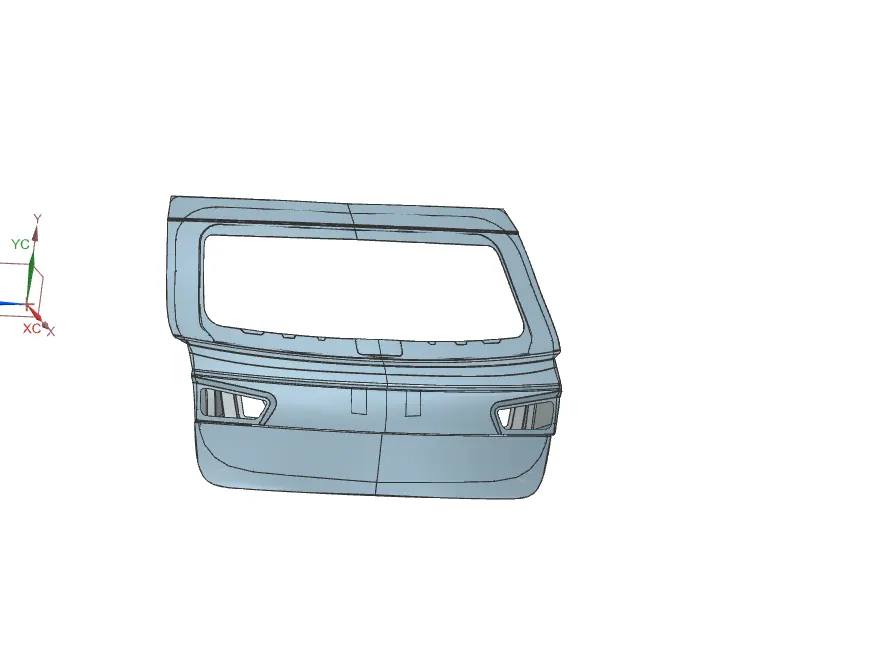
1. Outer Panel
- Purpose: Serves as the visible surface, offering an aesthetic appearance and aerodynamic shape.
- Material: Typically made from steel, aluminum, or lightweight composites.
- Design Considerations:
- Smooth surface finish for visual appeal.
- Integration with the car’s overall design language.
- Embosses or creases for added rigidity.
2. Inner Panel
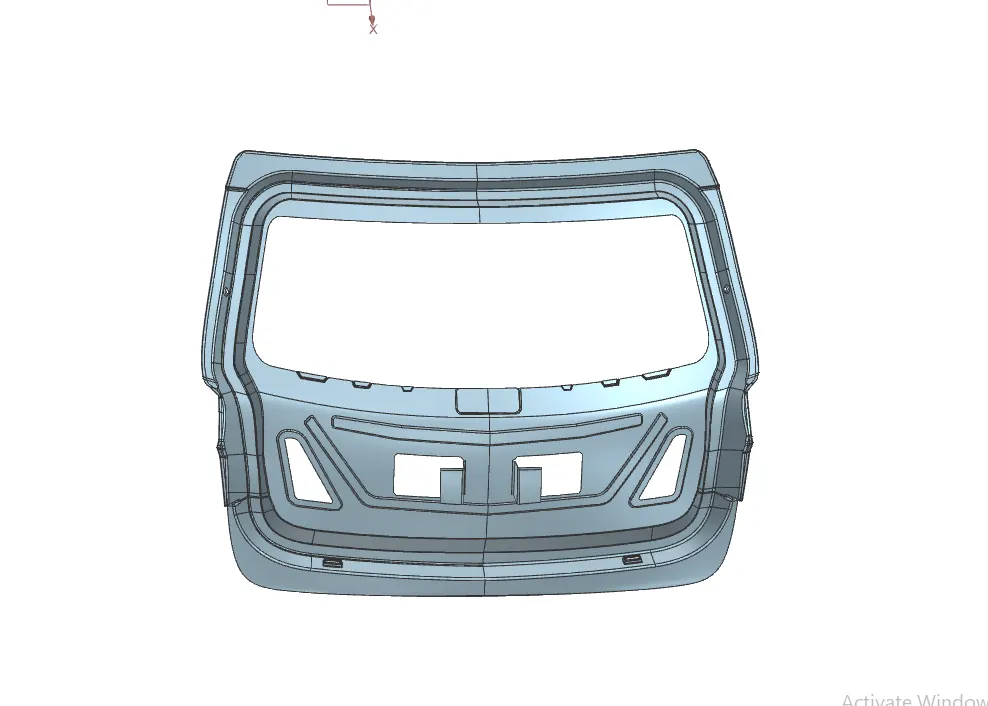
- Purpose: Provides structural integrity and houses critical components.
- Material: Same as the outer panel but with additional reinforcements.
- Design Features:
- Hinges: Securely mounted to allow smooth and controlled opening and closing.
- Latch and Striker Assembly: Ensures secure locking of the door.
- Cutouts and Embosses: Reduces weight and enhances stiffness.
- Reinforcements: Added at high-stress areas to manage loads during operation and impacts.
Wiper Mounting: Specific provisions and reinforcements are included to securely mount the rear wiper assembly.
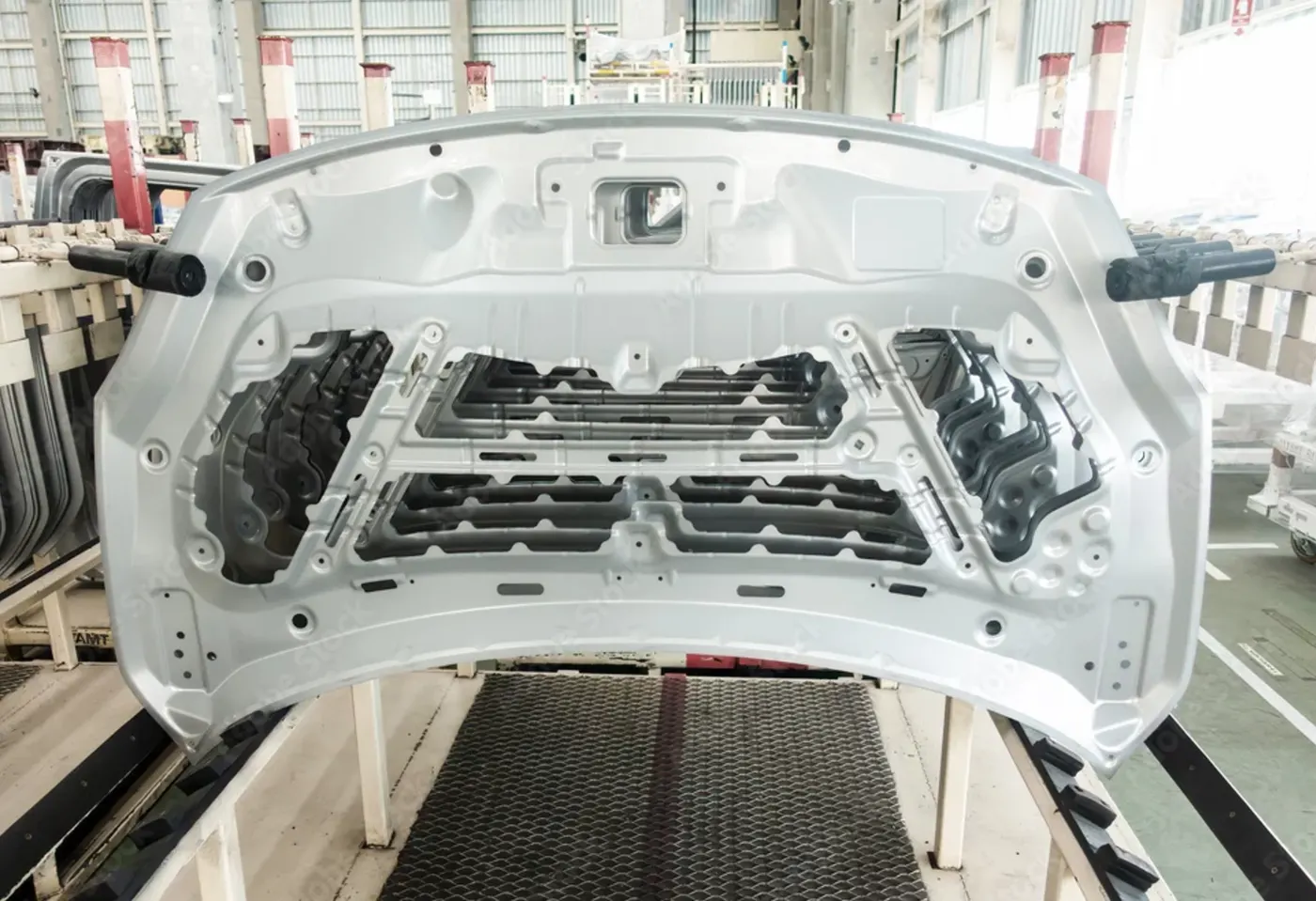
Embosses: Strategically placed to enhance rigidity and reduce material usage while maintaining strength. Here we use structural embosses in a v pattern as studies done have found that in case of accident or roll over the V or Y shaped emboss provides the best shape for safety.
3. Latches
- Purpose: Provides secure closure and prevents accidental opening during operation.
- Components:
- Primary latch: Ensures normal securement.
- Secondary latch: Acts as a fail-safe.
- Mounting: Reinforced locations in the inner panel.
Following is the latch trajectory:
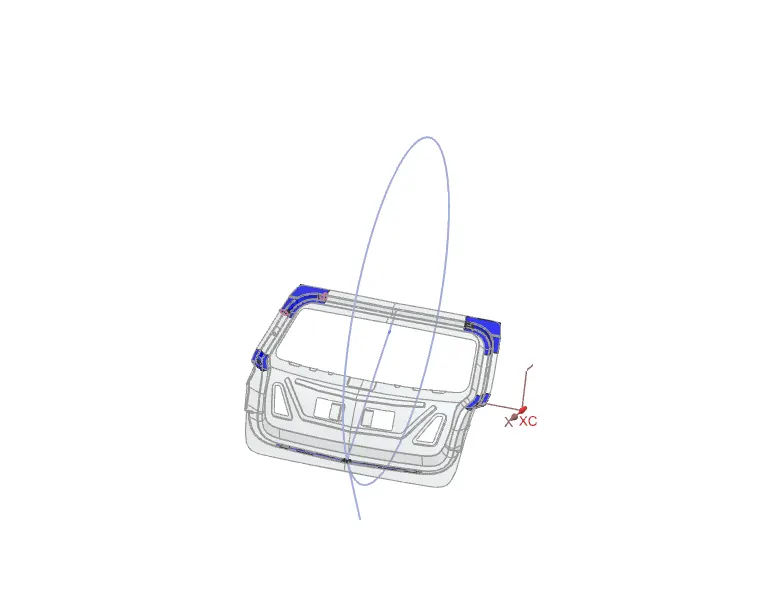
The latch trajectory is a carefully designed path that ensures smooth engagement and disengagement with the striker. This trajectory depends on the alignment between the latch and striker, ensuring that the latch operates efficiently under all conditions. Proper trajectory design prevents misalignment, reduces wear, and minimizes operating noise.
4. Hinges
- Purpose: Facilitate controlled movement during opening and closing.
- Design:
- Mounted at the top (hatchback) or side (swinging doors).
- Designed to withstand operational loads and repetitive use.
Gas Springs and Diavolo Embosses: Provisions are included for mounting gas springs to assist in opening the door. Diavolo embosses are strategically placed in critical areas to ensure robustness and proper alignment.
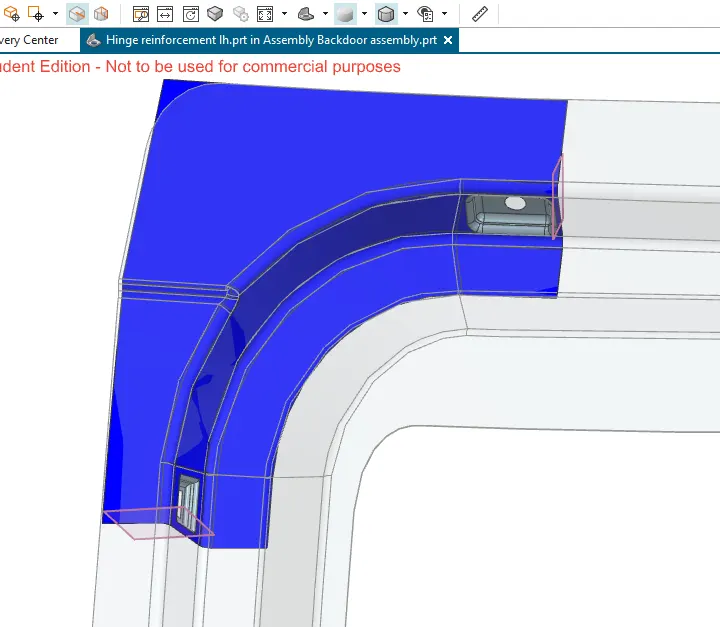
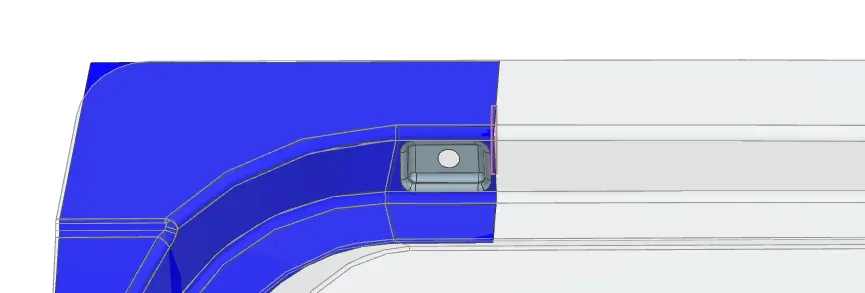
Here we see that the Gas spring mounting is on our inner panel and its second mounting is on outer panel and for aesthetic resons we created an Diavolo emboss on the mountings of outer panel. the hinges are fitted by press fits.
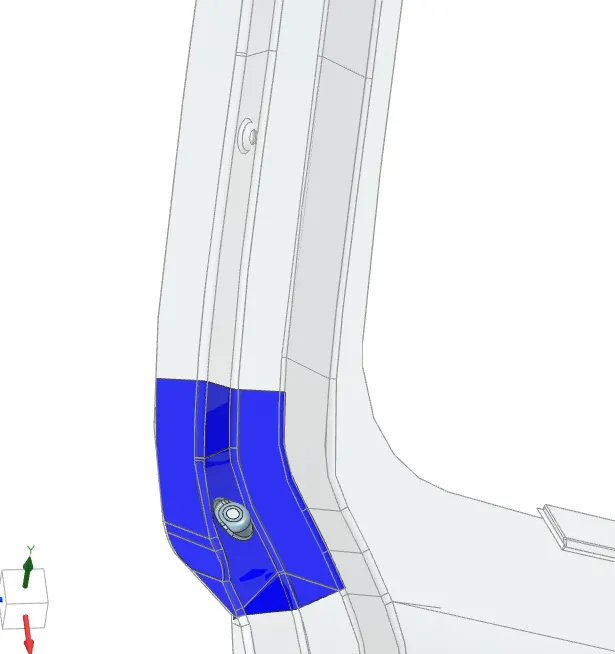
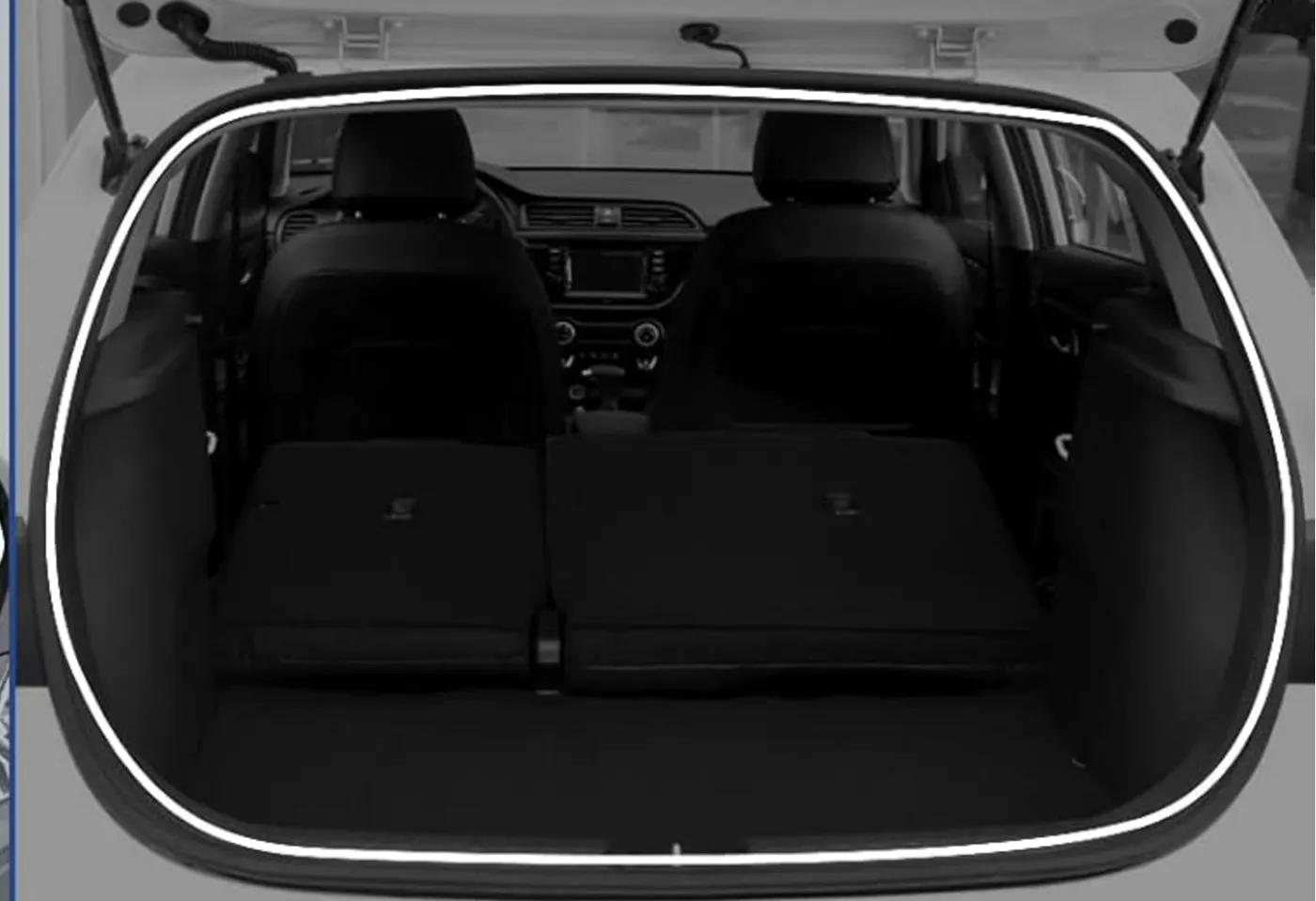
5. Sealants and Weatherstrips
- Purpose: Prevent water and air ingress, contributing to NVH performance.
- Placement:
- Around the periphery of the inner and outer panels.
6. Glass Panel
- Purpose: Provides visibility and contributes to aesthetics.
- Material: Tempered or laminated safety glass.
- Mounting:
- Bonded to the outer panel using adhesives.
Design Methodologies
1. Benchmarking
- Study of competitor designs to identify best practices and innovative solutions.
2. Concept Design
- Initial sketches and CAD models created to define the back door’s aesthetics and functional aspects.
3. Material Selection
- Based on factors such as weight, cost, strength, and manufacturability.
- Steel: High strength but heavier.
- Aluminum: Lightweight but costlier.
- Composites: Offer weight reduction but involve complex manufacturing.
4. Load Path Analysis
- Ensures proper load distribution during impacts and operation.
5. CAE Simulations
- Finite Element Analysis (FEA) for structural integrity.
- Crashworthiness Analysis for impact performance.
- Aerodynamic Simulations for airflow optimization.
6. Prototyping
- Physical prototypes are developed to validate design through testing.
Draft Analysis
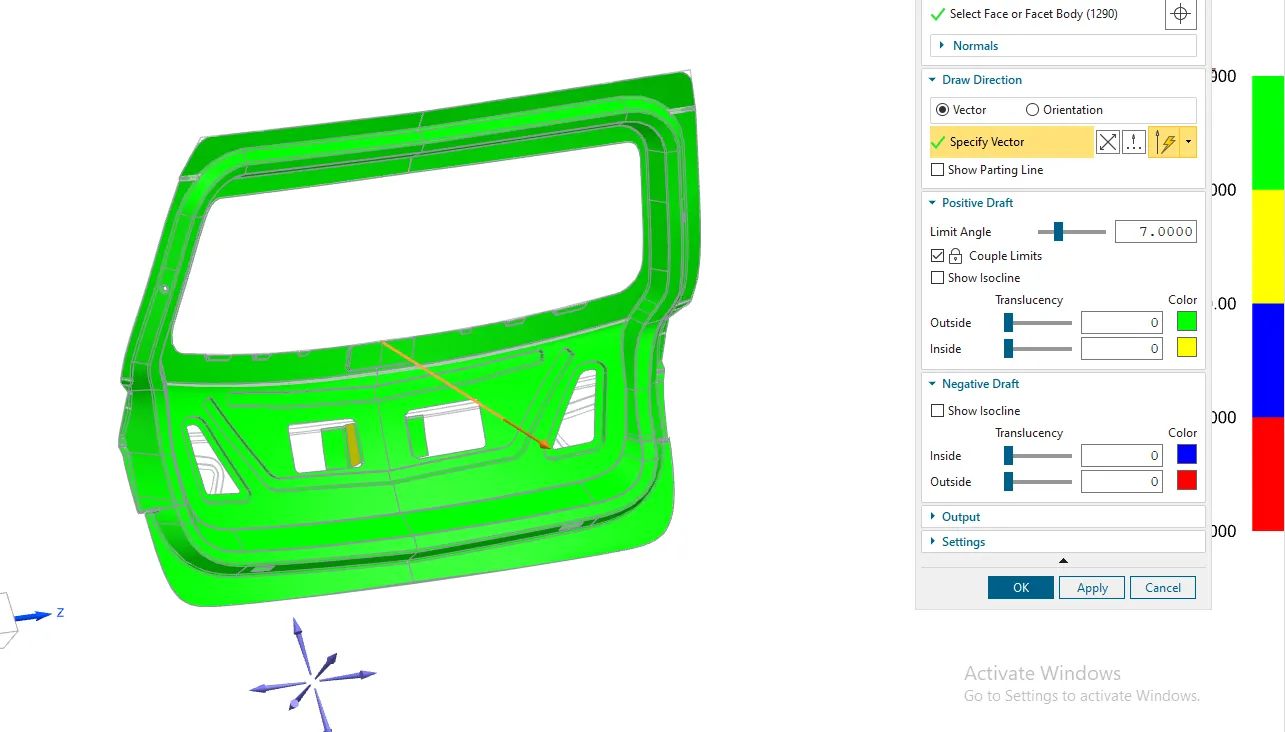
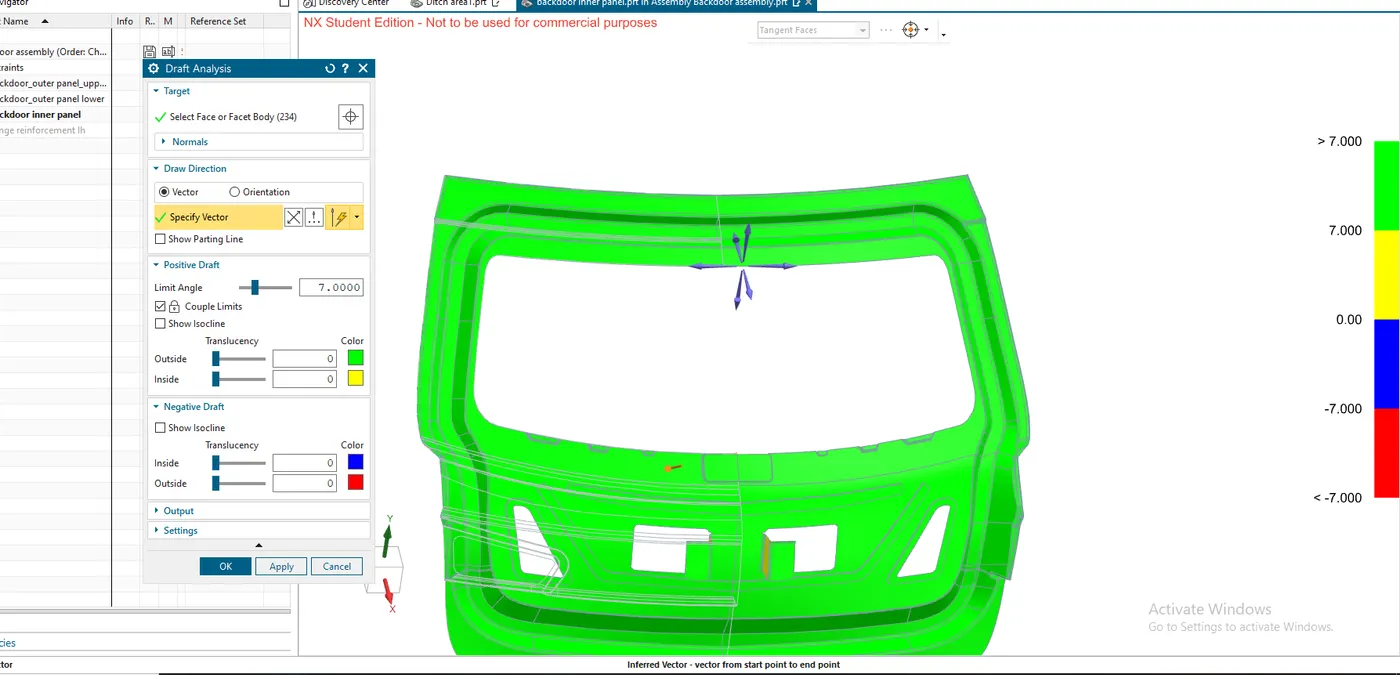
Draft analysis ensures that the design can be easily manufactured using stamping or molding processes without defects.
Purpose of Draft Analysis
- Ensuring Manufacturability:
- Verifies appropriate draft angles for easy ejection from dies.
- Preventing Defects:
- Identifies areas prone to tearing, wrinkling, or other manufacturing issues.
Key Parameters
- Draft Angle:
- Minimum recommended angle: 7° for steel, 3° for aluminum.
- Surface Continuity:
- Ensures smooth transitions to avoid stress concentrations.
- Undercuts:
- Highlights areas that may impede die ejection.
Process
- CAD models are analyzed using software tools.
- Problematic regions are highlighted and modified to meet manufacturability requirements.
Here we have given an draft angle of 7 degrees
important to note that the cutout in the middle of inner panel where the outer panel is joined to inner panel via mastic glue cannot manufactured. We make the part by cutting the part from the sheet seperately. Also the place where the upper and lower panel joins the inner panel cannot be manufactured in one piece. For that we cut the part and join in hemming with hemm glue.
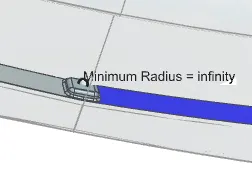
Below is curvature analysis done on mountings for DFA and for structural rigidity
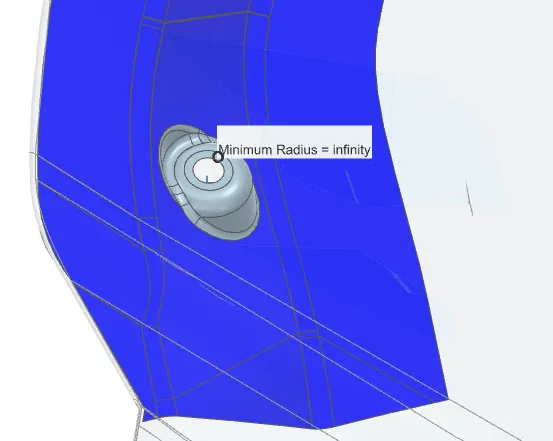
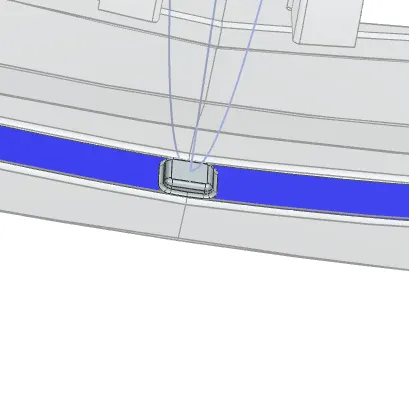
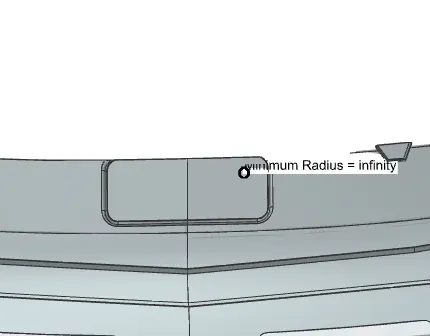
The mounting for wiper motor and its curvature analysis is shown below
The latch trajectory is an important part of our analysis as it determines the entire movement of our backdoor. It is formed from the axis of top Hinge reinforcement and the striker axis. Additional structural rigidity can be given with the help of
Increasing material thickness or using higher strength material
Using structural componenst such as ribs for enhancing rigidity
Manufacturing Process
1. Stamping
- Purpose: Shapes the sheet metal into the desired form.
- Steps:
- Blank cutting.
- Deep drawing to form the base shape.
- Trimming and piercing for openings and edge definition.
2. Hemming
- Purpose: Joins the outer and inner panels.
- Types:
- Roll Hemming: Gradual folding using rollers.
- Die Hemming: One-step folding with high precision.
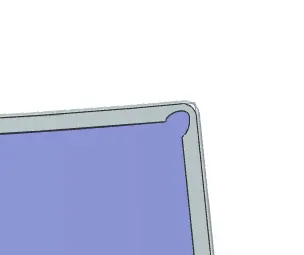
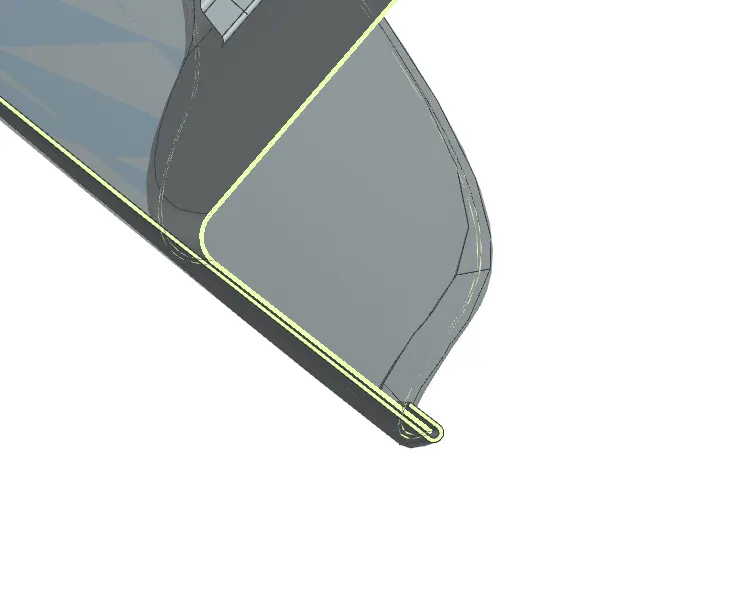
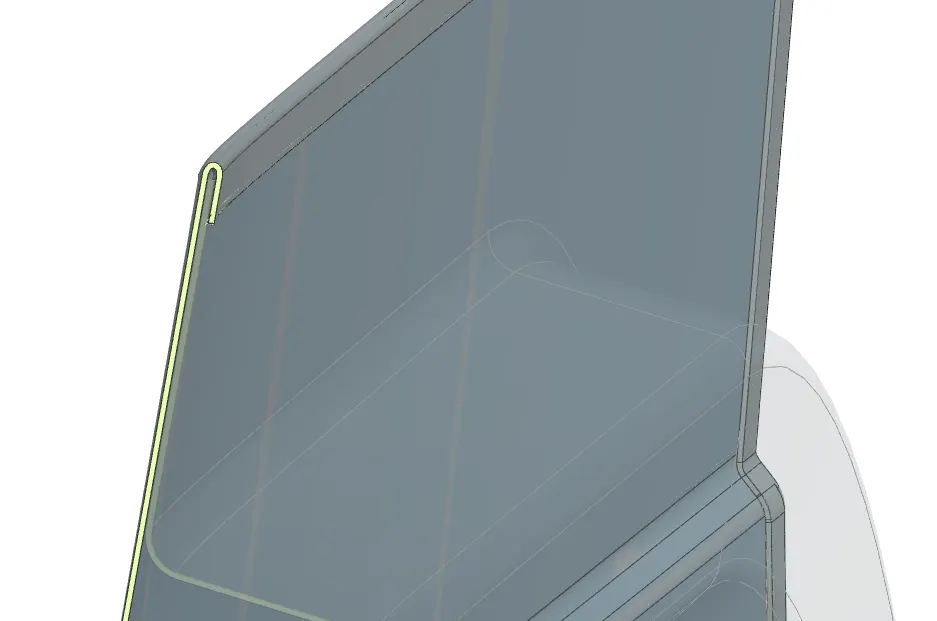
We provided hemm reliefs on the outer panel for ease of manufaturability and assembly.
3. Adhesive Bonding
- Used for attaching glass panels and reinforcements.
4. Painting
- Enhances aesthetics and corrosion resistance.
Design Validation
1. Strength and Durability Testing
- Verifies the back door’s resistance to operational loads and environmental conditions.
2. Crash Testing
NCAP Standards
The New Car Assessment Program (NCAP) is a globally recognized safety rating system that evaluates vehicle safety performance, including the rear crashworthiness of back doors. The crash tests adhere to stringent protocols, ensuring the vehicle meets regulatory and consumer safety expectations.
Key Crash Tests for Back Doors:
Rear Impact Test:
Simulates a collision from the rear to assess the structural integrity of the back door.
Evaluates the ability of the back door to withstand impacts without compromising passenger safety or causing fuel tank leakage.
Side Pole Test:
Assesses the back door's response when struck by a pole-like object, mimicking a real-world scenario like a car sliding into a pole.
Ensures the reinforcements and embosses in the back door absorb energy effectively.
Whiplash Protection Test:
Evaluates the potential for neck injuries to rear passengers during a rear-end collision.
Parameters Evaluated:
Deformation Levels:
Measures how much the back door deforms under impact.
Latch and Hinge Performance:
Ensures the latch mechanism and hinges remain intact during the crash.
Energy Absorption:
Analyzes how well the back door absorbs impact energy to reduce passenger injury.
Fuel System Integrity:
Ensures the back door design protects the fuel tank area during a collision.
Design Considerations for NCAP Compliance:
Reinforced hinge and latch areas.
Strategic placement of energy-absorbing materials.
Optimized emboss patterns to distribute impact forces.
Enhanced sealants to prevent fuel or fluid leaks.
3. Torsion Test
Verifies the back door's ability to withstand twisting forces without permanent deformation or failure.
Ensures operational reliability under uneven loading conditions.
4. Assembly Load Cases
Tests the back door assembly for durability under repeated opening, closing, and external loading scenarios.
Includes both static and dynamic load simulations.
5. Abuse Cases
Evaluates the back door's performance under extreme conditions such as slamming, overloading, and misuse.
Identifies potential points of failure and addresses them in the design phase.
6. Water Leakage Testing
- Validates the effectiveness of seals and weatherstrips.
7. NVH Testing
- Evaluates noise, vibration, and harshness performance.
Conclusion
The back door design is a complex integration of aesthetics, functionality, and manufacturability. Through rigorous design methodologies, simulations, and testing, a robust and efficient back door system is achieved. Proper consideration of materials, components, manufacturing processes, draft analysis, and validation ensures a high-quality and reliable design.