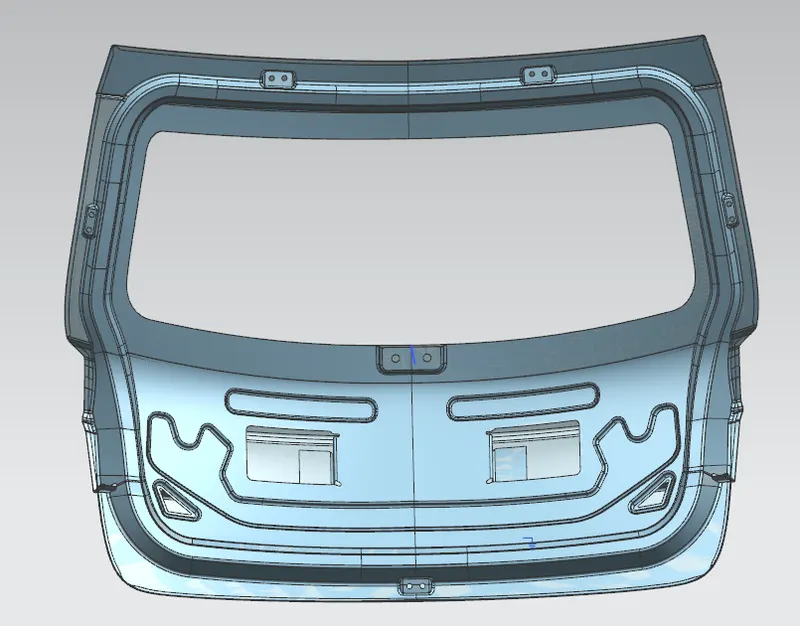
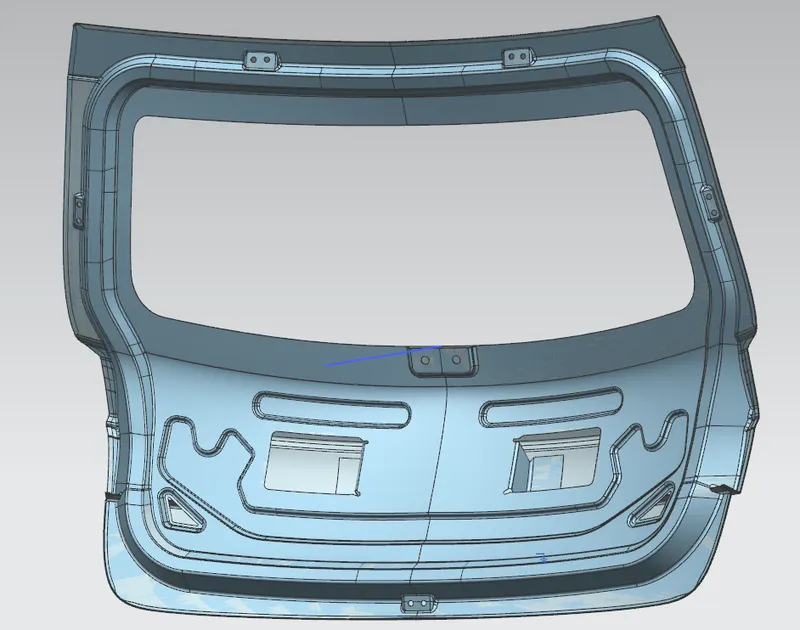
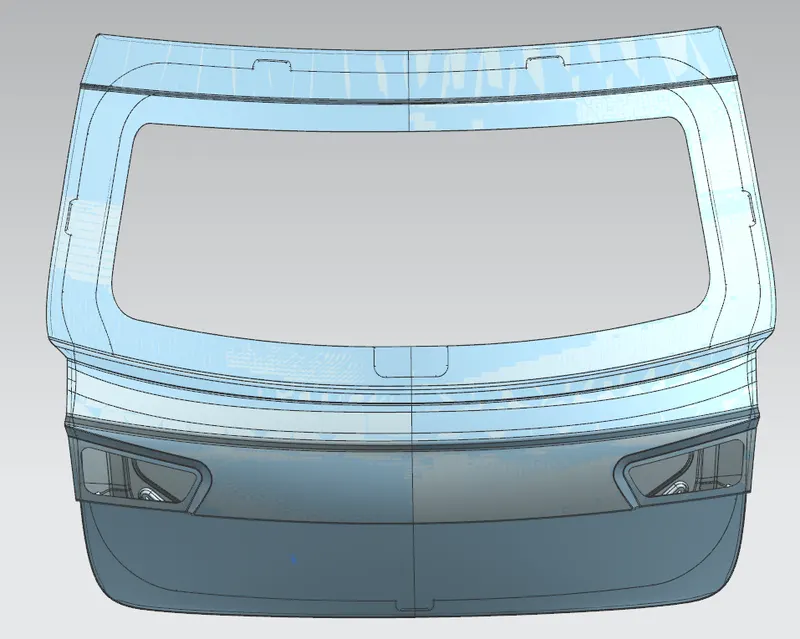
Design of backdoor
- ABOUT BACKDOOR :
It is hinged board or door at the rear of the vehicle that can be moved up or down during loading and unloading. The function of the backdoor is to protect the occupants and luggage from getting damaged. It houses assembly of tail lamps, wiper motor and other components. The backdoor is one of the closure commodities in BIW sheet metal design.
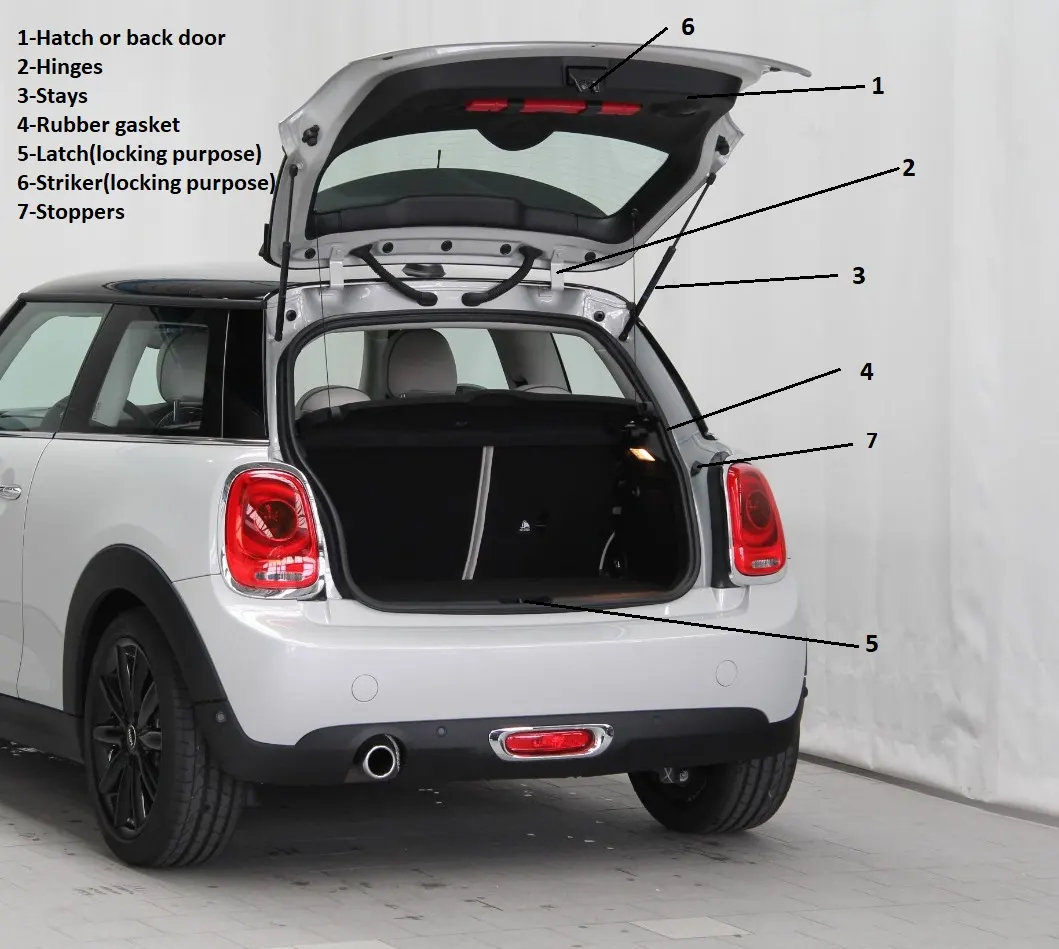
- OBJECTIVE :
To develop the class A surface which is received from styling team into manufacturable product design by following the OEM design standards using NX CAD.
- TYPES OF BACK DOORS :
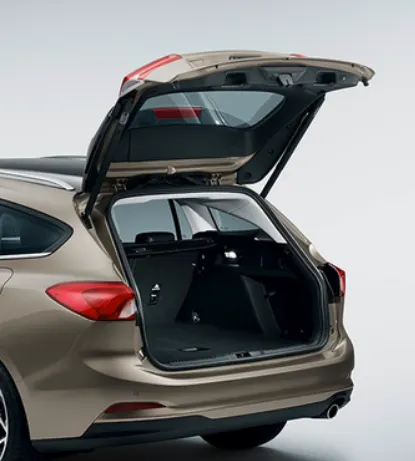
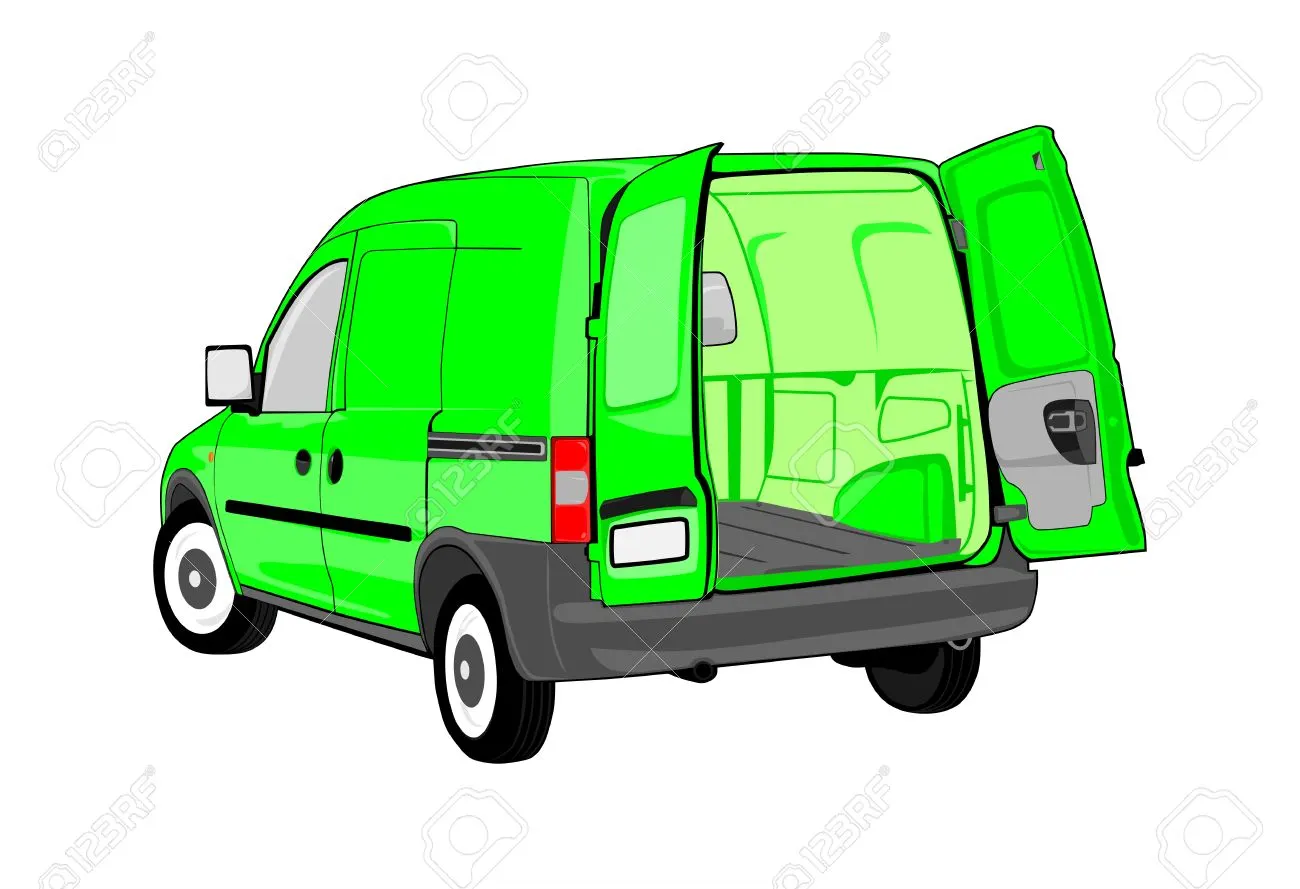
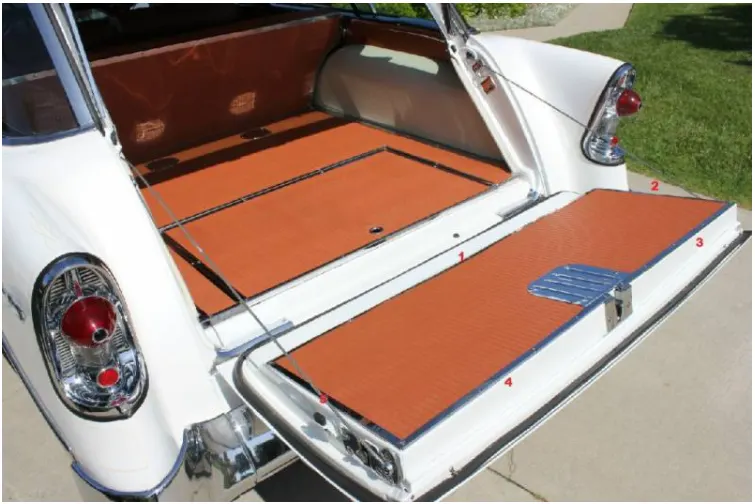
There are three types of back door based on the position of the Hinge axis.
1) Top Mounted.
2) Side Mounted.
3) Bottom Mounted.
- DESIGN CONSIDERATIONS IN BACKDOOR DESIGN :
1) Visibility criteria.
2) Force dissipation.
3) Latch and Stricker Positions.
4) Hinge Position.
5) Gas Stay Position.
6) Material Selection.
7) Space Availability.
8) Hemming and Relief Areas.
- THE MAIN PARTS OF THE BACKDOOR :
1) Inner panel.
2) Outer panel.
3) Hinge reinforcement.
4) Gas stay reinforcement.
5) Wiper motor reinforcement.
6) Latch/striker reinforcement.
7) Hemming.
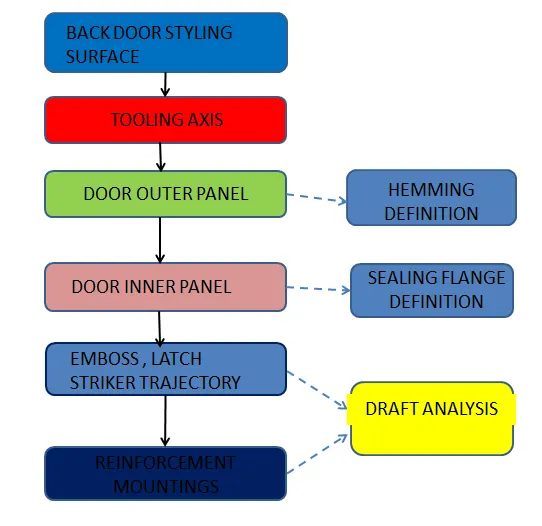
- DESIGN METHODOLOGY :
- CLASS A SURFACE :
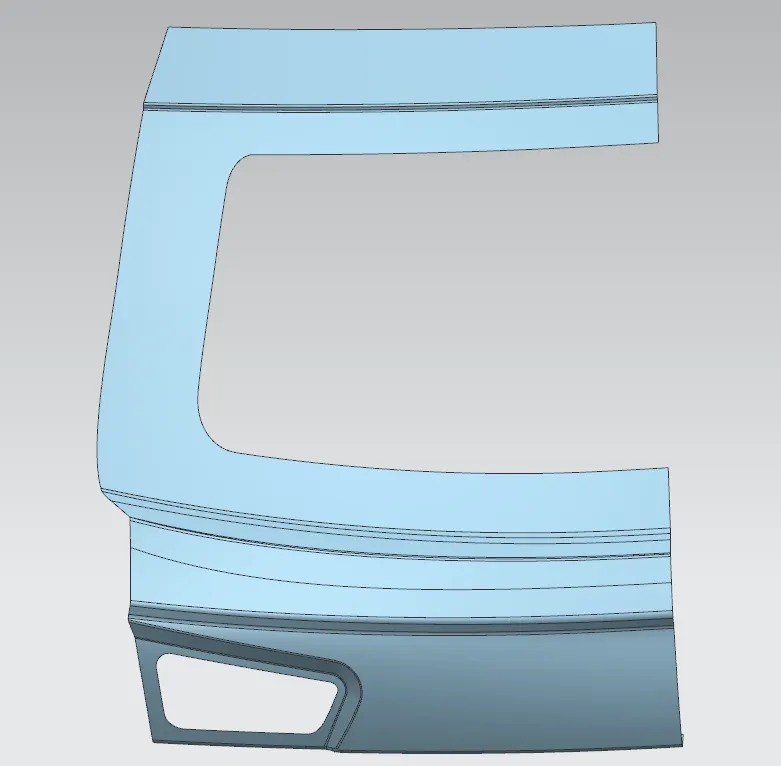
In automobile industry there will be dedicated team who will perform the aesthetic designing of various components including the whole vehicle. They will create various concept sketches after ideation. After that they will also create a class A surface of the product. This class A surface is then passed over to the NPD CAD team. They will initially inspect the calss A surface in order to check if the design is manufacturable or if it is following the engineering principles. If there is any issues about the design, they will contact the product design team and will ask to modifiy the calss A surface in order to solve the problem. Here also I received class A surface.
- TOOLING DIRECTION :
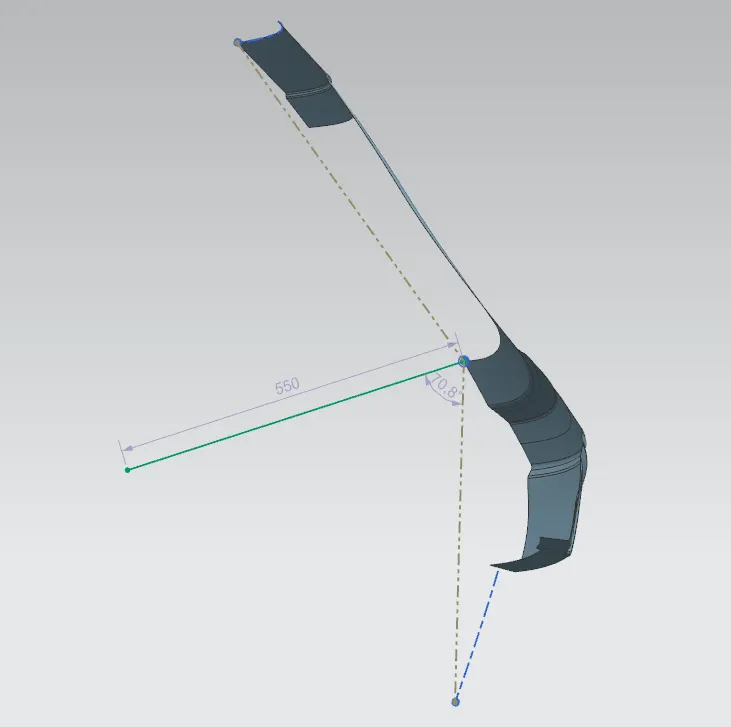
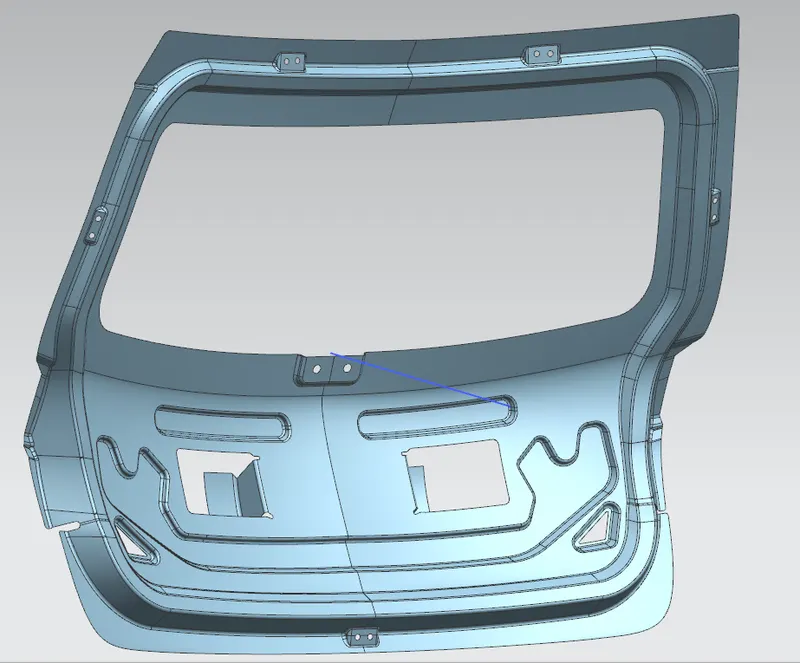
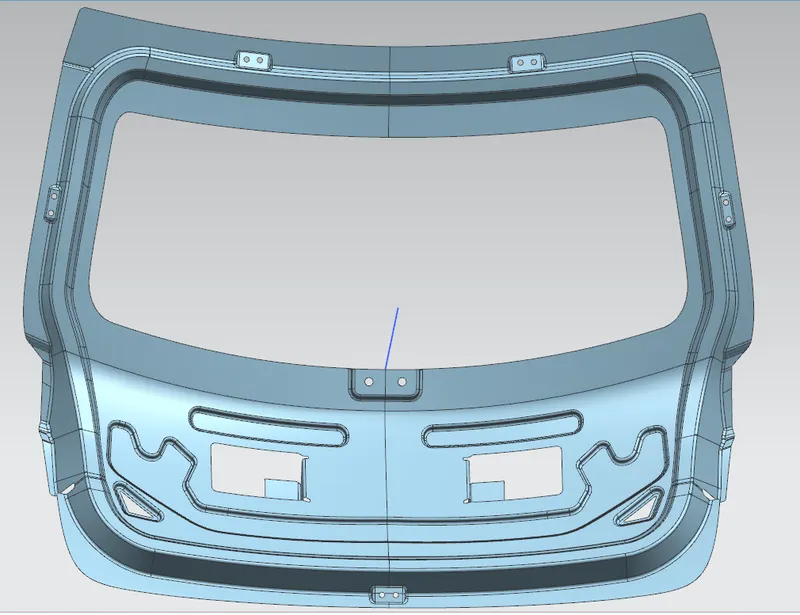
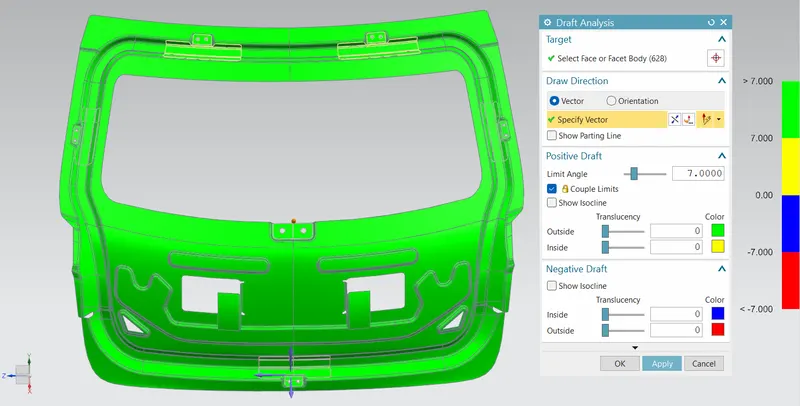
The inner panel is going to be manufactured by deep drawing process. In deep drawing process have a tool which is core and die. The core part follows the single straight path the inclination angle of core is known as a tooling direction. The tooling direction is created so, that manufacturing team take the reference of this tooling axis and manufacture the part accordingly.
- OUTER PANEL :
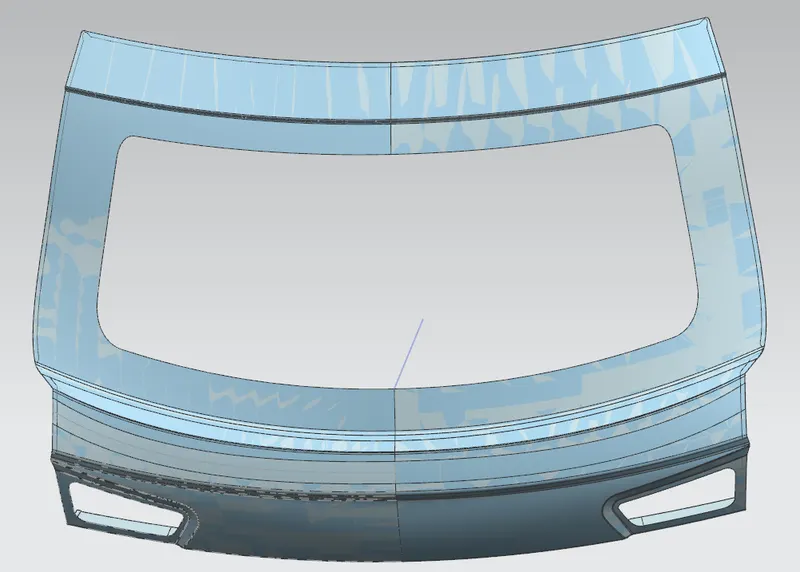
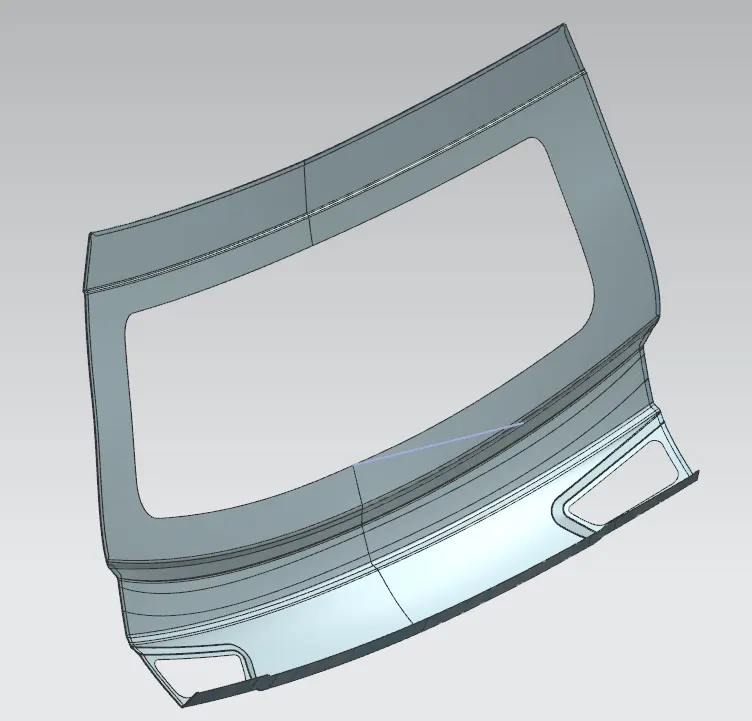
The outer panel of the backdoor is simiar to other BIW components where it is aesthetic part of the vehicle. The coating provided is of multi-stage which has the property of scratch resistance, rust prevention and smooth and attractive finishes. The outer panel also has the provisions for the tail lamp, rear fog lamp and also has the provision for licence plate moutings. Most of the hatchback cars have the provision for wiper motor.
- INNER PANEL :
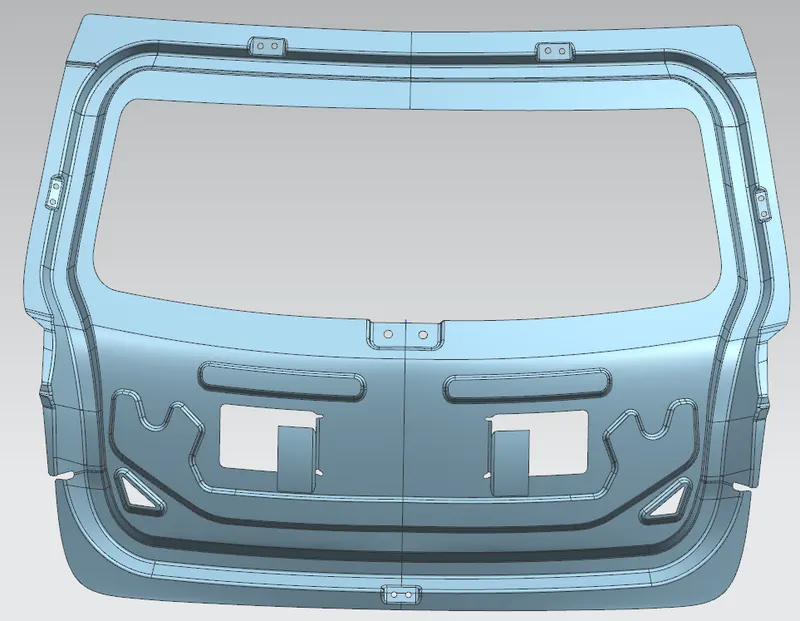
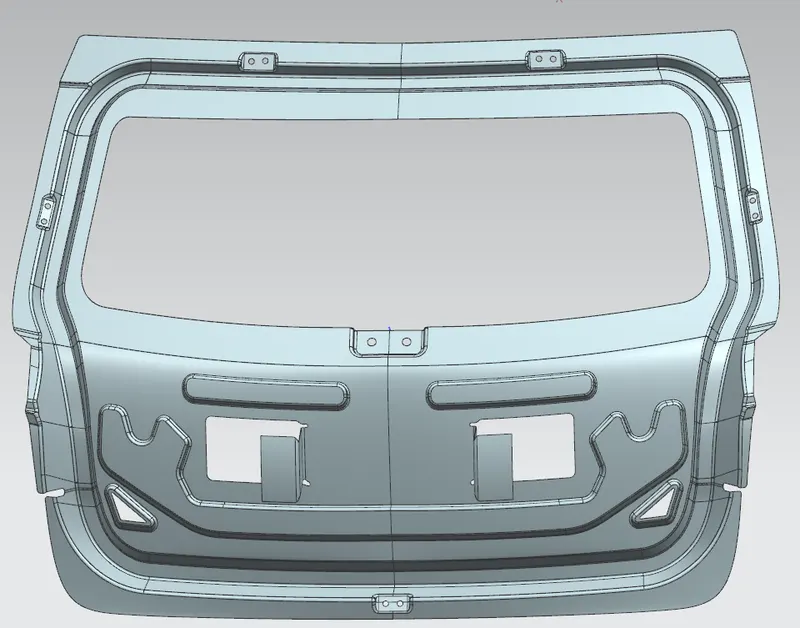
Here the inner panel is created for strengthening the door assembly and it is one of the most important components on which all the accessories monut likes hinges, glass guide channel. Bckdoor inner panel is mounted with the roof. The weight of the backdoor inner panel is near about 7 to 8kg depends upon its material and thickness. The possible method is the integration method. In the integration method, the part is stamped out of a single blank. This reduces the number of tools needed, the assembly cost and eliminates any fit ability problem.
To create the inner panel of back door we make an offset of 1.7mm from the outer panel. Here we consider 1.7mm offset because of the inner panel and outer panel is going to be thicken 0.75mm inwards side and 0.2mm gap is needed to be given for mastic sealant.
Here to create the sealing flanges on the inner panel, I extracted the surface from the outer panel and then offset by 25mm.
Then we creating the connecting flange to join the inner panel and sealing falnge.
Then for windshield glass, windshield panel created and joined with sealing flange.
- MASTIC :
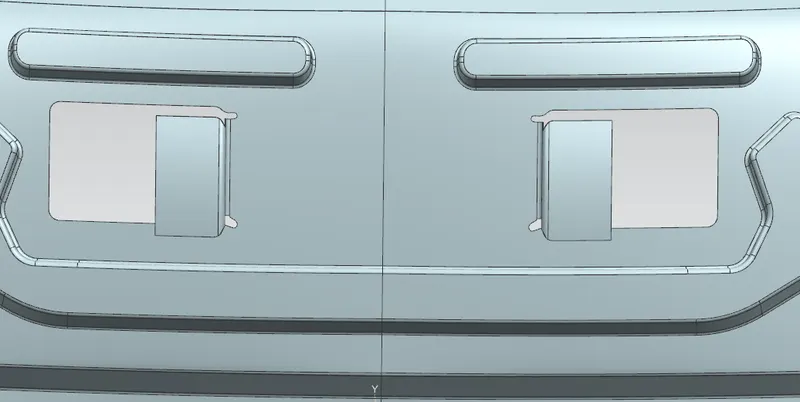
Since we are reducing the overall weight of the door, this mastic providing the strength, also serves the purpose of joining the inner and outer panel using the mastic sealants.
The mastic sealants help in reducing the NVH (Noise, Vibration and Harshness) levels of the door.
By creating sketch and cuts on the surface we are creating mastic region.
- EMBOSSING :
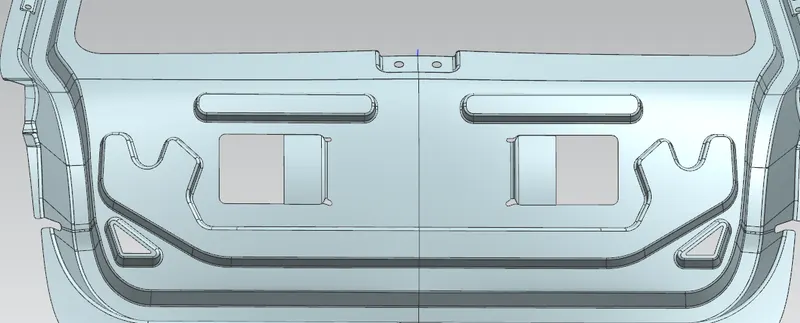
Creating emboss in the outer panel direction because when collision happens from backside of the car this impact initially falls on the embossed faces then force dissipates according to the design of emboss, then the remaining force hits the inner panel. For this case we design the emboss towards the outer panel.
Emboss should be in 7 degrees to 25 degrres inclined in angle and it should not be in 90 degree angle. Because when we do stamping in the manufacturing, the stamping tool fits into the sheet metal, hence it will not come out of that sheet metal. So this is main reason why the emboss face is in an angle.
- HINGE AND GAS STAY MOUNTING :
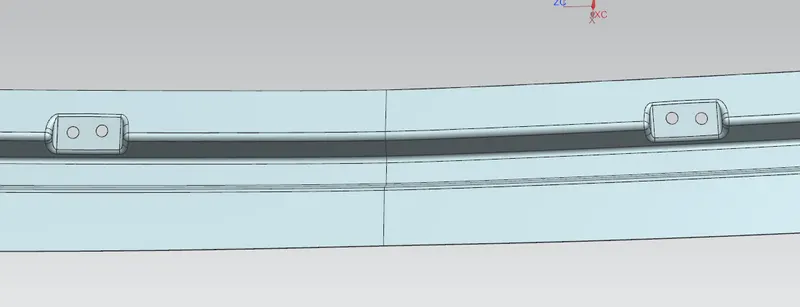
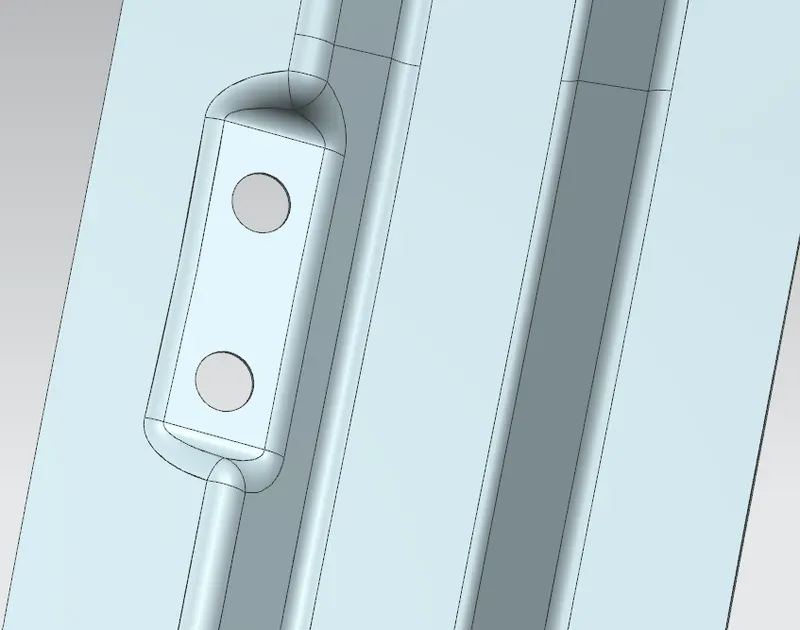
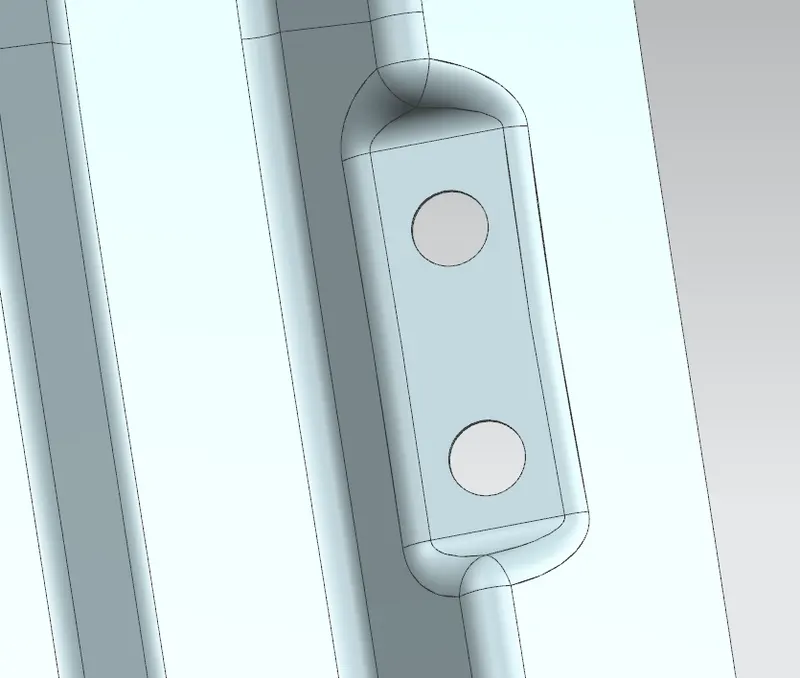
Hinge and gas stay is used to connect the door to the BIW, also enables the opening and closing of the hood. So the embosses are created of the hinge along with reinforcement to provide additional support to the inner panel.
- LATCH AND STRIKER MOUNTING :
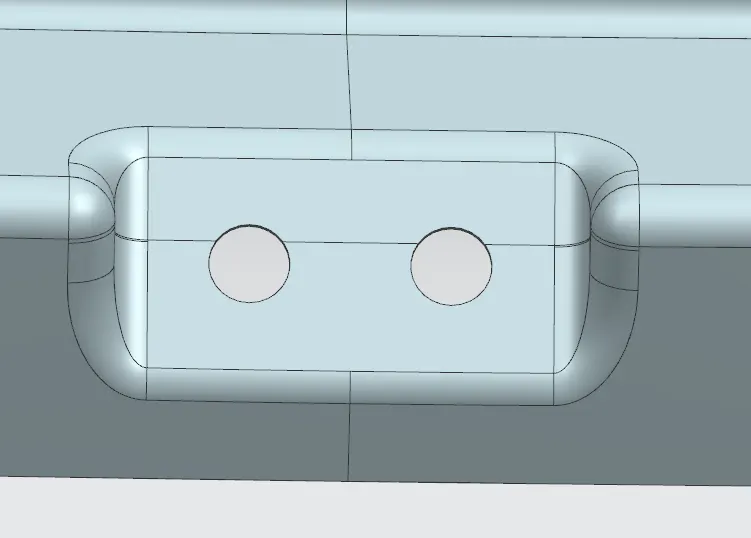
For the latch it is important to keep the latch embossment according to the trajectory the door opening and closing follows. Create the centre point between two hinge parts and draw the circle to the position where we need the latch to be placed. Then we draw the tangent line to the circle at that point & place the latch in that region.
- WIPER MOTOR MOUNTING :
- HEMMING :
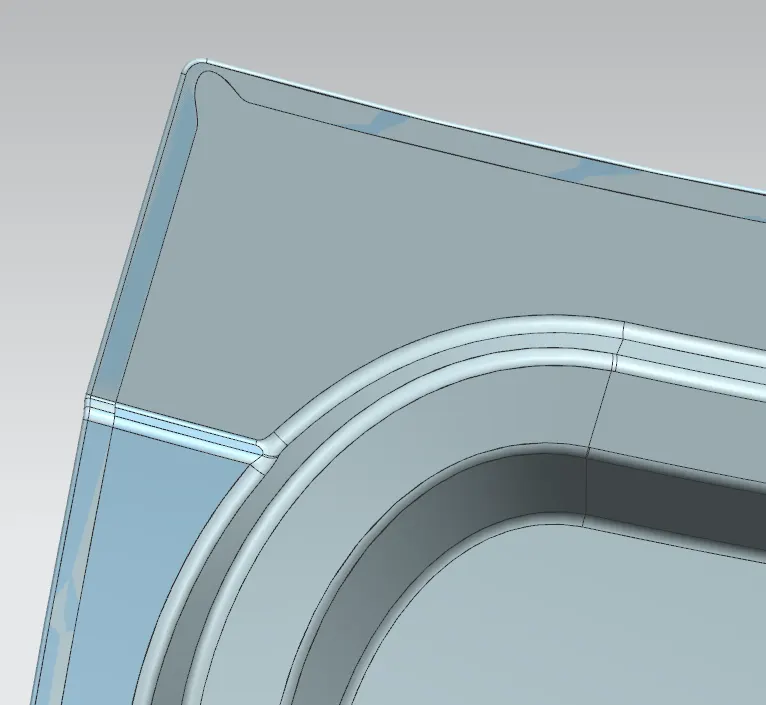
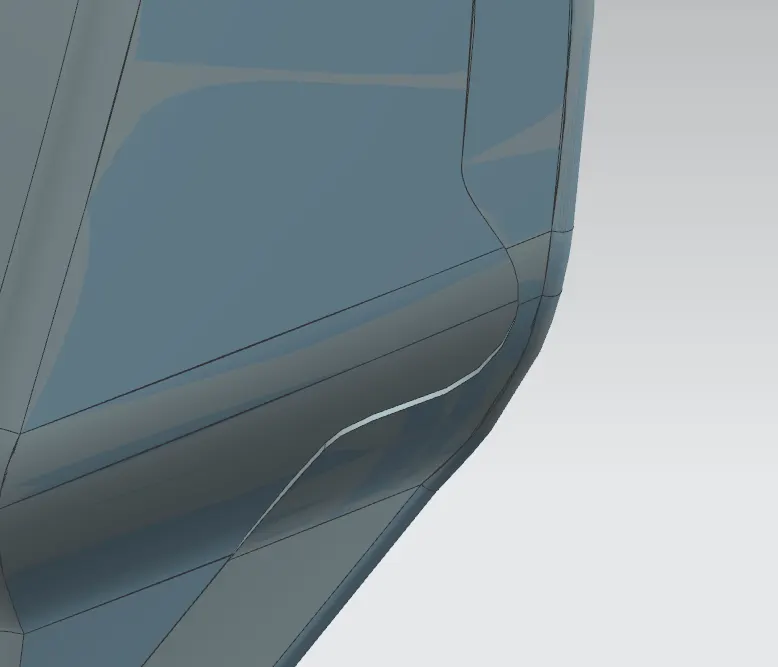
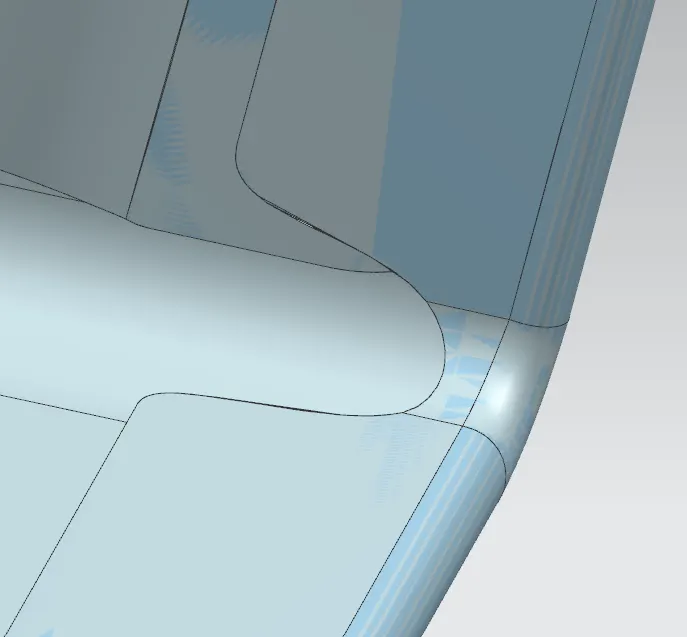
Hemming is the process of joining both the outer and inner panel together. In the hemming process roles and wraps the hood outer panel arond the inner panel and holds it tightly together. After the hemming process is done, now we need to provide corner relife on the corners of the outer panel so that the part is manufactural.
- REINFORCEMENT :
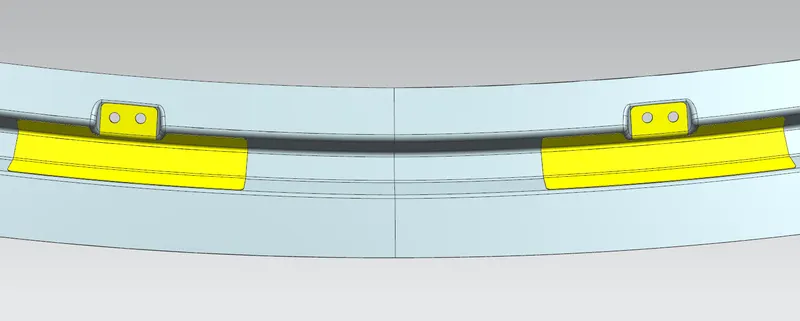
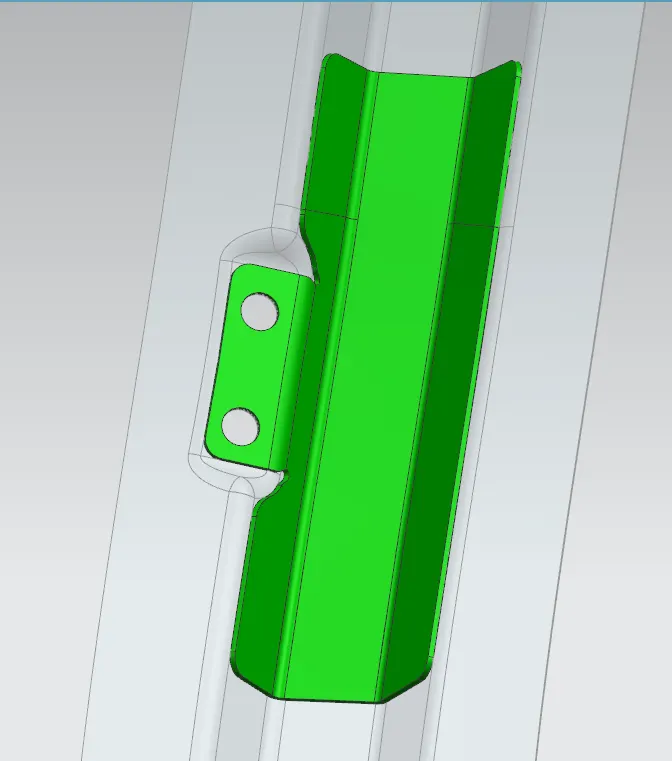
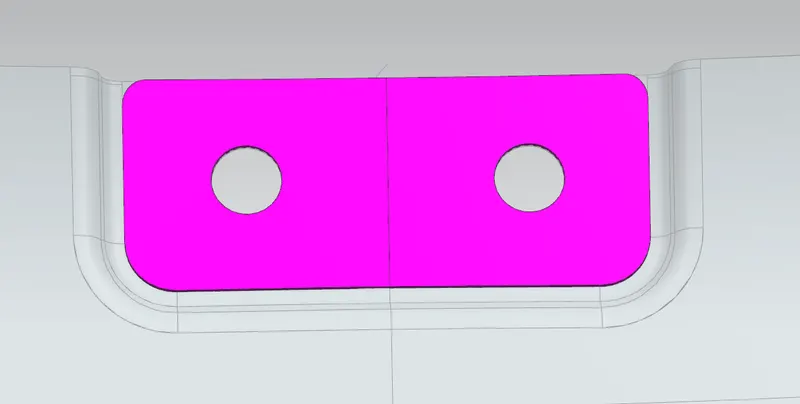
Reinforcement and embosses are added or desiged to compensate for the loss of strength in a region or area due to load acting there. In back doors case load acting in the form of hinge, gas stay and latch & striker. These load cases are determined with the help of various tests and simulation.
1) Hinge reinforcement -
2) Left side reinforcement -
3) Right side reinforcement -
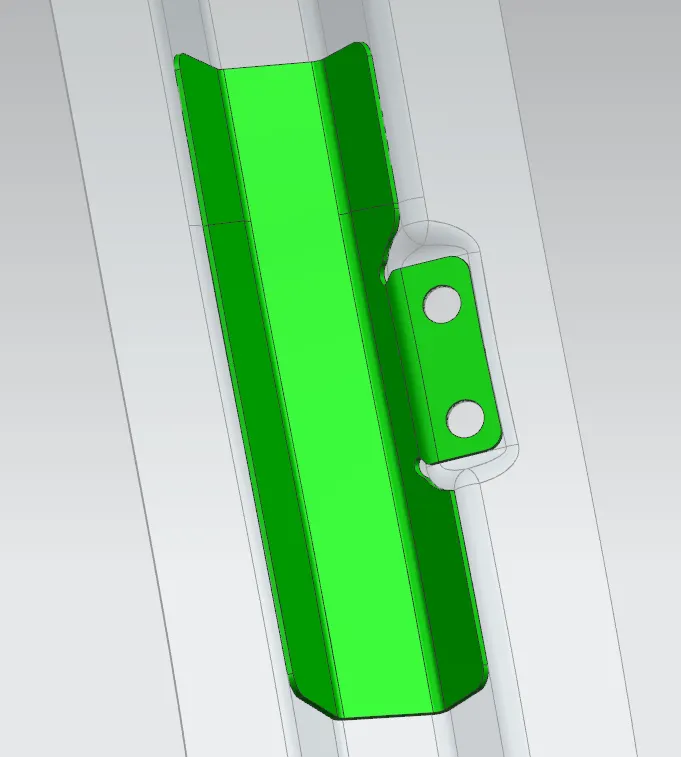
4) Latch reinforcement -
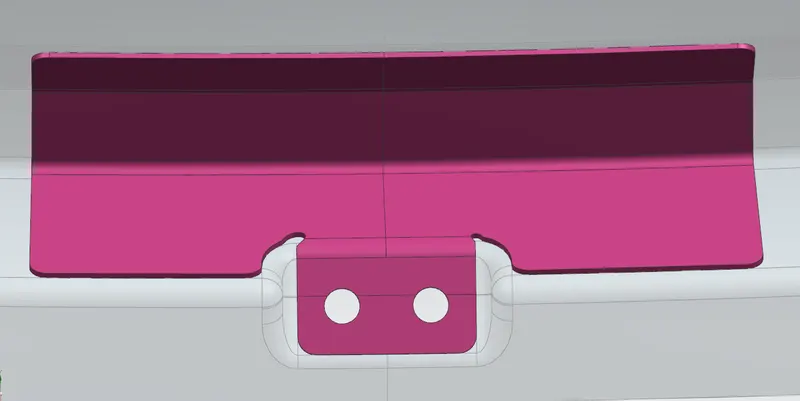
5) Wiper motor reinforcement -
- DRAFT ANALYSIS :
- RELEVENT IMAGES OF BACKDOOR :