Design of Backdoor
Design of Backdoor
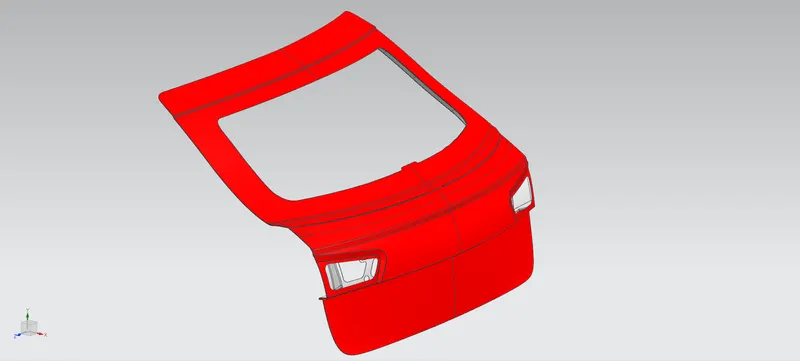
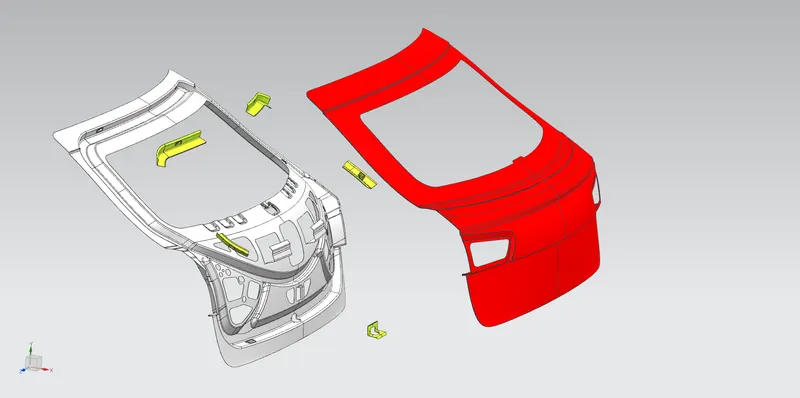
Objective:
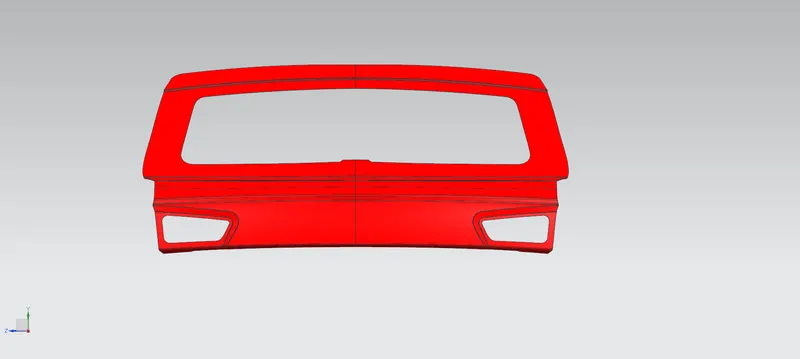
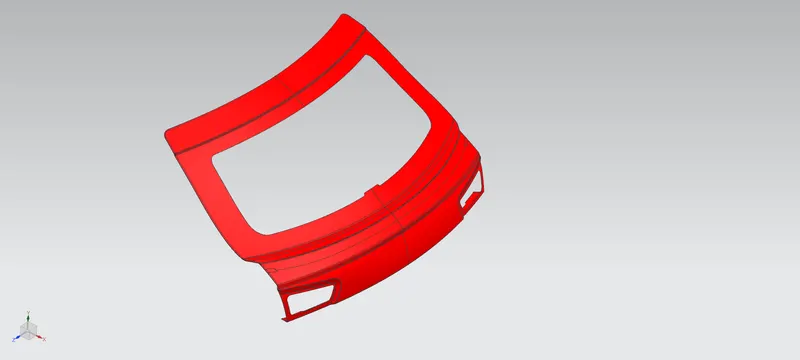
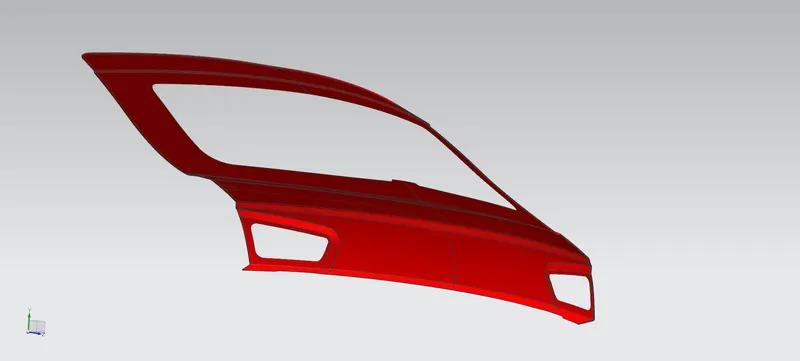
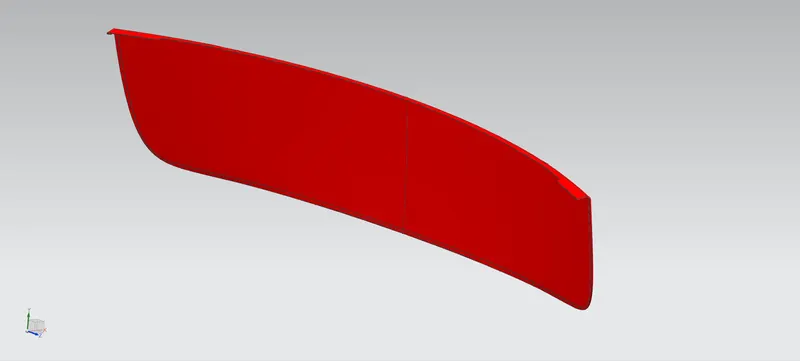
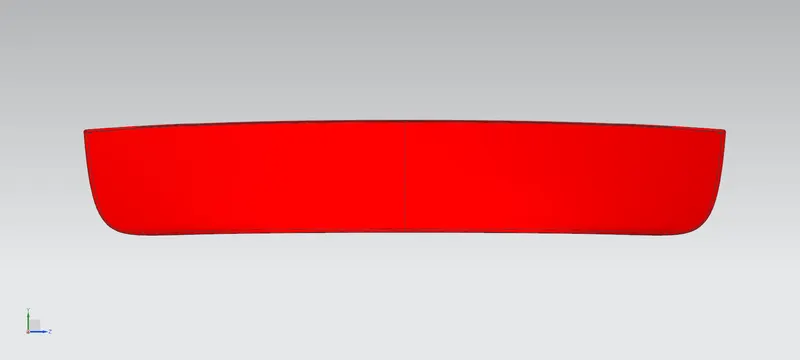
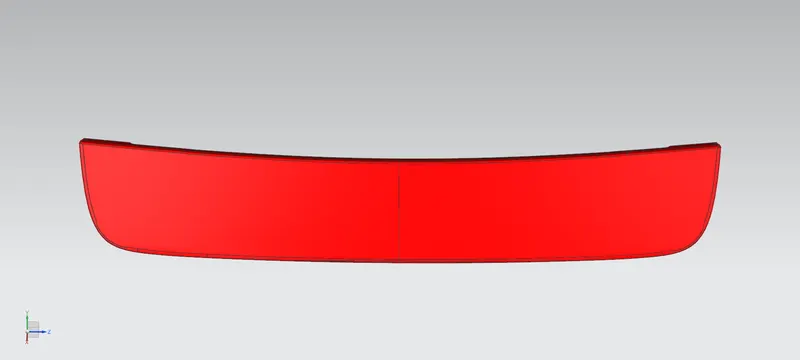
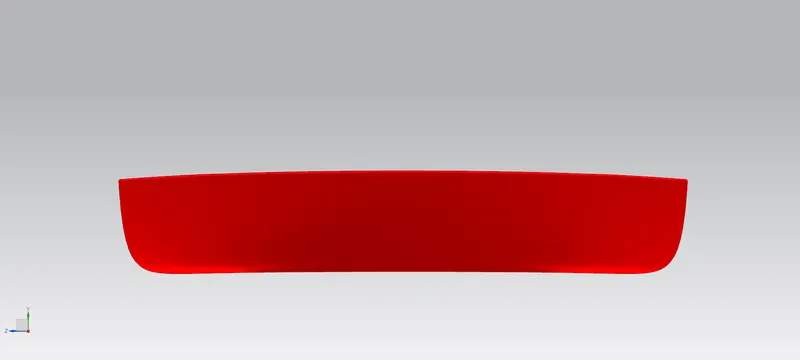
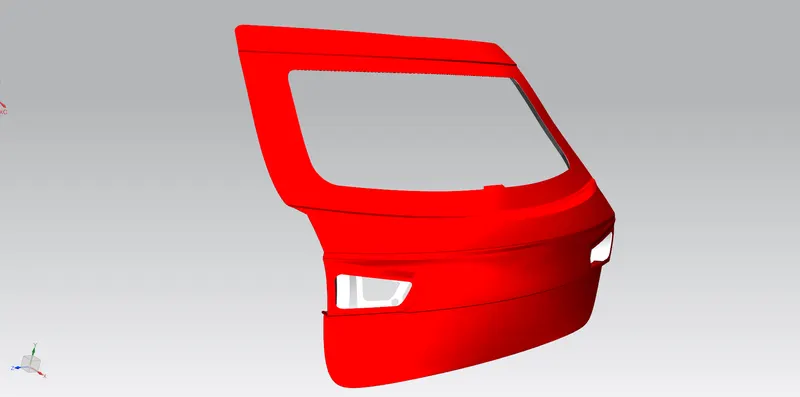
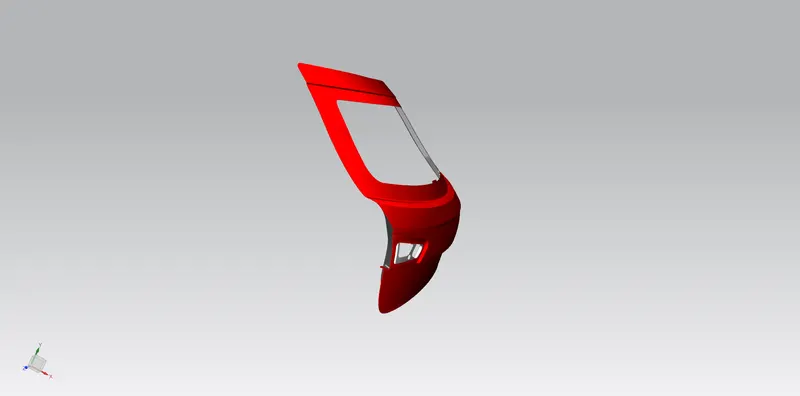
Use the provided styling surface to come up with a back-door design, use appropriate design methodologies, and provide the necessary reinforcements and embosses.
Introduction:
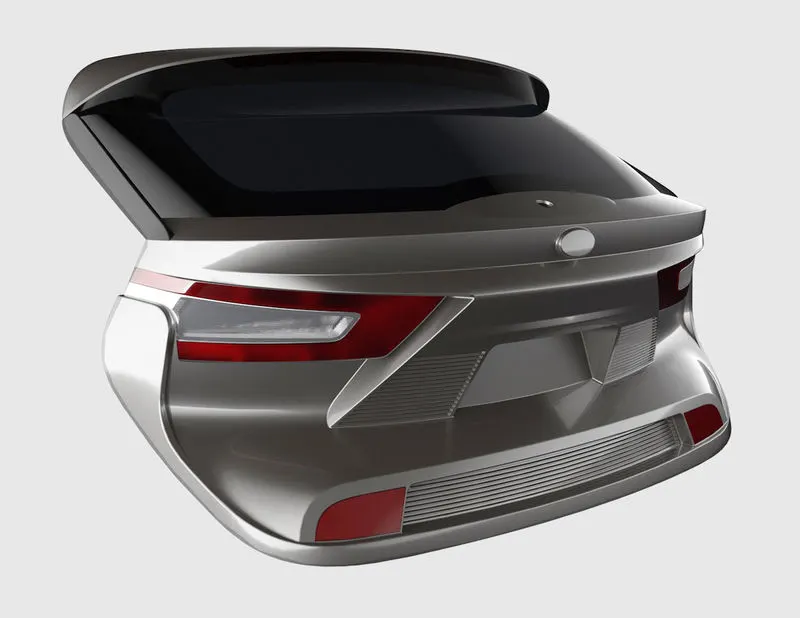
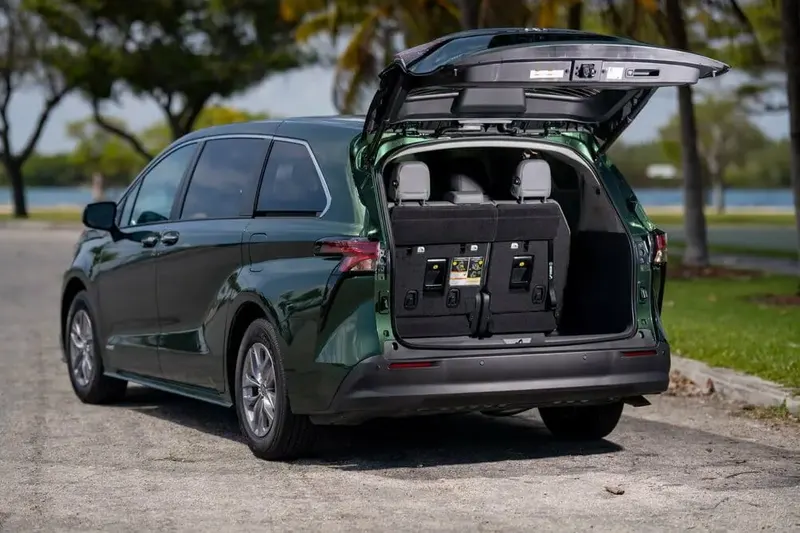
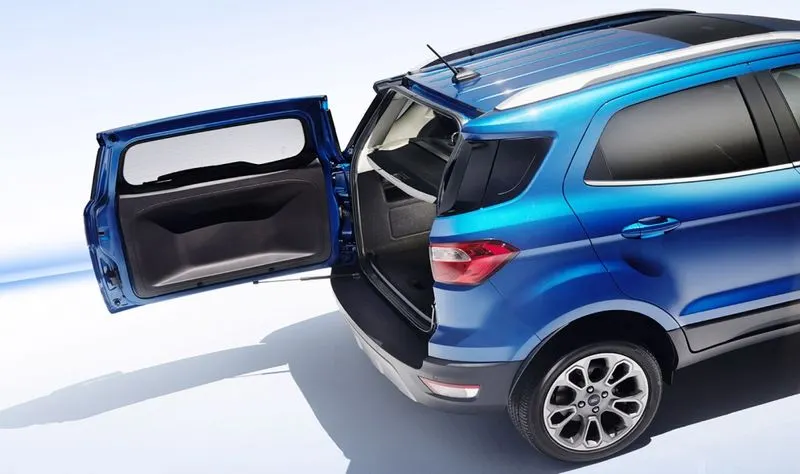
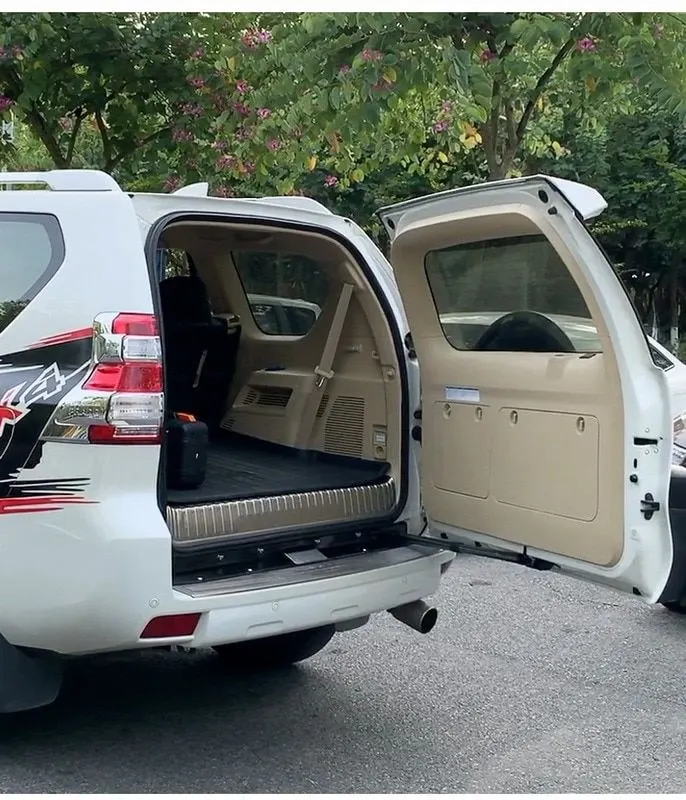
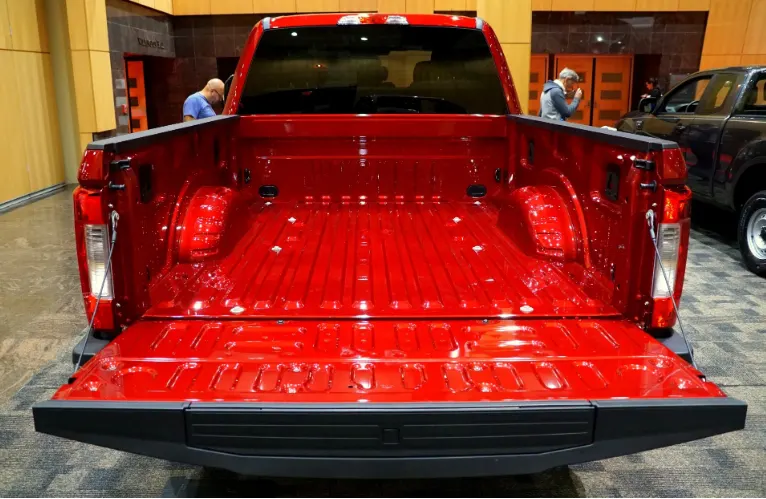
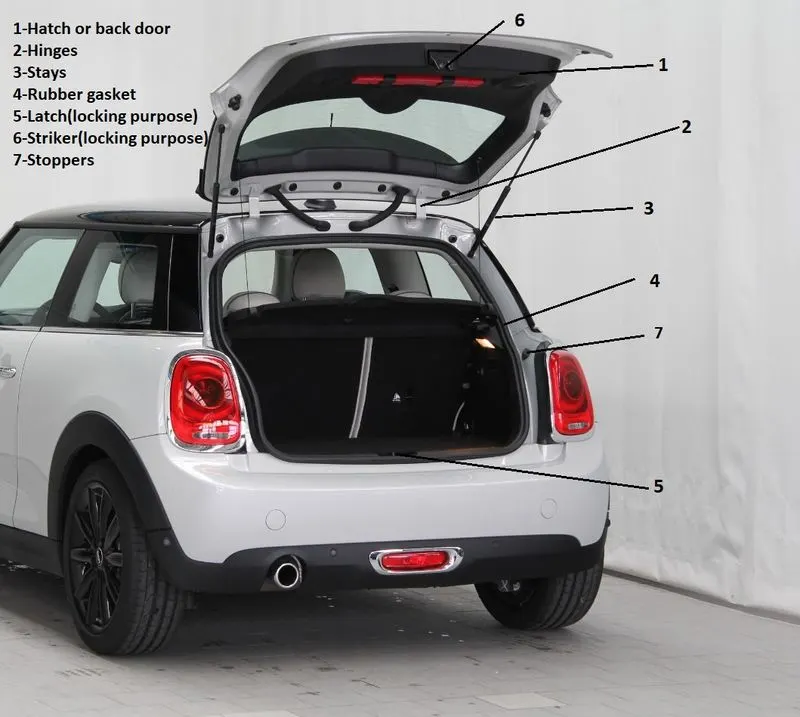
A Backdoor is a door at the back of a car or truck, that is hinged at the top, side, or bottom so that it opens downwards. It covers the trunk or boot of a car, which is the vehicle's main storage or cargo compartment.
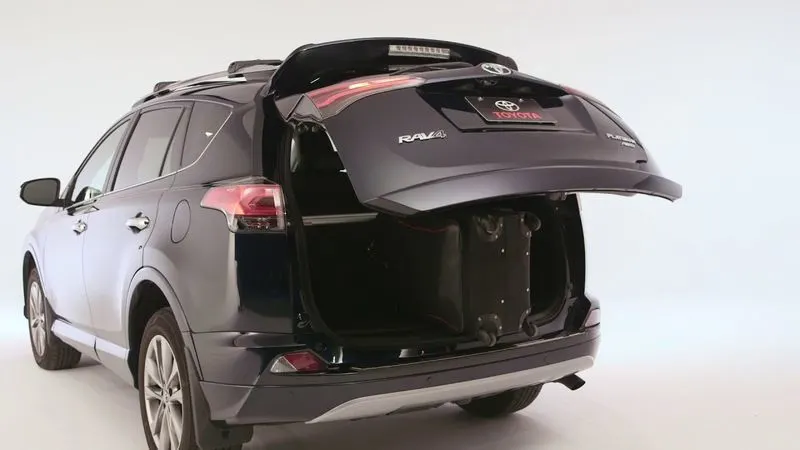
It is also called a tailgate. Hence, Backdoor or Tail-gate simply refers to the back of the car that can open and close.
Types include:
1. Top Mounted Door:

2. Side Mounted Door:
3. Bottom Mounted Door:
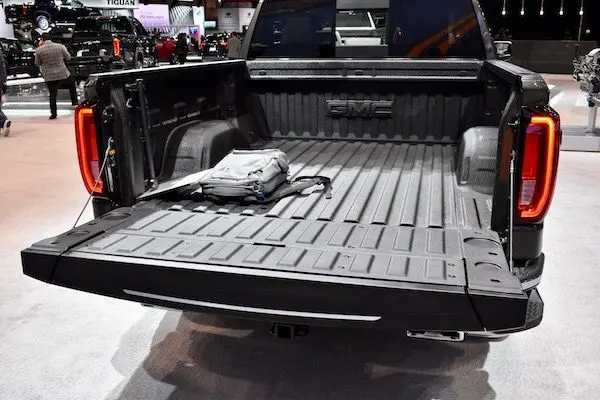
In most cars, gas stays (struts) are provided to reduce the effort required in lifting the door open. Some cars are provided with a powerlifter backdoor which in turn is driven by an electric motor, furthermore reducing the effort in lifting the door.
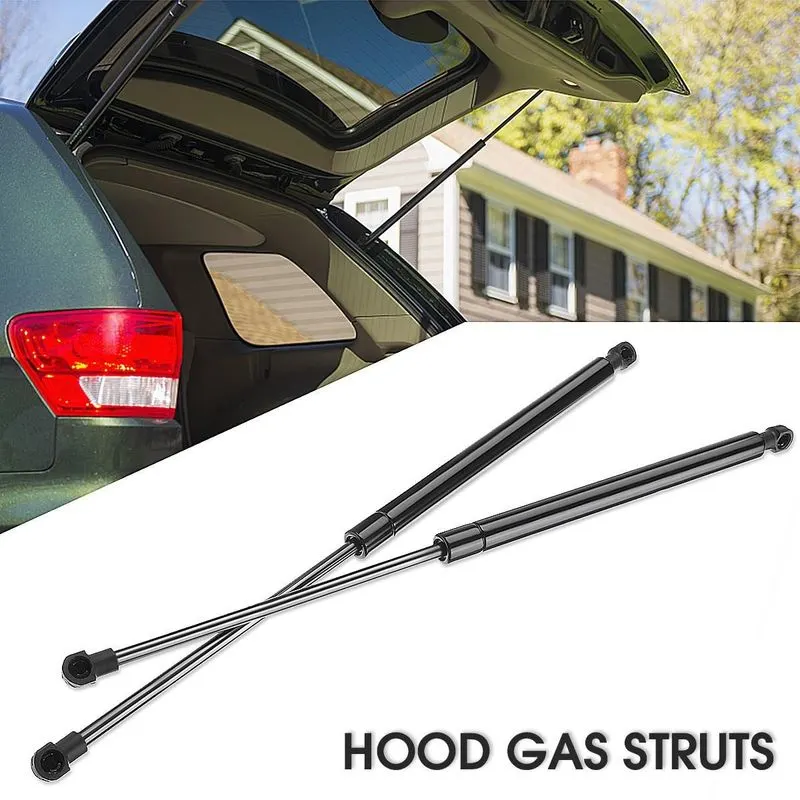
Gas stay is an ideal and most commonly used mechanism for lower-segment cars. The car's backdoor is held open by two gas stays.
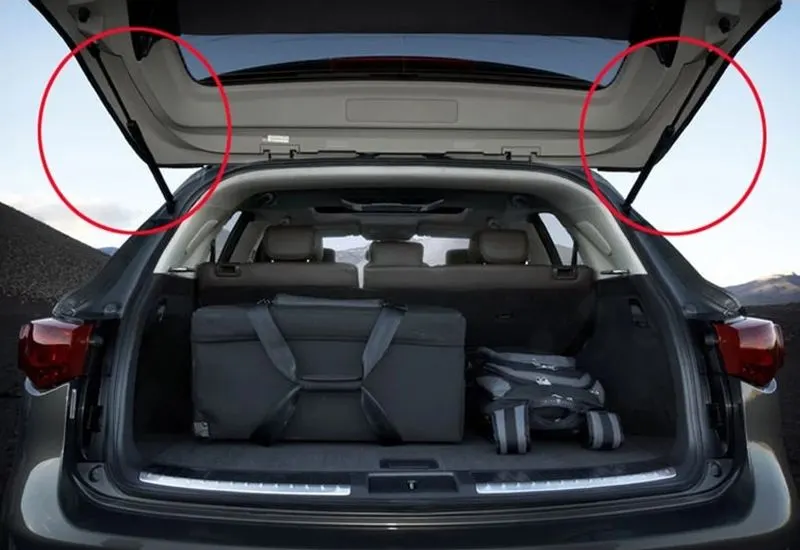
Gas stays are great for helping control the motion of the backdoor. It can help keep the backdoor in the closed position, aid in lifting, and hold the backdoor in the open position. These are pressurized with nitrogen gas and contain a small amount of lubricating oil within the cylinder.
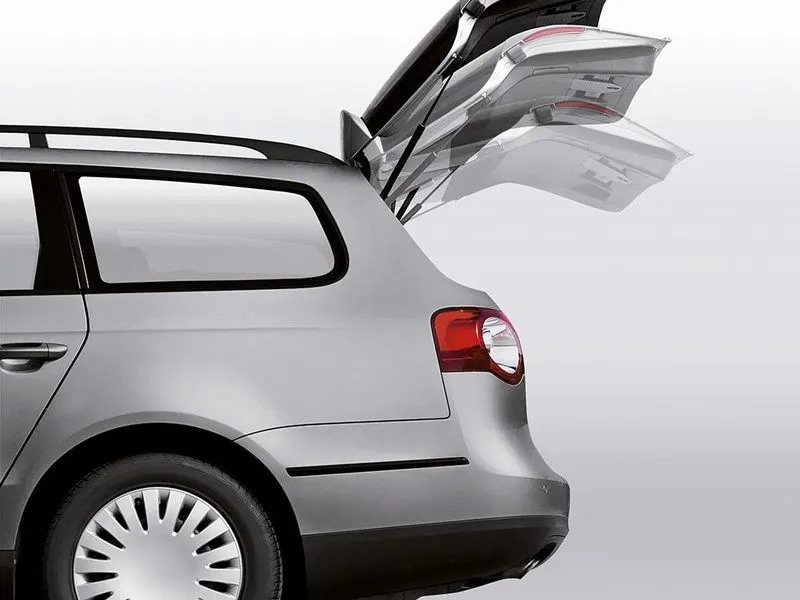
A power liftgate opens and closes automatically when activated by your key fob, a button inside your car, or by waving your foot below the bumper on select vehicles.
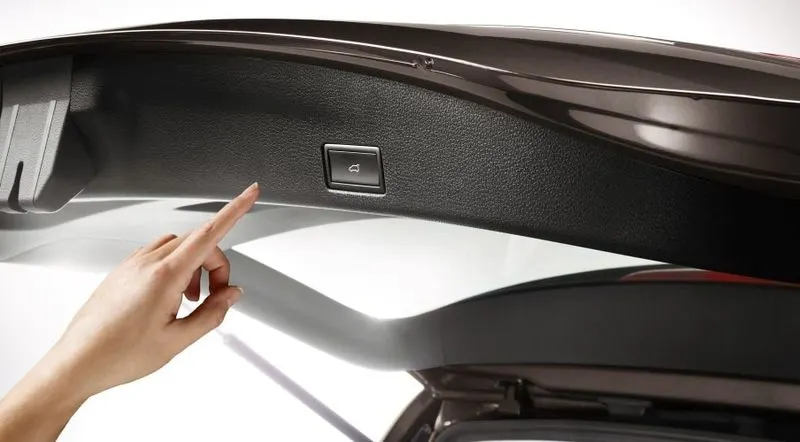
It closes automatically at the press of a button located in the boot lid.

An automatic tailgate in the car will do the process of shutting and opening the tailgate electronically. This is deemed as a convenience feature. In most cars usually, this process will be done manually. One has to get down the car to open and close the tailgate with the car key. In advanced cars, the driver can press the button in his cabin to open and close the tailgate while sitting in his seat.
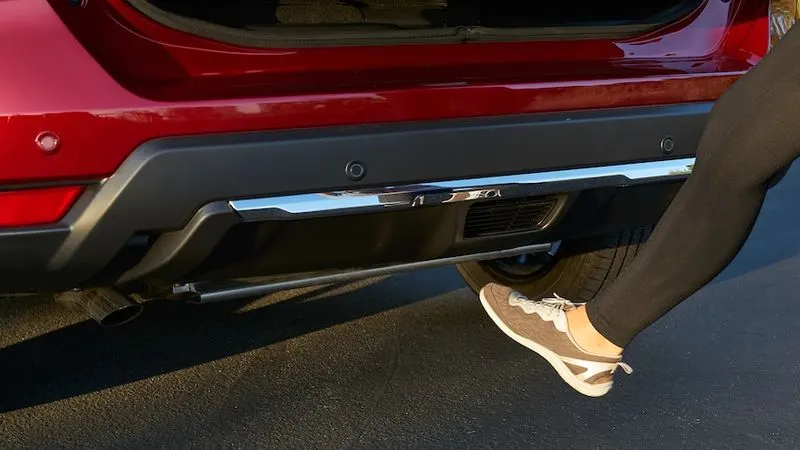
However, luxurious cars have this fantastic feature in them where one just has to kick or wave under the lower part of the boot to make the boot door open automatically.

It comes in handy if your hands are full with luggage, it is the easiest way to load things inside. Or, while driving if one finds out that the tailgate is left open accidentally, this automatic tailgate feature turns out to be quite useful.
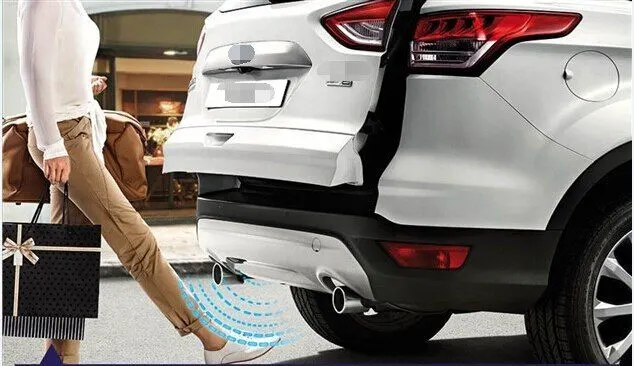
The way the technology works is that there are sensors attached to the underside of the rear of the car, and it will only work when the car is stationary. So, when the sensors detect movement that it has been developed to recognize, it sends a signal to the ECU, commanding the hatch to open.
Technology points:
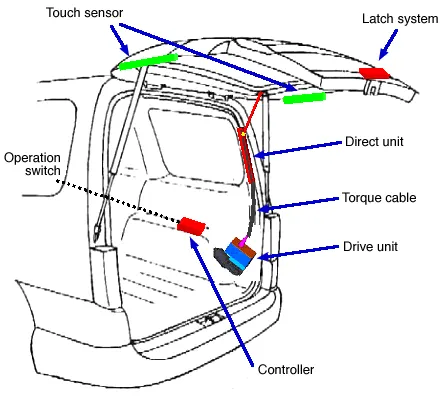
- A torque cable is employed to allow a high degree of freedom for the drive unit layout.
- The actuator can be built into the trim.
- The compact design achieves a smart-looking appearance.
- Manual operation force with low resistance.
- Safety is maintained when an object is caught in the door.
Other Mounting Components Include:
Design Parameters:
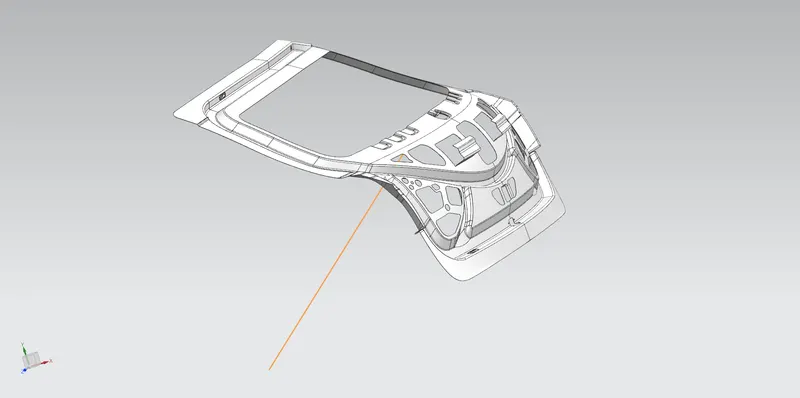
A predefined tooling direction is made.
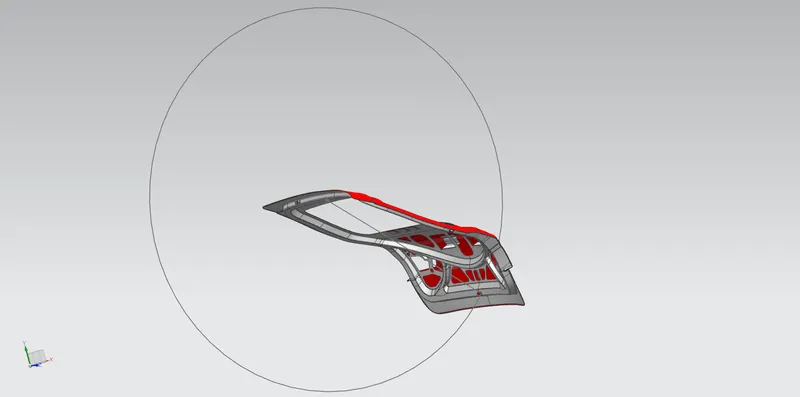
The striker and latch placements are determined by the backdoor opening/closing trajectory. The striker is placed by keeping the striper point perpendicular to this trajectory with respect to the latch situated in the boot compartment (Trunk). It is necessary to maintain the perpendicularity for proper closing of the backdoor with the boot compartment. To do that, we will draw a circle that represents the hood trajectory from the hinge axis point. Then adjust the hinge axis and striker point to get a perpendicular relation.
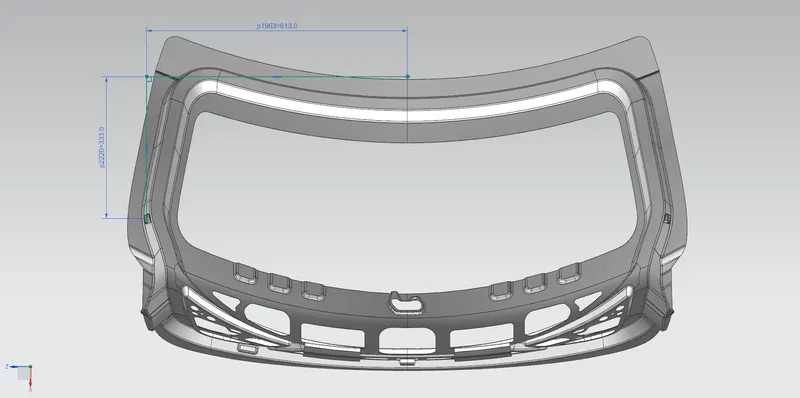
We also maintain a 60°- 90° angle between the gas stay and hinge axis.
Hence, All the design requirements are considered.
Mastic Sealant:
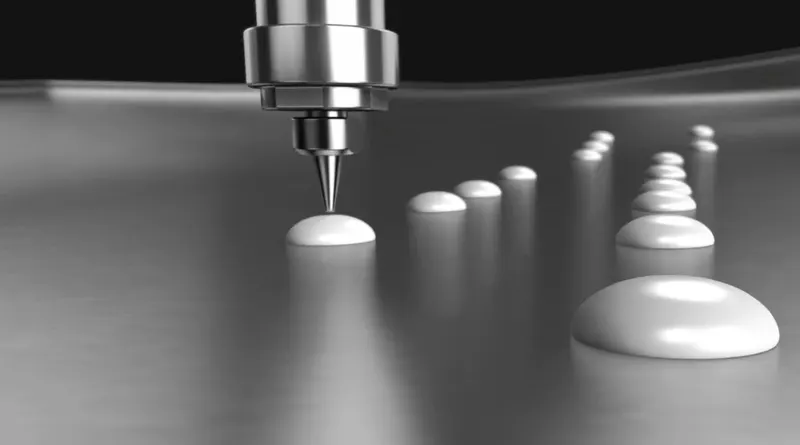
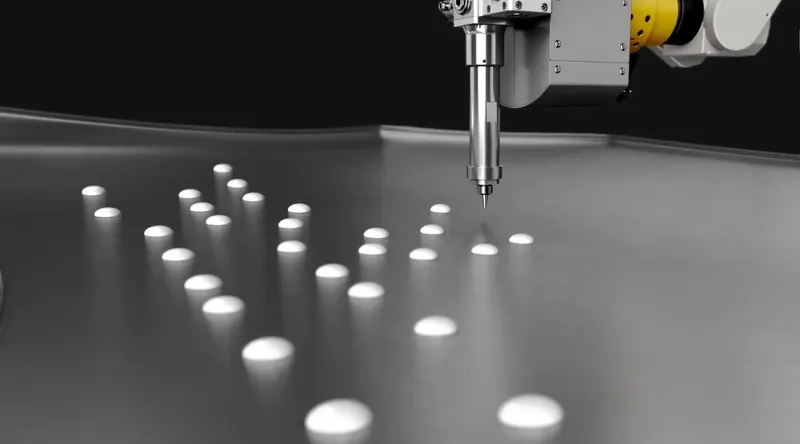
These are the spots where the inner panel and the outer panel of the hood are joined together.
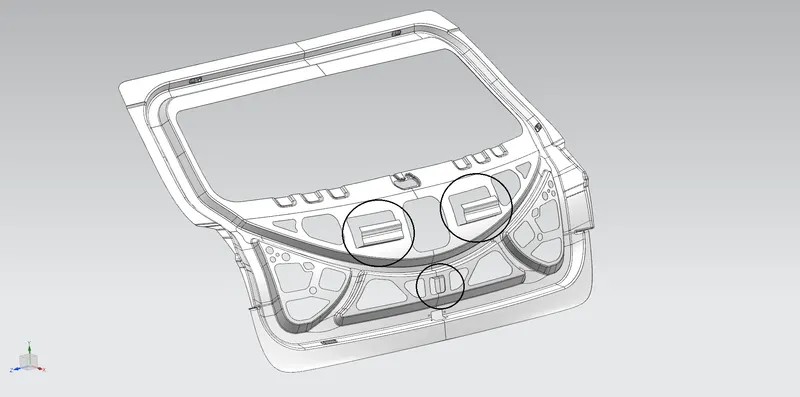
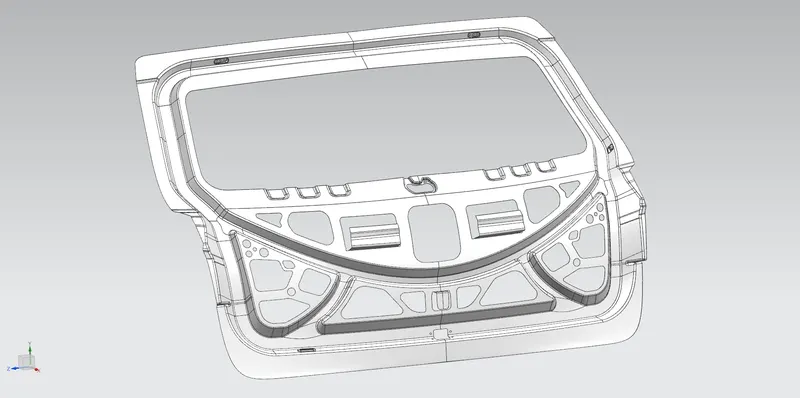
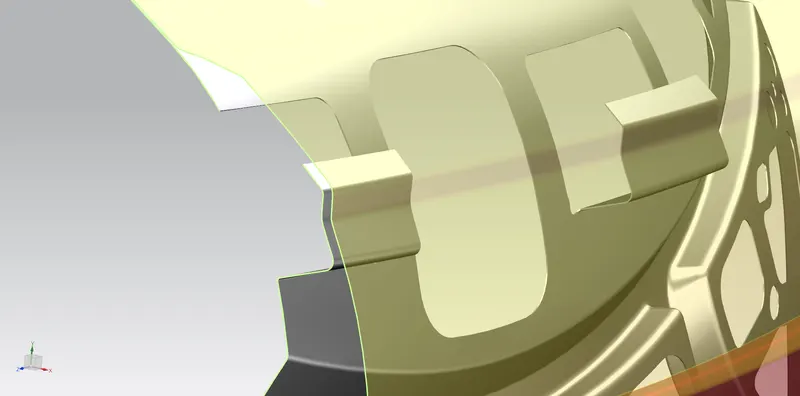
Mastic Sealer is a synthetic rubber-based sealer material that has good filling properties and corrosion resistance. It is designed to apply to doors, roofs, hoods, in specific, the gaps between inner & outer panels. The material is cured through the e-coat oven, and it has the property of paste before the curing process. Depending on the customer's request, various lap-shear strength and foaming rates would be achievable. These also help in improving NVH.
Reinforcements:
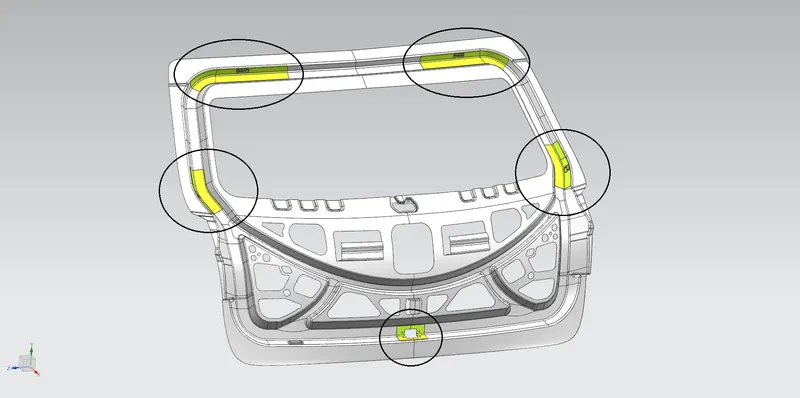
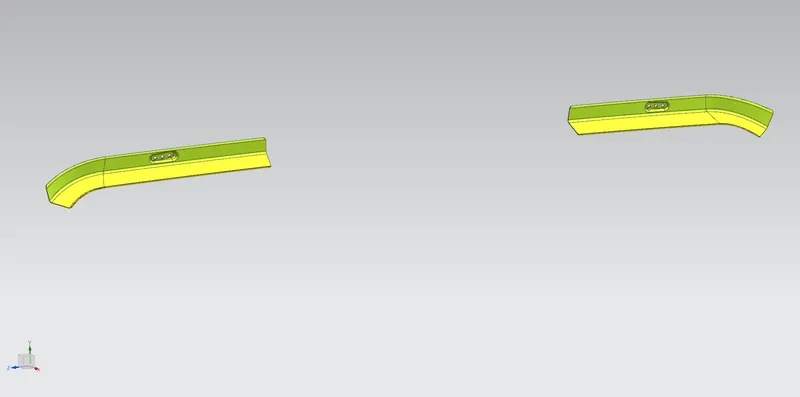
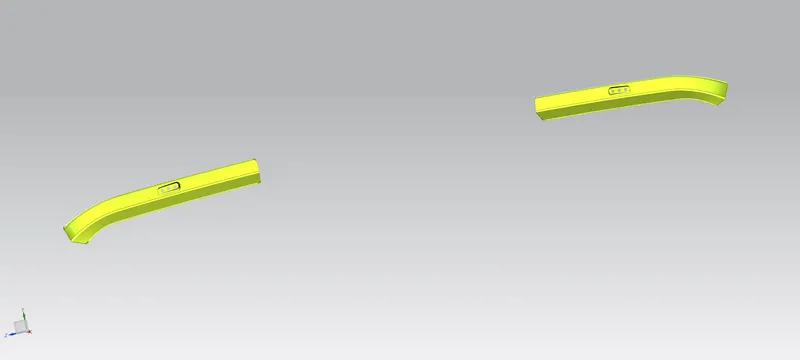
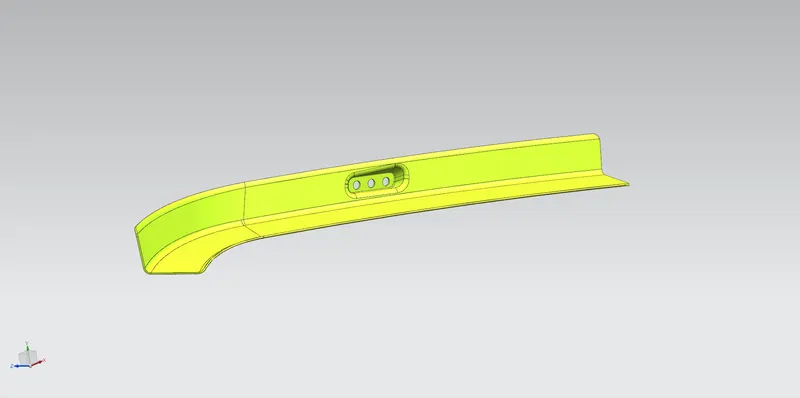
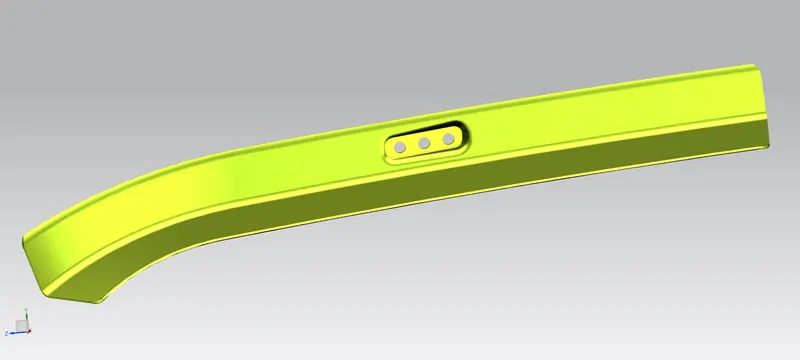
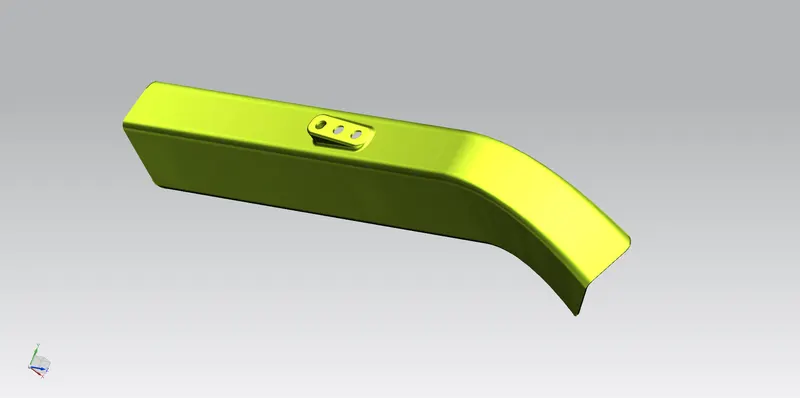
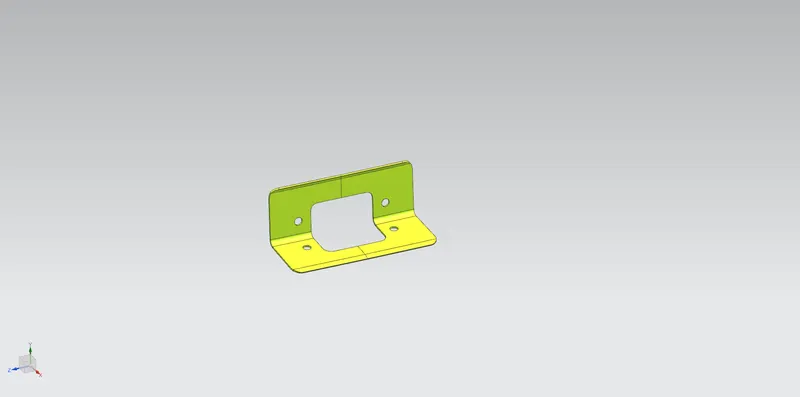
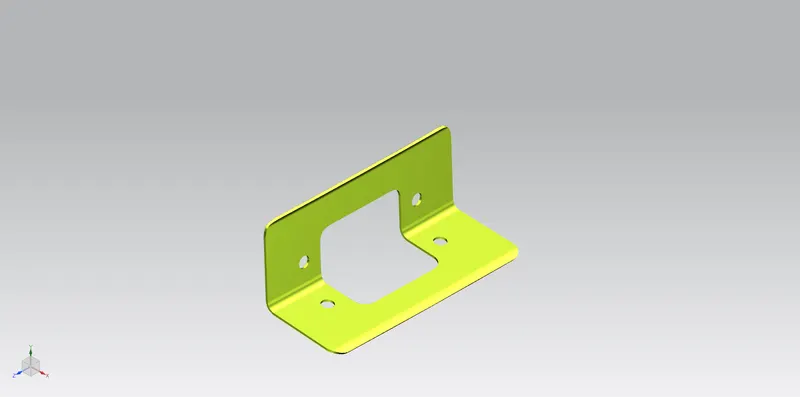
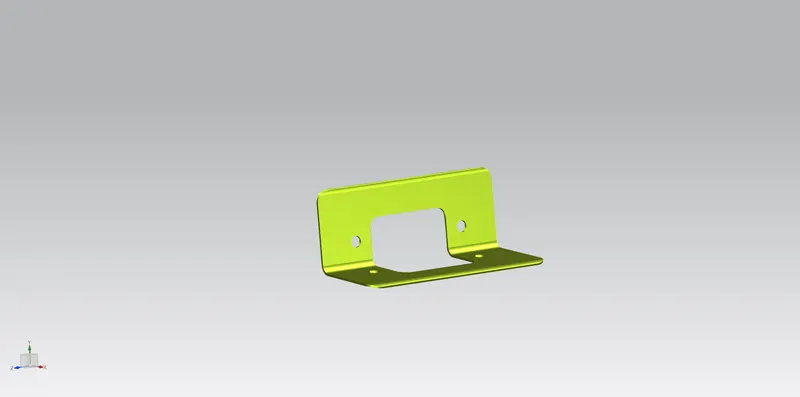
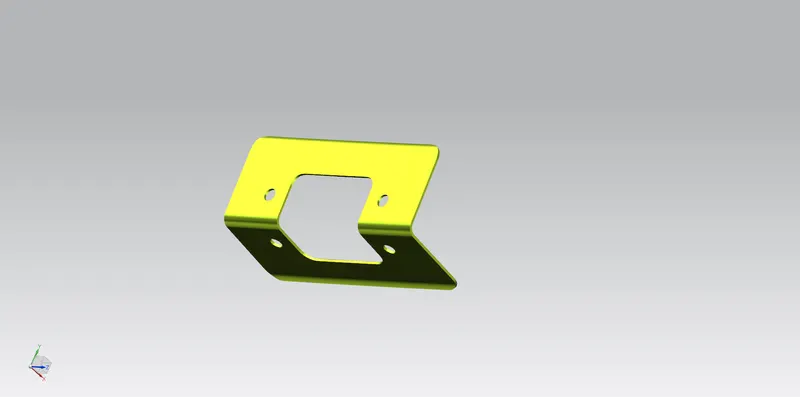
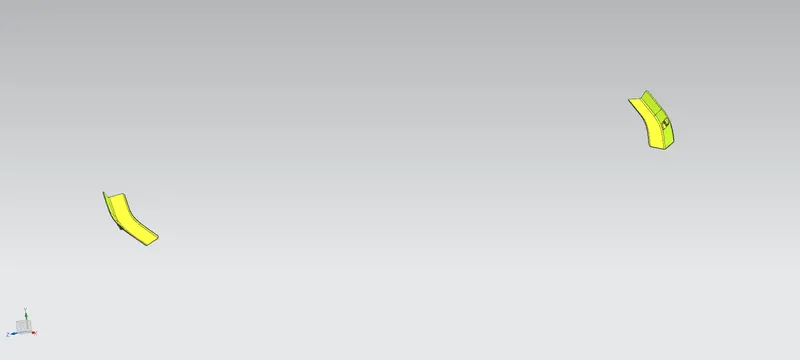
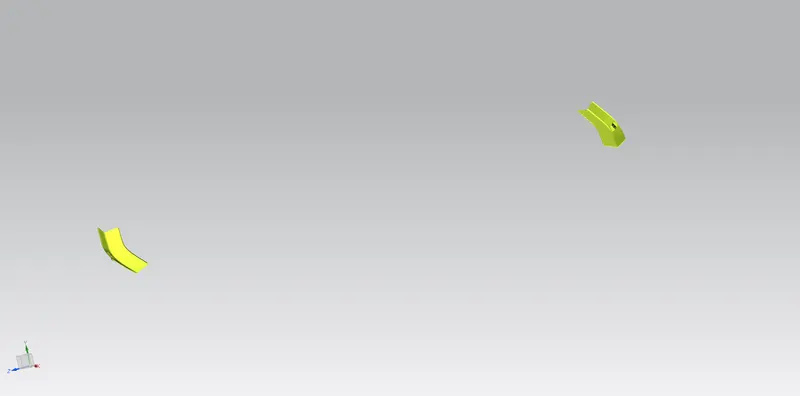
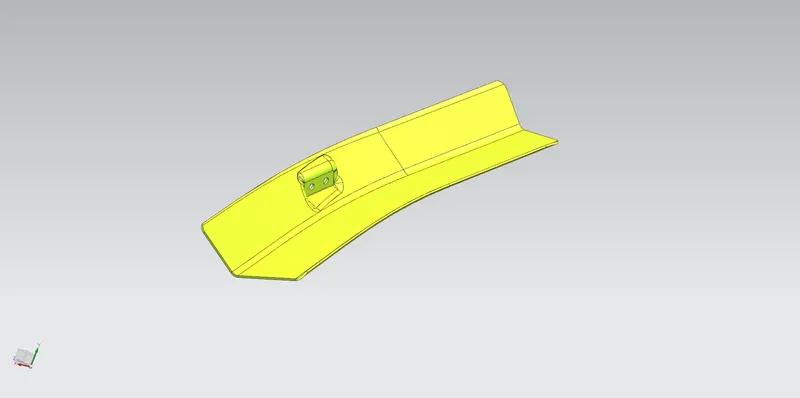
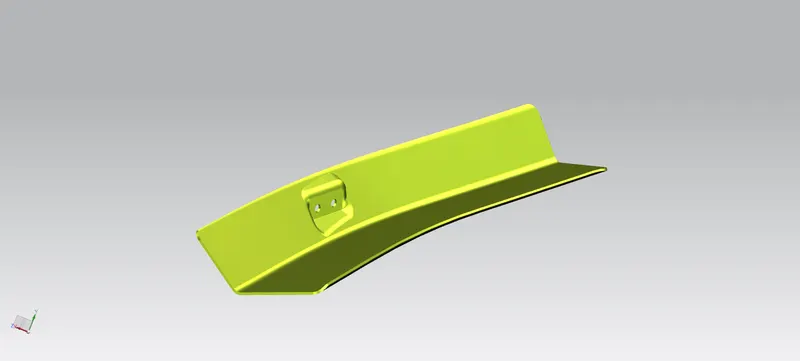
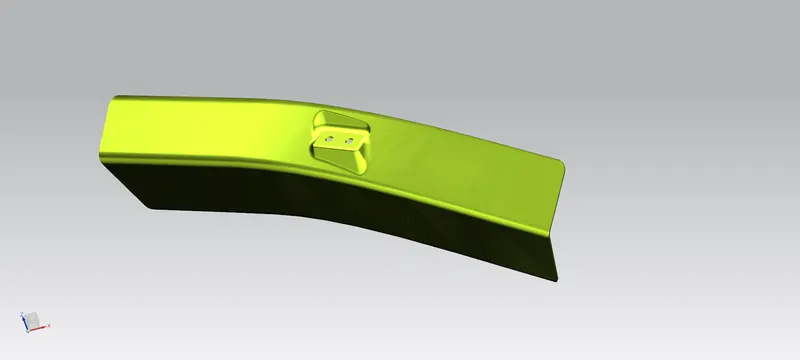
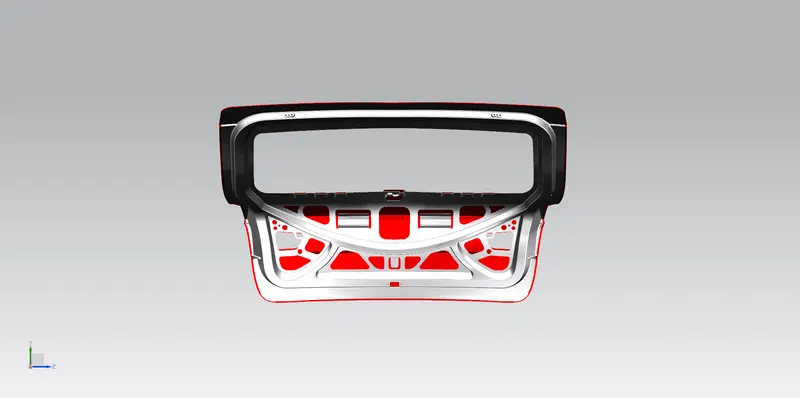
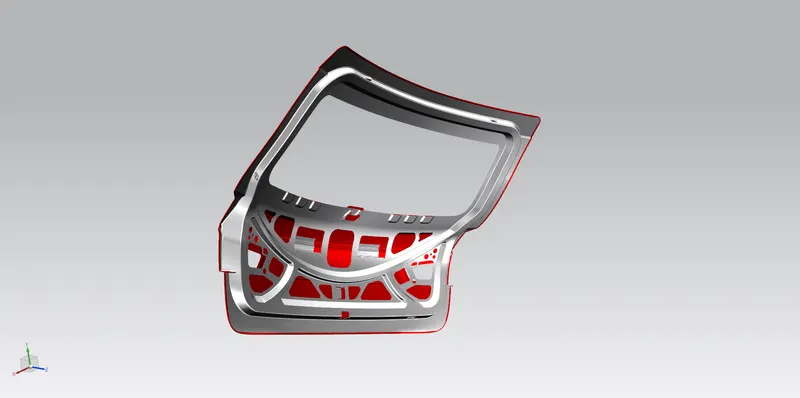
Reinforcements are provided in the wiper motor, gas stay, hinge, and striker position/area to compensate for the strength in those areas.
The reinforcement is 0.5 mm is given in each region.
Design Methodology
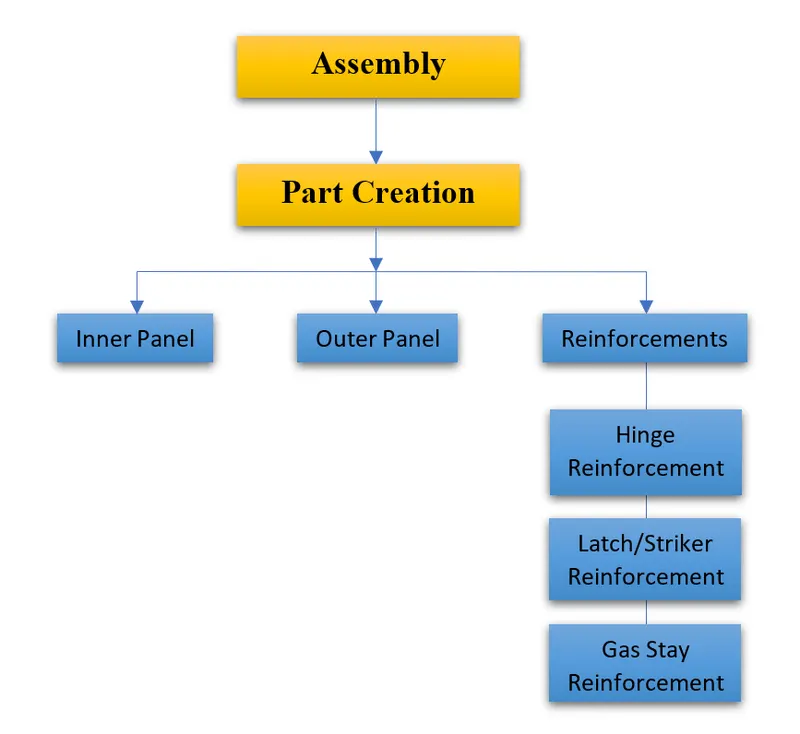
Design Procedure:
Hood design using NX CAD
Commands Used:
- Sketch Commands: Line, Arc, Circle, Fillet, Quick Trim, Quick Extend, Make Corner, Offset Curve, Offset Curve in Face, and Project Curve.
- Through curves: This command is used to create a body through multiple sections where the shape changes to pass through each section
- Law Extension: This command is used to create a law-controlled extension from a base sheet, dynamically or based on laws for distance or angle
- Face Blend: This command is used to add tangent blend faces between selected sets of faces. The blend shape can be circular, conic, or law controlled
- Edge blend: This command is used round sharp edges between faces. The radius can be constant or variable.
- Offset Surface: This command is used to create a body by offsetting a set of faces.
- Trim Sheet: This command is used to trim off a portion of a sheet body.
- Trim Body: This command is used to trim off a portion of a body.
- Trim and Extent: This command is used to trim or extend a set of edges or faces to the intersection with another set of edges or faces.
- Extend Sheet: This command is used to extend a sheet body by distance or to the intersection with another body.
- Mirror Geometry: This command is used to copy geometries and mirror them across a plane
- Sew: This command is used to combine sheet bodies by sewing common edges together, or combine solid bodies by sewing common faces.
- Thicken: This command is used to a solid body by adding thickness to a set of faces
Assembly Commands:
- Add: Adds components to the assembly by selecting loaded parts or parts from the disk.
- Create New: Creates a new component in the assembly by selecting geometry and saving it as a component
- Assembly Constraints: Position and fix the components in relation to other components in the assembly by specifying the constraint relationship.
- WAVE Geometry Linker: Copies geometry from other parts in the assembly into the work part.
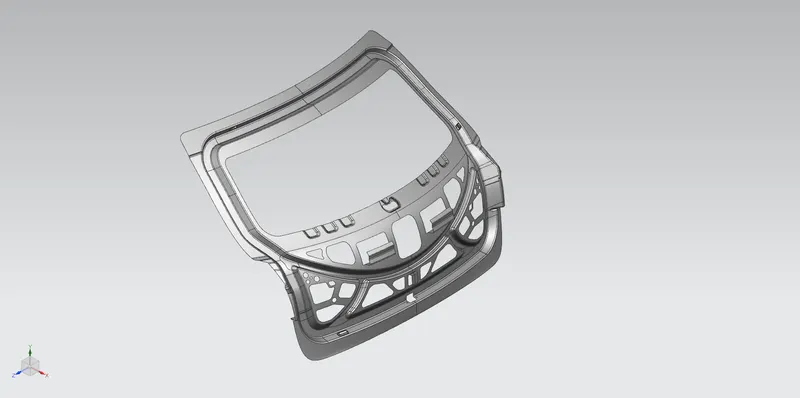
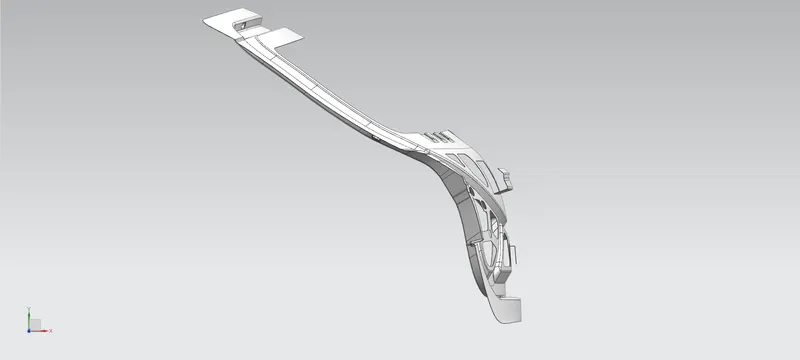
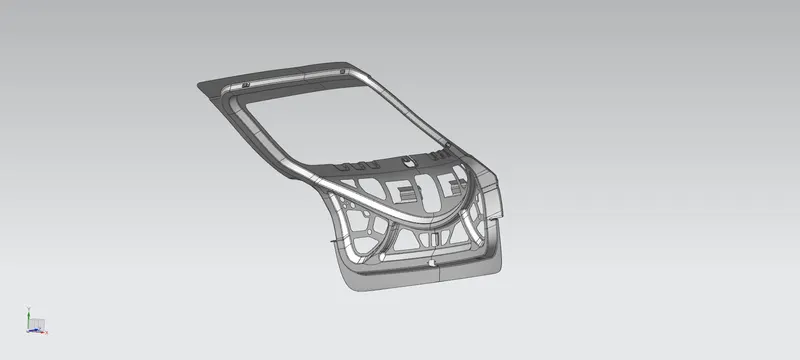
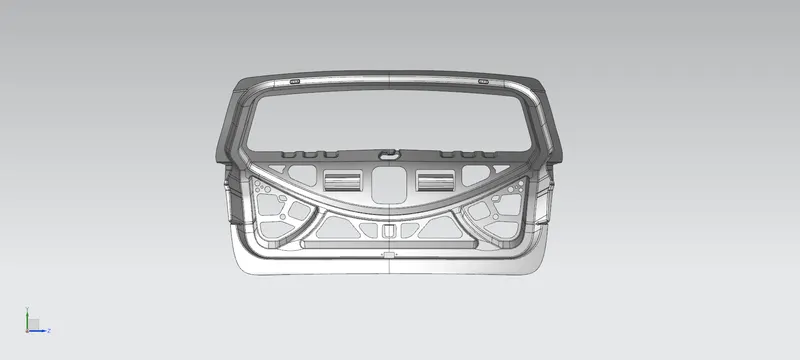
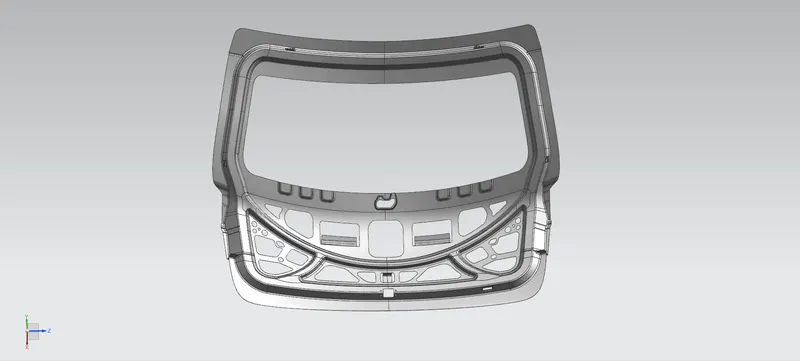
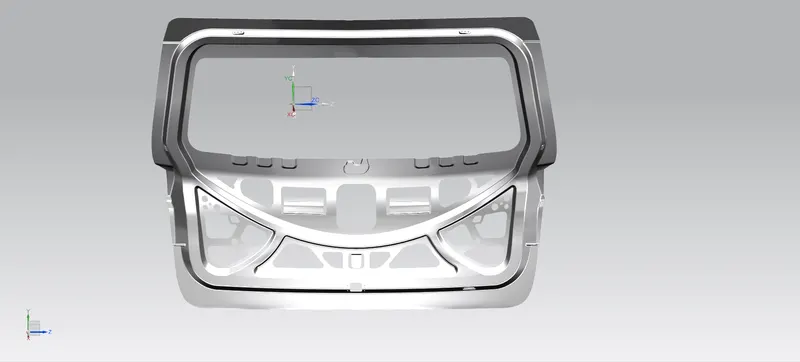
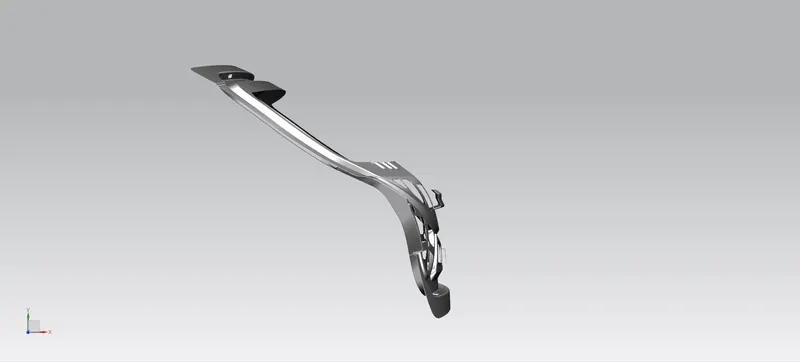
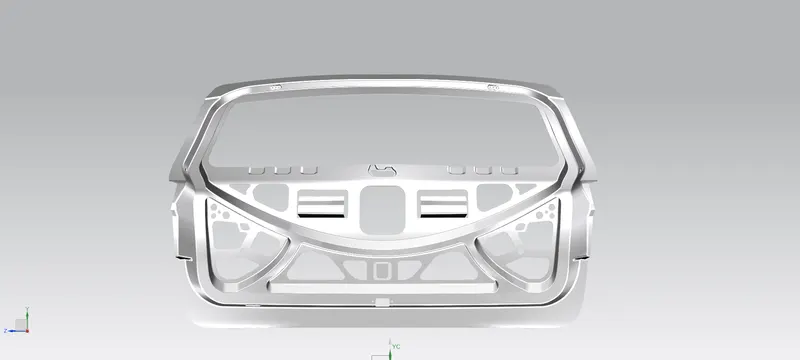
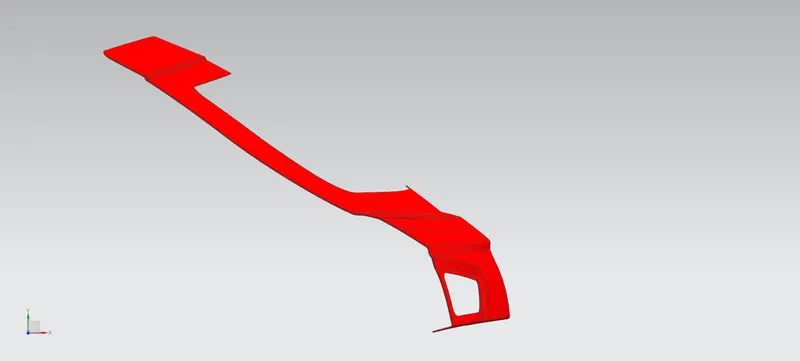
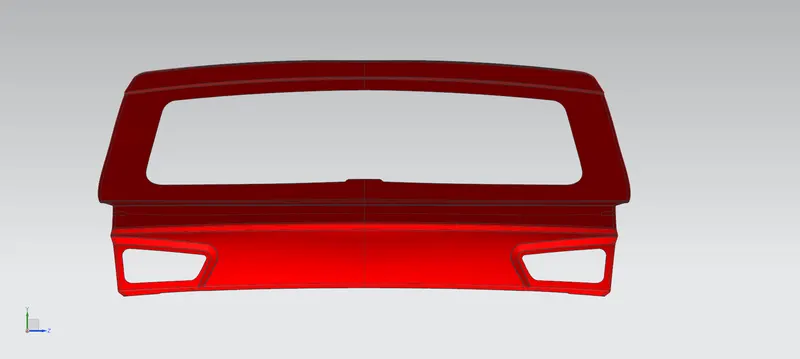
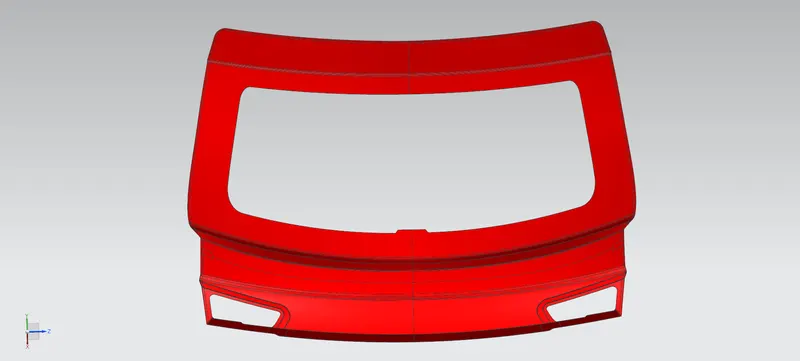
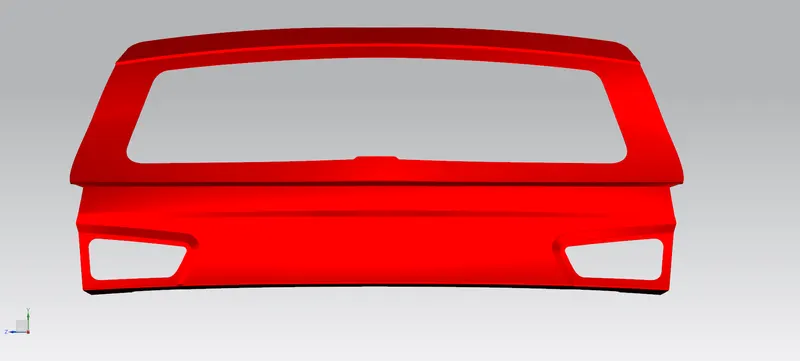
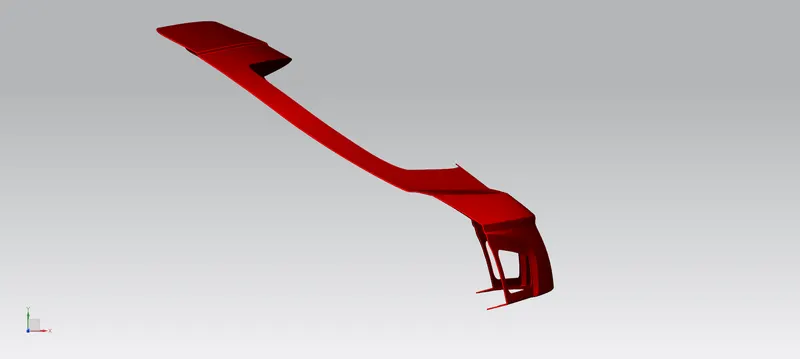
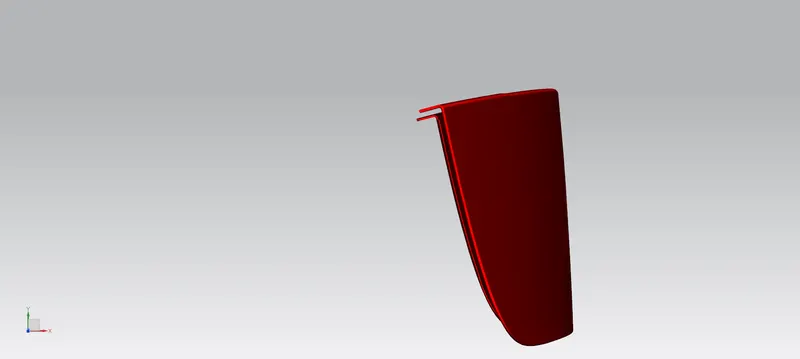
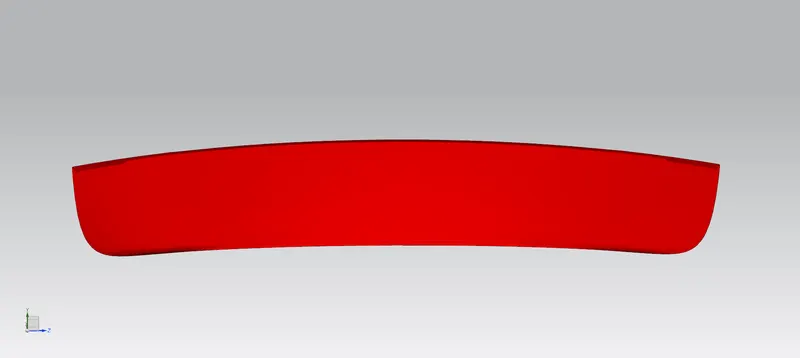
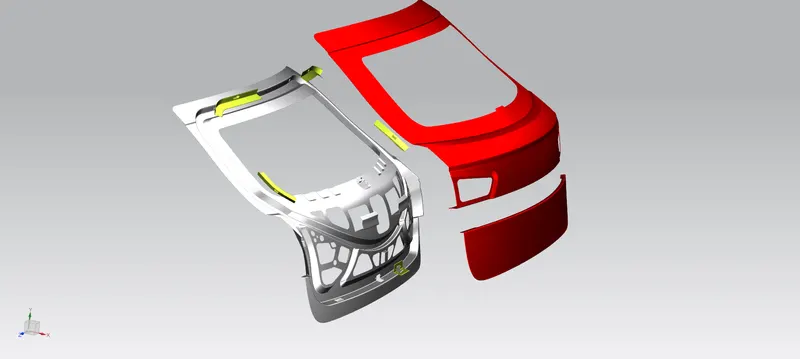
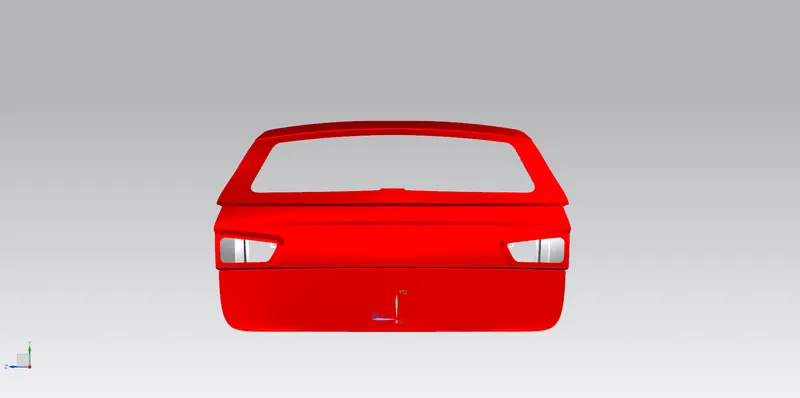
The Inner and outer panels are designed by considering the tooling direction.
Inner Panel:
The inner panel is thickened 0.75 mm in the upward direction.
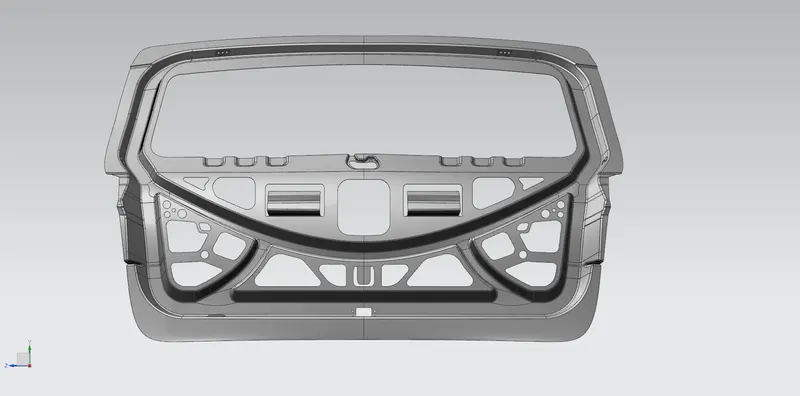
Outer Panel Upper:
The upper outer panel is thickened 0.75 mm in the downward direction.
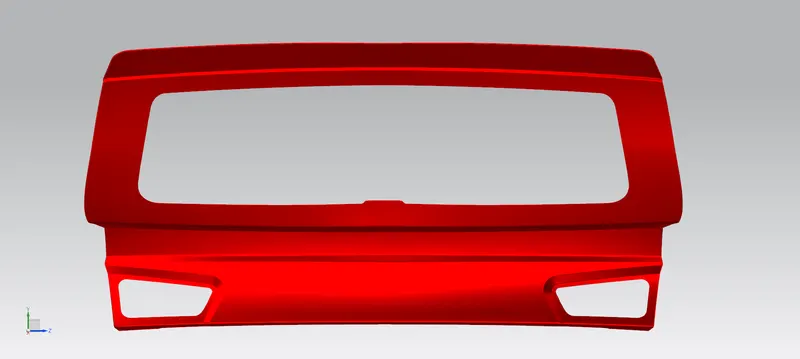
Outer Panel Lower:
The upper lower panel is thickened 0.75 mm in the downward direction.
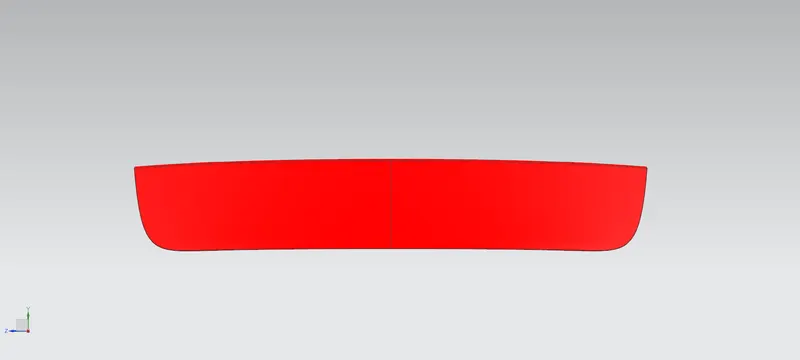
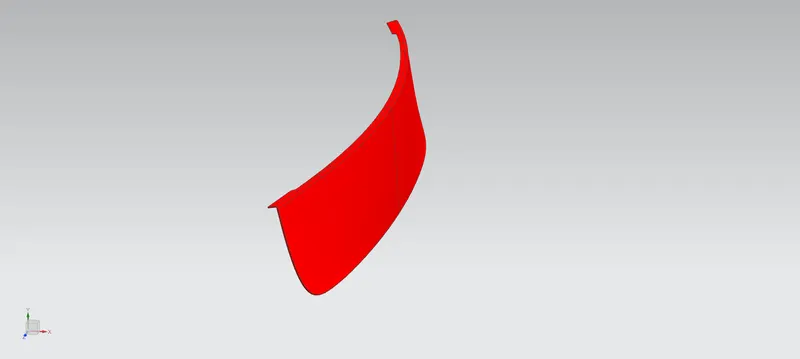
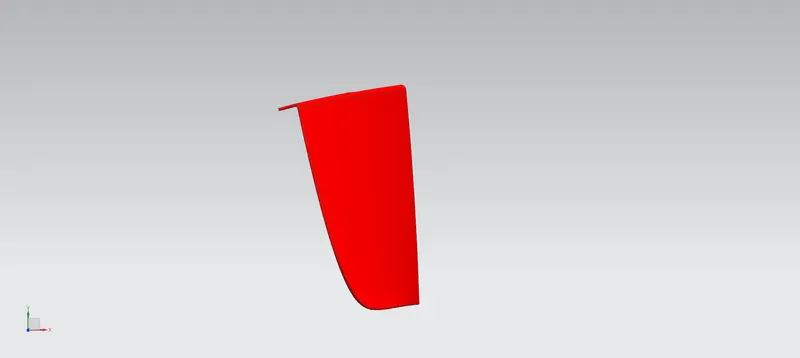
Reinforcements:
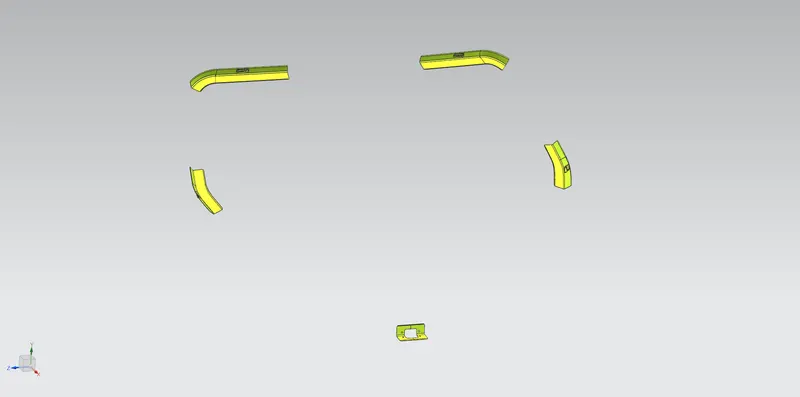
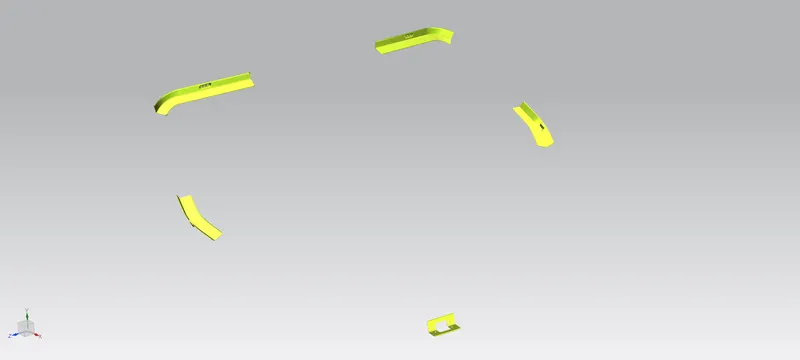
The reinforcements are thickened 1 mm in the upward direction.
Hinge Reinforcements:
Latch/Stricker Reinforcements:
Gas Stay Reinforcements:
Assembly:
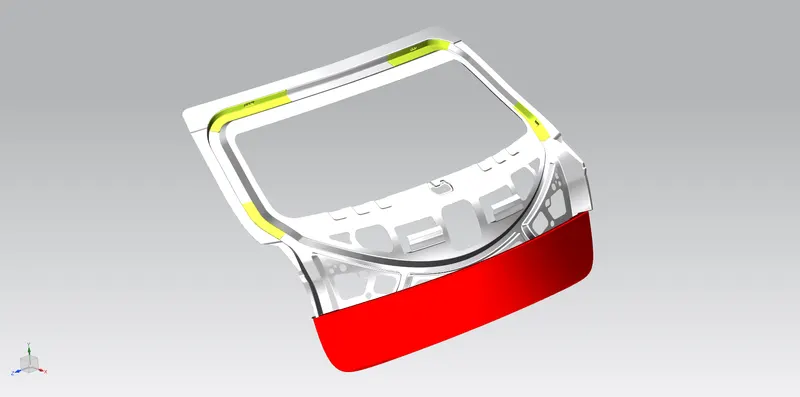
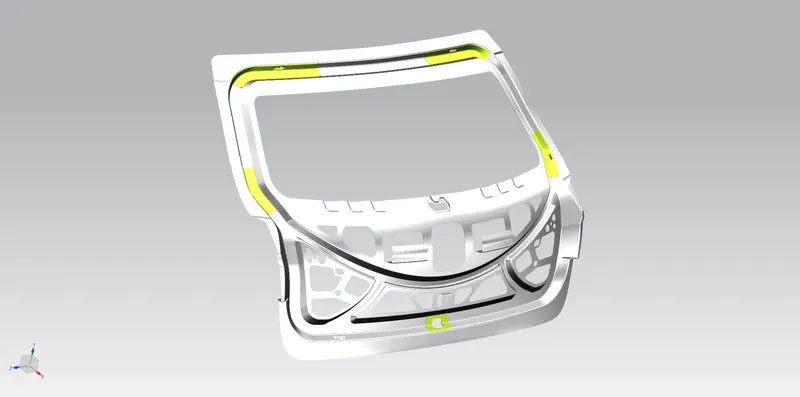
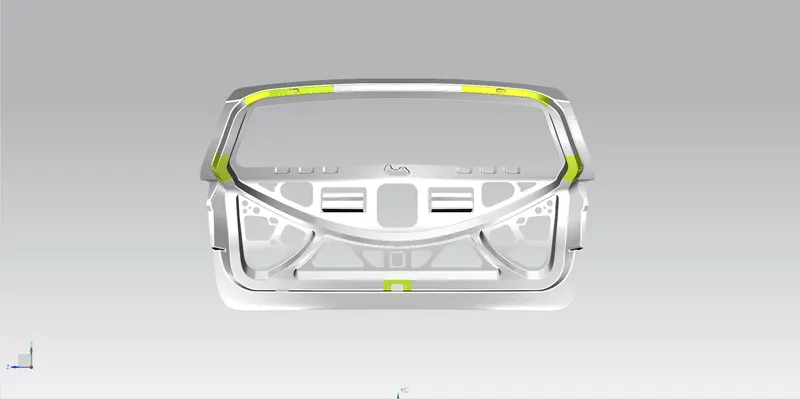
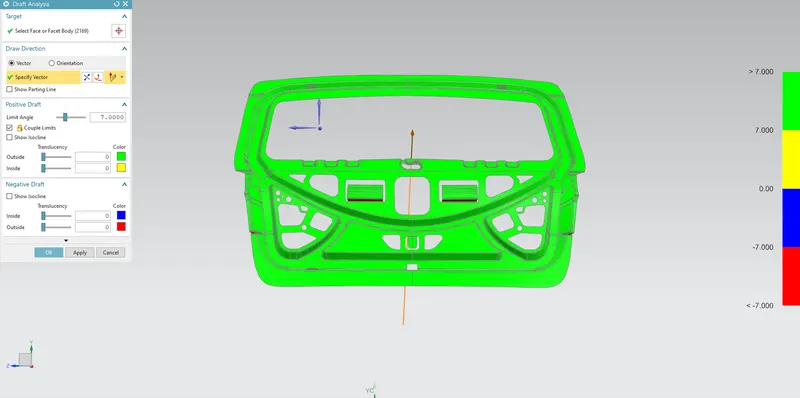
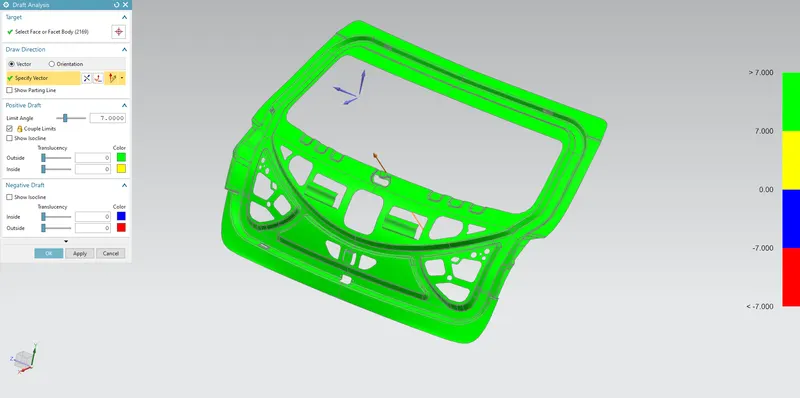
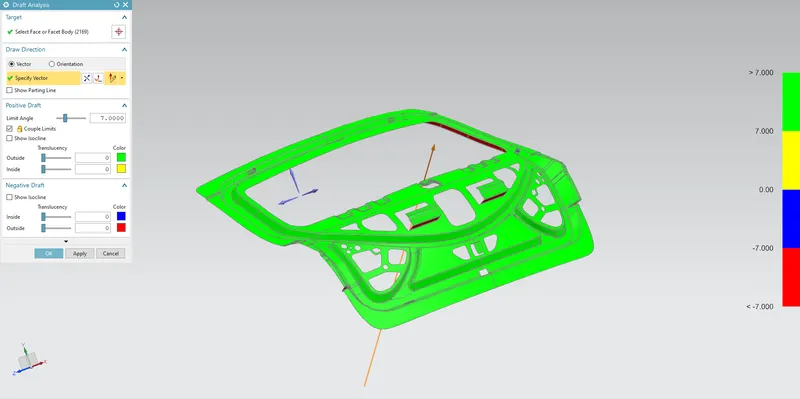
Draft Analysis:
Conclusion:
The backdoor is designed by considering the design parameters for the given styling surface.