Design of backdoor
BACK DOOR
Introduction
The Back door of a car is a component which hinges at the back of the car to cover the boot space or luggage area, it has back lights/ Tail lamps and Braking lights mounts on it, rear windshield fixed between inner and outer panel. In some back door, spare wheel can be mounted on it, sometimes car registration number plate mounts on it and it gives a complete closed design to the car.
COMPONENTS OF BACKDOOR
- Inner panel
- Outer panel
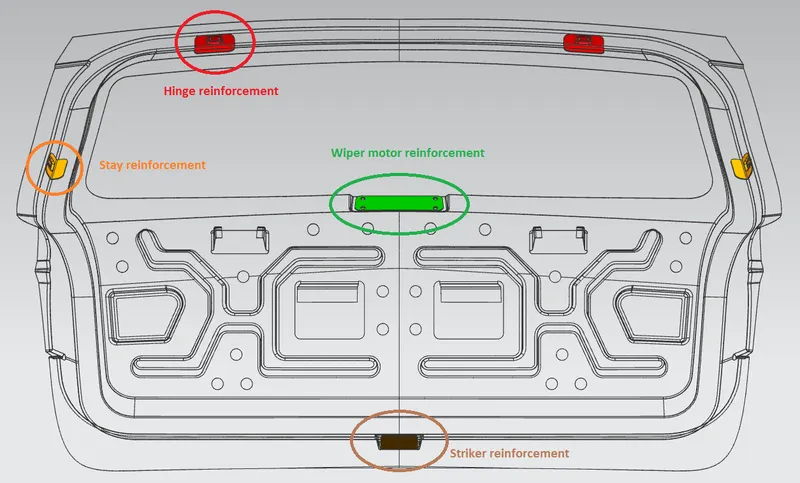
- Hinge reinforcement
- Gas stays reinforcement
- Wiper motor reinforcement
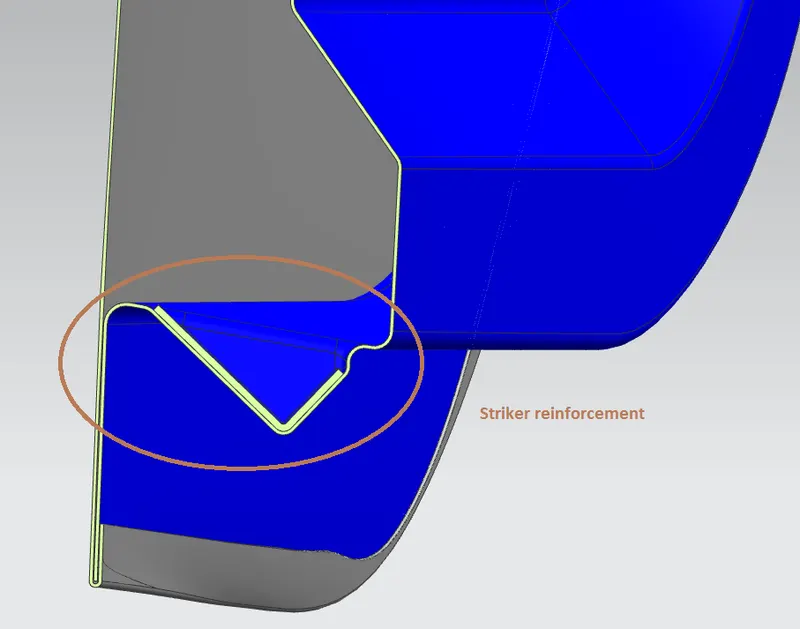
- Striker reinforcement
DESIGN CONSIDERATION OF A BACKDOOR
- Functional Requirement of Hinge and gas stay
- Rear visibility criteria
- Luggage volume area
- Crash Analysis
- Bend Test, Dent Test, Torsion Test & Endurance Test
- Rear Crash Regulation
- Gap and flushness Requirements
Parameters for designing the backdoor
- Outer Panel - 0.75 mm
- Inner Panel - 0.75 mm
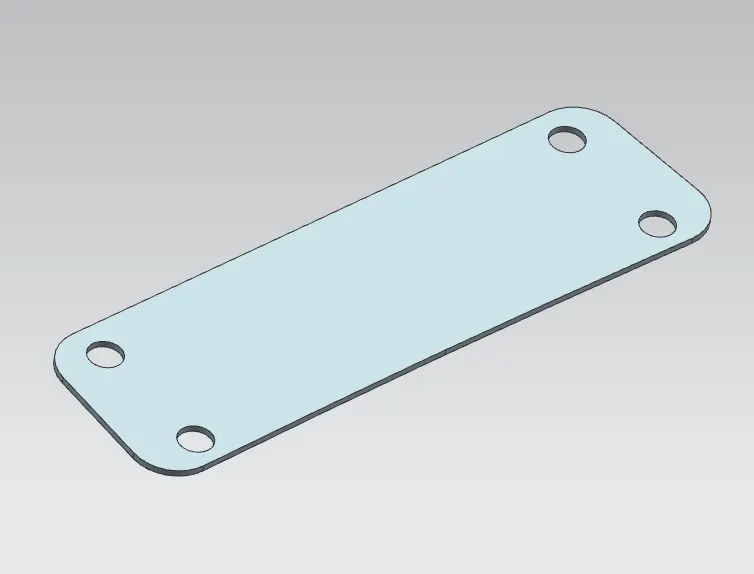
- Reinforcements - 1.5 mm
Design Methodology
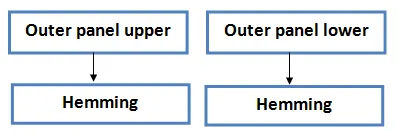
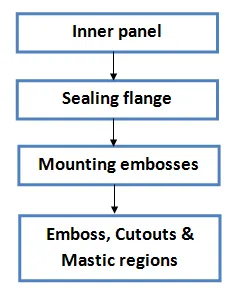
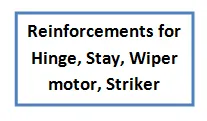
Back door Assembly
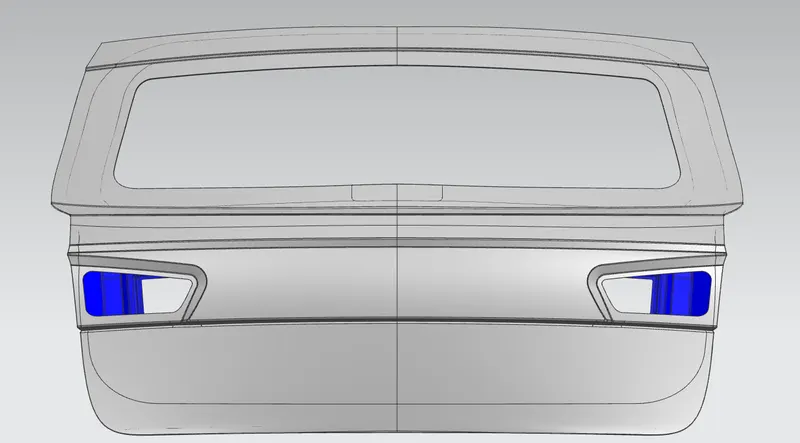
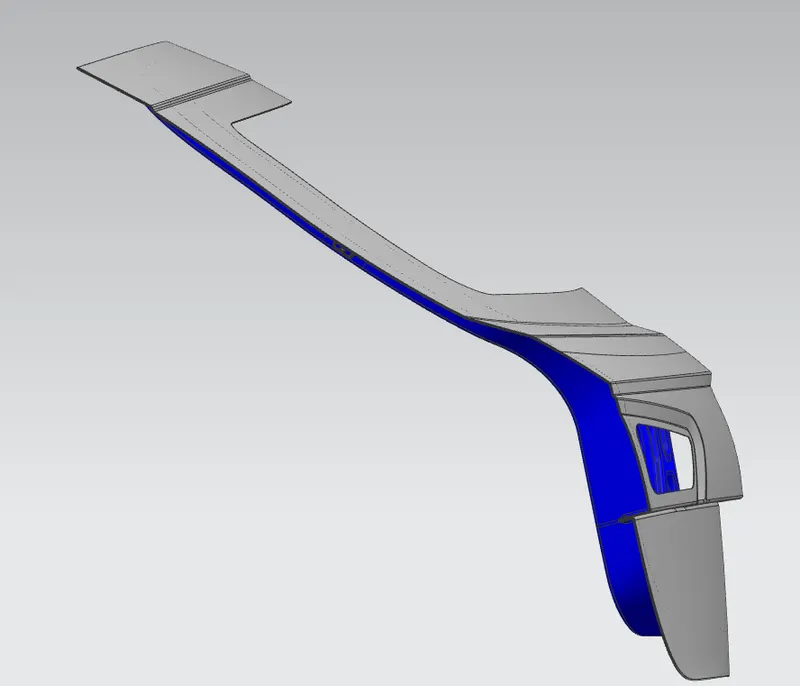
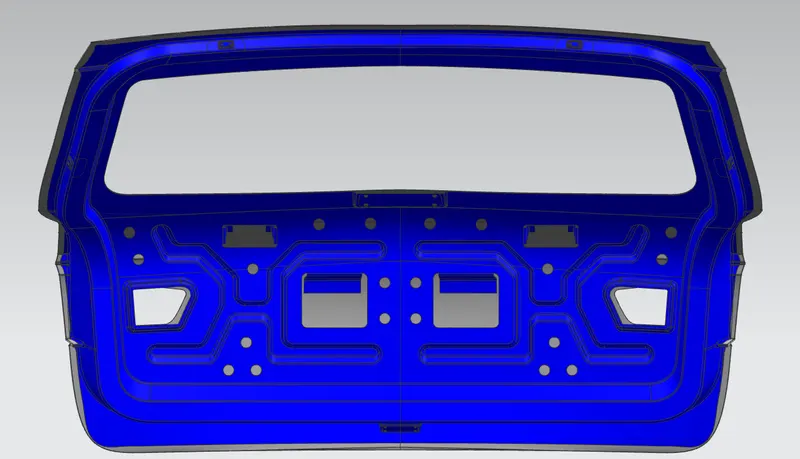
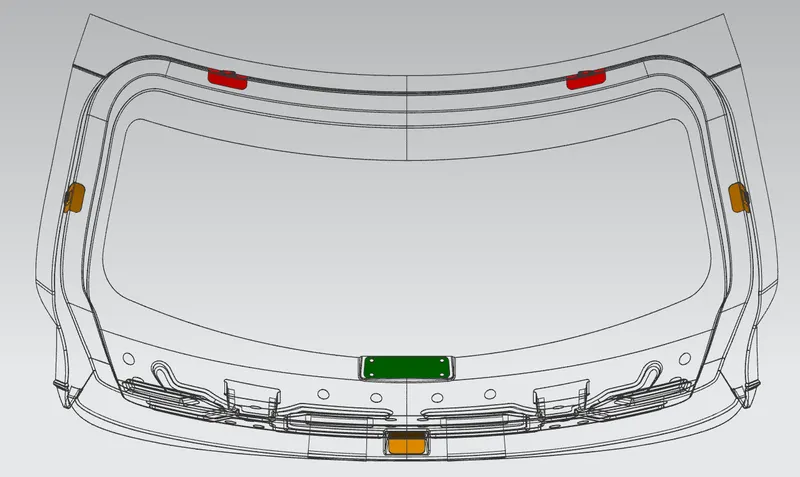
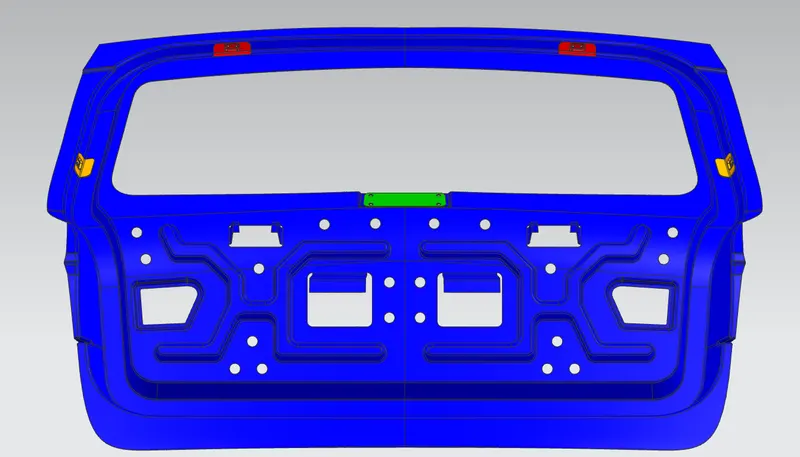
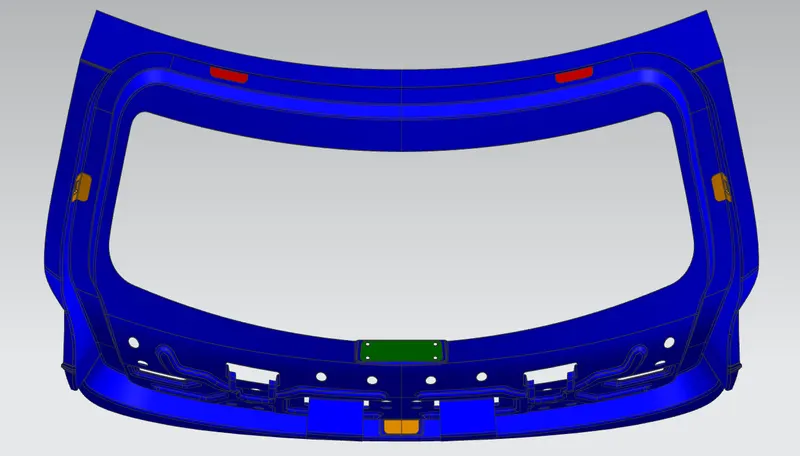
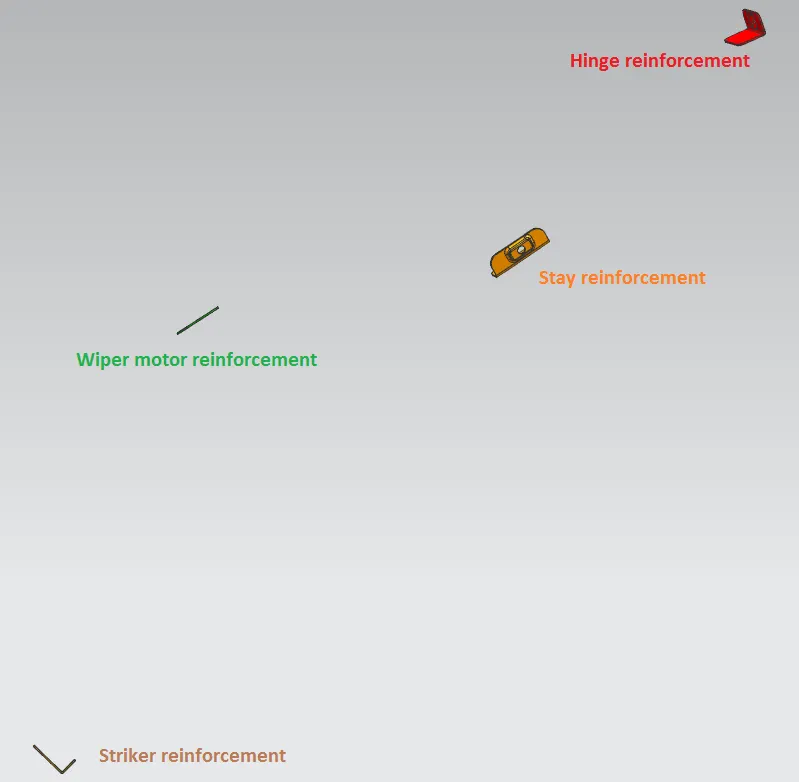
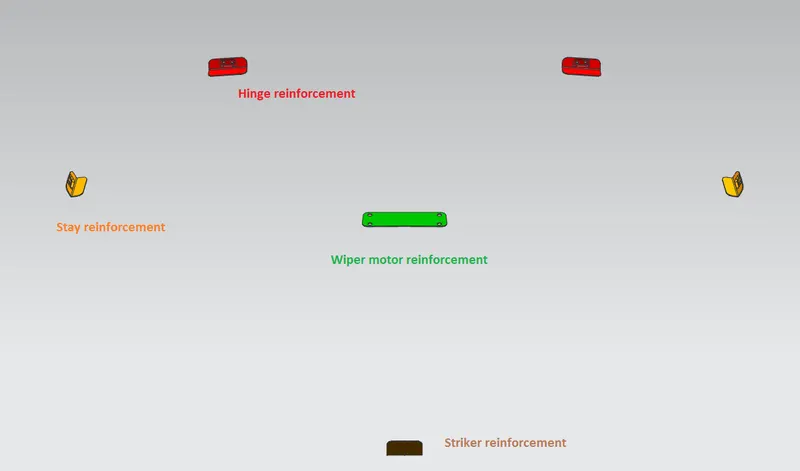
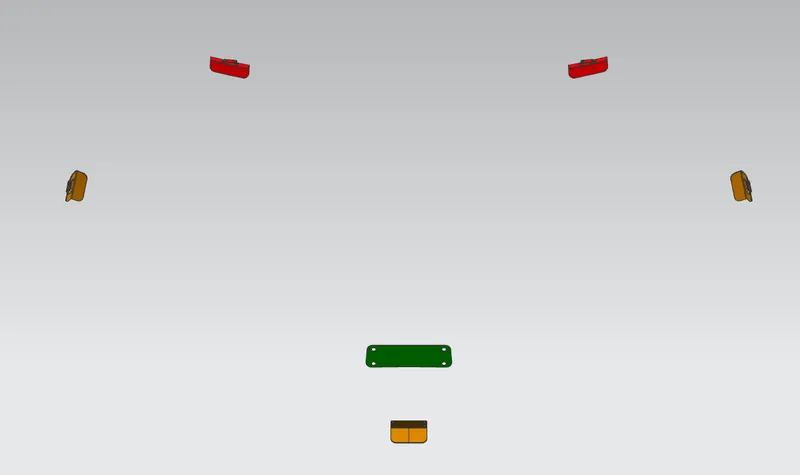
Position of the Reinforcements in the assembly
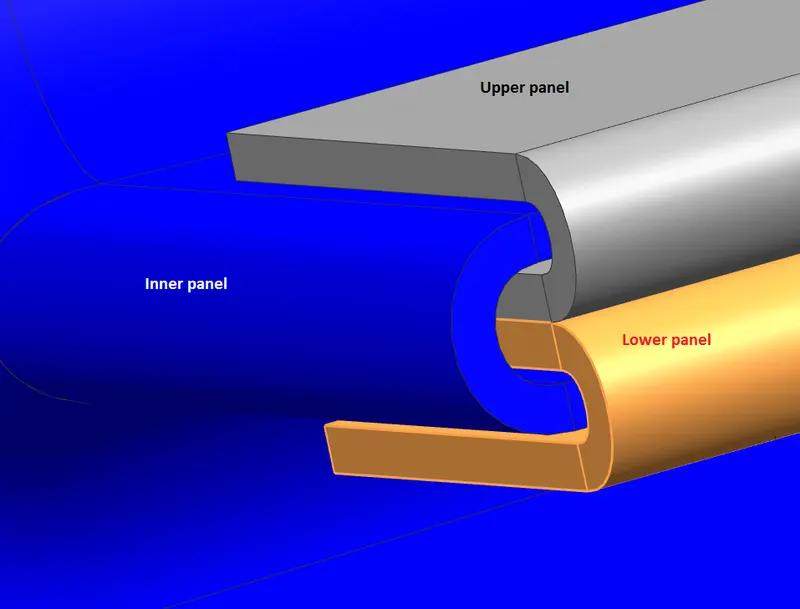
Hemming:
Hemming is a forming operation in which the edges of the sheet are folded or folded over another part in order to achieve a tight fit. Normally hemming operations are used to connect parts together, to improve the appearance of a part and to reinforce part edges.
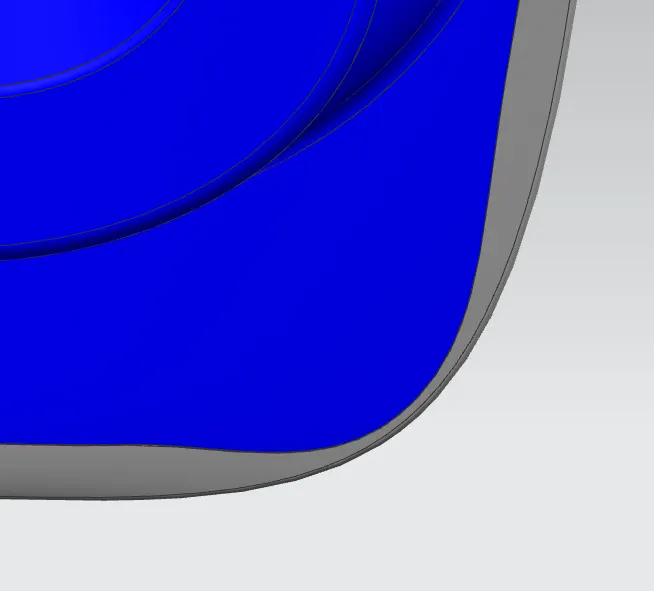
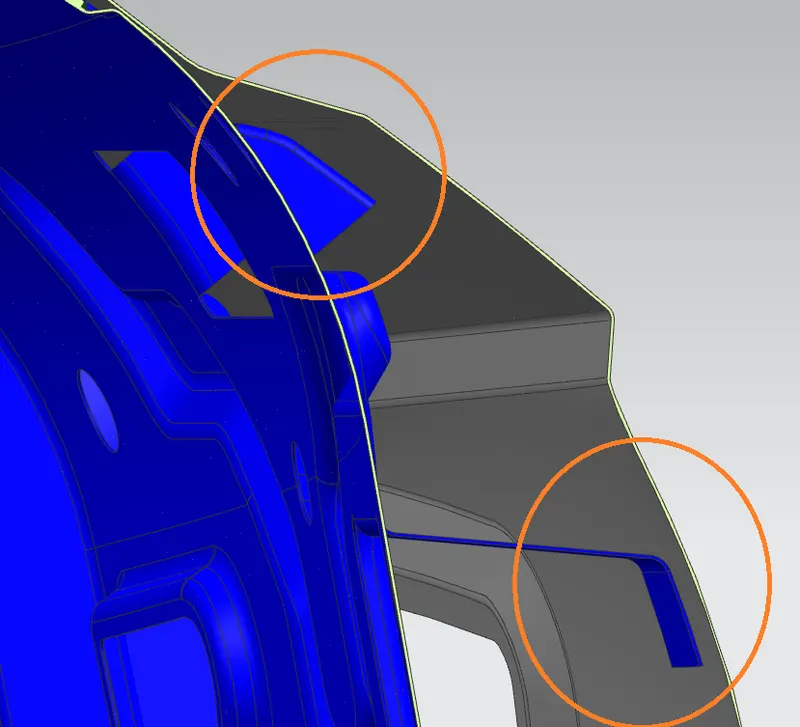
Hemming relief
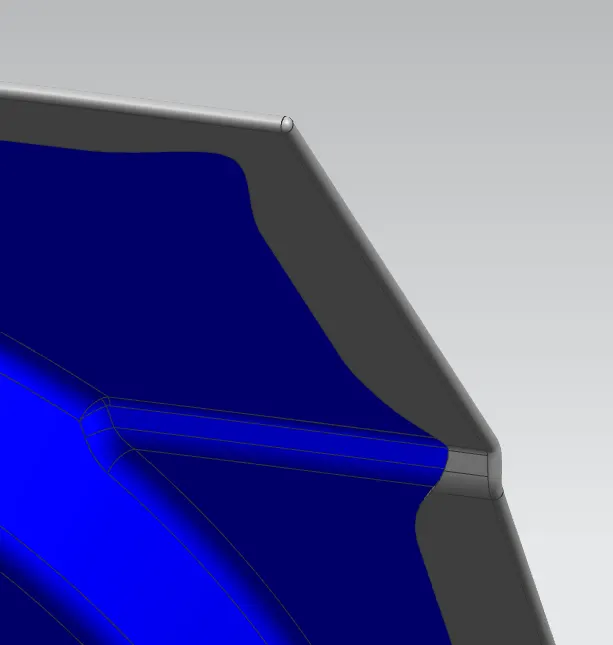
Mastic Region
Mastic surfaces are used to join the inner panel to the outer panels inorder to provide strength and to avoid vibrations, using mastic sealants. Here the mastic clearance given is 5 mm.
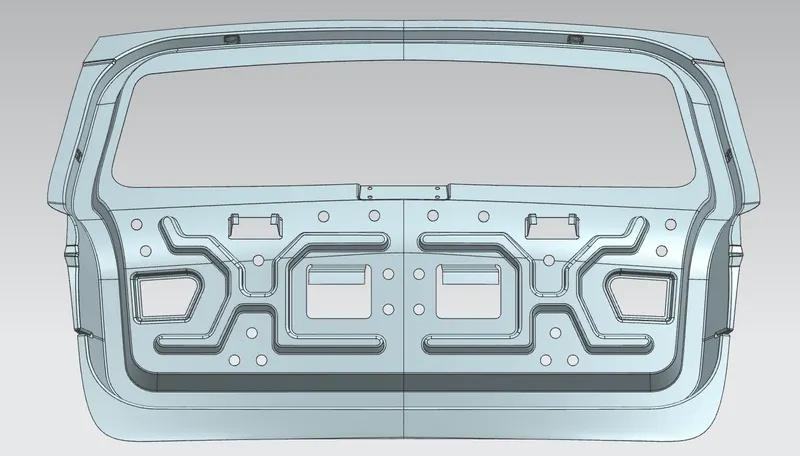
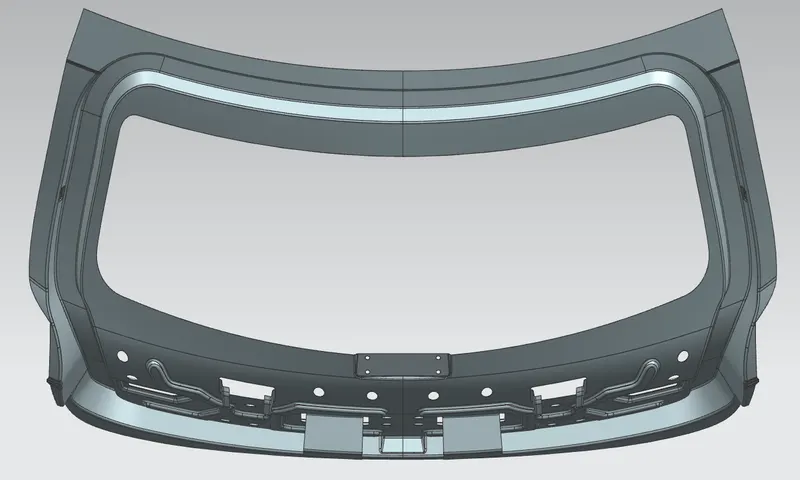
Backdoor Inner panel
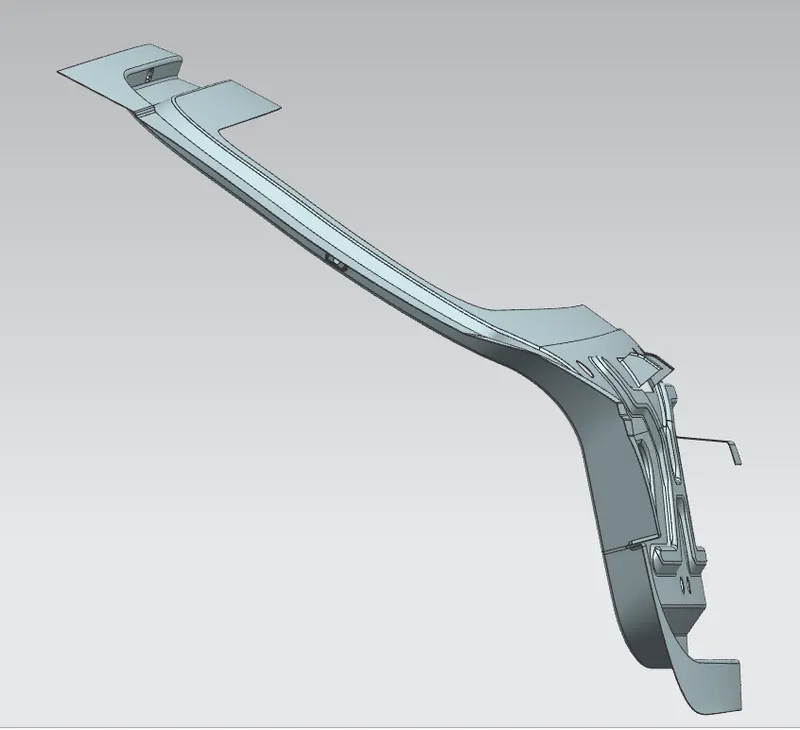
Deep drawing
The Inner panel is made by deep drawing process.
The metal deep drawing process is an effective method of manufacturing of cups, cans and other similar deep drawing products. The deep drawings having two main categories.
- First- stage drawing: The blank shape of metal is placed on the die and contact with the punch. When the metal specimen is flat piece of sheet metal used in forming and finish the product. Initially the punch moves in downward direction. The outer rim of blank is subjected to pure radial drawing (drawing toward in vertical axes) between die and blank metal. The metal become a bend and sliding over die and also stretched between die and punch. The metal in vicinity of punch head and contact with it bend and slide over radii and stretch over punch head.
- Redrawing: The components drawn from first stage again it is redrawn convert into more depth to form a cup shape in the die and punch. The second stage of drawing is called as redrawing.
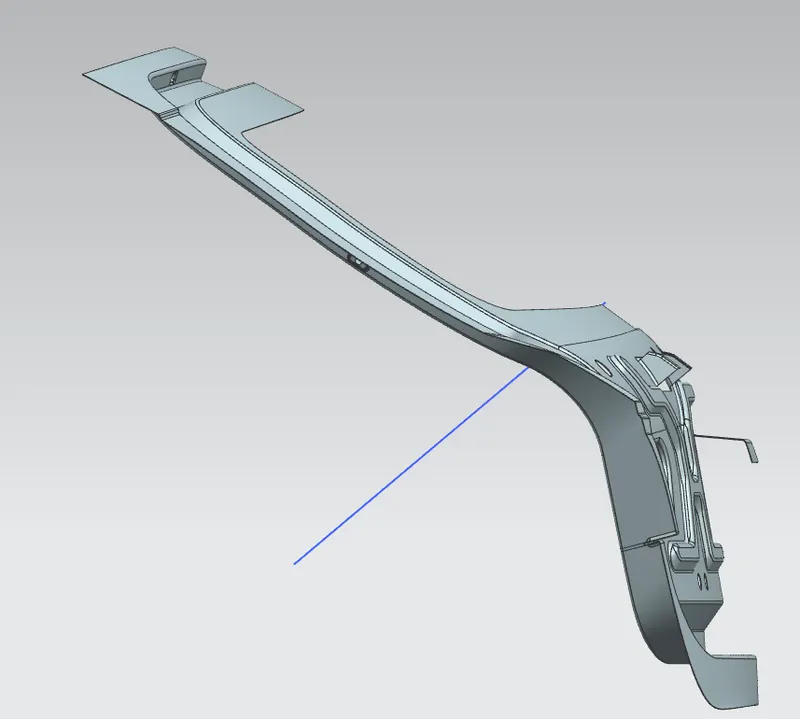
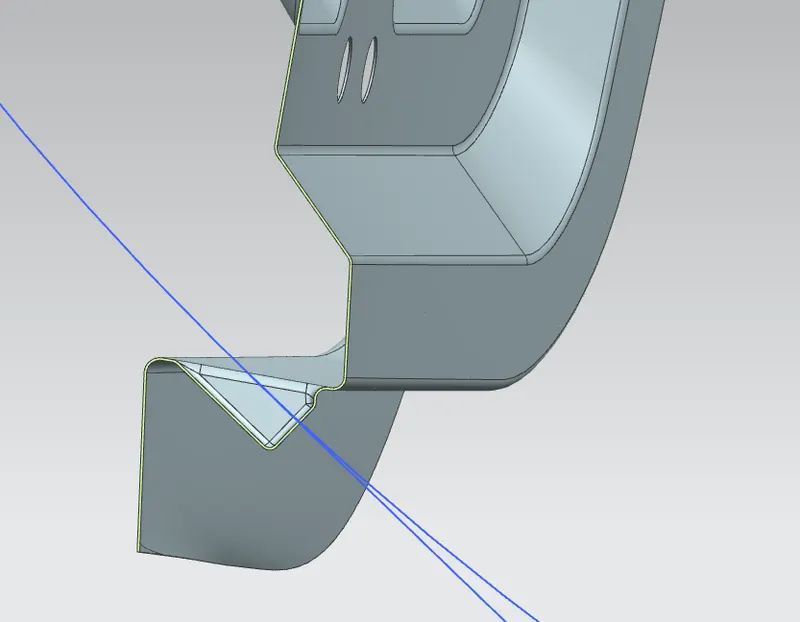
The deep drawing direction is given by the blue line
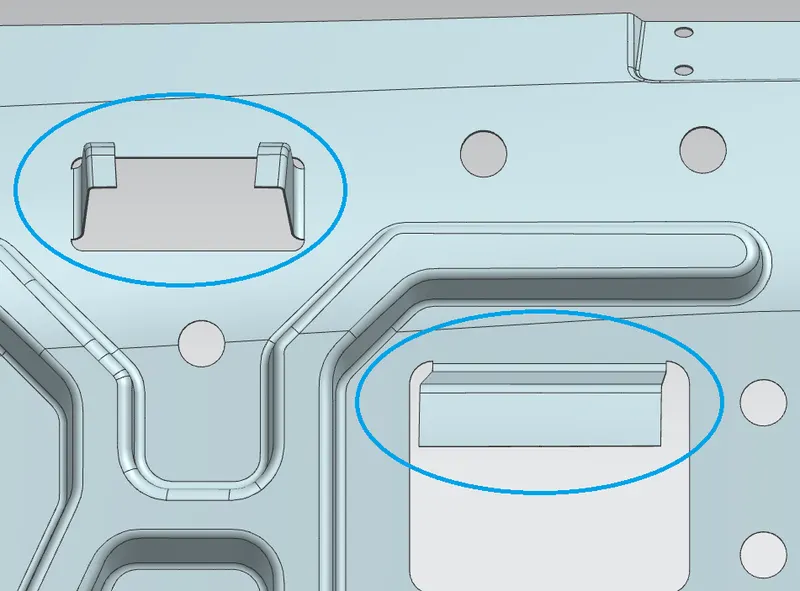
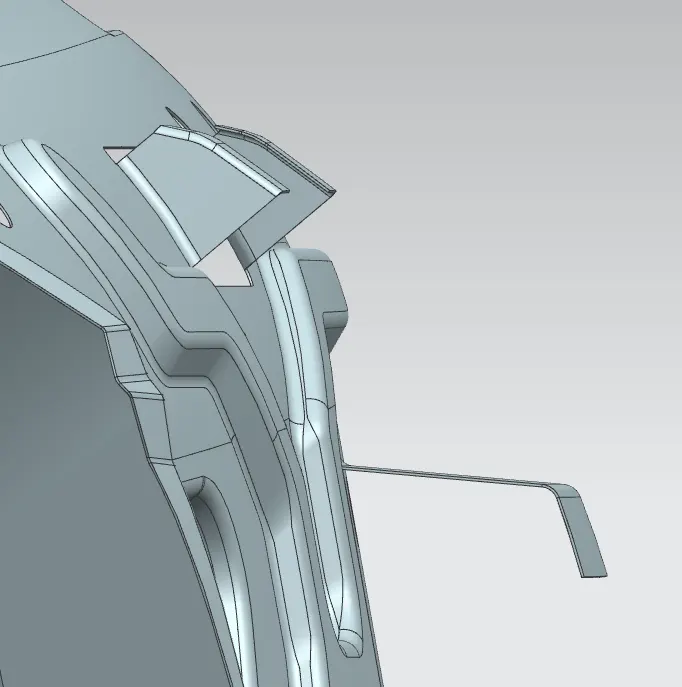
Embosses for Hinge, Stay, Wiper motor
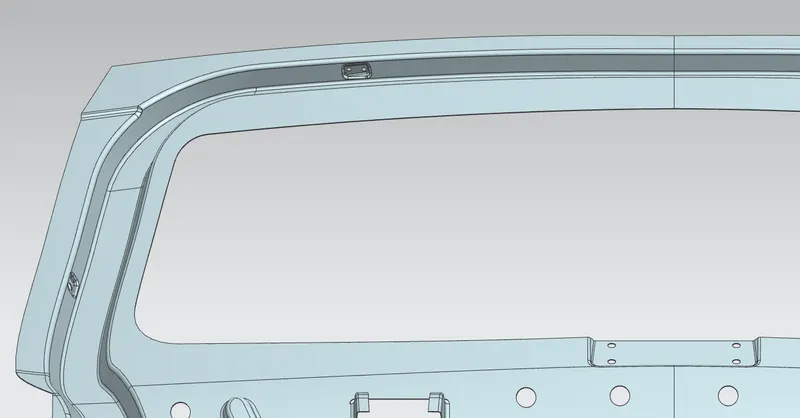
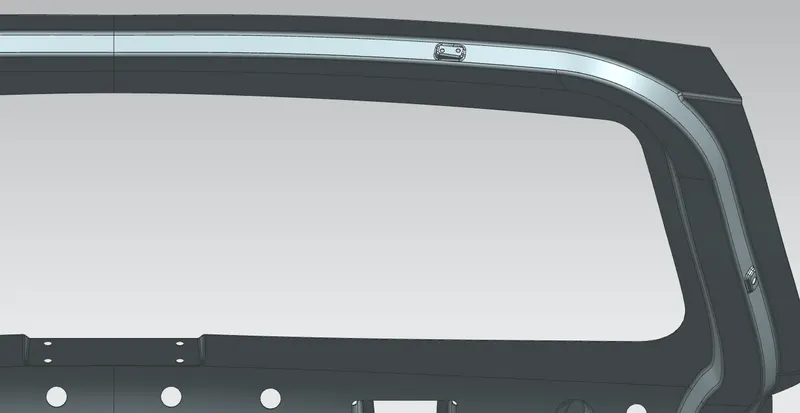
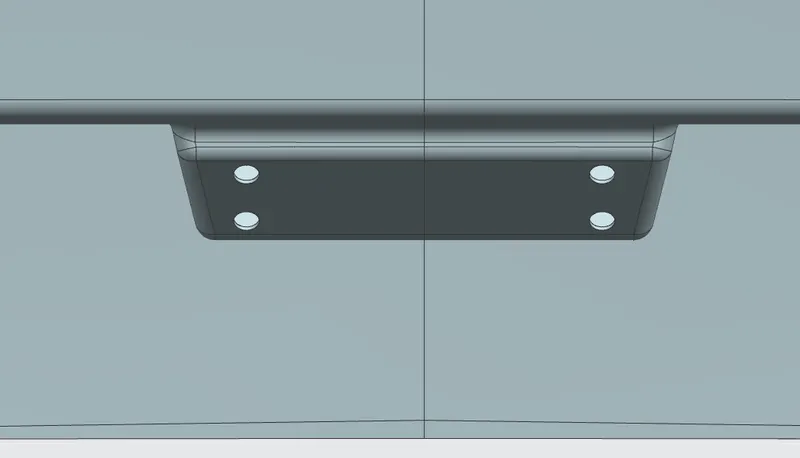
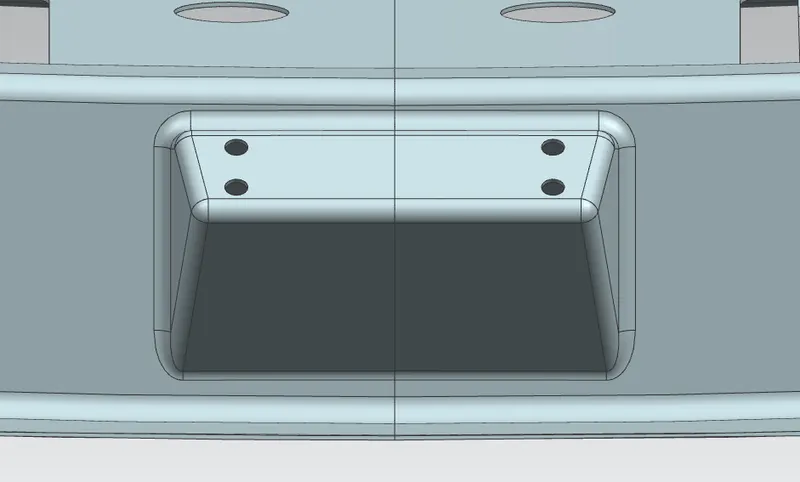
Striker emboss
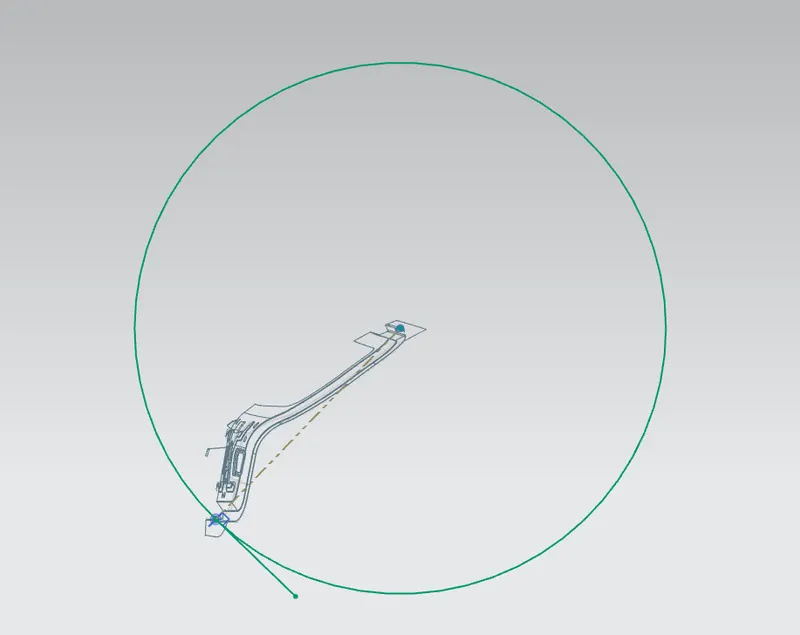
Trajectory for striker
Mastic regions
Draft Analysis
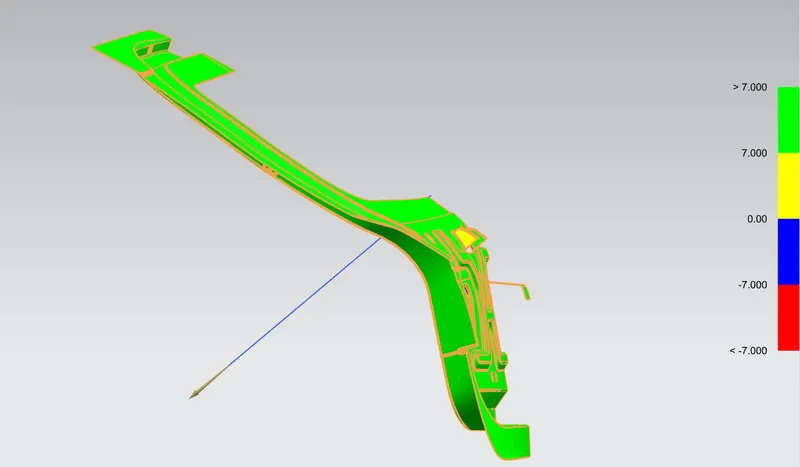
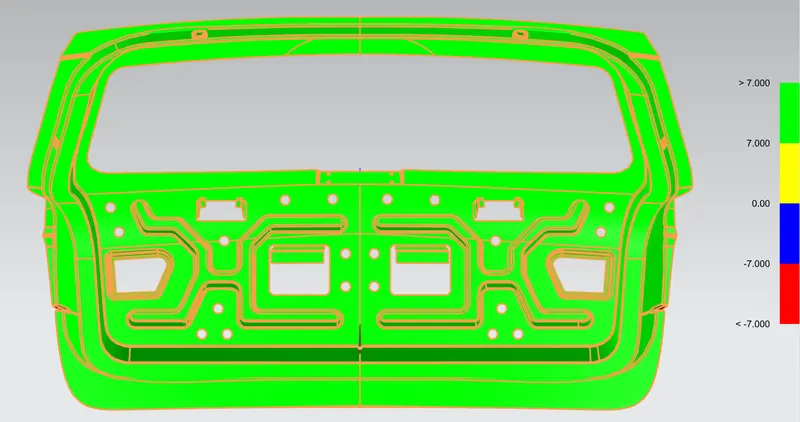
Draft Analysis is done to analyze the draft angle. This allows us to verify whether the product will be easily made by the tool during deep drawing.
When designing a product it needs to be slightly angled so that the tool can be pulled away from the part easily, without deformation or damage. This slight angle is called draft.
Minimum Draft of 7 Degrees provided for easy manufacturing of sheet metal
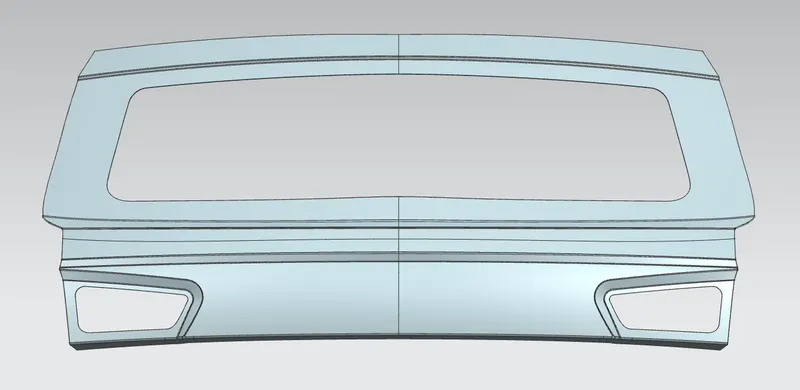
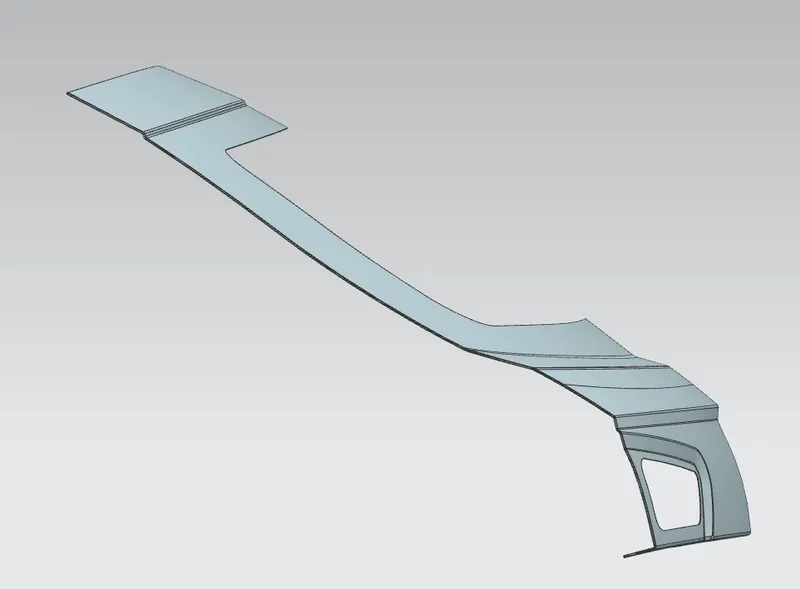
Backdoor Outer panel - Upper
Backdoor Outer panel - Lower
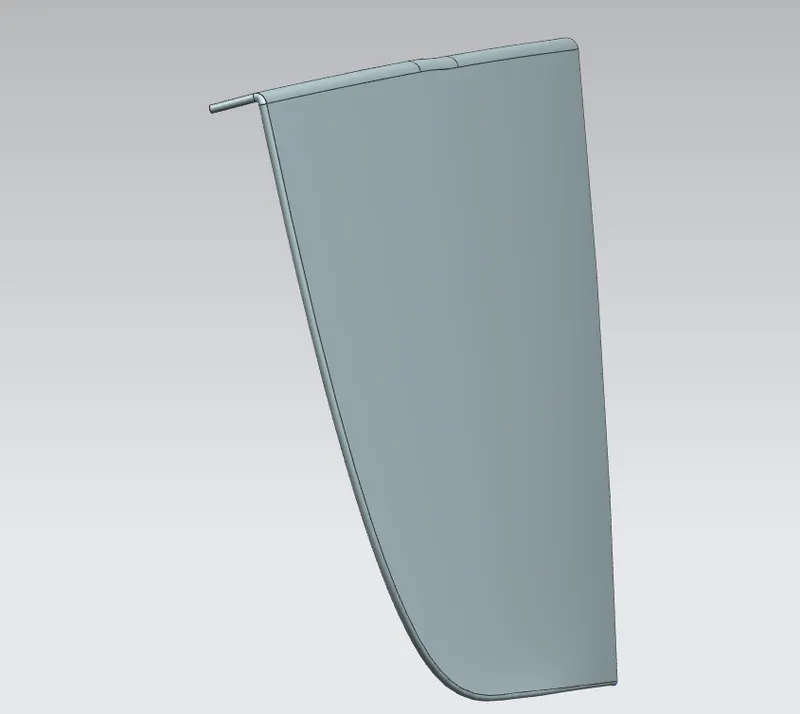
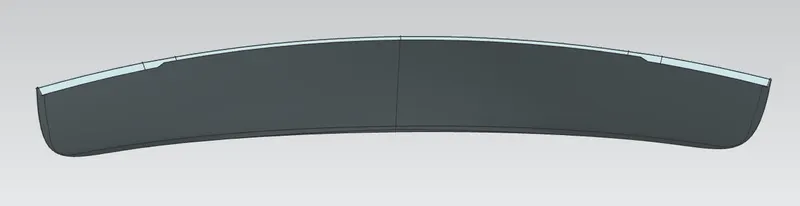
Hinge Reinforcement
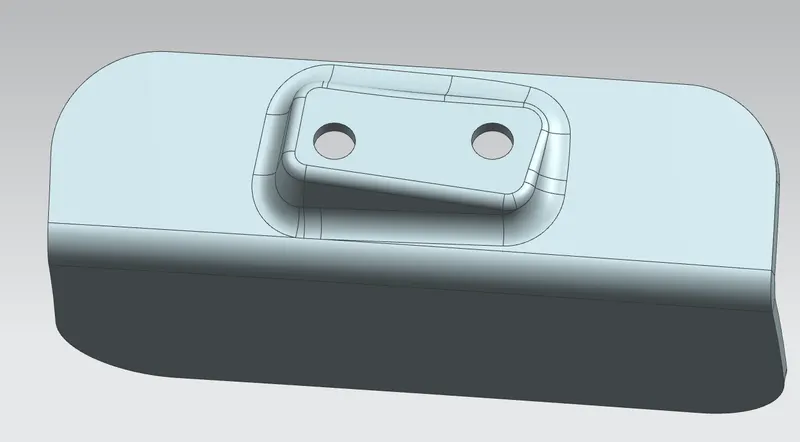
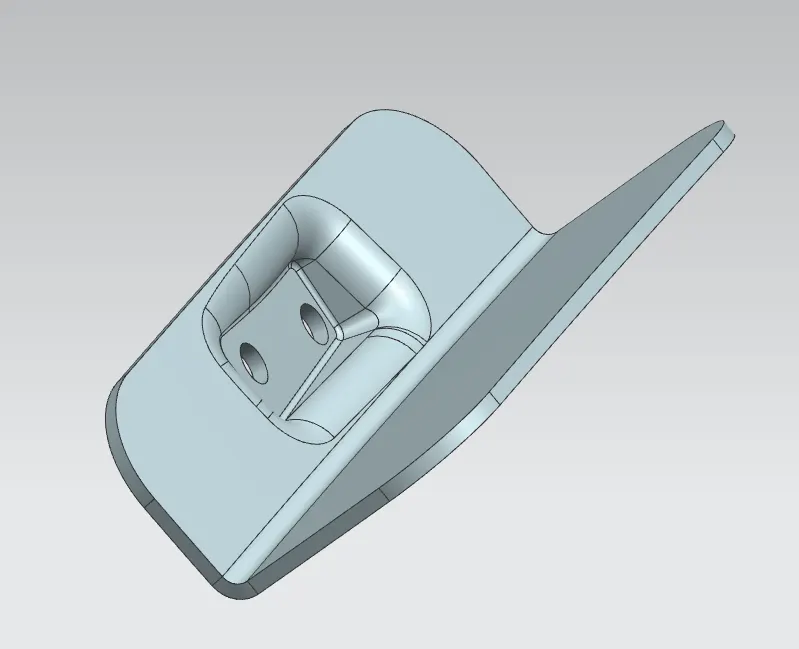
Stay Reinforcement
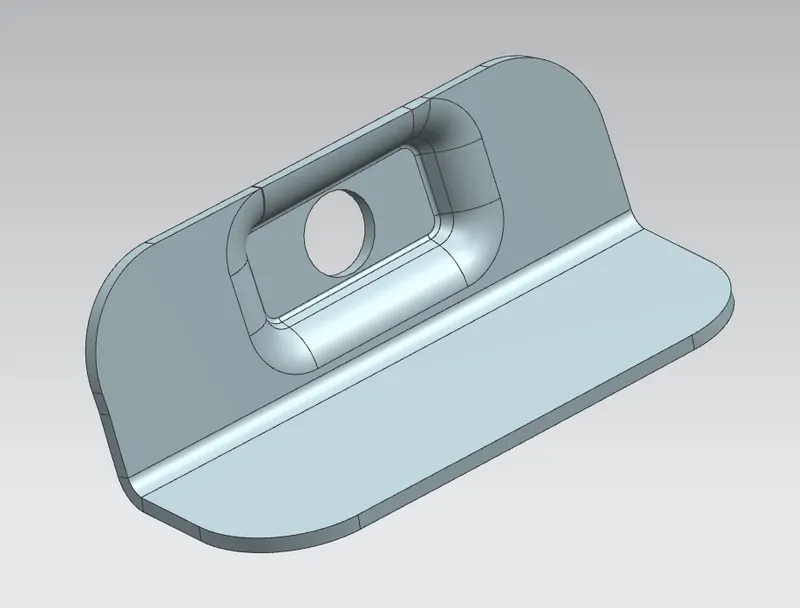
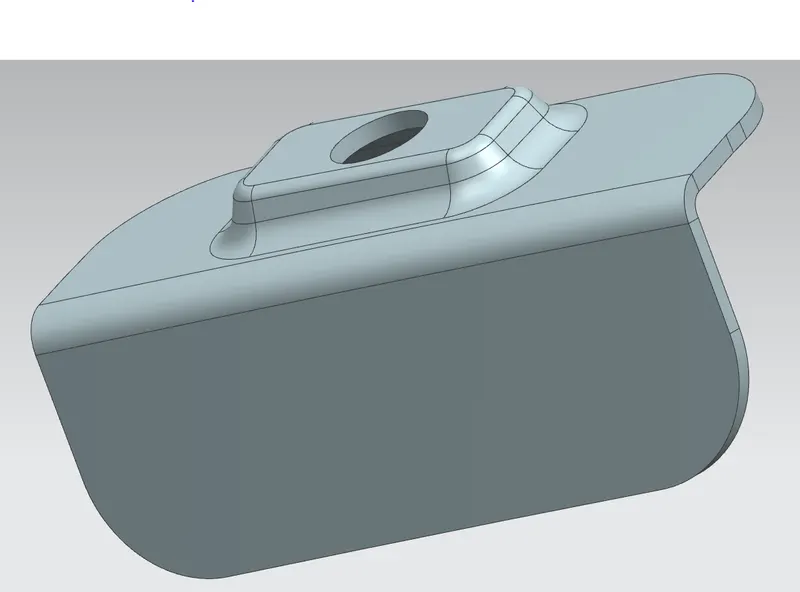
Striker Reinforcement
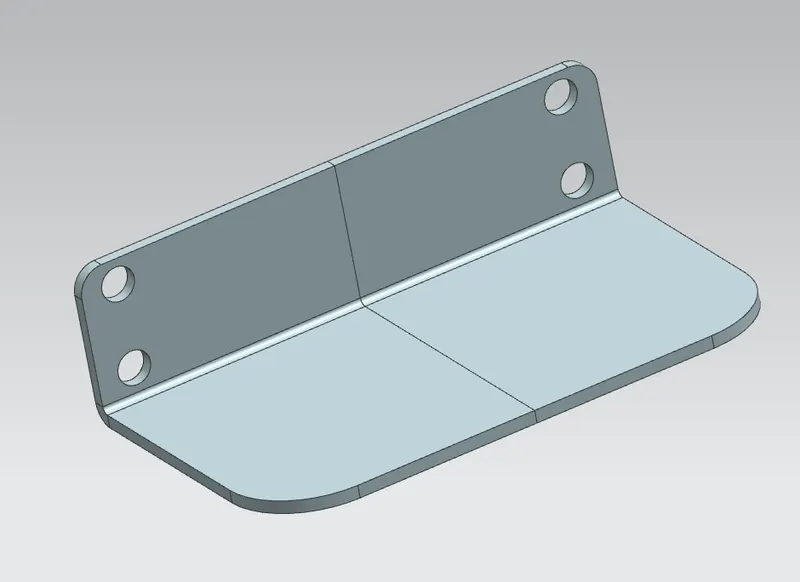
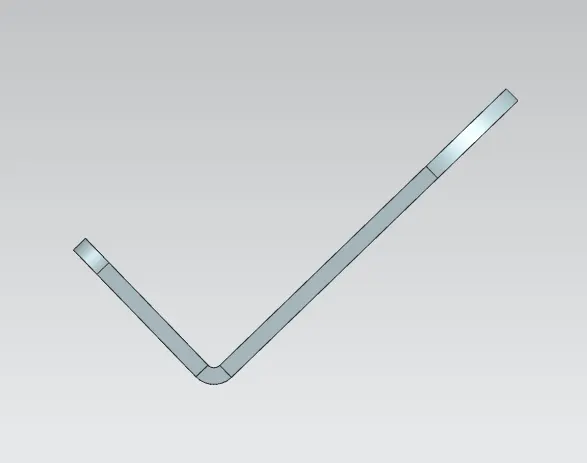
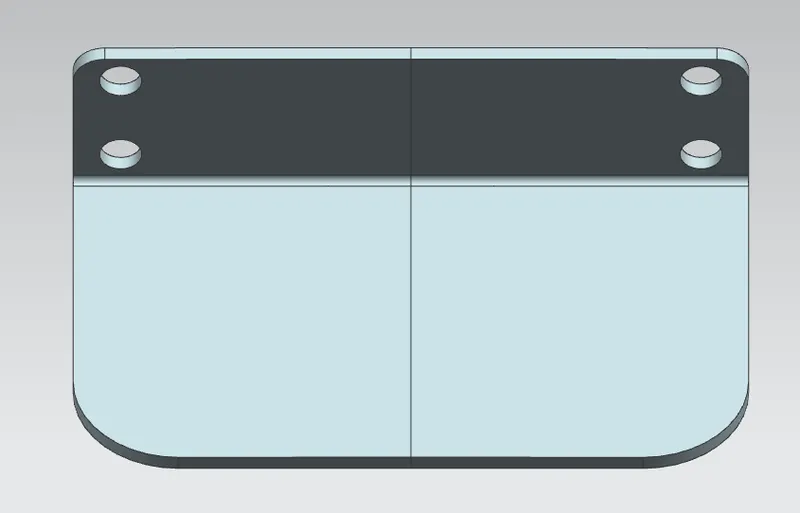
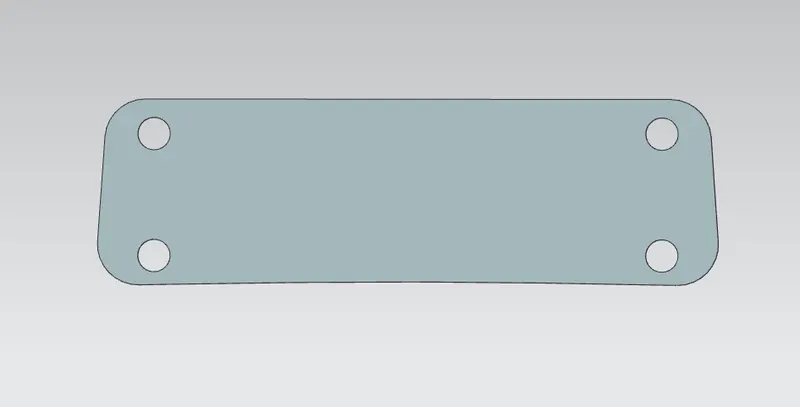
Wiper motor Reinforcement
Conclusion
The design of the Backdoor assembly with necessary reinforcements is done.