Design of backdoor
AIM : To design a back door , with the given styling .
Introduction :
BACK DOOR also known as tail gate, is a swinging commodity or closure commodity .
More thinner our back door sections, more better our luggage area is.
In this design , we will see the following things.
1. Design Requirements for the tail gate and its components.
2. Functional requirements.
3. Rear visibility criteria.
4. Sealings and its functions
5. Joining techniques followed like Hemming , spot welding.
6. Manufacturing techniques using a casting part.
7. GAP and flushness requirements.
8. functional Requirements of hinge and gas stay (power lifter)
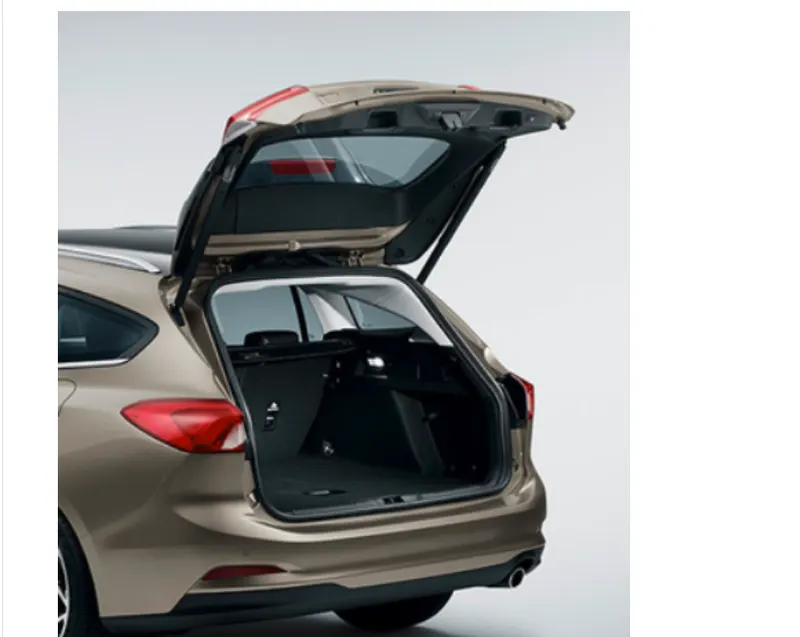
TYPES OF DOOR OPENING: In this design , we are dealing with top mounted door.
- Top mounted door
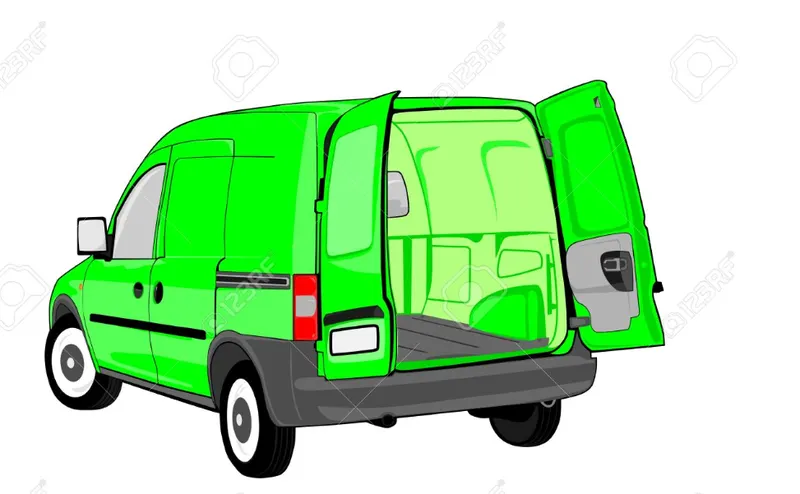
- Side mounted door
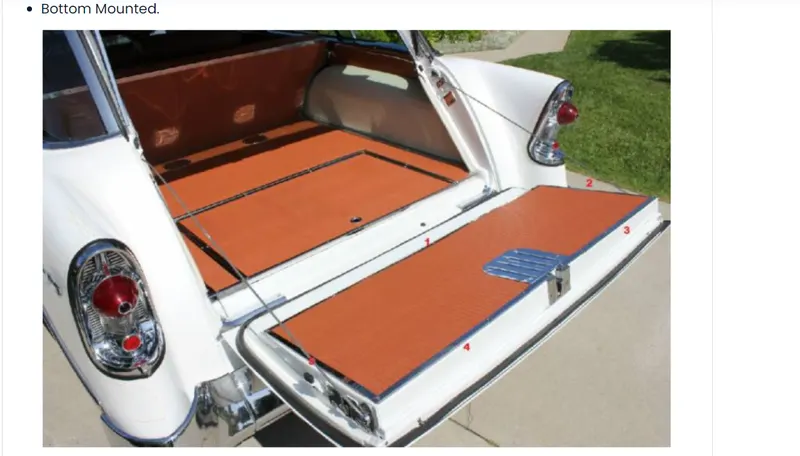
- Bottom Door
Total no. of parts in Backdoor are:
- Back door outer panel (upper)
- Back door outer panel (lower)
- Back door inner panel
- Hinge reinforcements ( LH AND RH )
- Gas stay reinforcements ( LH AND RH )
- Latch and striker reinforcements
- Wiper motor reinforcements
Materials : Inner pannel of aluminium cannot be deep drawn , but outer pannel of aluminium can be deeP drawn because of the structure.
The purpose of using aluminium is having less density, so the final weight of the product will be very small. so we can cast the part, which means we can vary the thickness on different regions. so we acn avoid the reinforcements completly.
Designing methodology of alumimium is quite different when compared to the steel.Steel parts that to inner pannel can only be deep drawn, we can have only one thickness there, which means we will have to add reinforcements on local area like hinge reinforcements,gas stay reinforcements, latch and striker reinforcements in the bottom , wiper motor reinforcements in the top.
Car backdoor inner panel is made of either steel or alumminium.Most of the luxuary car's inner panel are made of aluminium because of is properties.But the cost of aluminium is high.
| STEEL | ALUMINIUM | |
| PARTS | Parts are stamped | Parts are casted |
| REINFORCEMENTS | Necessary | Can be neglected |
| THICKNESS | Constant | Can be Varied |
| COMPONENTS | More | Lessin number |
| WEIGHT | More | Lighter |
| COST | less in cost as compared to Aluminium | More as compared to Steel |
Reinforcements : The purpose of the reinforcements is itself to compensate the strength, what is getting reduced.
Thickness given to reinforcements = 0.15
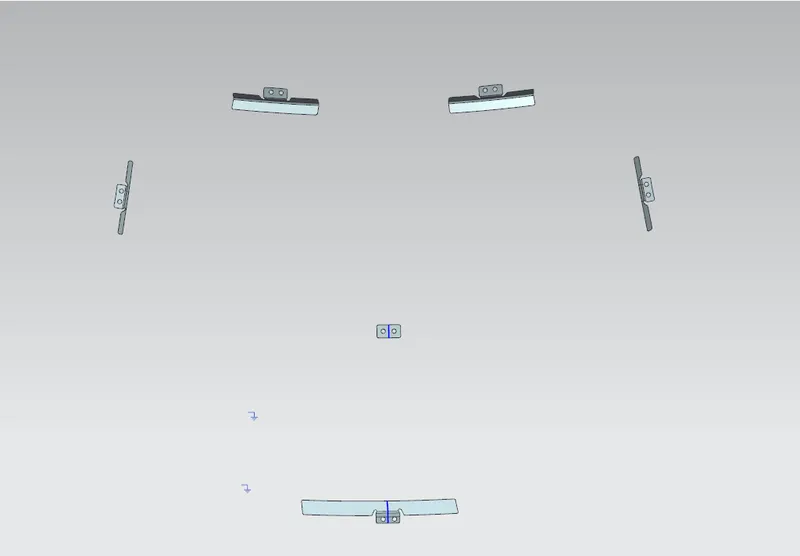
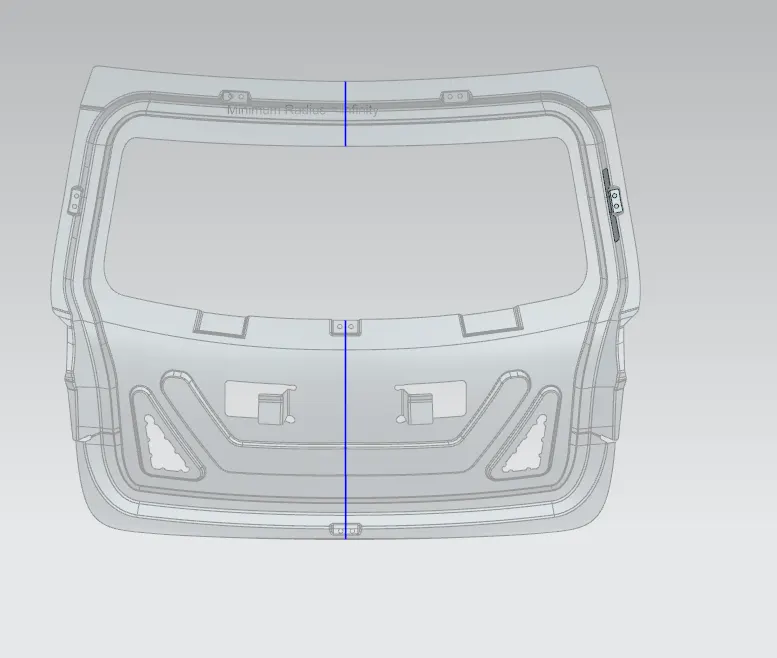
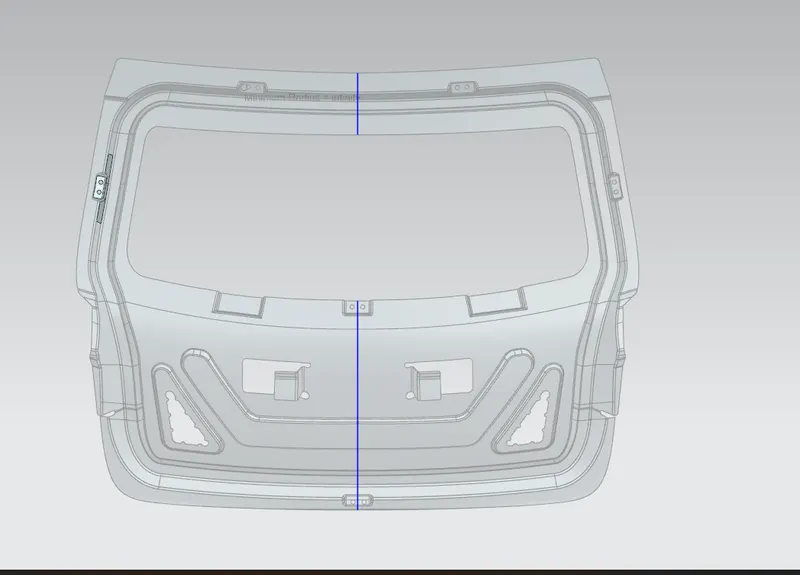
Gas stay reinforcements : It will have one mounting on the back door and one mountings on the body side, so when we near the back door mounting, we need the reinforcements because that will reduceding the strength there.
GAS STAY RH
GAS STAY LH
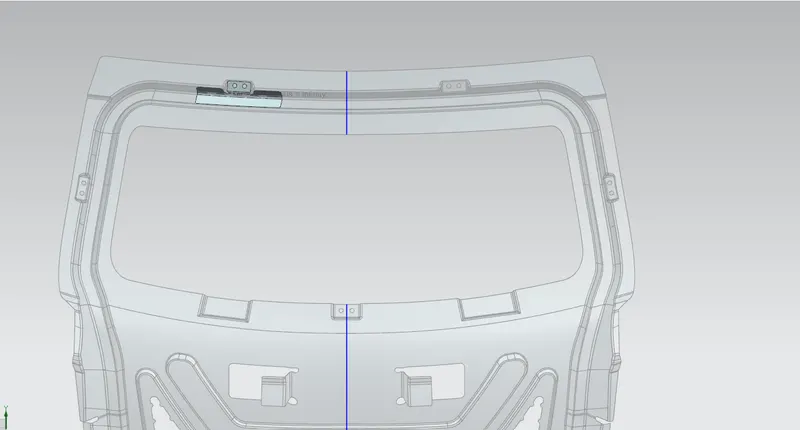
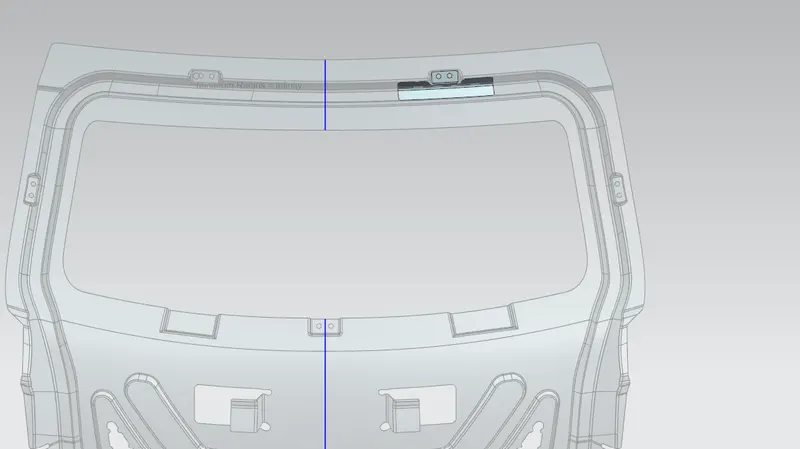
HINGE REINFORCEMENTS: It is added to avoid the loss in the strength of the inner pannel, due to the addition of hinges.
LH
HINGE RH
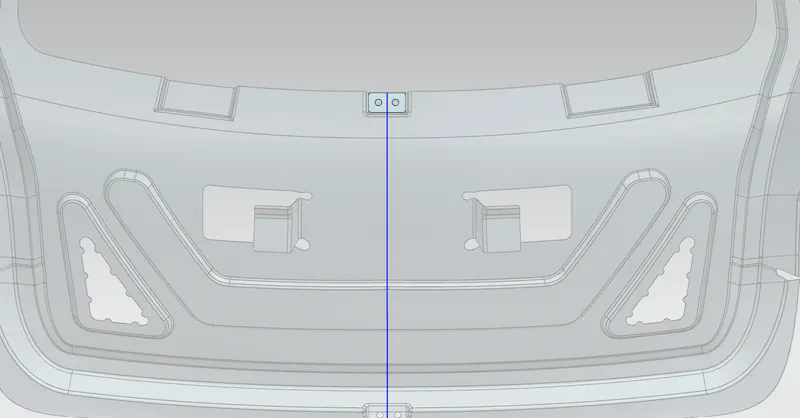
wiper motor reinforcements:
Wiper is used for wipeout the rain water falls on the backdoor window. It has given the movements by the motor which is mounted on the inner panel.Due to the vibration and heat created by the motor , the inner panel where the motor is mounted gets deform and the parts attached to the motor starts to vibrate which leads to poor noise , vibration and hardness .So in order to prevent from NVH , we generally have to provide the reinforcement where the wiper motor is placed.
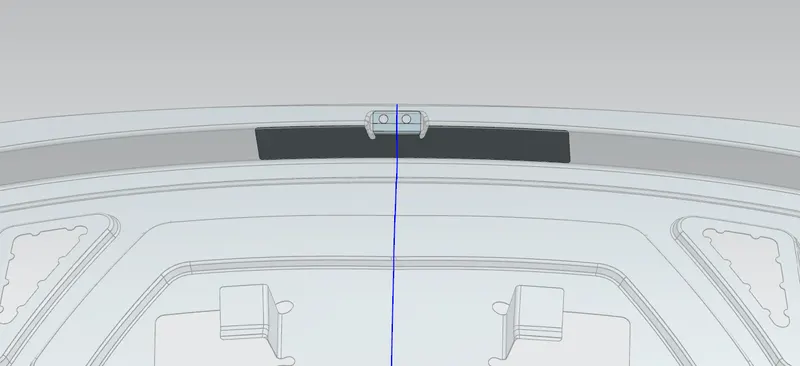
LATCH REINFORCEMENT:
At bottom of the panel , reinforcement and emboss are given to accomodate the latch and striker assembly.Generally key operated or automatic remotly controllable mechanism is used to keep the door open or closed.The actuators , recivers and other electronic devices are mounted on the inner panel only.
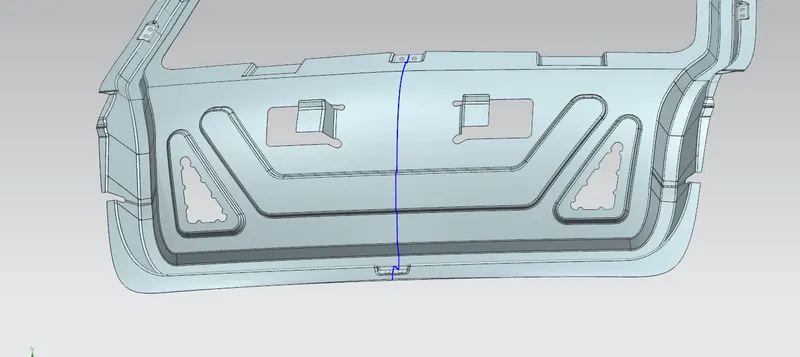
Embosssing :
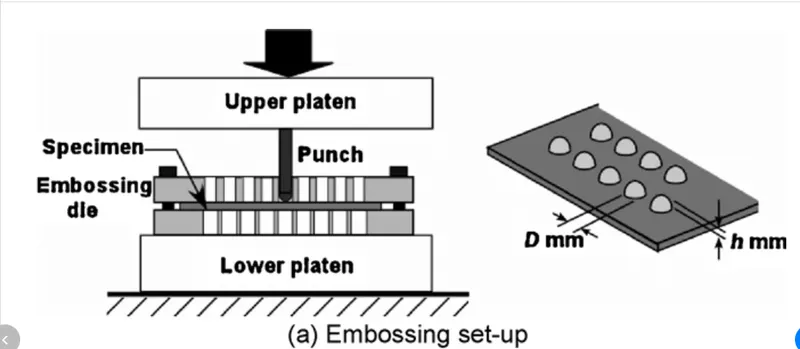
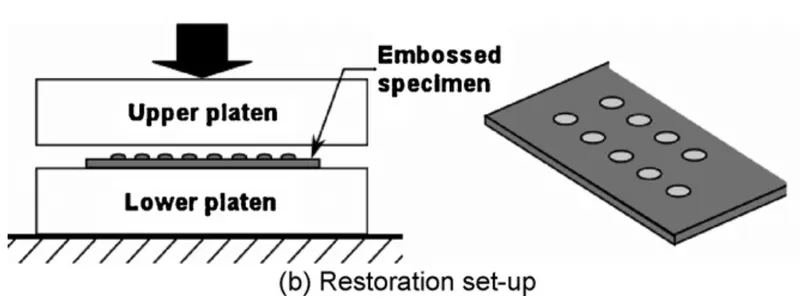
Embossing is a stamping process for producing raised or sunken designs or relief in sheet metal. This process can be made by means of matched male and female roller dies, or by passing sheet or a strip of metal between rolls of the desired pattern. It is often combined with Foil Stamping to create a shiny, 3D effect.
There are basically three types of metals that are used for embossing dies.
- Magnesium dies : They are used for easy embossing projects that have short runs. It also allows for special hand tooling.
- Brass dies : They are the most popular embossing dies. They are very flexible and give the embosser leeway to create fine lines, sculptured images, combo foil stamping and embossing. They are also very good for images requiring extensive hand tooling. You can make brass dies by machines or by a semi-photographic process. The photograph is transferred onto the die to use as a guide for drawing.
- Copper dies : They are used as an in between to magnesium and brass. However copper dies do not permit hand tooling.
MANUFACTURING PROCESS :
HEMMING:
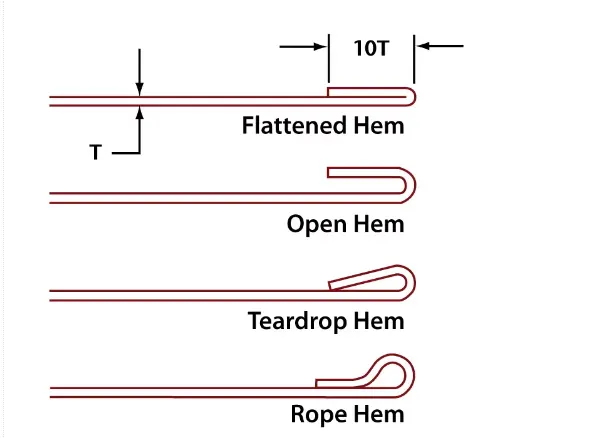
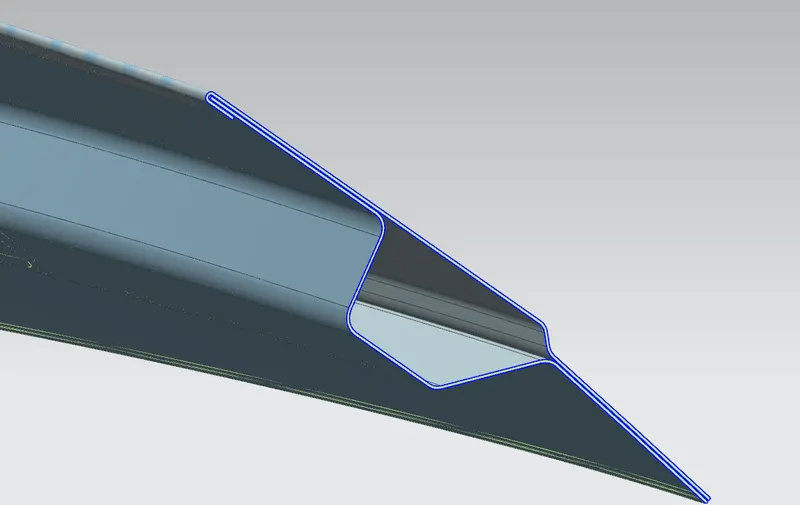
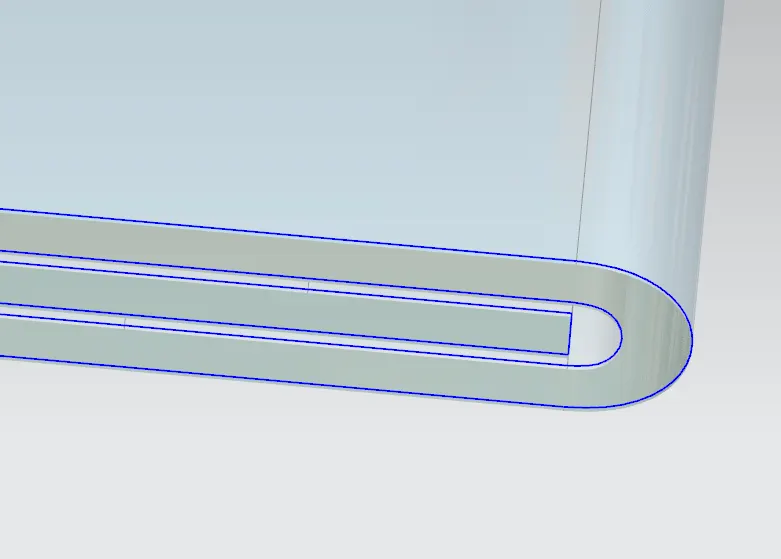
Hemming is a sheet Metal forming process in which sheets are joined by bending it usually to 180°. Automotive body panels and automotive parts such as deck-lids, trunk-lids, doors, hoods and tailgates are formed by hemming process. Various grades of high strength sheets, aluminum alloys, recycle-friendly aluminium alloys, magnesium alloys, light weight alloys are used as workpiece materials in hemming process.
Classical hemming, roller hemming, robot assisted roller hemming, laser assisted roller hemming and hemming with electromagnetic forming processes are the experimental different approaches utilized for performing sheet metal hemming operations.
In FEM simulation of hemming process, three dimensional solid elements, shell elements and their combination are mostly employed by researchers in meshing of sheet metal blanks in hemming process.
FEM simulation found to be an efficient tool for prediction of defects in hemming process and for optimization of process parameters as well. Besides, FEM simulation new computational approaches such as meta-model strategy are also applied for efficient design of hemming process.
Spot welding:
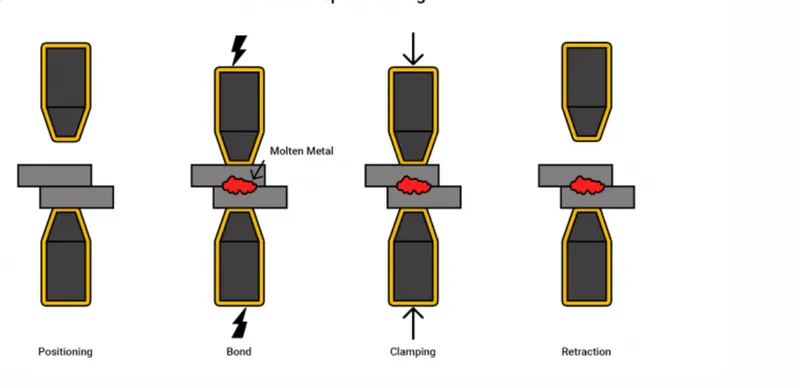
Spot Welding is a form of resistance welding also known as Resistance Spot Welding (RSW). Spot Welding involves using heat produced by resistance to an electrical current to join materials together. The current heats the materials to a point where they become malleable. The use of strong pressure bonds them together.
Spot welding (also known as resistance spot welding) is a resistance welding process. This welding process is used primarily for welding two or more metal sheets together by applying pressure and heat from an electric current to the weld area.
Spot welding occurs in a four-step process.
- Positioning: The material and electrode position so the operator may properly apply the bond.
- Bond: The bond applies, creating molten metal where the current meets.
- Clamping: The operator removes the current and keep the bond clamped in place.
- Retraction: The electrodes retract and the material cools.
Resistance spot welding
Important features used while designing:
- Wave Geometry Linker – With this you can create, associative or linked copies of any entity of a part into other parts. It may be a surface, edge, curve, body, sketch etc. The changes made to the original entity will be reflected in the copy of that entity.
- Extract Body – It is used to create an associative body by extracting faces, entire body or region of faces.
- Bridge Curve – It helps to create a tangent blend curve between two objects. The objects may be edges or sketch curves.
- Sew – It combines sheet bodies together by sewing their common edges. There shouldn’t be any gaps larger than specified tolerance.
- Projected Curve – It is used to project an existing curve/curves on a selected plane or surface by selecting a direction for projection.
- Trim Body – It is used to trim one or more bodies using a face or plane. You can also specify the bodies to retain and the bodies to discard.
- Offset Surface – It allows you to offset the surface below or upper from the original body.
- Offset Curve in Face – This command will allow to use offset the curve from a particular surface.
- Trim Sheet – It is used to trim off a portion of a sheet body using curves, faces, edges or planes.
- Through Curves mesh – It is used for a joing a body using primary and guide curves.
- Law Extension – This command extends a curve or edge to create a sheet body at desired angle length by changing the rules under angle law and length law.
- Trim and Extend – It helps you to trim and extend intersecting surfaces and make corner at their intersection.
- Face Blend – It creates fillets between faces.
- Edge Blend – It creates fillets on edges.
- Extend Sheet – It will allow you to extend an existing surface to required distance.
- Emboss – Emboss command creates an embossing by modifying a body with faces created by projecting a curve/section along a direction. You can modify the emboss using options like endcap location and draft angle.
- Mirror Geometry – it is used to mirror geometries about selected plane or surface.
- Thicken – It is used to convert a surface to solid body by adding some thickness.
Design of Back door in NX CAD:
Door parts thickness is given below,
- Outer Panel - 0.75 mm
- Inner Panel - 0.75 mm
- Reinforcements - 0.15 mm
Given Data,
class A SURFACE : from the given class a surface , first we need to repair the surface , wherever sew is not happeing.
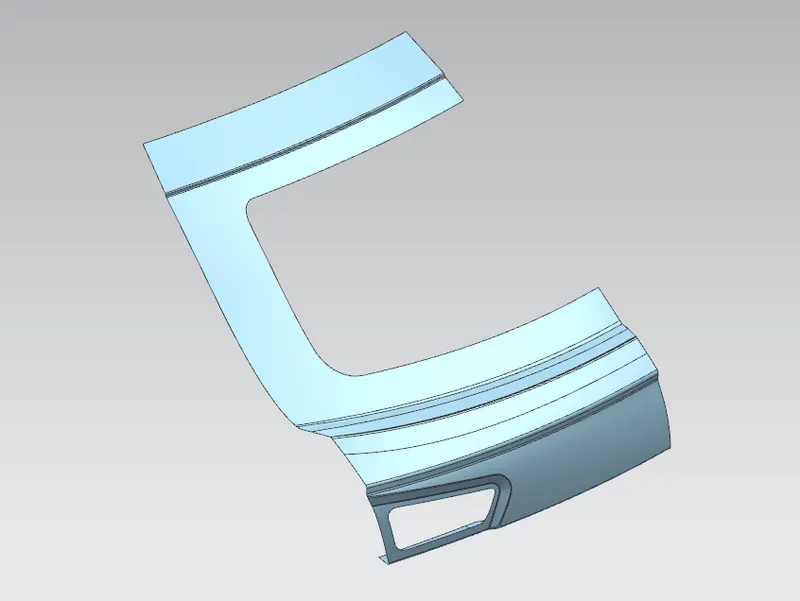
outer UPPER pannel :
It is the outer part of the rear door and is mostly responsible for aesthetics of the vehicle.
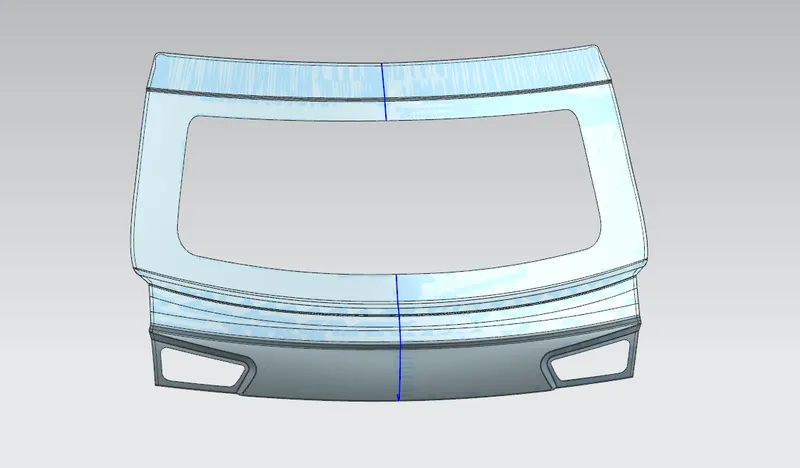
OUTER LOWER PANNEL:
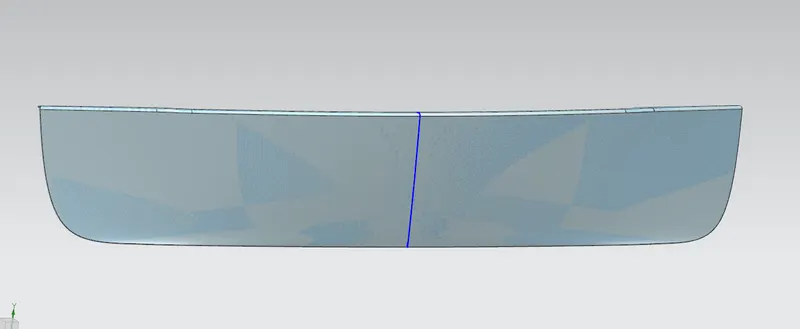
Inner pannel:
It is the inner part of the door. It is where most of the reinforcements and components are mounted. It is manufactured either by casting (aluminum) or sheet metal stamping (steel). Thickness of inner panel is 0.75 mm.
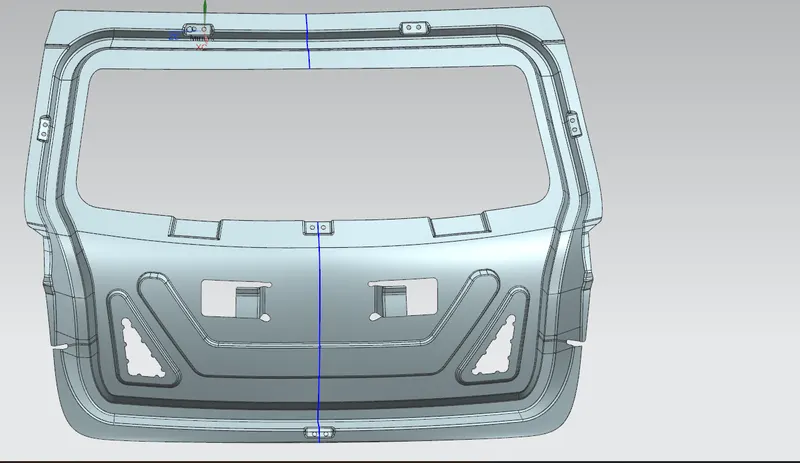
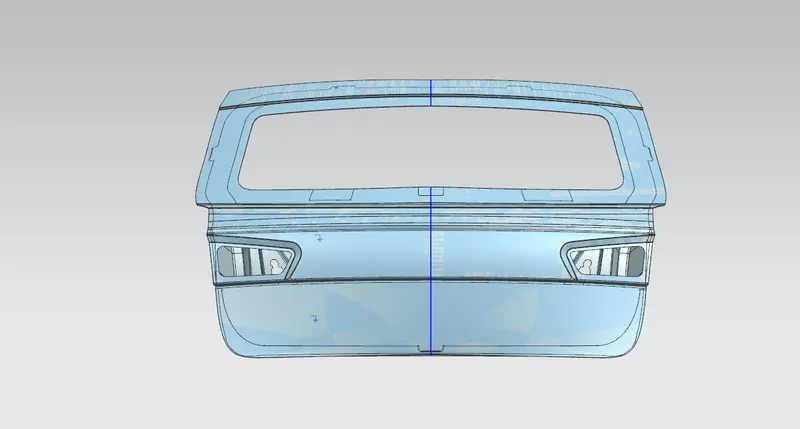
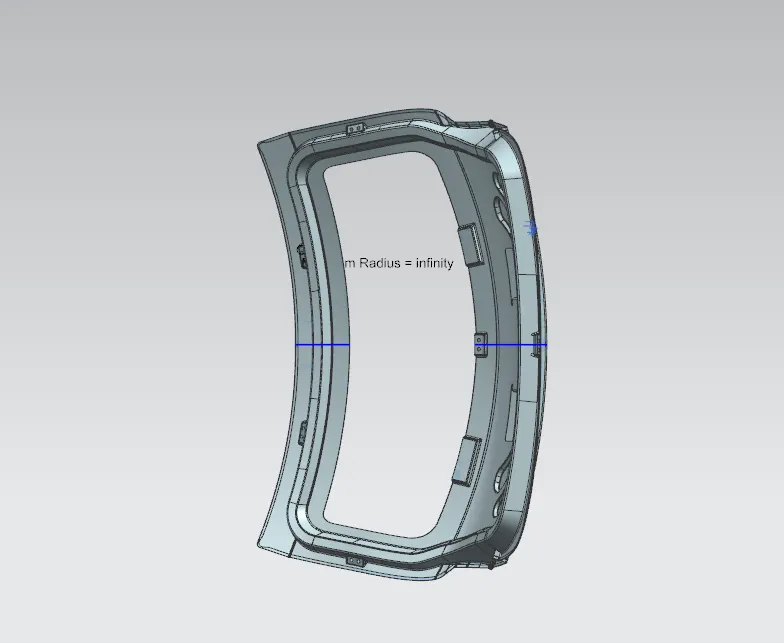
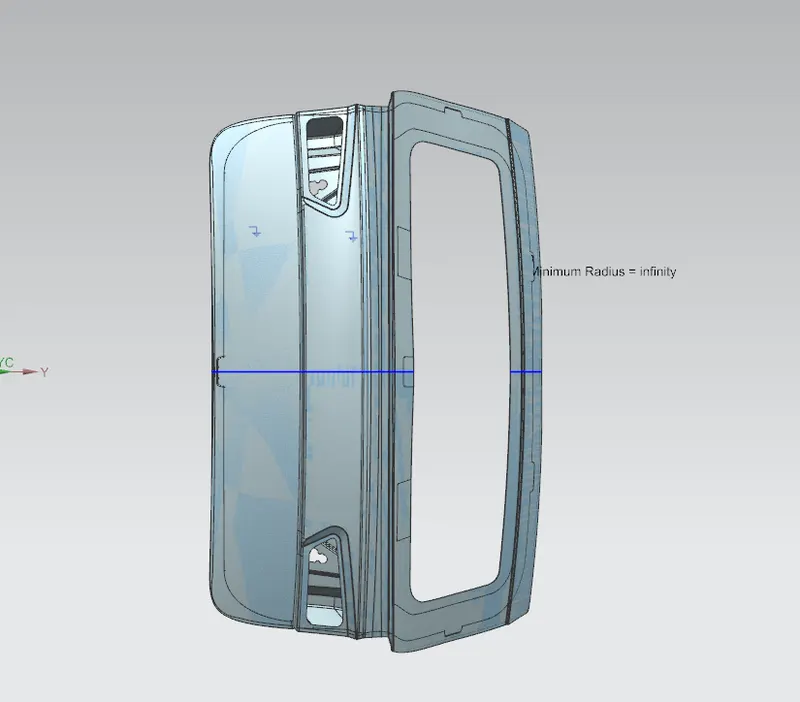
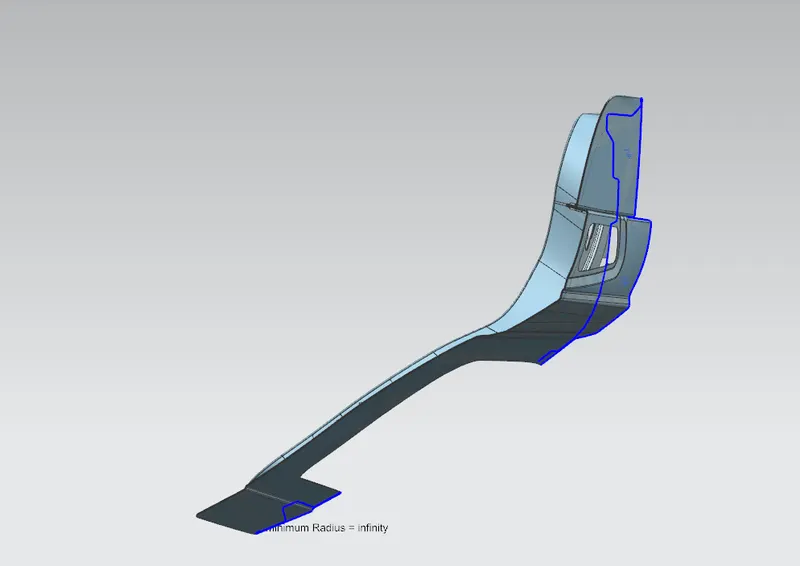
DIFFERENT VIEWS OF BACK DOOR
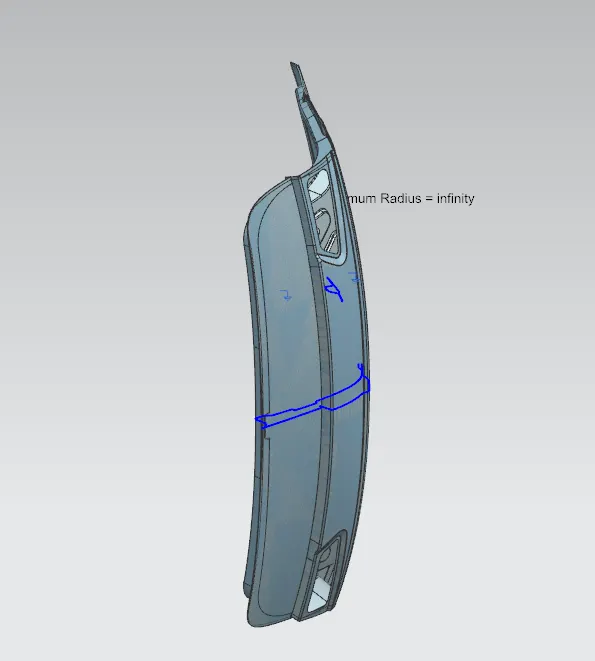
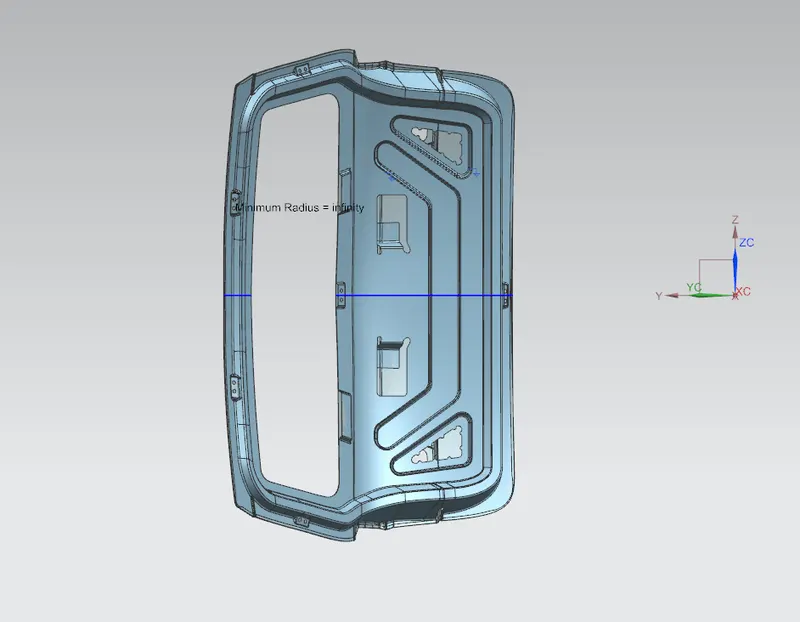
Draft analysis.
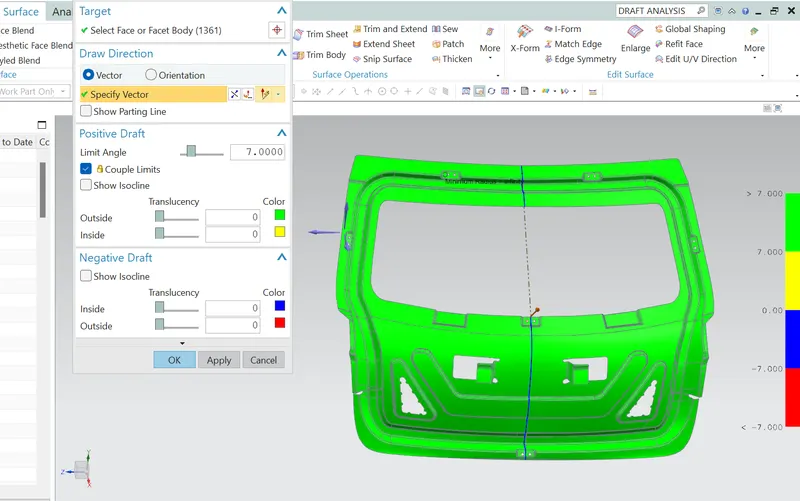
In order to make sure the drawing of inner panel body is proper; we do draft analysis. We need to define the drawing direction and select the inner panel body.
The draft angle for aluminium casted panel is 2 to 3 degrees is enough but if it is steel then the angle is more than 7 degrees.
conclusion:
Thus the back door was designed from the given styling surface and Draft analysis is also done on the inner panel to check the manufacturing condition.Also all the reinforcents done to support the strength.
here is the link
https://drive.google.com/drive/folders/18RcbRAlbc-H7ZUzciAQBBa4BdiYlzNko?usp=sharing