Design of backdoor
Objective: To design backdoor using the given styling surface and proper reinforcements for hinge, striker and wiper motor mountings and necessary embosses.
Introduction:
Backdoor is the part of a vehicle which is mounted on the rear side of a car. It helps in covering the luggage area with the help of sealant which keeps inside of the vehicle air tight and prevents water to enter into the car. The back door, sometimes referred to as the "Hatch," "Tailgate," "Trunk-lid," or "Boot-door," is a four-door car's fifth door. It's the region behind the last passenger seats generally. It has striker mounting as well as wiper motor mounts, tail lamps, and hinges to support the weight of the trunk when it is open, gas stays to help open and close the trunk, radars, cameras, and other features.
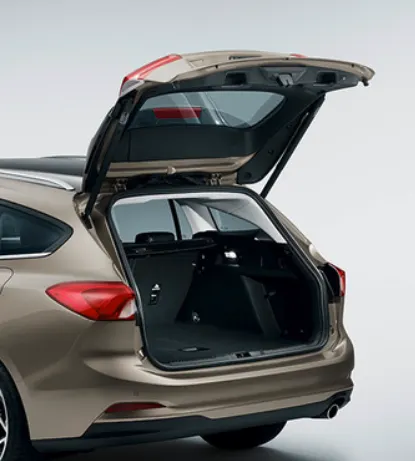
A backdoor is normally manufactured with 1 inner panel and 2 or 3 exterior panels that are hemmed and spot welded together as needed. Depending on the price range of the car, different materials are utilised for the backdoor. The bulk of inexpensive cars are made of steel since it is less expensive, and parts are stamped using moulds. Here, uniform thickness of the panels is maintained throughout.
However, in expensive cars, aluminium is used for the manufacturing of back door which is usually die cast. In such cases, reinforcements are not required and the vehicle is also light in weight. Varying thickness can also be achieved in case of aluminium body back doors.
Backdoor components:
1.Outer panel
2.Inner panel
3.Hinge reinforcements
4.Striker reinforcement
5.Gast stay reinforcements
6.Wiper motor reinforcement
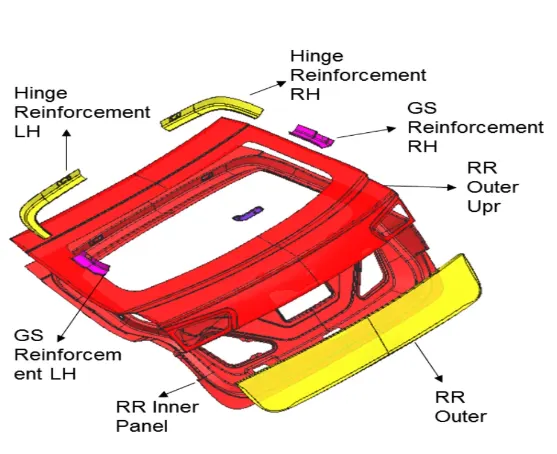
Design Constraints for Back Door
The constraints for back door design are
1. Rear Visibility criteria: The driver should be able to see from his seat to the rear side of the car.
2. Boot Space: The gap between inner and outer panel should be in such a way that, proper section modulus is maintained while giving enough boot space volume inside the car.
3. Rear crash regulation and requirements
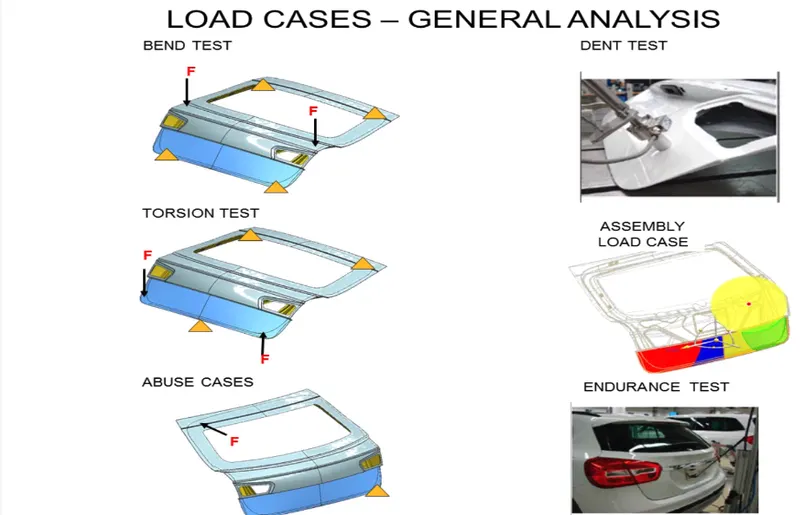
4. Sealing and its functions: To make inside of the rear side of the car, sealing is provided for air and water tight for which sealing flanges are also designed. The width of the sealing flange should be atleast 25mm after providing edge blends at the edges.
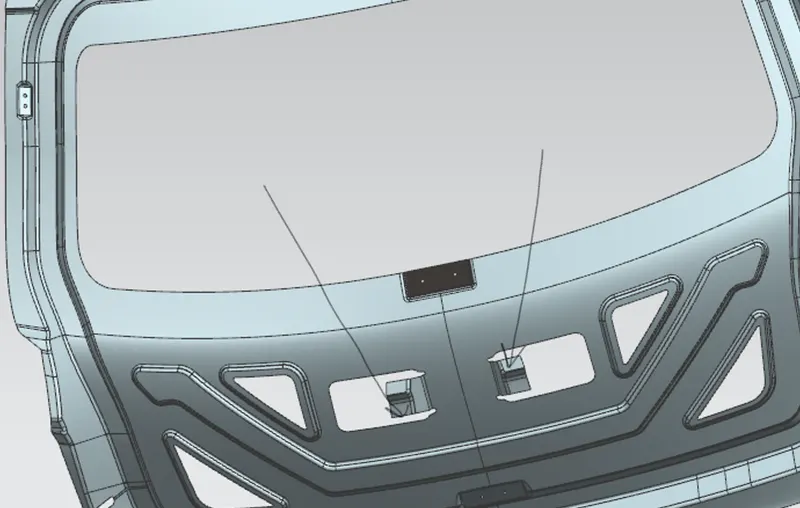
5. Joining Techniques followed like Hemming, Spot Welding etc.,: Hemming is used at the edges of the panels for assembly. Mastic seals are provided where spot welding and hemming can't be done. A minimum 5mm depth for mastic is provided between inner and outer panel. As indicated below in the image, mastic seals are provided at these locations.
Hemming:
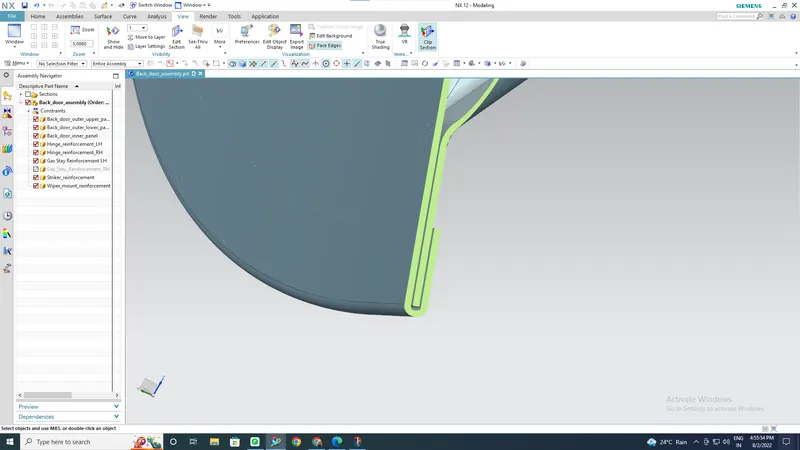
Above image shows hemming technique used for joining inner and outer panel. 0.2mm gap is provided for hemming glue.
6. Manufacturing Technique: Stamping, punching, bending, forming etc. are used in back dor manufactuirng. But it also varies according to the material being used.
7. GAP and FLUSHNESS Requirements
8. Functional Requirements of
- HINGE
- GAS STAY / POWER LIFTER
Hinges are provided for easy opening and closing of the back door. Gas stays are used to hold the backdoor. And for these, mountings and reinforcements are provided on the backdoor.
Parts thickness used in current design:
Outer panel: 0.75mm
Inner panel: 0.75mm
Reinforcement: 0.75mm
BACKDOOR COMPONENTS:
Outer Panel:
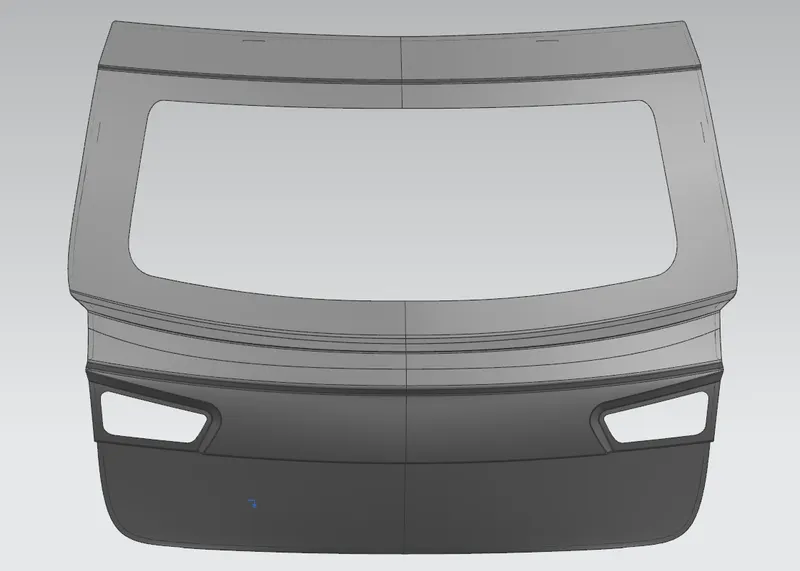
Outer lower panel:
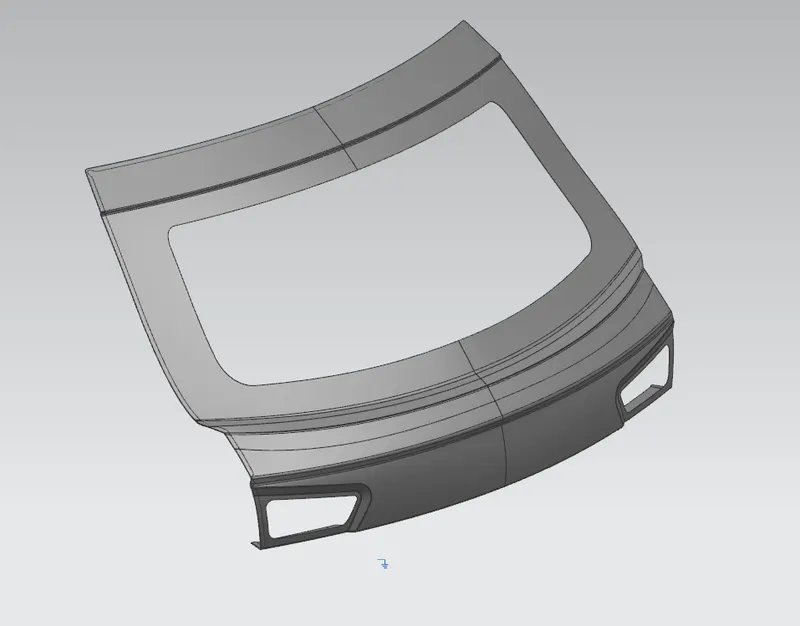
Outer Lower Panel:
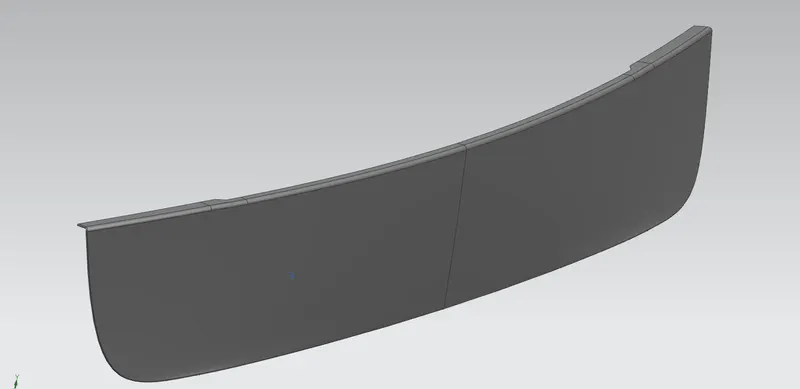
Inner Panel:
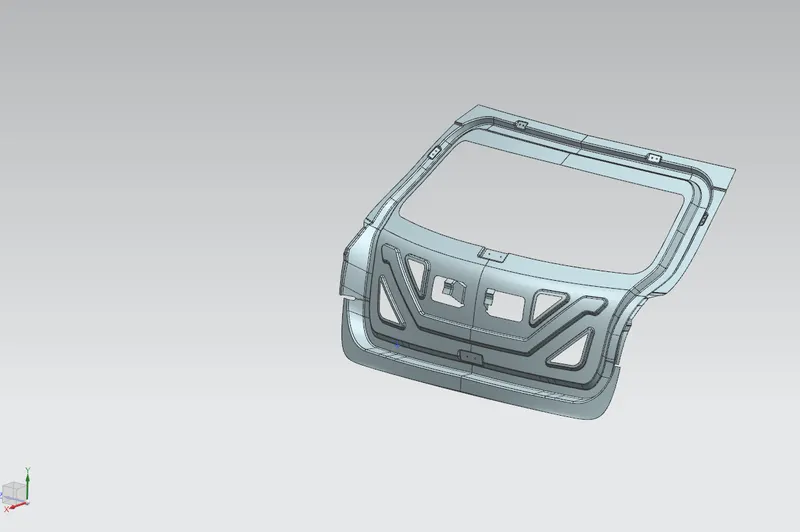
Hinge Reinforcements:
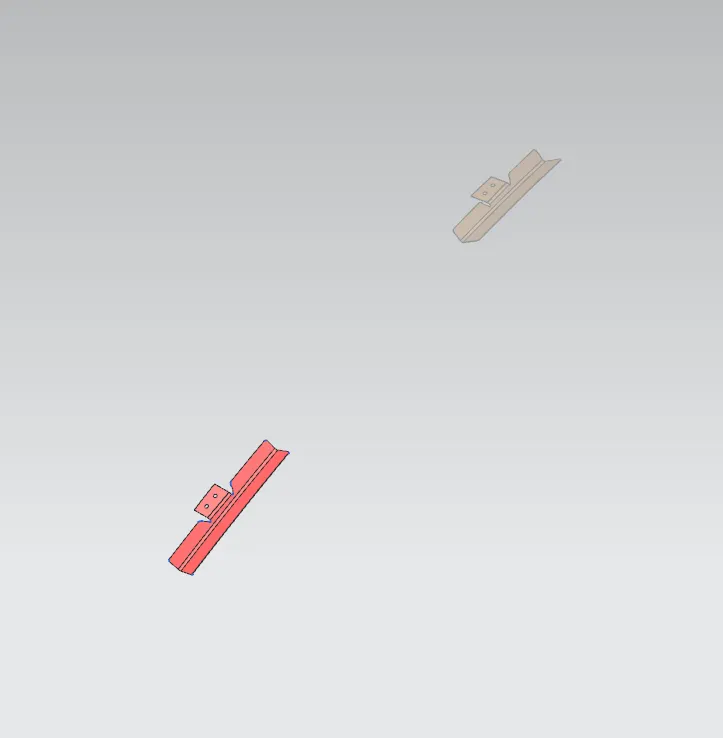
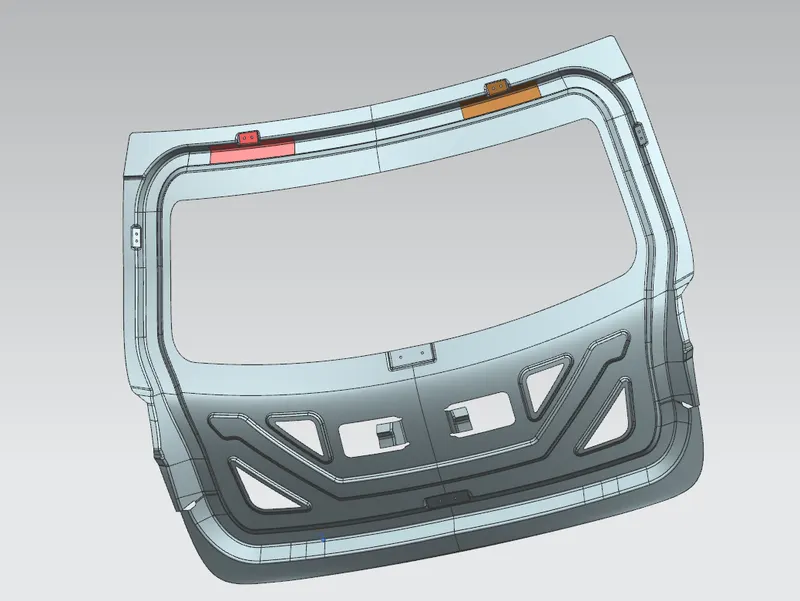
Gas Stay Reinforcements:
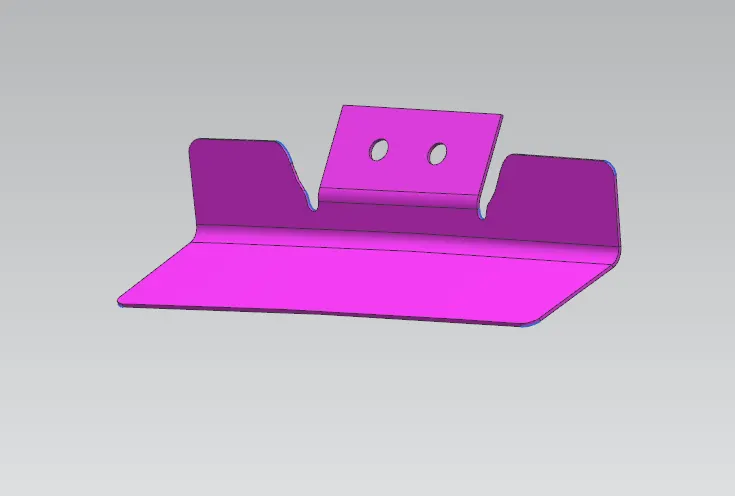
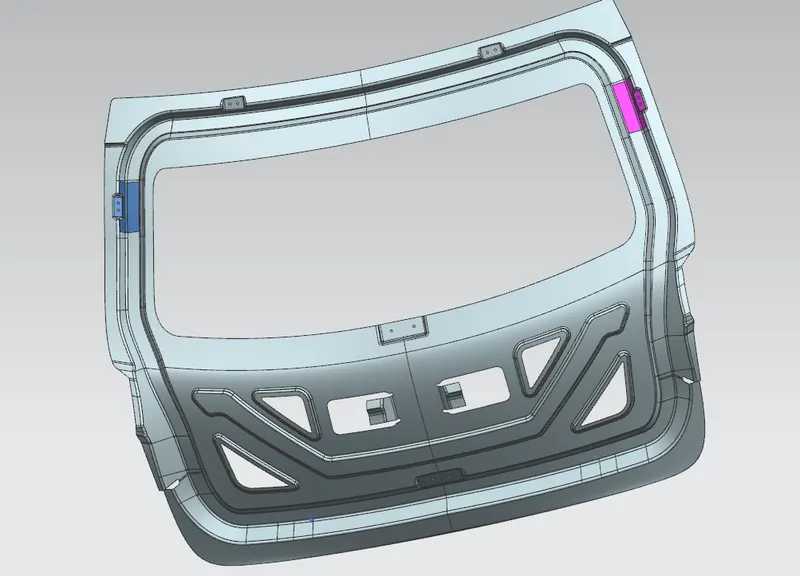
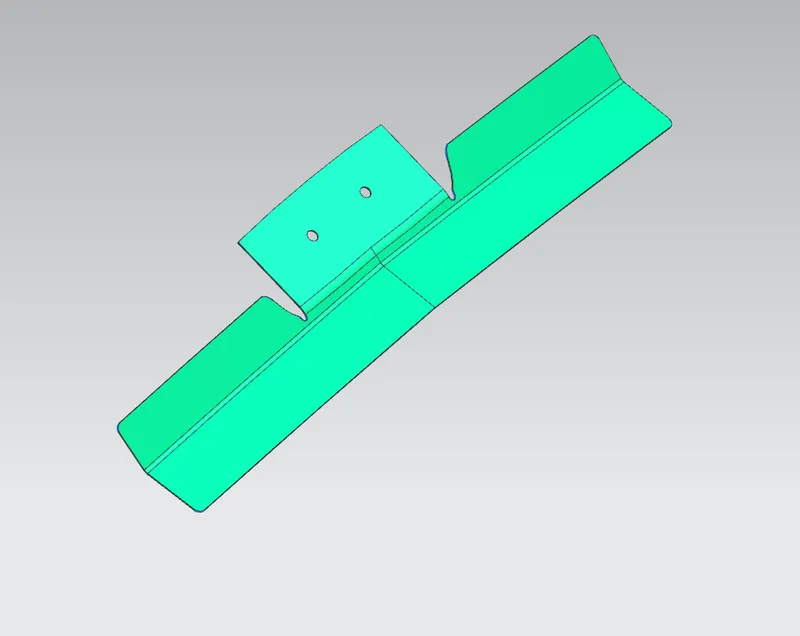
Striker Reinforcement:
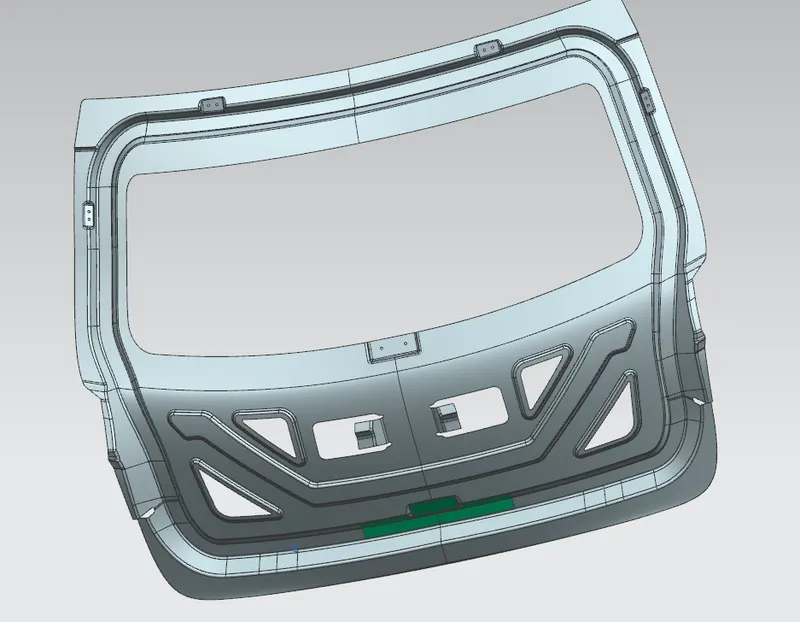
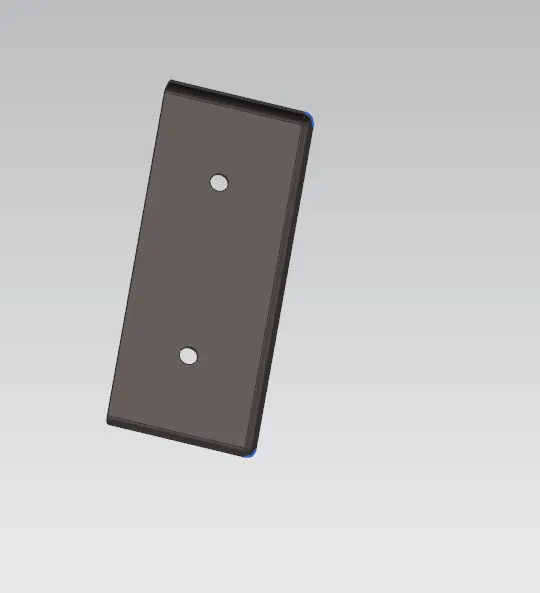
Wiper Motor Reinforcement:
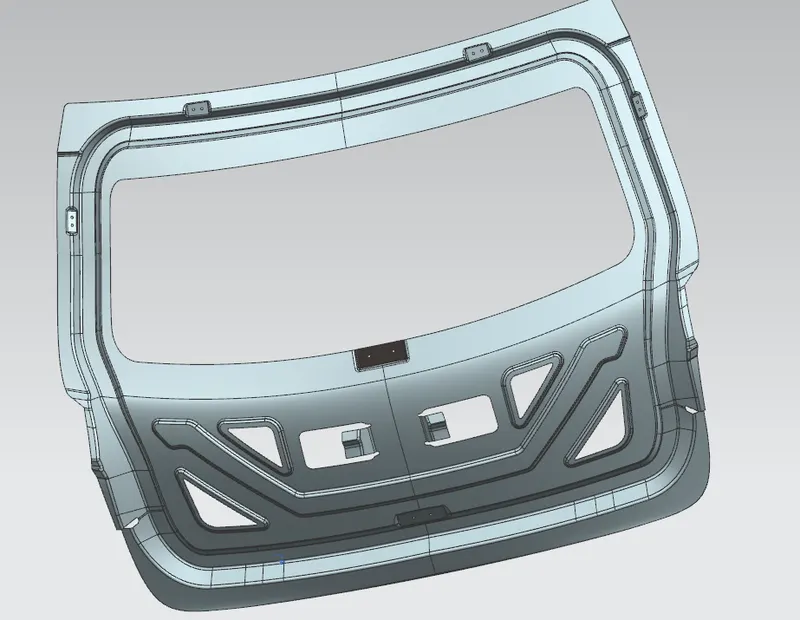
BAck Door Assembly:
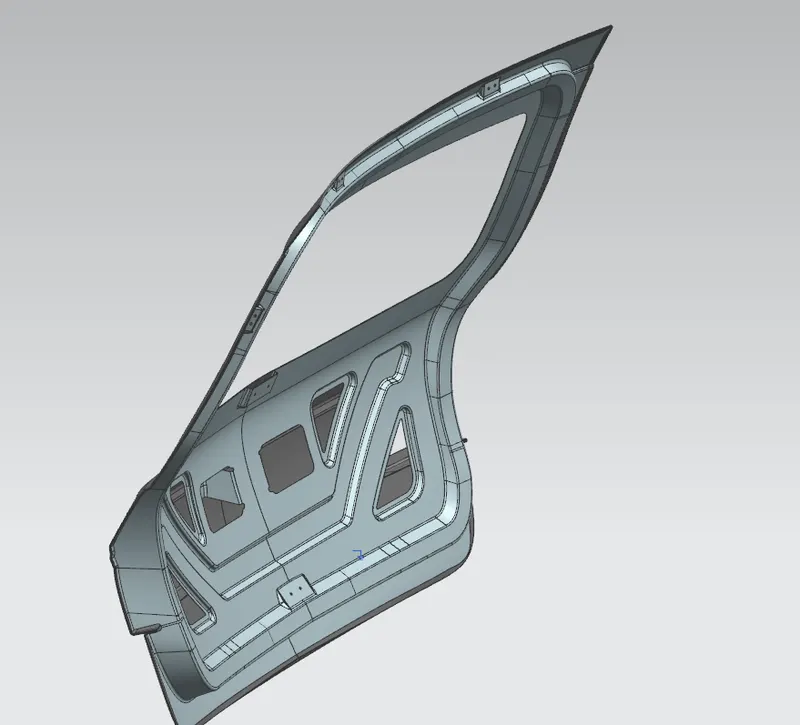
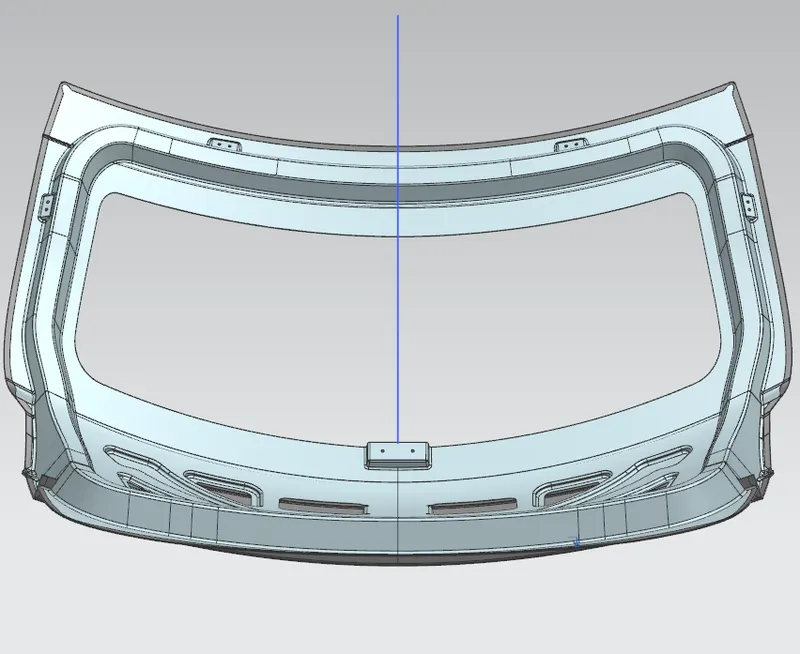
Tooling Direction:
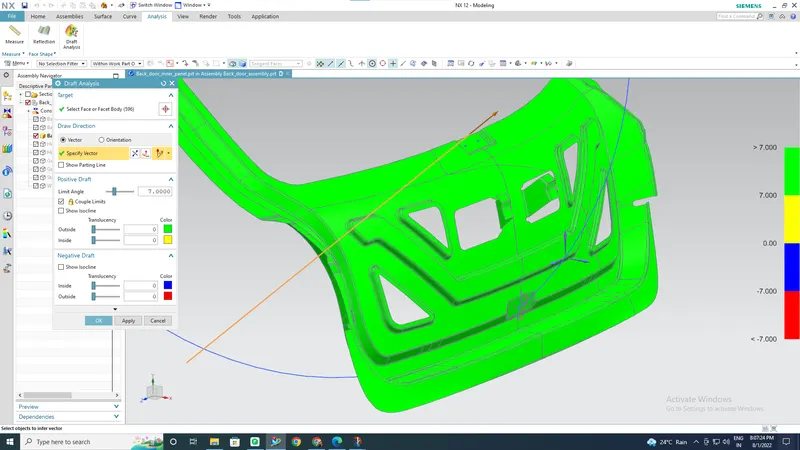
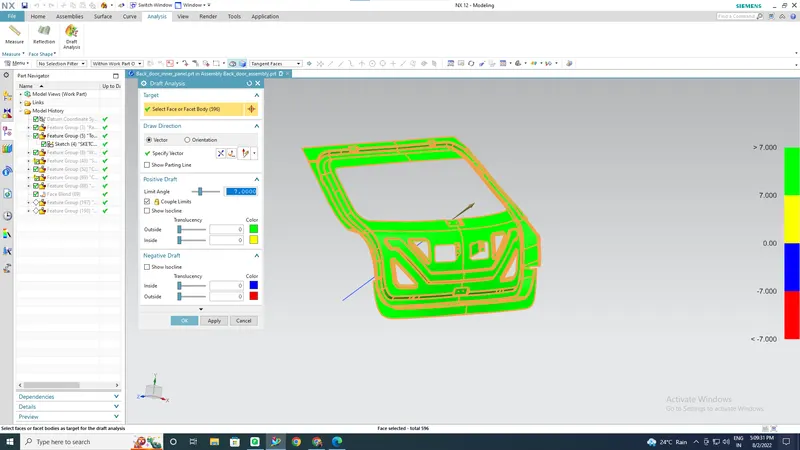
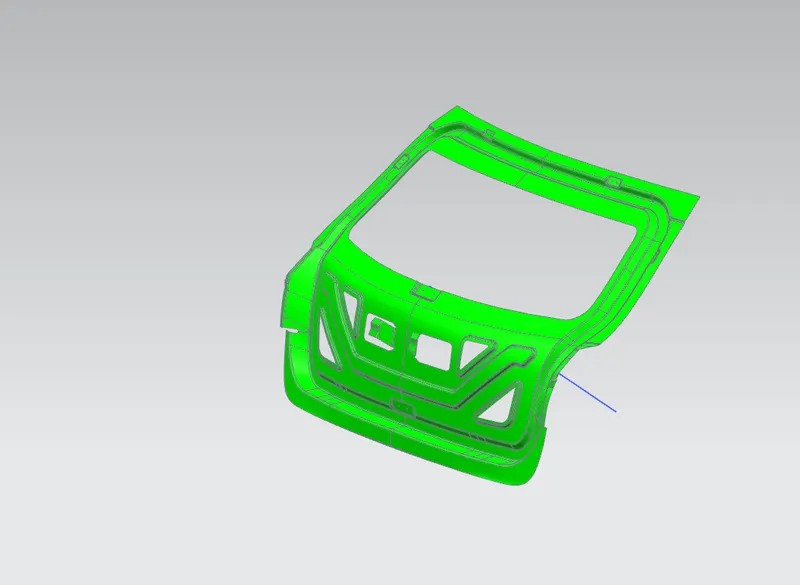
The direction in which the Core and Cavity open and close is known as the tooling axis. In order for the component to be easily ejected from the moulds, Design Engineers must analyse the Class A Surface and determine the appropriate tooling direction while keeping in mind that all drafting angles are with regard to the tooling axis.
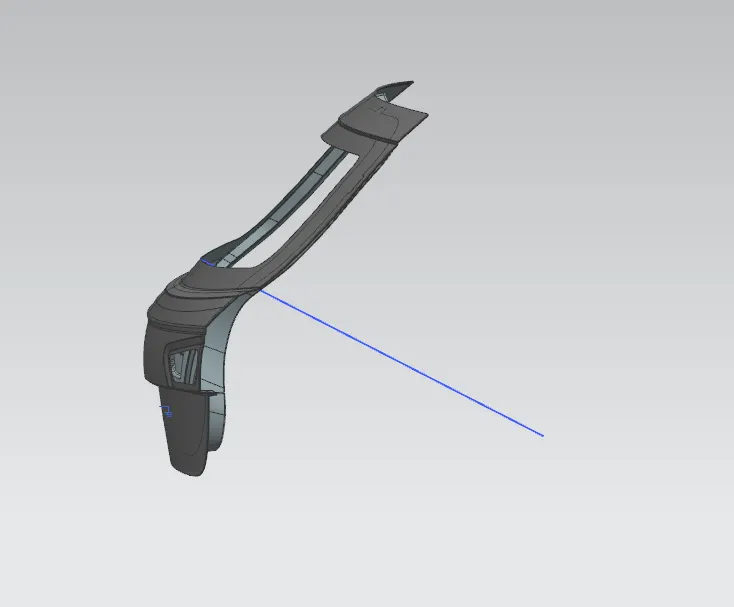
Draft Analysis:
CONCLUSION:
The backdoor design is completed keeping draft angle in mind with respect to the tool direction. The cutouts, embosses, extensions are done in tooling direction.