Design of backdoor
Design of Car Back Door
Introduction-: This challenge is to about designing and studying the back door/tail gate part considering the Class-A surface, design regulations, manufacturing practices & safety standards.
In this challenge we will be gaining the exposure and doing the detailed study on the following –
1. Back Door/Tail Gate -:
A back door of a car which is also known as “Tailgate” or hatchback door or rear door, is a hinged component sometimes mounted with other means such as tracks, roofs usually used for accessing the cargo/boot space in the car. The Tailgate/Back door can be operated manually as well as electronically-power driven types.
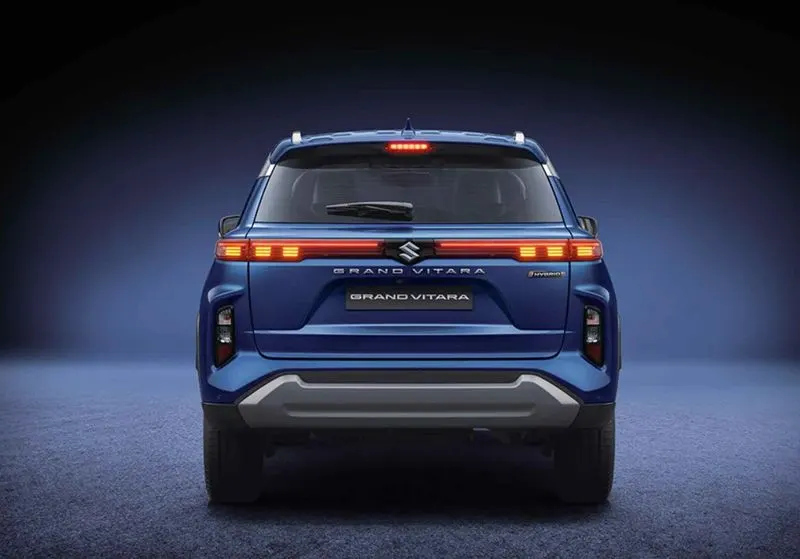
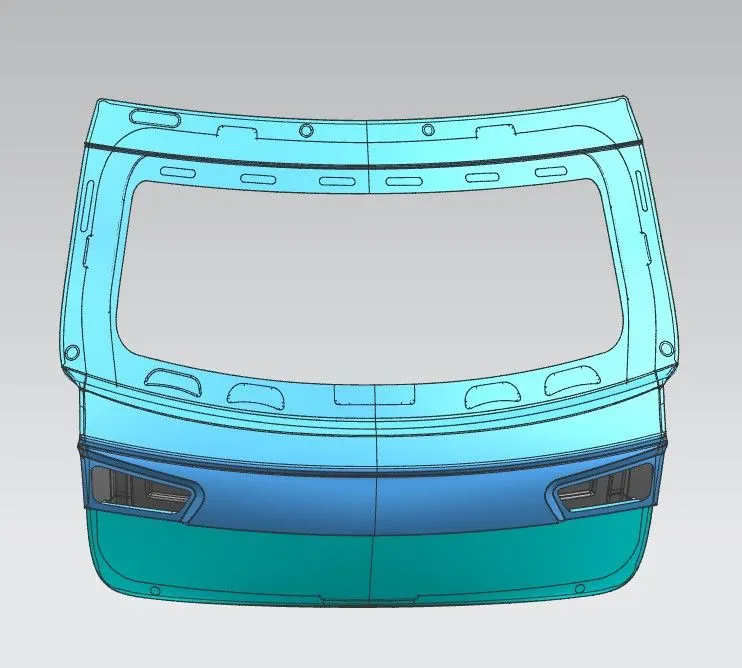
Types of functional mechanism for back door-:
a. Hinges -: Car door hinges are small components which are mounted permanently on the door as well as rear portion of car roof. The hinges allow the back door to open and close on a fixed rotational axis. The opening position and closing position are determined and fixed according to the hinge mounting.
The hinges play an important role in the back door assembly such as they work as door retention system, such as it holds the tailgate in case of impacts, accidents, roll-over. It thus ensures that the tailgate of the car tends to remain closed while collision or impacts. Also known as Door Retention system, the hinges are the assembly of the parts/ components that are mounted on the body and the door of the car.
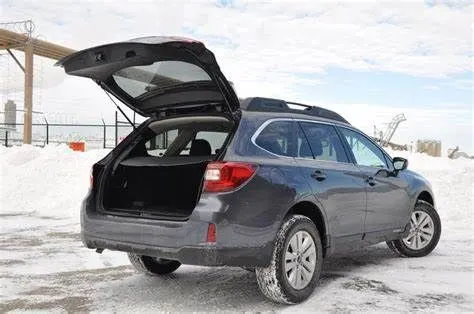
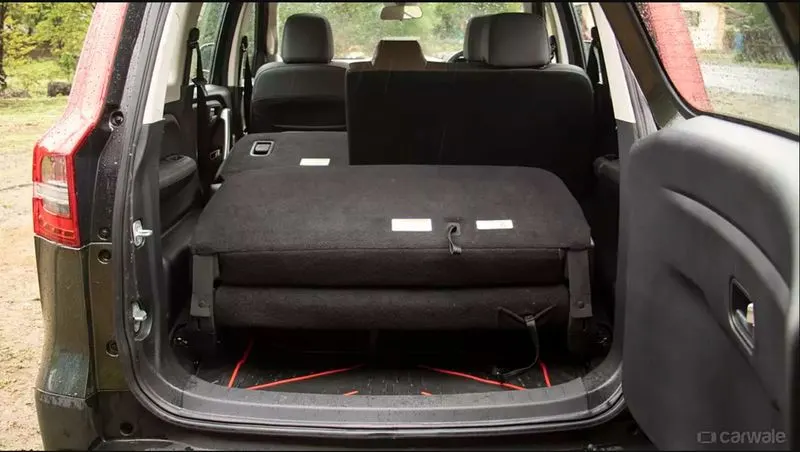
The Car hinges can be top mounted as well as side mounted.
Top Mounted Back Door-:
Side Mounted Back Door-:
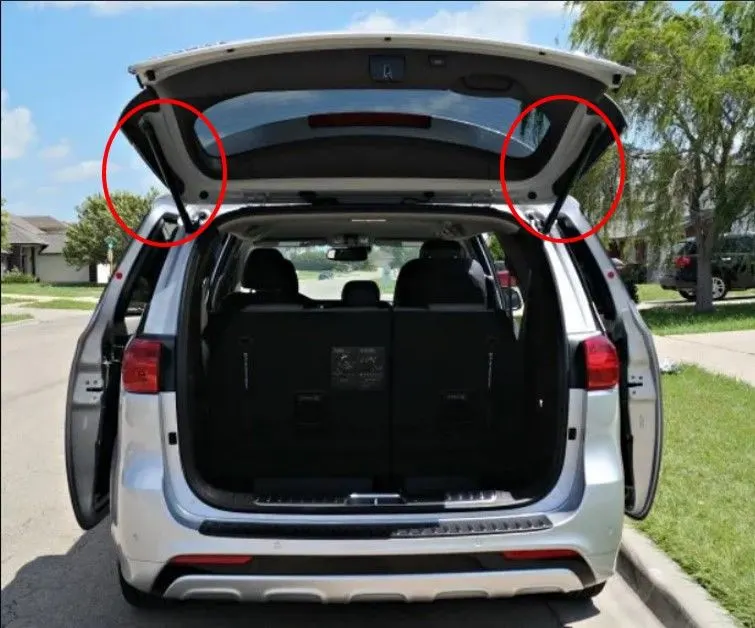
b. Gas Stay Rod-: The gas stay rod are the supporting mechanism for the tail gate when it is in open state, the gas stay rod also simplifies the gate opening procedure for the back gate. The positioning of the gas stay rod plays major role as they bear the whole load of the back door as well as also determines the height & angle at which the gate remains opened.
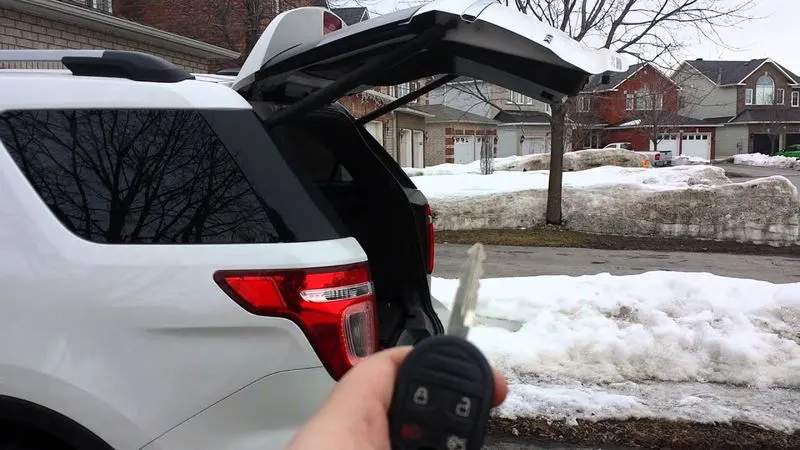
c. Power Lifting mechanism-: In some premium segment cars such as ford, Volkswagen, Audi and BMW the power lifting mechanism with automated controls are provided for user convenience. The power lifting mechanism automatically lifts the tail gate of the car, these mechanisms are electronically controlled users are provided with the features such as voice control, buttons at the IP panel, key control, gestures controls and the button at the bottom of the door. The illustration of such mechanism is shown in the image below.
2. Back Door parts & components-:
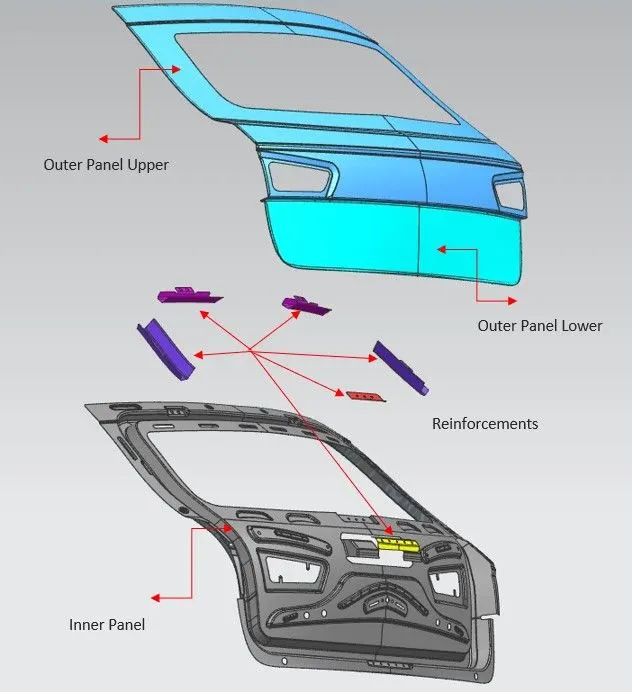
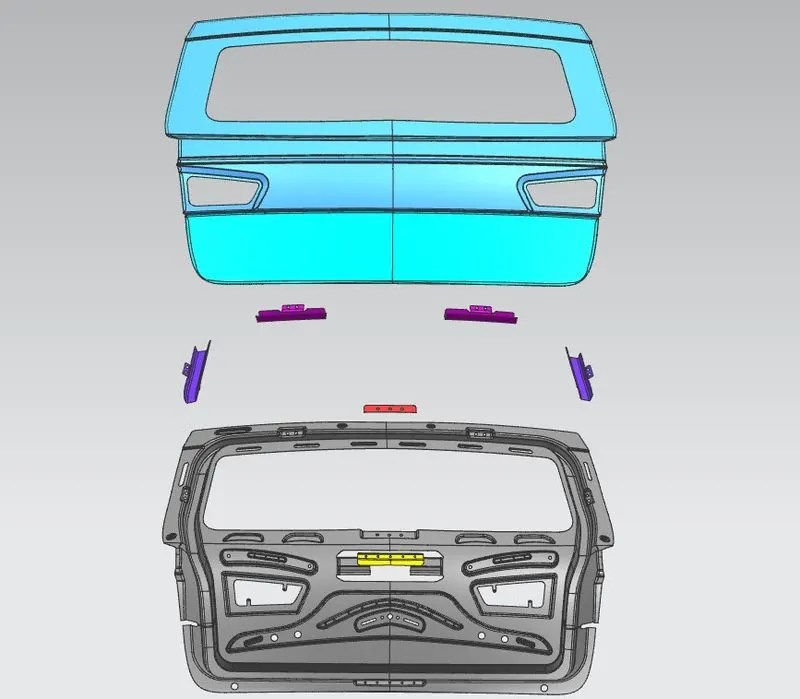
The Back door can be subdivided into more than 2 to 3 sections and designed accordingly to simplify manufacturing process, reducing the production time. The Back door design in this project is designed into two sections Outer panel Upper & Lower. The other parts and components are-:
- Outer Surface (Class-A) Upper & Lower.
- Inner Panel.
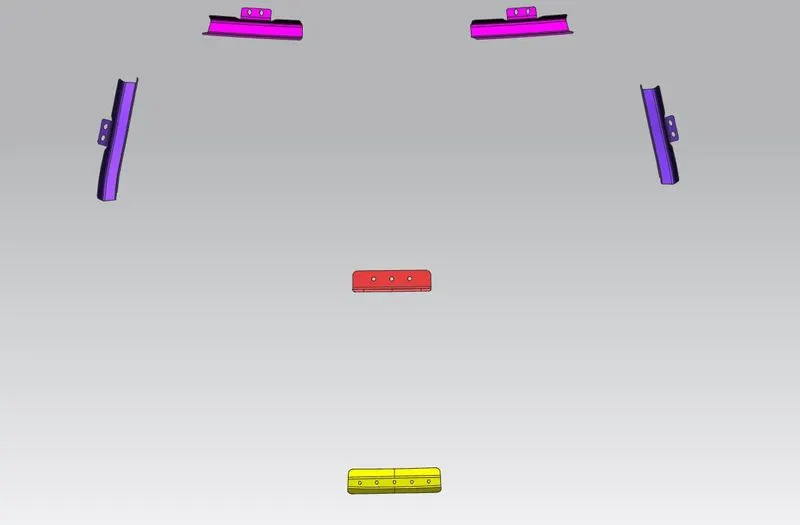
- Hinge Reinforcement LH & RH.
- Gas Stay Reinforcement LH & RH.
- Wiper Motor Reinforcement.
- Latch & Striker Reinforcement.
3. Functional & Design Requirements-: Functional & Design requirements for the back door plays a fundamental role in designing & assembling the whole component. In this article we will be looking out for some of the important design & functional requirements essential to design the back door.
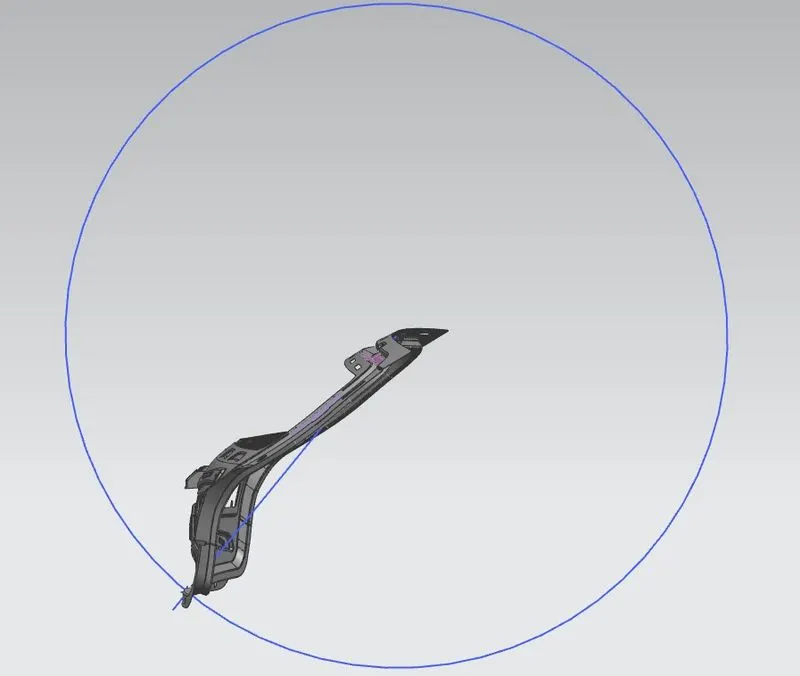
a. Hinge Axis & Positioning -: As this part is the hinged commodity so the first most step in designing the back door is to define & position the hinge on the back door. We can position the hinges as per the data received from Roof commodity designers as well as the side body data we have. After the hinge positioning, we can define the hinge axis which will reveal the opening angle of the gate. As per the axis of the hinges we can sketch the trajectory path for the Latch & Striker mounting. In the below sketch the hinge axis is illustrated for the reference.
b. Latch & Striker Trajectory -: The striker & latch plays an essential role in the designing of the back door. As the axis of the latch & striker determines the closing of the hood as well as the ergonomics of the design. The striker is positioned perpendicularly to the hinge axis. So that there is no hinderance in opening & closing of the back gate. In the below sketch the hinge axis is illustrated for the reference.
c. Gas Stay rod positioning-: As the Back door panel is a big & heavy commodity so for its functionality the gas stay rods are provided for easy, hassle-free opening & closing of the back door, it also positioned keeping in regard for convenience of the customers. The Gas stay rods plays essential role in opening & closing of back door and hence is a design as well as functional requirements.
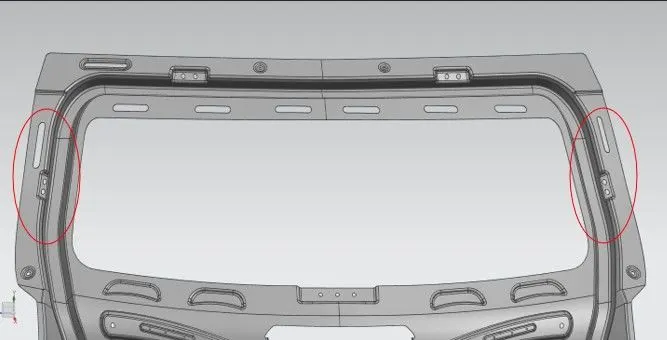
d. Sealing Flanges-: Sealing flanges are the flanges on which the rubber trims are mounted on which the back door rests in closed position. The Sealing flanges design is the first & foremost step in designing of back door. We can design the sealing flanges based on the data received from the side body design engineer, roof design engineers or can follow the Class-A surface and design the sealing flanges. These flanges not only the design requirement but also the safety requirement as it absorbs the shocks and impacts as well as reduced the NVH and enhances the performance and life of the components.
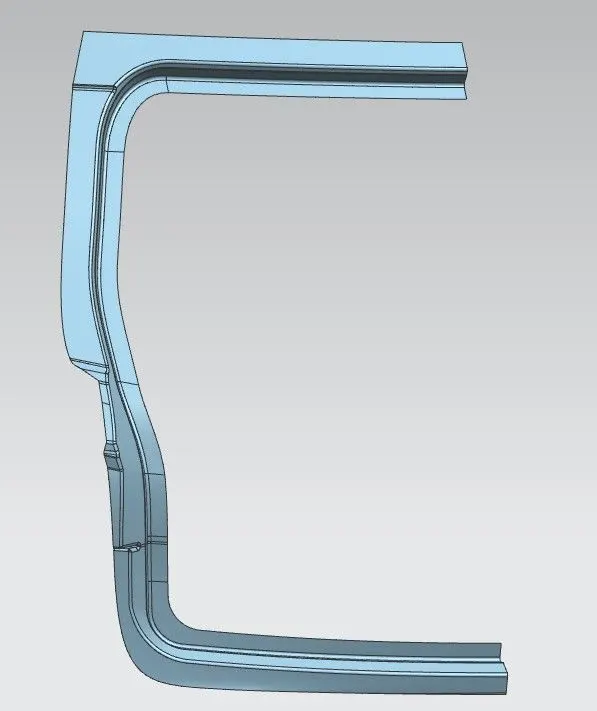
e. Rear Visibility Criteria-: The Rear visibility criteria is the design requirement that describes the design of the back door be such that the driver gets the maximum view of surroundings from the rear mirror. The design of the flanges and body of back door such be that the rear visibility criteria are optimized and enhanced to the best possible.
f. Rear Crash regulations-: The Back door is the panel that is on the outermost rear portion of the car and is subjected to the maximum impacts, crash from rear side. The design of the back door should be such that the forces of the collision, impact & crash should be deviated towards the edges of the back door and forces gets absorbed.
These regulations are taken into safety consideration of the vehicle & the passengers. The forces should be minimized within the back door so that the magnitude of the forces deviating towards the passenger sections are lower in magnitude.
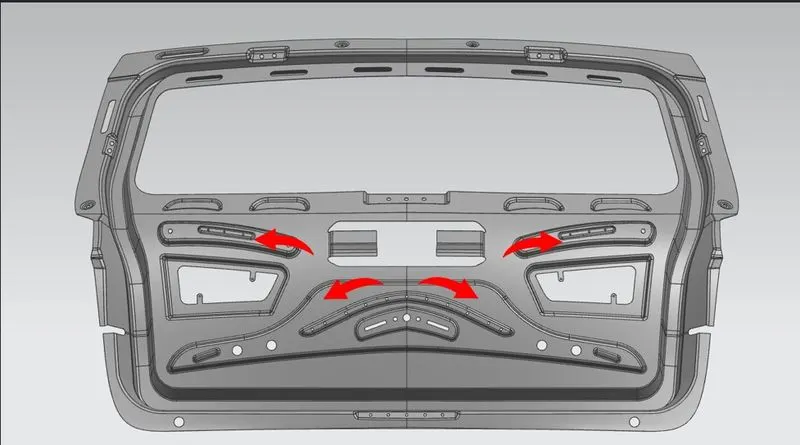
4. Manufacturing Processes & Design Requirements for Assembly-:
For Manufacturing of the back door, the in traditional car now a days steel is used due to its versatile properties such as strength, endurance, high yield strength, high modulus of elasticity, increased safety, easily formable and good ductility.
Now a days some manufacturers also consider the aluminium as an alternative to the steel in manufacturing of back door as it drastically reduces the weight of the whole component, leads to increase fuel efficiency, high safety, increased boot/cargo space, good yield strength and high ductility as compared to steel. Manufacturers can thicken the panel more than the steel and hence reduces the overall weight. Aluminium provides cost-effective and reduced manufacturing processes. But the overall manufacturing costs for aluminium back door is more than the steel component.
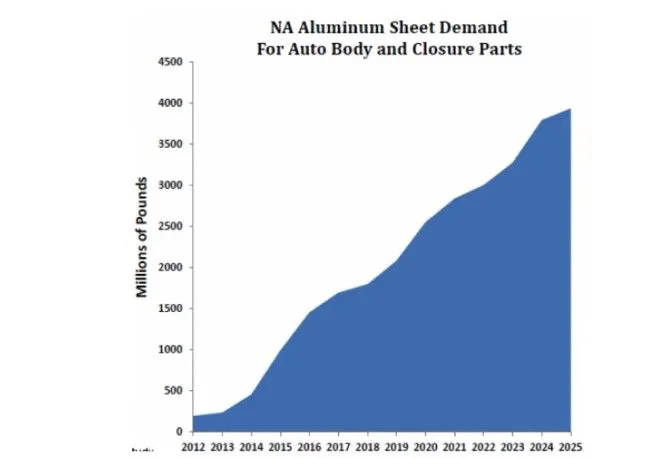
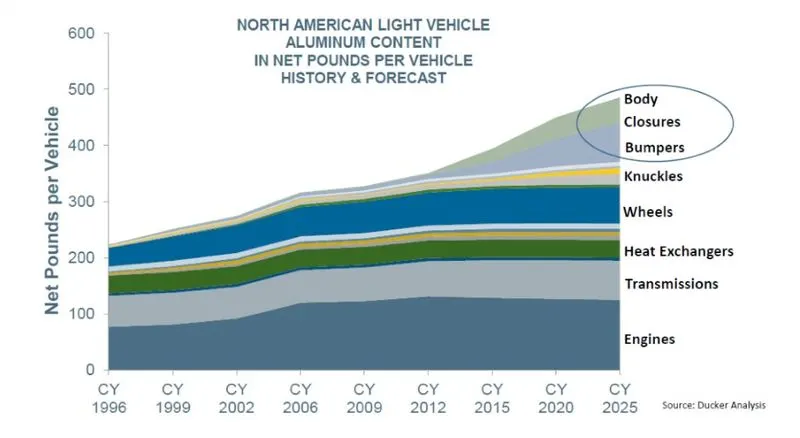
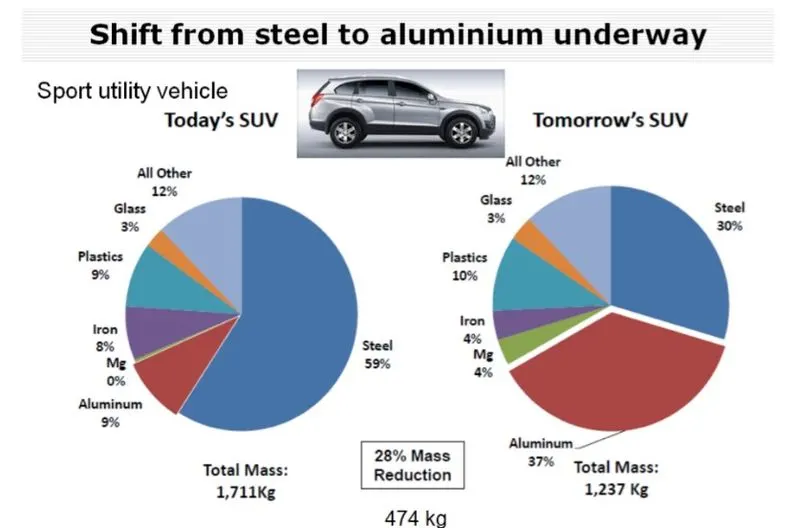
Note-: The study data in the above figures show how the aluminium is revolutionizing the automotive industry. Currently the automotive industry is focussing on lightweight vehicles & low-emission vehicles. As the weight is reduced the emission will be reduced proportionally. Since the automotive industry is to met the strict emission needs in the next few years, so to achieve that manufacturer will require a mix of various aluminium alloys and high strength steels, magnesium, composite materials (carbon fibre) and various plastic materials.
Ex-: Ferrari, for example, has developed unique forms of aluminium, such as reinforcing it with ceramics to reduce the weight by additional 15-20 %. Ferrari favours aluminium over CFRP since in a crash, aluminium is safer and easier to repair – aluminium crumples while carbon fibre shatters.
Some of the manufacturing processes in the back door manufacturing cycle to be considered are-:
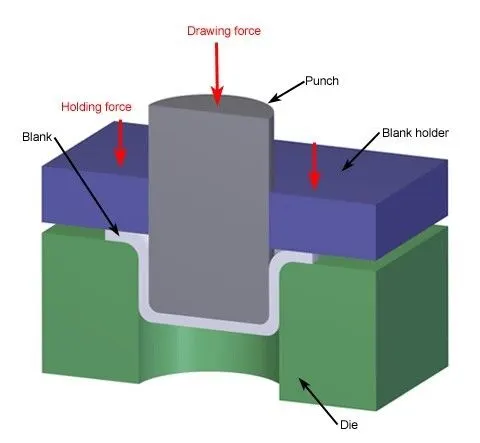
i. Deep Drawing -: Deep drawing process is a forming process for sheet metals, into which the complex shapes are derived out of the blanks of sheet. The blanks are deep drawn into the core cavity with the help of the punch and due to high ductility and modulus of elasticity the sheet gets deep drawn into the complex shapes rather than getting sheared.
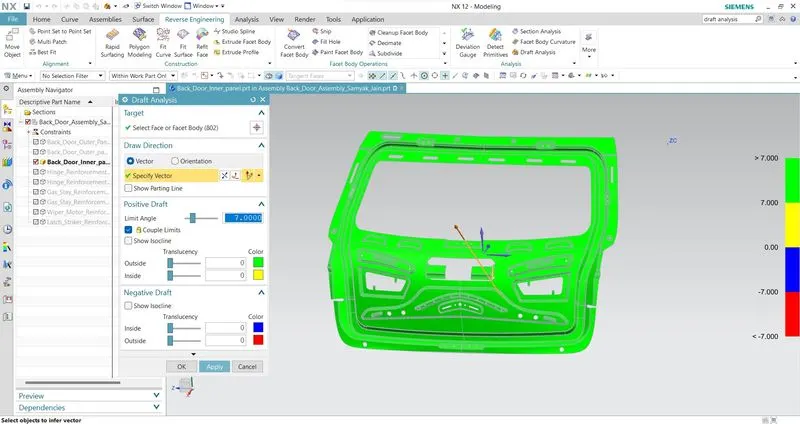
In deep drawing process we need to consider the positive draft angle for the design of the component so that the manufacturing quality and production rate increases. The tool wear is directly proportional to the draft angle provided. The more the clearance between the tool and the walls of the drawn part the more précised the part is. The minimum draft angle for the steel to be considered is 7° and in case of aluminium is 3° as the aluminium parts are manufactured using die casting process, the complex shapes and geometry are easily achieved with precision in die casting.
ii. Stamping Process-: Stamping is the process in which the raw material is feeded in to the form of steel coil or sheets and the finished part/ component is derived into the complex shapes and geometry. In Stamping process, the steel (raw material) is punched and blanked into the required shapes and size, then the following blanks are deep drawn into the complex shapes, the deep drawn parts are then trimmed for extra material and burrs, the trimmed parts are then heat treated and washed for the required thickness and properties. The heat-treated parts are then washed and coated if any and supplied for joining processes and assembly processes.
iii. Joining Processes-:
a. Mastic Sealant & Welding: The sheet metal parts and components are then welded and assembled together using the welding processes such as TIG welding, laser arc welding, spot resistance welding and gas arc welding.
The another joining process is the mastic sealants that are used to join two adjacent sheets/faces together using a mastic sealant. The mastic sealant act as a joining medium between the parts and thus ensures reduced noise and vibrations and increased part life. The Mastic sealants are used on the surfaces such as Outer panel so that the aesthetic appearance of the car does not gets damaged.
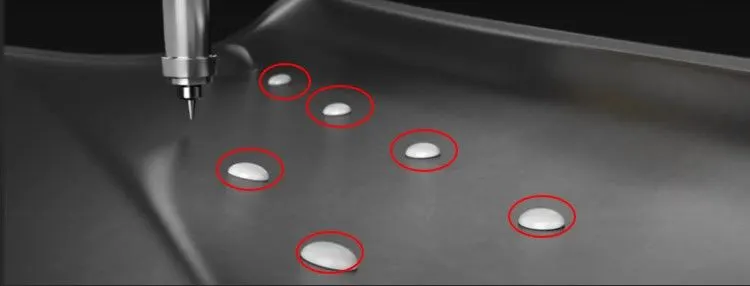
Mastic Sealant applied through robotic arm
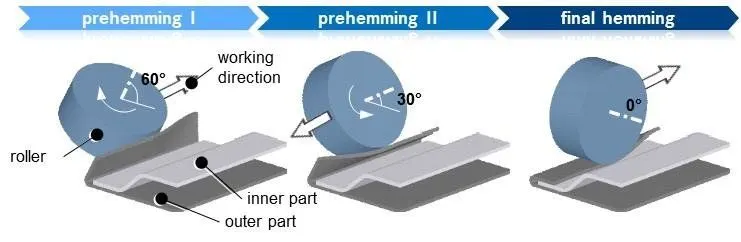
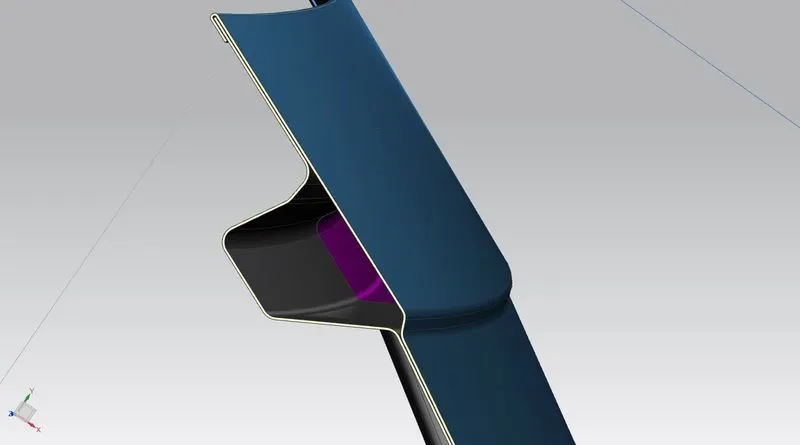
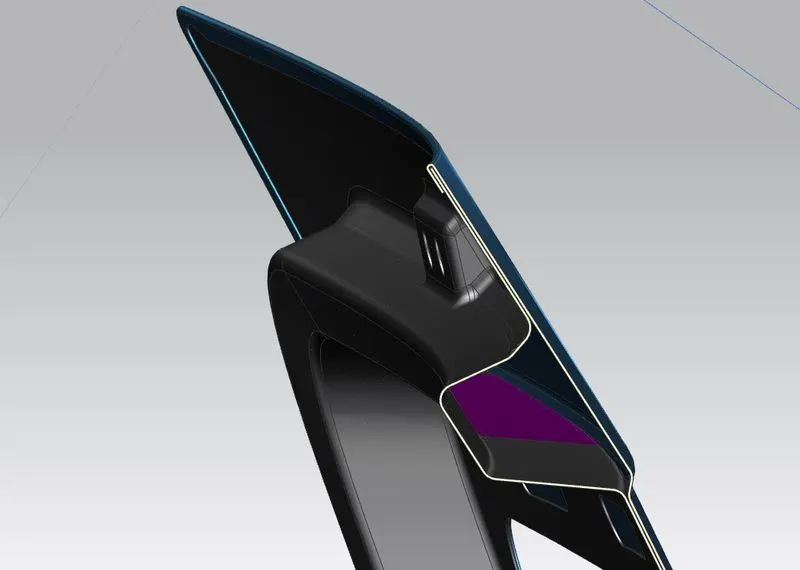
b. Hemming Process-: Hemming process is the process in which the two panels are joined together by rolling the edges of the upper panel on to the lower panel such that both the panel gets joined.
The hemming process joins the edges of the two adjacent panels and provides aesthetic appearance to the component.
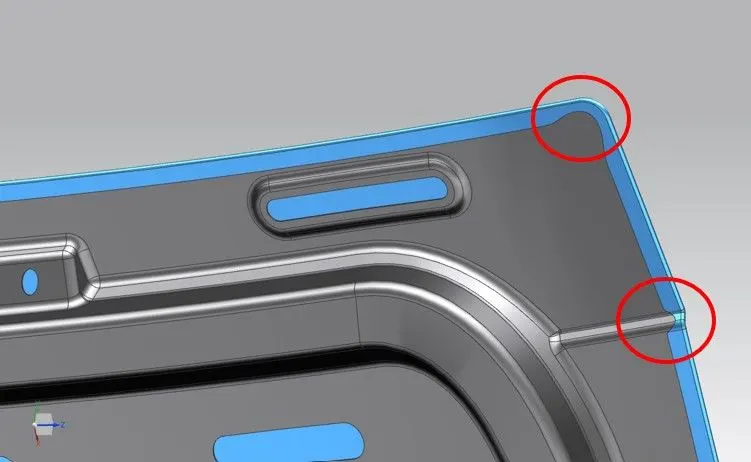
Hemming reliefs are the circular reliefs in the circular shape that are provided at the sharp ends or the cut-outs so that during the manufacturing process the stress concentration in the part is eliminated and part is formed easily.
This process is also a joining process as it joins the two panels together and forms flanges.
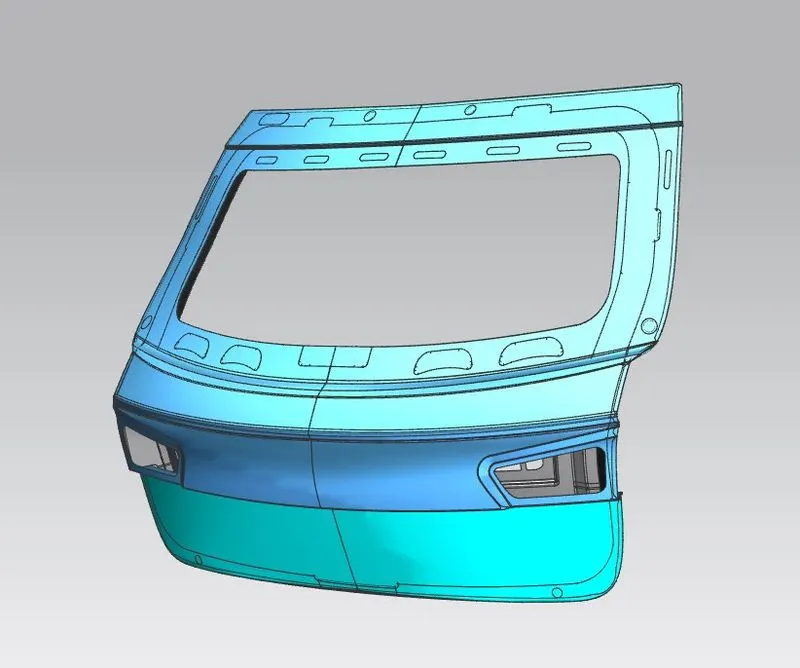
5. Design of Back Door-: As discussed earlier the back door can be segregated into 2 to 3 sections such as Outer Panel Upper, Outer Panel Lower, Inner Panel, Reinforcements such as hinge, wiper motor, latch & striker, gas stay rod. We will be designing the whole parts & components and assembling them to form the design for Back Door. We will be designing the back door from the data of side body, roof & floor of vehicle and taking into consideration the design sheets. The Tail gate is designed using Class-A surface received from the styling team.
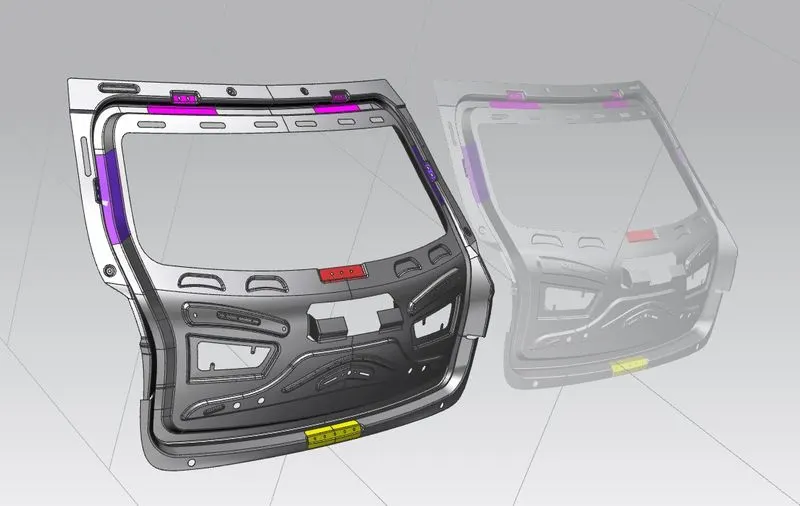
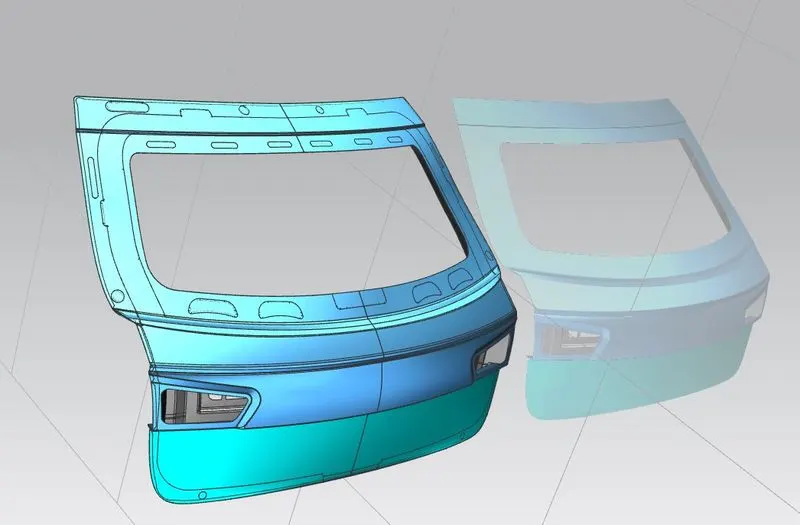
a. Outer Panel Upper -: The Outer Panel upper is the portion of the back door which joins the inner panel and provides aesthetic appearances to the design of the tail-gate. The Outer panel upper of the tail-gate is the portion which gets mounted on to the roof of the car, side body of the car & floor of the car.
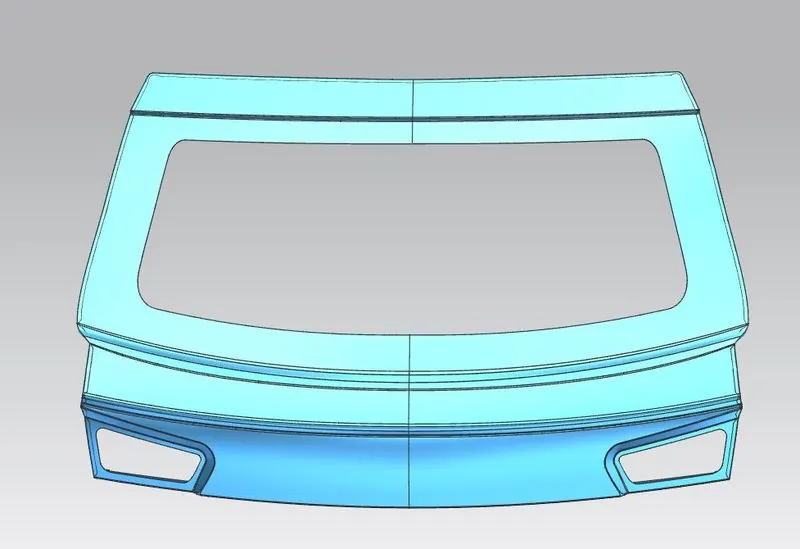
b. Outer Panel Lower-: The Outer Panel lower is the portion of the back door which joins with the upper panel, side body & floor of the car. The latch is most often mounted on to the Outer lower panel.
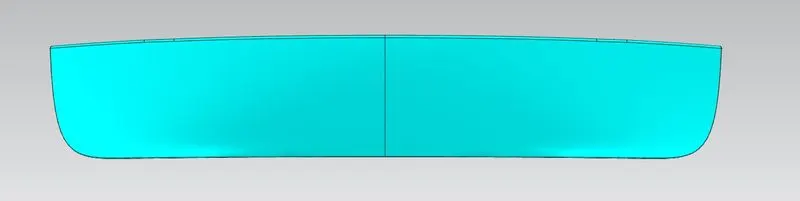
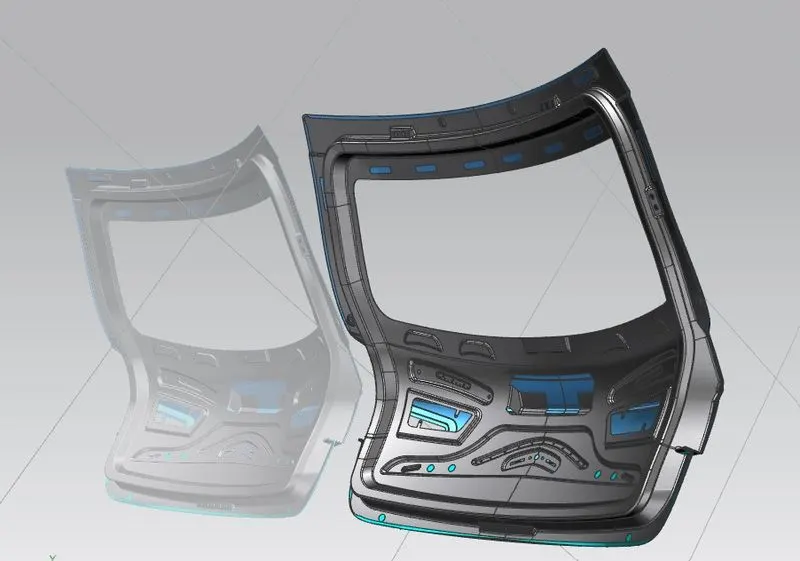
c. Inner Panel-: Inner Panel is the panel which is joined with Upper Outer panel and thus comprises of hinge assembly mounting, gas stay mounting, wiper motor mounting, latch & striker motor mounting, embosses and cut-outs for headlamps installation, plastic trims, rubber trims etc. Inner Panel provides the strength and endurance to the Tail-gate of the car.
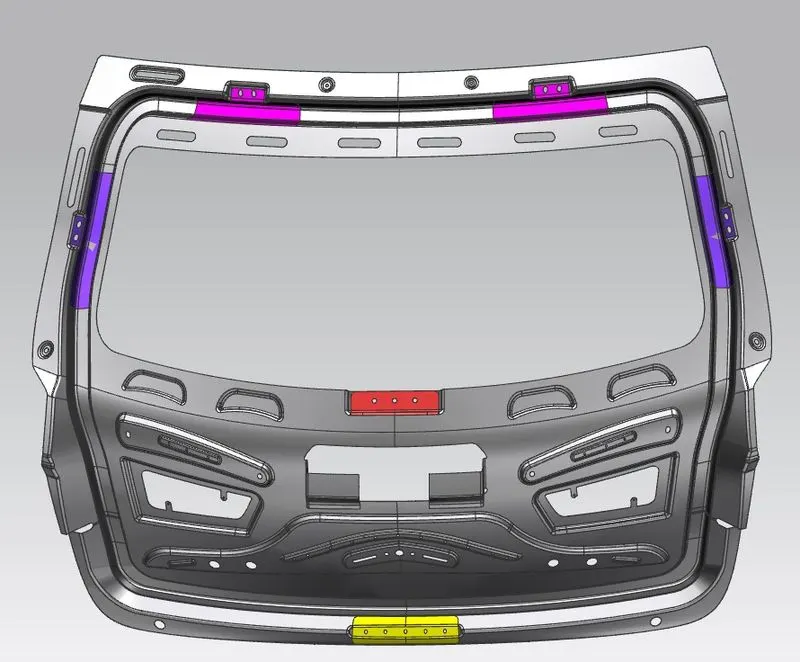
d. Hinge Reinforcements LH & RH-: Hinge Reinforcements are the portion that provides additional strength and endurance to the hinge joints so that the hinge is properly functional and there is no failure on to the hinge joint. As the whole back door weight acts on to the hinges when the door is fully opened.
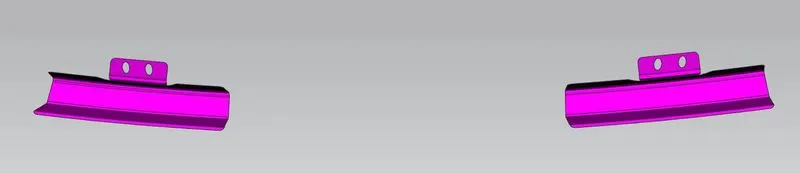
e. Gas Stay Reinforcement-: Gas Stay Reinforcements are the portion that provides additional strength and endurance to the joints so that the gas stay is properly functional and there is no failure on to the joint. As the whole back door weight acts on to the gas stay when the door is fully opened.
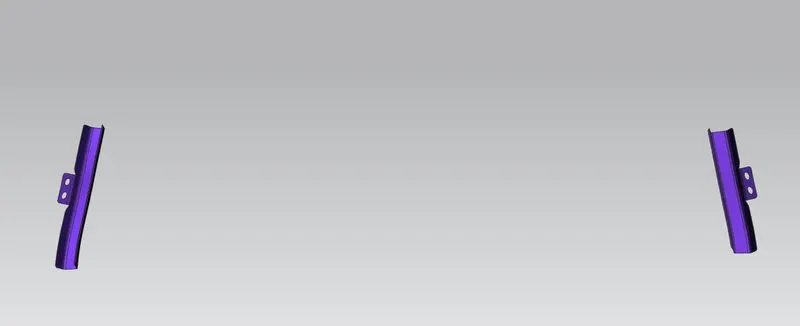
f. Wiper Motor Reinforcement-: Wiper Motor Reinforcements are the portion that provides additional strength and endurance to the wiper motor mounting so that the noise and vibrations are eliminated as the wiper rotates the motor operates and due to which the vibrations get induced into the joining parts which over a period of time can lead to part failure/improper working.
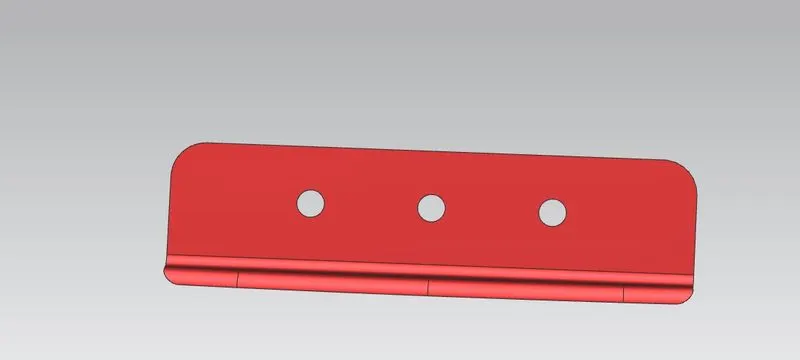
g. Latch & Striker Motor Reinforcement-: Latch & Striker Motor Reinforcements are the portion that provides additional strength and endurance to the Latch & Striker Motor mounting so that the noise and vibrations are eliminated as the motor operates and due to which the vibrations get induced into the joining parts which over a period of time can lead to part failure/improper working.
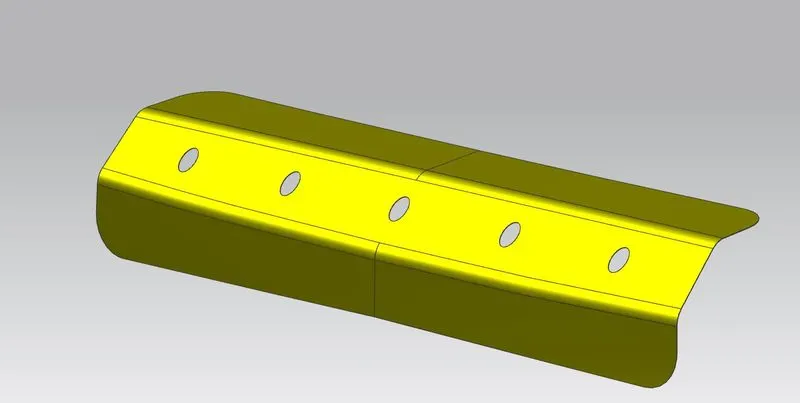
All Reinforcements are illustrated below in the figure-:
6. Draft Analysis-: Draft Analysis is a study of the designed part in which the part producibility is checked on to the given draft angle. The Draft Analysis help us to determine whether our designed part is producible or not and if it has a negative draft angle the results will be highlighted and shown in the table on to the RHS of the screen.
Some of the draft analysis study figures attached below-:
Inner Panel-:
Assmebly Views & Orientation-:
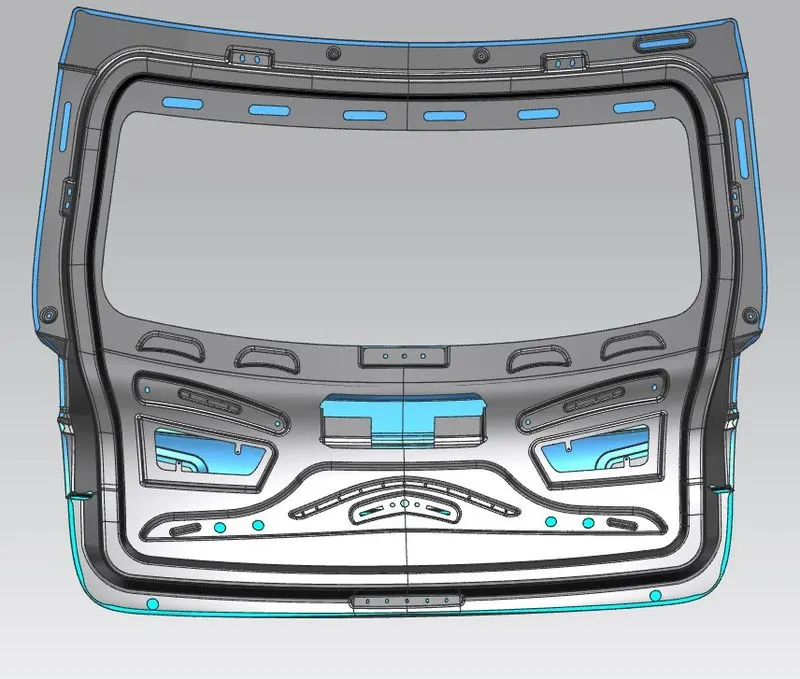
Assembly Exploded Views-:
Conclusion-: The overall learning from this project work is that we learnt how the different commodities are designed taking all the considerations such as manufacturing, design intent, safety standards and carry-over parts.
The Back Door design projects overview the complete understanding of the functional & design requirements as well as its significance in to the BIW body.
Thanks