Design of backdoor
BACK DOOR DESIGN CHALLENGE
1.Objective
- For a given backdoor styling surface Come up with a design of the inner, outer panel of the tailgate with essential reinforcements and flanges required.
- To create a complete tailgate by assembling all the components altogether.
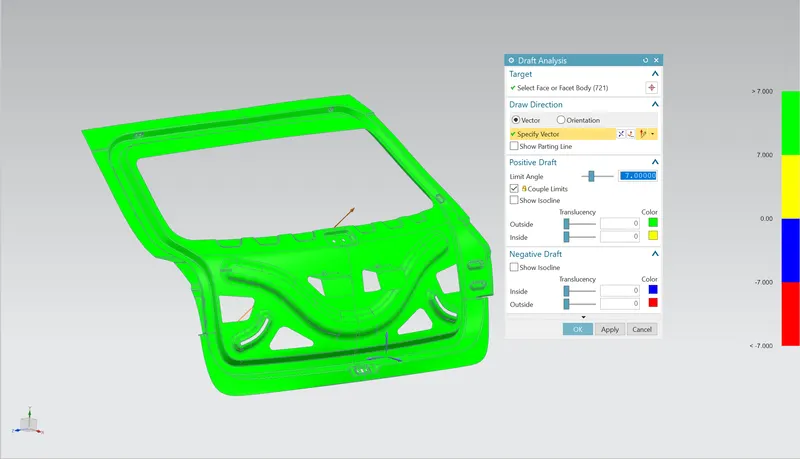
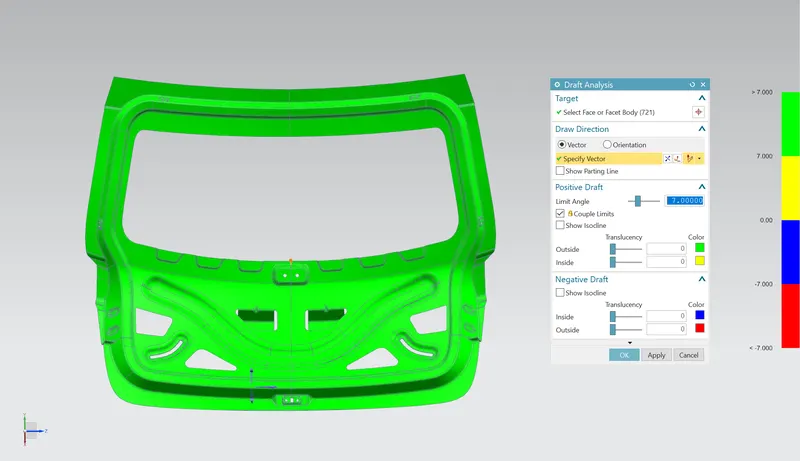
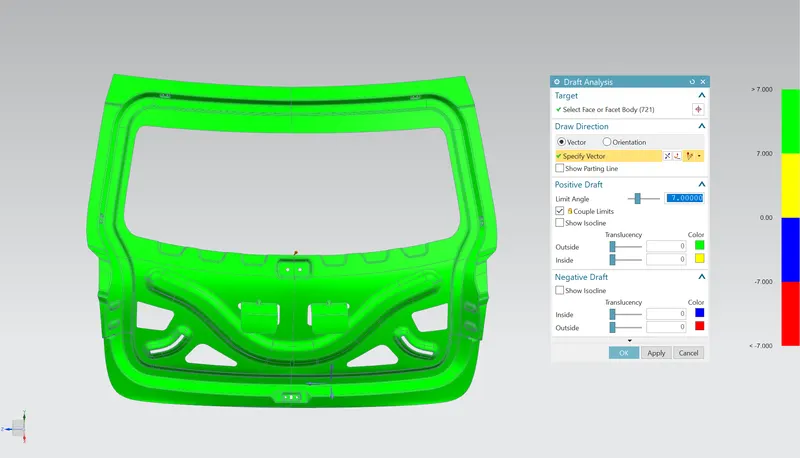
- To perform draft analysis on the various components of the tailgate, to ensure that they are manufacturable.
- Software used is Siemens NX CAD software
2. Introduction
2.1 BACK DOOR
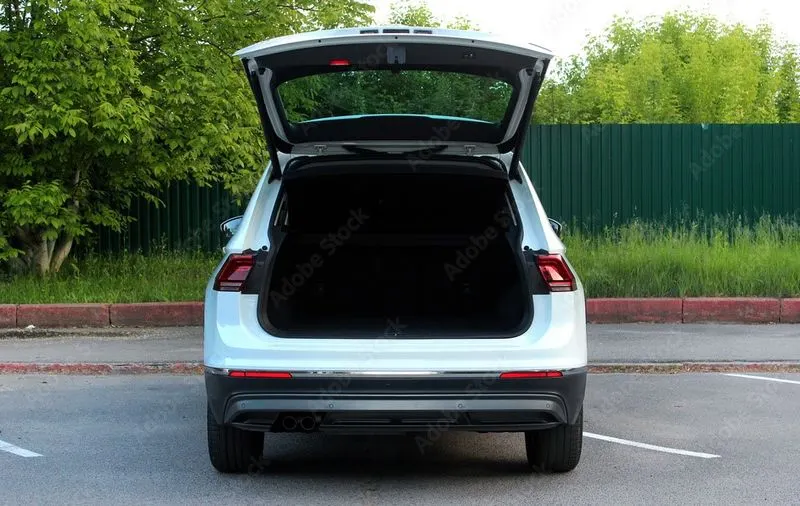
The trunk (North American English) or boot (British English) of a car is the vehicle's main storage or cargo compartment, often a hatch at the rear of the vehicle. The Backdoor is an automotive component which is located at the rear side of the car that covers the back portion of the car body. It is located next to the rear passenger seats and it gives access to the luggage space by opening it. If the rear door is mounted on top then it is called a tailgate, it is mostly used in station wagons, Sport utility vehicle and hatchback-type cars.
Nowadays most modern cars come up with power-lifted tailgates which consists of electric motors to open the tailgate which require only initial force to activate. In premium cars, foot sensors are provided which senses the foot movement to open the tailgate automatically and eliminates the manual opening of the tailgates.
2.2 Types of backdoor mountings
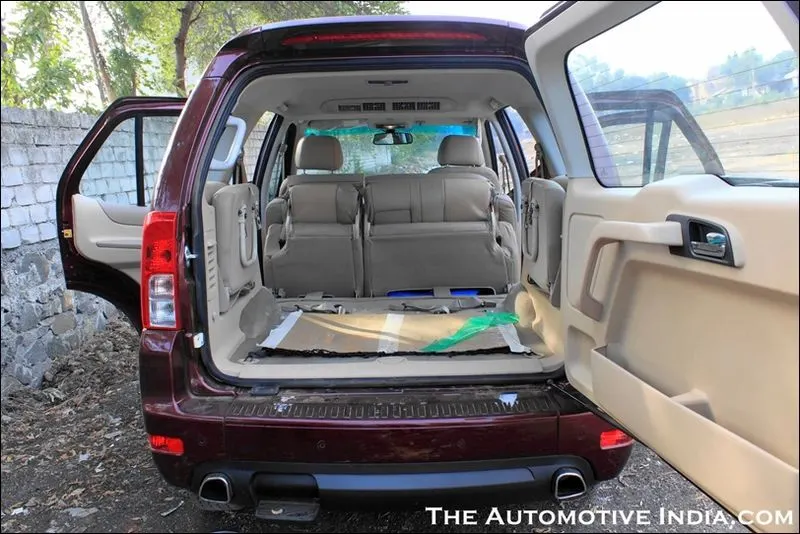
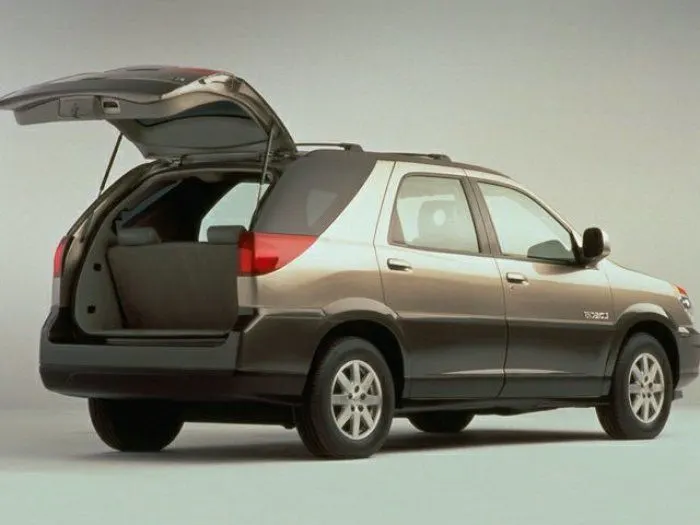
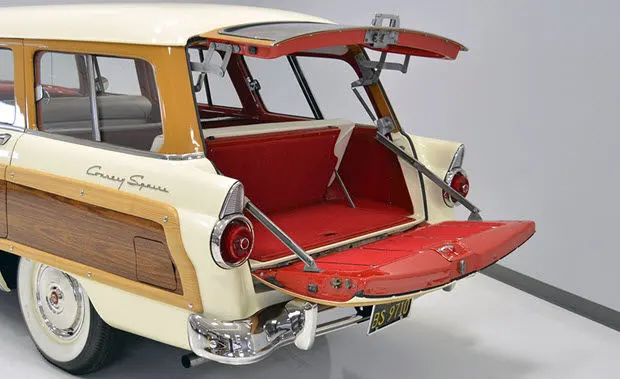
The opening of the backdoor depends upon the type of vehicle the different types of rear door opening are as follows:
Side-mounted
Top-mounted
Bottom mounted
2.3 Materials used for the manufacturing of backdoor panel
- Aluminum
- Steel
Aluminum is lightweight material as compared to that of steel but at the same time the price of aluminum is more than that of steel. So, it is only used for expensive cars or sport vehicles where the weight of the car plays a crucial role. In raw materials costs, aluminum is about three times more expensive than steel, while in terms of conversion costs it is about twice as expensive, MIT said. And in assembly costs, aluminum was 20-30% more expensive than steel. This will we a disadvantage which make the car more expensive to the market.
When it comes to strength properties, aluminum makes for a very desirable metal, as it is more malleable and elastic than steel. It is also very easy to shape, making it one of the most suitable materials for metal fabrication, thanks to its ability to form deeper or more intricate spinning. The manufacturing process used for panels made up of aluminum is different when compared to that of steel. Aluminum panels are made by casting process rather than stamping which is used for steel material due to which the accuracy and precision of the panel is more as compared to that of steel.
In case of aluminum sheet metals, we can provide sufficient strength by varying the thickness of the sheet at weaker sections and no reinforcements would be needed to be provided. In case of steels, reinforcements are essential that we cannot vary the thickness of the sheet it is uniform throughout and also steel panel requires more components as compared to that of aluminum. These are some of the advantages of aluminum over steel.
Steels are stronger and more durable than aluminum, steel also weighs more than its counterpart. Steel is essentially 250% times denser than aluminum, making it obviously heavier. This will add more weight to the Sheetmetal parts and makes the overall weight of the car will increase. This will lead to decrease the performance of the car.
But the drawback of aluminum is it requires more cost to produce a single panel when compared with steel. So, it can't be used all cars but used for luxury cars only.
2.4 Load Analysis of Backdoor
- Bend Test
- Torsion
- Abuse case
- Dent test
- Assembly load case
- Endurance test

2.5 Joining process involved in the back door assembly are as follows
- Spot welding
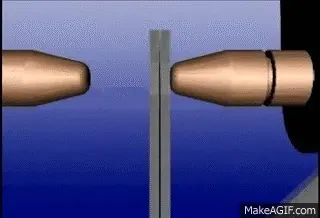
Spot welding (also known as resistance spot welding) is a resistance welding process. This welding process is used primarily for welding two or more metal sheets together by applying pressure and heat from an electric current to the weld area.
It works by contacting copper alloy electrodes to the sheet surfaces, whereby pressure and electric current are applied and heat is generated by the passage of current through resistive materials such as low carbon steels.
- Hemming operation
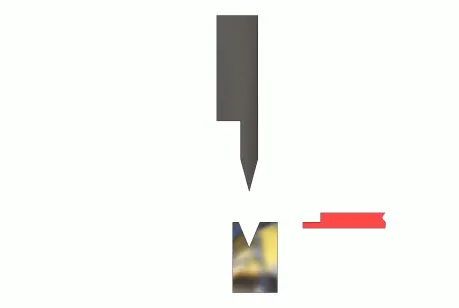
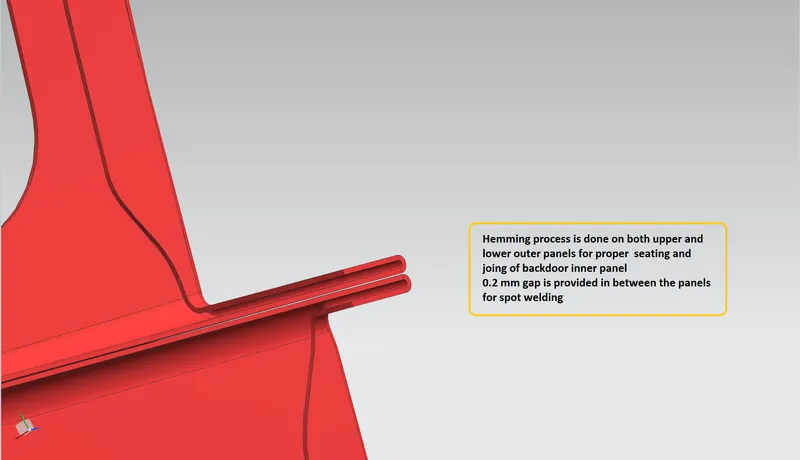
Hemming is a sheet metal forming process in which sheets are joined by bending it to 180°, that is a sheet metal edge is rolled over onto itself. Automotive body panels and automotive parts such as deck-lids, trunk-lids, doors, hoods and tailgates are formed by hemming process. In this process, usually a sheet is bent with the help of inner sheet in three different stages.
3. DESIGN CONSIDERATIONS FOR BACKDOOR
While designing the back door of passenger vehicles we need to follow some design considerations to make the part more efficient and useful. They are
- Rear visibility criteria
- Rear Crash regulations
- Functions of sealing
- Joining techniques used like hemming, spot welding
- Thickness of Sheetmetal is 0.75 mm
Here visibility criteria are so important as it also plays an important role in total safety of the car and passengers inside that the driver should be able to see the rear objects clearly so we should design the rear door with maximum visibility. So, designers should focus on giving more area for rear windshield glass.
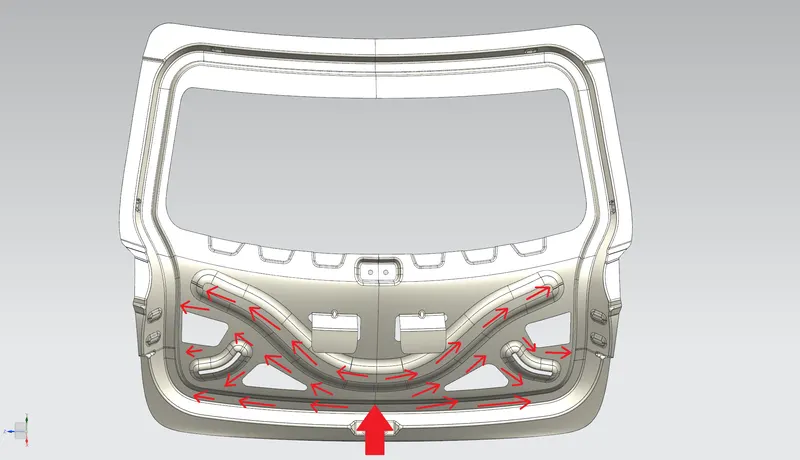
fatal injury. For that purpose, a design engineer can use an inner panel to strengthen the structure of the back door. Embossed sections are created on the inner panel is generally V & Y shape to deviate the forces in an outward direction rather than directly in the normal direction.
In case of rear collision occurs, the passengers inside the vehicle should get minimum injuries. For that, the inner sheet metal part should be designed in such a way that it will take all the force acting on it and deviate it to the sides. This will be achieved by giving the inner panel with some V & Y shape embosses.
Proper sealing is also to be provided in between car body and backdoor thereby not allowing any foreign material to get inside the storage space, that is sealing prevents water, dirt, dust to get in the storage space. So, proper rubber sealing is to be provided on the car body, and a sealing flange is provided on the inner panel of the backdoor which gets in contact with the rubber sealing and forms bound when the door is closed.
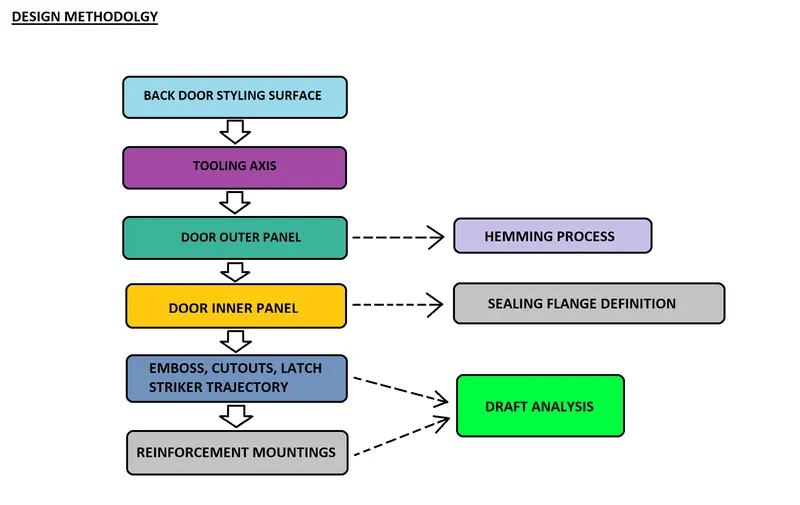
- DESIGN METHODOLOGY
4. Main Components of Back door
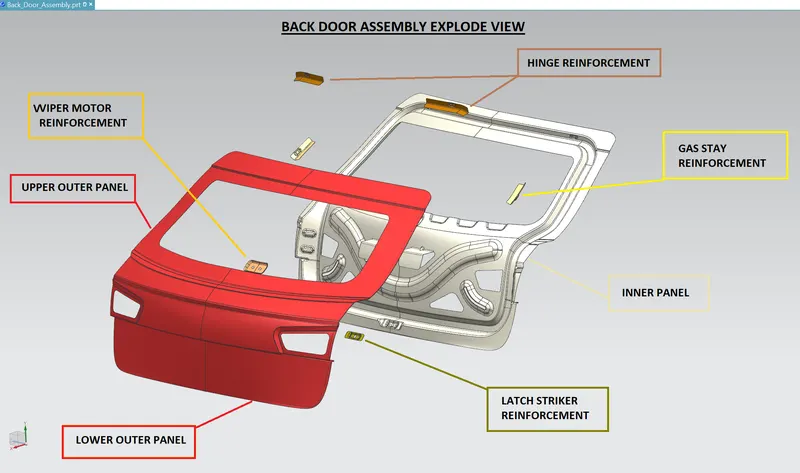
1. Back door outer panel upper
2. Back door outer panel lower
3. Back door inner panel
4. Reinforcements
- Hinge reinforcements
- Gas stay reinforcements
- Wiper motor reinforcement
- Latch and striker reinforcement
Outer panel upper
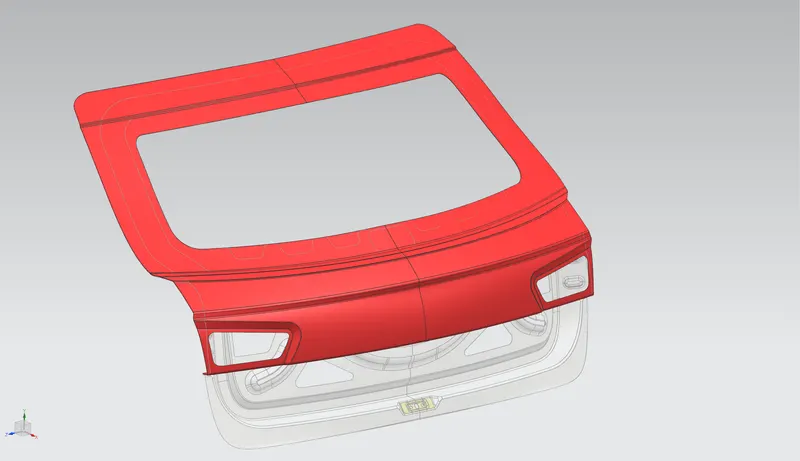
This is the styling part of the back door which gives better aesthetics look for the car. Cutouts have been provided on the upper panel for the fixation of rear windshields, vipers and tail lights. This BIW part is manufactured using the stamping sheet metal operation. Hemming operation is also done for joining the inner panel.
Outer Panel Lower
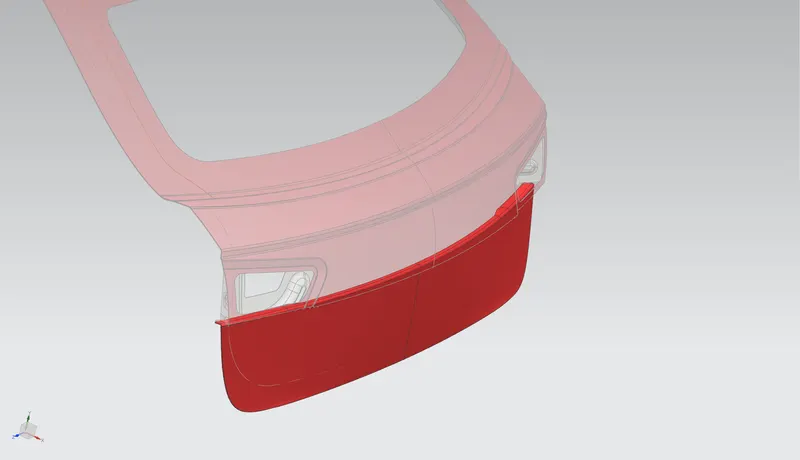
Lower outer panel is manufactured separately and joined with the upper outer panel of the back door using the spot weld operations. 0.2 mm gap have been maintained between the lower and upper panels for proper spot-welding operations. Hemming process is also carried out on this panel.
Joining of upper and outer panels with the help of spot-welding process
Back Door Inner Panel
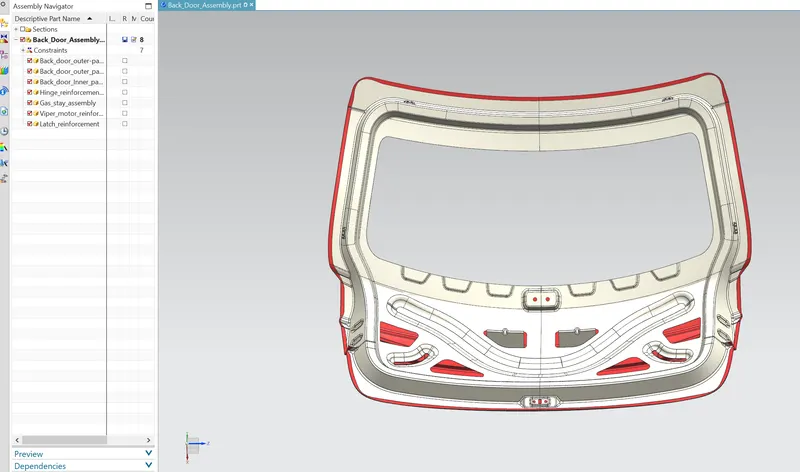
It is located in the inner side of the outer panels and which carries all the reinforcements which are required for the Back door. Inner panel provides all the strength and stiffness to the back door assembly and also responsible for absorbing and deviating all the forces/ load acts on it when a rear collision occurs.
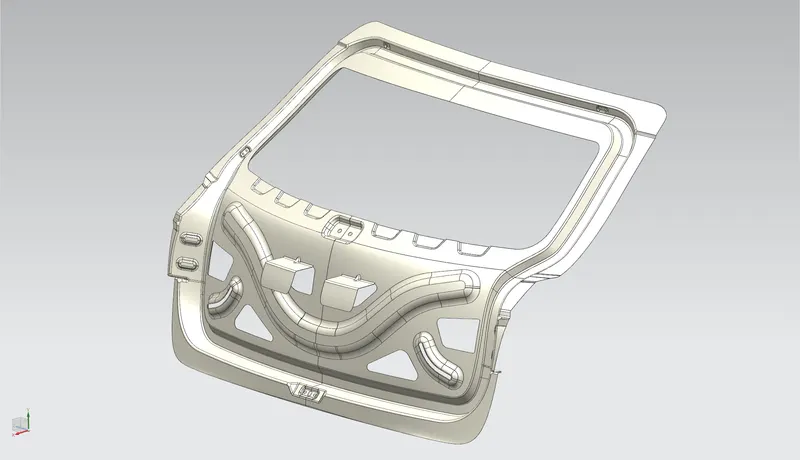
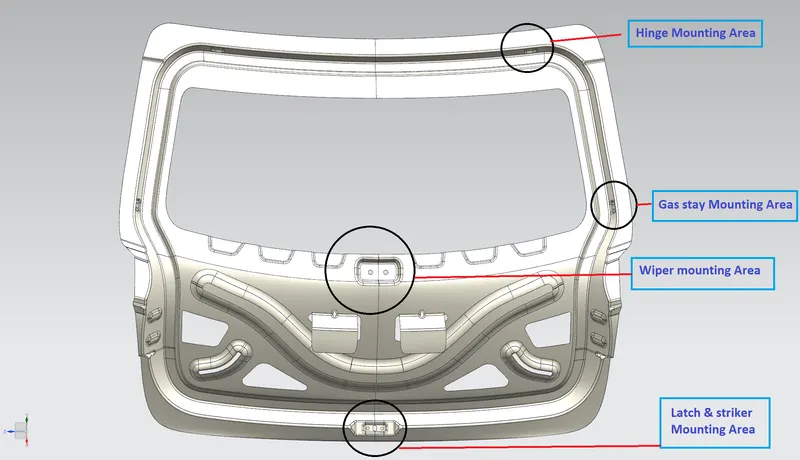
Additional embosses are created for all the mounting points for easy installation process
4.1 Reinforcements used in back door inner panel
Reinforcements are being implemented on the inner panels for the drastic improvements of strength and stiffness locally to the sheet metal part.
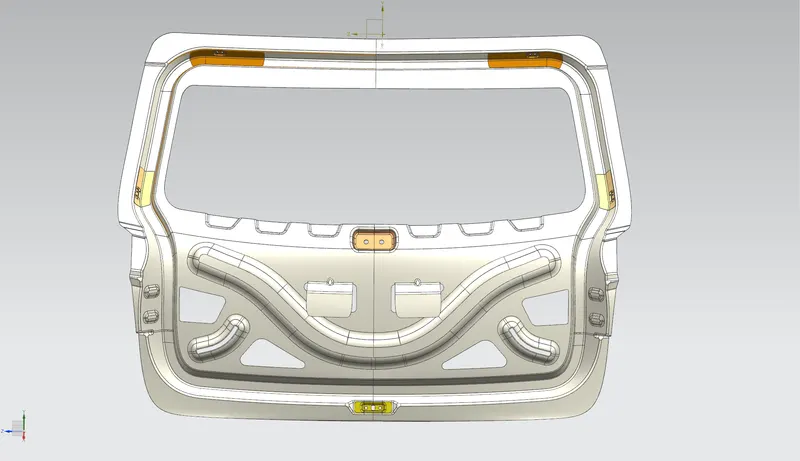
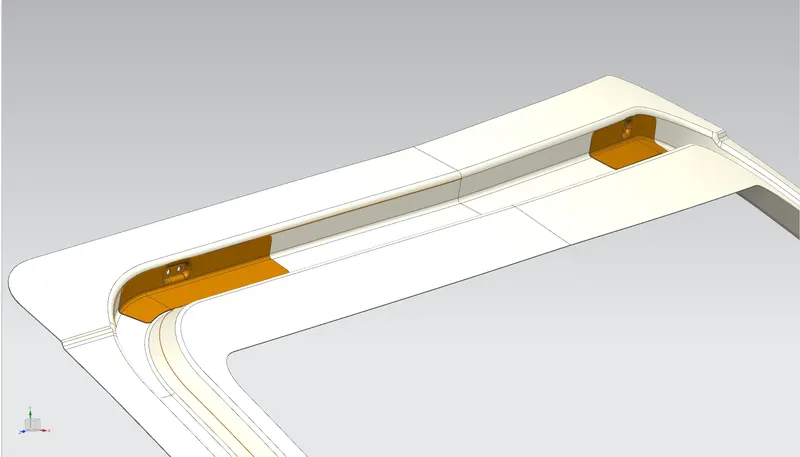
Different types of reinforcements given to the back door assembly are as follows
- Hinge reinforcement
- Gas stay reinforcement
The gas stay will help us to open and close the back door easily. it can be achieved by fully automated or manual. One end of gas stay is mounted on the car body and other end is mounted on the gas stay mounts on the back door. reinforcement is provided for drastical improvement in the gas stay mounting region locally.
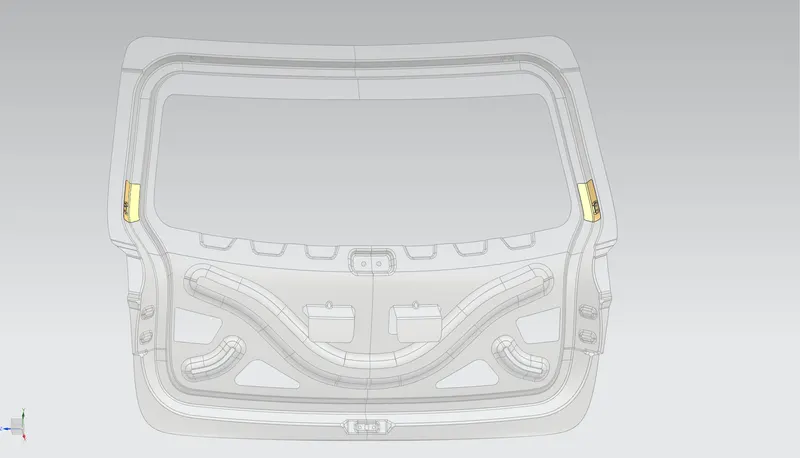
- Wiper motor reinforcement
Wiper motor reinforcement is introduced to improve the strength of material on the wiper mounting region.
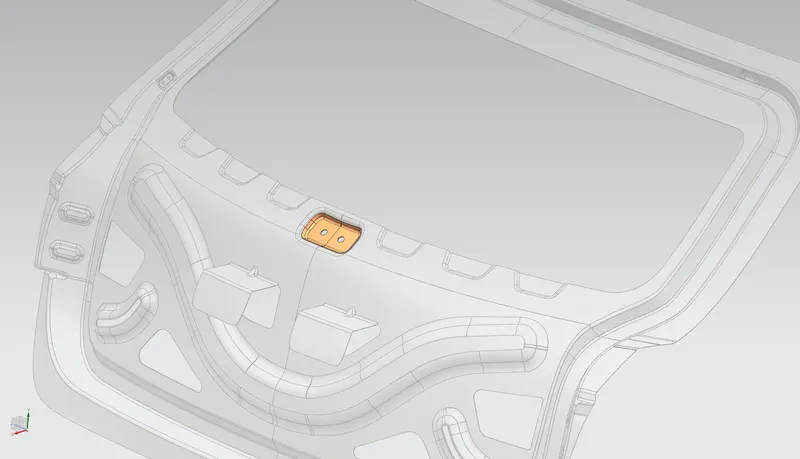
- Latch & striker reinforcement
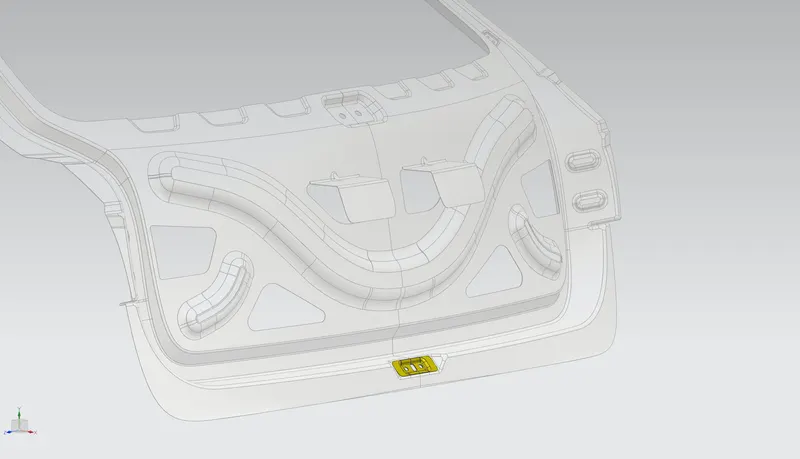
The above latch emboss can be created with the help of drawing trajectory for opening/closing w.r.t the hinge axis.
5. Hemming process on Outer panels
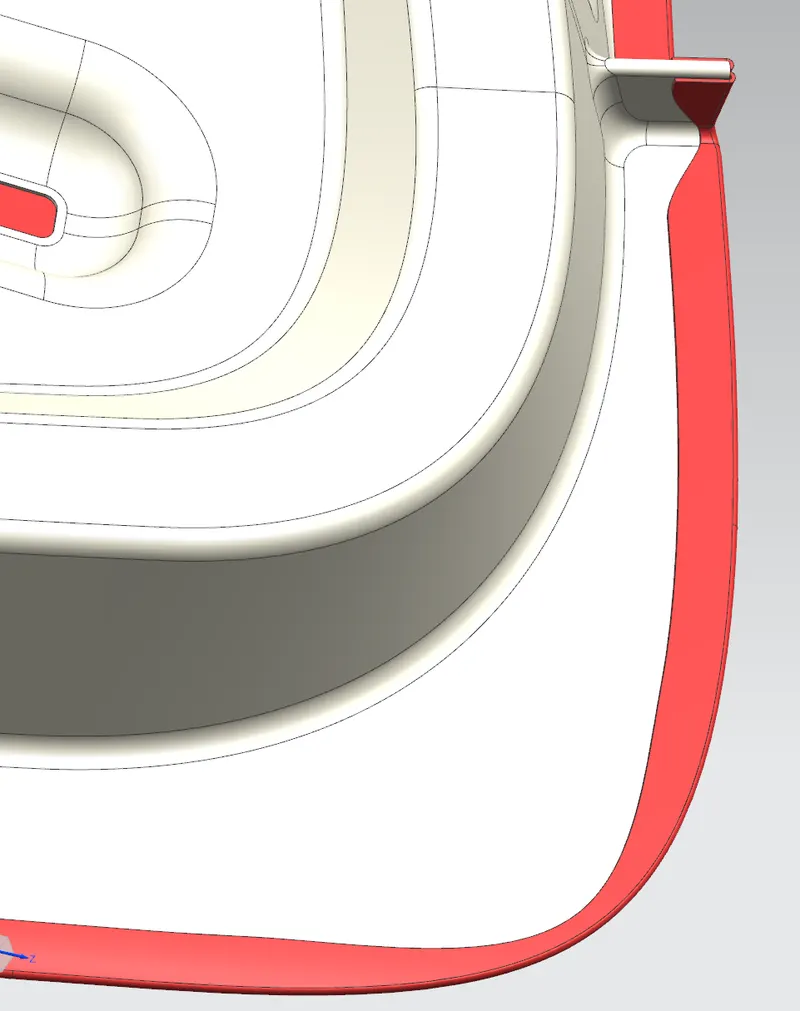
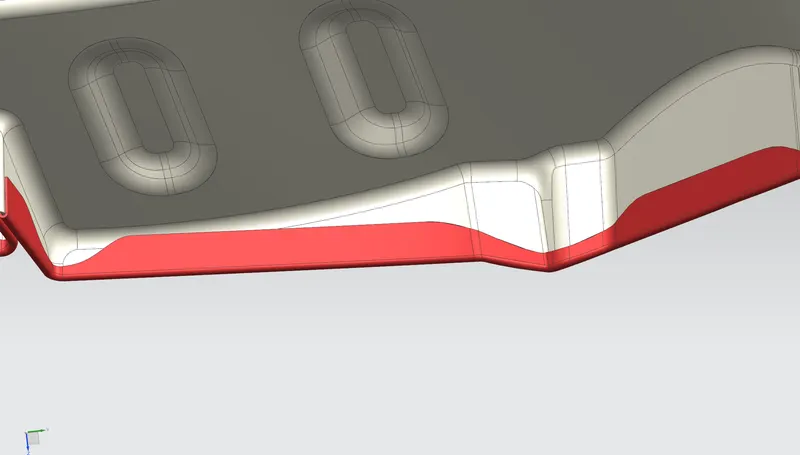
5.1 Corner Reliefs for hemming operations
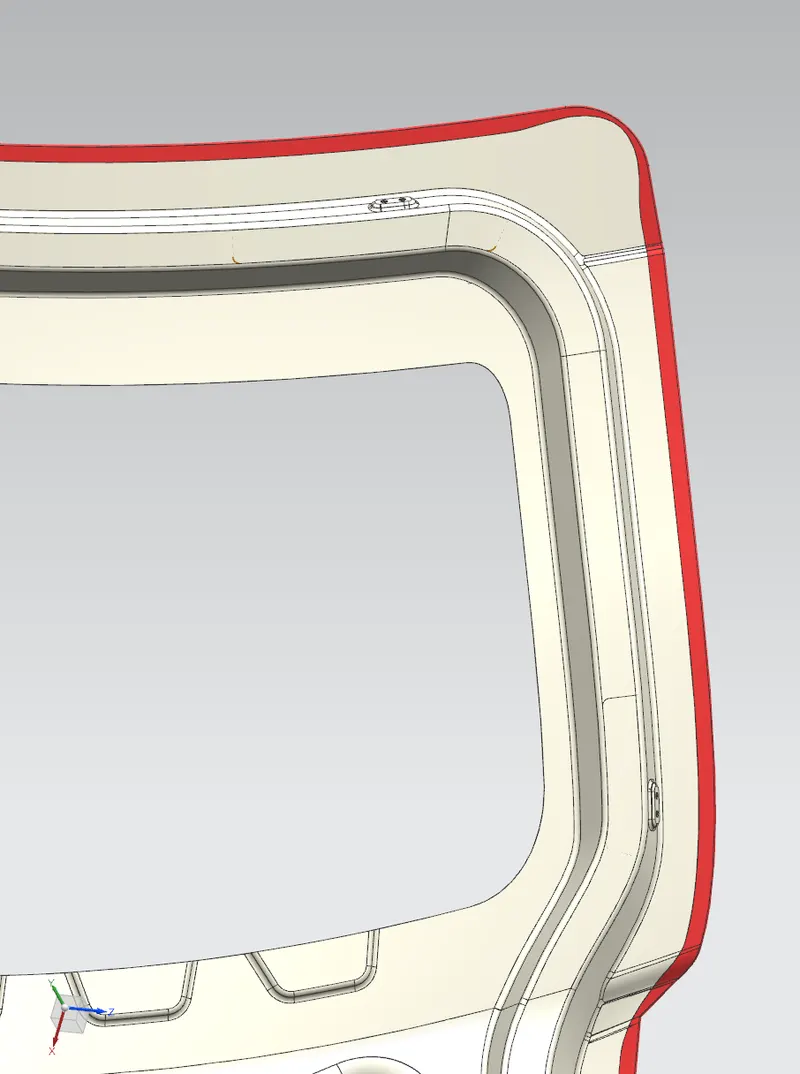
When you add relief, sheet metal sections are removed from the model. You can apply corner relief automatically to all corners or manually to individual sets of corners. Relief helps to control sheet metal material behavior and to prevent unwanted deformation during unbend operations.
6. Mastic Area
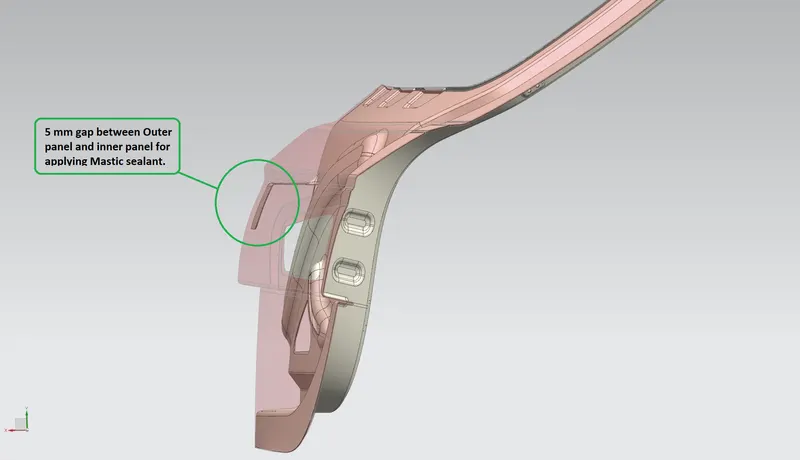
Mastic sealants are nothing but a hard rubber or introduced as a paste in between the inner and outer panels. The gap in between the inner and outer panel should be around 5mm and they will be filled with the mastic sealant.
The skin panels or outer panels are always strict to not apply any welds, rivets etc. which causes the aesthetic appearance. so, in order to ignore these conditions, Mastic sealants are introduced to strength in that region.
7. Force Distribution
8. DRAFT ANALYSIS
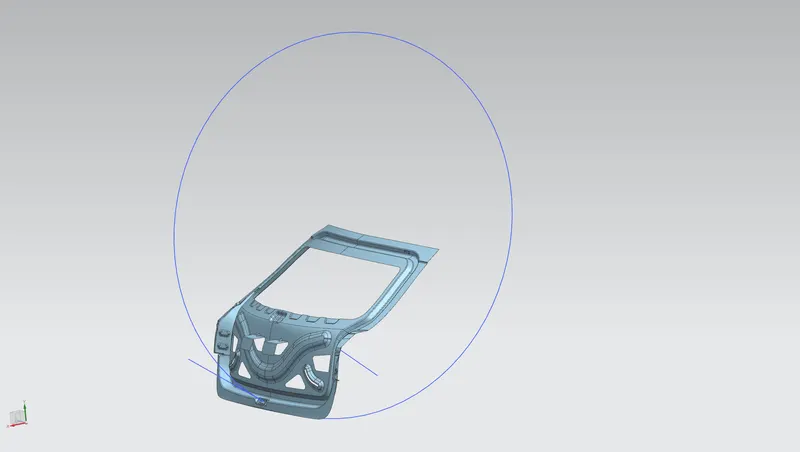
Tooling axis
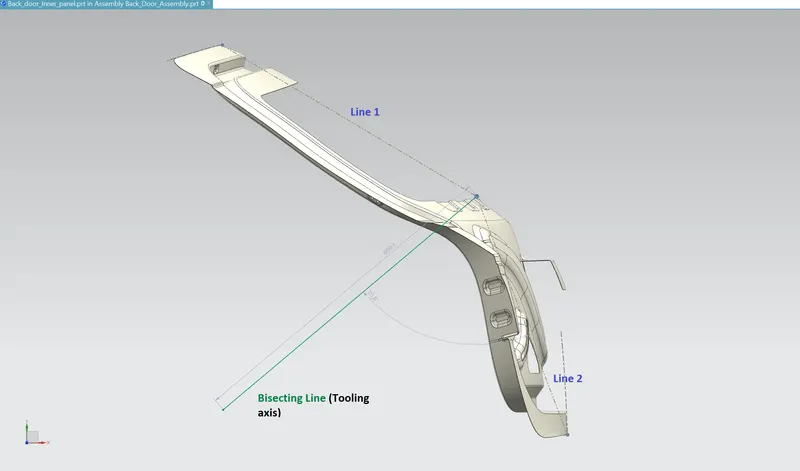
Two lines have been drawn from left and right extreme points almost parallel to the path of the surface along the unsymmetrical axis. With the use of bisecting line tool, create a new line which bisects the two lines created first. Use the bisecting line as the tooling axis as shown below
Sheet metal parts are generated from a press tool or some forming tools, maybe the plastic parts which generally come out from the plastic moulds and maybe the casting parts, all such kind of parts required some face on the surfaces which are parallel to the tooling direction.
if we don't provide a draft on the surface then the tool will not come out and tool motion will destroy the surfaces or also reduced the finishing of surfaces.
Draught angles are designed in such a way that they will assist depart rejection. By doing so we have a reduced cycle time and improved productivity. Draft value for a particular part is mostly decided by the material used for making it.
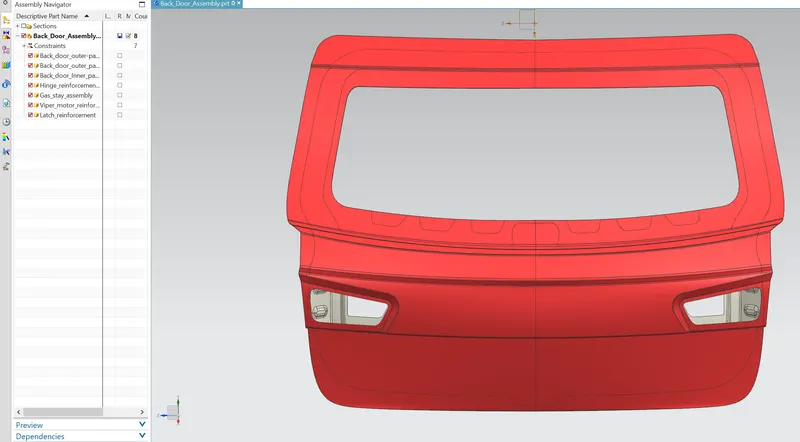
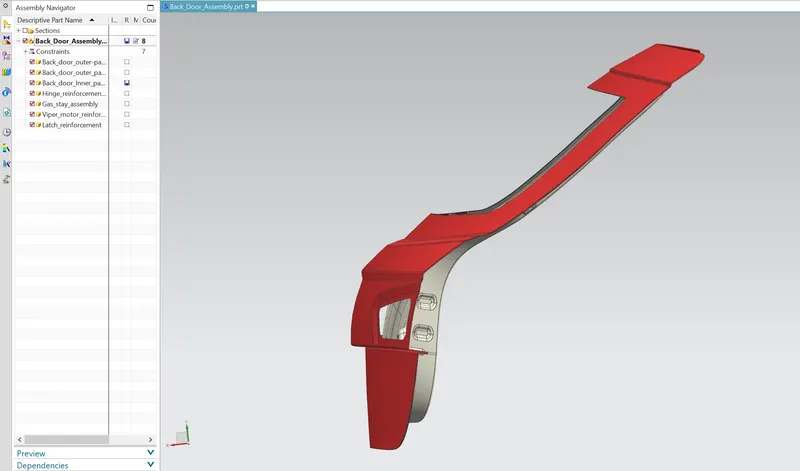
9. Back Door Assembly
Conclusion
Successfully completed the design and assembly of Back Door of a passenger car with Siemens NX CAD software. All design considerations have been taken into account while the designing process.