Underbody Coating
Car Underbody Coating
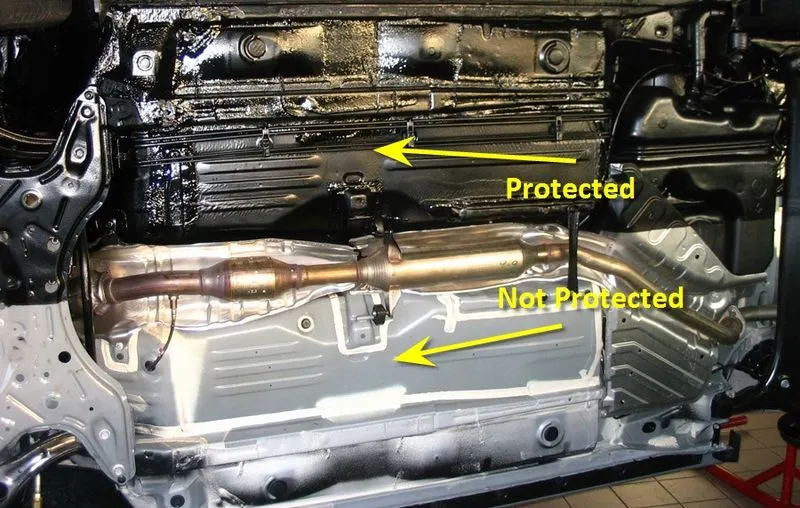
As we all know while we are sitting inside our car and driving very comfortably, the underbody of the car is always exposed and eventually gets damaged by various road conditions like muddy water, road gravels, salts, road bumps and debris flying up from the road. As our vehicle sustains damages from everyday wear and tear it becomes more vulnerable to corrosion and rust. To avoid such conditions, it is highly recommended to perform undercoating of our car.
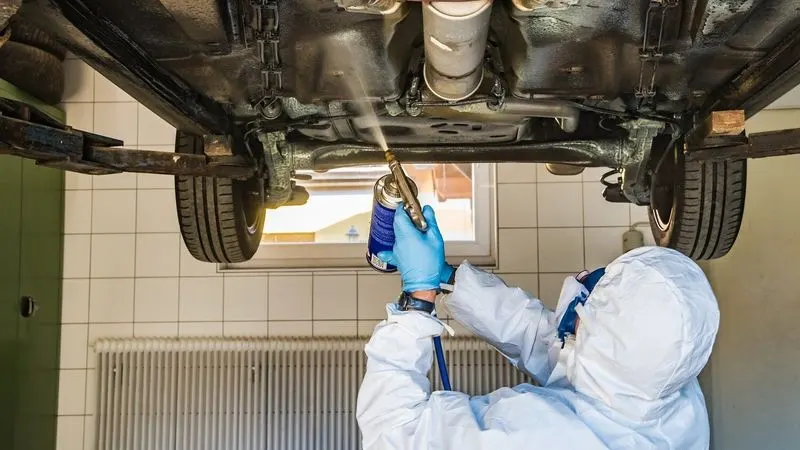
Undercoating is a sprayed application of a wax or rubber based protective layer on to the entire underside of the vehicle. It’s always better to go for an Undercoating as soon as you get a new car from the dealer. Applying Undercoating is best for every vehicles and Highly reccommanded to the vehicles running in coastal, blizzard and high rainfalls regions.
Types of Underbody Coating
1. Rubberized Underbody Coating
- It is a widely used and best option for protecting your vehicle's undercarriage, as it provides the simplest and best protective measures against rust and moisture.
- It offers sound cushioning which results in lesser noise coming from underneath of the vehicle while going through various road conditions.
- It is very easy to apply and also can be removed easily with an undercoating removal spray if needed.
2. Wax based Underbody Coating
- It is also a widely used type of underbody coating and an effective method to fight against moisture.
- Wax-based options, which are cheap and easy to apply, but need to be removed and reapplied at least once a year.
3. Polyurethane Undercoating
- The other option of undercoating your vehicle is to use a polyurethane-based sealant.
- This type of sealant works by seeping into all cracks and seams, displacing salt and moisture and oozing around rusty areas to bond with and protect unoxidized metal.
- It is little bit quicker and easy to apply.
4. Asphalt based Automotive Coating
- Asphalt-based undercoating is one of the strongest and most effective types of undercoating, often used for large trucks and heavy machinery.
- It needs more time to cure but provide more sound dampening than the other options of underbody coatings.
Advantages of Underbody Coating
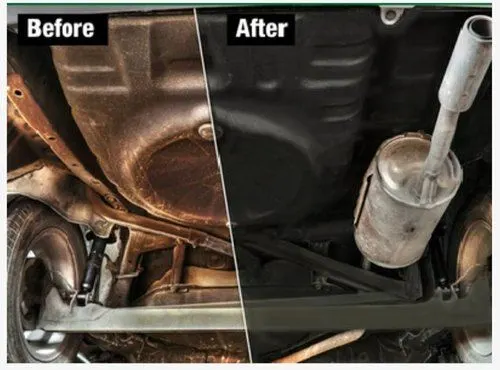
- Fights Rust - It plays an important role in keeping corrosion at bay. Underbody coating can come in handy especially if you live near the sea, where there is too much humidity, and rusting is just one of those everyday things. You should also seriously consider undercoating if you reside in a place where it snows in winter.
- Absorbs Noise – Undercoating layer also acts as a thick insulation layer to the undercarriage of the vehicle, hence can reduce noises that reaches the cabin up to a certain level.
- Reinforcement - If your car comes with a stock undercoating, by applying additional undercoating gives more protection to the underbody from water, road debris, gravels and small pebbles. And also, there would be lesser chance for the factory coat to flake away.
- Prolonged Car’s Life - Good undercoating provides Less rusting coupled with slower wear and tear can surely add years to the lifespan of your vehicle. There would be fewer dents, dings and scratches on the undercarriage for you to worry about.

Disadvantages of Underbody Coating
- Fail to Protect from existing rust - Undercoating will work best on new vehicles that have not been exposed to road conditions. Undercoating will not help you if corrosion already exists and the corrosion needs to be removed first before it can be applied, which can be expensive for you. Applying undercoating just after you get your new car can overcome this situation.
- Cost - Underbody coating can be expensive and need to do recoating after few years.
- Damage Risk – Applying undercoating on Brake Disc plate and Shock absorber parts may leads to damage and failure of the part, so it is advised to cover those parts while performing undercoating.