Design of backdoor
AIM Design a BiW of back door of car.
OBJECTIVE
- Create an assembly of car Back door from the given Back door styling, including Inner and Outer panel and its mounting reinforcements.
- Perform the draft analysis.
What is Back door of car?
Back door are one of the type of door of the vehicle which are located next to the passanger seat which provides access to the luggage compartment.These back door are operated with the help of gas stay or electirc powered stay. In case of safety, the backdoor designed should meets the safety requirement of the rear collision.
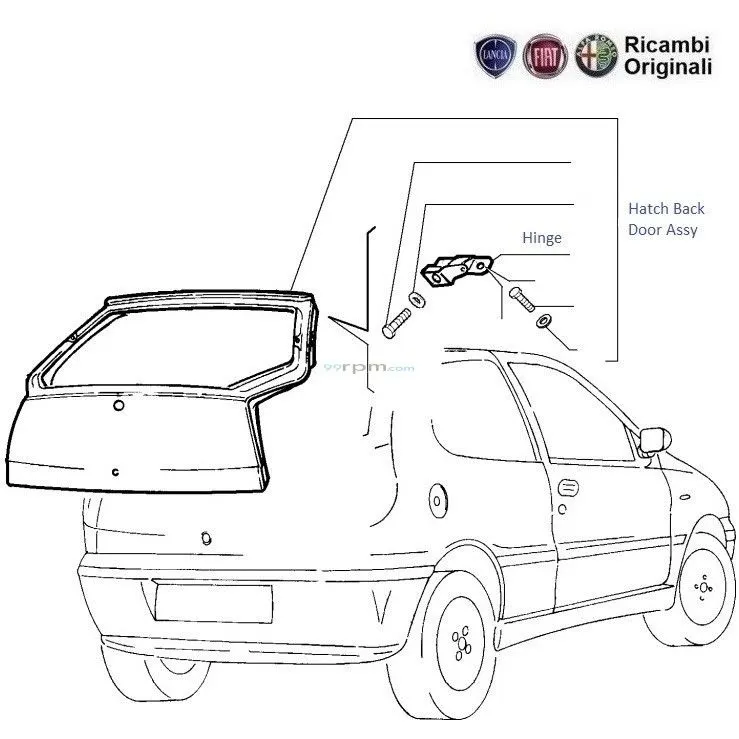
Based of Mounting Back door are three types
Top mounted
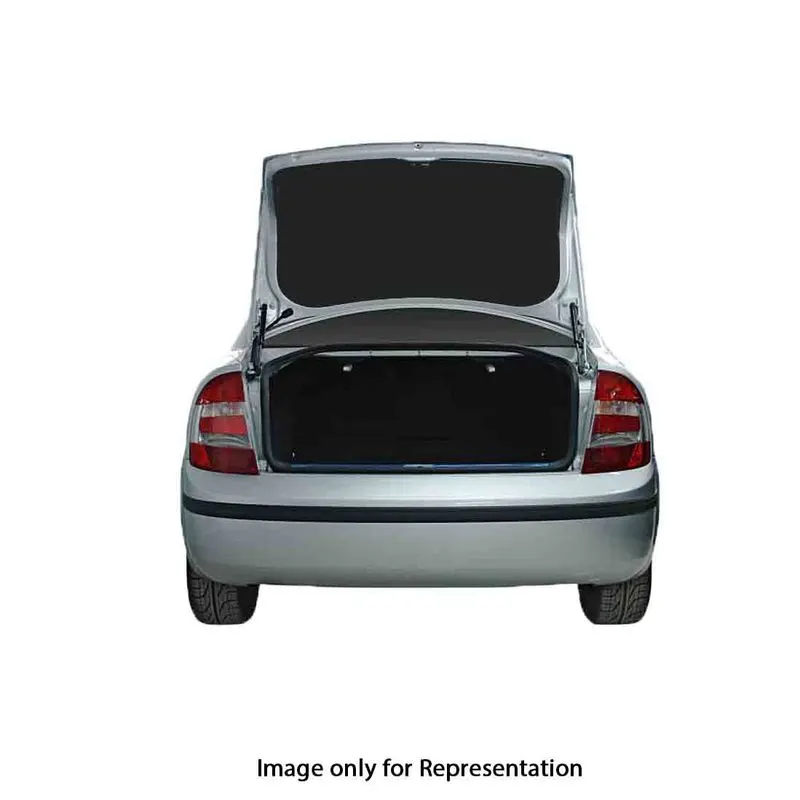
Bottom mounted
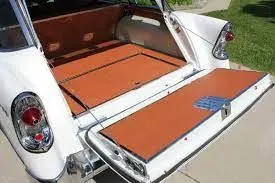
Side mounted

MANUFACTURING METHODS
Back door are mainly manufactured by two methods, first is Metal Stamping and second is Metal Casting.
Metal Stamping is a cold-forming process that makes use of dies and stamping presses to transform sheet metal into different shapes.
And in the metal casting process, metal shapes are formed by pouring molten metal into a mold cavity, where it is cooled and later extracted from the mold.
Metal stamping process mainly used sheetmetal of steel and its alloys. It is consist of one or more of a series of more specific processes or techniques, such as Punching, Blanking, Embossing ,Coining ,Bending and Flanging. In these methods, variation of thickness of panel sheet is not possible so, reinforcements are used at mounting parts to overcome the stress concentration at mounted or trimmed area. In comparsion to Metal stamping, in casting process variation of thickness of are possible.
In Metal stamping methods, Back door are mainly consists of two panels i.e. Outer and Inner panel and its mountings reinforcemnts such as Hinge reinforcement, Stay reinforcements, wiper motor reinfrocemnts, latch and striker reinforcements. But in Casting methods reinfrocements of mountings are not required because stress concentration are neturalized by increasing the thickness at that area.
Embossing
Sheet metal embossing is a metal forming operation in which the sheet metal is stretched into a shallow depression.
Three things to controls during the embossing of sheet metal
- Pressure: Pressure applied to the sheet metal should be controlled during embossing.
- Heat: Heat level should be maintained consistently during the embossing to get the perfect impressions.
- Die depth: The depth of the die should be adjusted such that the extreme thinning or failure of sheet metal does not occur.
Joining methods
- Mastic data
Mastic seals are used as a bond between outer and lower panels. It improves the stiffness of the area. It also plays vital role to reduce the NVH. Mastic sealants are elastic compound that behave like rubber. The mastic points are arranged in such a way that covers the area away from the hemming which are more vulnerable to vibrate.Maximum gap them panel in mastic sealant is 5mm.
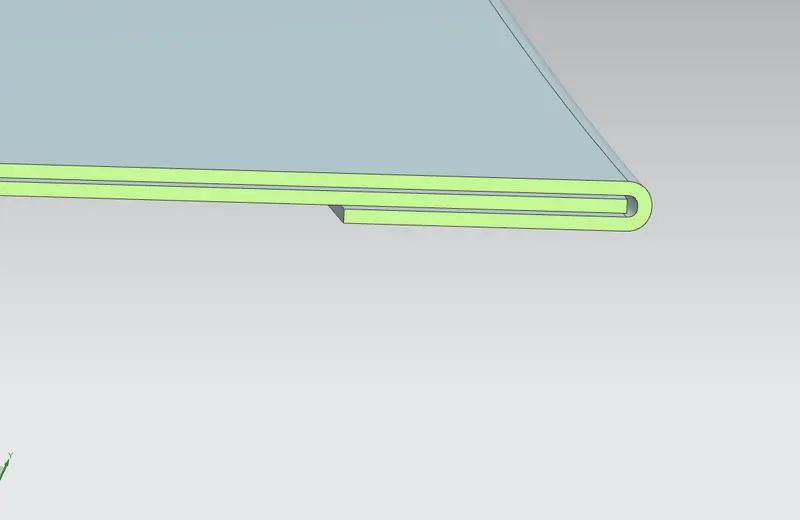
- Hemming Hemming is a sheet metal forming process in which sheets are joined by bending it usually to 180°.
The outer and inner panel of back door are joining at the edge by Hemming process with 0.2mm gap between them.
Corner reliefs - Corner relief help to control the sheet metal material behaviour and to prevent unwanted deformation during unbend operation
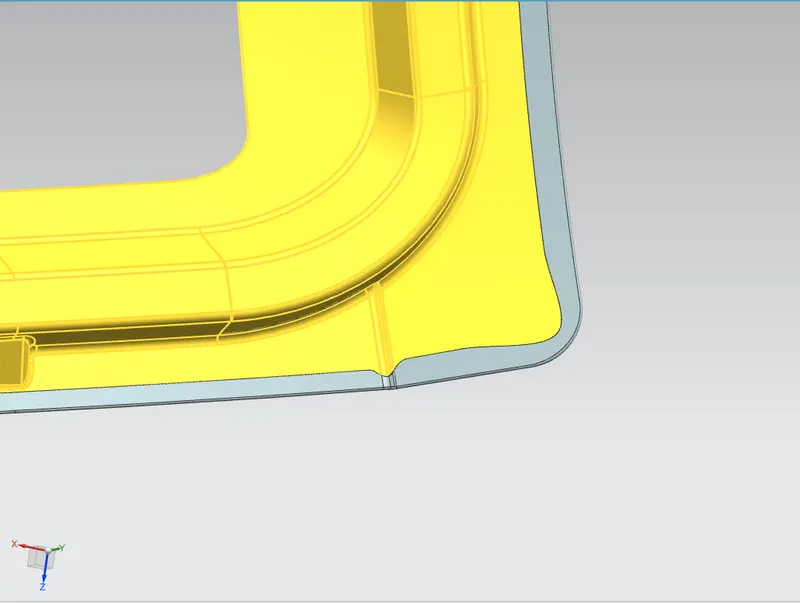
DESIGN OF BACK DOOR
From the given styling surface of Back door, the assembly of back door Outer panel, Inner panel and reinfrocements are design as top to down design approach.
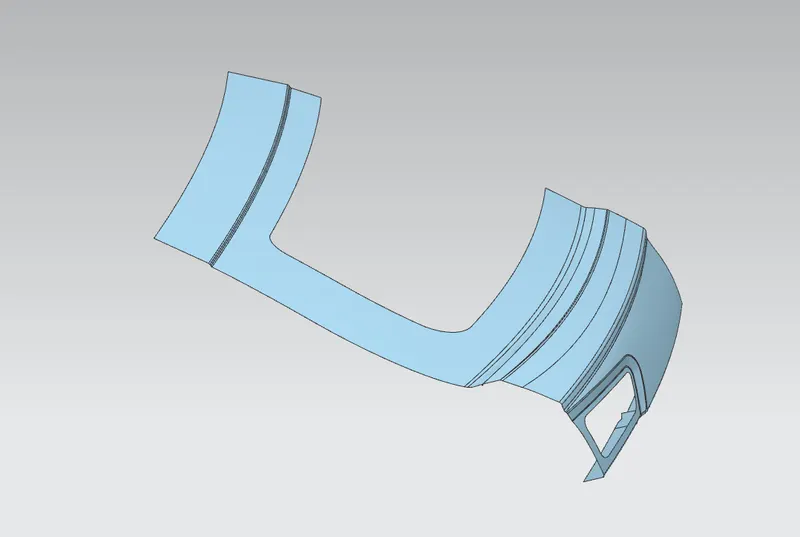
Different parts of Back door and its thickness
Outer panel upper (0.75mm)
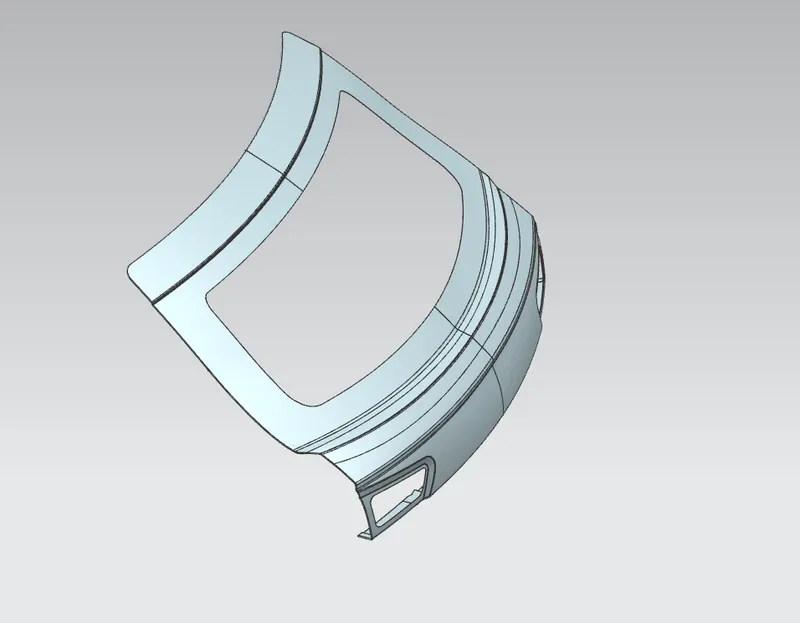
Outer panel lower (0.75mm)
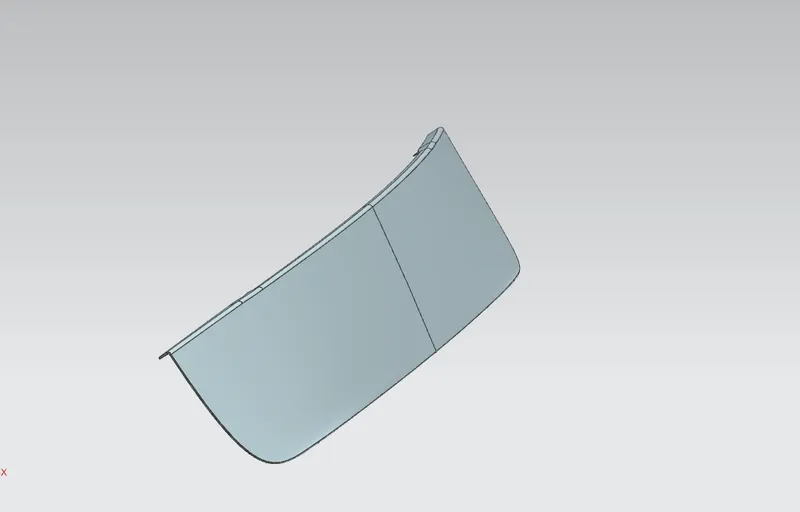
Inner panel (0.75mm)
Reinforcements (1.5mm)
Outer panel
The Outer panel of the back door is the aesthetic part of a vehicle. The coating provided is of multi stage which has the property of scratch resistance, rush prevention and smooth and attractive finishes. The Outer panel also has the provisions for the tail lamp, rear fog lamp and also has the provision for license plate mountings.
Outer panel upper
Outer panel lower
Inner panel
The Inner Panel is a component which is used to provide strengthening or stiffness to the door. Hinges, wiper motor, latch, stay and other accessories are mounted on inner panel. All reinforcements of the mounting are weld on the inner panel.
Reinforcements
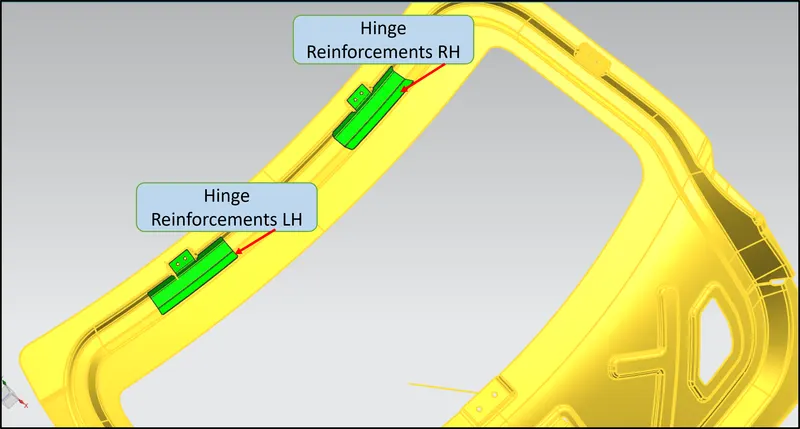
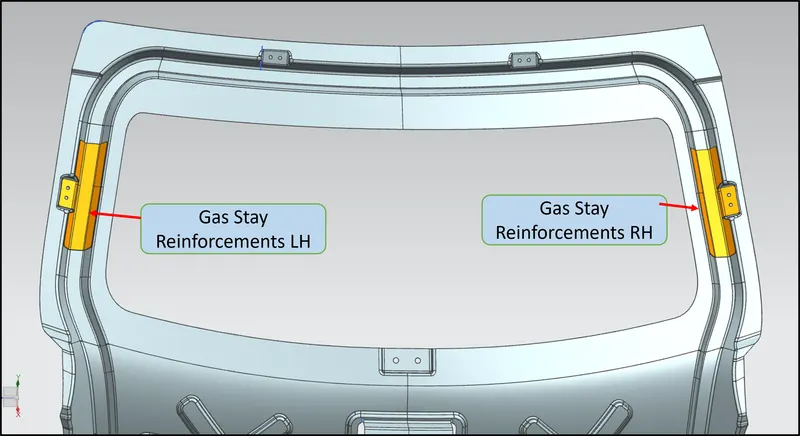
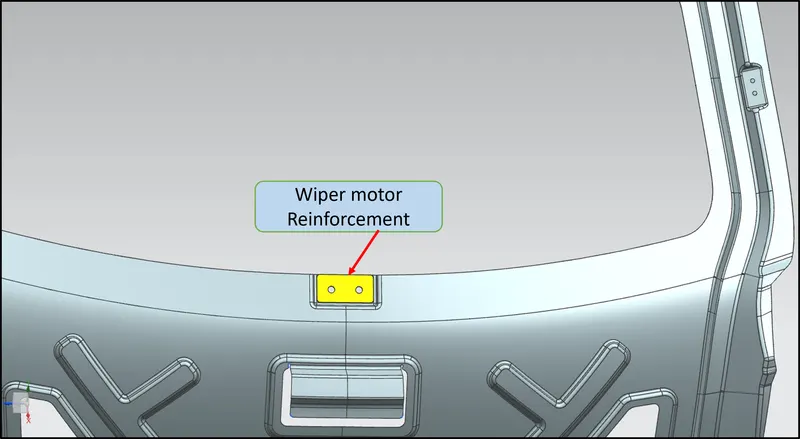
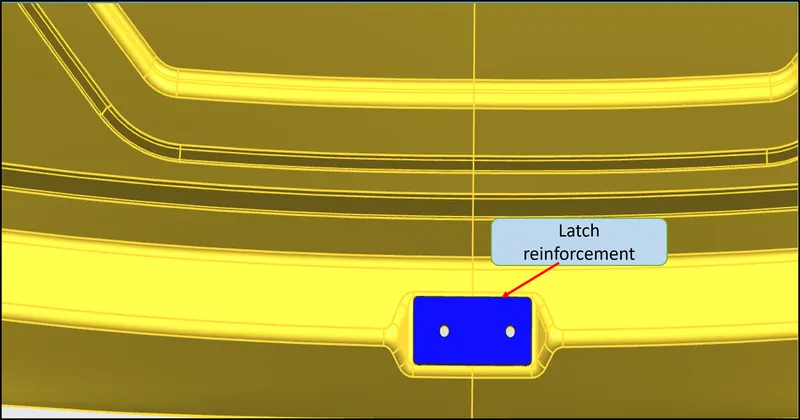
Reinforcement is provided according to the design requirements. We add reinforcement at hinge and latch regions to improve the strength of that region.
Hinge reinforcements
Gas Stay reinforcement
Wiper Motor reinforcement
Latch reinforcement
Draft Analysis
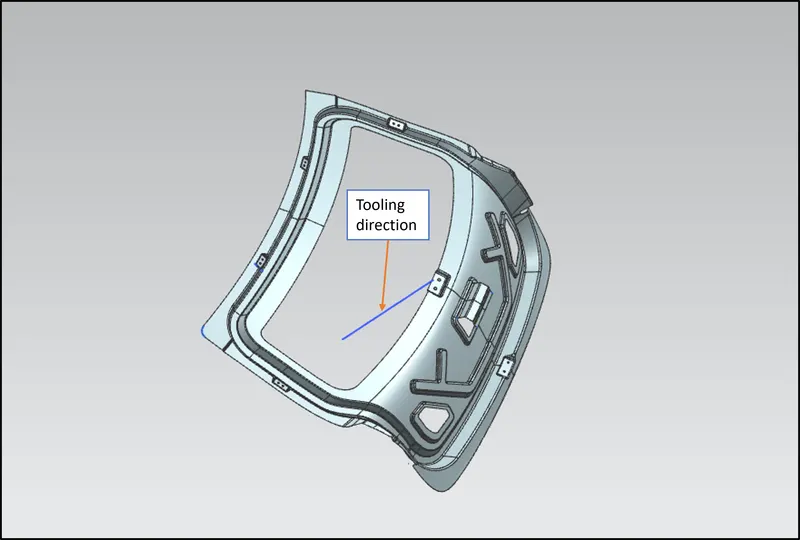
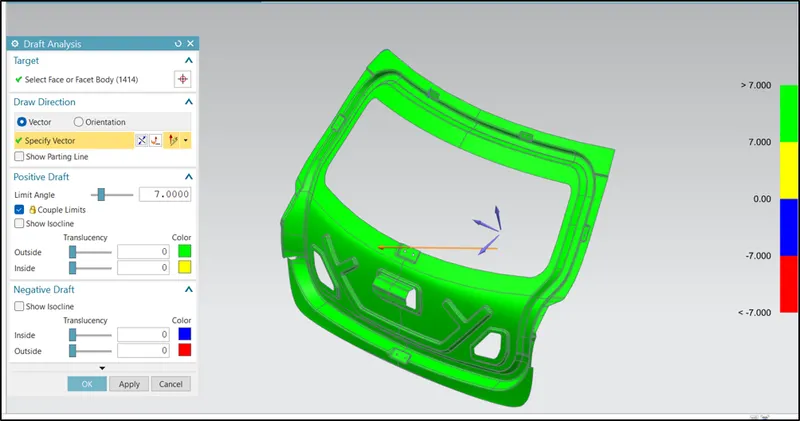
The Draft Analysis command enables to detect if the part drafted will be easily removed. This type of analysis is performed based on color ranges identifying zones on the analyzed element where the deviation from the draft direction at any point, corresponds to specified values. Here tooling direction is vector of draft analysis.
Latch trajectory
During opening and closing of hood at hinge axis, a circular path of the latch is traced, this path is called latch trajectory and for proper locking and unlocking operation the latch is located directly perpendicular to the trajectory.
CONCLUSION
From the given styling backdoor surface, design Inner panel, Outer panel and its mounting reinforcements.And perform draft analysis along tooling direction.