Design of backdoor
DESIGN OF BACKDOOR USING NXCAD
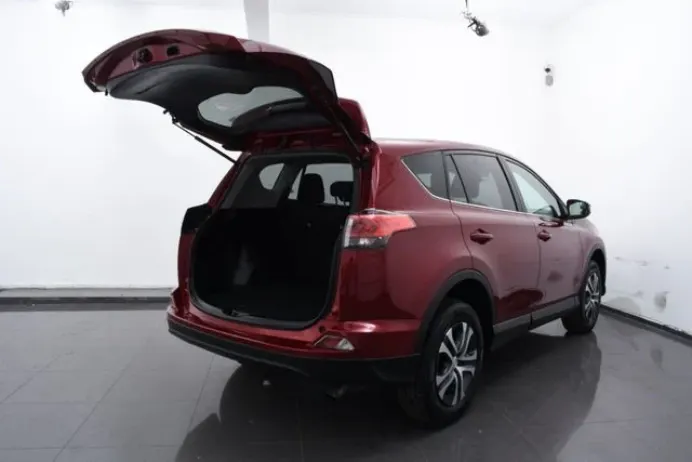
Objective -
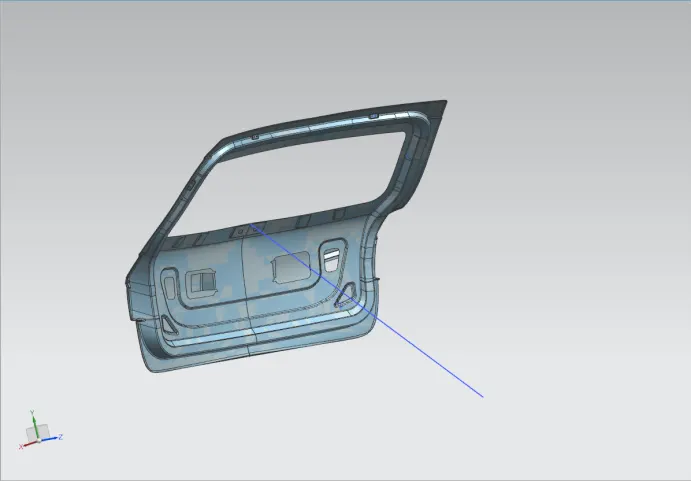
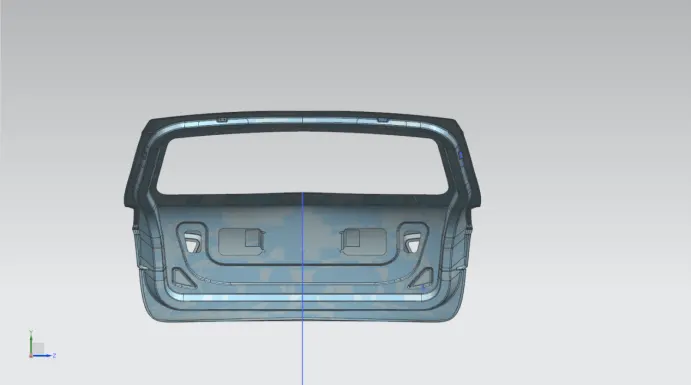
- The main objective of this project is to design a car's back door with an inner panel, outer panel, and reinforcement for hinges, gas stay, wiper motor, and latch.
- The inner panel is subjected to the draft analysis to ensure whether it is satisfying the deep drawing requirement for the tooling direction that was created in the design.
Software used in the designing -
Siemens NX CAD
Introduction -
The design of any product starts from a requirement. The design engineer sketches the product based on the requirement. Then the 2D sketch with the proper dimension is converted into the 3D model using CAD software. The major factor in designing is that the product should be able to manufacture. So the role of the design engineer is to design a product that can be easily manufactured and should be cost-effective.
Back Door Introduction -
The back door of the vehicle is also called the tailgate. The back door of the car is the rearmost part of the vehicle which gives access to the trunk space of the car. The back door is one of the closure commodities in BIW sheet metal design. The material used for the back door manufacturing depends on the budget and performance of the vehicle. Mostly aluminum and steel are used for manufacturing whereas steel is used on the low budget cars where it can be quickly produced with less cost-effective by following the stamping process.
Back Door Parts -
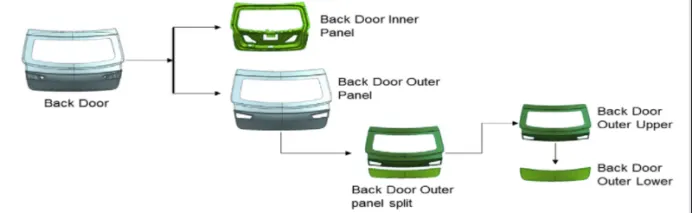
The back door consists of the following basic components -
- Back door outer panel (upper)
- Back door outer panel (inner)
- Back door inner panel
- Hinge reinforcement
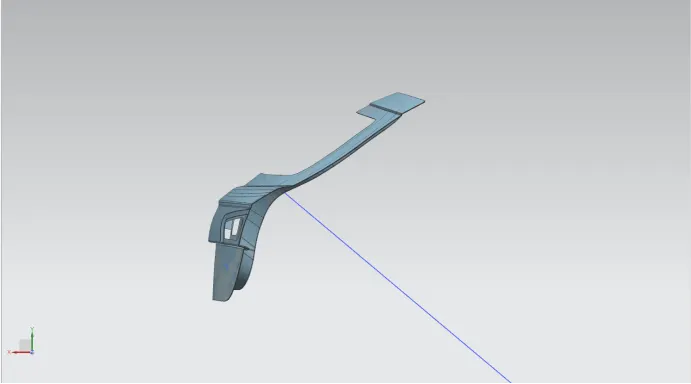
- Gas stay reinforcement
- Latch and striker reinforcement
- Wiper Motor reinforcement
Design Intent -
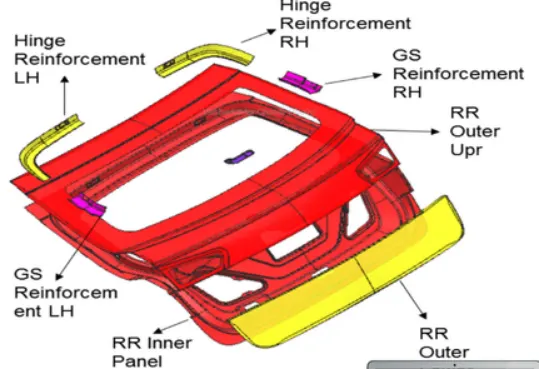
The intent of this project is to design the BIW back door of the vehicle by following the engineering standards and manufacturing requirements which satisfies the deep drawing process.
Design Considerations -
- Functional requirements of hinge and gas stay
- Rear visibility criteria
- Boot Space
- Crash analysis
- Bend test, dent test, torsion test, an endurance test.
- Rear crash regulation
- Gap and flushness requirement
Tooling Direction to be considered
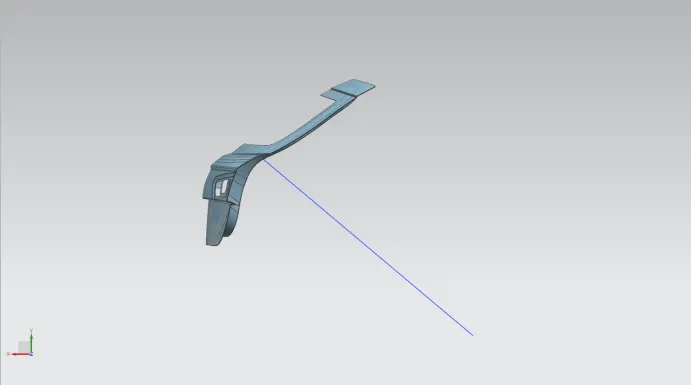
- Initially, the tooling direction is created for deep drawing purposes before designing the inner panel
- Then styling surface is analyzed and irregularities are fixed.
- Then backdoor was designed using the top-down approach.
Latch and Striker Positioning
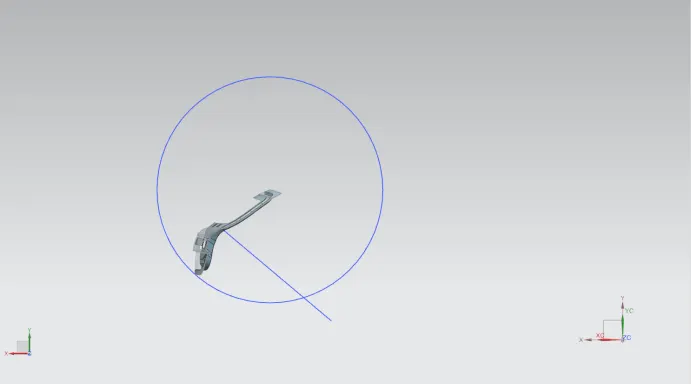
- For proper opening and closing of the back door, the latch and striker should be positioned in the correct position.
- For measuring the correct position of the latch and striker hinge axis is taken the reference line and the circle is drawn by taking the hinge axis center point as the center of the circle.
- Now position the latch using the above drawn has to be perpendicular to the hood trajectory.
- One positioned creates a emboss on the inner panel by extracting the face of the latch
Points to be considered while designing the Gas Stay Rod -
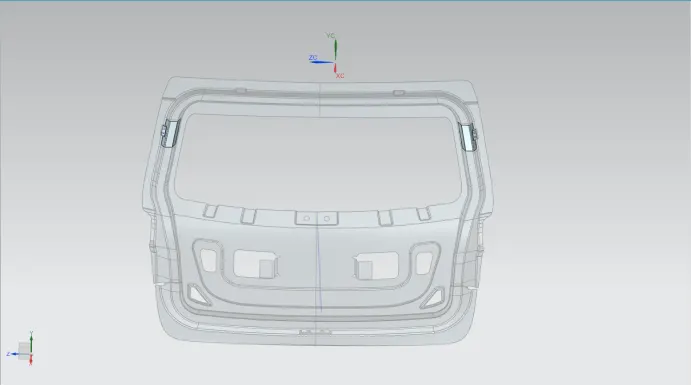
- We have to design the stay rod in such a way is should not collide with any other parts, because of this collusion the rod produces a noise when the car is in motion which causes the NVH (Noise, Vibration, Harshness)
- Rod with bends are more preferred because a straight rod will wobble, whereas the same part with a bend is rigid, these structured rod gives strength to the part.
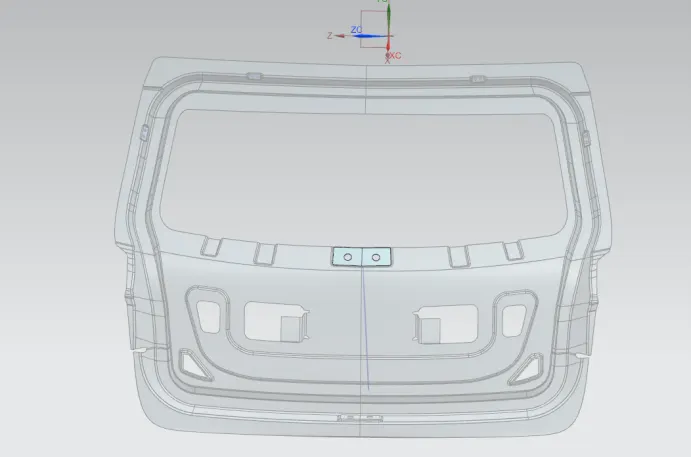
Wiper Motor Reinforcement
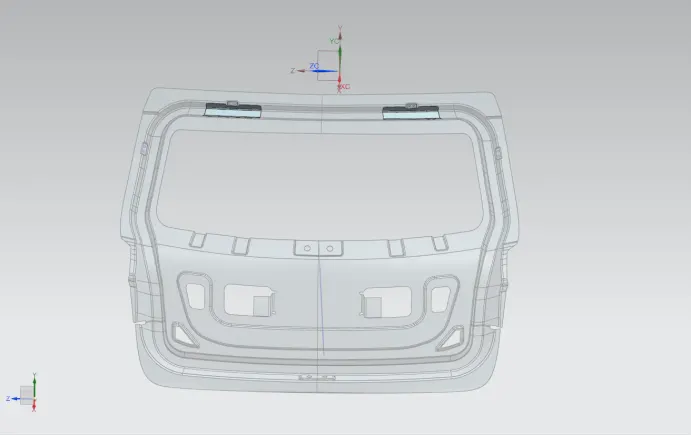
Hinge Reinforcement
Reducing the NVH Caused by Back Door
The back door also causes the NVH in the car body, this can be reduced by using the stiffener pad.
Stiffener Pad -
This pad is introduced between the back door inner panel and outer panel to increase the strength locally, during the motion of the car the back door will wobble and causes noise. To avoid this vibration and reduce NVH stiffener pad is introduced.
Hemming -
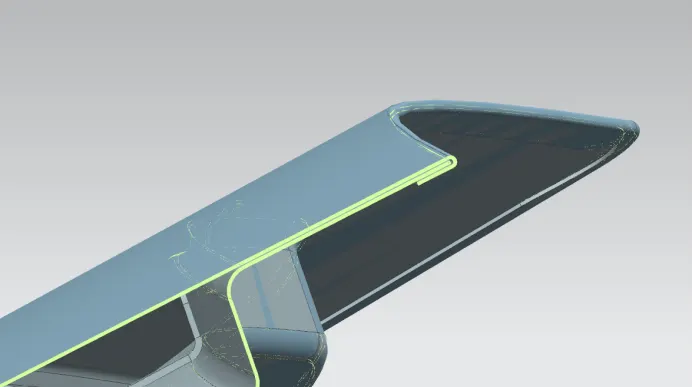
The process of creating a fold at the edge of the sheet metal to create a rounded safe edge is called hemming.
There are four types of hems, they are -
- Open Hem
- Rolled Hem
- Tear Drop Hem
- Closed Hem
Mastic Data Design
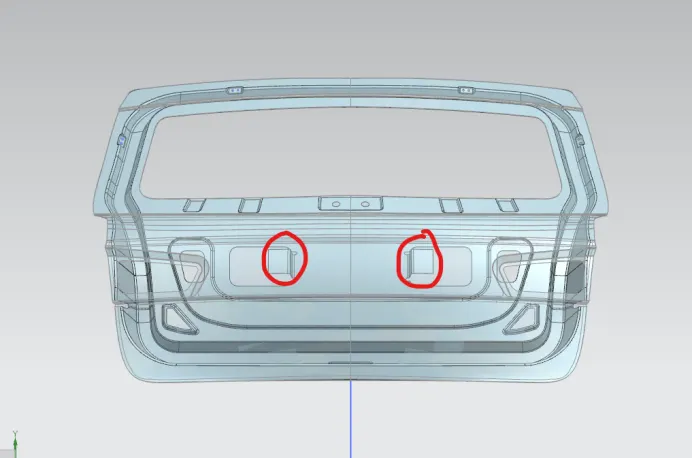
The main purpose of the outer panel is for the aesthetic looks, so we cannot use the welding or the bolts to join the outer and inner panels as this results in damage to the looks of the panel. This can be done with the help of hemming and mastic sealants.
Mastic Sealants - It is a kind of small rubber paste that is introduced between the back door outer panel and inner panel and when this back door gets into the hot bath furnace it gets hardened and joins the back door outer panel and inner panel and gives the strength to the door locally.
Draft Analysis -
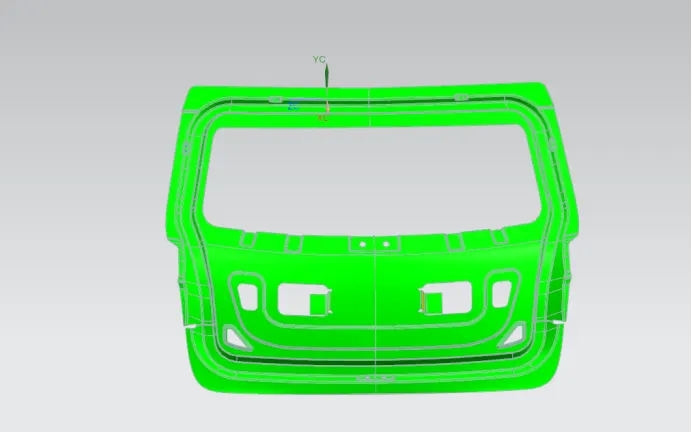
The draft analysis command helps to detect if the part drafted will be easily produced. This type of analysis is performed based on color ranges identifying zones on the analyzed element where the deviation from the draft direction at any point, corresponds to specified values. A minimum draft angle of 7° is considered for analysis. The green color infers on the parts that all face along the tooling direction has a positive draft angle greater than 7° and passed in analysis.
Procedure for designing the Back Door -
Way of Approach
Top Down Assembly -
There are two types of assembly, are
- Bottom Up assembly
- Top Down Assembly
Bottom - Up assembly -
The Bottom-up assembly is the most preferred approach for creating assembly models. In this type of assembly the components are created in a part design workbench, (as NXCAD part file). Parts are conceived in assembly design workbench using product structure tools. After inserting each component, constraints are applied to position them properly in the 3D space with respect to the other components. This assembly is preferred for large assemblies, especially those having intricate individual components.
Top-down assembly -
In the top assembly design approach, components are created inside the assembly design workbench. Therefore, there is no need to create separate part files of the components. This design approach is completely different from the bottom - up design approach. Here you have to create the product life first and then one by one create all the components. Note that even then the parts are created as product files, they are saved and opened individually one by one when they are created. Here the construction and the assembly take place simultaneously.
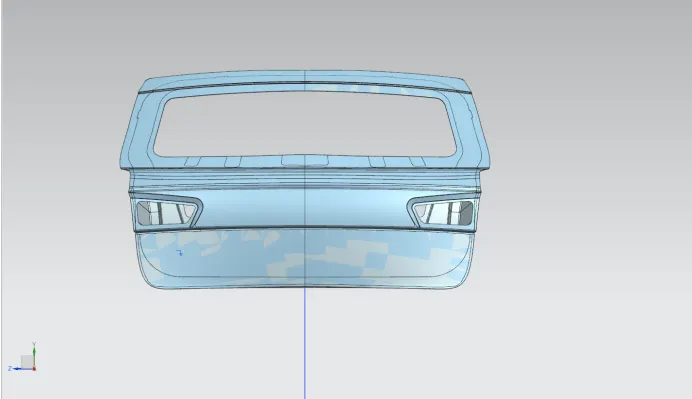
Back Door Images -
Conclusion -
Hence, the back door is designed with the inner panel, outer panel, hinge reinforcement, gas stay reinforcement, latch, and striker reinforcement, and wiper motor reinforcement. Finally, draft analyses are carried out to check the feasibility of manufacturing.