Design of backdoor
TITLE: TO DESIGN AND DEVELOP THE BACK DOOR OF THE CAR ALONG WITH ESSENTIAL REINFORCEMENT BY USING APPROPRIATE DESIGN METHODOLOGIES.
OBJECTIVE:
- The objective of this project is to design Car back door with reinforcement like a latch-and-striker hinge, Gas stay, and viper motor reinforcements.
- Learning the industrial approach of how the BIW car back door is designed in the industry.
- To be the industry ready for the role of Mechanical Design Engineer.
INTRODUCTION:
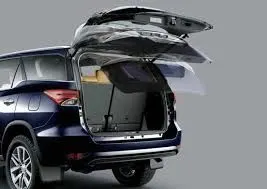
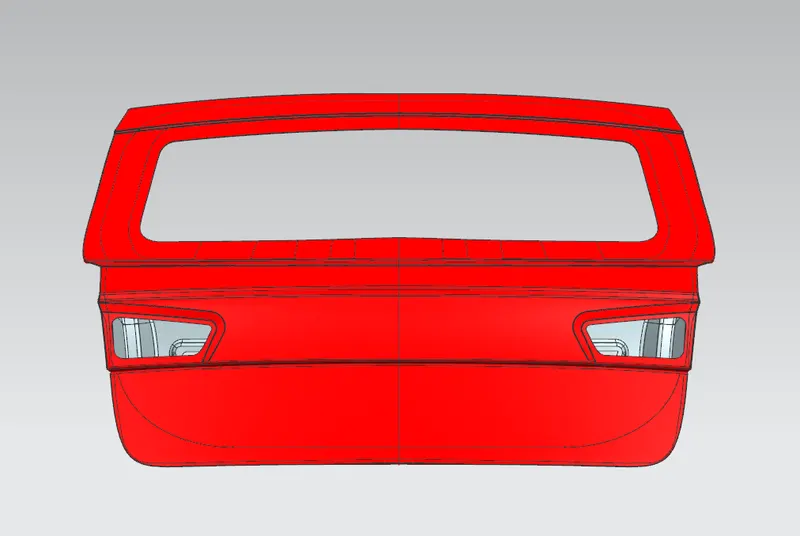
The Back Door of the car is the rearmost part of the vehicle which gives access to the Luggage compartment of the vehicle. In most cars, these back door are operated with the help of gas stay which in turn reduces the effort required to lift the back door. Some luxury cars have an electric motor-driven backdoor. The back door is usually made up of inner and outer panels with appropriate reinforcement. Mostly aluminum and steel are used as material for backdoor which lately depends upon the budget to select any particular material. In case of safety, the back door design should meet the safety requirements for the rear collision.
MANUFACTURING OPERATIONS FOR BACK DOOR:
Deep drawing:
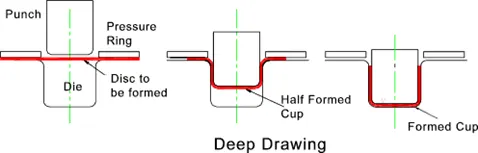
The deep drawing process is a forming process that occurs under a combination of tensile and compressive conditions. The deep drawing process starts with a metal blank, the disc of metal cut from a larger sheet is pushed into a cavity around a die, which begins the deep drawn process of drawing the blank into the desired shape. This is completed in gradual steps to ensure an even distribution of the metal across the final shape, which is important for preserving the integrity and strength of the finalized deep-drawn component. Features like emboss, dimple, and bead are used in Siemens NX for representing the deep drawing on a software level.
Trimming:
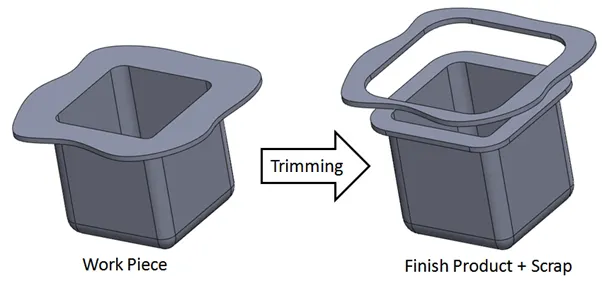
Trimming is the removal of excess metal from a stamped part to allow the part to reach the finished stage or to prepare it for subsequent operations.
Hemming:
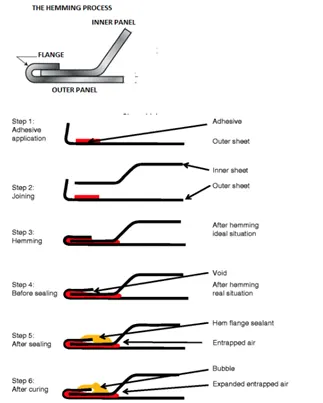
Hemming is a forming operation in which the edges of the sheet are folded over another sheet metal part to achieve a tight fit. Normally hemming operation is used to connect parts, to improve the appearance of a part, and to reinforce part edges. The accuracy of the hemming operation is very important since it affects the appearance of the surface and surface quality. Material deformations, which occur during the hemming process, can lead to dimensional variations and other defects in parts. Typical hemming defects are splits or wrinkles in the flange, material overlaps in the corner areas, or material roll-in. This is why it is important to provide relief at the corners.
DESIGN METHODOLOGY:
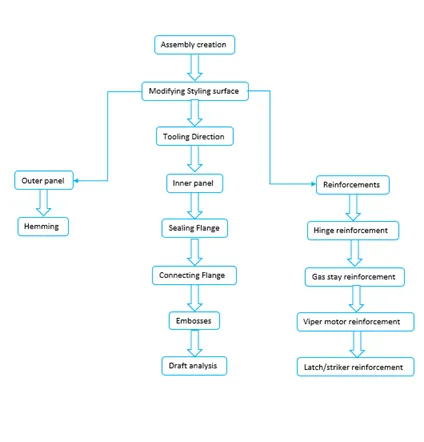
For the back door BIW designing, I preferred the top to down approach. In top to down approach designing started in the assembly environment of the Siemens NX and then designing each part one by one in the Assembly environment itself. The advantage of this approach is that we don’t have to worry about the position of the parts as we can easily define the position of one part concerning another part by using functions like wave geometry linker. My Design for the back door started with the outer panel upper and lower then by taking these parts into account I designed the inner panel. Afterward, by referencing the inner panel various reinforcements were designed.
The following flow chart represents the whole process of designing the Back Door from beginning to end.
DESCRIPTION:
OUTER PANEL:
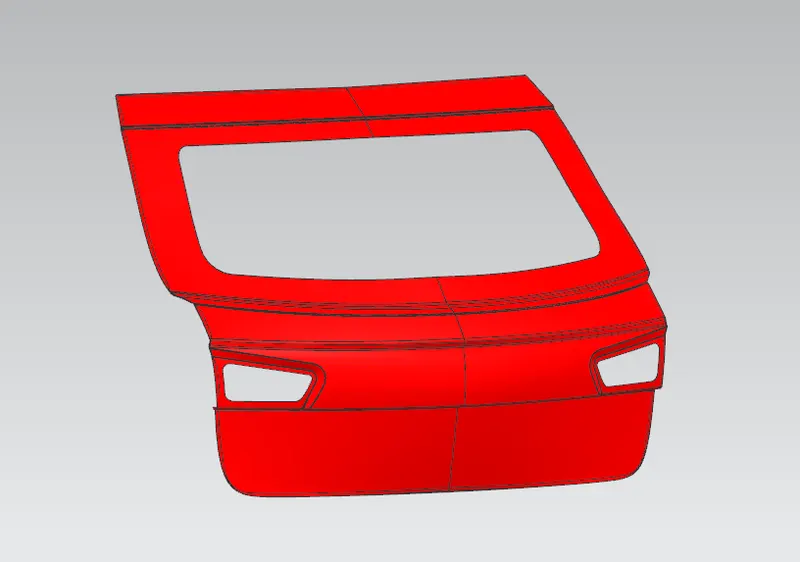
The outer panel of the back door is an aesthetic part. The outer panel is mainly divided into outer panel upper and outer panel lower. These two panels are joined together by spot welds. The outer panel has provision for the windshield glass, tail lamp, and license plate mountings. Windshield glass carries gradient lines which are important for the visibility factor. On the outer panel, a coating is provided so that it is prevented from rust, scratch and also this coating layer gives a smooth and attractive finish. Firstly, I had to repair the surface by removing an irregular surface that is not able to sew properly. I also created one flange at the outer lower panel which will be used further for spot welding outer upper and outer lower panel.
HEMMING:
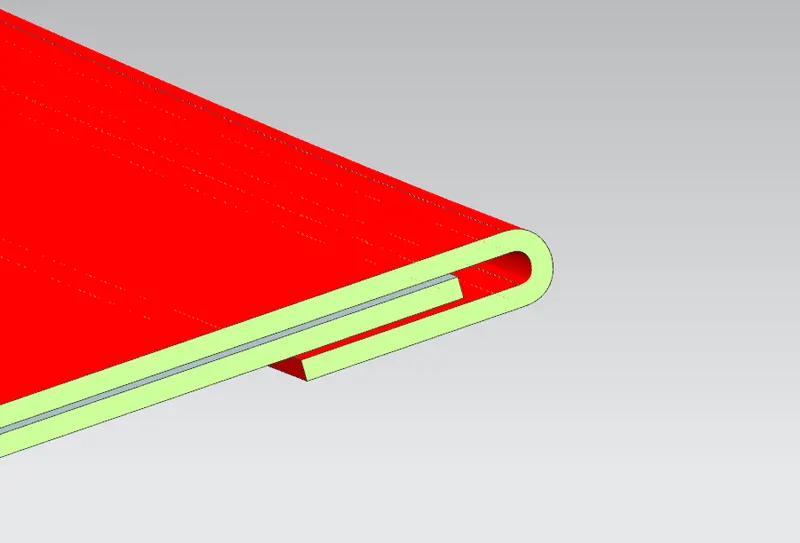
Hemming operation in NX was performed by using swept, studio surface, and face blend. It is a kind of complex process so I have to give close attention to the curves. 0.2 mm clearance between top and bottom and 2 mm clearance between the edge of the inner panel and the inner surface of the outer panel. This clearance is there because after the hemming sealant is applied there for which it needs little space to lose out and get it stuck properly.
TOOLING DIRECTION:
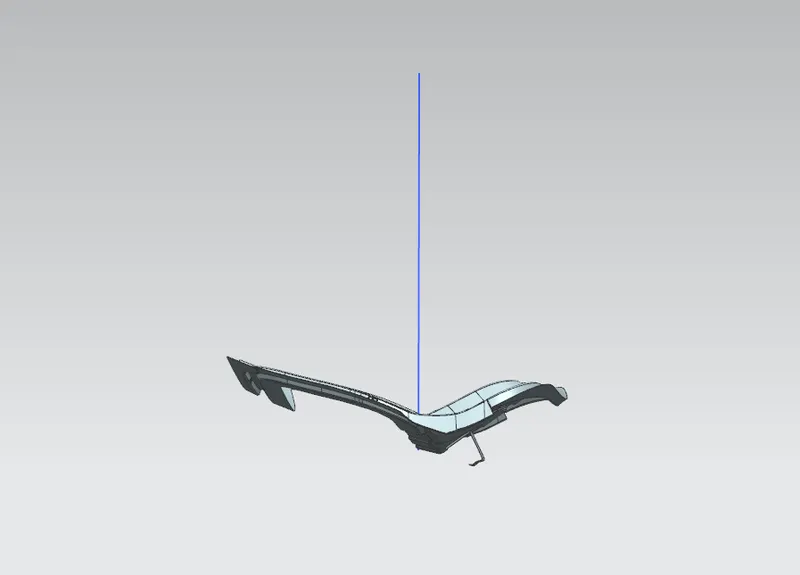
The inner panel is manufactured in the industry through a deep drawing process. Core and die are used for deep drawing, the core is a heavy part and it follows a single straight line which is also known as tooling direction. Core follows the tooling direction and punches the entire part in the die and the sheet metal part gets created. For creating tooling direction in the Nx software I draw to connecting lines which follow the part a very high extent and then bisecting these two lines me my tooling direction.
INNER PANEL:
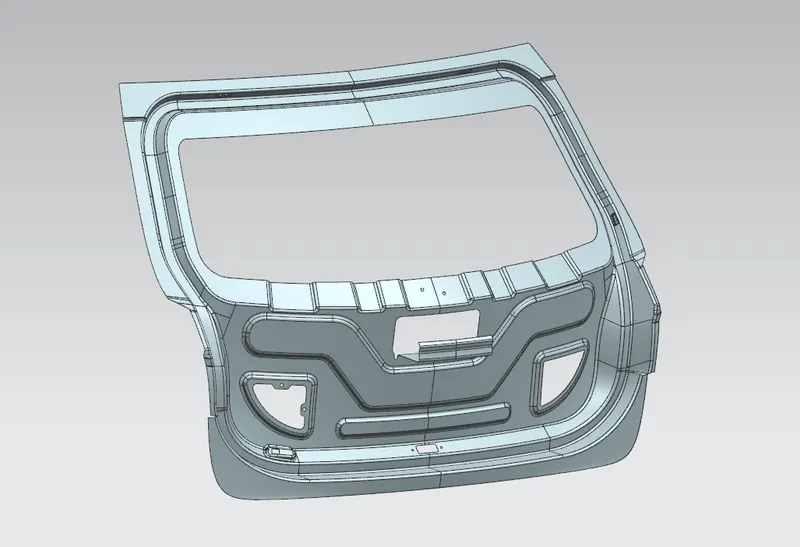
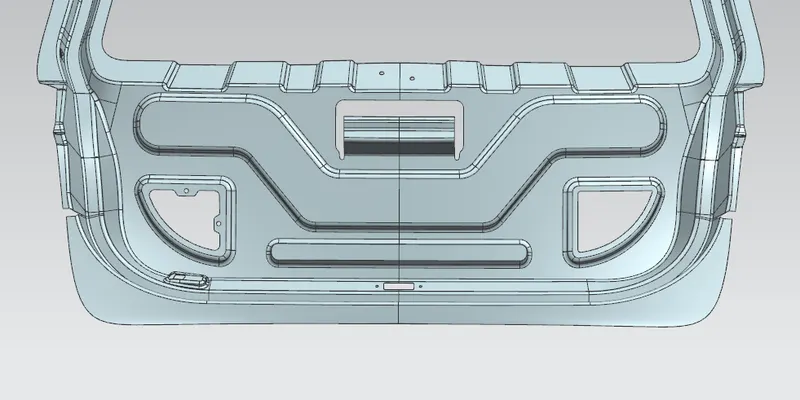
As we know the outer panel is an aesthetic part. So, all the load in case of over slamming or Collison is resisted and transferred to the side body by the inner panel. The inner panel is the most important component in the back door which strengthens the door assembly, as well as all the reinforcements and accessories like a wiper motor, are mounted on the inner panel. Manufacturing of inner panel is mainly done by using deep drawing process in which whole inner panel is created as a single part from a sheet by using core and die assembly. This reduces the no. Of tools needed and eliminate any fit ability problem so in the end reducing the cost of manufacturing. The inner panel was designed by offsetting the given class-A surface. The designing of the inner panel includes a sealing flange, connecting flange, Embosses, and surface for the mastic which provide strength to the outer panel.
SEALING FLANGE:
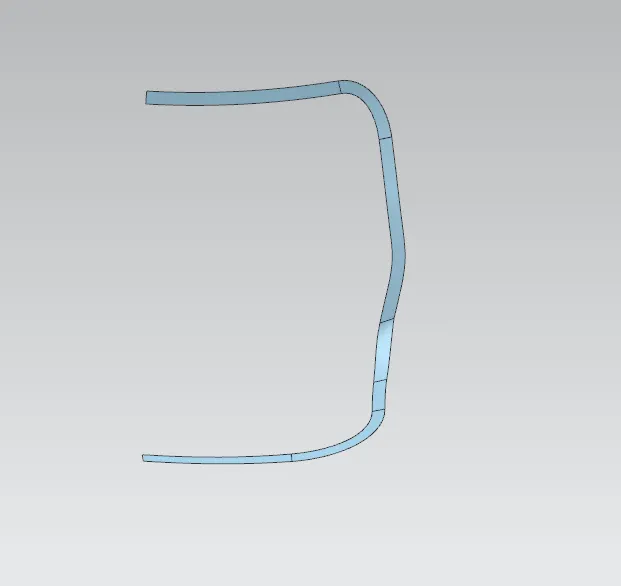
Sealing is a surface that allows the entire backdoor to sit on the body of the car. when the back door is over slammed all the forces are absorbed by the rubber sealant provided at the sealing area. There are multiple ways of creating a sealing flange first way is that we get offset from side body assembly but in this case, the side door data is not available so I have to create the sealing flange and then for designing the side body it will be useful. The offset curve on the face, bridge curve, and through curve mesh are the important functions that I used for designing the sealing flange.
CONNECTING FLANGE:
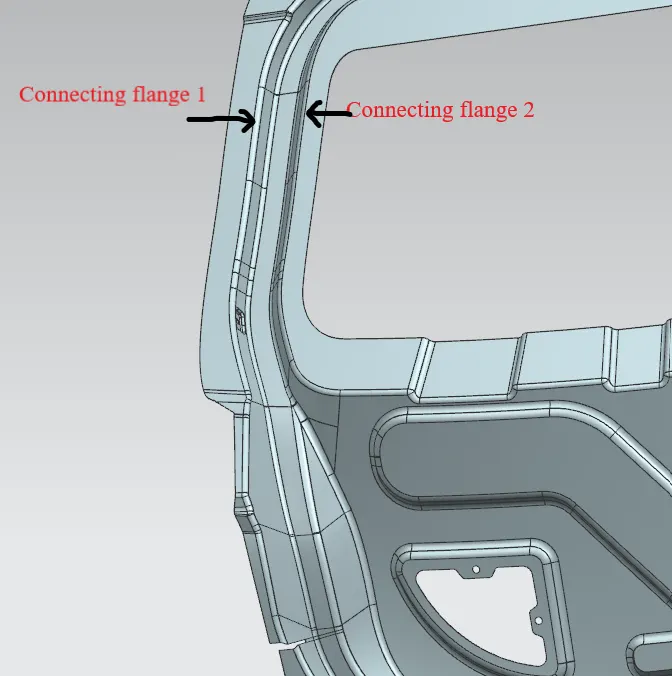
These flanges were created to connect the sealing flange with the inner panel of a back door. Two connecting flanges were created by using law extension on each side of the sealing flange.
EMBOSSES:
Embosses are there for giving strength to the back door in case of over slamming. Concerning so many loads, cases there will be so many impressions and depression on the door. These things are recovered by embosses. Embosses need to be designed in such a way that they should follow force dissipation criteria for example in case of collision from the rear the forces should be transferred to the hinges and side body of the vehicle for the safety of occupants. One of the most important points to consider during the designing emboss is that the embossing direction should be towards the outer panel so that they will resist most of the force. All the emboss and cut-outs in the inner panel are designed by considering tooling direction. Emboss, edge blend, and the fillet are the most common function I used while designing embosses.
SURFACE FOR MASTICS:
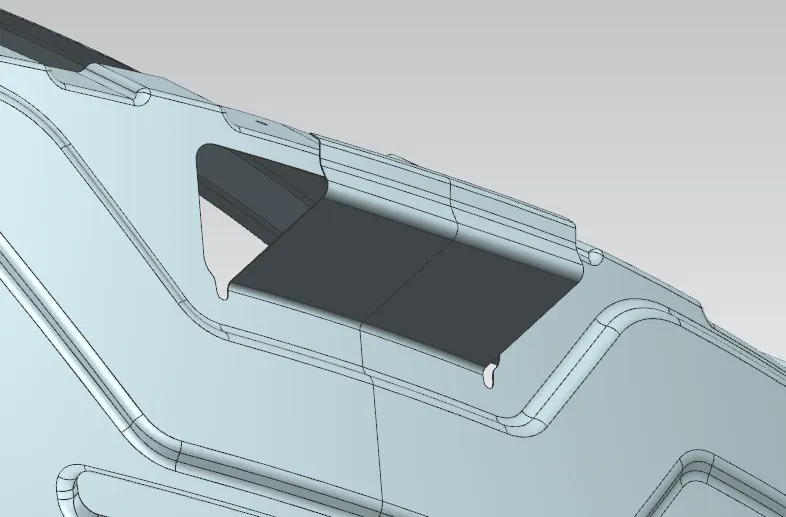
mastic is provided between outer and inner so that we will not get ratel noise. As we know the main purpose of the outer panel is for the aesthetics looks. Thus, we cannot use bolts or spot welding because they will leave marks on the outer panel. The back door commonly possesses a large surface area and hemming can only be provided at the boundaries. So, mastic sealants are used to stick the inner surface of the outer and inner panels. Mastic sealants are elastic compound that behaves like rubber. Initially, they are in pastel form, but after the hot furnace bath, it gets hardened thus joining the outer and inner panel. It is applied between the inner and outer panels at specified spots.
For designing the surface for mastic, I used law extension and offset surface command.
REINFORCEMENT:
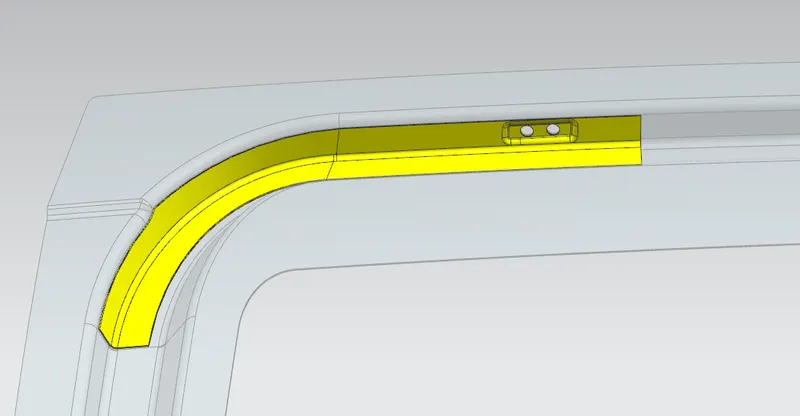
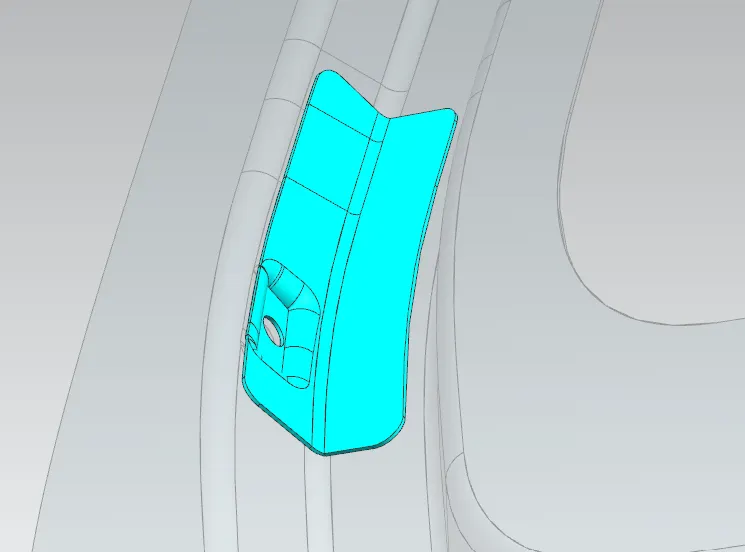
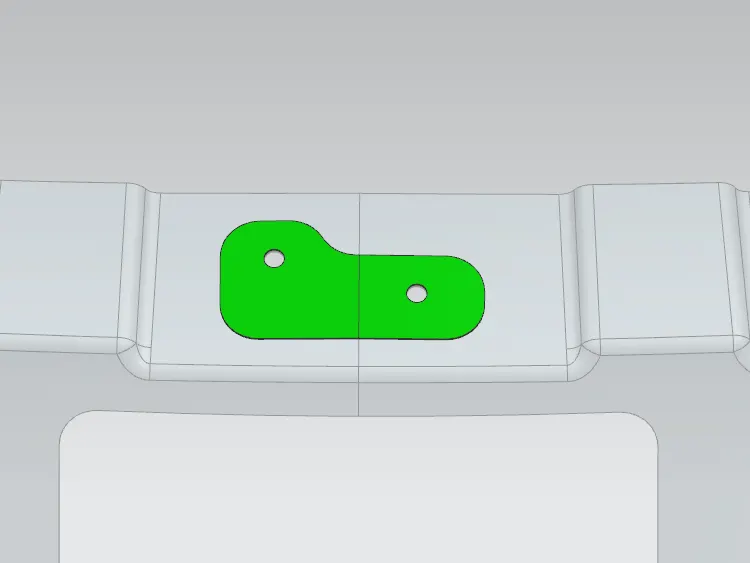
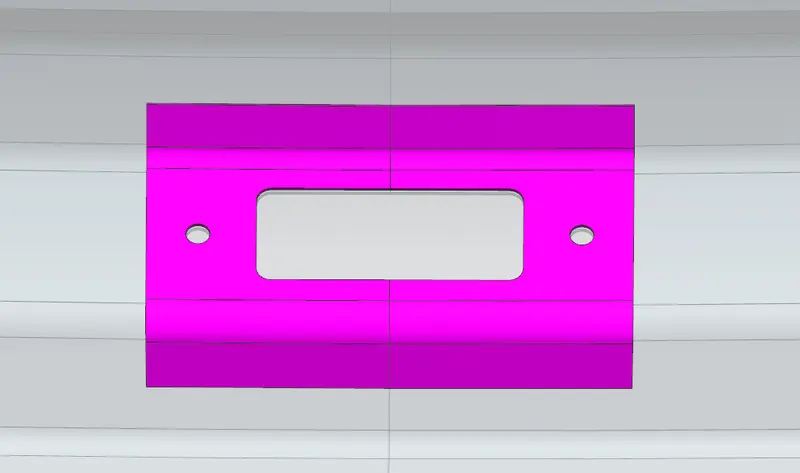
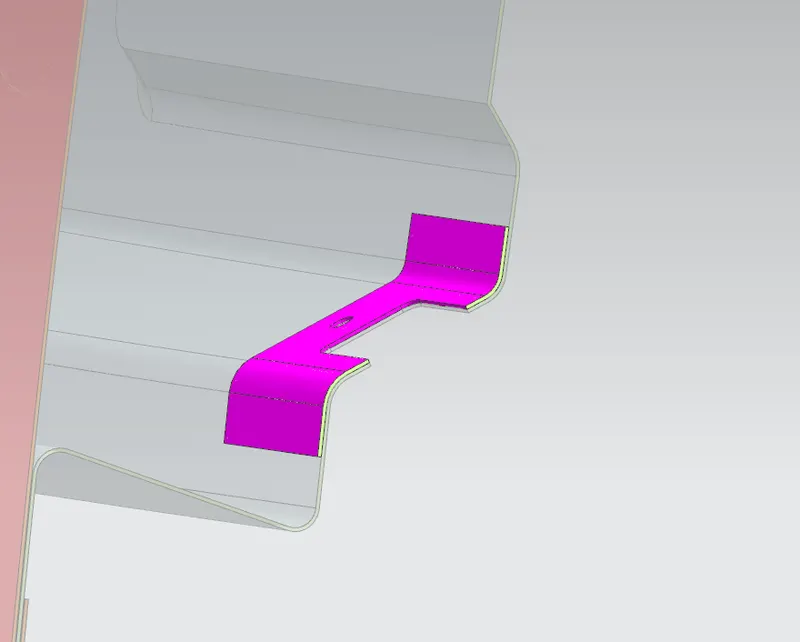
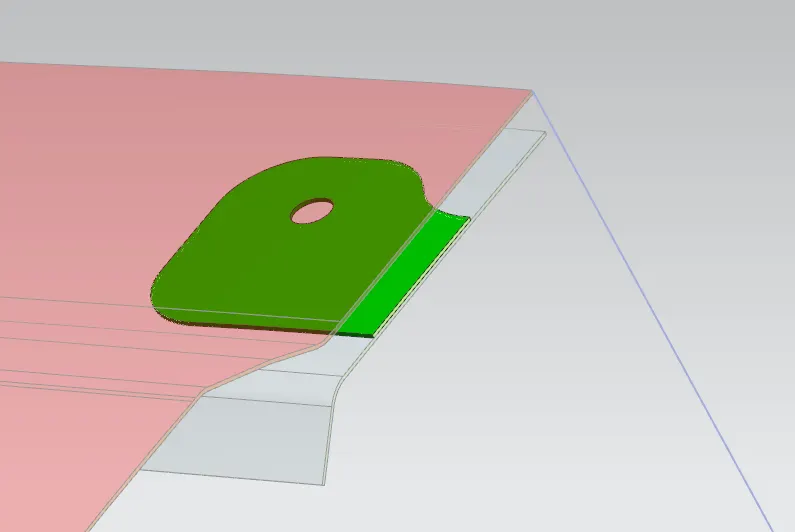
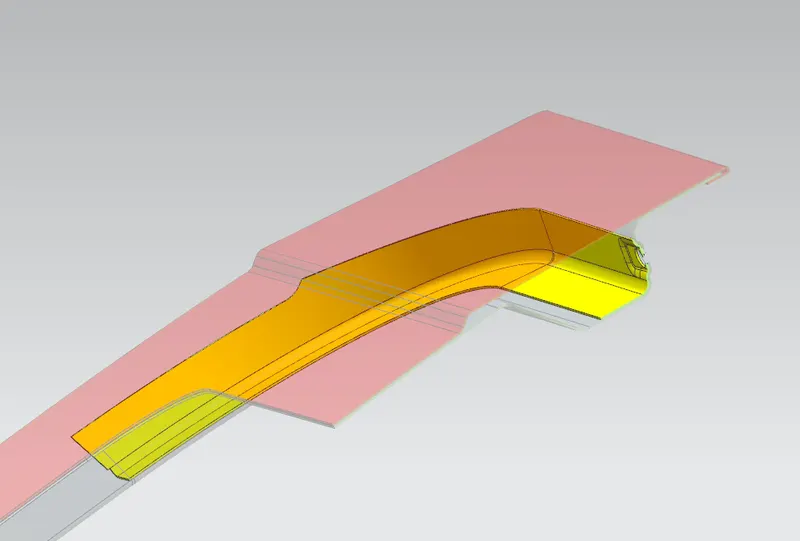
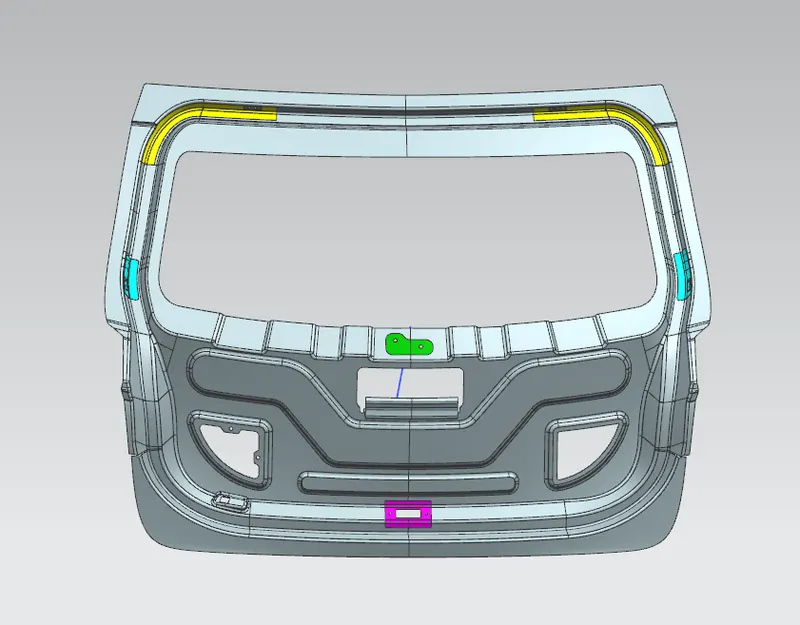
Reinforcements are necessary to improve the local strength of the back door. Reinforcements are provided in a BIW back door where maximum load gets transferred during over slamming or Collison. They are spot welded to the inner panel. If there will be a direct hole on the section for mounting then it will tear the back door that's why I give there emboss which will improve strength and protect the part from tearing. Also, I designed reinforcements with proper clearance that there will be ease in assembling them with the inner panel. Wave geometry linker, offset surface, and trim sheet were the most common functions I used while designing the reinforcements in NX software.
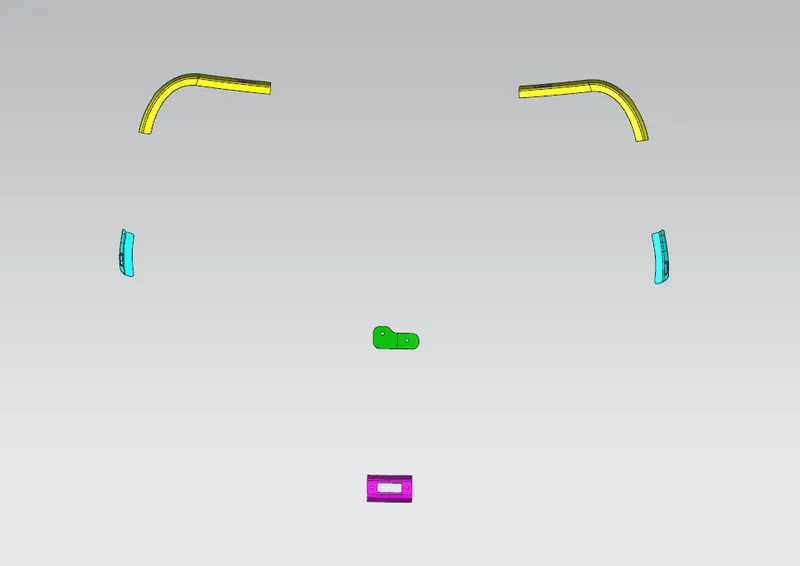
These are the reinforcement for the back door:
Hinge reinforcement:
Gas reinforcement:
Wiper motor reinforcement:
Latch/striker reinforcement:
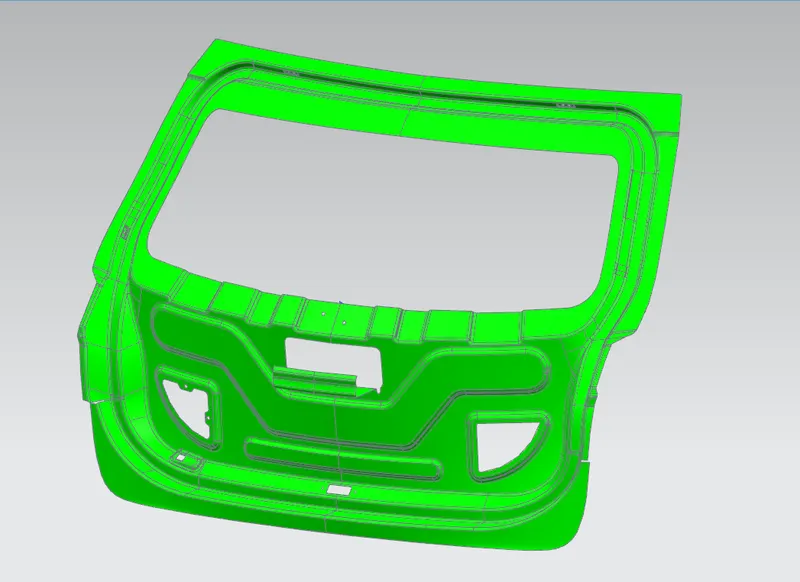
DRAFT ANALYSIS:
The Draft Analysis command enables you to detect if the part you drafted will be easily removed. This type of analysis is performed based on color ranges identifying zones on the analyzed element where the deviation from the draft direction at any point, corresponds to specified values.
DIFFERENT VIEWS OF BACK DOOR:
Section view with latch/striker reinforcement:
Section view with Wiper motor reinforcement:
Section view with Hinge reinforcement:
With all reinforcement:
CONCLUSION:
- Successfully designed Car back door with reinforcement like latch-and-striker, hinge, Gas stay, and viper motor reinforcements.
- Successfully did the draft analysis for the inner panel of a back door.
- This project helps me to enhance my designing skill and help me to become industry-ready for the role of Mechanical Design Engineer. Overall, the project was successful.