Design of backdoor
AIM:
To design the back door (Tail gate) of a car from the styling surface provided using NX CAD . The ultimate aim is to design the back door by following the industrial standards.
BACK DOOR :
A back door is a BIW component found in all automotive car generally used for opening and closing of the so called as a car luggage that is usually used for storing items inside a car. Car doors are designed to facilitate ingress and egress by car passengers.
Unlike other types of doors, the exterior side of the vehicle door contrasts in its design and finish from its interior side (the interior part is typically equipped with a door card (in British English) or a door panel (in American English) that has decorative and functional features.
The exterior side of the door is designed of steel or other material like the rest of the vehicle's exterior. In addition, its decorative appearance, typically coloured with a design, is intended to match with the rest of the vehicle's exterior, the central purpose being to add to the overall aesthetic appeal of the vehicle exterior.
A vehicle typically has two types of doors: front doors and rear doors. Loosely related are: vehicle hoods and vehicle trunk lids. There are also doors known as a "hatch" (see "door categorization" below)
A major safety issue with opened vehicle doors is the assumption at night vehicle doors can provide a warning to other vehicle drivers. It is estimated over 50 percent of all vehicle doors have nothing applied to the interior of the vehicle door such as light and/or a reflector. These devices need not meet any US Federal Motor Vehicle Safety Standards since no standards apply. To make matters worse it was reported by the Fatal Accident Reporting System that in the year 2014 not one single death was reported with a person outside the opened vehicle door at night in the entire United States of America. New safety technology such as providing to the lower interior edge of the vehicle door a highly reflective tape provides the ability of other vehicle drivers to see the opened vehicle door at night see US Patent No. 9,308,859 for details including diagrams of a typical application .
PART OF A TAIL GATE :
- Outer panel
- Outer panel lower
- Inner panel
- Hinge reinforcement
- Latch and striker reinforcement
- Wiper motor reinforcement
- Gas stay reinforcements
All there parts are assembled together to obtain the back door of a car.
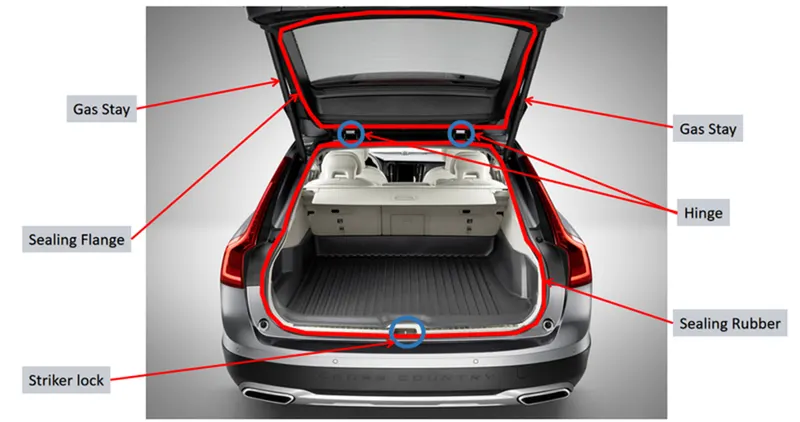
TYPES OF BACK DOOR :
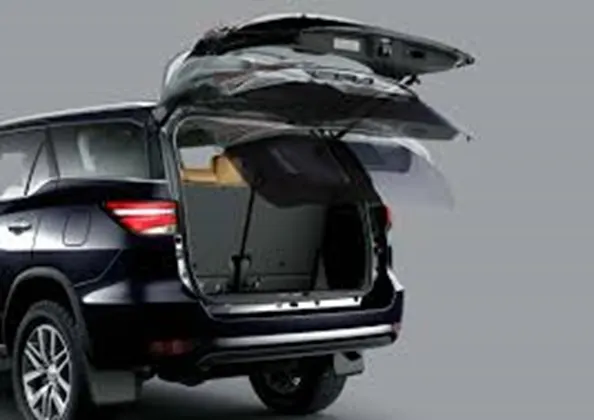
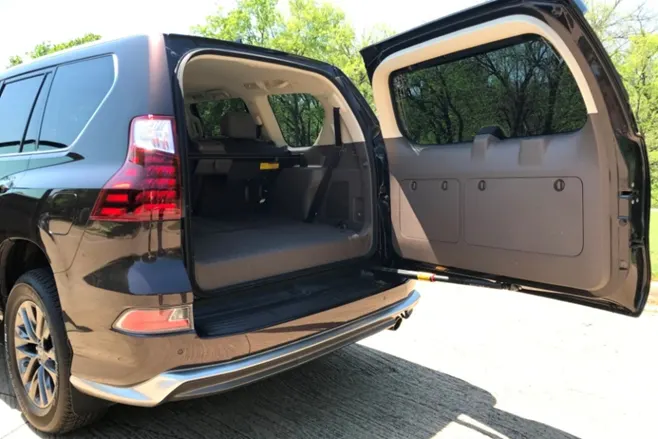
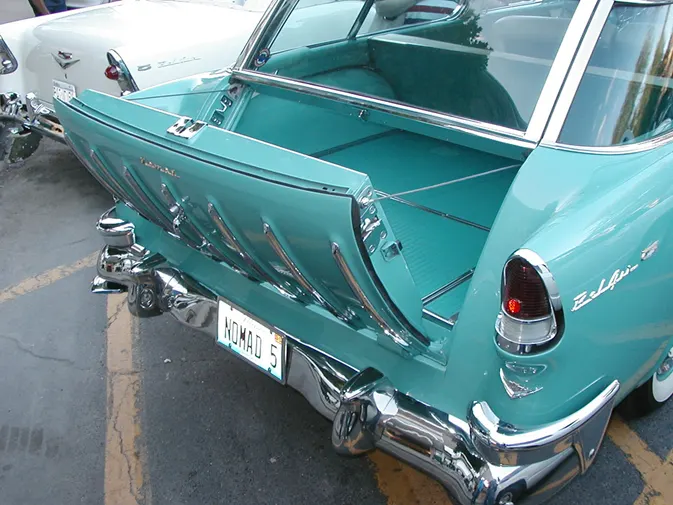
There are three types of back door based on the position of the hinge axis. They are
- Top Mounted
- Side door
- Bottom mounted
In our design we follow the top mounted design where the hinges are mounted on the top.
Design consideration in back door design:
The following are the design consideration taken while designing the back door. They are,
- Visibility criteria
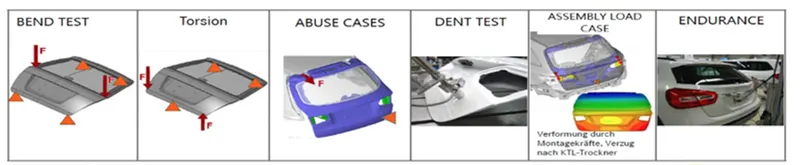
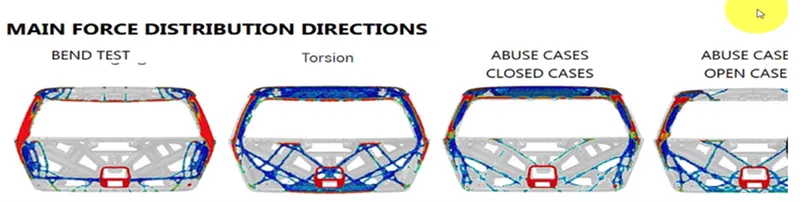
- Force dissipation
- Latch and striker positions
- Hinge position
- Material selection
- Space availability
- Hemming and relief areas
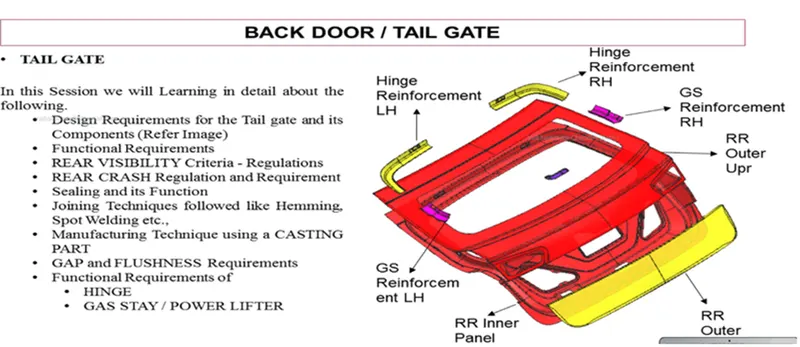
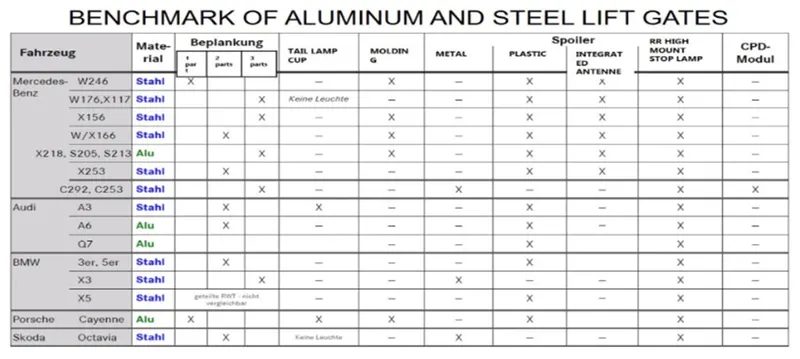
All the design consideration go hand in with each other because there positions and dependant on each other and if position get altered all the position has to be altered for effective opening and closing of the back door. The latch and striker, hinge position and the gas stay position has to be maintained in a proper way so that they play a major role in the opening and closing as well as the rear visibility criteria of the car.
Material selection:
The material selection play a major role Side-door impact beams are mounted on the door panels of passenger cars to guarantee passenger’s safety from side-impact damage. Door stifness is an important factor of a side-impact. Impact beams are required to have large static strength and high-impact energy absorption capabilities; properties that are seldom possessed simultaneously by conventional metals, because metals with high-strength usually have low toughness and vice versa (Lim and Lee, 2002). To meet these required properties of high-strength and high-toughness, high-strength metals are used to replace conventional steel for use in side- door impact beams. Weight reduction of cars is currently of great concern Journal of Mechanical Engineering and Technology manufacturers, due to the international movement of regulations; in terms of fuel efficiency and gas emissions of passenger vehicles. In order to reduce weight, there are two important methods (Zhang et.al., 2006). One of these methods is to redesign automobiles parts to optimize their structure. By using thinning, hollowing, mini type, and compound parts, car weights can be reduced. The other method is to replace traditional materials, like mild steel, with lightweight materials, such as aluminium alloy, high- strength steel, and composites (Zhang et.al., 2006). Of these two methods, material replacement is generally more effective in achieving a lightweight automobile than structural modification. In this study, the structural modification and impact energy absorption of materials was investigated simultaneously using Finite Element Analysis (FEA) and Charpy impact tests, respectively; in order to design a new side-door impact beam. The best way to reduce the structural weight of an impact beam, without sacrificing safety, is to employ aluminium alloy, due to its higher strength to weight ratio than that of conventional steel. Aluminium alloys are widely used in aerospace and automotive industries; especially in structural applications. Therefore, they are a useful new candidate material for side-door impact beams, in order to improve impact energy absorption capacity and resistance to plastic deformation.
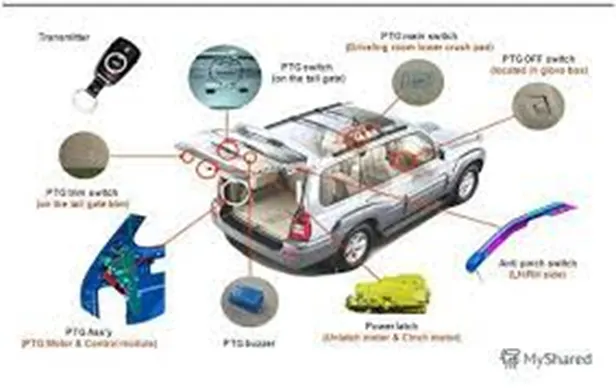
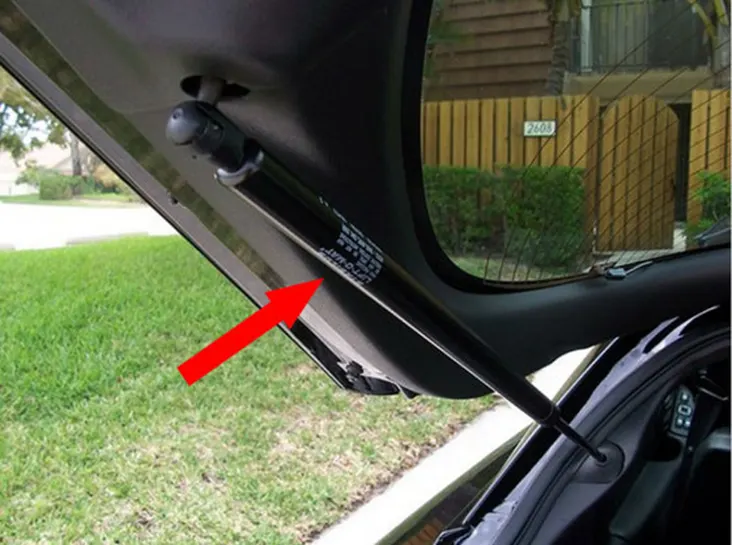
GAS STAY POWERED
The present invention relates to a stay rod of an automobile, and more particularly, to install the divided rods on the body and the door, respectively, so that the rods are assembled in a sliding manner so that the operation of the stay rod can be performed without using a hand. A stay rod of a vehicle that is intended to be made. In general, the back door of the vehicle is a kind of lid covering the engine room located at the front of the vehicle, and the front part is lifted about the hinge formed at the rear side. The door is equipped with a locking device to prevent the door from being opened while driving, and the locking device is configured to release the locking force by the operation force of the door dredge provided on one side of the driver's seat of the cabin. Therefore, the hood may release the fixing force acting on the hood by manipulating the hood in one side of the driver's seat, and hold the front part of the hood and lift it upwards to achieve the opening of the back door. Here, the back door is provided with a door stay rod having a predetermined length to keep the door open.
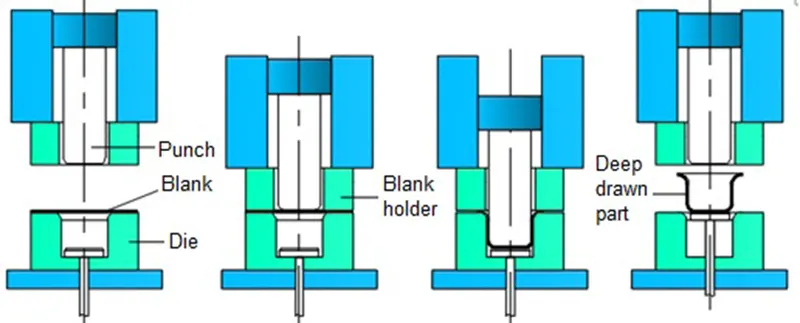
DEEP DRAWING:
Deep drawing is a sheet metal forming process in which a sheet metal blank is radially drawn into a forming die by the mechanical action of a punch. It is thus a shape transformation process with material retention. The process is considered "deep" drawing when the depth of the drawn part exceeds its diameter.
EMBOSSING :
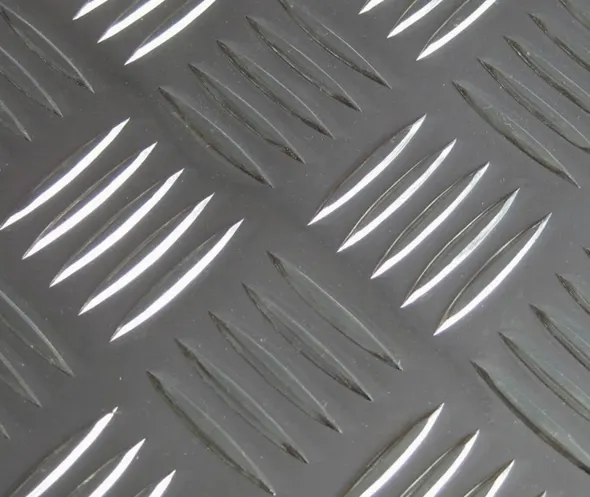
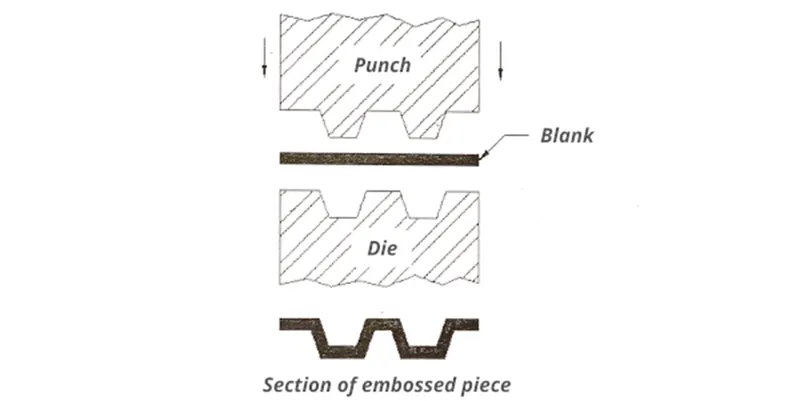
The metal sheet embossing operation is commonly accomplished with a combination of heat and pressure on the sheet metal, depending on what type of embossing is required. Theoretically, with any of these procedures, the metal thickness is changed in its composition. Metal sheet is drawn through the male and female roller dies, producing a pattern or design on the metal sheet. Depending on the roller dies used, different patterns can be produced on the metal sheet. The pressure and a combination of heat actually "irons" while raising the level of the image higher than the substrate to make it smooth. The term "impressing" refers to an image lowered into the surface of a material, in distinction to an image raised out of the surface of a material. In most of the pressure embossing operation machines, the upper roll blocks are stationary, while the bottom roll blocks are movable. The pressure with which the bottom roll is raised is referred to as the tonnage capacity.
HEMMING:
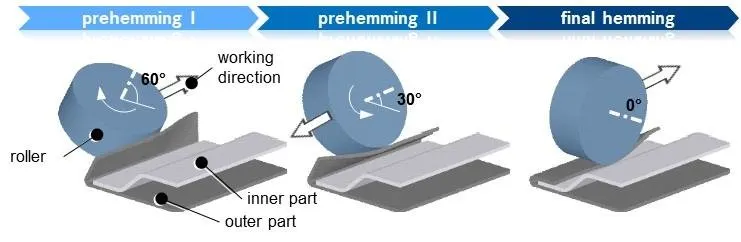
Hemming is a metalworking process that involves rolling the edge of sheet metal over and onto itself, essentially creating an area of two layers. During this process, the edge of sheet metal is folded over. The two newly formed layers then lie flush with each other. Sheet metal is available in a variety of gauges.
b 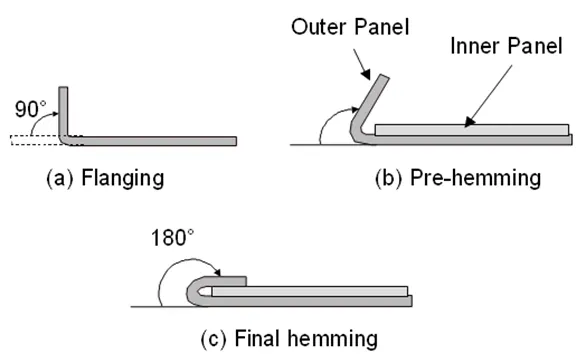
DESIGN A BACK DOOR IN NX CAD :
Door part thick ness is given below.
- Outer panel =0.75
- Inner panel =0.75
- Reinforcement = 0.75
GIVEN DATA:
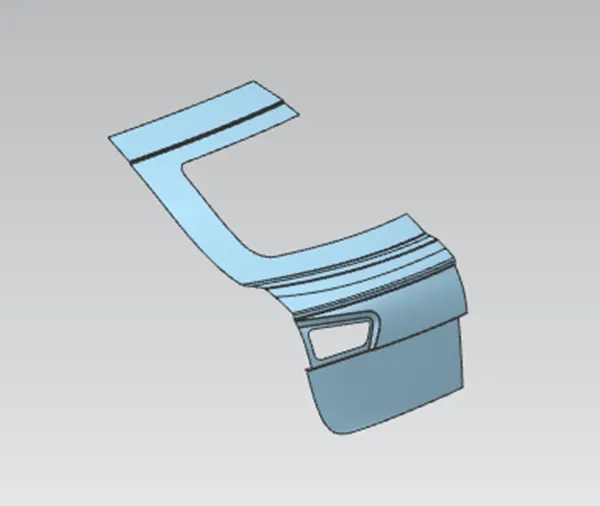
Given surface has to be repaired according to the smoothness. After repairing the surface the door is divided in to two parts as door outer upper and door lower panel.
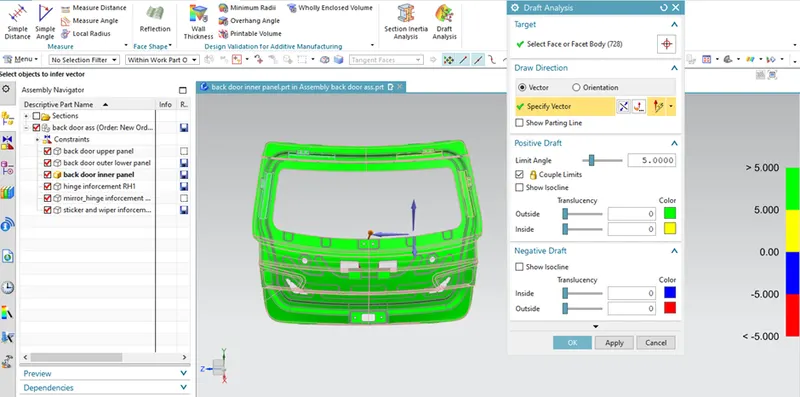
First, we need to create the tooling direction for the deep drawing operation.it shows that all the operation like embossing is done by considering this vector direction and it will help in manufacturing the part,
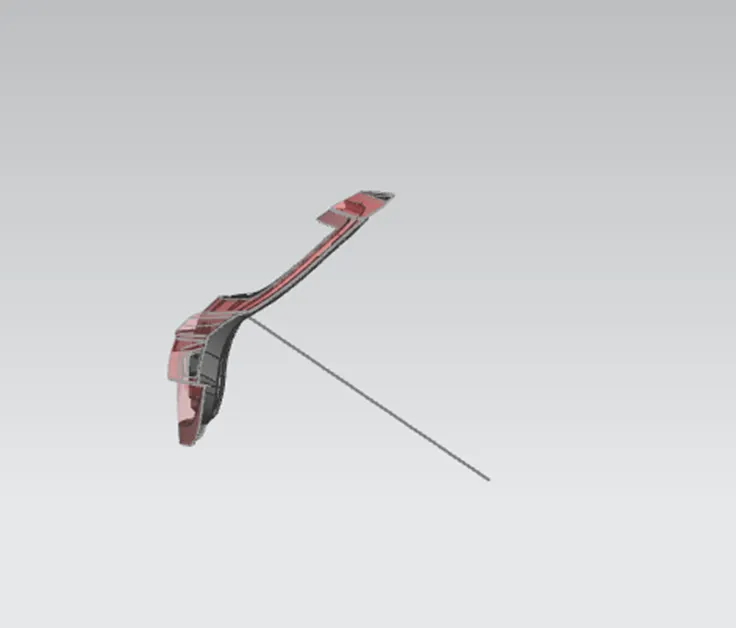
After that we have to create sealing flange by offsetting the outer panel to the specific distance.
Then we will be creating the back door inner panel flange by offsetting the outer surface at a distance considering the sheet thickness and thickening direction.
We make that all part we will making the emboss on the design of my idea.
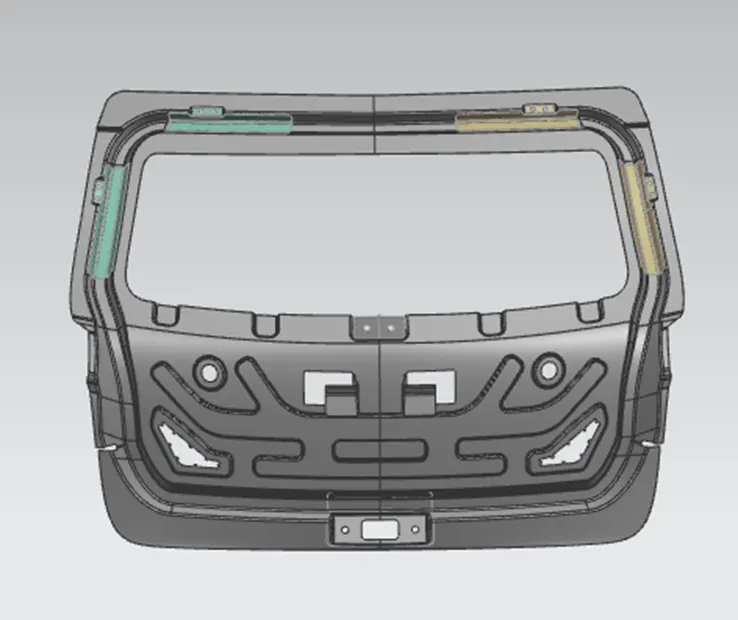
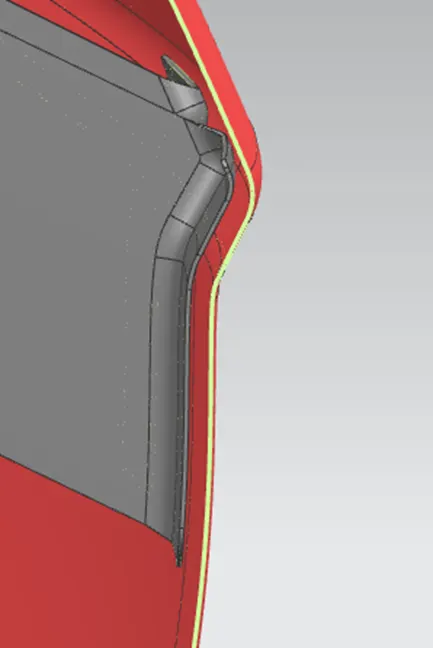
We should be give 5mm of minimum gap of mastic filling.
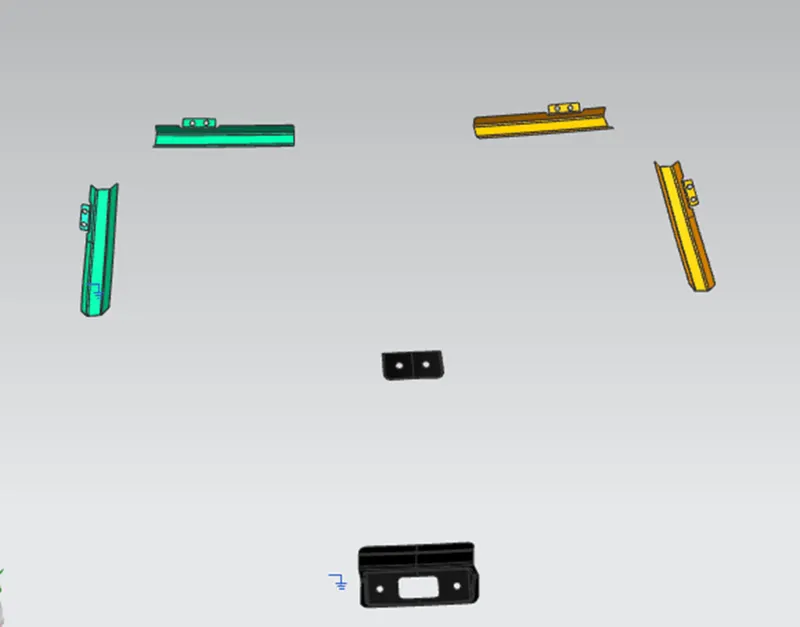
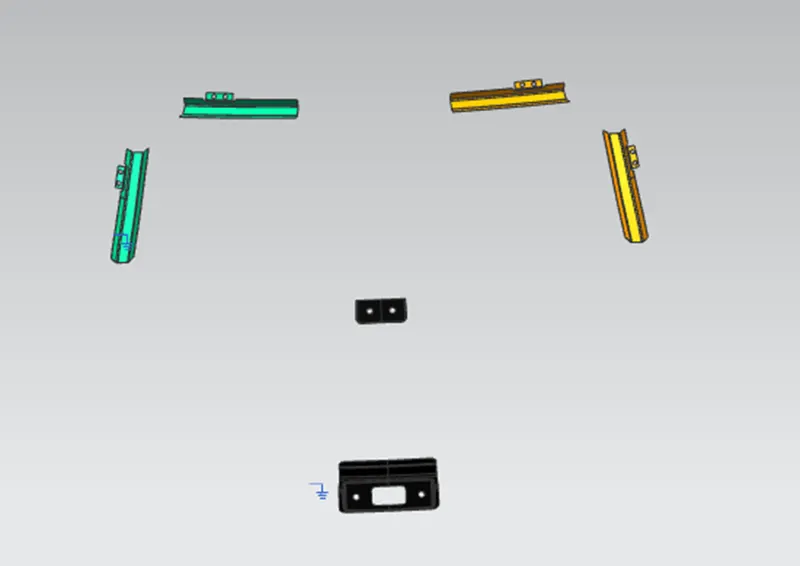
Reinforcement is to increase the strength of the sheet metal to joint the gas stay or striker if there are moving or impact zone that case we will using reinforcement .
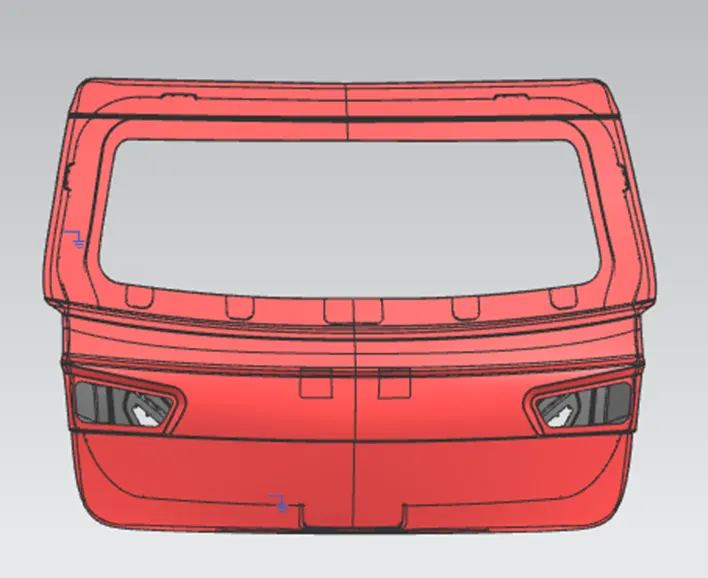
Front view
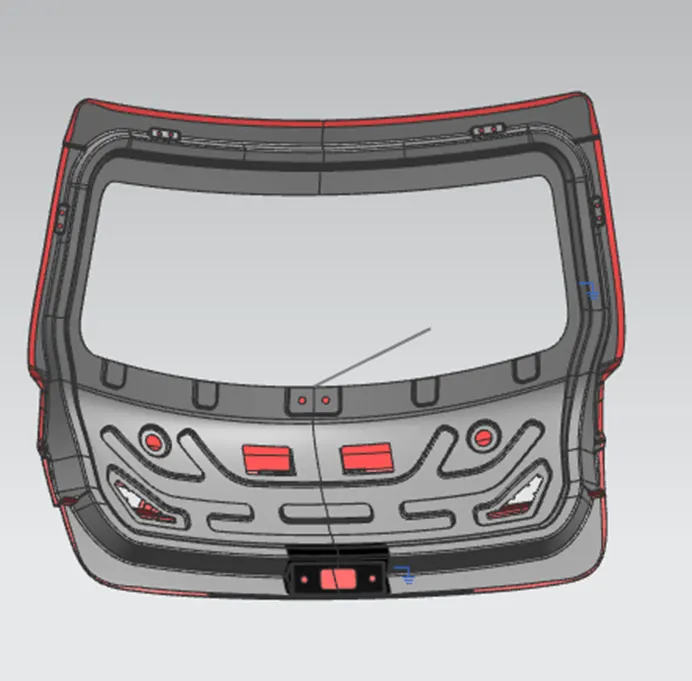
Rear view
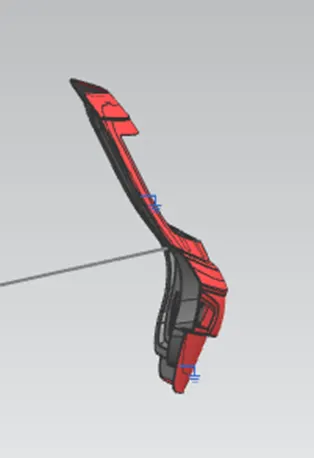
Side view
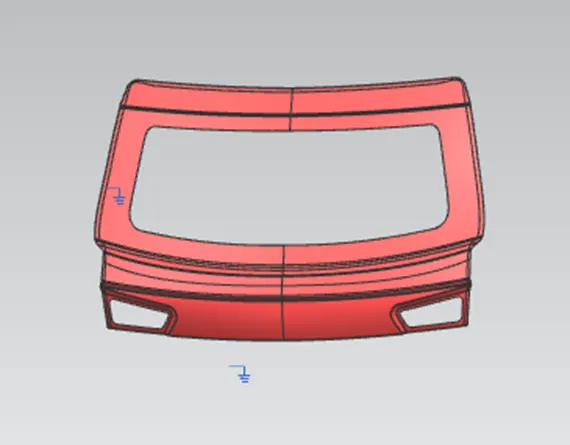
Upper panel front view
Upper panel rear view
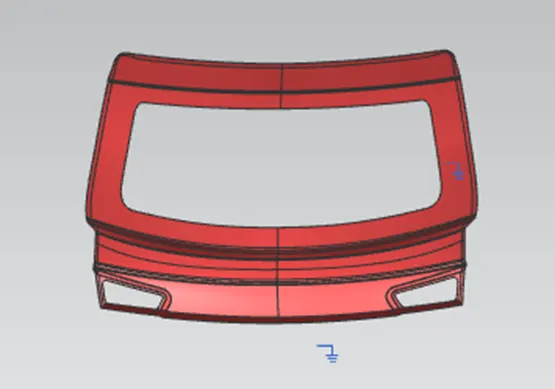
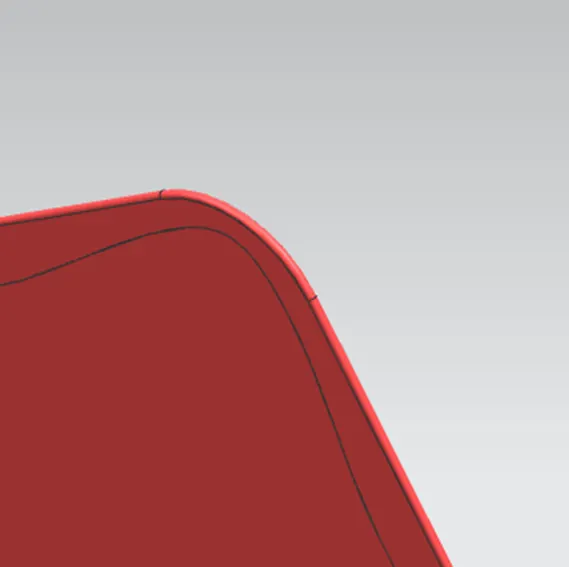
Upper panel using hemming and relief prosses
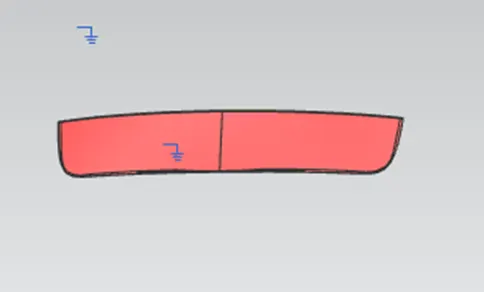
Lower panel
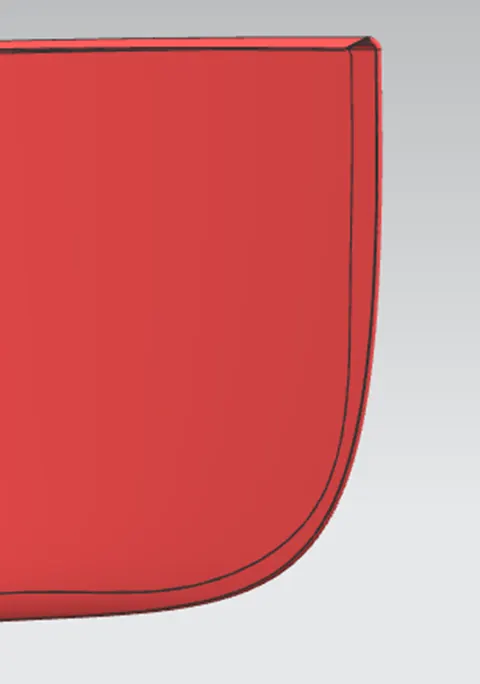
Lower panel relief prosses
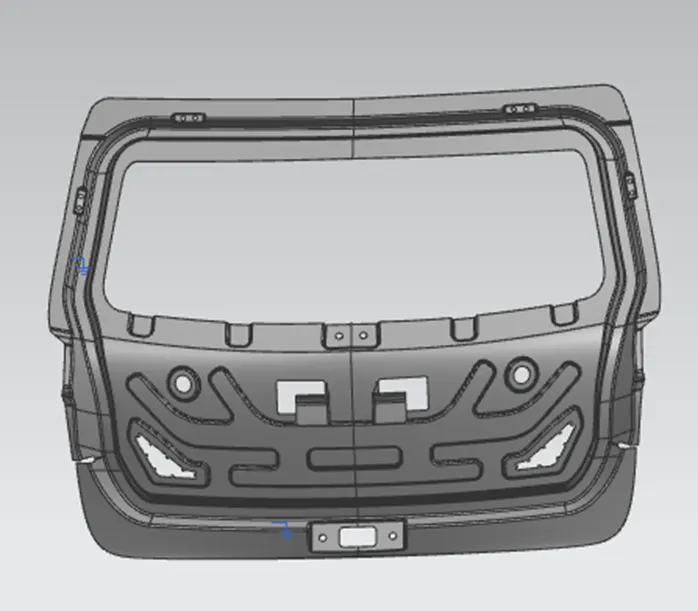
Inner panel rear view
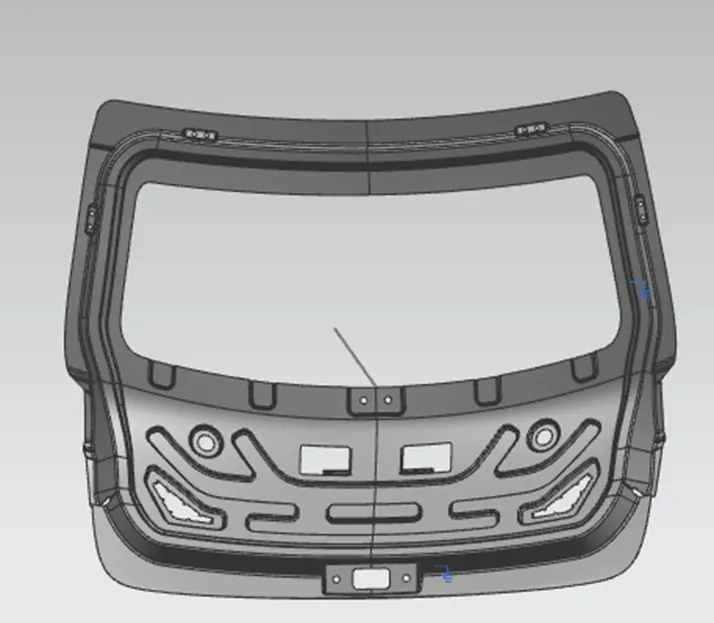
Inner panel front view
All reinforcement parts
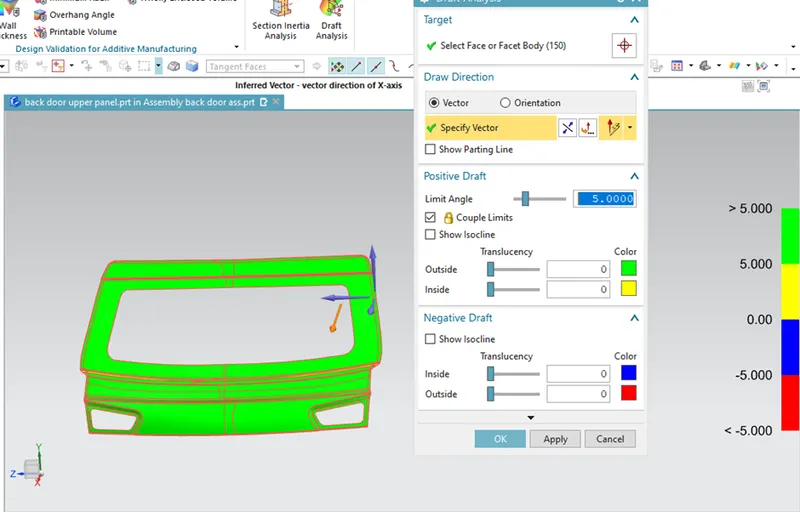
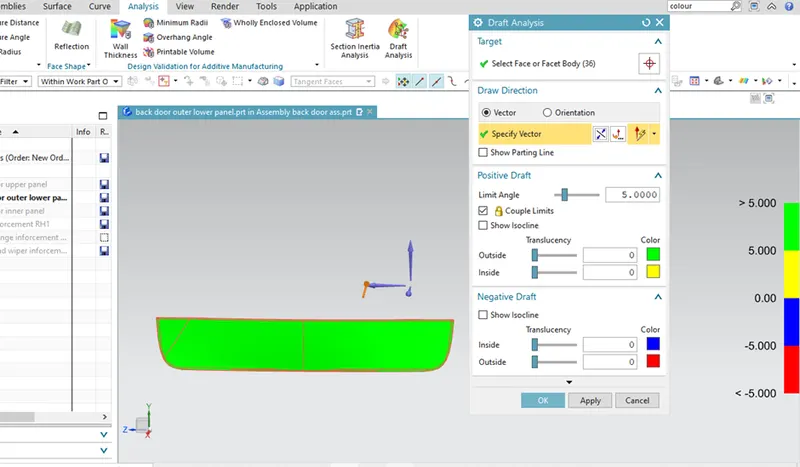
Draft analysis :
Inner panel draft analysis
Outer upper panel draft analysis
Outer lower panel using draft analysis
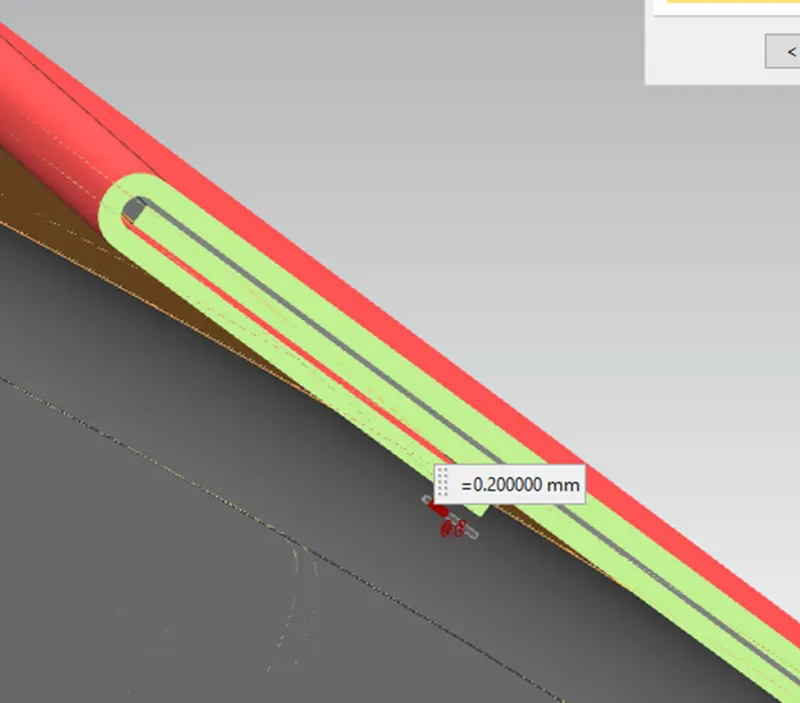
Upper and lower panel to inner panel gap is 0.2mm and tolerance 2mm
Result: