Hood design-Week 2
SHEET METAL DESIGN OF HOOD OUTER AND INNER PANEL
AIM
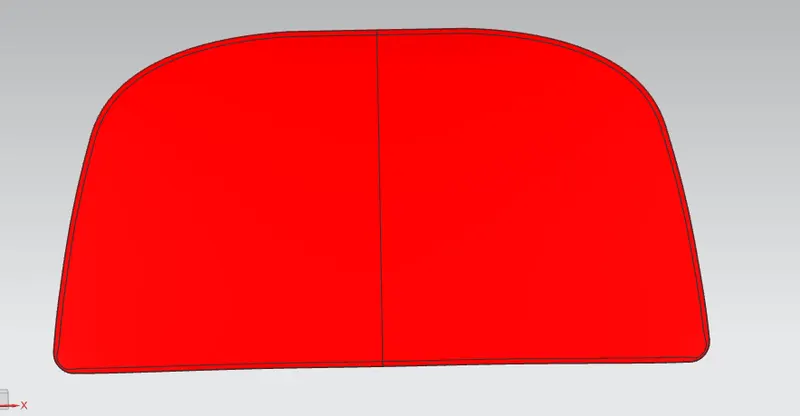
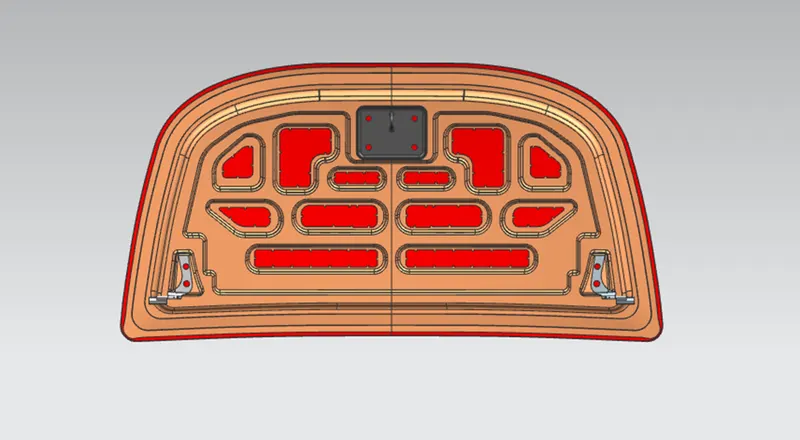
In this project a hood assembly will be designed which would consist of hood outer panel. The latch for the hood will also be placed at appropriate position considering that the hood should be opened and closed easily using its mechanism. The hinges will also be placed at appropriate position for the rotation of the hood inner panel.
INTRODUCTION
The hood or bonnet is the hinged cover over the engine of motor vehicles. Hoods can open to allow access to the engine compartment, or trunk on rear-engine and some mid-engine vehicles) for maintenance and repair.
A car hood also referred to as a bonnet in some other countries is the hinged cover that rests over the engine of a front-engine vehicle. Its purpose is to provide access to the engine for repair and maintenance. Car hoods are typically constructed from steel and sometimes from aluminium.
In UK terminology, a hood refers to a fabric covering over the passenger compartment of the car (known as the “roof” or “top” in the US). For many motor vehicles built in the 1930s and 1940s, the resemblance to an actual hood is clear when it is opened and viewed from the front; in modern vehicles, it still serves the same purpose, but no longer resembles head covering.
On front-engine cars, the hood may be hinged at either the front or the rear edge, or in earlier models (e.g. the Ford Model T) it may be split into two sections, one on each side, each hinged along the centreline. A further variant combines the bonnet and wheel arches into one section and allows the entire front bodywork to tilt forwards around a pivot near the front of the vehicle.
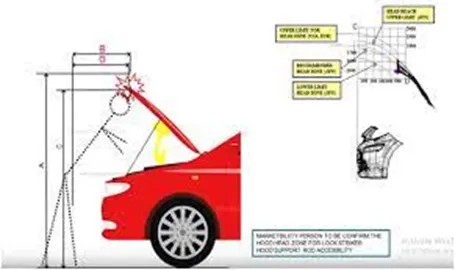
The first important criteria for designing the hood is to set an opening angle till which the hood panel can be opened . this opening angle is different for different countries which largely depends on the average height of a person in that particular country .
The movement of the hood can be controlled by either one of them:
- Gas stay
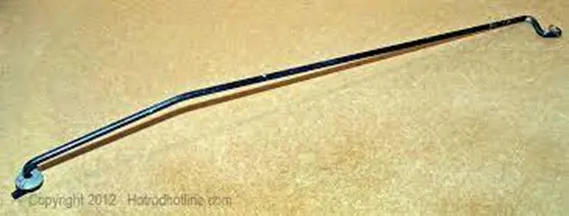
- Support rod
GAS STAY
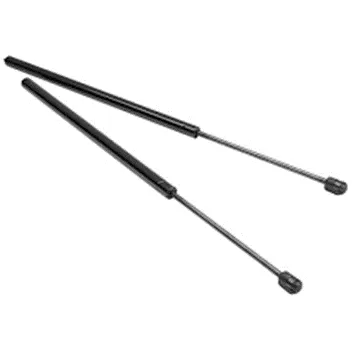
The present invention relates to a hood stay rod of an automobile, and more particularly, to install the divided rods on the body and the hood, respectively, so that the rods are assembled in a sliding manner so that the operation of the hood stay rod can be performed without using a hand. A hood stay rod of a vehicle that is intended to be made.
In general, the hood of the vehicle is a kind of lid covering the engine room located at the front of the vehicle, and the front part is lifted about the hinge formed at the rear side.
The hood is equipped with a locking device to prevent the hood from being opened while driving, and the locking device is configured to release the locking force by the operation force of the hood dredge provided on one side of the driver's seat of the cabin.
Therefore, the hood may release the fixing force acting on the hood by manipulating the hood in one side of the driver's seat, and hold the front part of the hood and lift it upwards to achieve the opening of the hood.
Here, the hood is provided with a hood stay rod having a predetermined length to keep the hood open.
SUPPORT ROD
A car hood, also referred to as a bonnet in some other countries, is the hinged cover that rests over the engine of a front-engine vehicle.
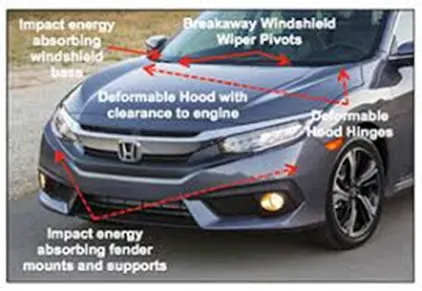
Pedestrian safety NCAP (new car assessment program) standards:
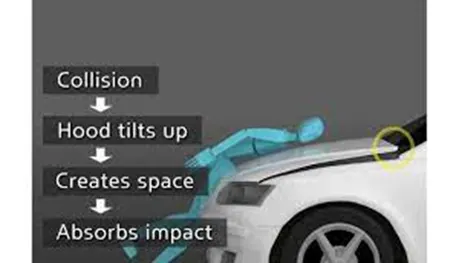
The Global New Car Assessment Programme (Global NCAP) was established in 2011 to serve as an international platform for cooperation amongst NCAPs and to promote their development worldwide. In this role, Global NCAP has given financial and technical support to new NCAPs in the emerging markets of South East Asia and Latin America and supported a ‘Safer Cars in India’ project. Global NCAP was pleased to be presented in 2016 with the Premier Award of the Prince Michael International Road Safety Awards in recognition of its work promoting vehicle safety.
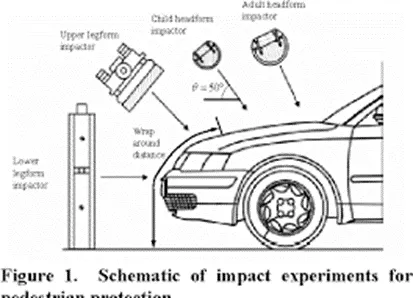
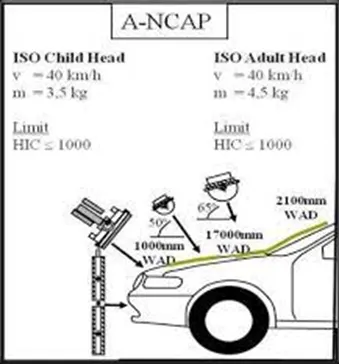
1 head impact
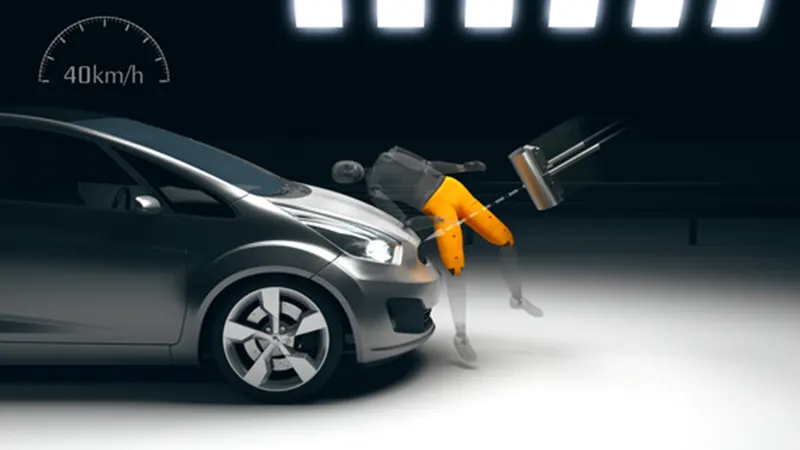
Most pedestrian accidents occur within city areas where speeds are moderate. The head, the lower body and the legs are amongst the most frequently injured body regions. To estimate the potential risk of head injury in the event of a vehicle striking an adult or a child, a series of impact tests is carried out at 40 km/h using an adult or child head form impactor. Impact sites are then assessed and the protection offered is rated as good, adequate, marginal, weak or poor.
2 upper leg impact
3 lower leg impact Typical injuries resulting from leg to bumper impacts include fractures to the leg, knee and ligaments. These leg injuries are rarely fatal however are often associated with permanent medical impairment.
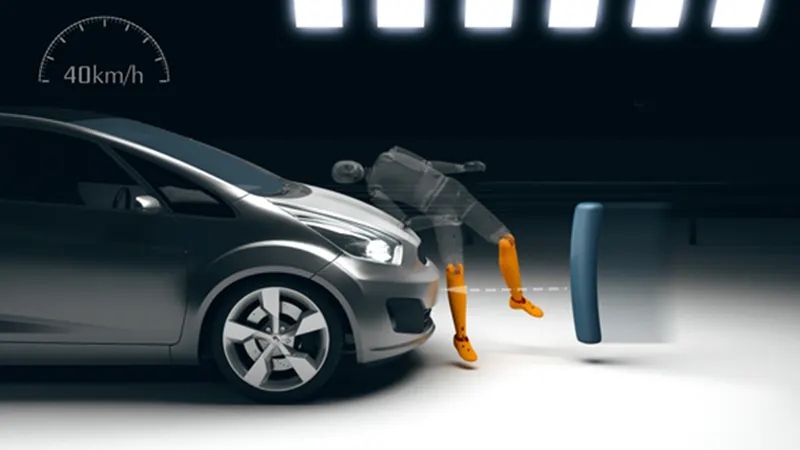
Typical injuries resulting from leg to bumper impacts include fractures to the leg, knee and ligaments. These leg injuries are rarely fatal however are often associated with permanent medical impairment.
NVH
Noise, vibration, and harshness (NVH), also known as noise and vibration (N&V), is the study and modification of the noise and vibration characteristics of vehicles, particularly cars . While noise and vibration can be readily measured, harshness is a subjective quality, and is measured either via jury evaluations, or with analytical tools that can provide results reflecting human subjective impressions. The latter tools belong to the field psychoacoustics.
Interior NVH deals with noise and vibration experienced by the occupants of the cabin, while exterior NVH is largely concerned with the noise radiated by the vehicle, and includes drive-by noise testing.
NVH is mostly engineering, but often objective measurements fail to predict or correlate well with the subjective impression on human observers. For example, although the ear's response at moderate noise levels is approximated by A-weighting, two different noises with the same A-weighted level are not necessarily equally disturbing. The field of psychoacoustics is partly concerned with this correlation.
In some cases the NVH engineer is asked to change the sound quality, by adding or subtracting particular harmonics, rather than making the vehicle quieter.
Design for noise, vibration, and harshness control
NVH control is one of the major design objectives in today’s automobiles, since NVH affects ride quality, drivability and occupant comfort. Among the sources of noise and vibration are engine and powertrain vibrations, tail-pipe exhaust noise, high speed wind flow over and around the vehicle, tire imbalance, and tire rolling on the road surface. The principal source of harshness is the squeaks and rattles in the instrument panel, dashboard, and other interior components, some of which are caused due to sliding and bumping between poorly fitted or worn out parts. NVH control is achieved by reduction in noise and vibration at their sources (e.g., by using engine mounts or vibration isolators) as well as along their transmission paths that include body structure elements, body panels, and windows.
Vehicle weight reduction using thickness down-gaging and material substitution with a lower modulus material can have an adverse effect on NVH. For low sound transmission, a low stiffness-to-mass ratio is desired, which is contradictory to low vibration transmission that requires a high stiffness-to-mass ratio. Typical approaches to NVH control include local reinforcements of body components, increased damping, and blocking or absorbing sound along its transmission paths. Local reinforcements can be provided by adding ribs and other stiffeners in areas of the component that are prone to excessive vibration. Another option is to include polymeric structural inserts, such as an expandable epoxy foam in a polyamide carrier, in local areas of body structure elements, such as B-pillars and floor sections. During the paint baking operation, the heat-reactive epoxy foam swells, cures, and bonds to the material of the body structure element.
Damping of vibration and noise can be achieved by selecting materials with high intrinsic damping and by structural damping. Polymers and fiber-reinforced polymers have significantly higher intrinsic damping than steels and aluminum alloys. However, it may not be sufficient for effective NVH control. Structural damping provides a larger attenuation of vibration and noise transmission. Typically this is achieved by adding mastic patches of butyl rubber and silicone, foams, etc. to the floor pan, bulkheads, dash panel, cowls, and the like. Lightweight options for high structural damping include constrained layer damping in which a thin viscoelastic elastomeric layer is sandwiched between two thin layers of a high modulus material, such as steel. Laminated steels, such as Quiet Steel, and Quiet Aluminum, are examples of commercially available products of this kind. Since the cost of laminated panels are high, applications of aluminum foils with a coating made of a soft and sticky viscoelastic material is often used as a low-cost option of constrained layer damping. Addition of a thin viscoelastic layer of high damping coefficient, such as an asphalt pad and an elastomer, on one side of the body panel can also provide increased damping. In this case, damping occurs through energy dissipation in extensional deformation of the viscoelastic layer, whereas damping in the constrained layer design occurs through shear deformation of the viscoelastic layer.
Reduction in sound transmission from engines and other outside-the-vehicle sources to the vehicle interior is achieved by adding sound packages to the dashboard, floor, and headliner. These sound packages work by either blocking sound or absorbing sound along it transmission path. Hybrid packages based on both sound blocking and sound absorption are also available. A blocker acts as a sound barrier that reduces the amplitude of sound waves by reflecting back and forth within the walls of the barrier material. This requires the barrier material to have effective dimensions that are much greater than the wavelength of the sound. The effectiveness of sound transmission loss increases with increasing mass of the barrier material, and therefore it may not be a desirable solution if vehicle weight reduction is desired. On the other hand, sound absorbers, working on the principle of sound energy dissipation, provide a better opportunity for weight saving. The sound absorbers are mostly porous materials, such as low density foams or fiber assemblage, and they are most effective when their thickness is one-quarter to one-half of the wavelength of the sound being absorbed. Some examples of sound absorbers are open cell polyurethane foams, melamine foams and blankets of natural fibers, such as cotton and wool. They are typically used in headliners, trunk liners, floor panels, and dashboards.
Designing of the hood using NX software
Input data
1 outer hood panel thickness = 0.75 mm
2 inner hood panel thick ness = 0.75 mm
3 reinforcement thickness = 1.5 mm
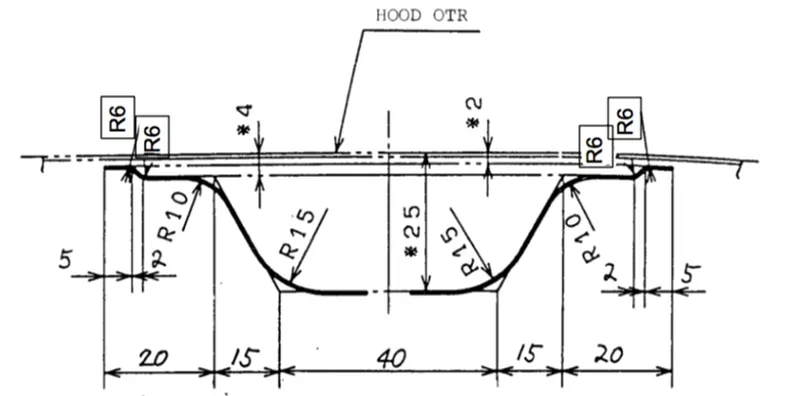
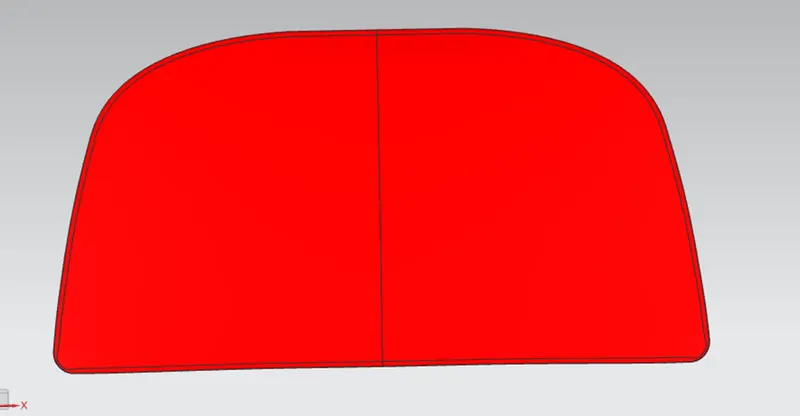
Master sketch that should be used to design the out inner hood panel is shown below.
OUTER HOOD PANEL
HOOD INNER PANEL
MASTIC SEALENT
A selection of high quality vehicle-specific mastic joint sealants & adhesives from professional vehicle assembly sealant and adhesive manufacturers such as Sika, Geocel and Otto Chemie for a wide variety of commercial and industrial sealing & bonding applications around all types of vehicles. There's specialist Sikaflex vehicle assemble sealants and vehicle adhesives for windscreen assembly, maintenance and repairs, vehicle sealant & adhesives suited to vibration dampening etc. and polyurethane vehicle mastic sealants for waterproofing and bonding which adhere perfectly to a variety of substrates and are suitable for a wide range of timber, metal and glass.

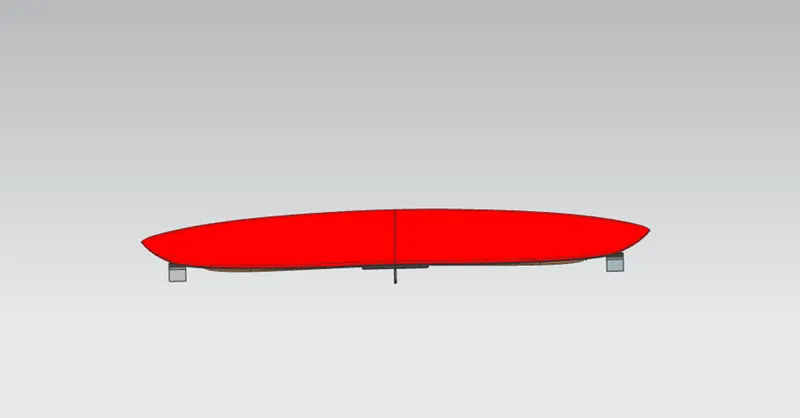
FRONT VIEW
MANUFACTURING PROCESS INVOLVED IN MAKING DIFFERENT OF THE SHEET METAL
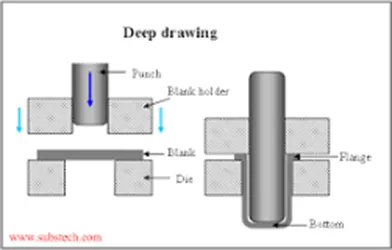
1 DEEP DRAWING
Deep drawing is a sheet metal forming process in which a sheet metal blank is radially drawn into a forming die by the mechanical action of a punch. It is thus a shape transformation process with material retention. The process is considered "deep" drawing when the depth of the drawn part exceeds its diameter.
HEMMING
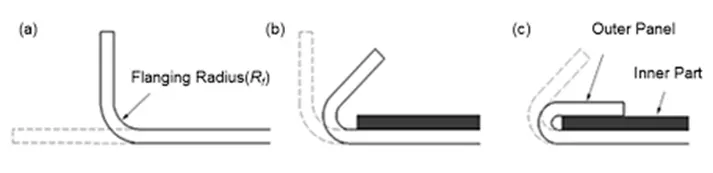
Hemming is a metalworking process that involves rolling the edge of sheet metal over and onto itself, essentially creating an area of two layers. During this process, the edge of sheet metal is folded over. The two newly formed layers then lie flush with each other. Sheet metal is available in a variety of gauges.
CONCLUSION
The complete assembly of the hood outer and hood inner panel was designed as per requirement.
The latch and the hinges were also placed at appropriate position by following a latch trajectory strategy.