Design of backdoor
Backdoor challenge
Objective
To design a BIW of Backdoor from the given surface design. The inner panel is designed and assembled with Hinge reinforcements, Gas Stay Reinforcements, Wiper Motor Reinforcements, and Latch Reinforcements
Introduction
A door is a hinged element that allows cars to enter and exit. The backdoor is a sort of car door that is situated adjacent to the passenger seat and offers access to the luggage compartment. The majority of automobiles use a gas stay to operate the rear door, which decreases the amount of effort necessary to lift the door. Some high-end vehicles include a power backdoor that is powered by an electric motor. This technology is also known as a motorized trunk lid system. Hatchbacks and station wagons are available with three or five doors. The rear hatch is recognized as a door in this scenario since it enters the house. the cabin for passengers the terminology is mostly used in Europe. In terms of safety, the backdoor should be constructed to meet the requirements of a rear accident.
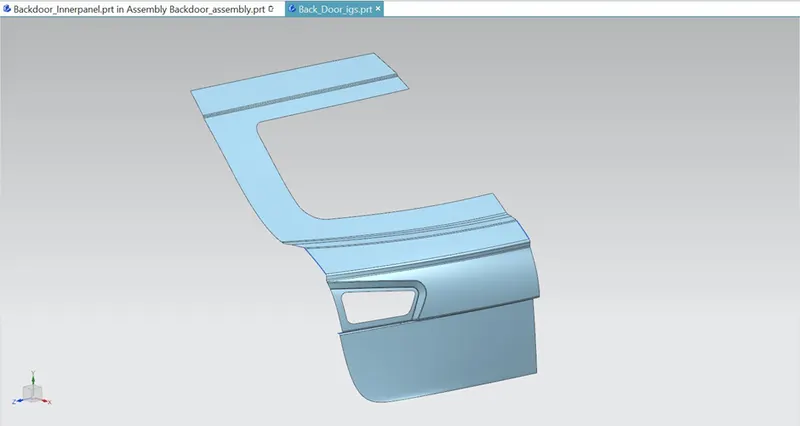
Design Consideration
- Rear visibility Criteria
- Draft angle/tool angle consideration
- Wiper and Latch Reinforcements
- (LH & RH) Hinge and Gas Stay Reinforcements
- Gap and flushness Requirements
Design Methodology
The outer panel is considered to be the styling surface of the backdoor, other required panels and Components are designed with the reference of the outer panel received from the designing team which acts as the outer cover and gives the ascetics to the back door
Requirements for Back Door assembly
- Outer Panel
- Draft Angle/Tool angle
- Inner panel
- Mastic Sealants
- Reinforcements
- Hinge reinforcement
- Gas Stay Reinforcement
- Wiper Reinforcement
- Latch Reinforcement
- Relief
- Draft Analysis
1. Outer Panel
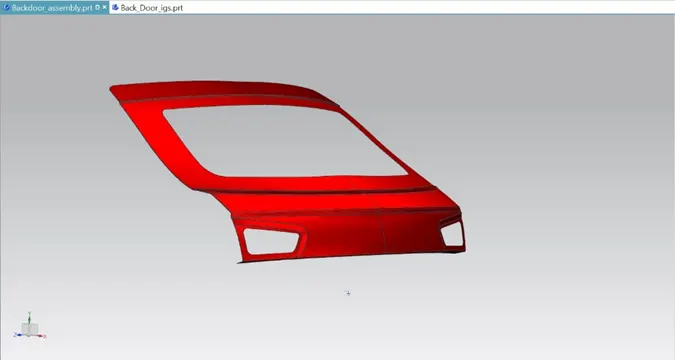
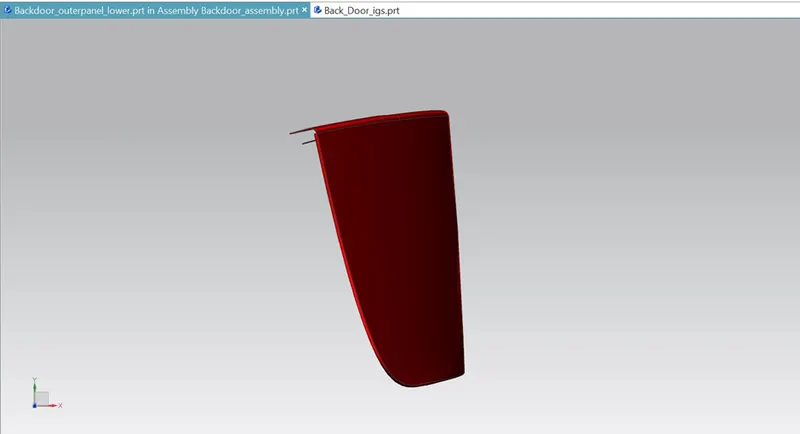
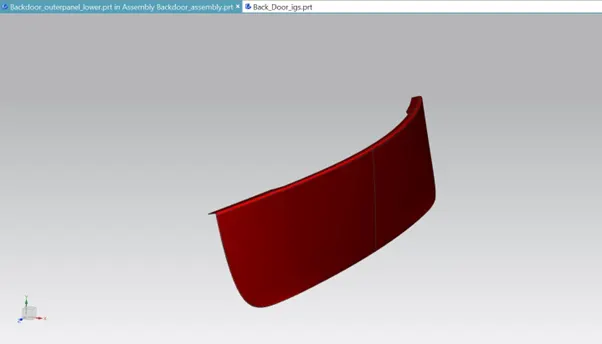
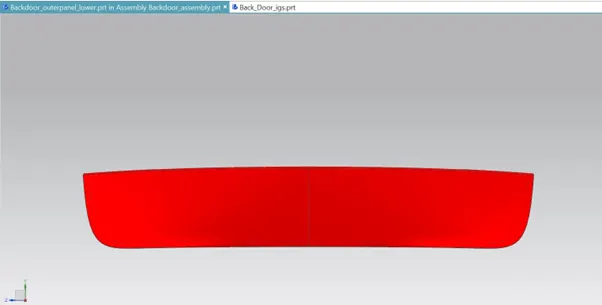
The outer design panel is divided into 2 parts
- Back door outer panel upper (Upper panel)
- Back Door outer panel lower (Lower panel)
These Outer panels are Extracted from the Styling surface, having a thickness of 0.75mm, Hemming is provided with corner relief in ease to reduce the stress provided at the corner
- Back door outer panel upper (Upper panel)
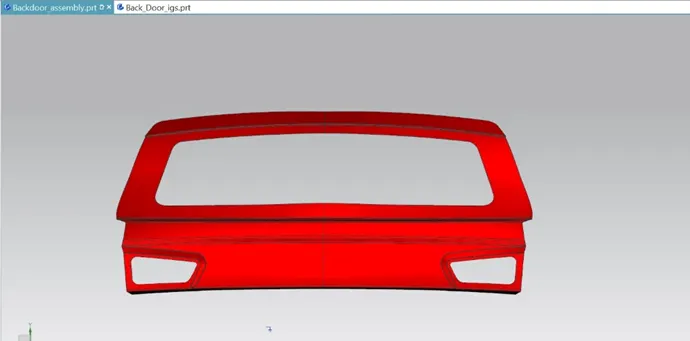
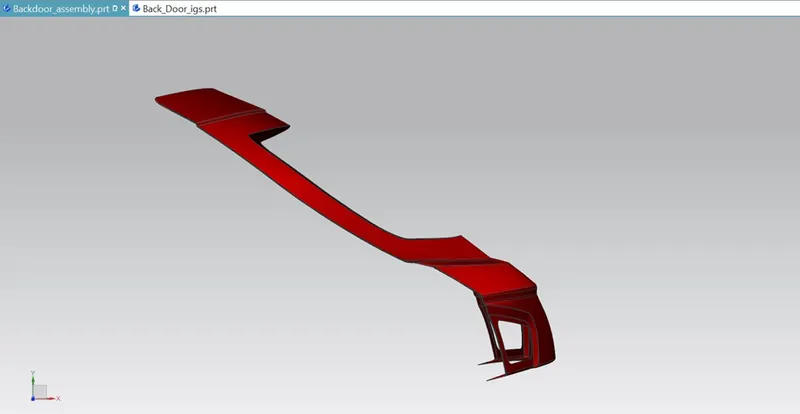
- Back door outer panel lower (lower panel)
2. Draft Angle/ Tool angle
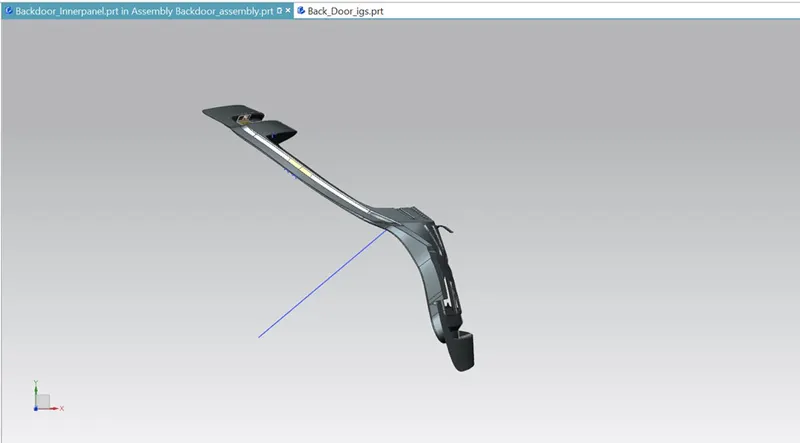
Before starting the design in the inner panel of the back door the tooling direction for deep Drawing purpose should be created
3. Inner panel
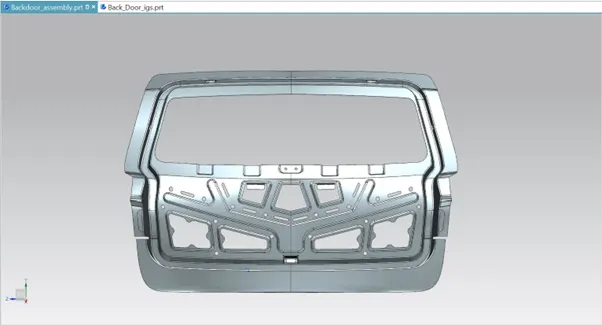
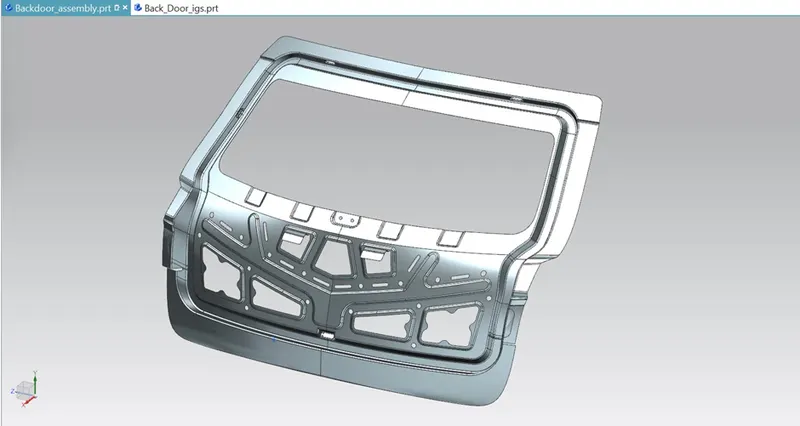
- The inner panel of the back door assembly is designed with a sealing flange to prevent rainwater from entering.
- The complete interior panel is then built with appropriate draft angles and surface regions, as well as appropriate embosses.
- Hinge, gas stay, wiper, and latch mounting emboss are provided on the top portions, side portions, middle portion, and end bottom portion, respectively.
- The embosses are placed below the windshield region to add strength to the back door assembly, thereby protecting passengers in the event of a car back strike.
- The windshield glass on the inner panel is provided a cutout section for the rear-end visibility criteria.
- The inner panel has a thickness of 0.75mm.
4. Mastic Sealants
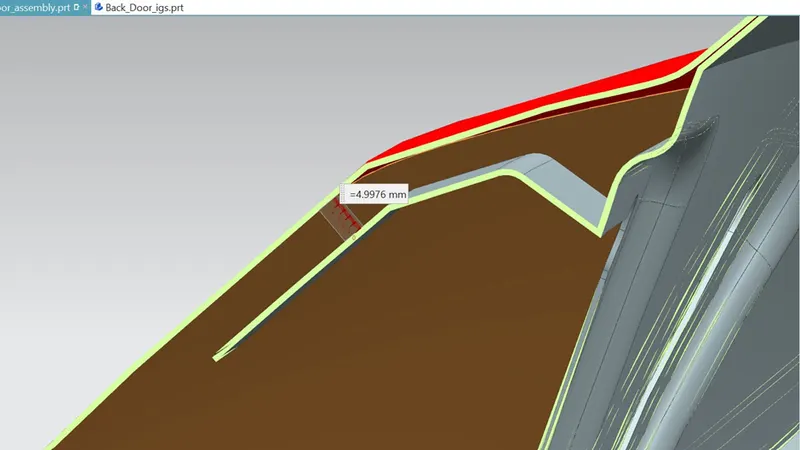
Mastic sealants are provided to reduce the NVH (Noise, Vibration, and Harshness ), they also provide strength, they are made of hard rubber and are introduced as a paste thereby joining the inner and outer panel with a thickness of 5mm. Mastic sealants are preferred over spot welding to join the inner and outer panel due to the fact that it reduces the aesthetics of the car, especially on the outer panel which is the styling surface
5. Emboss and Reinforcements
a.Hinge Emboss & Reinforcement
What is a hinge?
A movable joint or mechanism on which a door swings as it opens and closes or which connects linked objects.
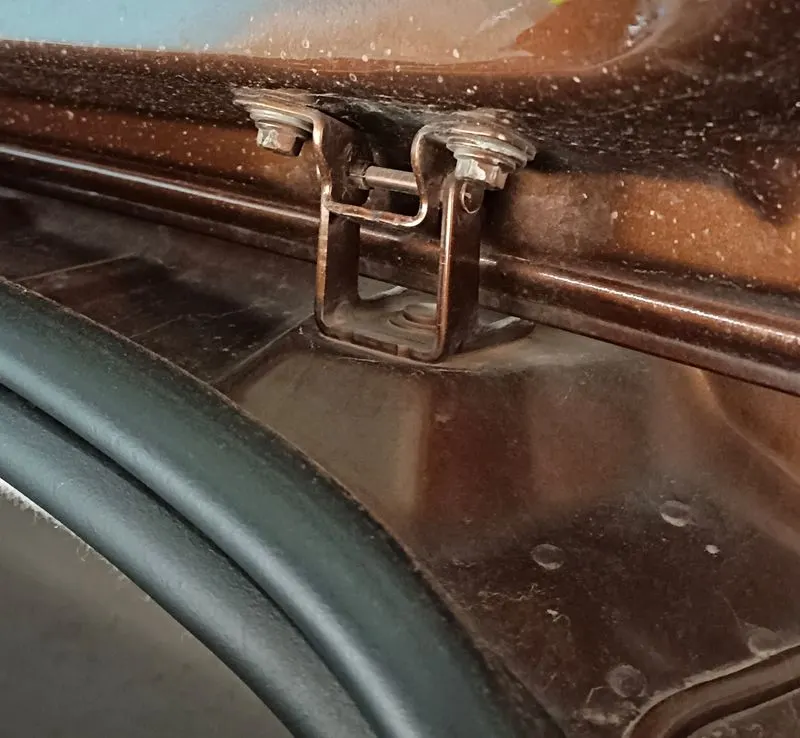
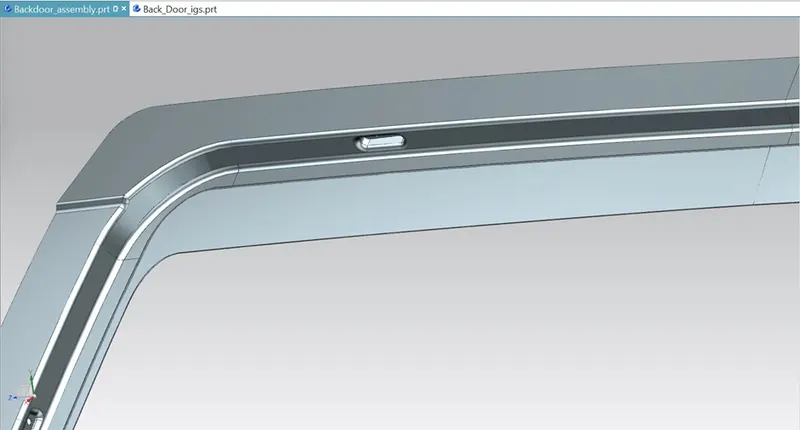
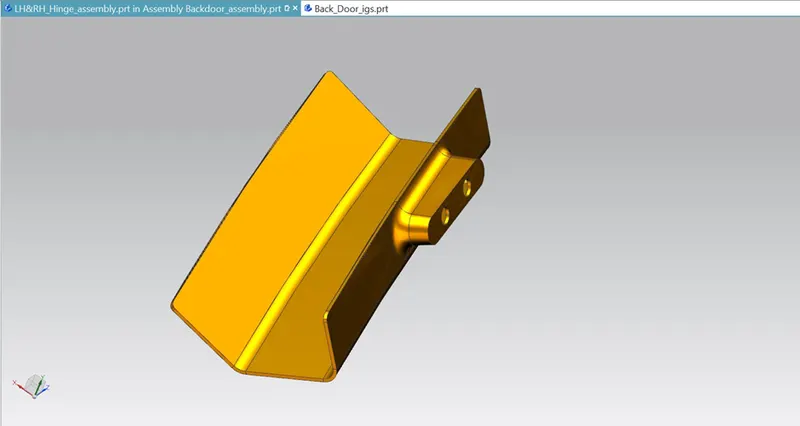
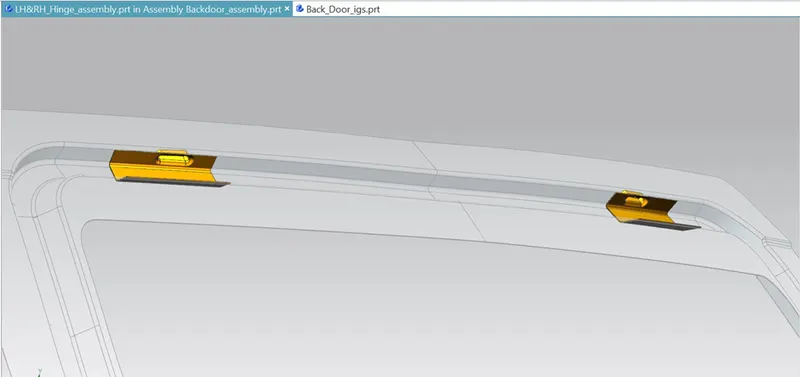
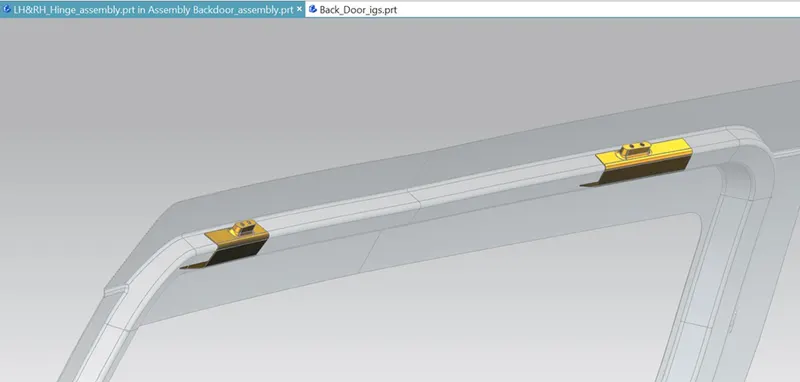
One end of the Hinge is placed on the back door and another end on the roof, reinforcements are provided to give an added strength as the load is acted while opening and closing the back door. This reinforcement is given a thickness of 1mm
The position of the hinge is given with reference to the hinge position placed on the Vehicle Renault Duster (reference image as shown below)
- Hinge Emboss
- Hinge Reinforcements
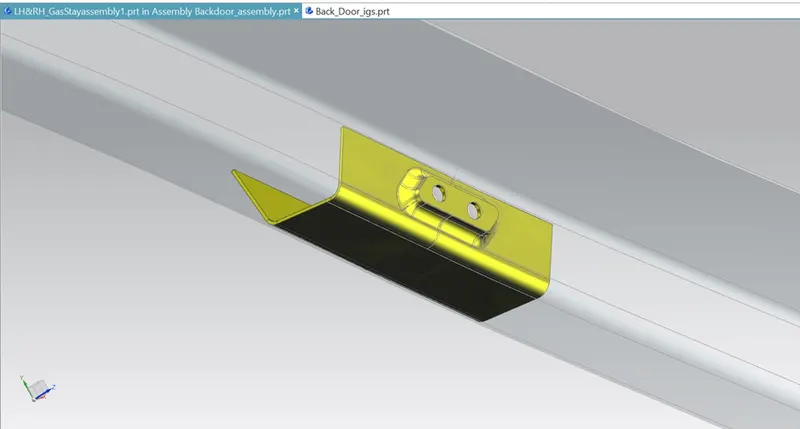
b.Gas Stay Emboss & Reinforcement
What is a Gas Stay?
Gas struts also called gas springs, rams or dampers make lifting heavy objects easy. They are generally used to lift vehicle bonnets or boots and tailgates.
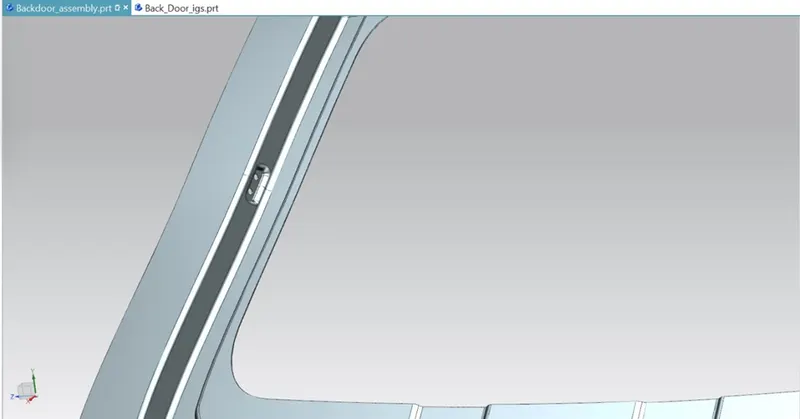
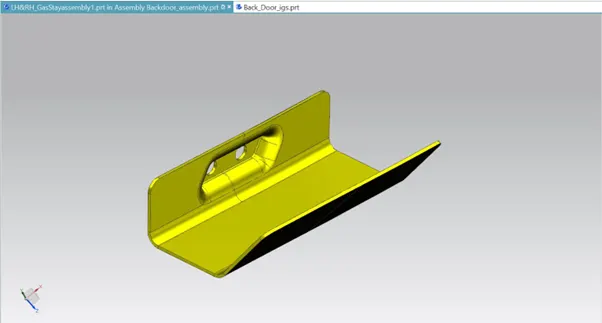
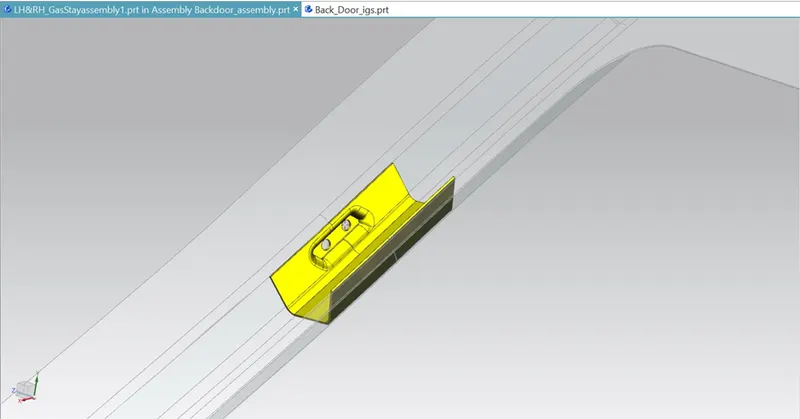
One end of the Gas Stay is mounted on the back door and another end is on the body side. Reinforcements are provided to give an added strength as the load is acted while opening and closing the back door. This reinforcement is given a thickness of 1mm
The position of the Gas Stay is given with reference to the position placed on the Vehicle Renault Duster (reference image as shown below)
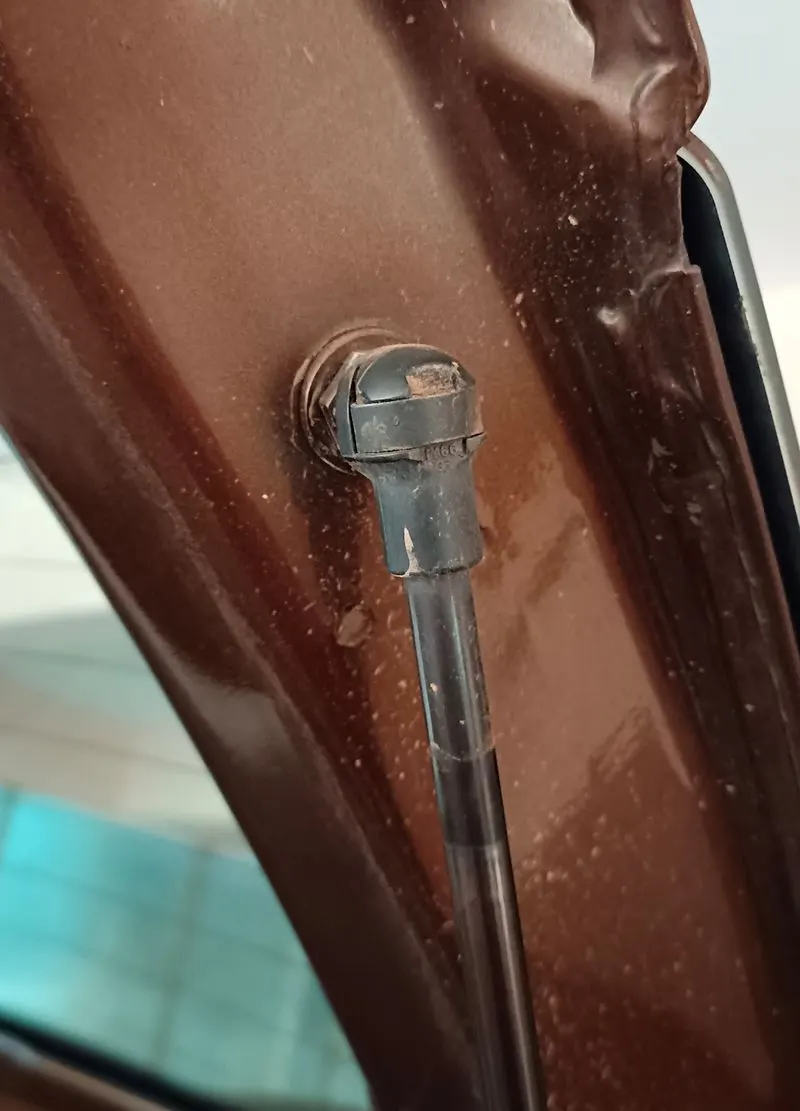
- Gas Stay emboss
- Gas Stay Reinforcements
c.Wiper Mount emboss & Reinforcement
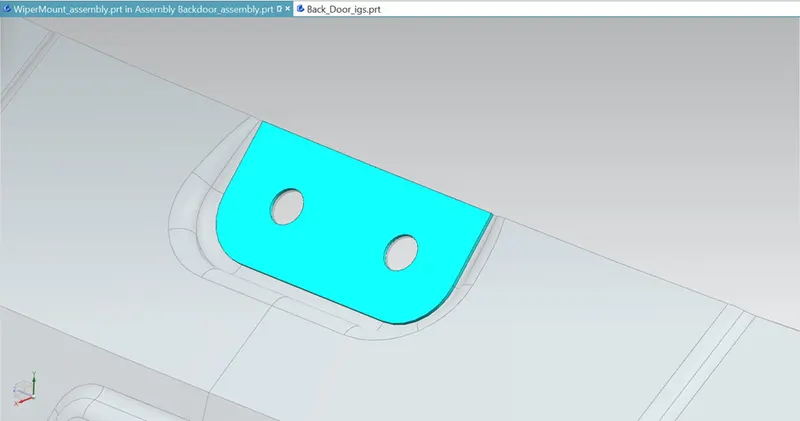
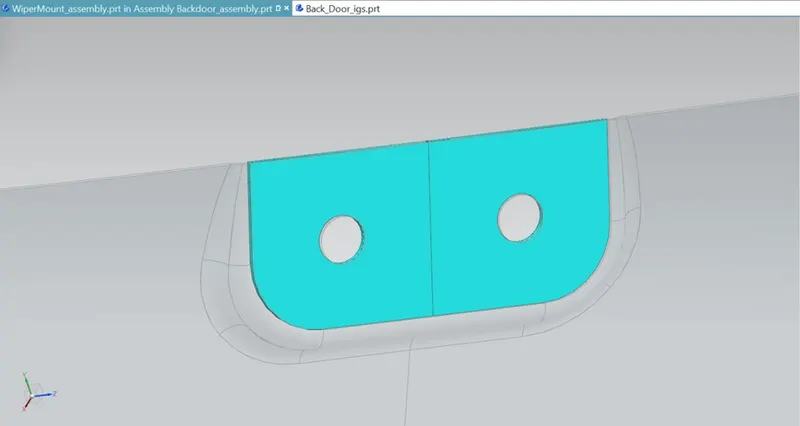
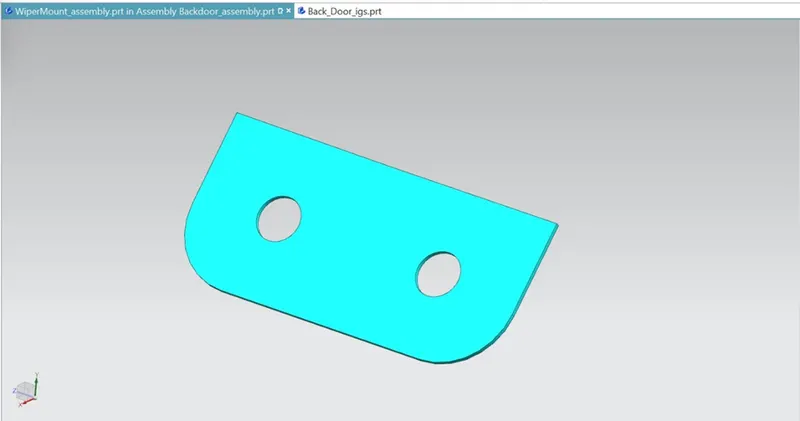
Wiper Mount emboss Reinforcement is created to mount the wiper motor assembly
- Wiper Mount emboss
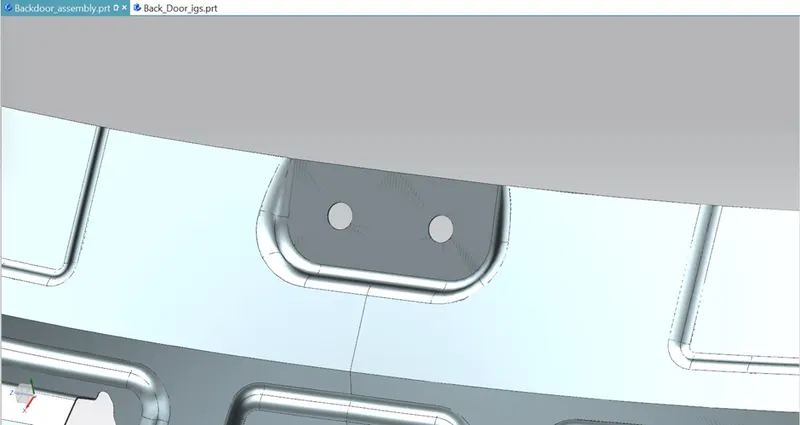
- Wiper mount Reinforcement
d.Latch emboss & Reinforcement
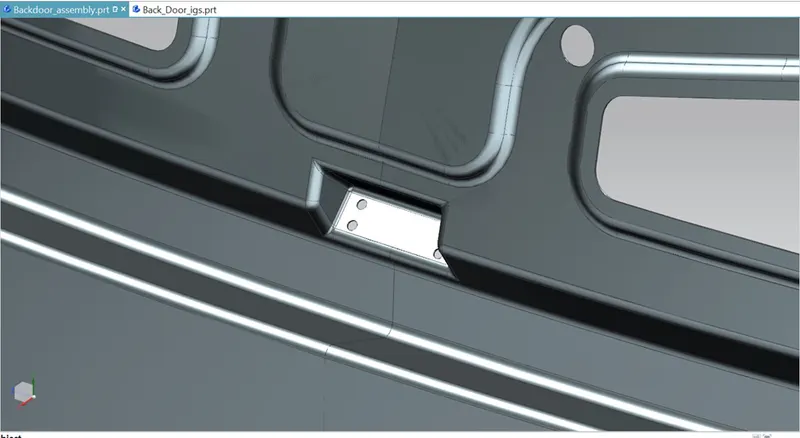
Latch and striker form a locking mechanism of the back door of a car, Due to regular opening and closing of the backdoor, there will be stress developed on this region, in order to give additional strength to this region reinforcement is provided. This reinforcement is given a thickness of 1mm
- Latch emboss
- Latch Reinforcement
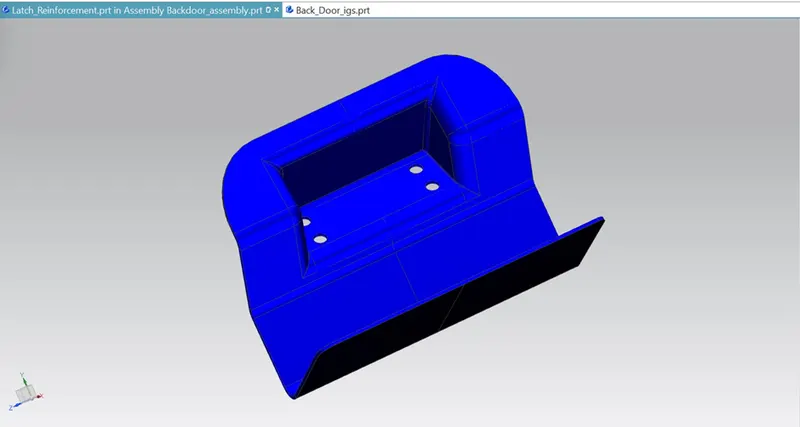
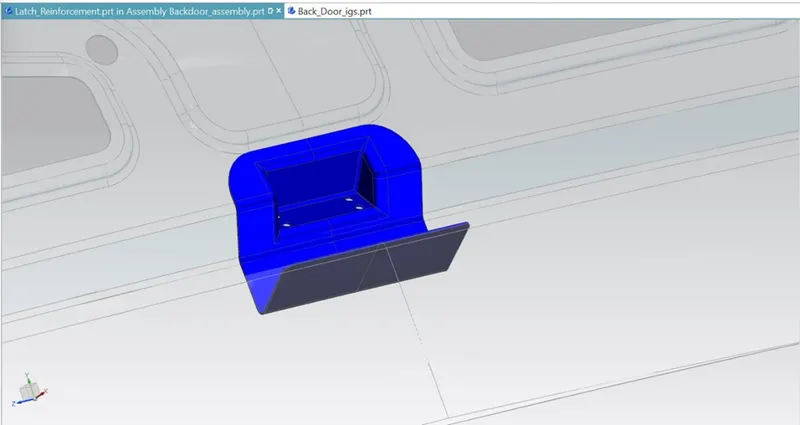
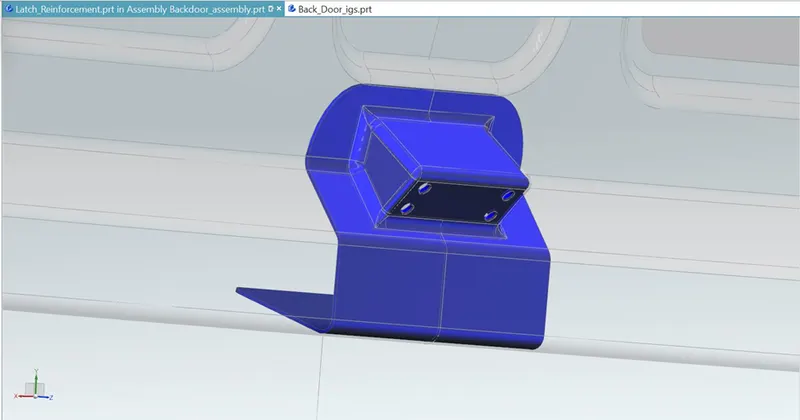
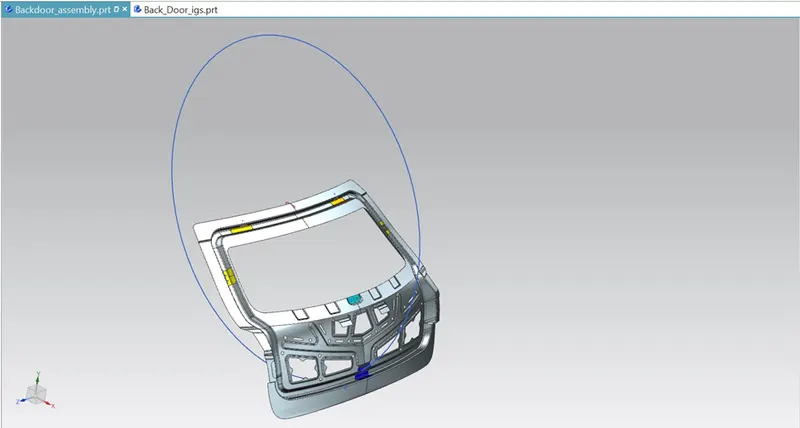
Latch emboss on the inner panel of the back door should be perpendicular to the latch, the circle is drawn from the center of the hinge axis to find the path of the striker and positioned perpendicular to the path
6. Hemming
Hemming and seaming are two similar metalworking processes in which a sheet metal edge is rolled over onto itself. Hemming is the process in which the edge is rolled flush to itself, while a seam joins the edges of two materials.
After designing the Outer panel (upper and lower) hemming operation will be created by offsetting the surface with the help of face blend and swept surface
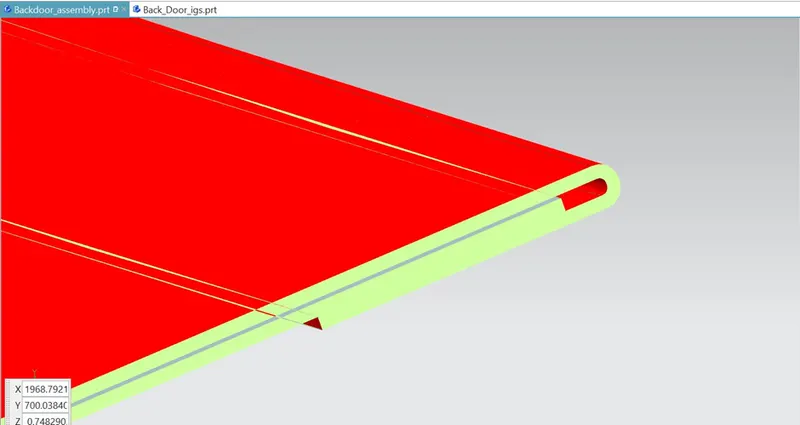
These two outer panels will be joined using the blanking operation
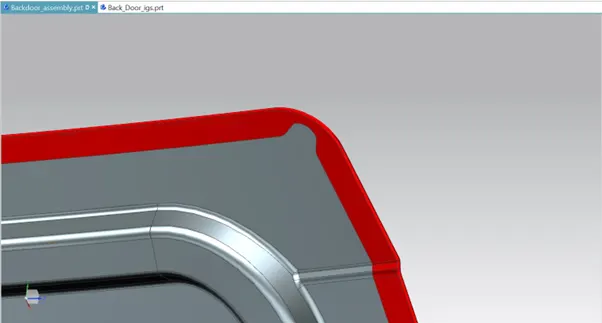
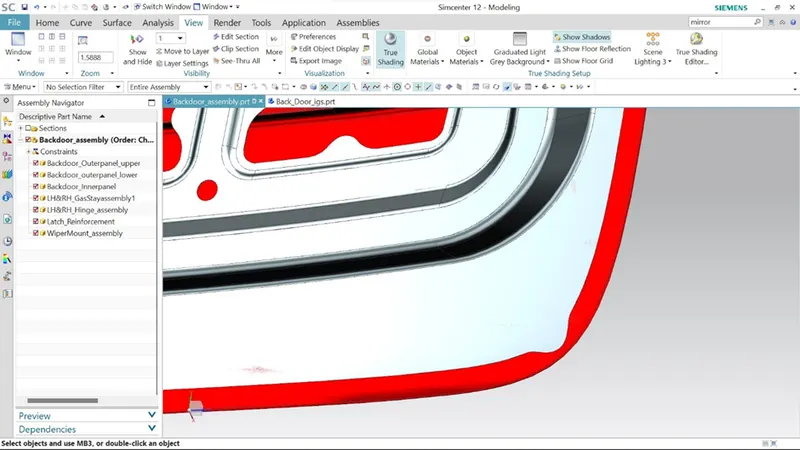
7. Relief
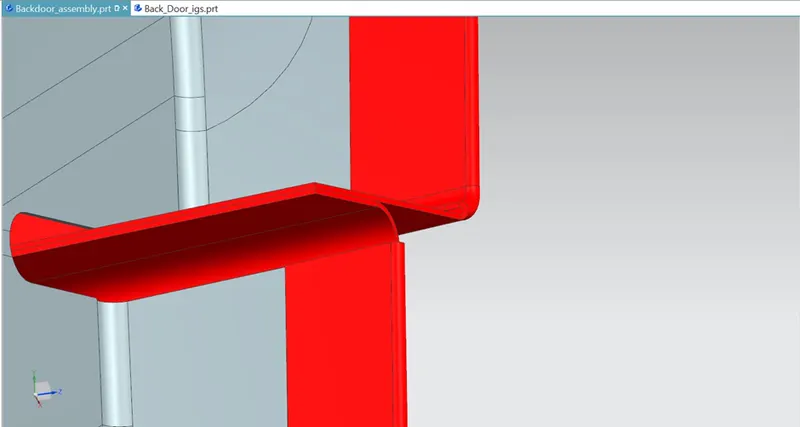
Relief helps to control sheet metal material behavior and to prevent unwanted deformation during unbend operations.
8. Draft Analysis
While designing a component a design engineer must make sure that the component can be produced by any means of manufacturing methods with the least amount of time, material, and manpower in order to reduce the overall cost of the car
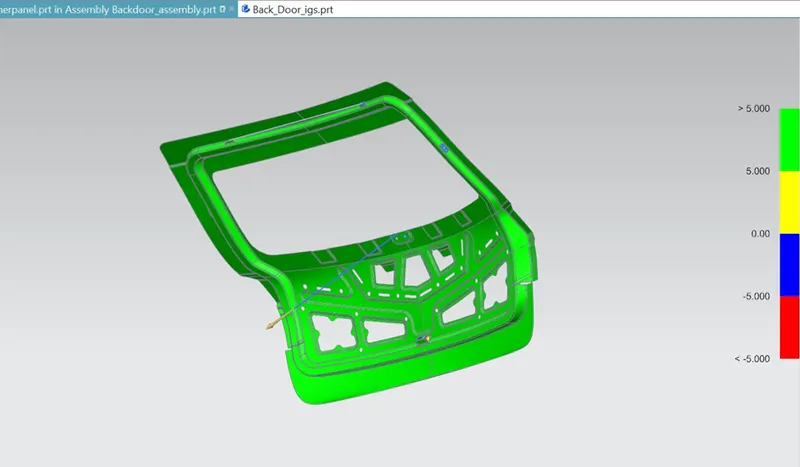
When the back door is considered, it is manufactured by deep-drawing most of the time deep drawing is the process where a single sheet of metal is placed over a die that has the desired shape of the final output and the sheet is pressed against it with a tool. For the tool to come out from the part usually pressing relief of 5 to 9 deg will be provided during modeling itself
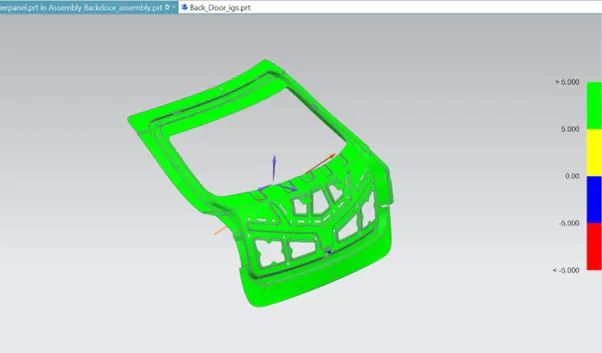
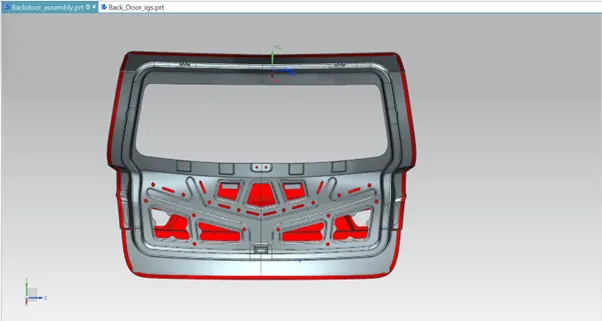
Using the Nx Draft analysis we can verify whether the product is manufactured by pressing or not. The result of the draft analysis is shown in the figure
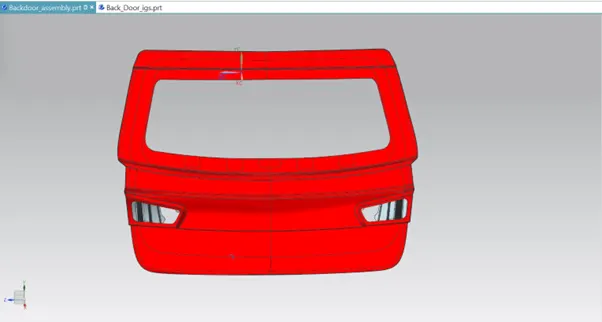
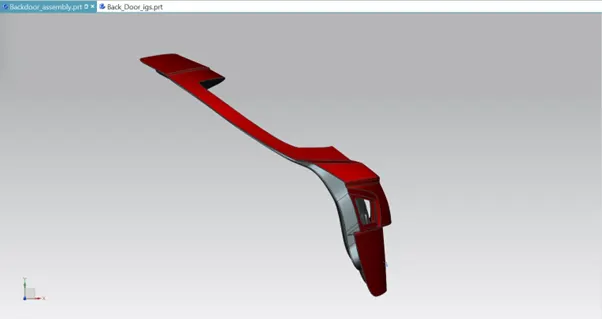
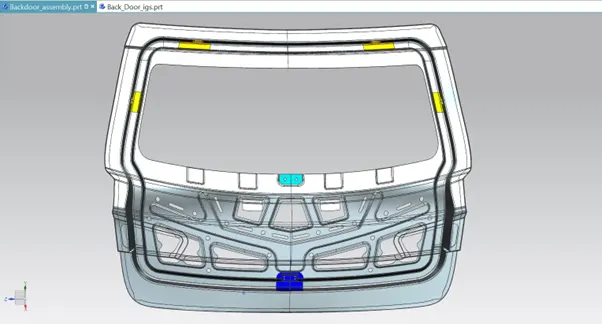
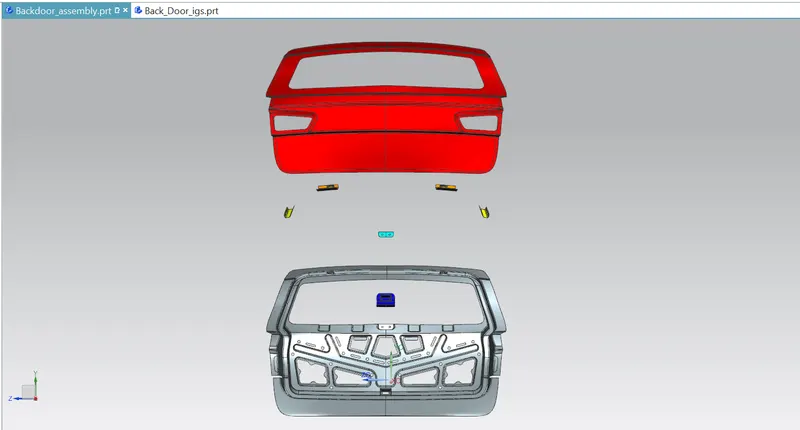
Final Assembly of backdoor.
conclusion
Thus Backdoor was designed using the given styling surface with required reinforcements and embossing, satisfying the manufacturing requirements, a draft analysis has also been done on the inner panel.