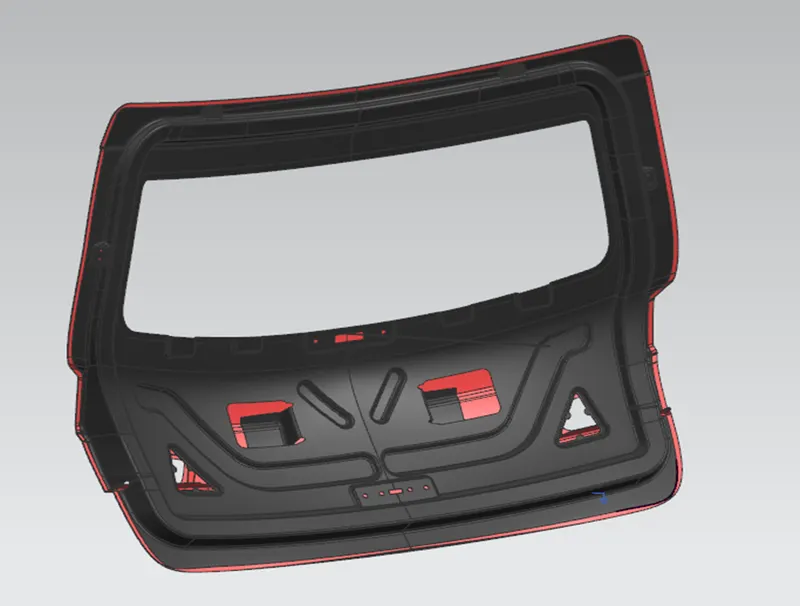
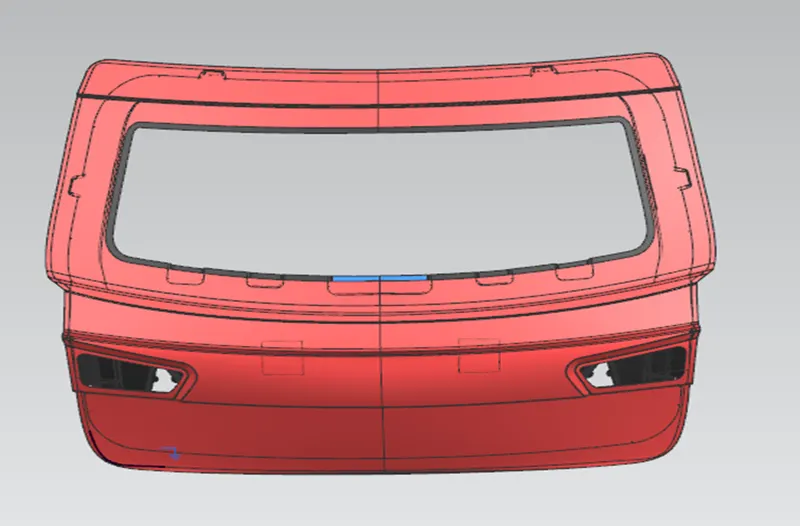
Design of backdoor
BACK DOOR
OBJECTIVE:
Use the provided styling surface to come up with a back door design, use appropriate design methodologies and provide the necessary reinforcements and embosses.
SOFTWARE USED:
NX CAD
BACKDOOR INSTRUCTION:
An automobile back door or tailgate is the panel that covers the boot (or trunk) of an automobile. It enables access to the main luggage compartment. A hinge allows the boot lid to be raised while devices such as springs or gas cylinders hold it up in the open position, the backdoor is an assembly of many parts such as inner panel, outer panel upper, outer panel lower and reinforcement, Inner panel is attached to the outer panel using mastic sealant.
COMPONENTS OF BACKDOOR:
- Backdoor outer panel upper
- Backdoor outer panel lower
- Backdoor inner panel
- Hinge reinforcement
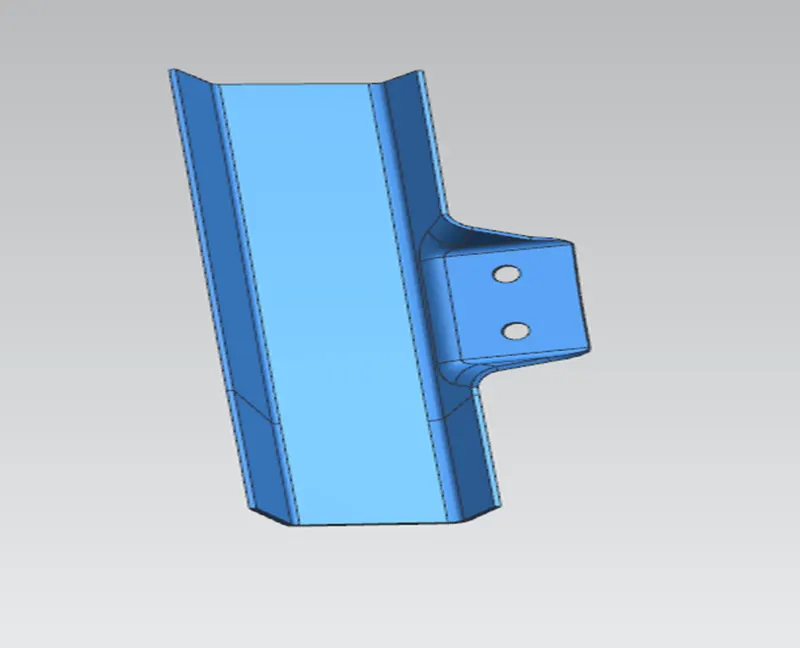
- Gas stay reinforcement
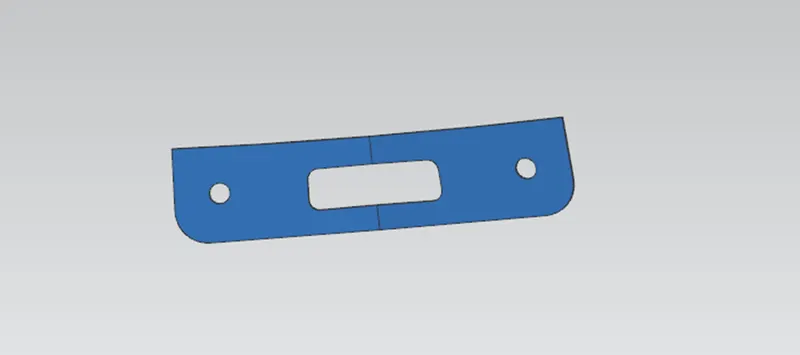
- Wiper motor reinforcement
- Latch & striker reinforcement
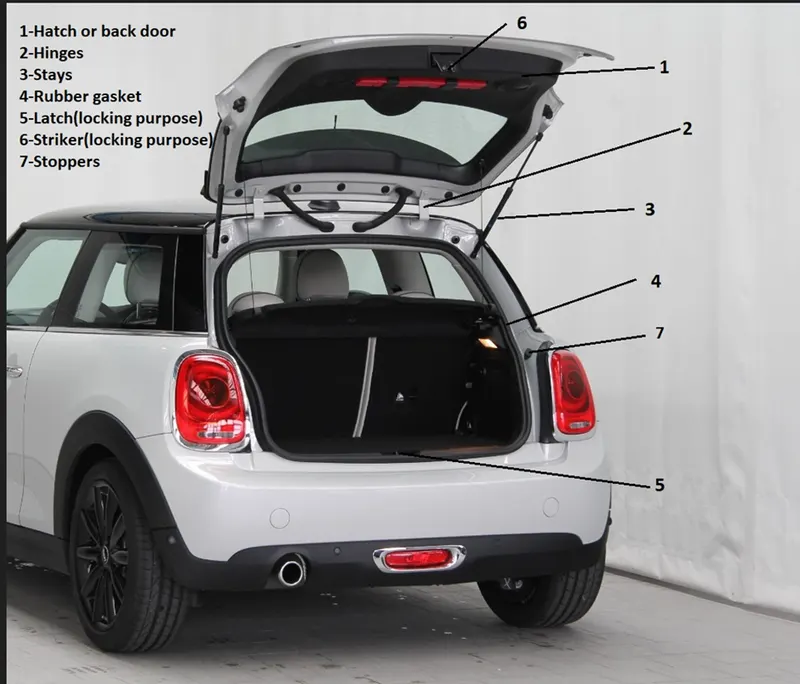
DESIGN CONSIDERATON FOR BACKDOOR INNER PANEL:
- Rear visibility
- Support structure like hinges and gas stays.
- Mounts for wiper motor, tail lamps, and other wiring loops.
- Fit and clearances.
- Boot space
- Sealing and its functions
- Joining techniques like hemming, spot welding etc.
- Load cases
- Force distribution
OUTER PANEL (INNER/OUTER)
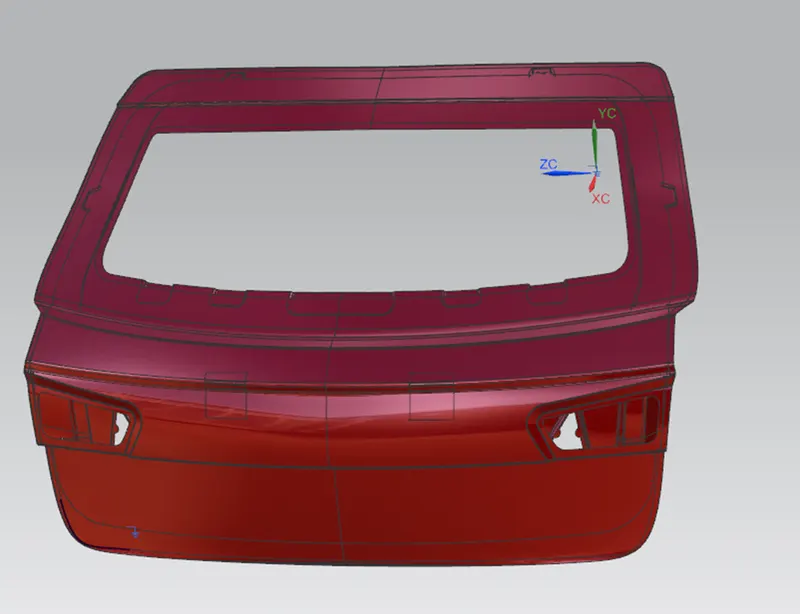
Outer panel of the rear door and is mostly responsible for aesthetics of the vehicle. Outer and inner panels are connected by mastic sealants in centre and by hemming process at edges. The outer door handle and in some cases, the number plates may also be installed on the outer panel of the back door. We have considered a 2-part outer panel for our design, outer upper panel and outer lower panel prospectively. Outer panel is manufacture by stamping sheet metal. Thickness for outer panel is 0.75mm
INNER PANEL
The inner panel of the door where most of the reinforcement and components are mounted. It is manufacture either by casting (aluminium) or sheet metal stamping (steel). Thickness of inner panel is 0.75mm
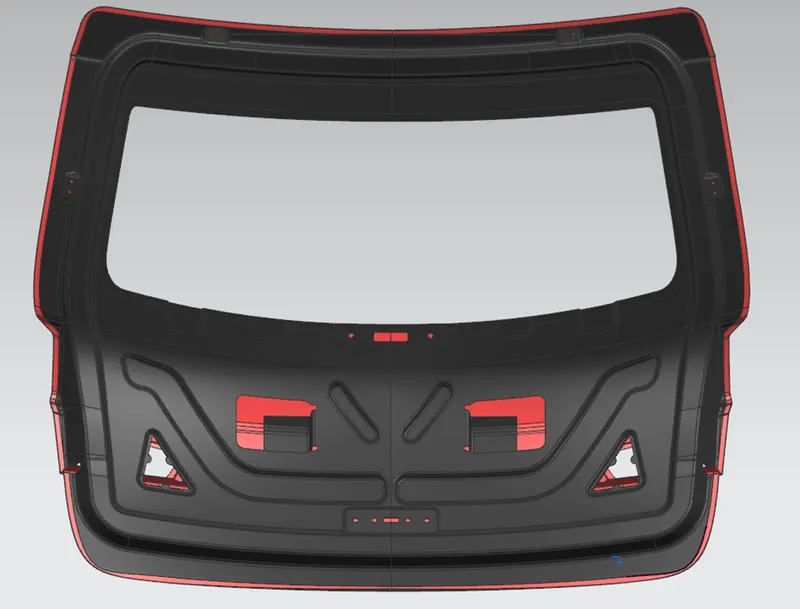
REINFORCEMENTS
Reinforcements are provided to provide support and add extra material to the sheet metal part to increase its strength near component installation regions and minimize the impact of collisions. We have considered following reinforcement during our design. The reinforcement may be manufactured by stamping. Thickness of all reinforcement is 1.5mm.
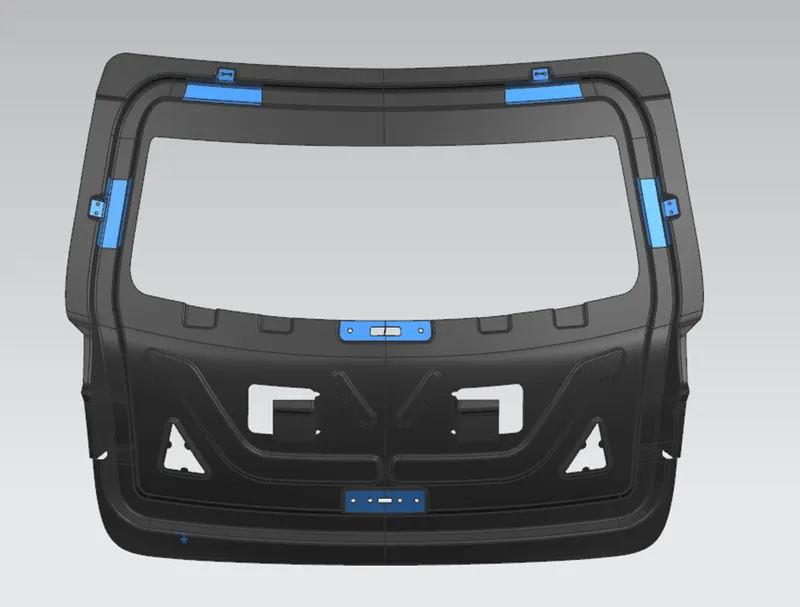
HINGES
Hinges connect the door with the vehicle body and allow the door to rotate around a fixed axis for opening and closing movement. Generally, hinges are a 2-part assembly, where one part is bolted to door and other is bolted to vehicle body.
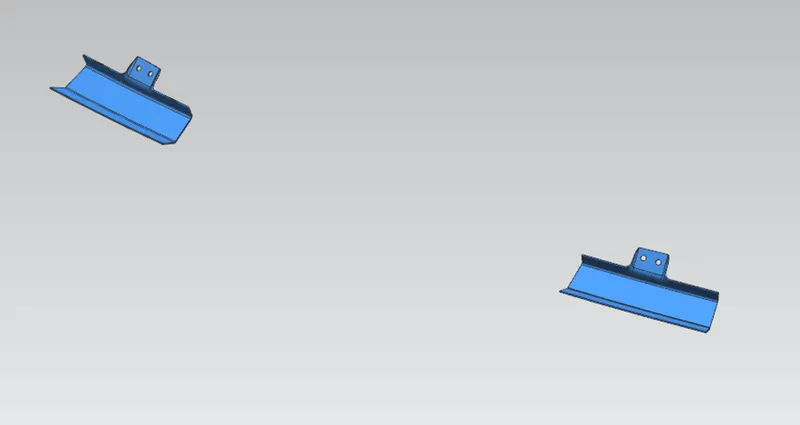
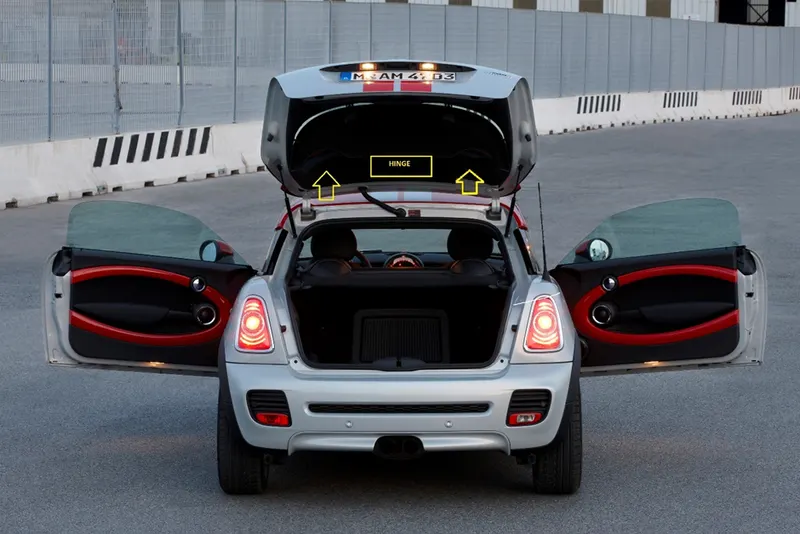
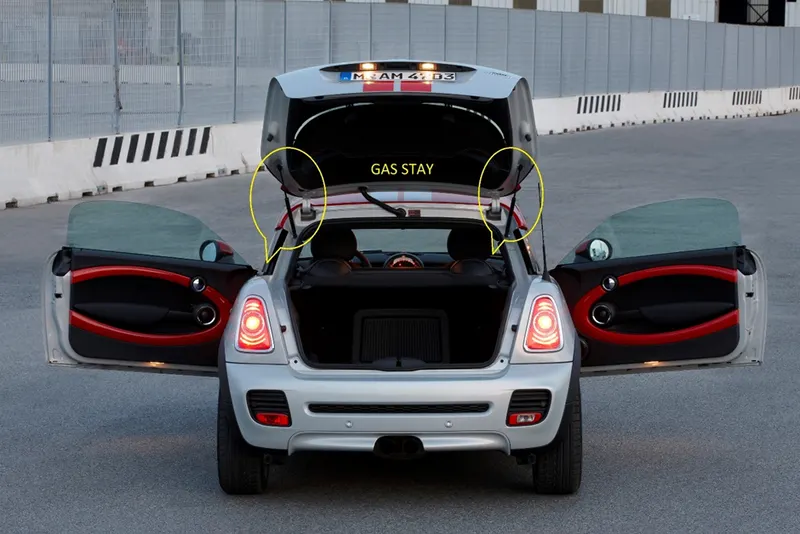
GAS STAY
Gas stay is basically a gas spring that relies on elastic deformation of a compressed gas which is enclosed in a cylinder. It is used to reduce required effort while opening the back door. Although all the cars don’t come with gas stays, it may be required in case of a heavy back door.
WIPER AND WIPER MOTOR MOUNTING
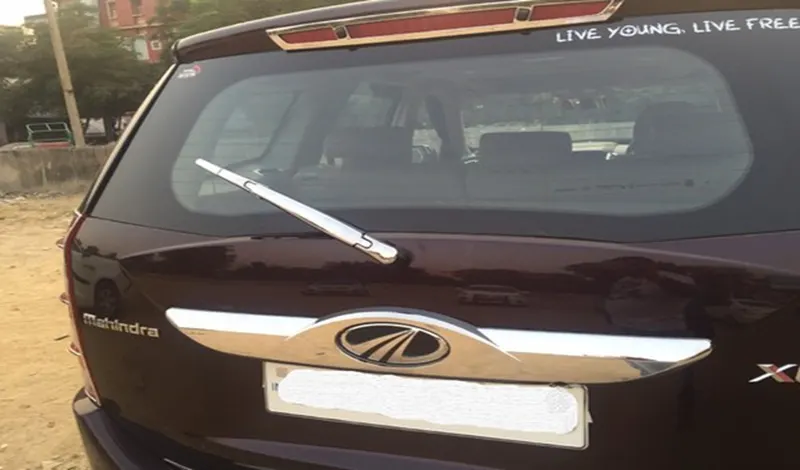
Wiper is used to wipe off the dust and water from the rear windscreen of the vehicle.
LATCH & STRIKER
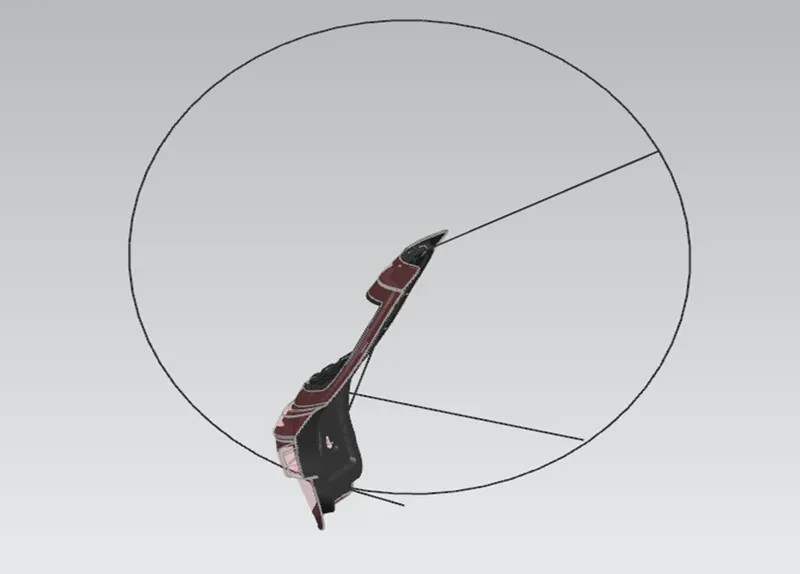
The position of the hinge should be perpendicular to the latch when the latch and striker meets for that a circle is draw from the centre of hinge axis to find the path of the striker and positioned it perpendicular to the path.
For the proper opening and closing of the door, the striker should be perpendicular to the trajectory of the door. For this, hinge is assembled at this position. Once it is placed, hinge axis is drawn.
- To check the hinge axis as the centre we draw a big circle to the position the latch in such a way that it is perpendicular to the hood trajectory.
- In between the two hinges the striker is perpendicular to the midpoint of two hinges, why because while closing and opening of the latch and striker the opening position be similar actions.
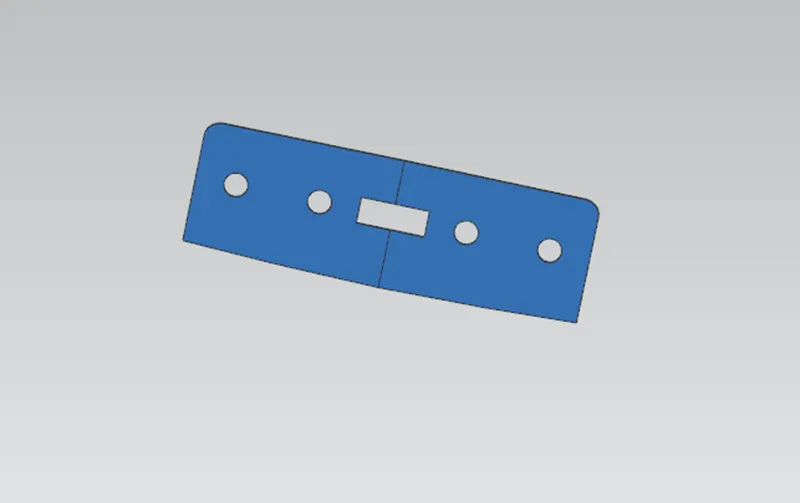
MASTIC SEALANTS
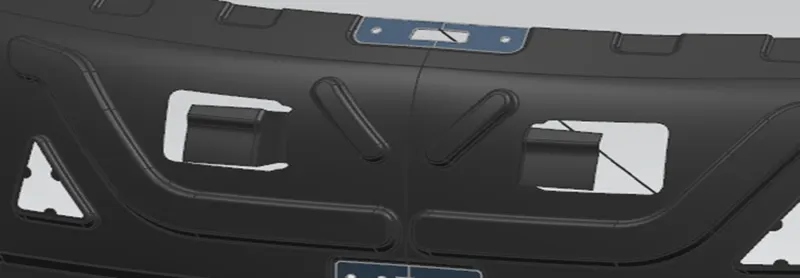
A Mastic sealant is a type of liquid sealant that cures in an elastic state, thus making it flexible while holding the bond of the surface that has attached together. It adheres to just about any material making an all-purpose type of sealant.
The main purpose of the outer panel is for the aesthetic looks. Thus, we cannot use bolts or welding. This has to be done with the help of the hemming and mastic sealants. Mastic sealants are elastic compound that behave like the rubber, it is placed between the outer and inner panel. Initially it is paste form, but after the hot furnace bath it gets hardened thus joining the outer and inner panel. Mastic sealant has the tendency to increase the strength of the panel and has influence of 80mm dia.
RELIFE
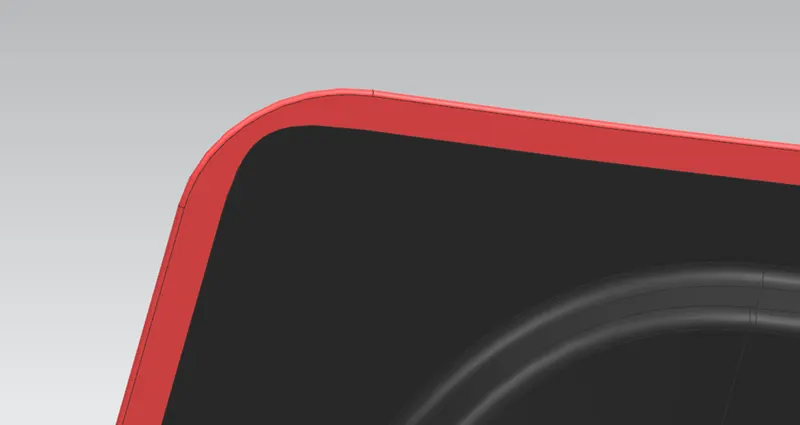
Relief is provided onto the part or component in order to remove any stress developed in a particular area i.e., sharp corners that takes place during the hemming process is carried out. Thus, corners are rounded or chamfered.
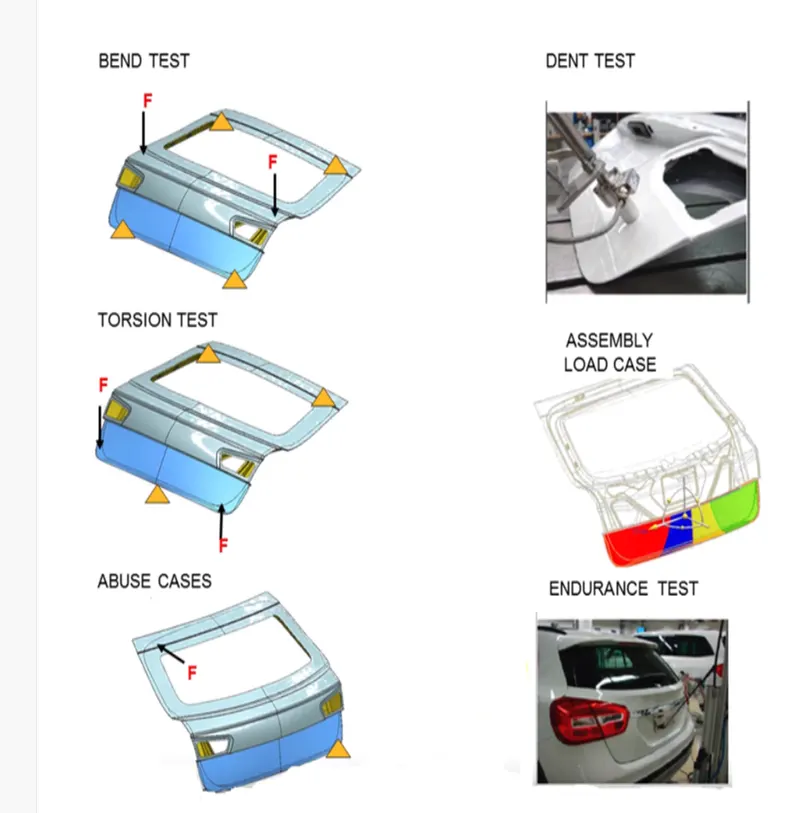
LOAD TEST
Various load test executed on backdoor for testing its durability, toughness so that it can with stand any type on accident.
DRAFT ANALYSIS
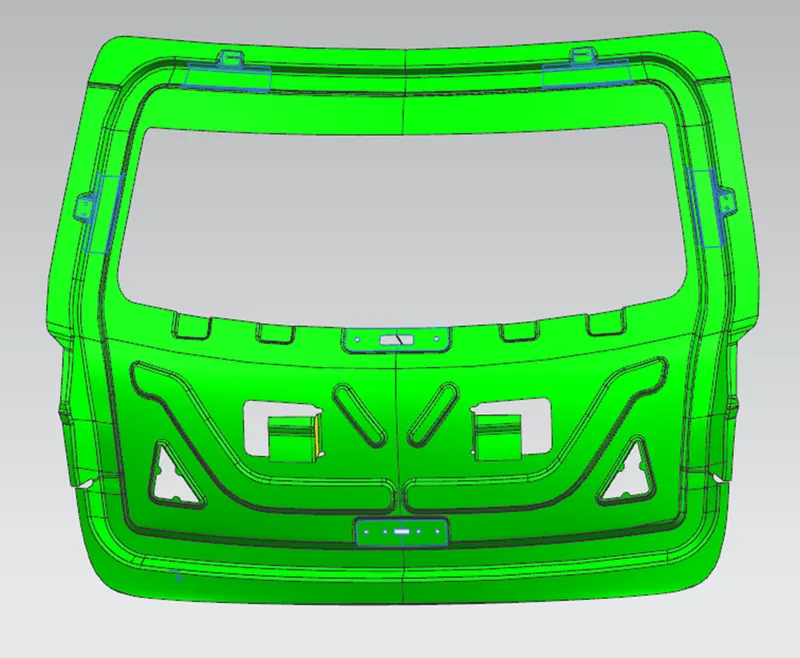
No parts can be ejected from the tool if it is having a straight 90-degree profile from its base surface. A small draft angle is provided to each and every area of the component in order to get an easy removal of the component from the tool. Draft analysis technique is used to analyse whether our part model created in cad is manufacturing based on the draft condition applied. Here the part should get easily removed from the panel dies (in case of sheet metal part) or mold (in case of plastic). Here we are providing a direction in which component should eject in order to get an easy removal of component from the tool in other words it also lets us know whether the model is having a draft angle and how much is the draft angle from the tool direction.
For sheet metal: 7 degrees
For plastic component: 3 degrees
BACKDOOR VIEW