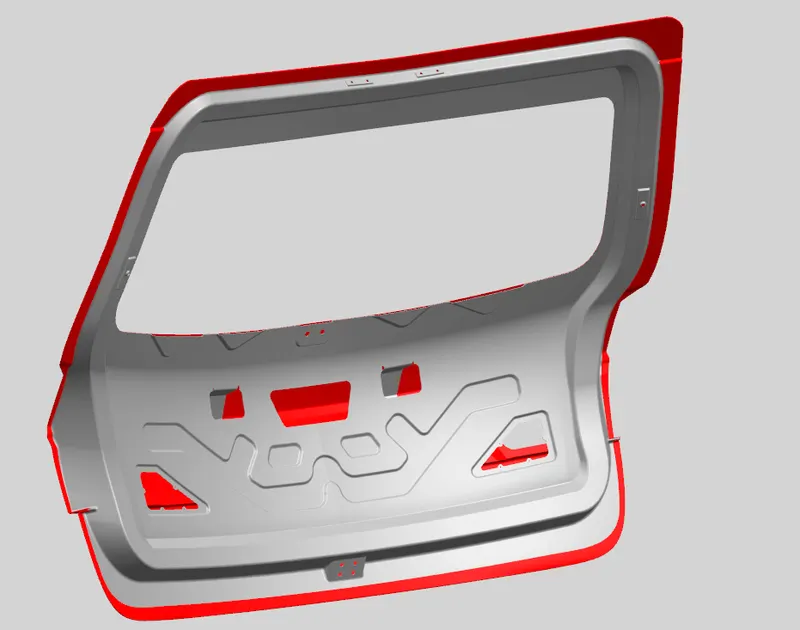
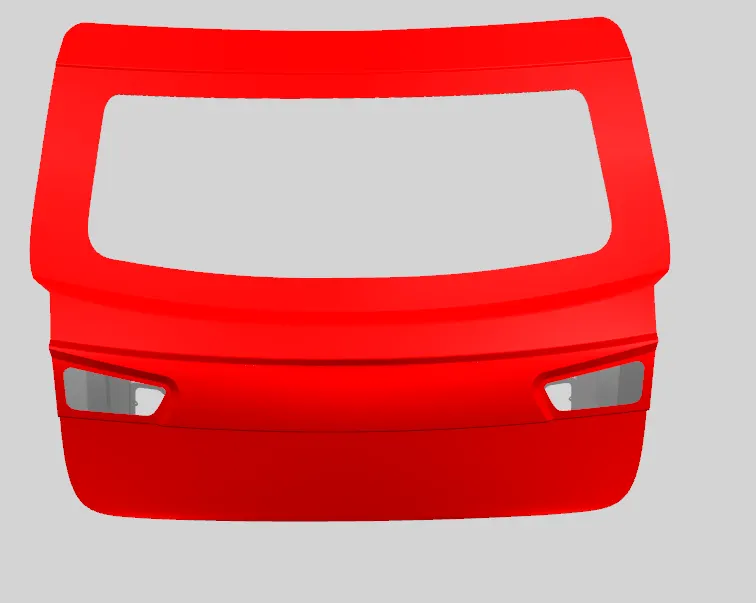
Design of backdoor
Automobile Back Door Design
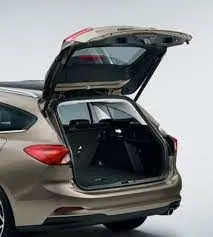
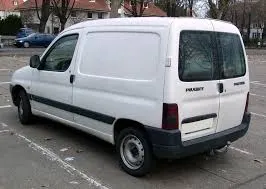
A Back door of an automobile is basically a covering for the rear part of the car which allows access to the boot space of the car. The back door also contains a wind shield to view the rear side of the car. The back door contains numerous parts like wiper motors, speakers, rear light indicator connections and latch and striker system. The back door also needs to sustain the impact of the crash and keep the passengers safe so the back door is hemmed with a inner panel with many embosses and stress distribution cuts in the inner panel.
The design and purpose of the backdoor can be changed based upon the requirements and alignments.
Here are some commonly seen back doors
DESIGN METHADOLOGY
- The design of the back door requires a initial styling design and sections from the styling team.
- The design team takes the inputs from the styling design and starts designing the inner and outer panels of the back door.
- The inner panel needs to be designed in such a way that it passes all the tests.
- Based on the panel design the hinge reinforcement, gas stay reinforcement, striker reinforcement needs to be designed and aligned to the inner panel using mastic sealants.
Outer panel
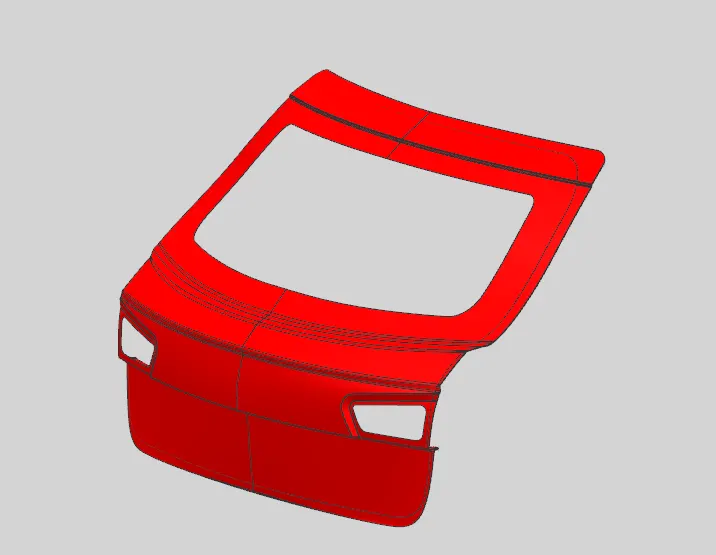
The outer panel is designed based upon the design given by the styling team, some surfaces and fillets are added later to the outer surface and then thickened to 0.75mm.
The outer panel also need to be hemmed to the inner panel so the relief is also given at the corners.
Inner panel
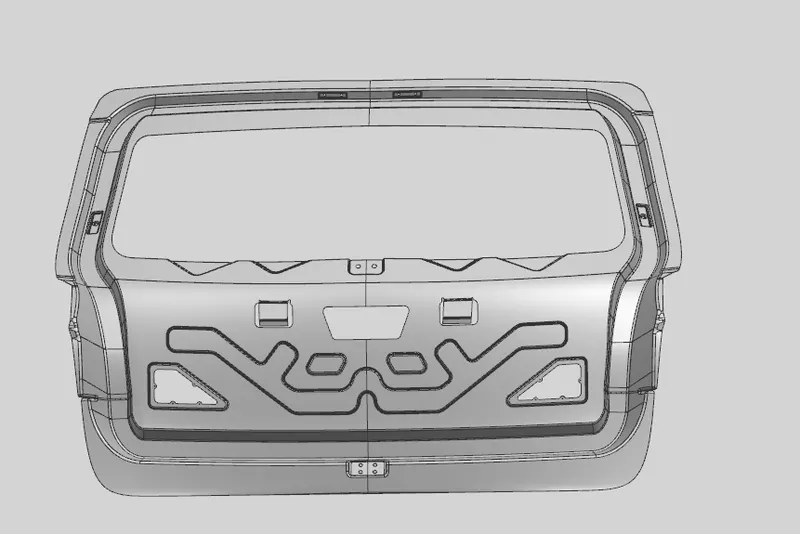
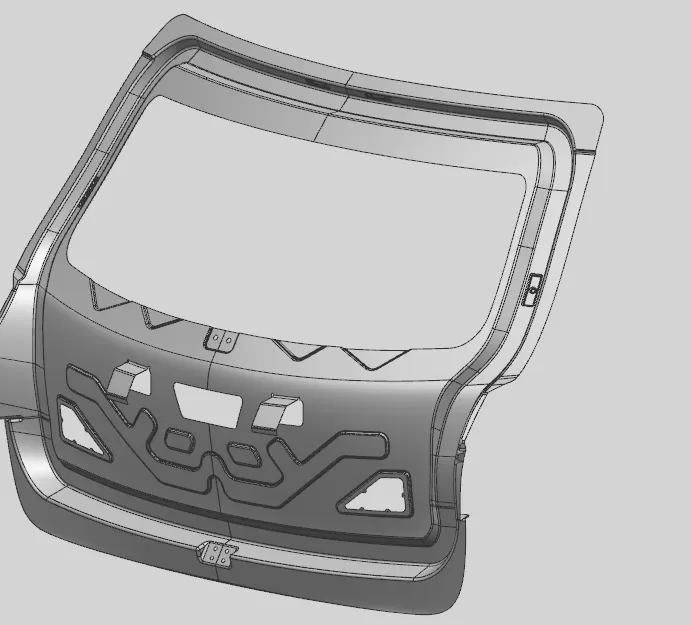
Inner panel is designed based upon the outer panel, primarily the sealing flanges are designed and then the using law extensions the connecting flanges are designed.
Then the embosses,cuts are created and aslo the supporting flange cutouts are also created by punching process.
Then the connection for the respective reinforcements are also designed.
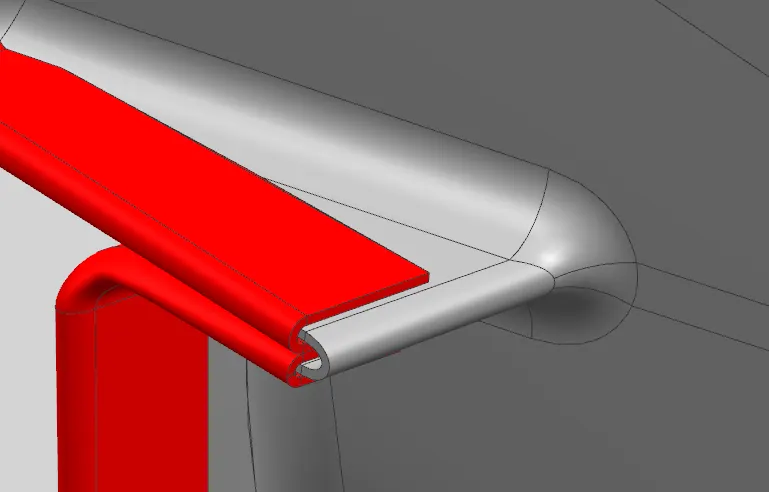
hemming along the inner panel
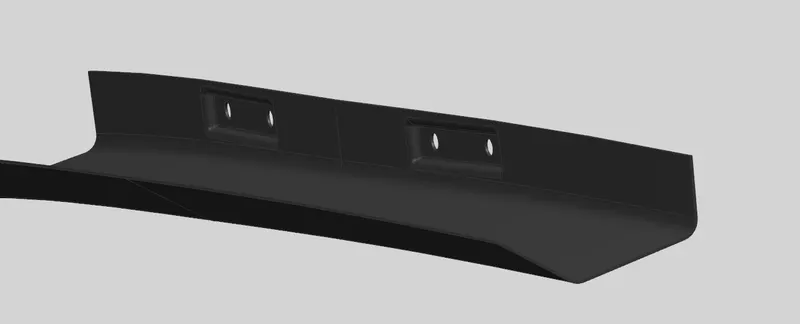
Hinge reinforcement
This reinforcement is designed to attach the hinge axis to the inner panel to get rotated upon it.
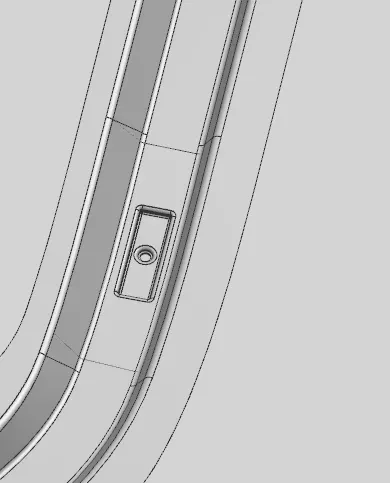
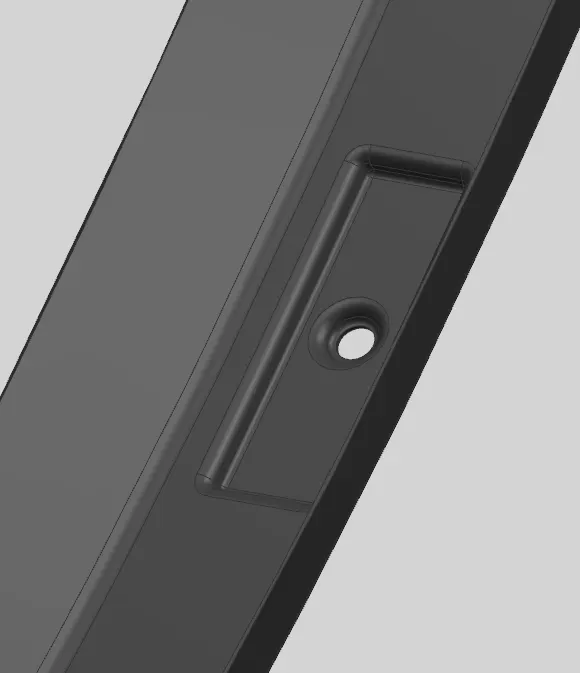
Gas stay reinforcements
These reinforcements are designed to attach gas stay to the inner panel, which helps the hood to stay in its position when opened.
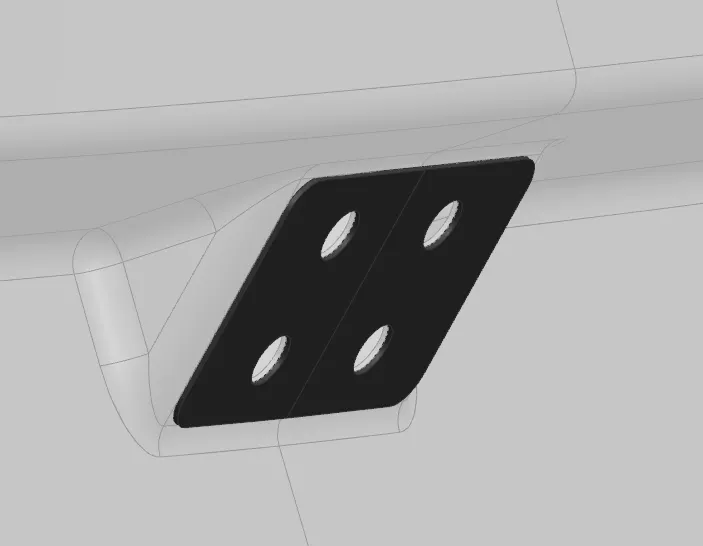
Striker Reinforcement
The striker reinforcement has been designed to get the back door locked with the car, its used the latch and striker method for the locking mechanism.
Manufacturing & Combining process of Various Sections in the inner panel and reinforcements
- Hemming
- Punching
- Deep drawing
- Spot welding
- Lancing
- Mastic sealing
Hemming
Hemming is a process in which two sheets combine by getting folded one upon other.
In the present design hemming process takes place between outer and inner panel to get combined.
Punching
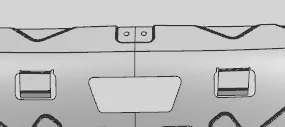
Punching is the process in which the material is cut using heavy hydraulic pressure and shear force.
In the design this process is used to cut wiper motor region and the support flange region.
Deep drawing
Deep drawing process is the process in which the metal is bent into desired format by giving a draft angle which is 7 degree for sheet steel.
Total inner panel has been designed to get manufactured under deep drawing process.
Spot Welding
Spot welding is the process in which two shhet metals are joined by welding at particular regions on the metal itself called spot welding.
All the reinforcements in the design will be combined using spot welding.
Lancing
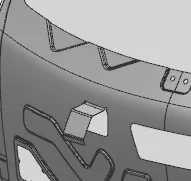
Lancing is the process in which the material is cut and dragged into flanges for some specific requirements.
In the design lancing is used to create the supportt flanges on the inner panel. They will be attached to the outer panel by using mastic sealants.
Mastic sealing
The process in which two metal sheets are combined to sustain impact without any welding marks or sticky marks.
Most of the style finishing surfaces on the outer pael of the back door uses mastic sealants.
Draft analysis
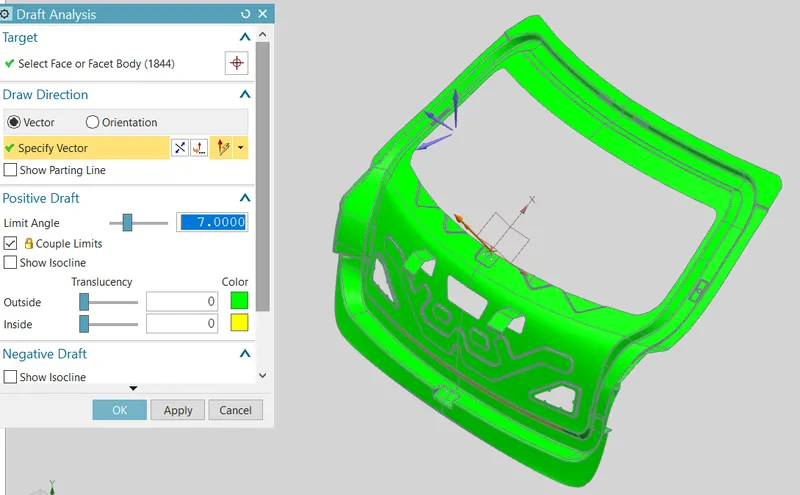
The draft analysis also shows a good result that the panel is manufacturable .
Assembly views