Design of backdoor
DESIGN OF CAR BACKDOOR
Objective:
- To Design the Backdoor of the vehicle by using the given styling class A surface and following the different methodologies and standards.
BackDoor of the car:
- Backdoor of the car places at the rear end of the car and it is connected to either roof end or vehicle body based on the different mounting methods.
- The functional purpose of this door is to access the storage things, spare wheels, and to mount rear wipers, head mount tail lamps and rear stopping lamp if incase it is the split stopping lamp, some case number plate has mounted on this backdoor.
- The opening and closing of the backdoor is done by using gas stay, either by manually or electro magnetically.
- There are different opening and closing methods, based on the design, they are
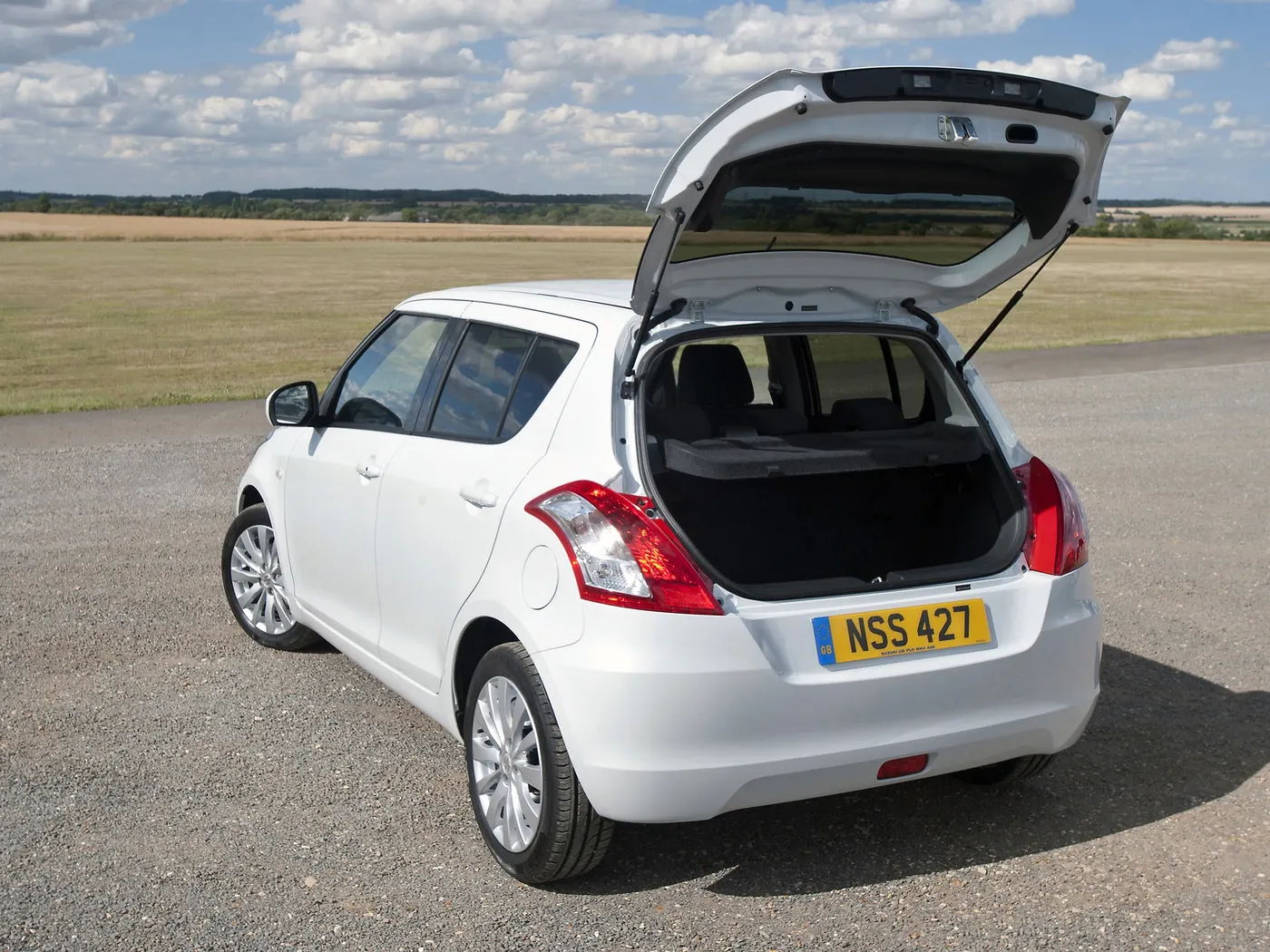
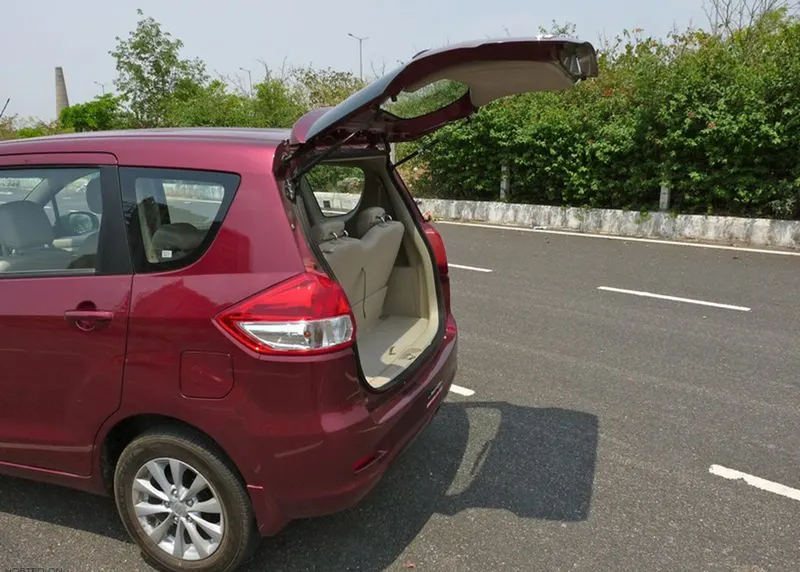
- Top Mounted Backdoors - Most of the car has top mounted backdoors, so that it is connected to the roof end by using the hinges.
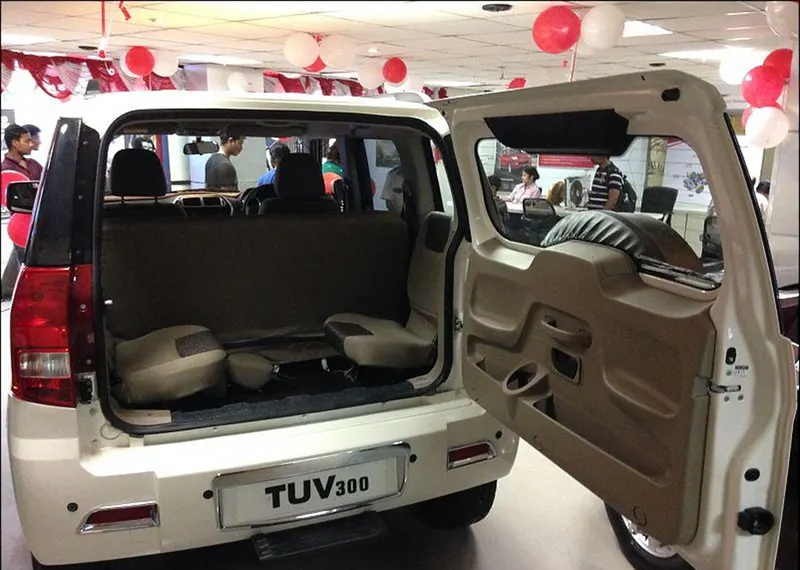
- Side Mounted Backdoors - Some of few car has side mounted backdoors, here it is connected to the vehicle body by using the hinges. (e.g: Ford-Ecosport, Mahindra-Scorpio,Bolero, TUV3oo)
-
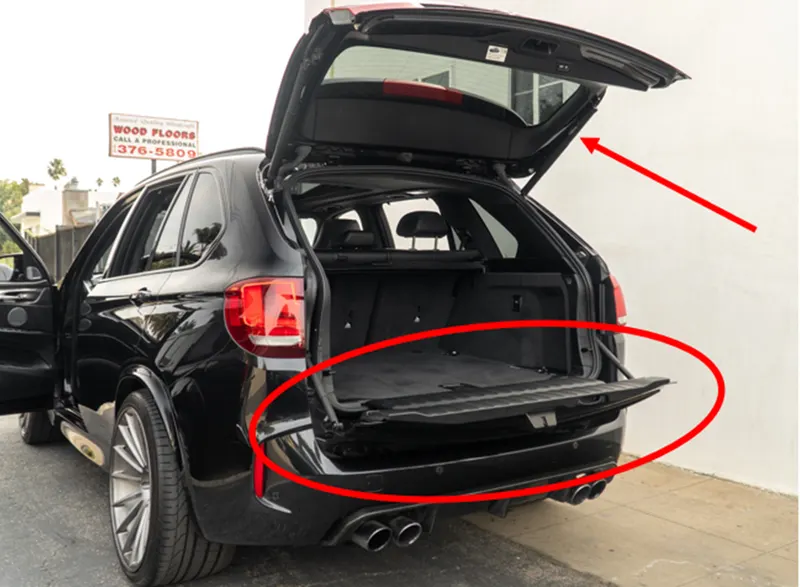
- Split Backdoors - Some premium cars has these kind of backdoors. (e.g: BMW X5, X7)
- Top Mounted Backdoors - Most of the car has top mounted backdoors, so that it is connected to the roof end by using the hinges.
Design Consideration of the Car Back Door"
- Rear Visibility of driver from the cabin
- Boot Space
- Mounting and Positions of Hinges, Gas Stay, Wiper motor, Striker, Head Mounted Tail lamps, Rear Stopping lamps and provisions for wirings.
- Ensure Reinforcement for Hinge, Gas Stay, Wiper motor and Striker.
- Various test Analysis of Backdoor
- Rubber sealings
- Joining process(Hemming and Spot Welding)
Various Sheet Metal Operation used to manufacturing the Car Back Door:
- Deep Drawing
- Hemming
- Embossing
- Blanking and Punching
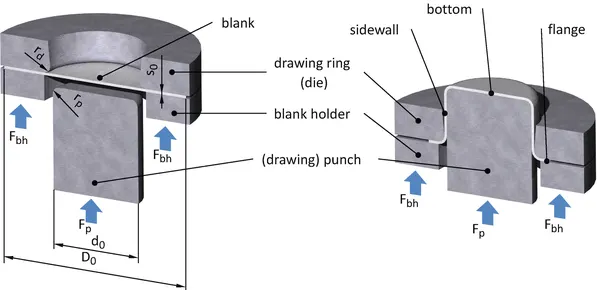
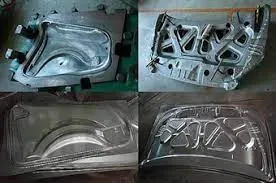
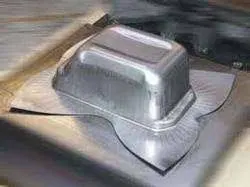
- Deep Drawing - It is the kind of forming operation and it can be done by punching the sheet metal into the specified die by using the mechinical force.
- Difference between Drawing and Deep Drawing is, if the deep of the drawn part is more than its diameter then it is called as deep drawing. If not, it will be called as simple drawing process.
- Hemming - Hemming is the process of folding the edge of the sheet metal to bottom itself.
- Types of Hemming:
- 2t Flat Hemming or Closed Hemming
- 3t Flat Hemming or Opened Hemming
- 2t Rope Hemming or Teardrop Hemming
- 3t Rope Hemming
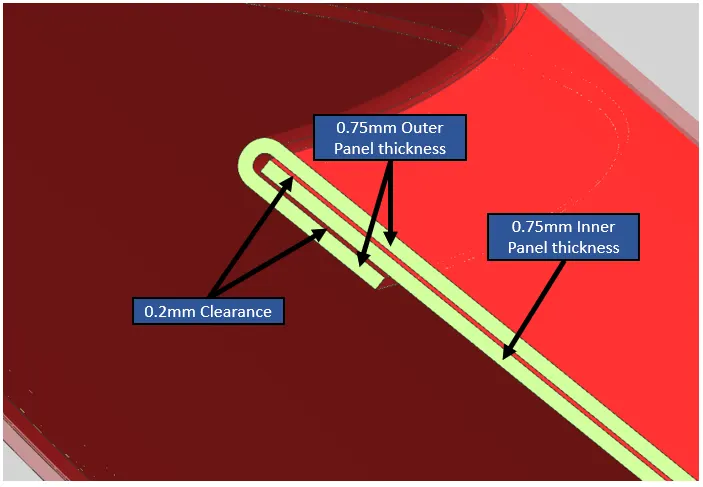
- Here hemming is used to ensure the tight fit between the inner panel and outer panels of the backdoor. So that open hemming is used with 0.2mm Clearance.
- Types of Hemming:
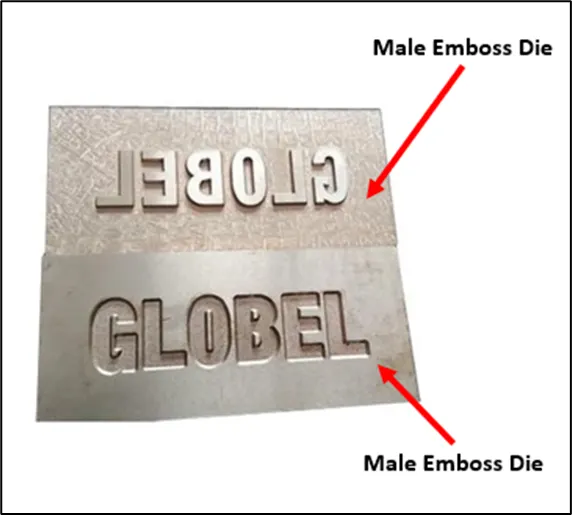
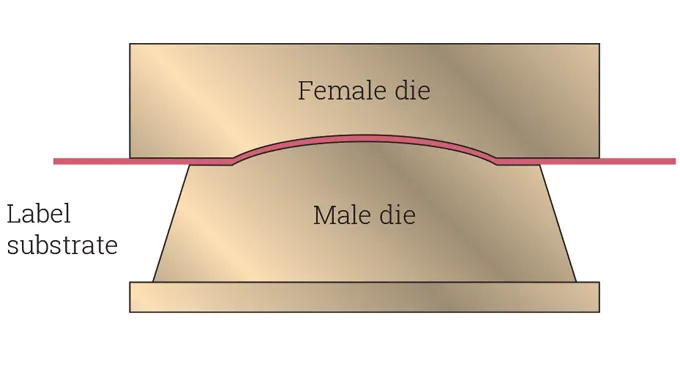
- Embossing - Embossing is also the kind of forming process, high pressure is applied by the male die to the sheet metal to raise its surface according to the female die. Sometime it can be done by the combination of applying pressure and heat based on the emboss design.
-
- Blanking and Punching
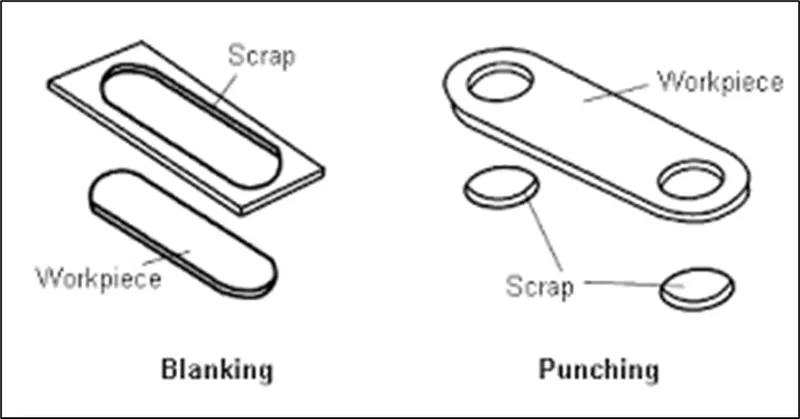
- Blanking - Blanking is the operation used to cut the required shape from the larger sheetmetal blank by the applied pressure. The removed material is the blank.
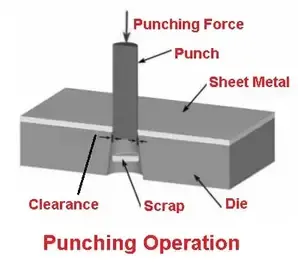
- Punching - Punching is the operation used to create the holes in the sheetmetal workpiece by the applied pressure using the punching dies. Here the removed waste is going to be the scrap.
-
- Deep Drawing - It is the kind of forming operation and it can be done by punching the sheet metal into the specified die by using the mechinical force.
Various Test Analysis carried out for the Car Back Door:
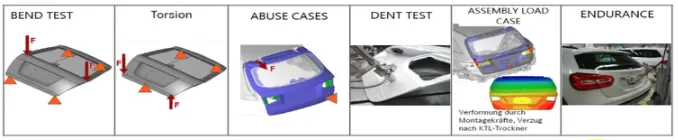
- Bend Test - Bend Test is done by mounting the door at four corners and applying the force to the middle of the door.
- Torsion Test - Torsion test is done by mounting the door at top two corner and at the middle bottom of the door, then applying the force upwards and downwards of bottom left and bottom right of the door.
- Abuse Test - Abuse test is done by applying Force on the hinge areas.
- Dent Test - Pressure is apply on the door outer panel and the intense of the dent is to be calculated and tested.
- Assembly Load Test - By applying the force, to test the behaviour of the assembly and stress, strain factors, etc.,
- Endurance Test - Frequently the door has opened and closed for the some number of times based on the company standards and regulations.
Components of Car Backdoor:
- Backdoor Outer Panel_Upper
- Backdoor Outer Panel_Inner
- Backdoor Inner Panel
- Striker
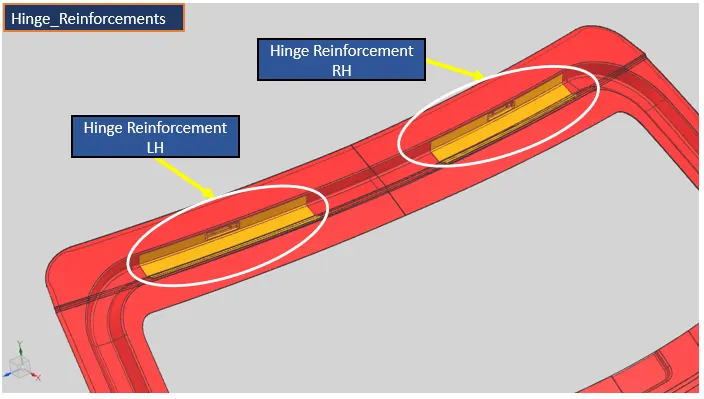
- Hinge Reinforcement_LH
- Hinge Reinforcement_RH
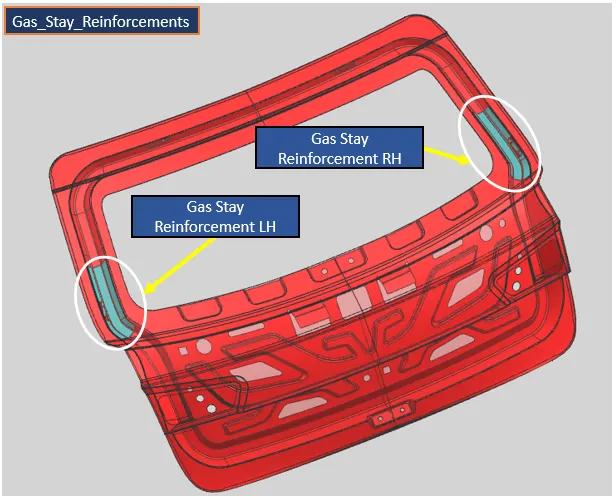
- Gas Stay Reinforcement_LH
- Gas Stay Reinforcement_RH
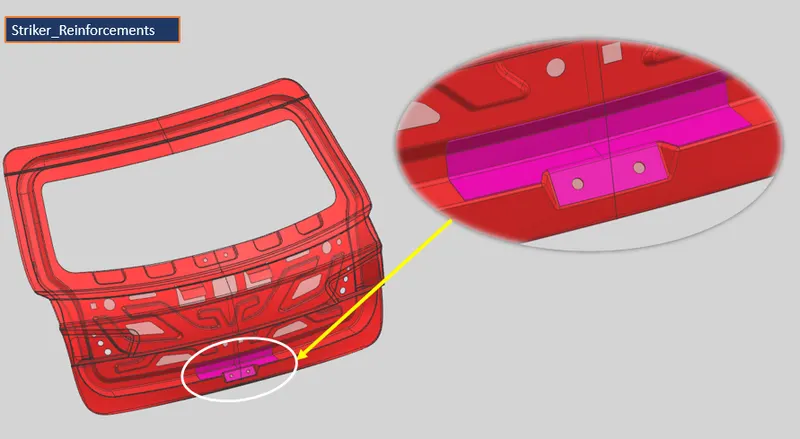
- Striker Reinforcement
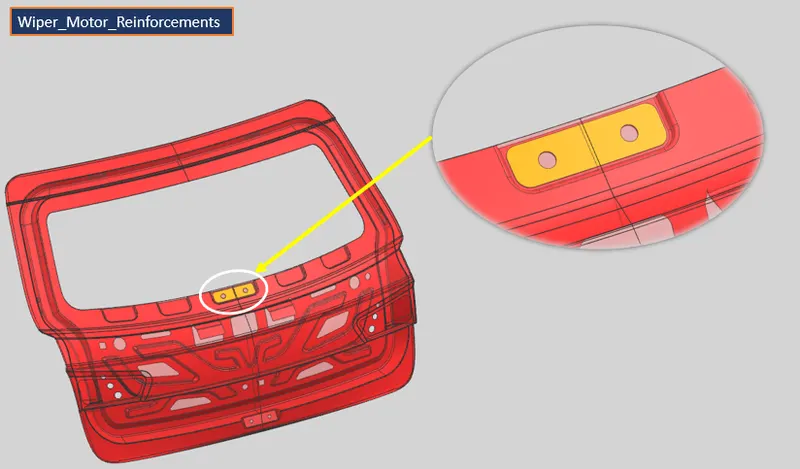
- Wiper Motor Reinforcement
Thickness of the Components:
- Backdoor Outer Panels - 0.75mm
- Backdoor Inner Panel - 0.75mm
- Reinforcements - 1.5mm
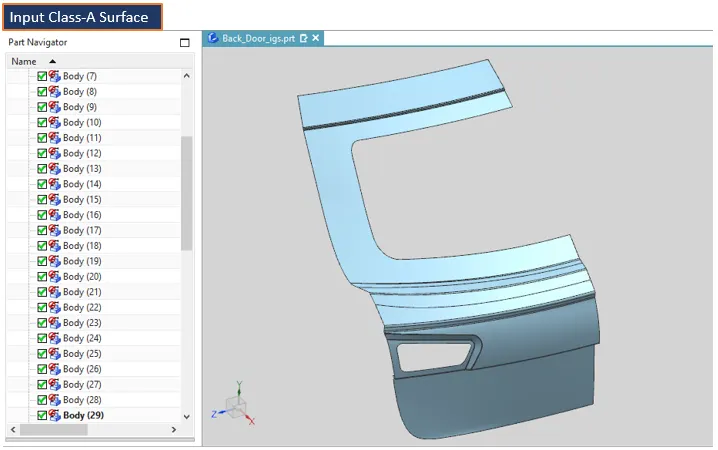
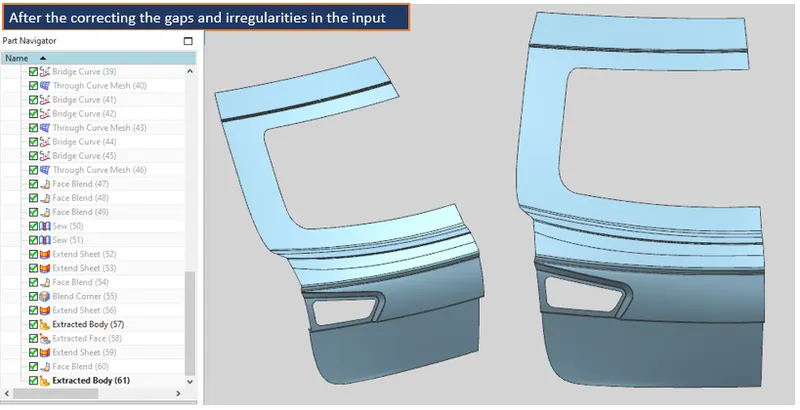
Given Styling Class-A Surface:
- Input Class-A Surface:
- After the correcting the gaps and irregularities in the input:
Back_Door_Assembly:
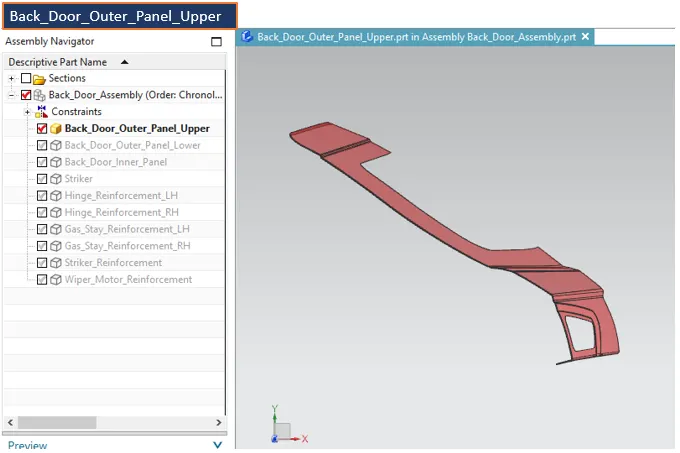
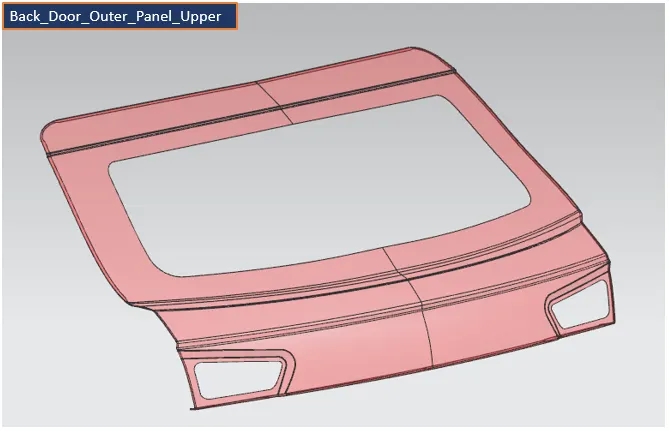
- Back_Door_Assembly file has been created and by using the repaired Class-A Surface, "Back_Door_Outer_Panel_Upper" and "Back_Door_Outer_Panel_Lower" has created. Also rest of the backdoor components are created as below,
- Back_Door_Outer_Panel_Upper:
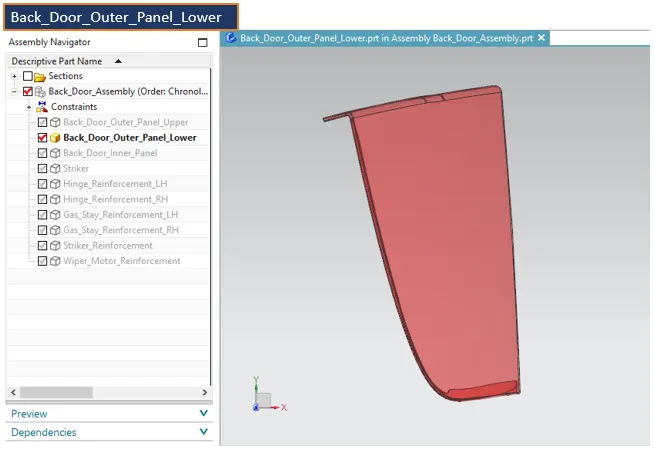
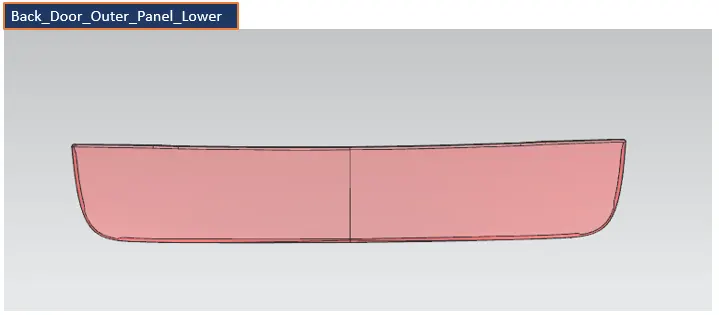
- Back_Door_Outer_Panel_Lower:
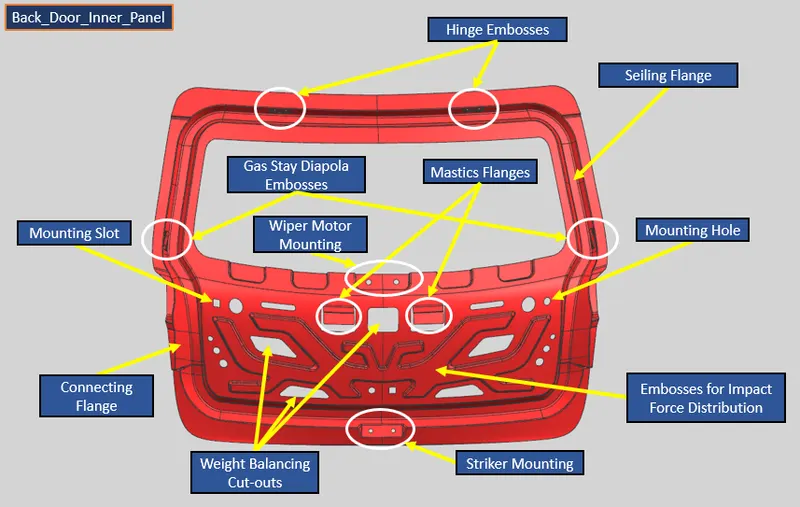
- Back_Door_Inner_Panel:
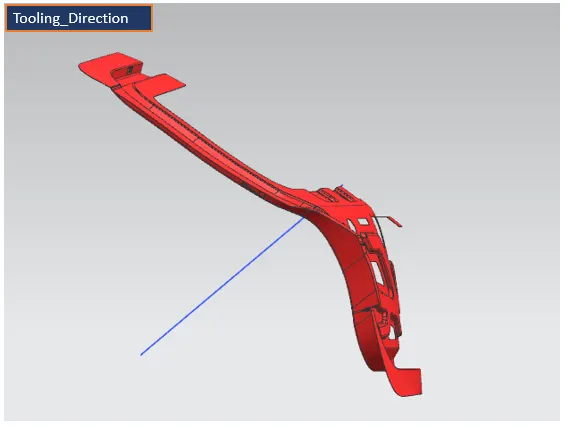
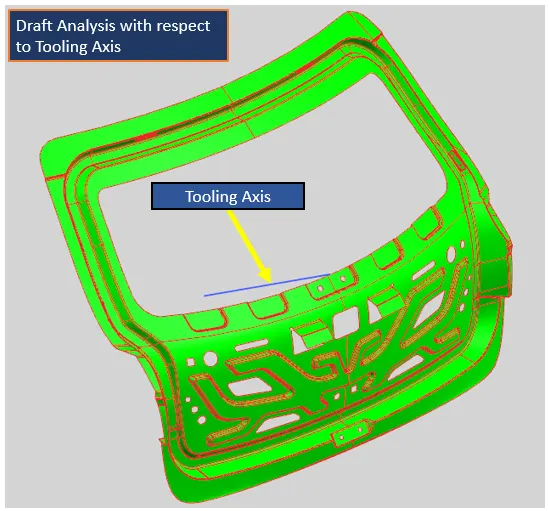
- Tooling Direction:
- By using the "Back_Door_Outer_Panel_Upper" and "Back_Door_Outer_Panel_Lower" surfaces, Backdoor Inner Panel has created with the following features,
- Hinge Embosses
- Gas Stay Embosses
- Embosses for Impact force distribution
- Weight balancing cutouts
- Mastics flanges
- Wiper motor mounting
- Striker mounting
-
- Tooling Direction:
- Hinge_Reinforcements(LH&RH):
- Gas_Stay_Reinforcements(LH&RH):
- Striker_Reinforcement:
- Wiper_Motor_Reinforcement:
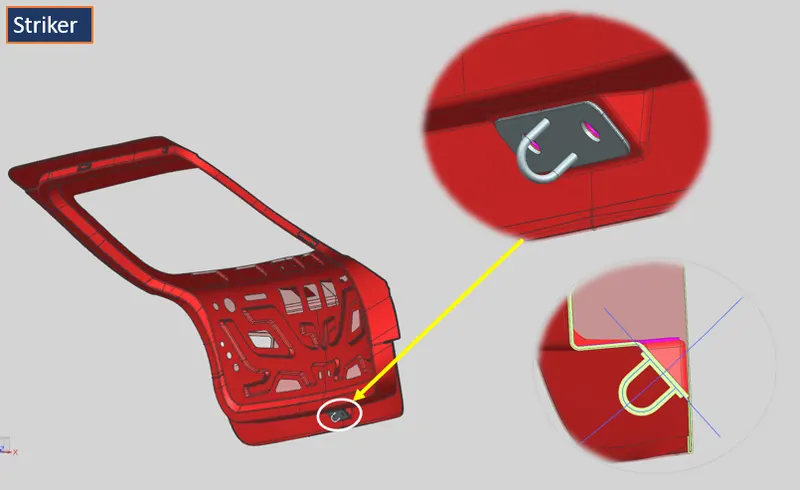
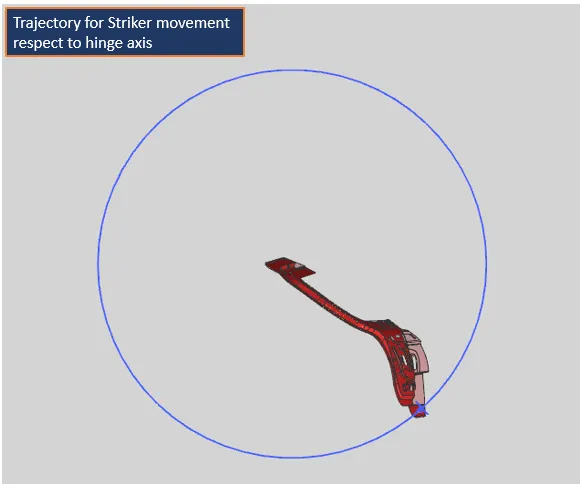
- Striker:
- Hemming:
- Back_Door_Outer_Panel_Upper:
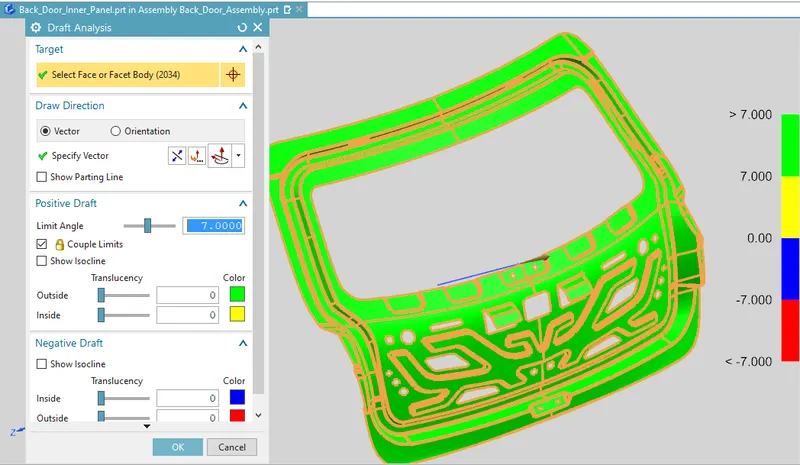
Draft Analysis:
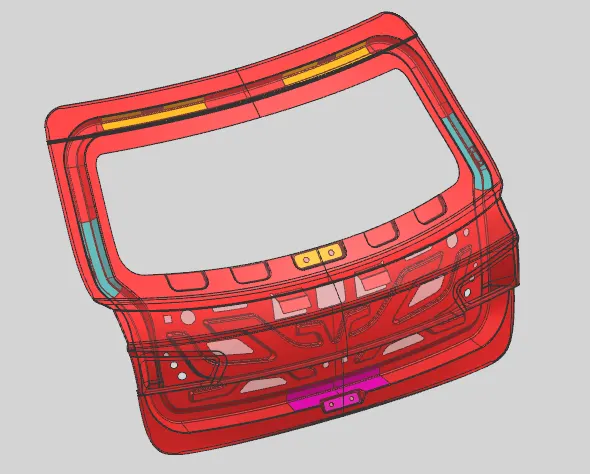
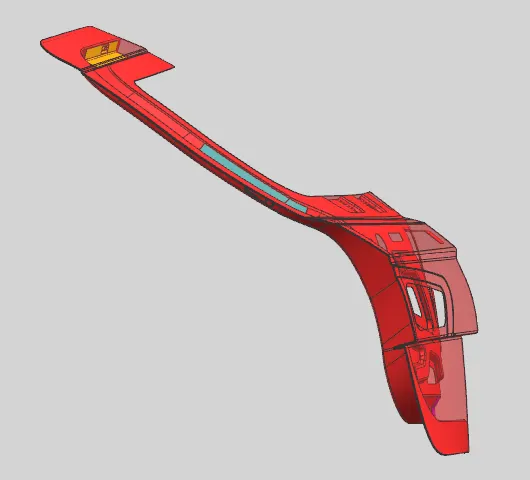
Backdoor Assembly Views:
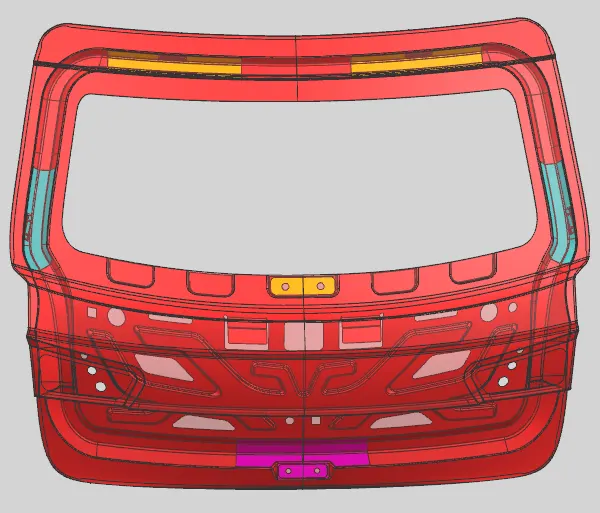
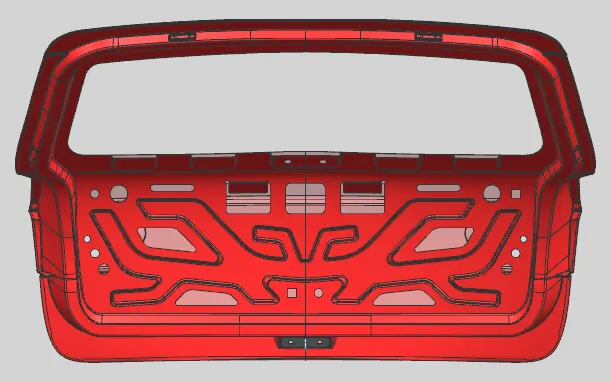
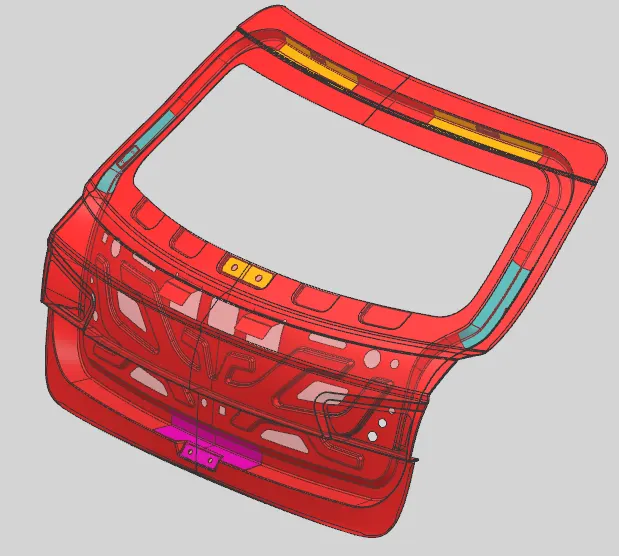
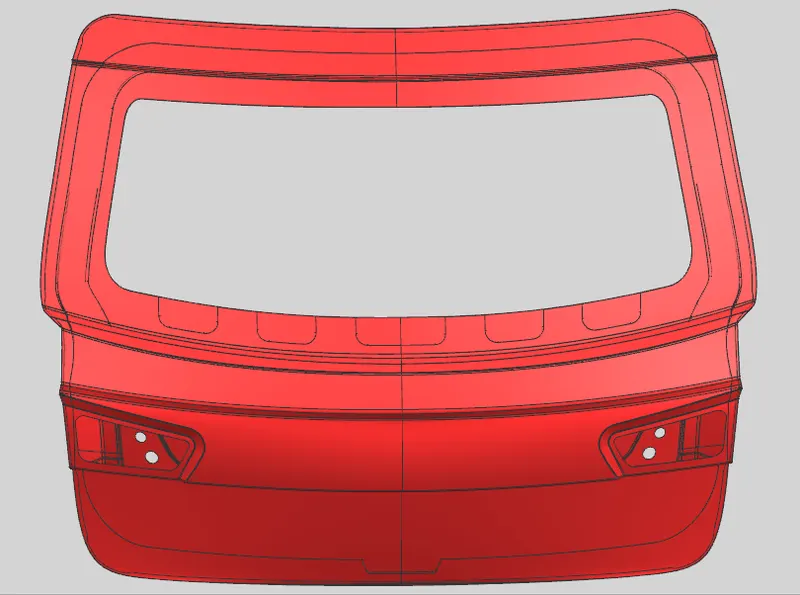
Conclusion:
By using the given Styling Class-A Surface, the Car Backdoor has been designed with its components by following the mentioned design considerations using Siemens NX-CAD Software.