Design of backdoor
Design Of Backdoor By Using Catia v5:-
Back Door Design is an important design component used in automotive vehicles. Since it provides protection and covering for the backside of the vehicle. Design characteristics of the back door play a very important role in terms of the safety and luggage storage capacity of the vehicle. Thinner the back door design more will be the luggage area storge, whereas, thicker the back door design, less will be the luggage area storage. But considering the type of the vehicle, there are different types and designs of the back door.

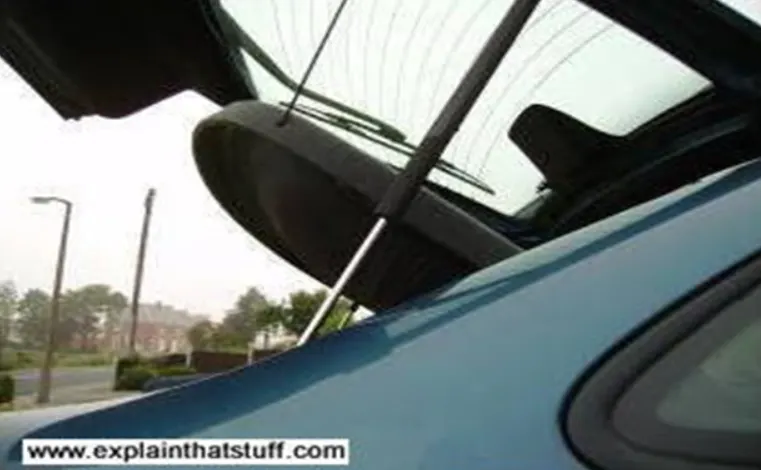
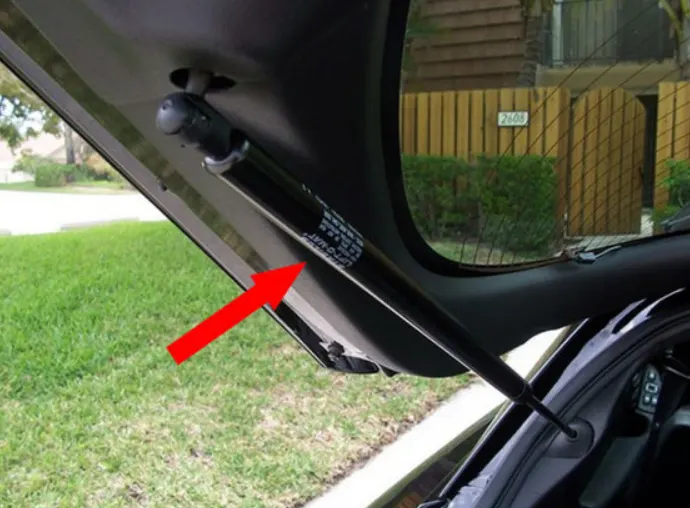
The next important point that comes into consideration is the opening and the stay of the back door of the car. Now this stay can be achieved with the help of gas stay, which is basically the gas spring attached at both ends. Whereas, in some cases, the stay is achieved with the help of the internal mechanism which consists of rubber grips or simply a rachet-type mechanism.
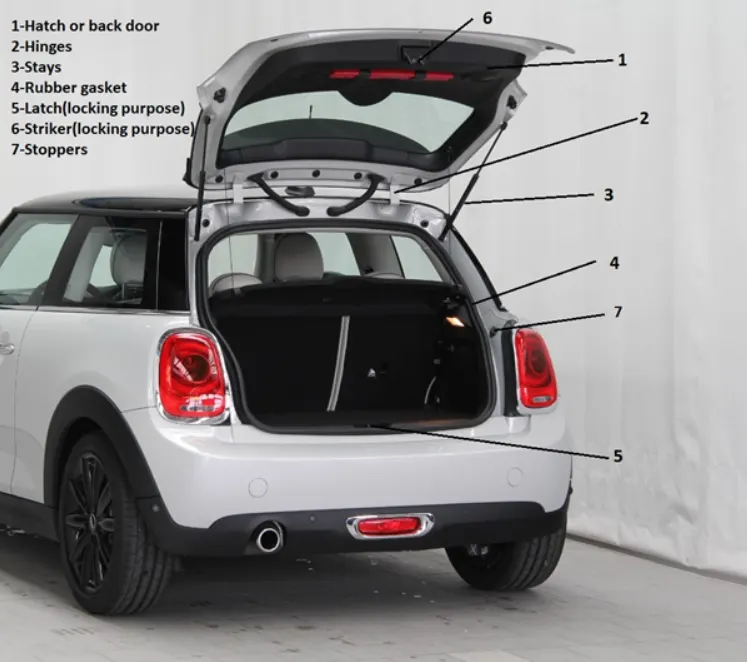
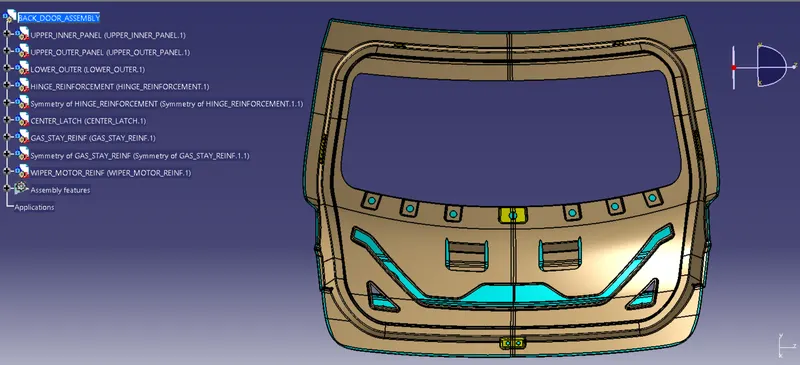
The car back door consists of the following parts,
- Outer panel.
- Inner panel.
- Hinge reinforcement.
- Gas stays reinforcement.
- Latch reinforcement.
- Wiper motor reinforcement.
Modeling of the back door involves two stages. They are,
- Modeling of the individual parts
- Assembling of the parts
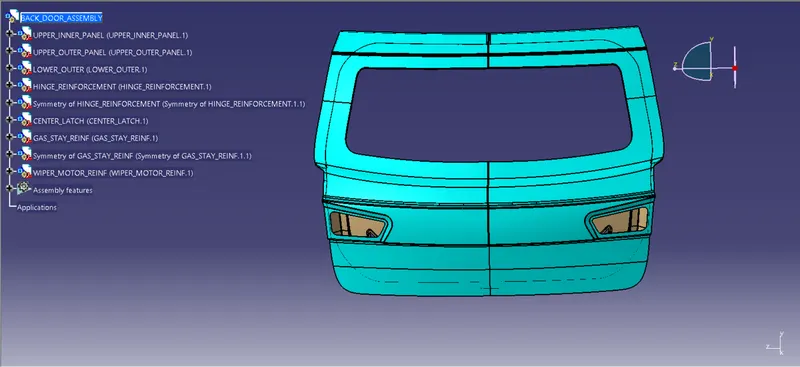
The design of the back door is shown in the following image made in the Catia v5:-
Design Considerations:-
The styling surface is checked for surface integrity and irregularities are developed and saved for further Surface developments.
To improve the luggage compartment the panel is drawn thinner with considerable space for all the mounting parts and wire harnesses.
Tooling Direction:-
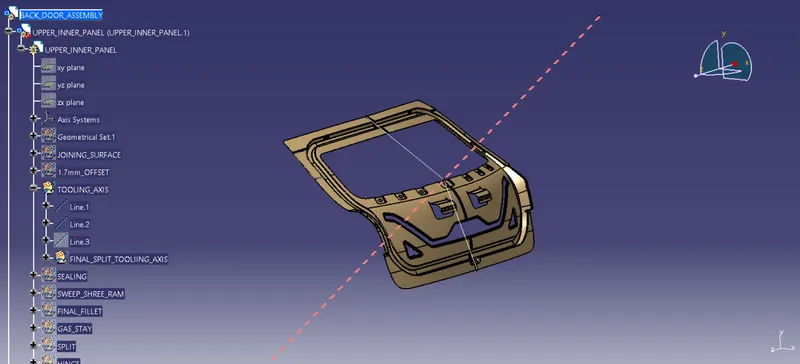
Based on the styling surface the foremost step is the definition of the tooling direction for the deep drawn steel process and all downstream steel metal operations are based on the tooling axis.
Latch Trajectory:-
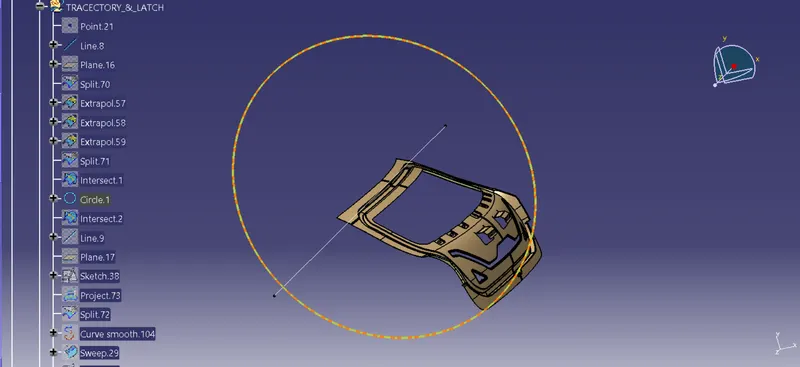
To define the opening and closing of the back door, the trajectory is needed. The circle drawn should be perpendicular to the latch striker to satisfy the condition.
Hemming:-
Relief
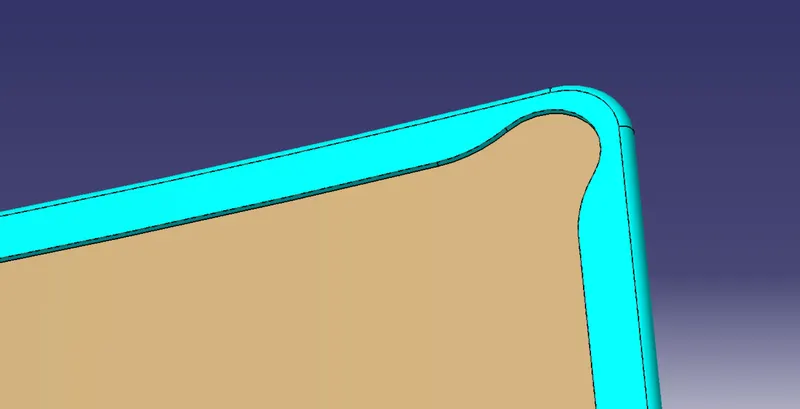
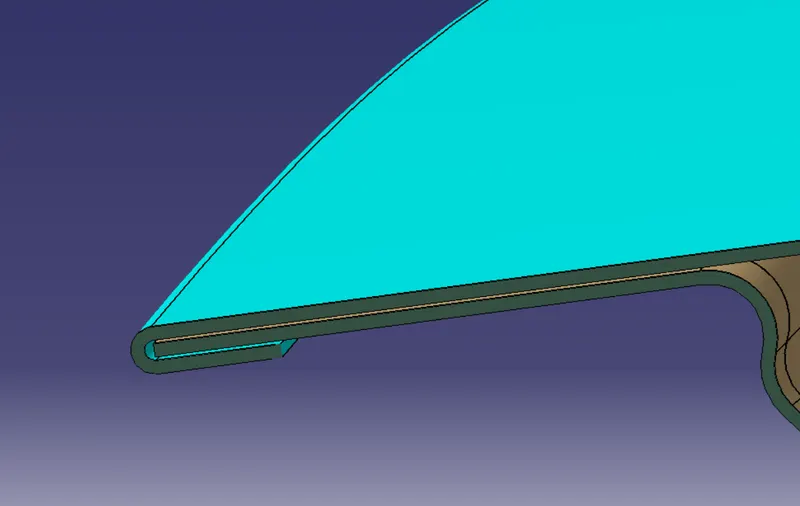
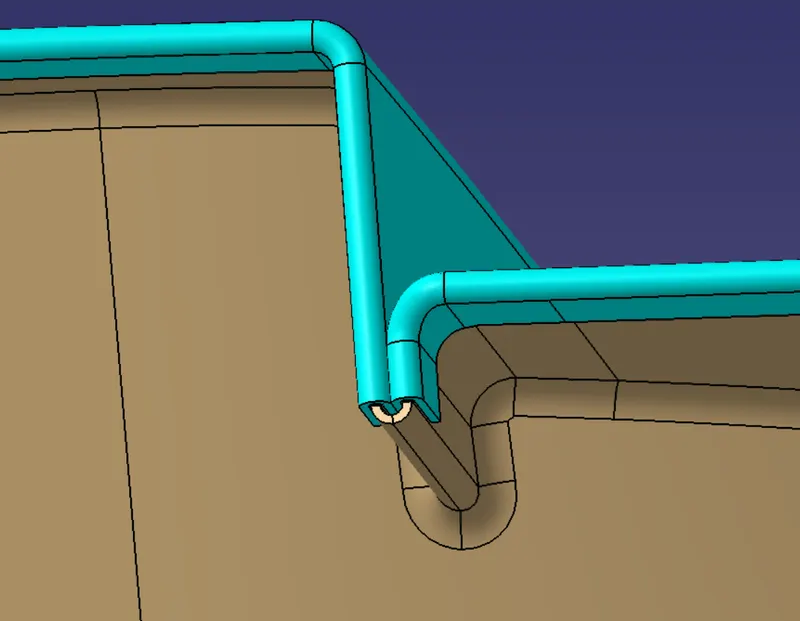
Hemming is the sheet metal joining process of the inner and outer panels by eradicating the spot-welded areas which affect the aesthetic of the outer panel. It is a safety requirement for door handling along the edges and suitable relaxations are provided along the corners to avoid stress concentration.
Reinforcements:-
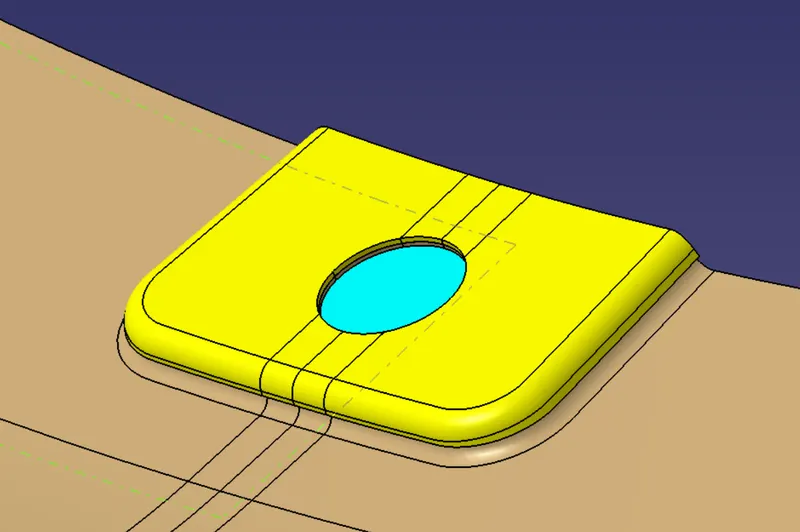
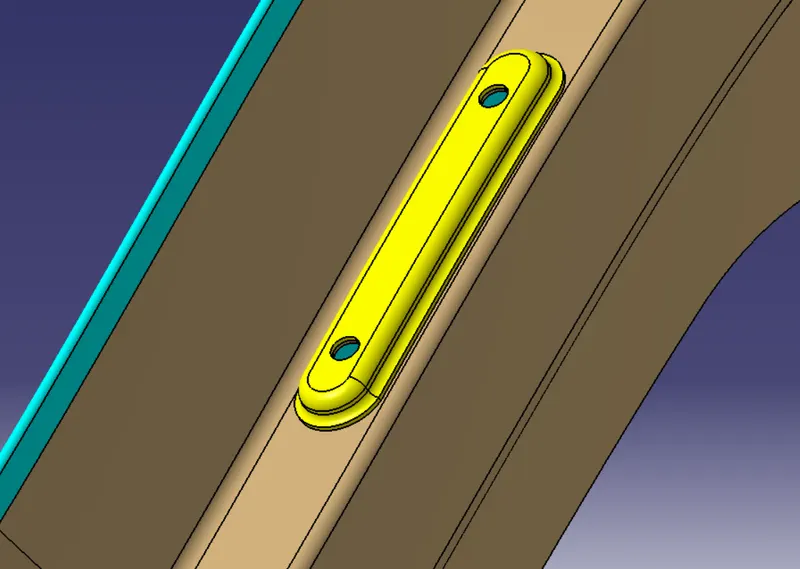
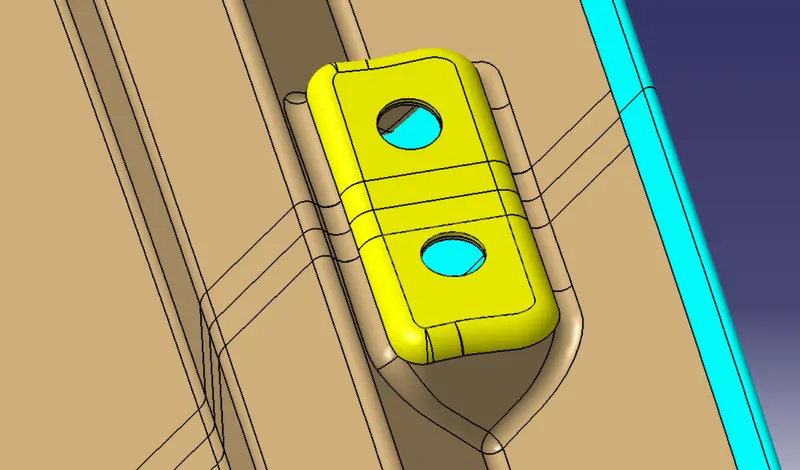
Reinforcement structures are provided to compensate for the loss of strength on the embossed section of the mounting points.
- 2 Hinge reinforcements
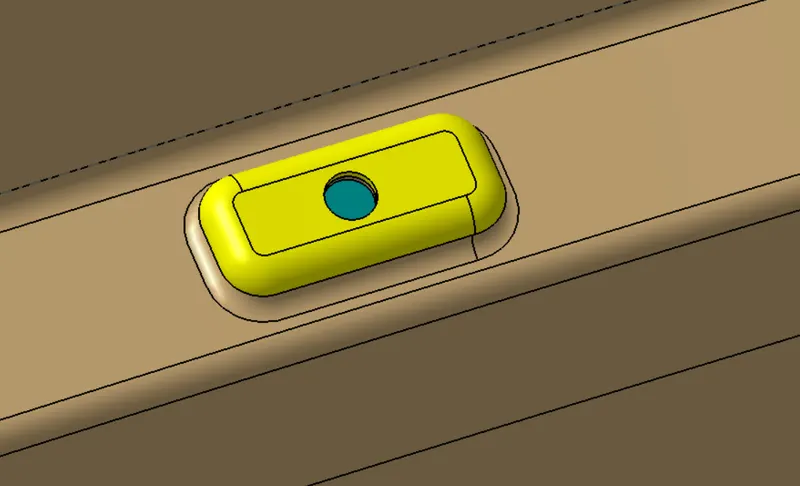
- Wiper Motor Reinforcement
- 2 Gas Stay Reinforcement
- Latch Reinforcement
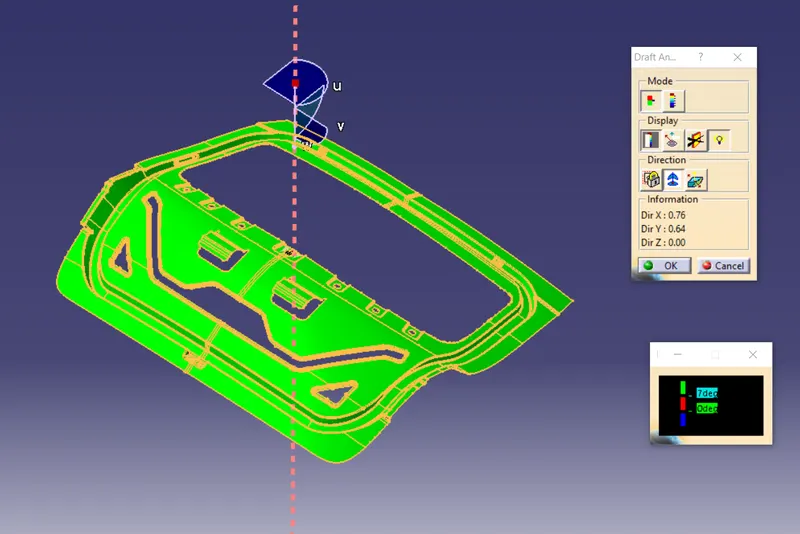
Draft Analysis:-
The draft analysis shows that the drafted section of the inner panel is above 7 degrees and is feasible for the deep drawn process. Some side embosses require line normal to sketch plane as tooling direction to clear the Draft.