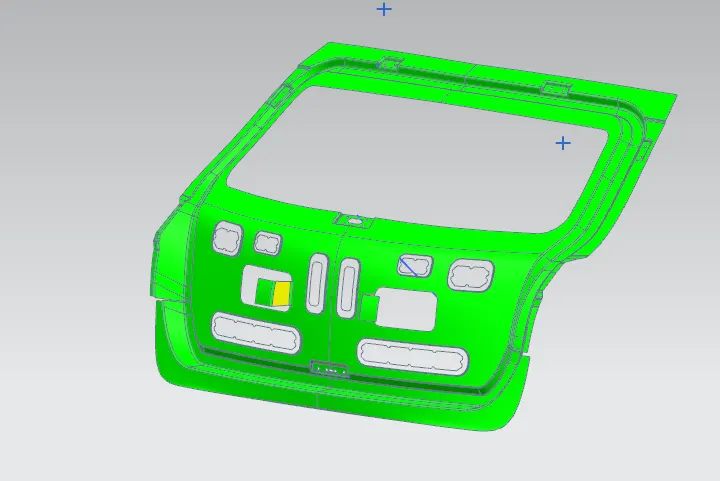
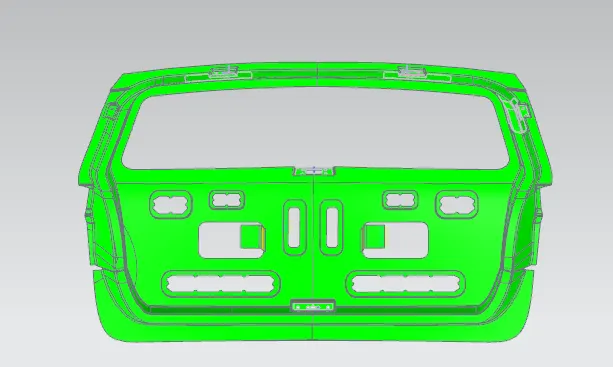
Design of backdoor
Development of Car Back Door Design
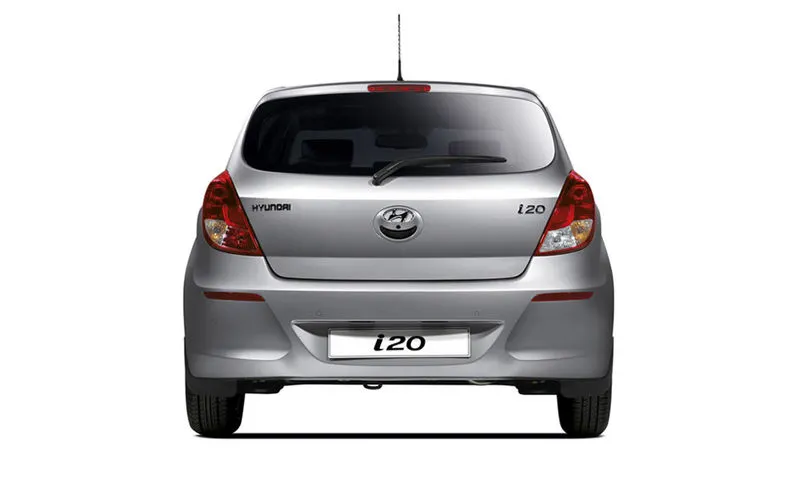
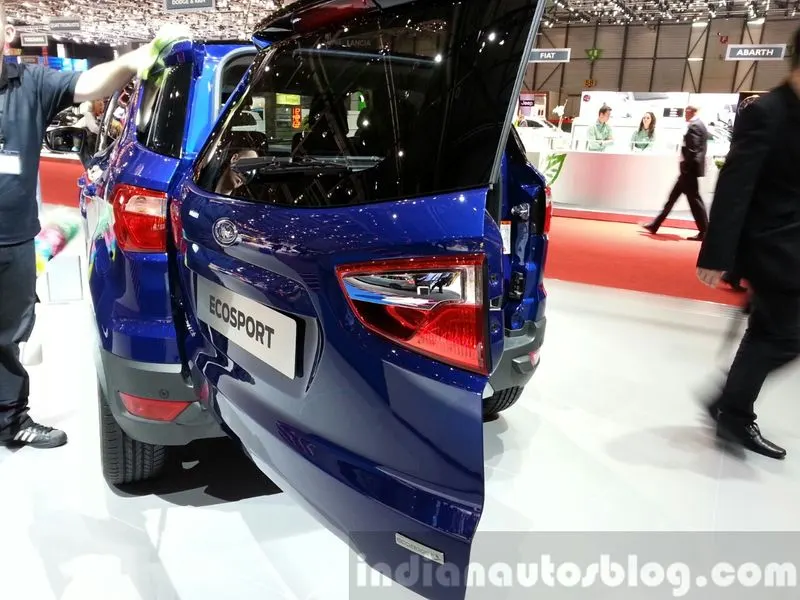
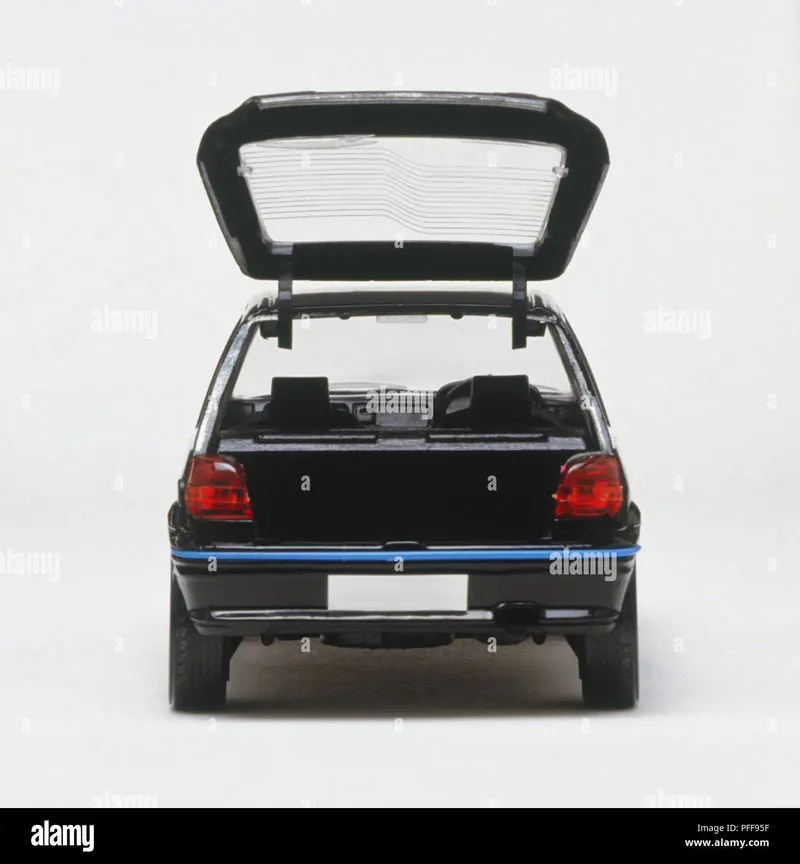
CAR BACK DOOR is known as a tailgate or Tailboard and The trunk in North American Englishor boot in British English of a car is the vehicle's main storage or cargo compartment, often a hatch at the rear of the vehicle. They are large, heavy pieces of equipment that add significant weight to the gross vehicle weight. The standard liftgate utilizes a hydraulic pressure(GAS STAY)to force a piston through a cylinder which raises and lowers the gate. More thin the back door area more area available for the luggage area. Door panels are expected to meet one of the toughest sets of requirements among interior car components. These panels should be designed to withstand and channel loads into the body of the car while being thin. An additional consideration is their ability to protect occupants from injury during a side collision, where most injuries are inflicted on the chest and pelvis as a result of the crushing force of the door.
FUNCTIONALITY OF CAR BACK DOOR
- Door panels serve as an interface between the interior of the car and the inner workings of the door, and between vehicle occupants and the door.
- They are expected to meet a variety of design specifications regarding safety, aesthetics, and functionality.
- In addition, they are expected to continue the material theme of the dashboard and pillars while concealing intricate electrical and mechanical components for operating locks, windows, and other features.
- The door panel has evolved from a simple two-part system of the latch and simple winding mechanism to a more sophisticated enclosure.
- Doors currently have an inner full-width panel consisting of electronic windows, a central locking system, and speakers.
- Door panels are expected to meet one of the toughest sets of requirements among interior car components.
MANUFACTURING OF TAILGATE/BACKDOOR
Deep drawing
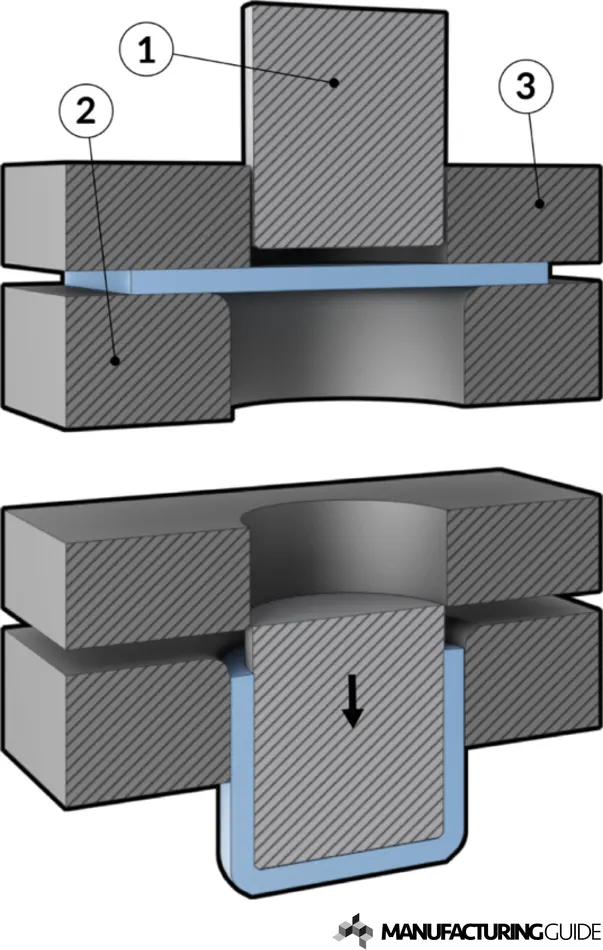
Deep drawing is a sheet metal forming process in which a sheet metal blank is radially drawn into a forming die by the mechanical action of a punch. It is thus a shape transformation process with material retention. The process is considered "deep" drawing when the depth of the drawn part exceeds its diameter. This is achieved by redrawing the part through a series of dies. The flange region (sheet metal in the die shoulder area) experiences radial drawing stress and tangential compressive stress due to the material retention property. These compressive stresses result in flange wrinkles (wrinkles of the first order). Wrinkles can be prevented by using a blank holder, the function of which is to facilitate controlled material flow into the die radius.
MATERIAL USED FOR BACK DOOR
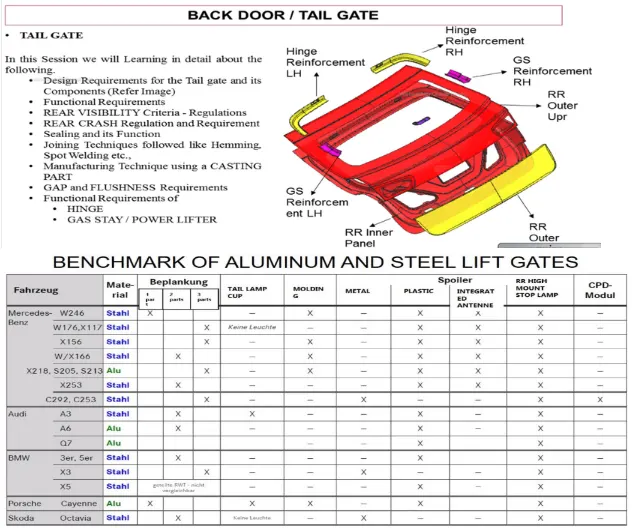
ALUMINUM AND STEEL
REARVIEW VISIBILITY CRITERIA
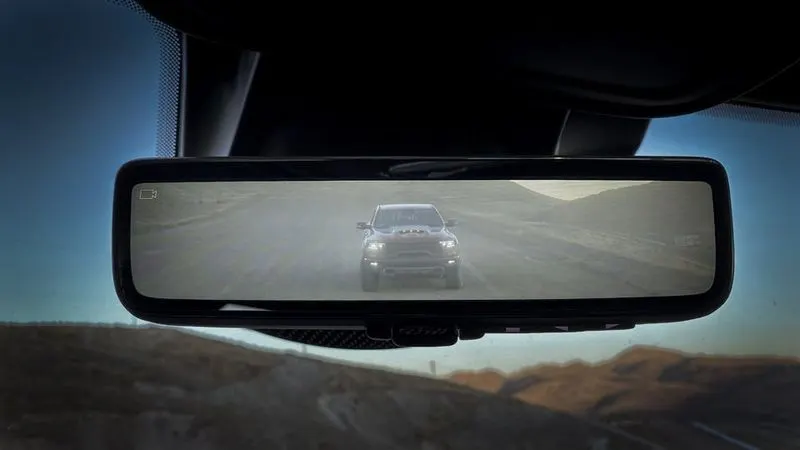
A rear visibility system means devices or components installed on a motor vehicle at the time of manufacture that allow a forward-facing driver to view a visual image of the area directly behind the vehicle. Here also come the rear visibility criteria means devices or components installed on a motor vehicle at the time of manufacture that allow a forward-facing driver to view a visual image of the area directly behind the vehicle.
Procedure
We get skin data for creating the back door panel. first, we start with importing the igs file into Siemens NX cad software. we are currently using siemens nx cad software for creating our door panel. first, we analyze our data isn't there any sort of opening or irregular surface is there or not.
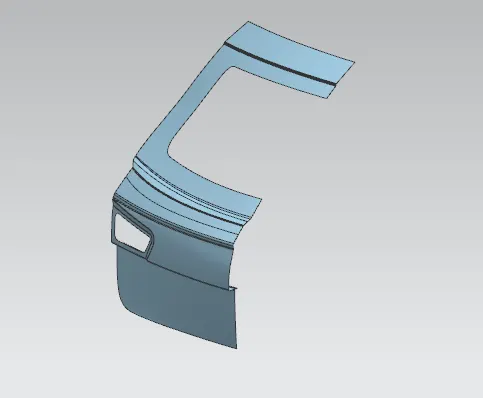
this is the skin data that is provided for the creation of the back door panel.
Creation of Tooling Direction
We need tooling direction for deep drawn operation.
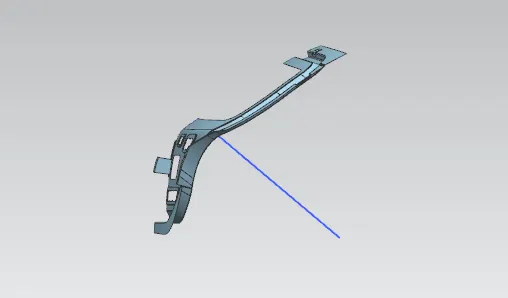
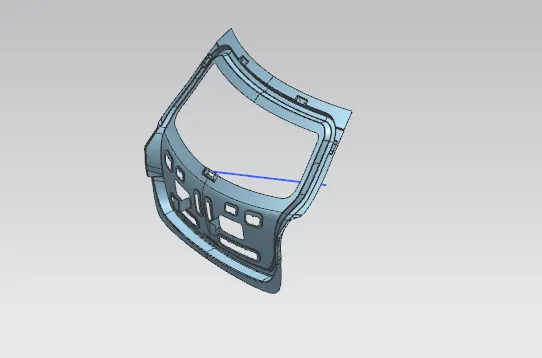
Components of the back door
- Outer panel upper
- Outer panel inner
- Inner panel
- Gas stay and reinforcement
- Hinge and Reinforcement
- Wiper motor and Reinforcement
- Latching &striker and Reinforcement
1. OUTER PANEL UPPER
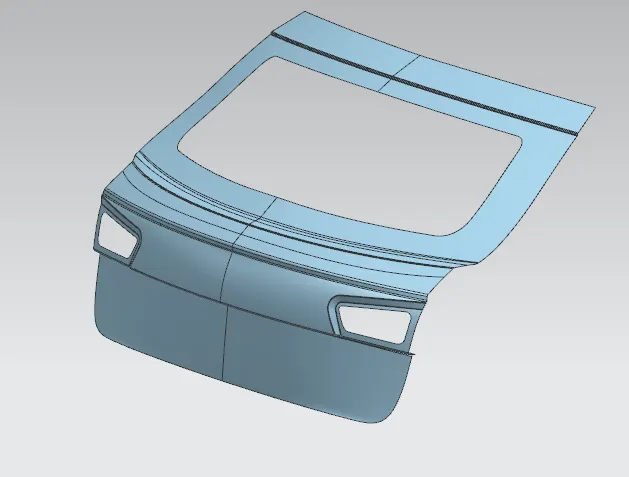
The designing of the back door begins when we take the skin data as a model for designing. first, we analyze our data isn't there any sort of opening or irregular surface is there or not. after that, we join all the parts by using sew command. these are the components we have to design. then we offset it by 5mm then we create our upper panel. we already consider the dimensions from the skin data. then we provide the thickness of 0.75 mm to it.
2. INNER PANEL
The main parts of the inner panel are the sealing flange, windshield panel, embosses, and inner flange. first, we go for the sealing flange. first, we offset the outer surface and then create the sealing flange. this flange will mate with plastic components and get assembled. then we go for the creation of the inner panel flange. after creating the inner panel flange we will try to make the windshield panel where our wiper motor will be mounted.
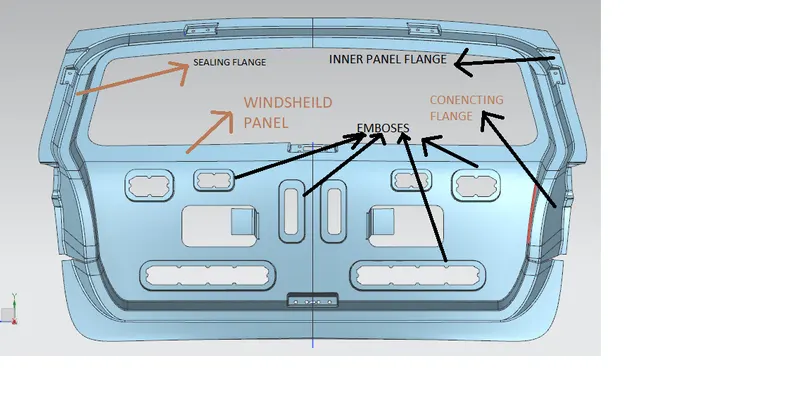
- for the creation of connecting flange, we have to look carefully because we cannot create the whole flange in a single deep-drawn operation. we have to create it in a separate assembly.
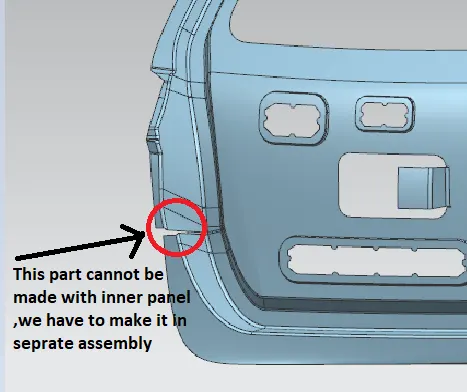
the thickness of the inner panel will be 0.75mm.
3. GAS STAY AND Reinforcement
Gas stay is the major part of the back door because it is the part that is responsible for the movement of the door.
the thickness for the Reinforcement is 1.5mm.
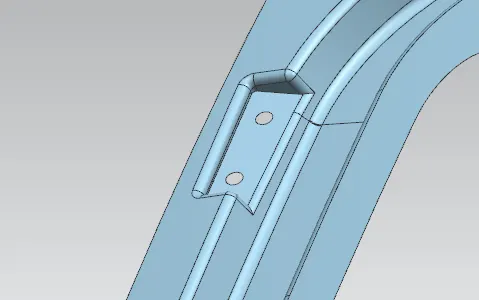
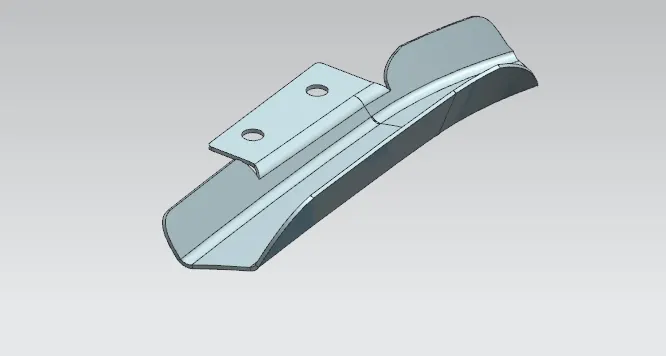
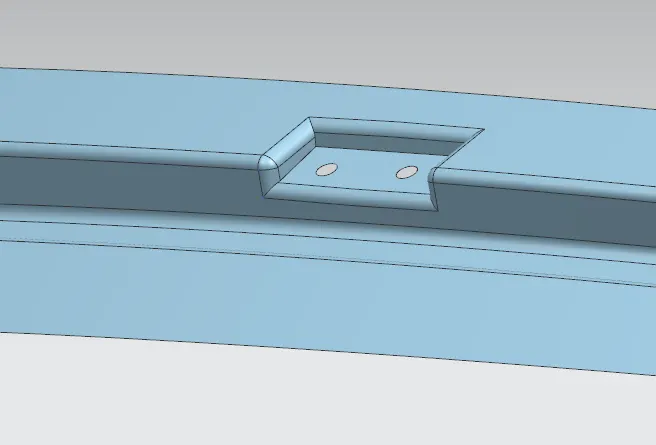
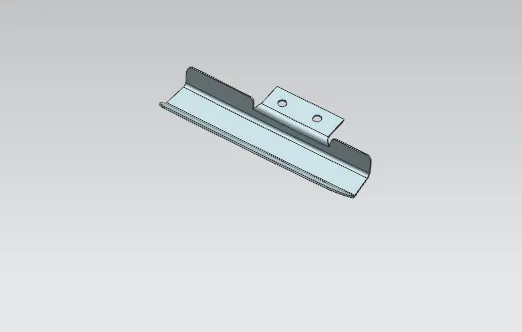
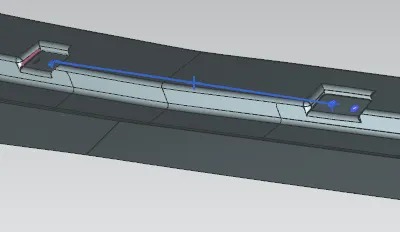
4. HINGE and Reinforcement
the purpose of the hinge is to hold the back door in a stable position, so it can move in a singular direction only. the hinge holds the back door to the chassis of the car. for the hinge, we have to create a hinge axis.
the thickness for the Reinforcement is 1.5mm.
5. Wiper motor and Reinforcement
The wiper motor tends to play an important role it's the area where the wiper motor will be mounted. the purpose of the wiper motor is to clean the wind shield where the driver can see the clear view.
Here also come the rear visibility criteria means devices or components installed on a motor vehicle at the time of manufacture that allow a forward-facing driver to view a visual image of the area directly behind the vehicle.
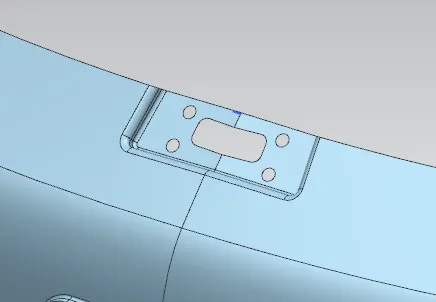
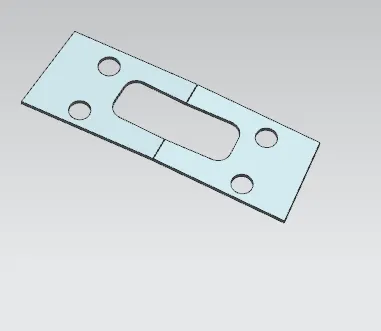
the thickness for the Reinforcement is 1.5mm.
6. latch & Striker and Reinforcement
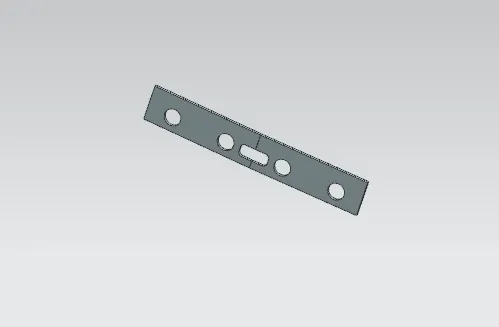
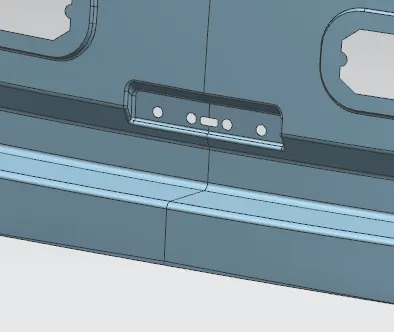
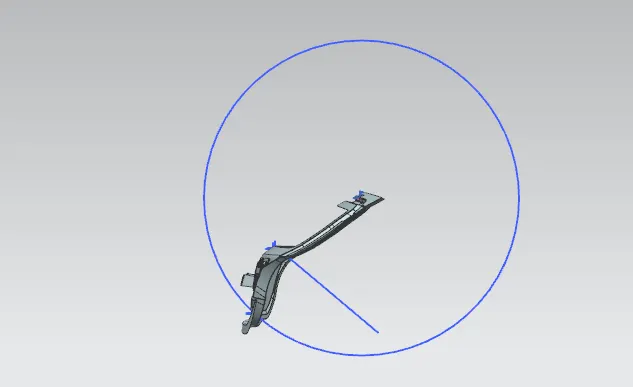
latch and striker is the part that will get a mate to the Car's chassis. for the creation of it, we need a trajectory the way it moves in a singular direction for that we have to create a hinge axis and we have to take the midpoint of it to create a circle.
Creation of emboss
Embossing is a metal forming process for producing raised or sunken designs or relief in sheet material by means of matched male and female roller dies, theoretically with no change in metal thickness, or bypassing sheet or a strip of metal between rolls of the desired pattern. the gap between embossing and the outer panel will be 5mm, between the gap there will be the placement of the mastic sealants. MASTIC SEALANT - Hard rubber-type sealants are used for joining.
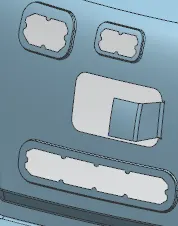
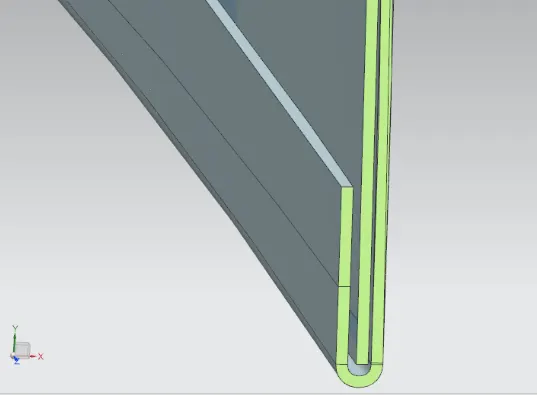
HEMMING METHOD.
Hemming is the process in which the edge is rolled flush to itself, while a seam joins the edges of two materials. there are certain things we have to follow for bending the outer panel.
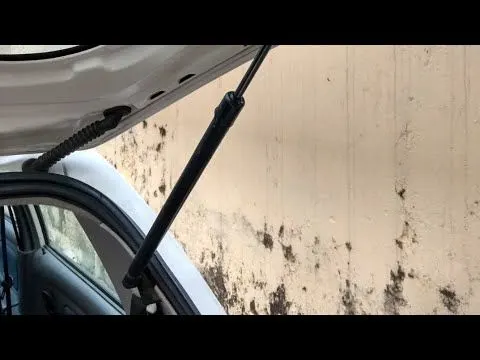
Moving mechanism of Back Door
Gas stay
A device for supporting the back door of a motor vehicle in its opening position by means of an actuator that is activated by gas. This is the automatic stay mechanism it doesn't require any manual need. since it is automatic so it is quite expensive.
DRAFT ANALYSIS
We also perform draft analysis here to check weather the tooling direction is correct or not.