Design of backdoor
DESIGN OF BACK DOOR/TAIL GATE
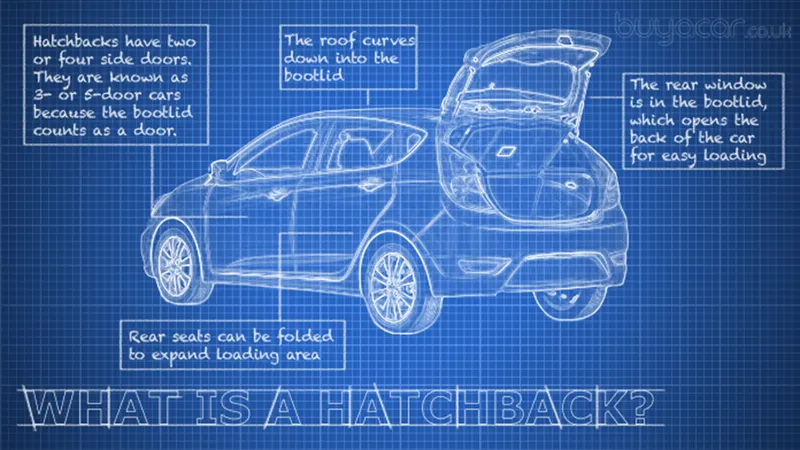
AIM: - To Design the Back door (Tail gate) of a car from its styling surface provided using NX CAD.TO design back door of car using given outer class ‘A ‘surface. Use appropriate design methodologies and provide the necessary reinforcements and embosses. The ultimate aim is to design the back door by following the industrial standards.
INTRODUCTION: - The backdoor or tailgate is the rear most part of the automobile which opens upwards, downwards, or sideways to give Access to the luggage space or seating area. In most of the cars the backdoor opens upwards.it is hinged to the roof and a gas stay support fixed at the body side outer for keeping the backdoor in open position. The Car backdoor consist of inner and outer panel.
The Materials used in making the backdoor of car is mainly steel but nowadays Aluminum is also used in making the panels.
The main advantage of Aluminum over steel is that the density of Aluminum is very less as compared to steel so it reduces the overall weight of the car. Using Aluminum improve the strength where we can avoid the reinforcement. Aluminum parts are casted and we can very the thickness of the part, because of this avoid or reduce the number of parts as compared to steel. But aluminum is costly as compared to steel.
Steel part are stamped, we can not vary the thickness of the part because of a greater number of parts are added. Which could increase the weight of the part.
So nowadays most of car manufacturers are trying to use aluminum instead of steel and they reduce the number of parts and weight of the car drastically.
Parts of a Tail gate
- Outer Panel
- Outer Panel Lower
- Inner Panel
- Hinge Reinforcement
- Latch and Stricker Reinforcement
- Wiper Motor Reinforcement
- Gas Stay Reinforcement
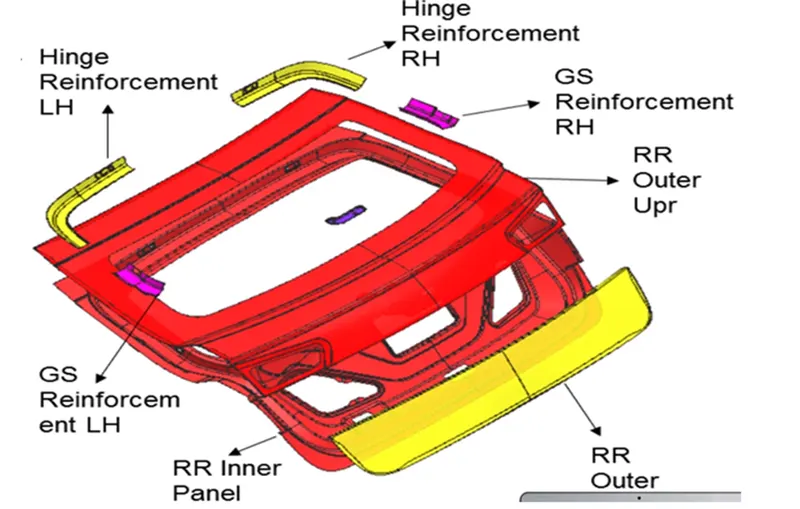
All these parts are assembled together to obtain the back door of a car.
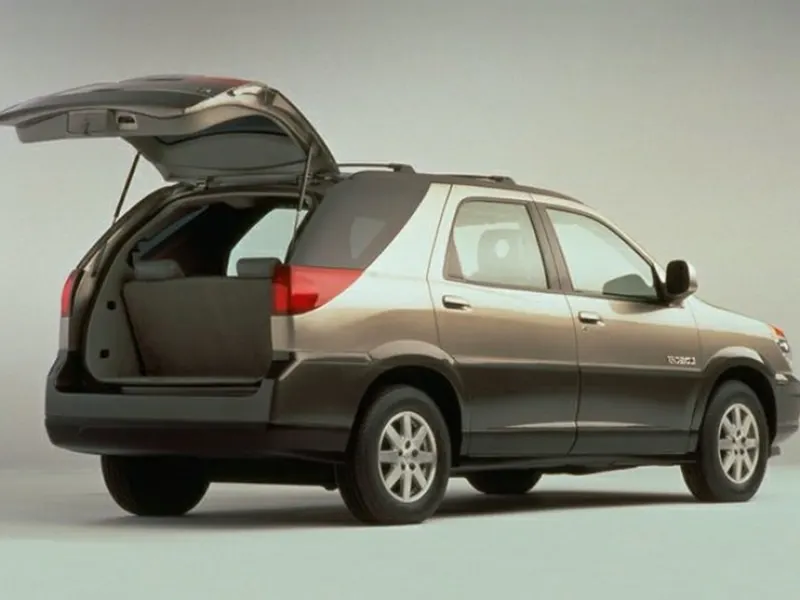
Types of Back door
There are three types of back door based on the position of the hinge axis. They are-
Top Mounted
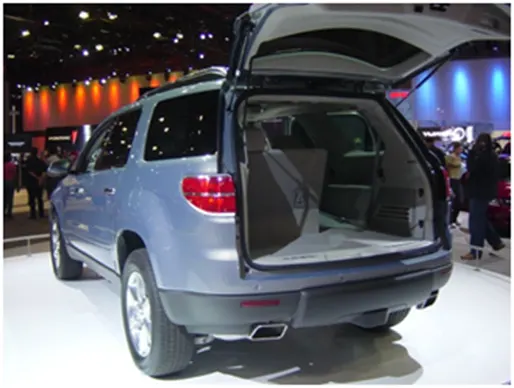
Side Mounted
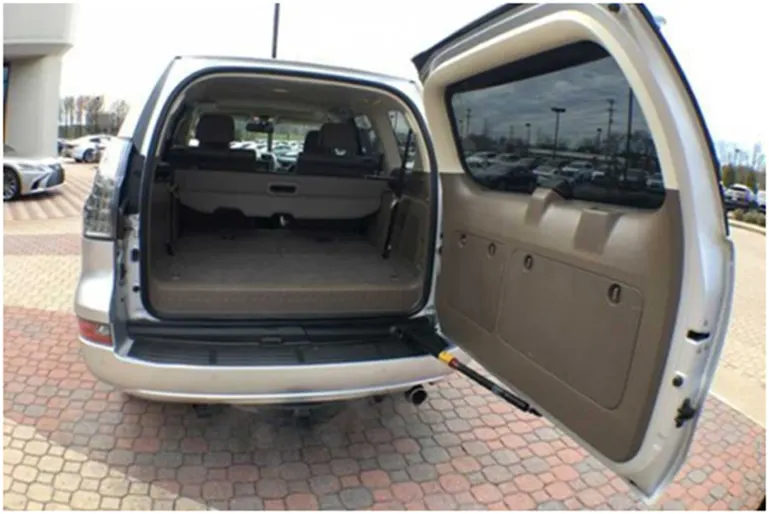
Bottom Mounted
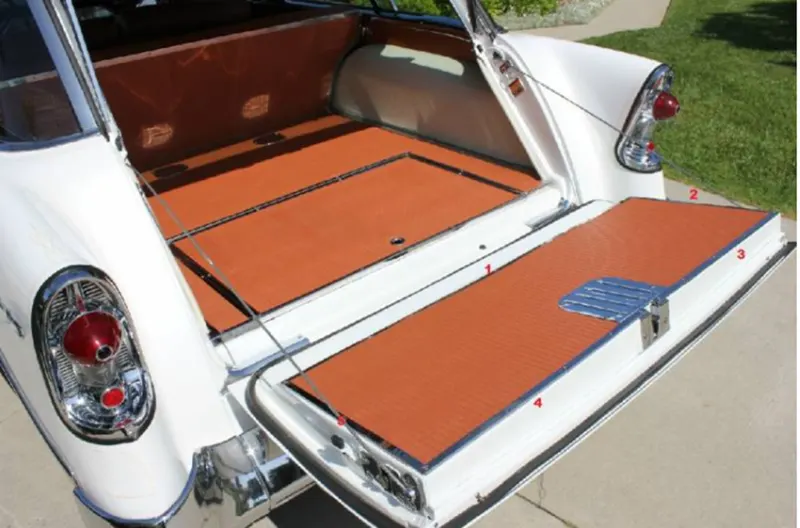
In our design we follow the Top mounted Design where the Hinges are mounted on the top.
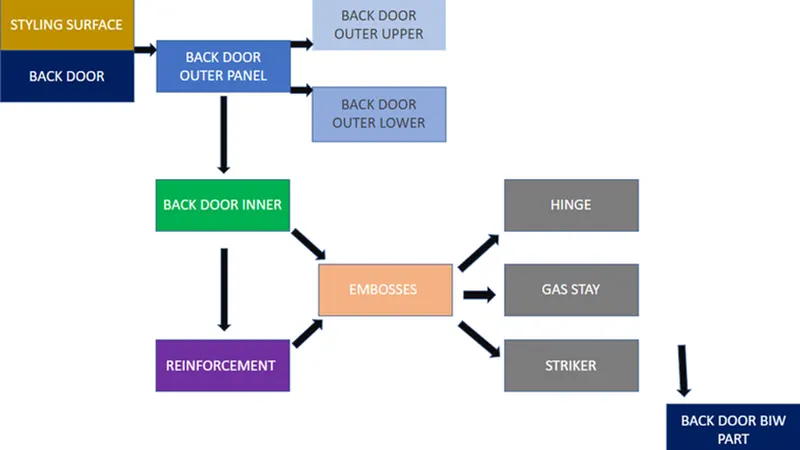
Design Steps:
Design Consideration in Back door design:
The following are the design consideration taken while designing the back door-
- Visibility Criteria
- Force Dissipation
- Latch And Stricker position
- Hinge Position
- Gas stay Position
- Material Section
- Space Availability
- Hemming and Relief Areas
All these Design Consideration go hand in hand with each other because these positions are dependent on ach other and if position gets altered all the position has to be altered for effective opening and closing of the back door. The Latch and Stricker, hinge position and the gas stay positions have to be maintained in a proper way so that they play a major role in the opening and closing as well as the rear visibility criteria of the car.
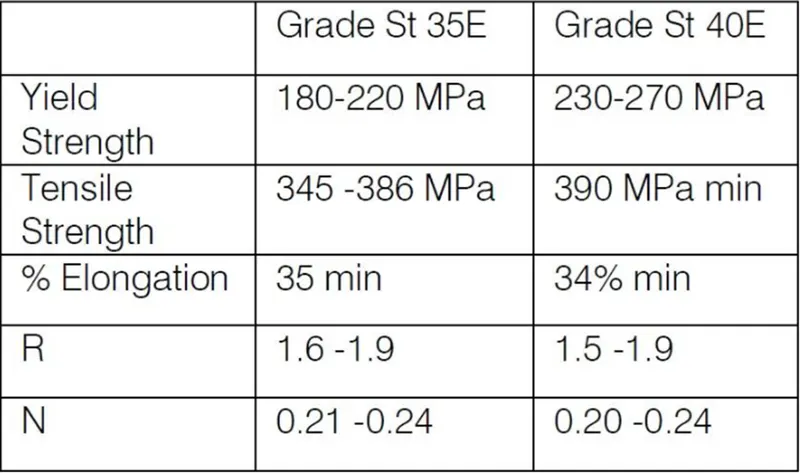
Material Used:
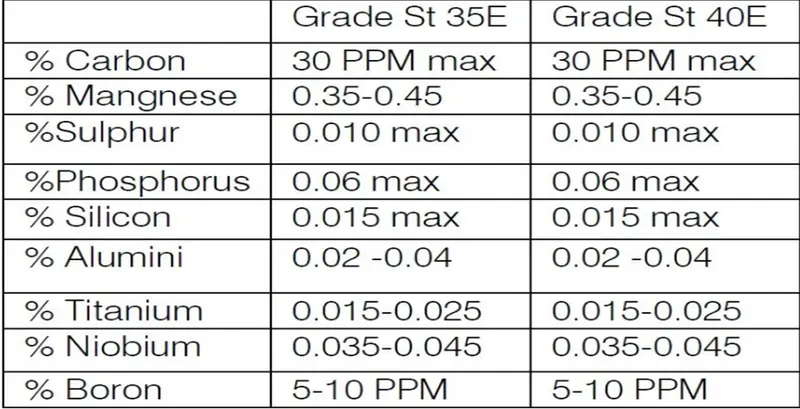
Material used for existing inner door panel 0.75mm thick, EDD 5131.6mm thick St40e.
Styling Surface:
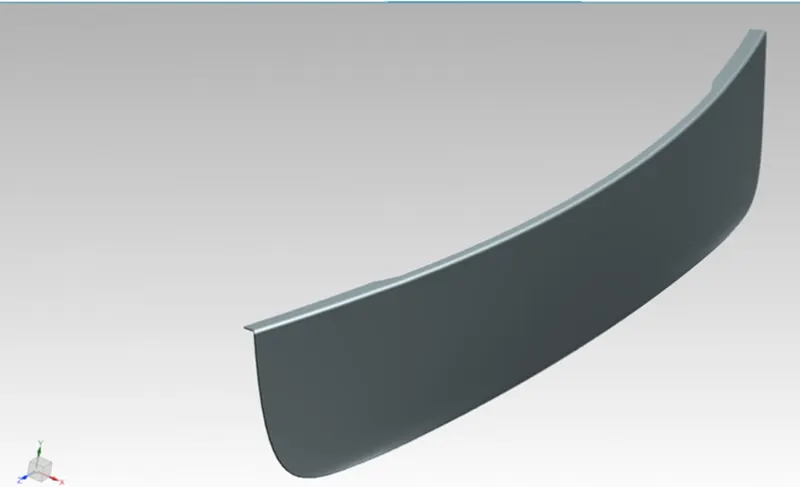
Once I got the styling surface, I want to make sure that the surface is sewed together. I got the IGES file then I worked on the surface so the whole surface can be sewed together. Then I Extracted the upper and lower surface of back door as part file.
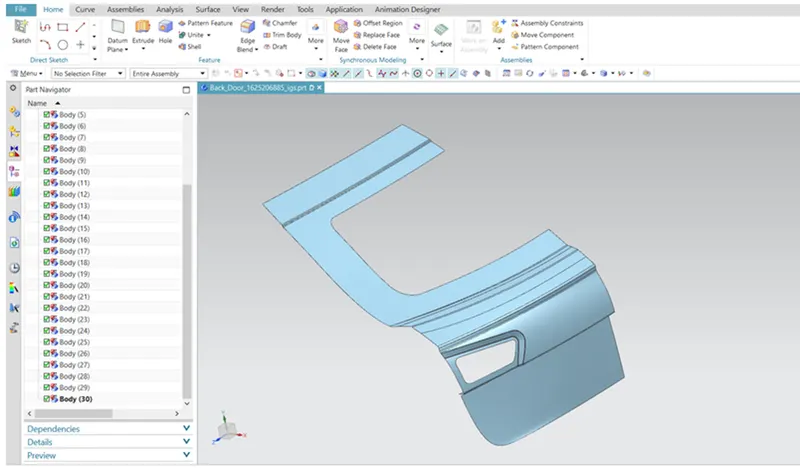
Back Door Upper Image
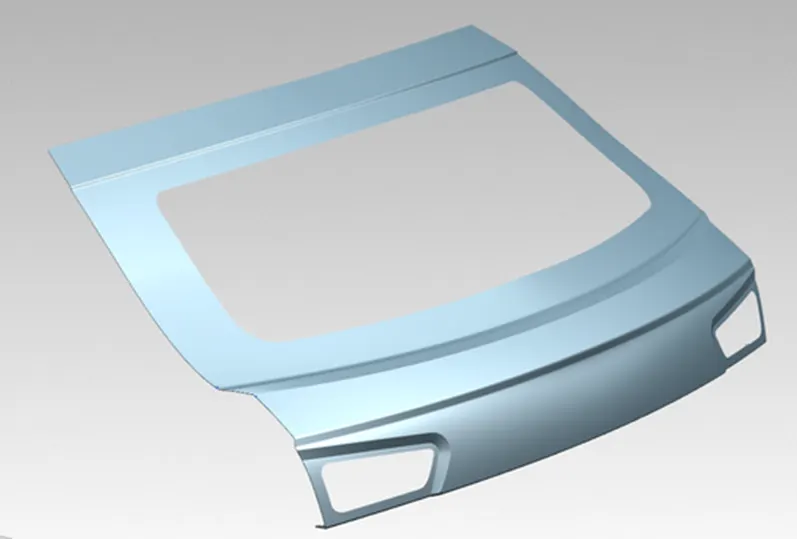
Back Door Lower Image
Inner Panel:
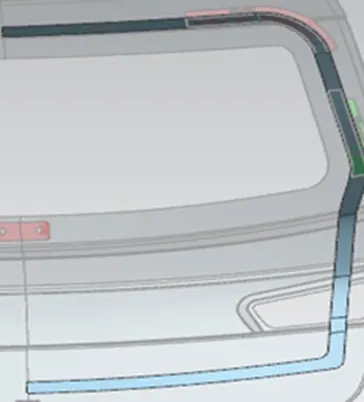
Considering the Class, A surface as reference We have to create the inner panel of the back door. The important part of the inner panel is the sealing flange, which decides how the back door will mounted on the rear side of a car. It also seals the rear side of the car and prevent the entry of dust and water inside the back door. The Width of the sealing flange within25mm.
Embosses:
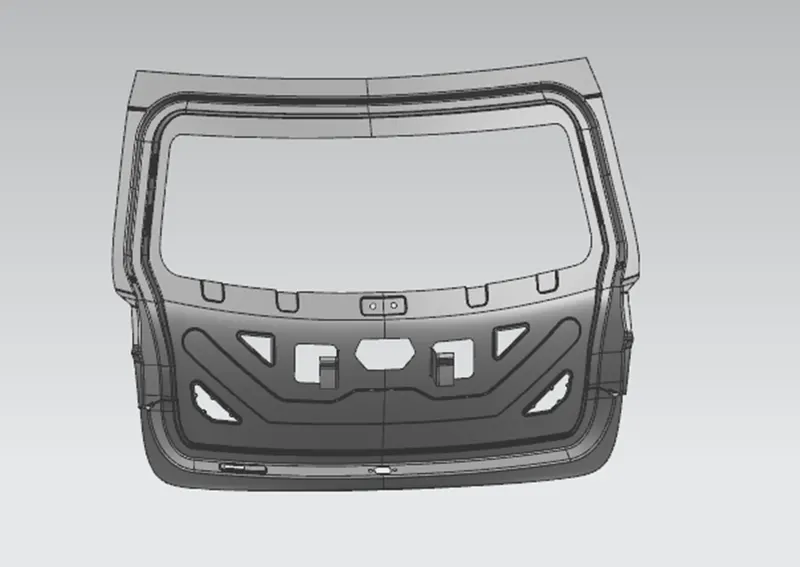
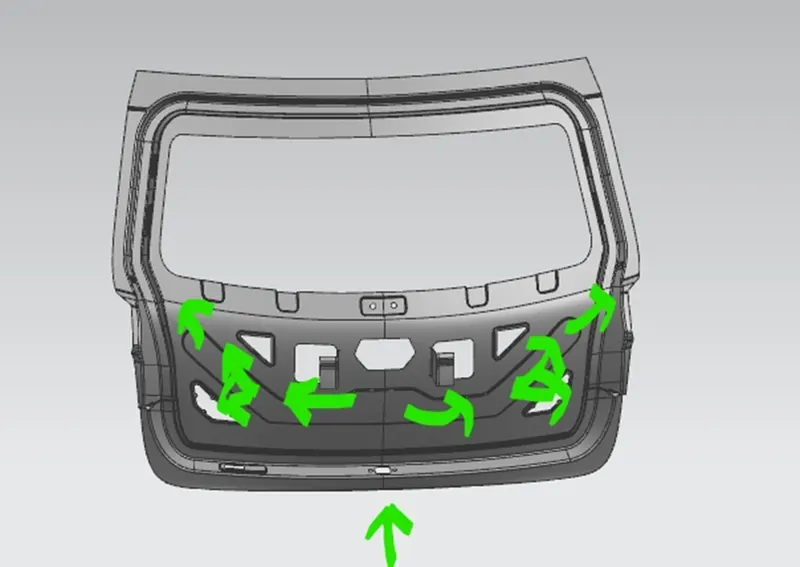
The Embosses are provided in the inner panel to provided strengthening of the part and also to dissipate the forces in case of rear collision of the outside of the car. The implement of embosses are very important on the inner hood since it plays an important role in saving human life during a crash from the back. The Embosses are designed in Y or V direction so that during the crash the force dissipate outwards. This will reduce the impact the passenger in the back.
The other cutout areas have been made to accommodate wiper motor assembly, Latch &Stricker, and to maintain the C.G of the backdoor for easy handling of back door.
Force Dissipation:
The major criteria in designing the back door or any BIW part is the force dissipation during an impact or a collision. Hence studies are being done in order to dissipate the force on the sides and avoiding it reach the inner panel of the car so that possible damage of impact inside the car is reduced. Hence in order to do that the V or Y shape embosses are created on the inner panel so that the force gets transmitted on the sides instead reaching it on the cabin. This is one of the main criteria in back door design.
Latch and Stricker Positions:
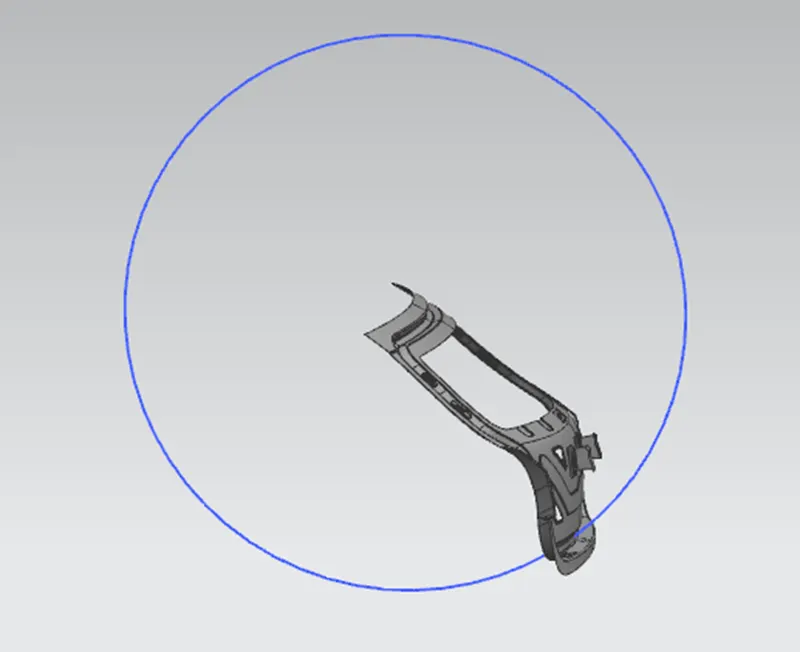
The Latch and Stricker position play a major role in determine the opening and closing of the back door. Hence the opening and closing of the Door to smooth and in order to ensure that the center point of the latch and Stricker has to be at the same position and trajectory has to be tangent to the open close circle that is drawn. This is shown in below. Only if the center points and the tangent line are perfect the opening and closing of the back door is smooth and clear. Or else the hinge position, gas stay position and latch and sticker positions have to be altered to meet the change.
Hemming & Relief Area:
Hemming and seaming are two different processes in which Sheetmetal edge rolled onto itself. Hemming is the process in which the edge is rolled flush to itself.
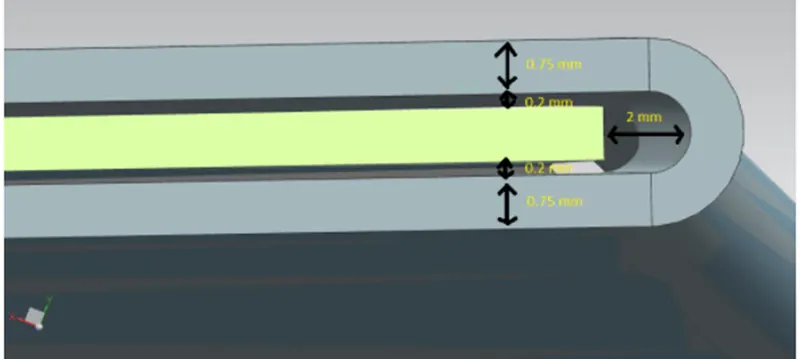
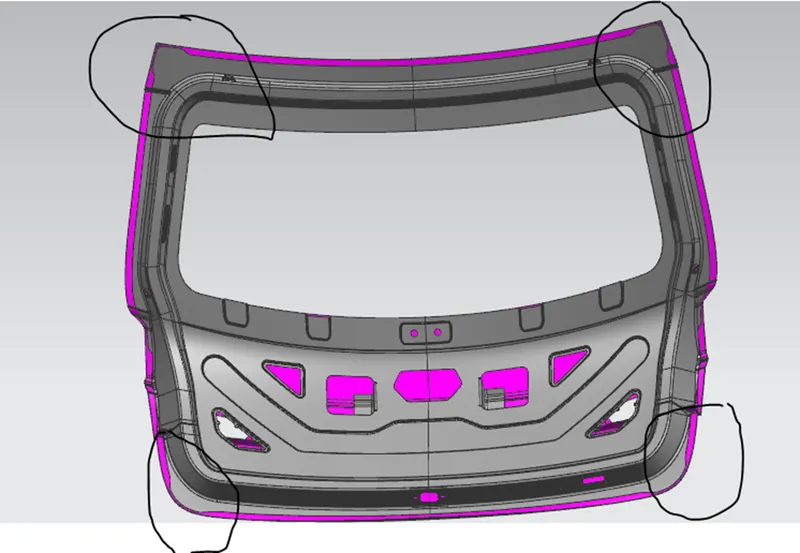
At the corner of the outer and inner panel are joined together by hemming.no type of welding is done because it leaves the mark of the outer panel and damage the authentic beauty of the car.
The hemming is done on the outer and inner panel with a clearance on 0.2mm on other sides. Since the corner hemming is difficult to perform, clearance has been given at the end of the panel so that hemming operation is performed.
Parts of Back door Assembly:
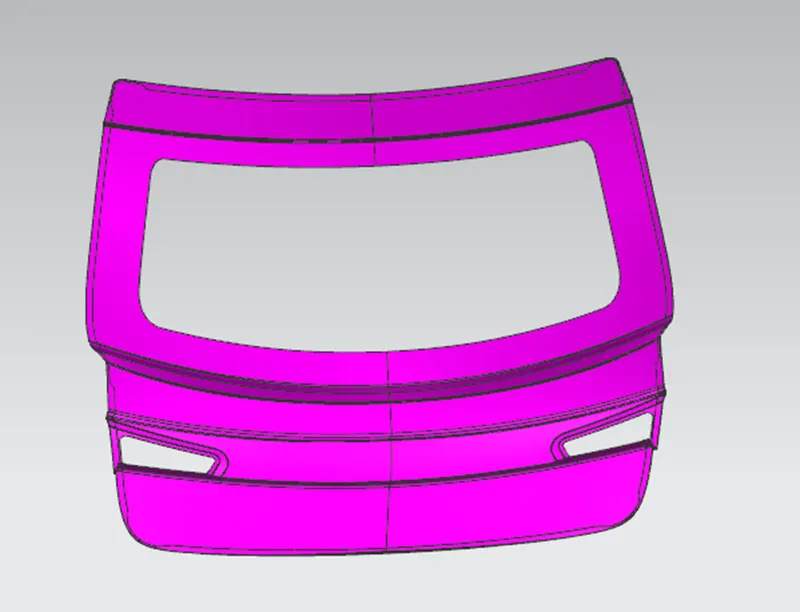
Outer panel
Inner Panel
Reinforcement:
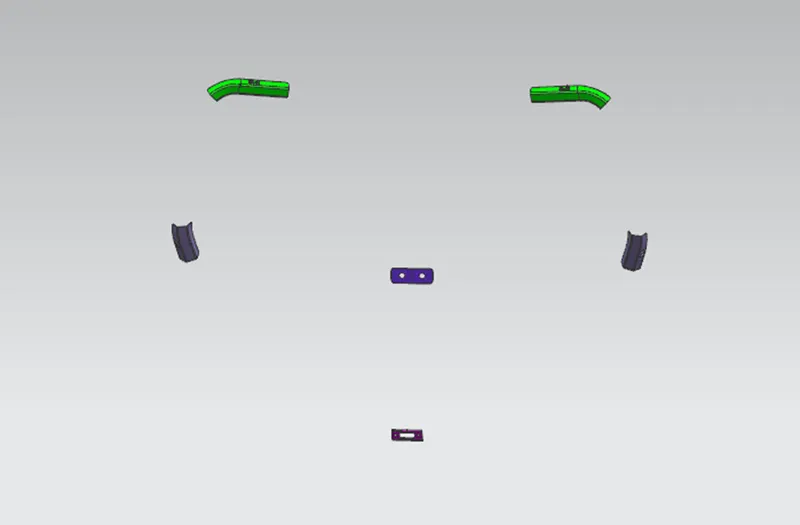
Reinforcement is generally used to increase the strength of the mounting so that there in no unnecessary noise or dent occurs at the moment of motion. This not only increase the strength but also increase the overall stiffness of the part so that the part is completely stable.
The reinforcements are-
- Latch Stricker Reinforcement
- Wiper motor Reinforcement
- Hinge Reinforcement
- Gas stay Reinforcement
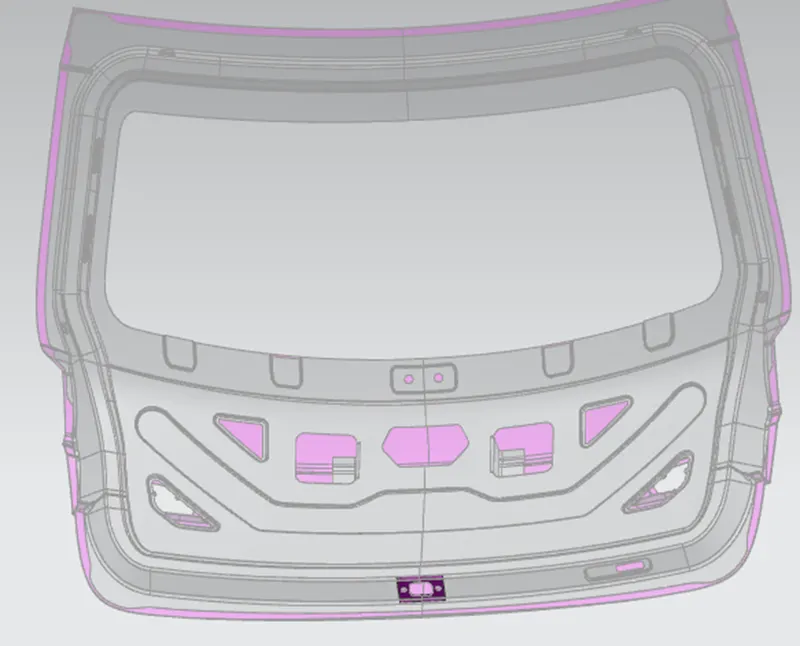
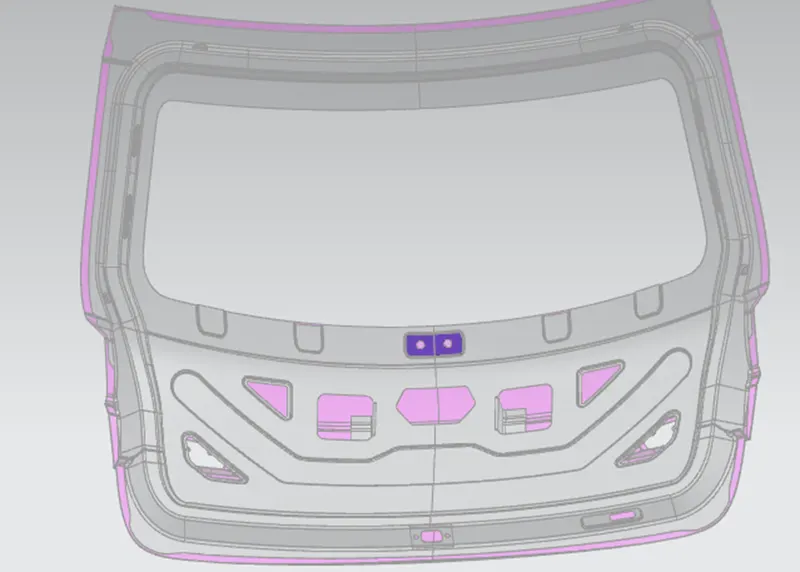
Latch Stricker Reinforcement:
The fitment of latch and Stricker plays an important role in designing of backdoor. The Latch and Stricker position play a major role in determine the opening and closing of the back door.
Wiper Motor Reinforcement:
Windshield wipers are powered by a small electric motor, usually mounted on the firewall or under the cowl (the area under the windshield’s base). The motor activates linkage that moves the wiper arms back and forth. On vehicles with a rear window wiper, a separate motor powers the one in the rear. Signs that a wiper motor is about to fail include slow or intermittent operation, wipers that will operate at only one speed, or arms that stop in the middle of the windshield when turned off. If your wipers don’t work, the fault could also lie with other parts of the wiper system. In the winter, for example, trying to use the wipers when the blades are stuck to the windshield because of ice or snow can blow the fuse for the motor or trip a circuit breaker. Other possible causes are the interior switch that controls the wipers failing, wires in the system being damaged, or the linkage that pushes and pulls the wiper arms breaking. Moving parts in the linkage may also be stuck from corrosion and/or gunk and need lubrication.
Hinge Reinforcement:
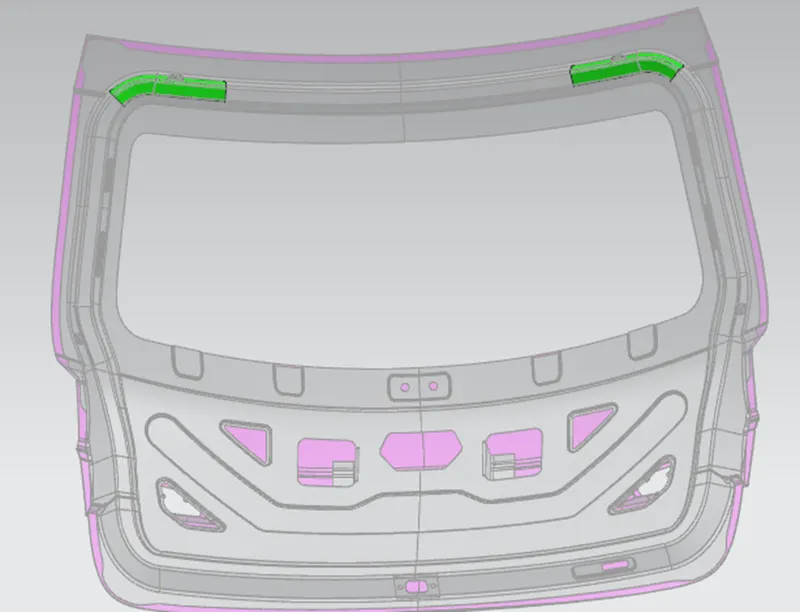
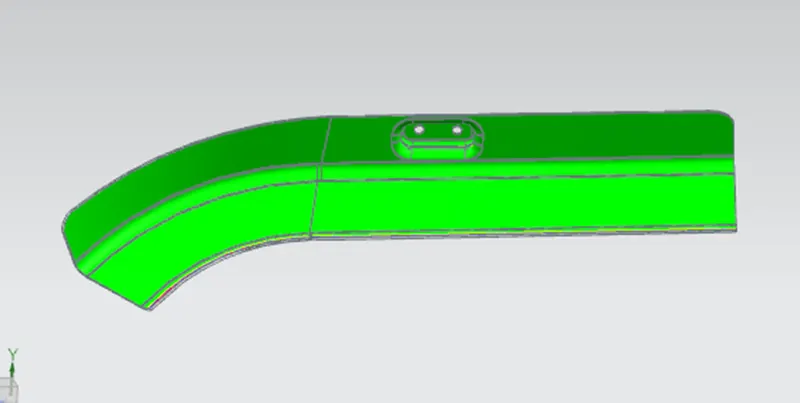
A hinge reinforcement for a motor vehicle door hinge in which are provided a fastening device, which supports the hinge pin and can be connected to the body of the corresponding motor vehicle, and a hinge bracket configured to be connected to the vehicle door, with the hinge bracket having, on a side facing toward the hinge pin, two bearing arms which are pivotable about the hinge pin and are spaced apart from one another.
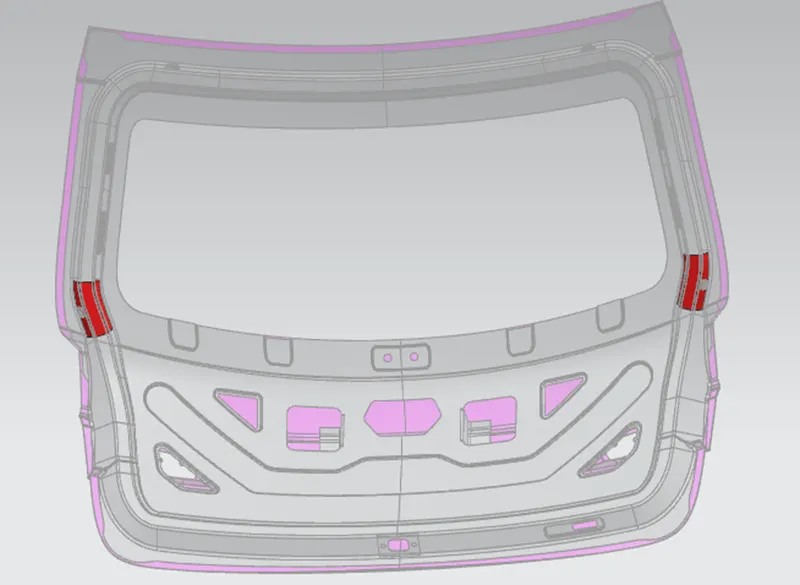
Gas Stay Reinforcement:
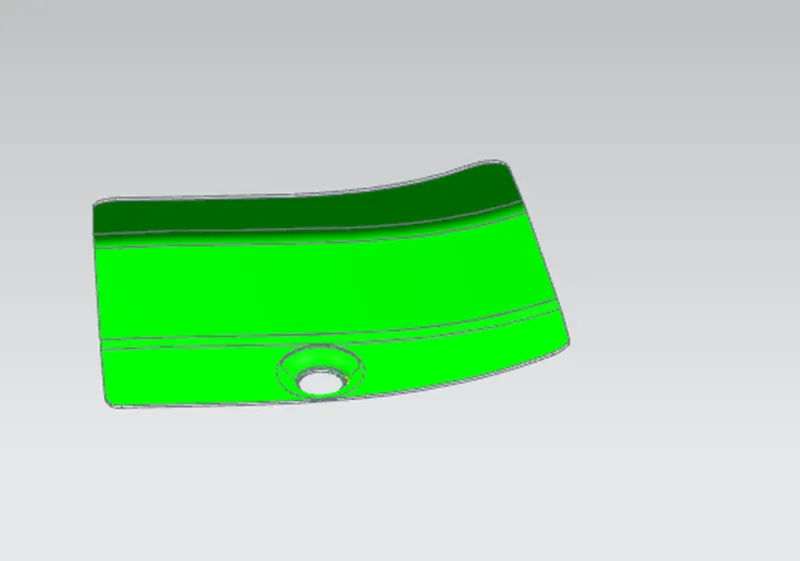
The Gas Stay Position is very crucial to smooth operation the back door. It positions depends on the gas stay weight of the door and other feature. The standard criteria that are followed is that the gas stay should be positioned in such a way that’s its distance from the hinge should be <90mm&>60mm and the angle of the gas stay w.r.t to the hinge should be80-90degree.
All The reinforcement
Mastic Sealants:
The mastic points are region where mastic is put to interference the outer panel to the inner panel. We can’t use spot welding because this gives less elegantly fulfilling result. Accordingly, mastic is used to join the panel as it doesn’t modify the real metal.
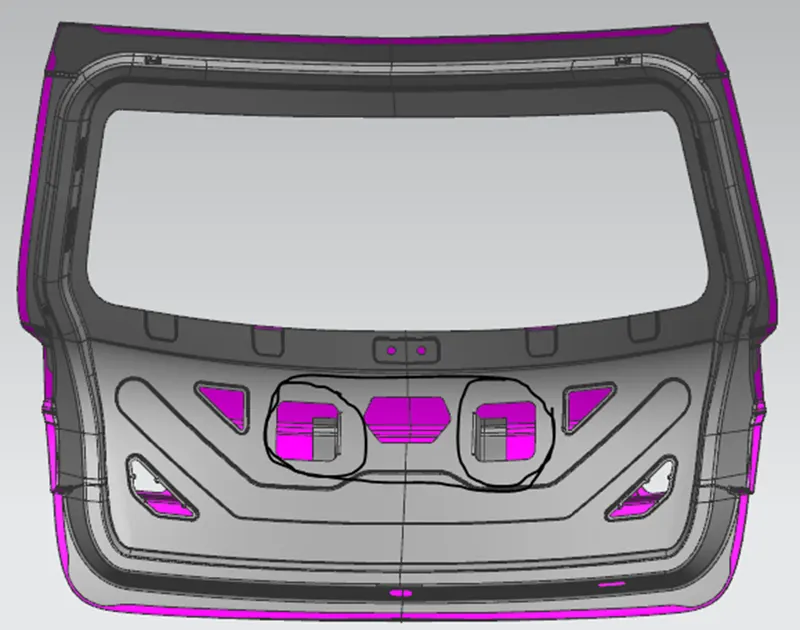
Draft Analysis:
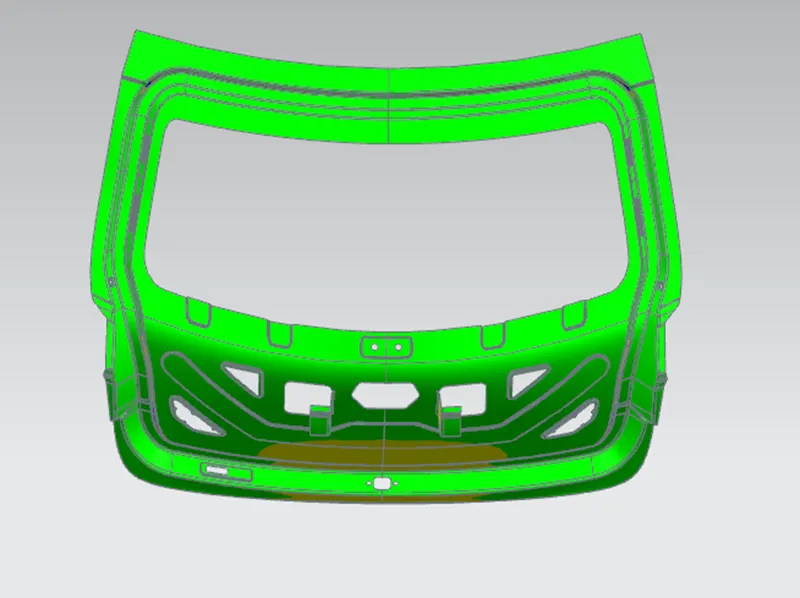
The Draft Analysis command enables you to detect if the part you drafted will be easily removed. This type of analysis is performed based on color ranges identifying zones on the analyzed element where the deviation from the draft direction at any point, corresponds to specified values.
Inner Panel
Hinge
Gas Stay
Latch Stricker
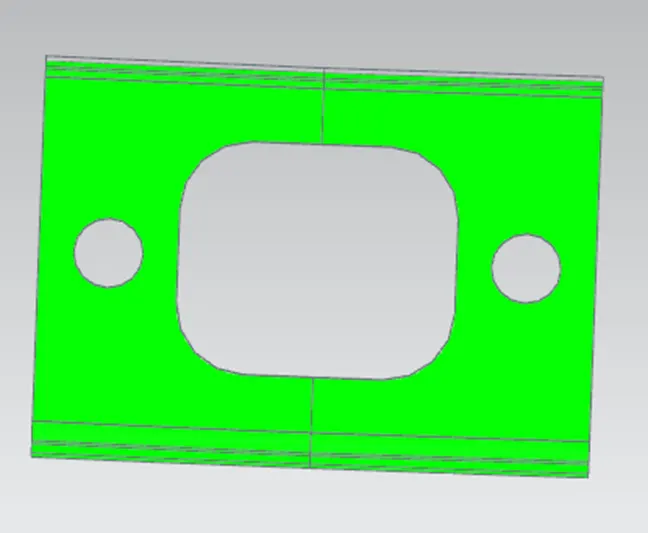
Wiper Motor
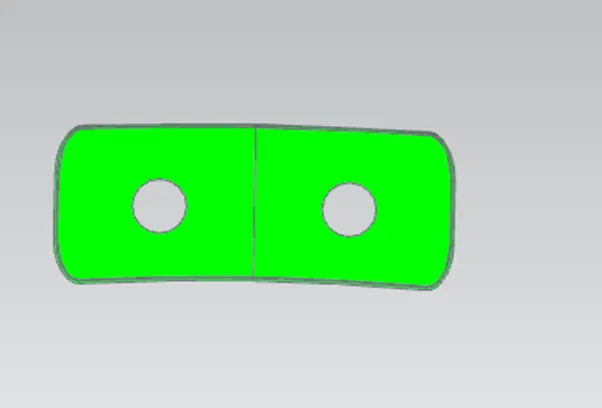
Back Door Assembly:
The above approach is followed by designing the back door assembly. At first from the given styling surface the inner panel was created by offsetting the outer panel and then individual parts are designed accordingly by using the inner panel surface. The reinforcement and other commodities designed by using the inner surface as the reference.
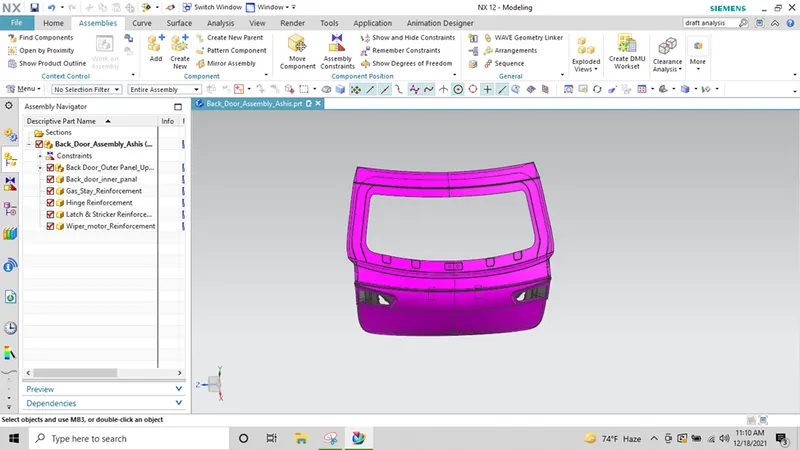
Top View
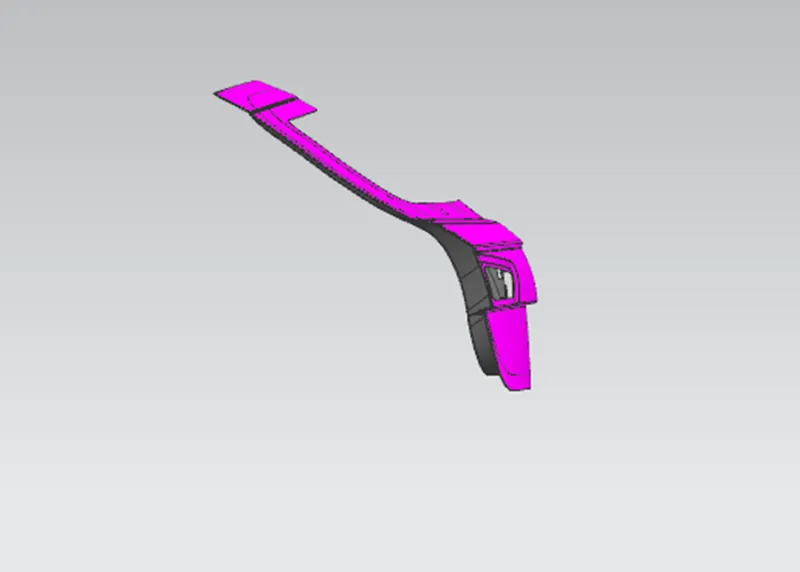
Left View
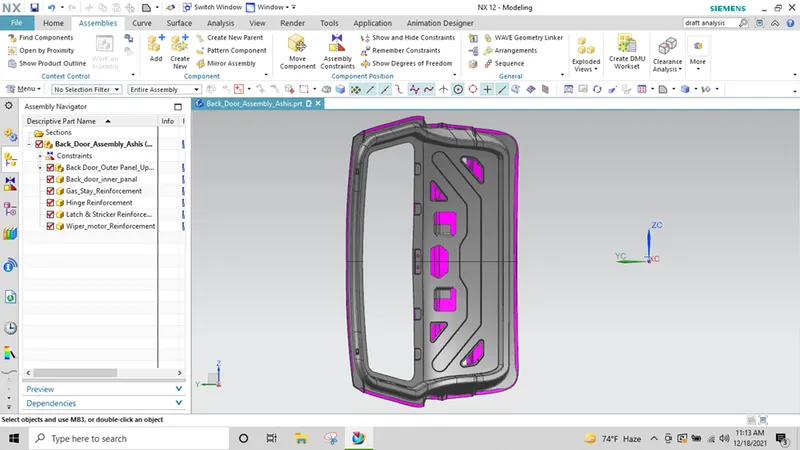
Front view
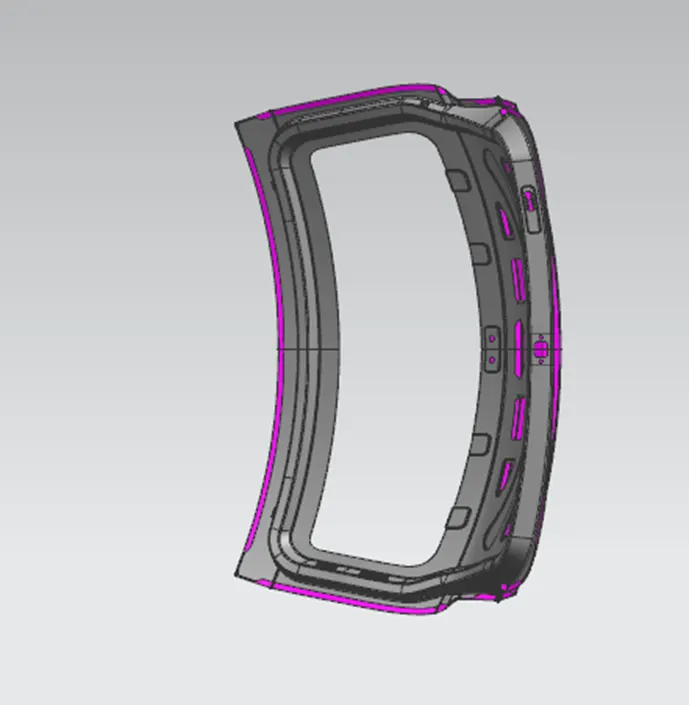
Conclusion:
The back door of the car is designed by appropriate design mythologies, and provided necessary reinforcement and embosses.
Thus, the designing of the back door or Tail gate is done as industrial standards and manufacturing techniques.
LINK: - https://drive.google.com/drive/folders/1v4PWe_fIHscRQv3A6RbOKmZC75CsVCYD?usp=sharing