Design of backdoor
BACK DOOR DEVELOPMENT
Indroduction:-
A Car Backdoor or Tailgate is a type of door opening, typically hinged on its top edge, but sometimes attached by other mechanisms, for opening the trunk or bootspace of a vehicle. BackDoors most often integrate window for visibility from inside the car and can be locked to secure the vehicle.
Car doors may be manually operated or with power assist supplied by the vehicle. Powered doors or power doors may be found on minivans, luxury vehicles, or modified cars.
The exterior side of the door is designed of steel or other material like the rest of the vehicle's exterior. In addition, its decorative appearance, typically colored with a design, is intended to match with the rest of the vehicle's exterior, the central purpose being to add to the overall aesthetic appeal of the vehicle exterior.
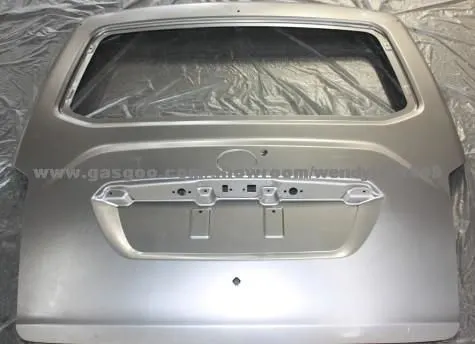
Inside parts of a backdoor look like this:
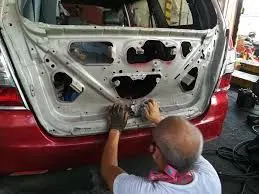
In this project, i use NXcad to create the interior and exterior panels and attachment features of an automotive backdoor.
Design methodology of car backdoor:-
For any type of automotives, the all doors must have 2 main sheetmetal panels. the exterior part is known as outerpanel and the inside panel of the door known as innerpanel. all the exterior and interior sheets and plastic trims will be attached to the inner panel.
Important features of backdoor design:
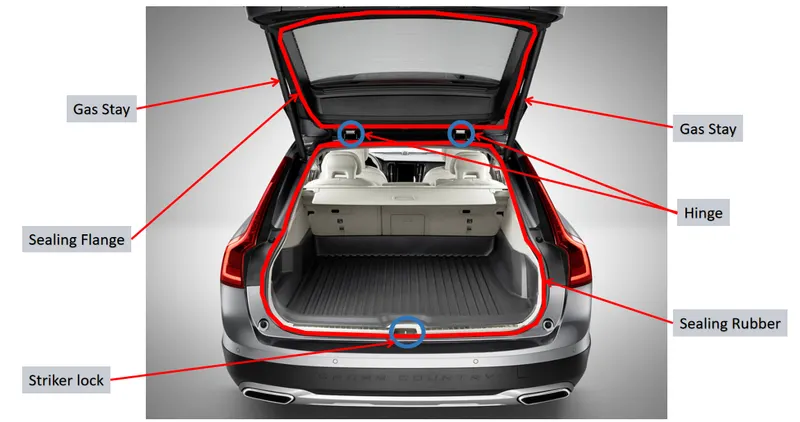
A typical car tailgate design includes the following functionalities:-
- Various mountings and attachments
- surface aesthetics
- design regulations
- Passenger headroom criteria
- bootspace requirement
- wiring harness
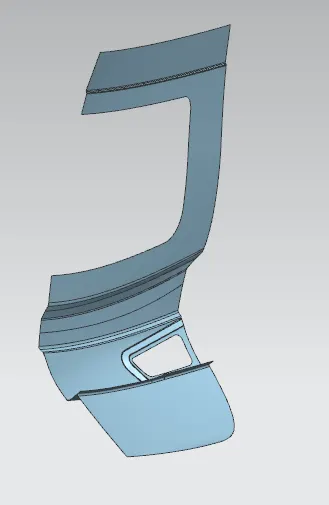
I will utilize the given class A surface to make references for the inner panel:-
Class A exterior surface:
the given surface includes 2 trims. we can name them as outer panel upper and outer panel lower.
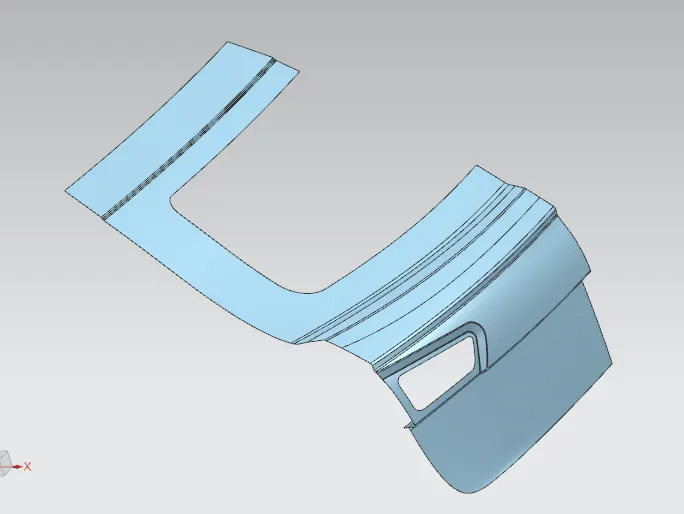
Construction of inner panel:-
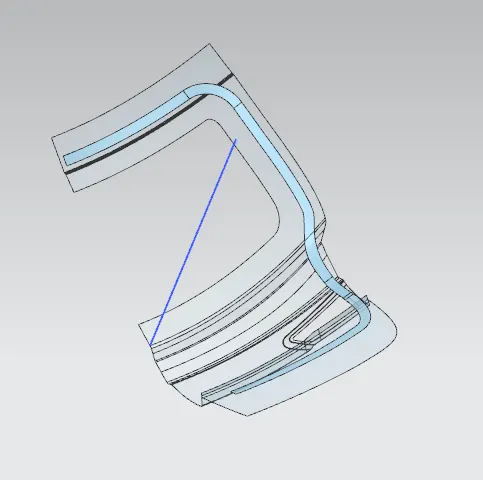
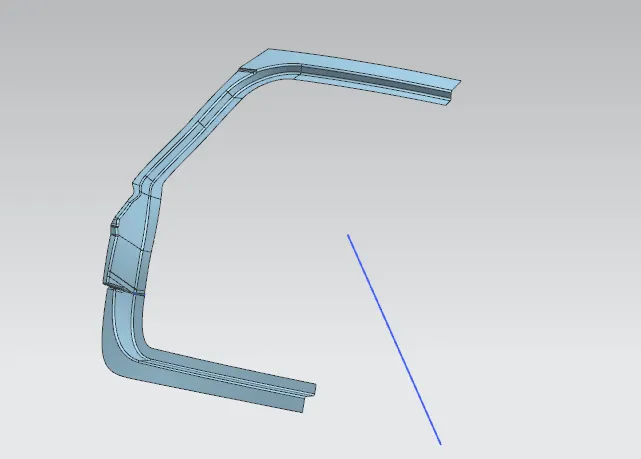
The trim we need to make the inner panel is a section that is shaped as an embossed region. there will be a central trim that flows throught the inside region of back door. all the required surfaces will be made by attaching to this trim rail.
The manufacturing method we use to make the inner panel is deep drawing. All emboss and design surfaces needs to be made at a positive draft angle to the tooling direction. for that application, we have to determine the feasible tooling axis, which is shown in the images below.
design consideraions:-
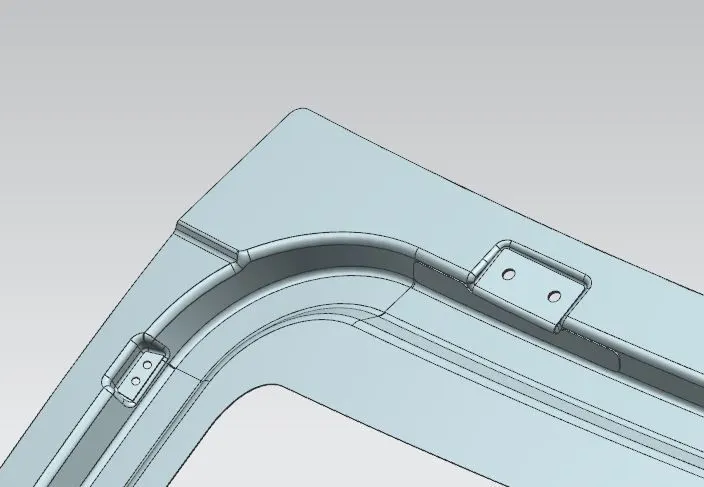
- provision for mounting features such as gas stay, hinge, wiper motor, striker will be designed accordingly on inner panel.
- Inner panel will have embosses given for strengthening.
- part thickness is 0.75 mm
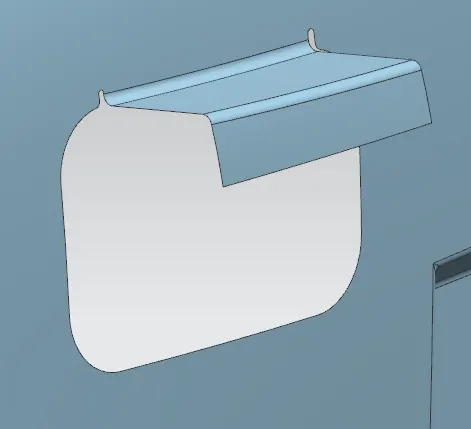
- Various mastic points to attach the outer panel. there will be 5mm gap between inner and outer panel to attach mastic sealants
- Top portion of the door will be hinged to the rear roof rail. it needs to designed by considering the head room clearance.
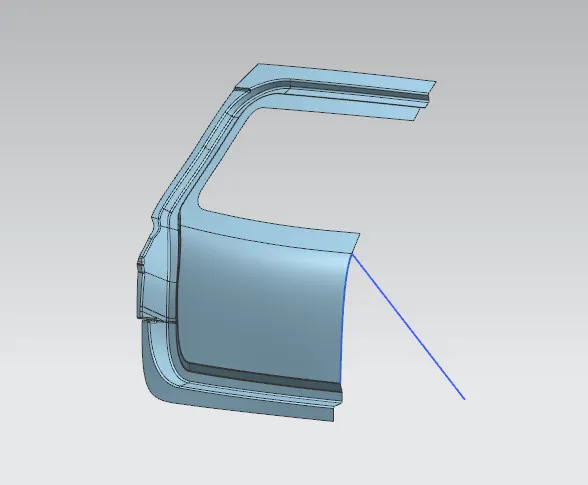
extension provided for mastic points to attach outer panel:
Hinge and gas stay mounting embosses:
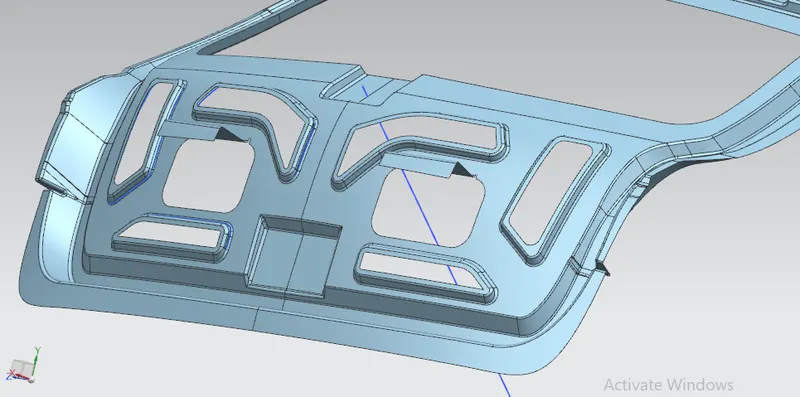
striker alignment:
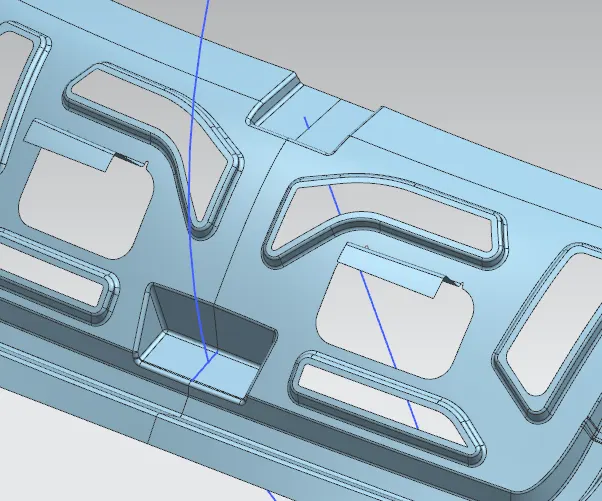
striker must be designed in a particular way that, when the door closes the hook will strike the latch. So, when designing we need to consider the circular path the door will rotate about the hinge.
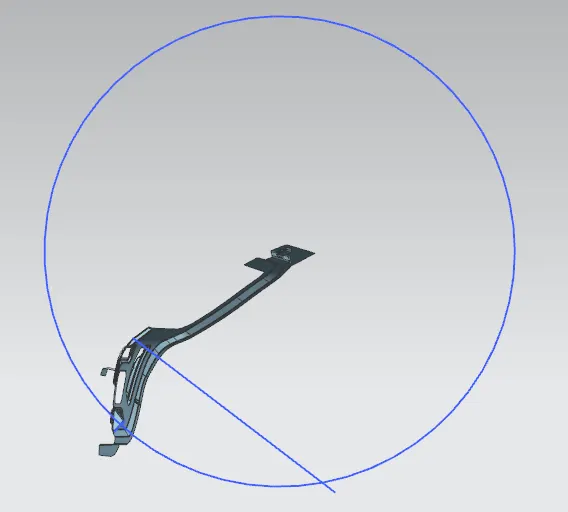
alignment of striker will come perpendicular to this circle.
REINFORCEMENTS:-
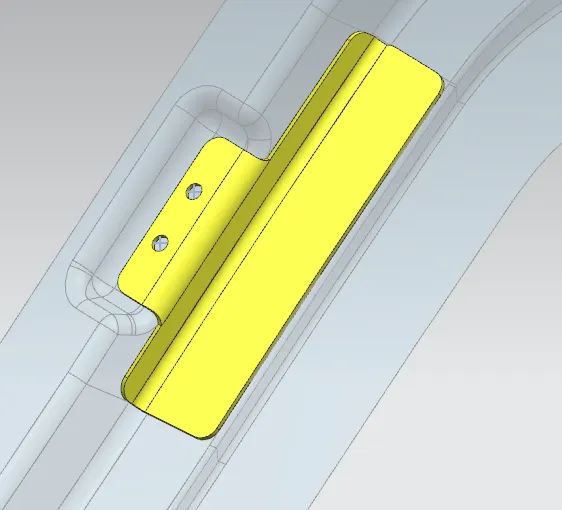
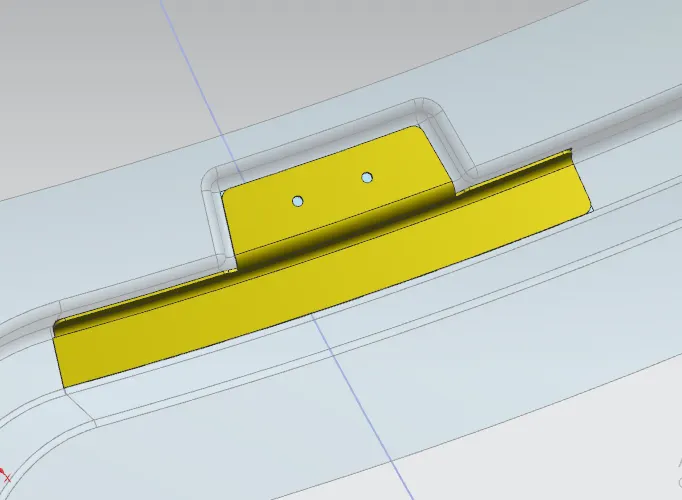
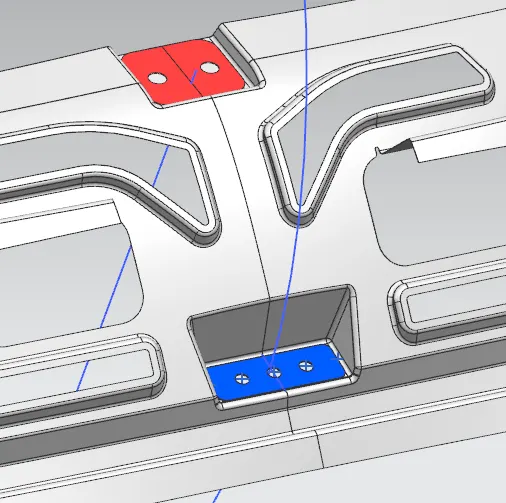
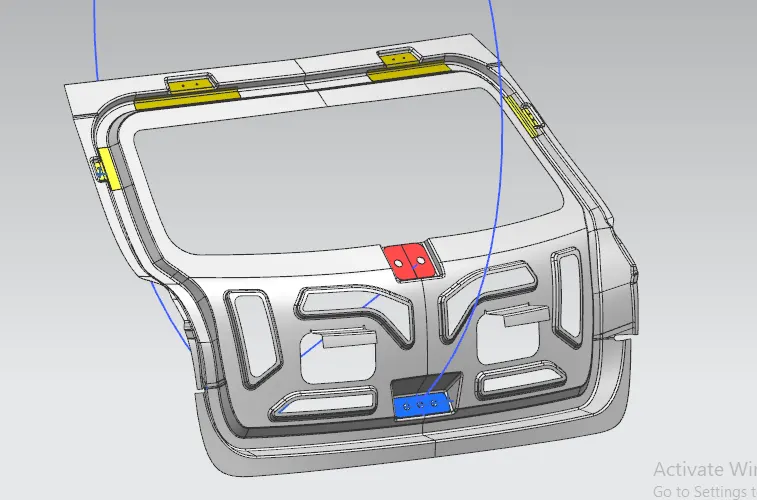
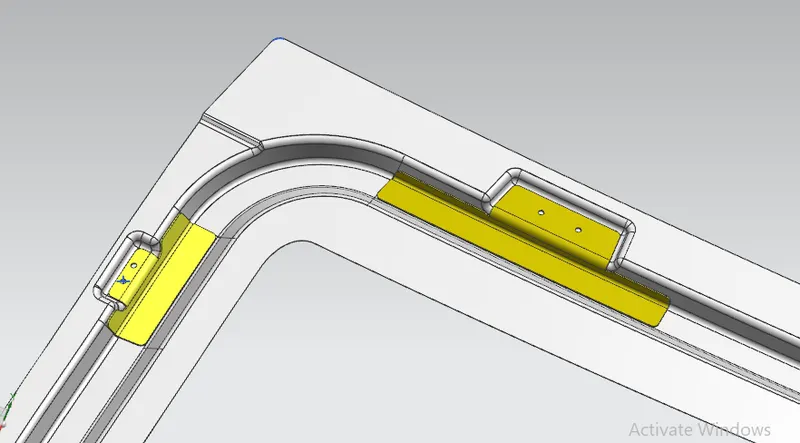
These are metal parts that provided between the attachment component and inner panel. it strengthen the joints and provide better stability to the door.
Thickness for reinforcements is 1.0 to 1.5 mm.
Reinforcements for hinge and gas stay:-
Wiper motor and striker reinfrocements:
Final inner panel part:
Outer panel design:-
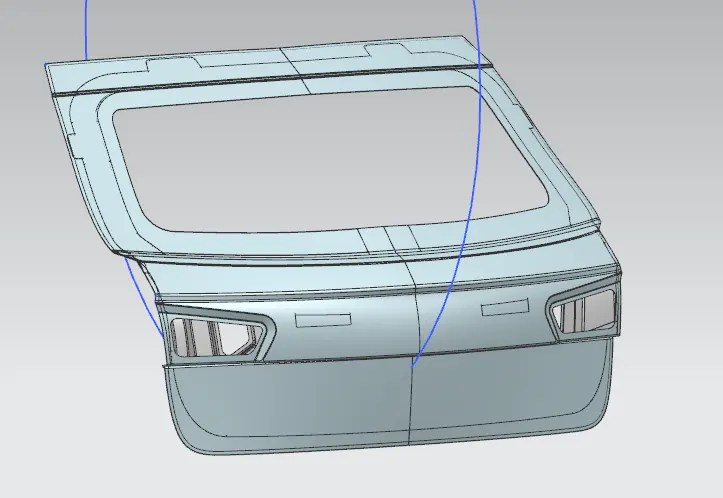
In this project, upper and lower outer panels are made separately and held together at their respective positions.
design considerations:
- Aesthetic surface quality
- good continuity/flow of surface
- provision for numberplate
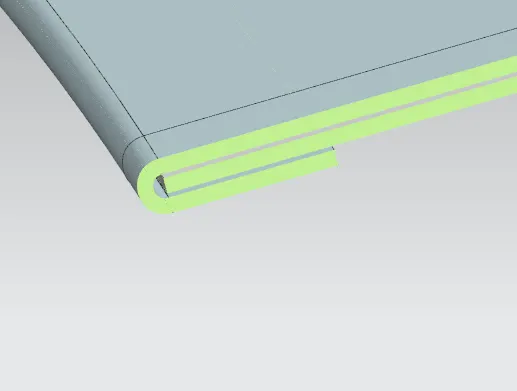
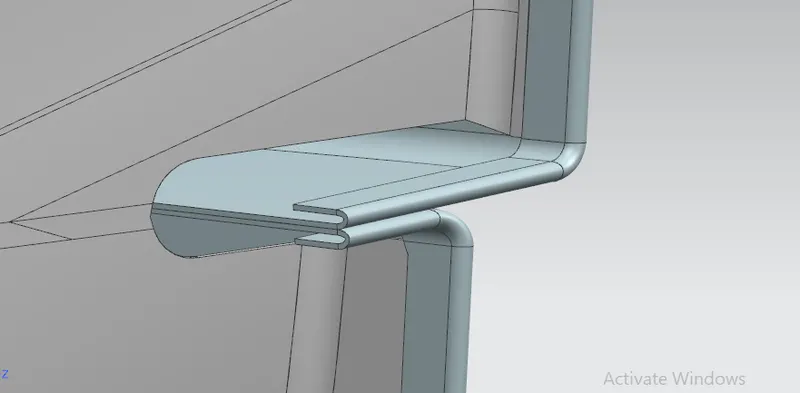
- Hemming for joining outer and inner panel
- part thickness 0.75 mm
Finished outer panel:-
Hemming section:-
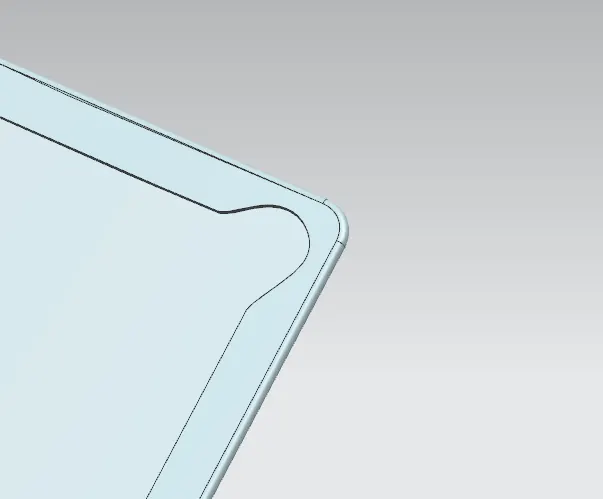
Corner relief:-
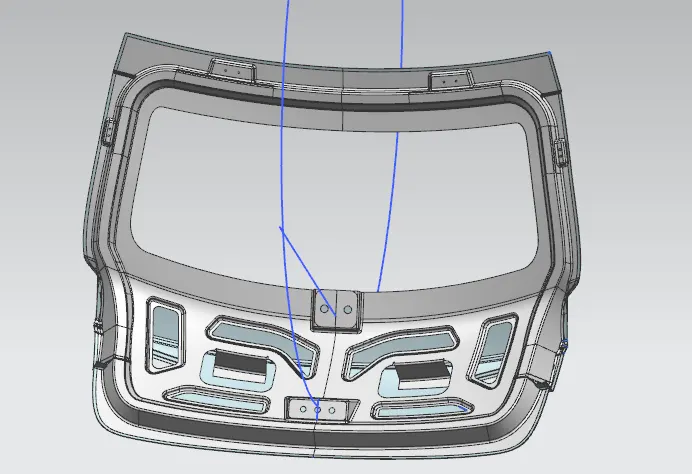
Final assembly:
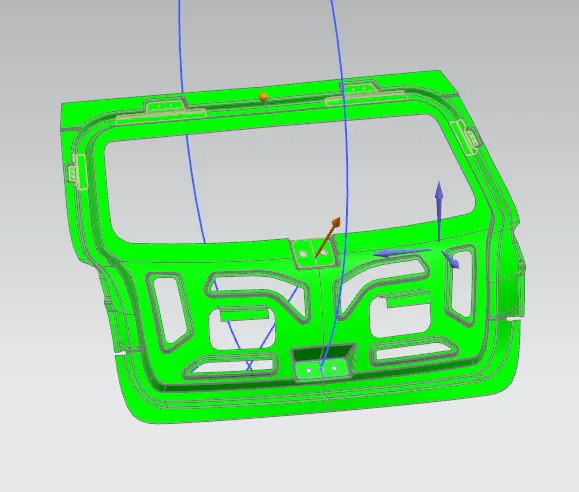
Draft analysis:
All inner panel surfaces needs to be drafted at minimum 5 degrees. Draft analysis result are shown:
Conclusion:-
Studied different design principles and requirements when constructing automotive backdoor. designed and developed backdoor elements using the given skin data in Siemens NX cad.